
Disclaimer: The information provided in this article is based on my 10 years of clinical experience as a specialized veterinarian and French Bulldog breeder. It is for educational purposes only and does not substitute for professional veterinary medical advice or behavioral consultation.
When you bring home a wrinkly, bat-eared French Bulldog puppy to your high-rise apartment, the first logistical nightmare you face is: Where are they going to go to the bathroom? It is the single most common question I get from urban Frenchie owners in my clinic.
Related Reading: Health & Diet | Frenchie Puppy Guide
You stand at a crossroads: Do you commit to the grueling schedule of the elevator ride down to the street every two hours, or do you lay down a pee pad (often affectionately called a “pee pig” pad) in the corner of your living room?
As a veterinarian and breeder who has seen the long-term results of both methods, I have a very strong professional opinion. In this ultimate guide, we will break down the pros, the cons, the behavioral psychology, and the hidden health risks of both pee pad training and outdoor potty training to help you make the best decision for your apartment-dwelling Frenchie.
Method 1: Indoor Pee Pads (The “Pee Pig” Route)
Pee pads are heavily marketed to apartment owners as the ultimate convenience. But are they really the magical solution they claim to be? Let’s look at the reality.
The Pros of Pee Pads
- Convenience During the Puppy Stage: A 10-week-old Frenchie has zero bladder control. They need to pee immediately upon waking up. If you live on the 15th floor, the puppy will likely pee in the elevator before you ever reach the grass. Pee pads eliminate the travel time.
- Weather Independence: Frenchies absolutely despise bad weather. If it is raining, snowing, or below freezing, a Frenchie will dig their heels in and refuse to walk. Pee pads mean you don’t have to freeze outside at 3 AM.
- Unvaccinated Safety: Before a puppy has received all their Parvovirus and Distemper vaccines (usually around 16 weeks of age), the city streets are incredibly dangerous. Pee pads keep them safe from deadly viruses during those crucial early months.
The Hidden Cons and Dangers of Pee Pads
- Teaching Them It’s Okay to Pee Indoors: This is the biggest psychological hurdle. By using pee pads, you are fundamentally teaching your dog that urinating inside the house is an acceptable behavior. The pad is just a square of fabric on your floor. To a dog, your expensive living room rug feels remarkably similar to a pee pad. This creates massive confusion and lifelong “accidents.”
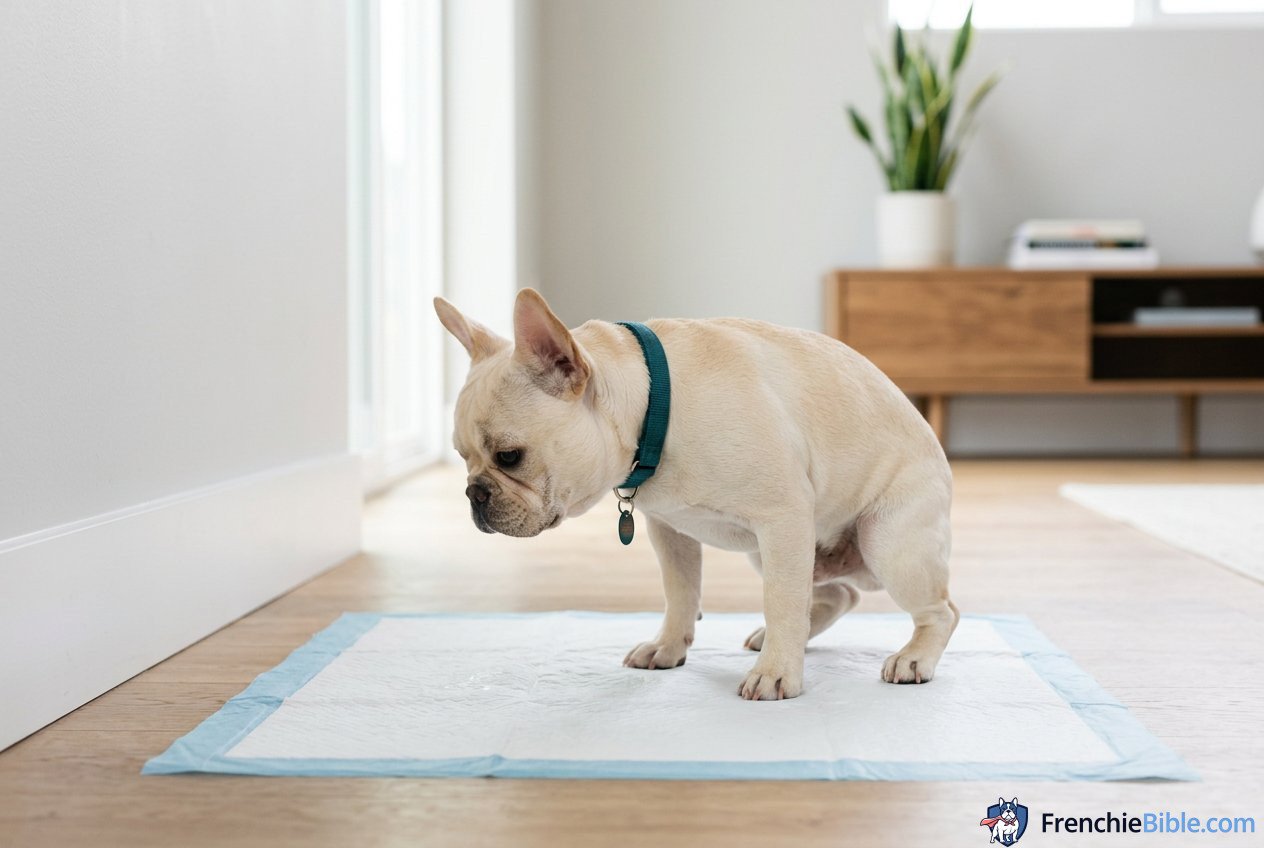
- The “Missed” Target: Frenchies have a unique stance when they pee. Very often, their front paws will be on the pad, but their rear end hangs over the edge, resulting in a pool of urine seeping into your hardwood floors.
- Destruction and Ingestion: Puppies chew everything. Many Frenchies decide that tearing the pee pad to shreds is a fantastic game. Ingesting the plastic backing and absorbent gel of a pee pad can cause a life-threatening intestinal blockage requiring emergency surgery.
- The Smell: No matter how frequently you change them, keeping a designated toilet in your living room will eventually make your apartment smell like a kennel.
Method 2: Strict Outdoor Potty Training
This is the traditional route, requiring you to physically take your dog outside to urinate and defecate on grass or pavement.
The Pros of Outdoor Training
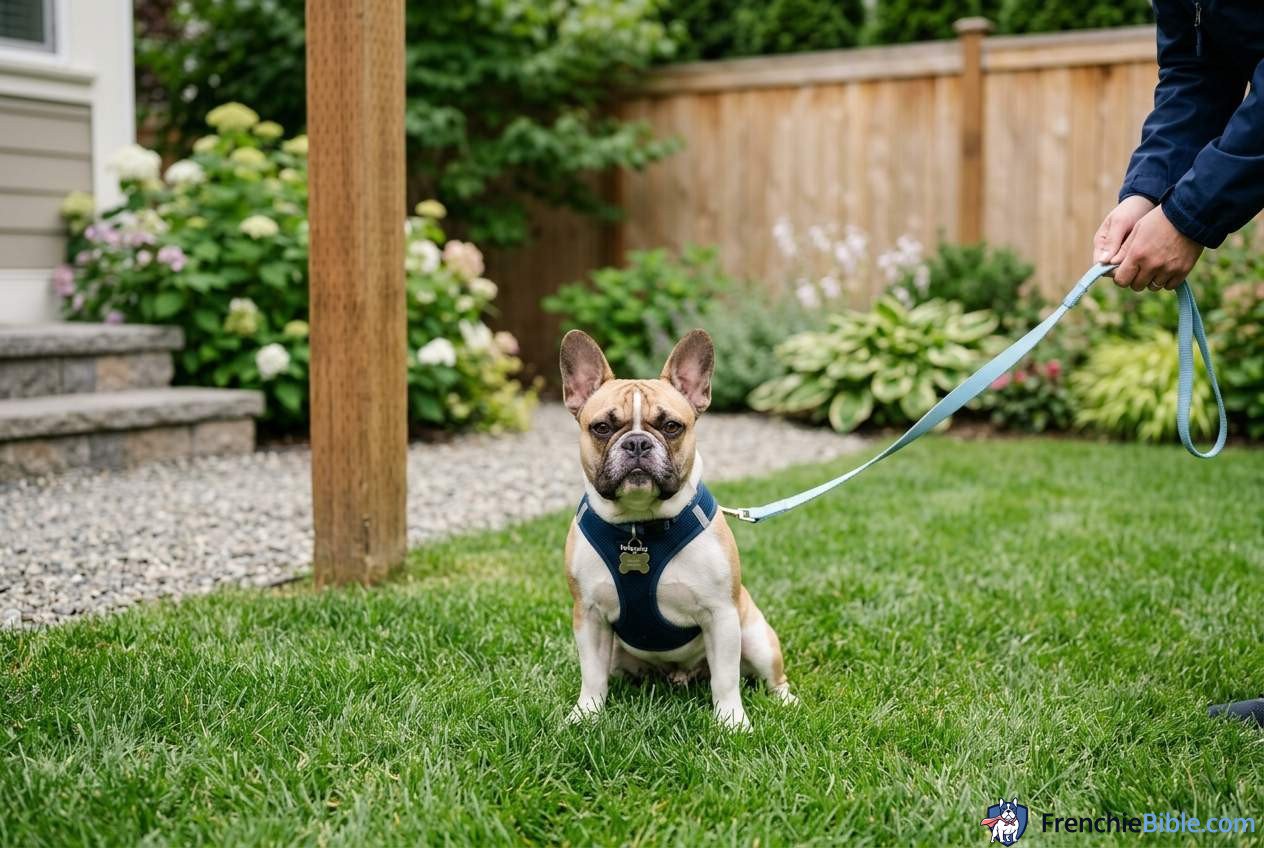
- Clear Behavioral Boundaries: Dogs understand spatial boundaries very well. When you train them strictly outdoors, the rule becomes black and white: “Inside is my den, outside is my toilet.” This drastically reduces the chances of long-term indoor accidents.
- Better Socialization: Taking your dog out multiple times a day forces them to experience the world. They see cars, hear sirens, meet other dogs, and smell new scents. This environmental enrichment is vital for a Frenchie’s mental health.
- Cleaner Home: All the mess stays outside. There are no smelly pads sitting in the corner of your apartment.
The Cons of Outdoor Training
- The Physical Exhaustion: The first few months are brutal. You must take the puppy out every 2-3 hours, including the middle of the night. If you live in a high-rise, this means putting on shoes and a coat, waiting for the elevator, and walking to the nearest patch of grass 8-10 times a day.
- The Weather Factor: You must be prepared to stand outside in the pouring rain or freezing cold while your stubborn Frenchie stares at you, refusing to pee because their paws are wet.
- The Parvovirus Risk: As mentioned, you must be incredibly careful where you put a young, unvaccinated puppy down in a city environment.
The Verdict: Which is Better?
As a veterinarian and a behaviorist, my professional recommendation is Strict Outdoor Potty Training, even if you live in an apartment.

While pee pads offer short-term convenience for the first few weeks, they almost always create long-term behavioral nightmares. I see countless adult Frenchies (2 to 3 years old) who still randomly pee on bath mats and area rugs because they were raised on pee pads and never learned the hard boundary that “inside means no potty.”
The Hybrid Compromise: The “Porch Potty”
If you absolutely cannot take your dog down the elevator every two hours (perhaps you work from home with tight meeting schedules), there is a far superior alternative to the fabric pee pad: The Balcony Grass Patch.
If you have a balcony, invest in a system that uses real, hydroponic grass (like Fresh Patch or DoggieLawn) or a high-quality artificial turf system over a drainage tray.
Why this is better than pee pads:
1. Texture Association: You are teaching the dog to pee on grass, not on soft fabric. This means when you eventually transition them to the park, they already know what texture to seek out. They won’t confuse it with your rugs.
2. It’s Still “Outside”: You are still establishing the boundary that they must go through a door to get to their toilet area.
Transitioning from Pads to Outdoors
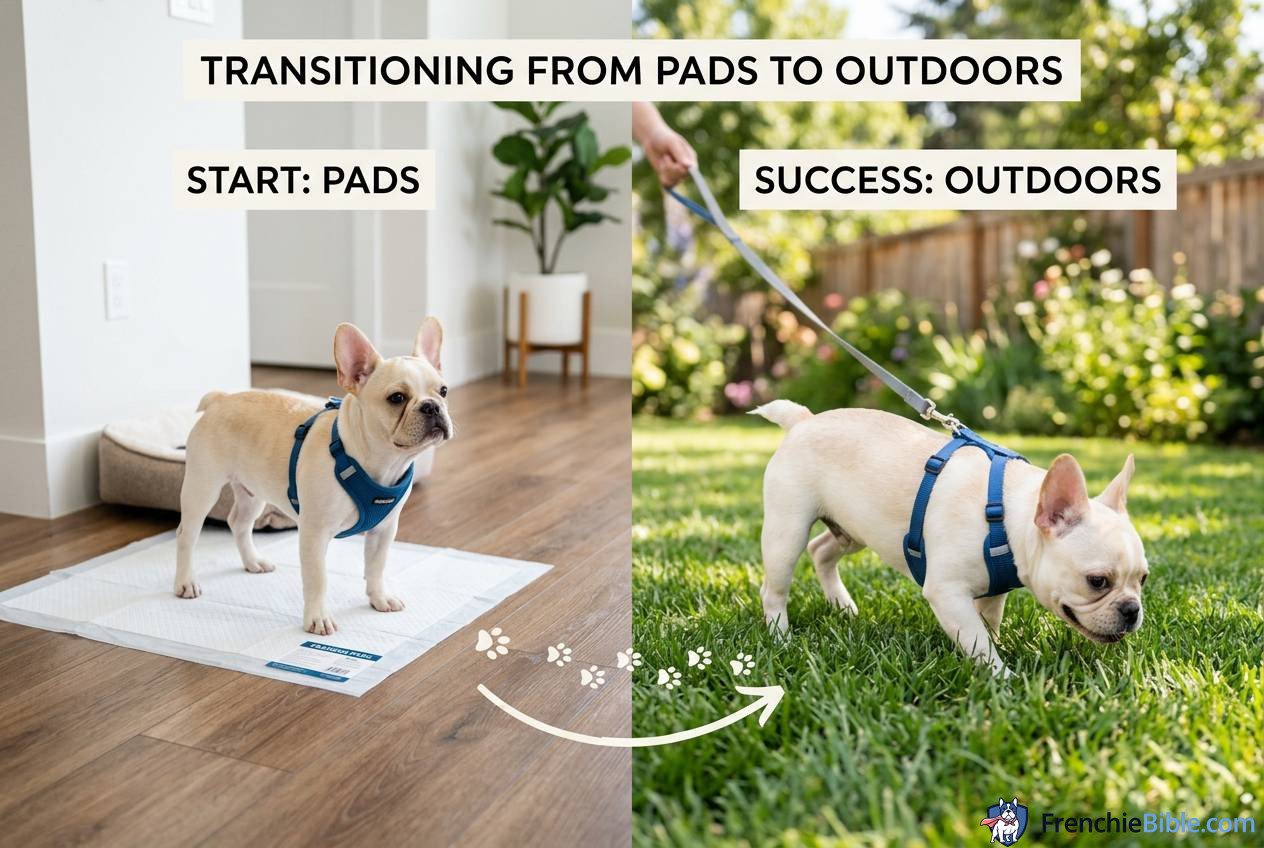
If you have already started with pee pads and want to fix it, you must use a phase-out method. You cannot simply remove the pads one day and expect them to understand.
1. Start moving the pee pad closer and closer to the front door (or balcony door) every few days.
2. Once the pad is at the door, start taking the pad outside with you. When you reach the grass, put the pad on the grass.
3. Over a week, gradually make the pad smaller and smaller (cut it in half) until they are just peeing directly on the grass.
4. Heavily reward every single successful outdoor bathroom trip with high-value treats and massive praise.
Conclusion
Owning a French Bulldog in an apartment is entirely possible and highly rewarding, but you must put in the hard work early on. Skip the fabric pee pads. They are a shortcut that leads to a dirty apartment and a confused dog. Embrace the grind of outdoor training, utilize crate training when you cannot supervise them, and set clear boundaries. Your future self (and your expensive rugs) will thank you.
Frequently Asked Questions (FAQs)
Q1: How long does it take to fully potty train a French Bulldog?
A1: Because of their stubborn nature, Frenchies can take longer than other breeds. With strict consistency, a puppy should be mostly reliable by 6-8 months of age, but true 100% reliability (no accidents for months) often isn’t achieved until they are a year old.
Q2: Should I rub my dog’s nose in it if they pee on the floor?
A2: ABSOLUTELY NOT. This is an archaic, abusive, and completely ineffective training method. The dog does not associate your anger with the act of peeing; they just learn to be terrified of you. If you find an accident, simply clean it up quietly with an enzyme cleaner.
Q3: Are male or female Frenchies easier to potty train?
A3: There is no significant difference in trainability between genders. However, intact (unneutered) males are more prone to “marking” their territory indoors by lifting their leg on furniture, which is why neutering at the appropriate age is recommended.
Q4: My Frenchie pees when they get excited to see me. Is this a training issue?
A4: No, this is called “submissive urination” or “excitement urination,” and it is an involuntary physical response, common in puppies. Do not punish them. Instead, greet them very calmly, avoid direct eye contact initially, and immediately take them outside. They usually outgrow this as their bladder muscles strengthen.
Q5: Can an adult French Bulldog learn to use a balcony grass patch if they are used to pee pads?
A5: Yes, but it requires patience. You will need to restrict their access to the old pee pad areas, take them to the grass patch frequently, use a command like “go potty,” and reward them heavily when they succeed on the new texture.