Disclaimer: The information provided in this article is based on my 10 years of clinical experience as a specialized veterinarian and French Bulldog breeder. It is for educational purposes only. If your French Bulldog is suddenly urinating indoors after being fully potty trained, please consult your veterinarian to rule out a Urinary Tract Infection (UTI) or other medical issues.
“Doctor, I’m at my wit’s end. He poops behind the sofa, he pees on the rug, and no matter how many times I yell ‘NO,’ he keeps doing it!”
Related Reading: Health & Diet | Frenchie Puppy Guide
If I had a dollar for every time a frustrated French Bulldog owner sat in my clinic and said this, I could fund a new hospital wing. French Bulldogs are incredibly smart, stubborn, and highly motivated by comfort. This combination makes them notoriously difficult to potty train using traditional methods. You cannot negotiate with a Frenchie, and punishing them after the fact is completely useless.
As a breeder who has successfully potty trained litters of puppies, and as a vet who counsels desperate owners daily, I can tell you that there is one tool that stands above the rest: The Crate. Crate training is not a punishment. When done correctly, it leverages a dog’s natural denning instinct to create a foolproof potty training system. In this comprehensive guide, we will break down exactly why crate training works, how to properly introduce it to your stubborn Frenchie, and the exact schedule you need to follow to stop the indoor accidents once and for all.
Why French Bulldogs Are Hard to Potty Train
Before we dive into the solution, we must understand the problem. Why are Frenchies so notorious for indoor accidents?
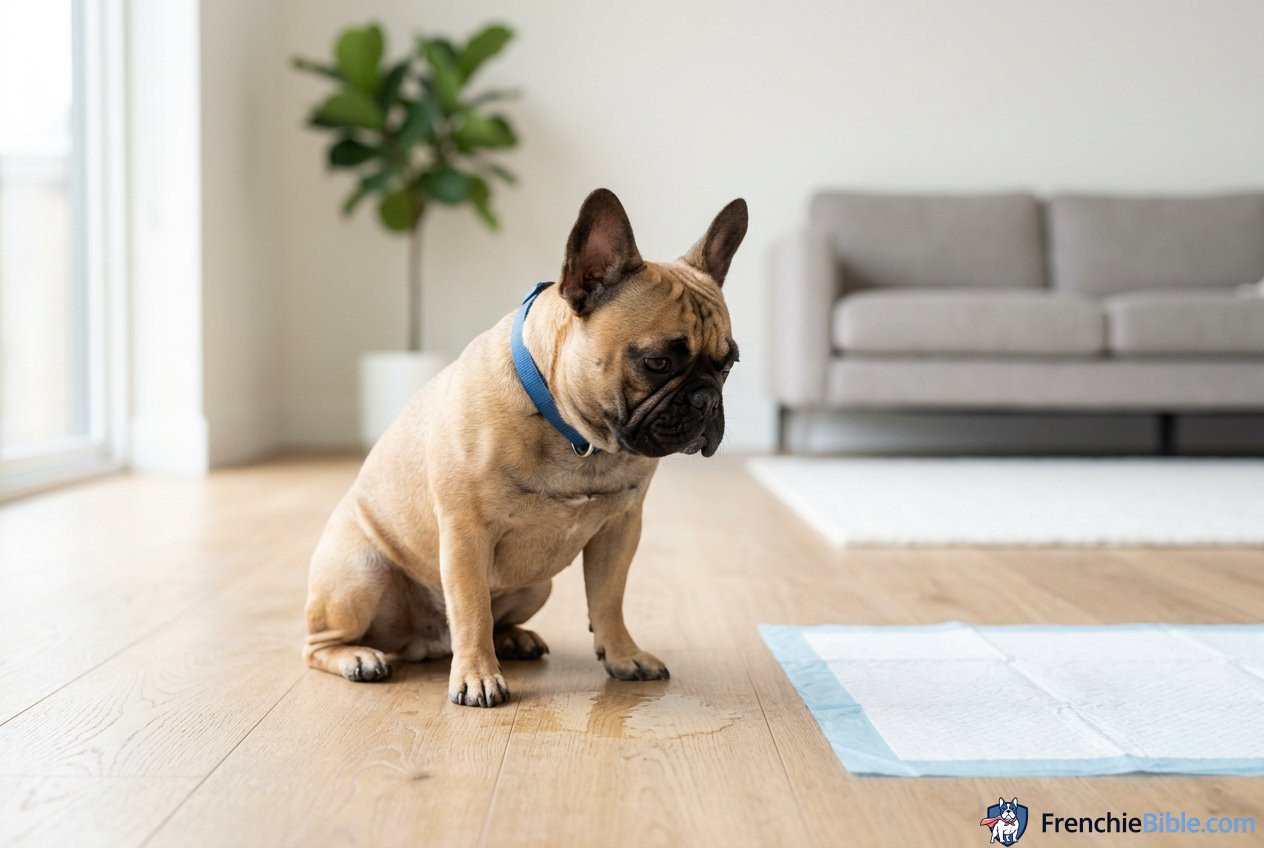
- The Stubborn Streak: Frenchies were bred to be companions, but they have a bulldog lineage. They do things on their own terms. If it is raining, snowing, or slightly chilly outside, a Frenchie will simply decide that the living room rug is a much more comfortable toilet.
- Small Bladders: Puppies physically lack the muscle control to hold their bladder for more than a few hours. A 10-week-old Frenchie simply cannot wait 8 hours while you are at work.
- Too Much Freedom Too Soon: This is the #1 mistake owners make. They give a new puppy free roam of the entire house. To a dog, only their immediate sleeping area is their “den.” The spare bedroom or the dining room? That’s fair game for a bathroom.
The Psychology of Crate Training
Crate training taps into the ancient, hardwired instinct of canine ancestors. Dogs naturally seek out small, dark, enclosed spaces (dens) to sleep and feel safe. More importantly, a dog will instinctively avoid soiling the area where they sleep.
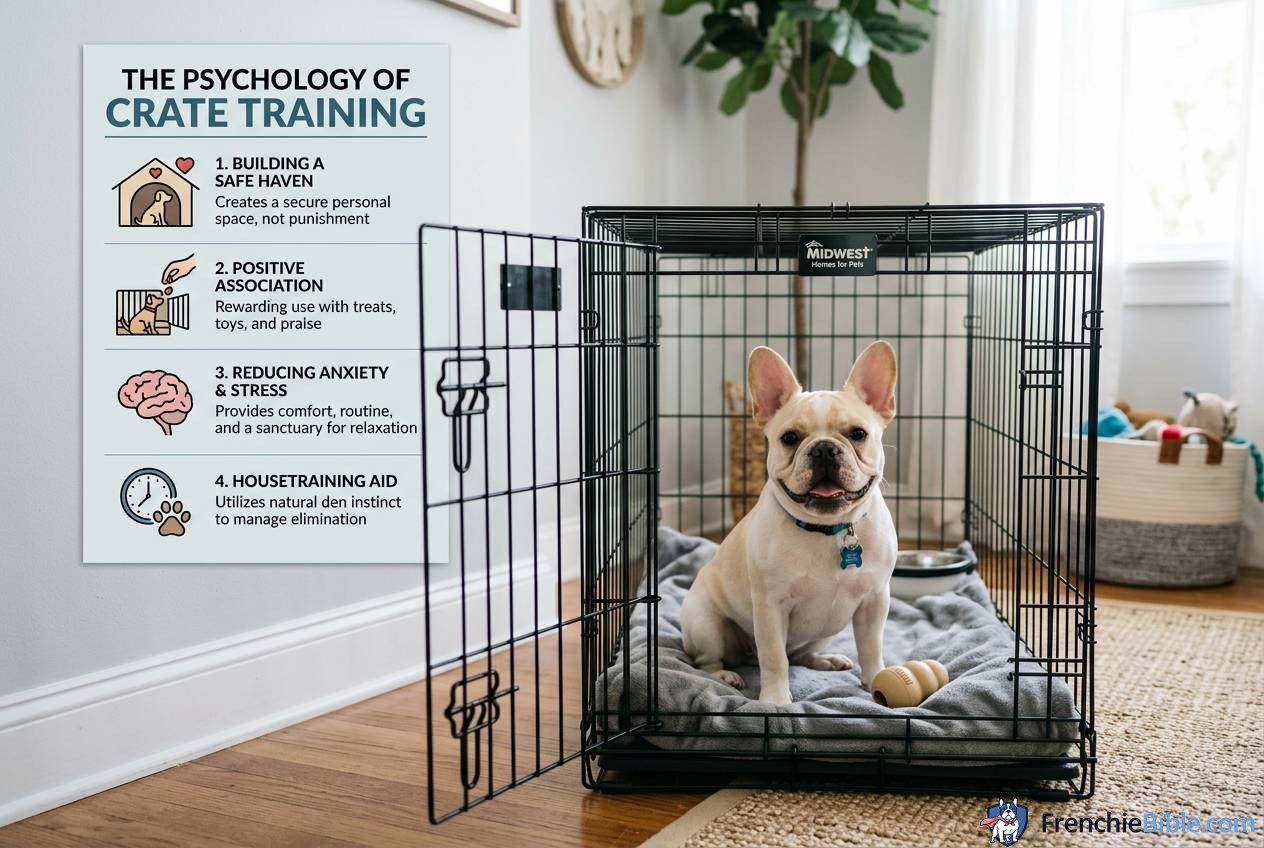
By restricting your Frenchie to a properly sized crate, you are utilizing this natural instinct to teach them bladder and bowel control. The crate teaches them to “hold it” until you release them to the designated potty area outside.
The Crate is NOT a Jail
We must shift our human perspective. A crate is not a prison cell; it is your dog’s private bedroom. It should be a place of immense comfort, safety, and reward. If you use the crate as a punishment (e.g., throwing them in there angrily when they chew a shoe), the crate training will fail spectacularly.
Step 1: Choosing the Right Crate
The most critical aspect of potty training with a crate is the size. If the crate is too big, your Frenchie will simply pee in the back corner and sleep comfortably in the front.
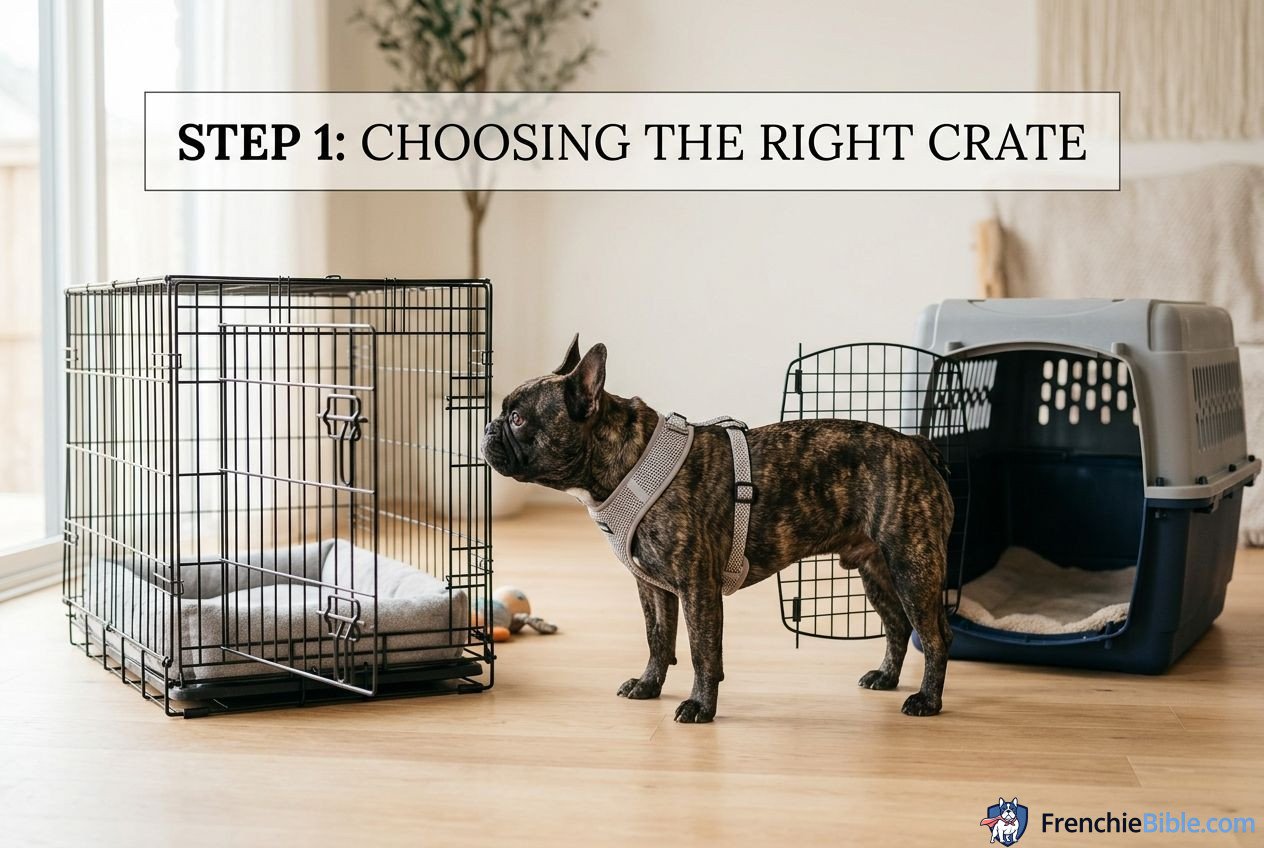
The Golden Rule of Crate Sizing: The crate should only be large enough for your French Bulldog to stand up, turn around, and lie down comfortably. That’s it. No extra room.
If you are buying a crate for a young puppy, purchase a wire crate that comes with a “divider panel.” You can place the divider to make the space very small for the puppy, and move it back as they grow into their adult size.
Step 2: Introducing the Crate (The “No Tears” Method)
Do not just shove your Frenchie into the crate, lock the door, and walk away. This will cause intense panic and crate anxiety. We must make the crate the best place on earth.
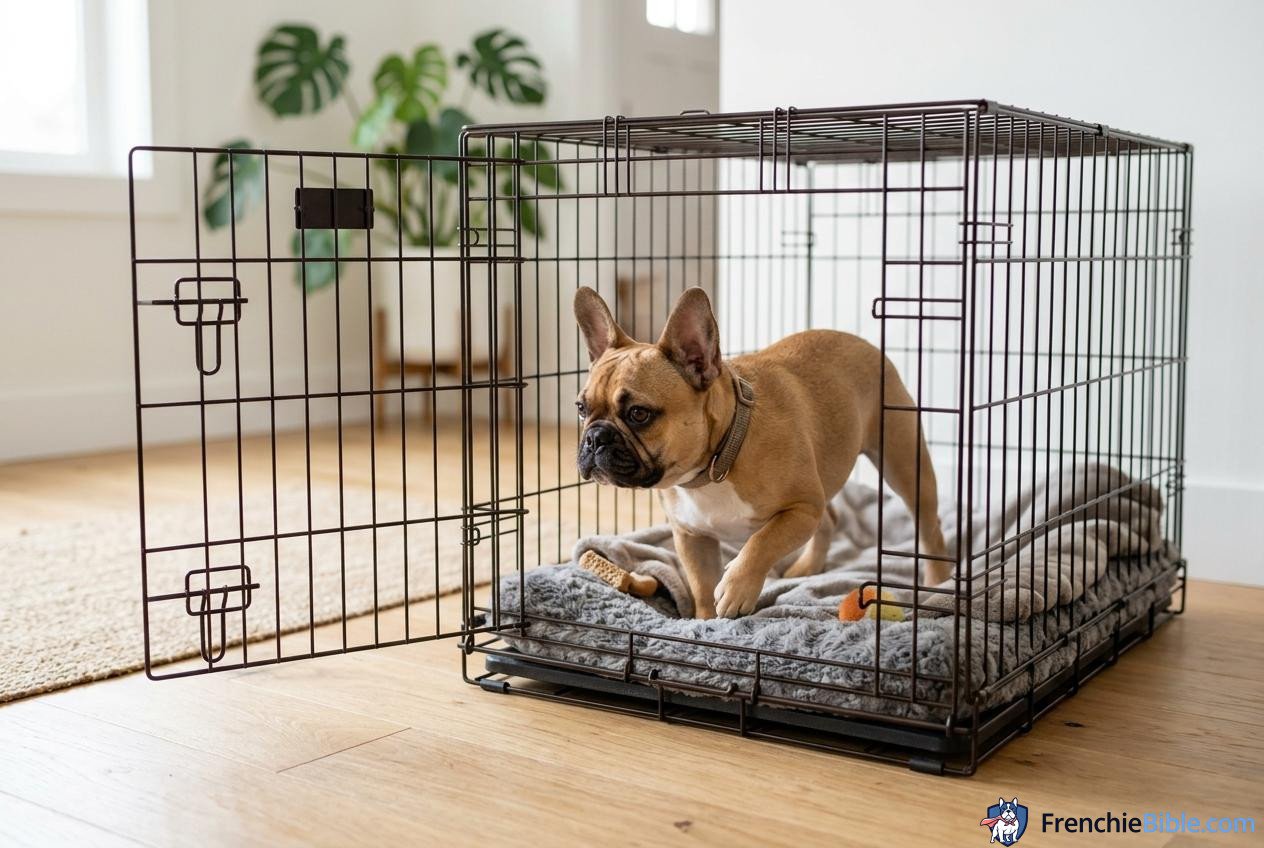
- The Open Door Policy: Place the crate in a high-traffic area (like the living room). Leave the door propped open. Put a soft blanket inside.
- The Hansel and Gretel Technique: Toss high-value treats (like tiny pieces of boiled chicken or freeze-dried liver) around the outside of the crate, and eventually toss a few inside. Let the dog walk in, eat the treat, and walk out. Do this for a few days without ever closing the door.
- Feed All Meals in the Crate: Place their food bowl at the very back of the crate. While they are eating, gently close the door. Open it the second they finish eating.
- Gradually Increase the Time: Once they are comfortable eating with the door closed, start leaving them in there for 5 minutes after they finish eating. Then 10 minutes. Toss a peanut butter-filled Kong toy in there to keep them occupied.
Step 3: The Crate Training Potty Schedule
Once your Frenchie accepts the crate, you must implement a militant schedule. This is where owners fail. You must be more stubborn than your dog.
The Rule of Thumb: A puppy can generally hold their bladder for one hour per month of age, plus one. So, a 3-month-old puppy can hold it for maximum 4 hours (during the day).
Here is the daily protocol:
- Morning Wake Up: The second you wake up, carry the puppy from the crate directly to the outside potty spot. Do not let their paws touch the floor inside the house.
- The Command: When you place them on the grass, say your cue word (e.g., “Go Potty”). Stand like a tree. Do not play with them.
- The Reward: The exact millisecond they finish peeing or pooping, throw a massive party. Give them a high-value treat and praise them enthusiastically.
- Free Time: If they peed/pooped outside, they get 30-45 minutes of supervised playtime inside the house.
- Back to the Crate: After playtime, they go back into the crate for a nap (1-2 hours).
- Repeat: When they wake up from the nap, take them directly outside again.
What if they don’t go potty outside?
If you stand outside for 10 minutes and they do not pee, calmly pick them up, bring them inside, and put them straight back into the crate for 15 minutes. Then try again. Do not give them free time in the house if they have an “empty tank.”
Handling the Crying
The first few nights will test your sanity. Your Frenchie will likely whine, bark, and scream in the crate. This is an extinction burst—they are testing boundaries.
As a vet, I tell you: Do not let them out while they are crying.
If you let them out when they scream, you have just taught them that screaming opens the door. You must wait for at least 5 seconds of silence before opening the crate. Cover the wire crate with a dark blanket to make it den-like. Play a white noise machine to drown out household sounds.
(Note: If they have been asleep for 3 hours and suddenly start crying in the middle of the night, they likely need to pee. Take them out on a leash, let them pee, and put them straight back in. No talking, no playing.)
Transitioning to Freedom
Crate training is not forever. It is a tool used until the dog proves they are 100% reliable. How do you know when to trust them?
Once your Frenchie has gone 4 straight weeks without a single indoor accident, you can begin expanding their territory. Start by leaving them out in a small, gated area (like the kitchen) for short periods. Gradually increase the space over months. If an accident happens, their freedom is revoked, and we go back to the strict crate schedule.
Conclusion
Potty training a French Bulldog requires immense patience, consistency, and a strict adherence to a schedule. The crate is your best ally in this battle. By utilizing their natural denning instinct, preventing them from making mistakes, and heavily rewarding outdoor success, you will eventually break the cycle of indoor accidents. Stay strong, be consistent, and soon you will have a perfectly house-trained companion.
Frequently Asked Questions (FAQs)
Q1: How long can I leave my adult French Bulldog in a crate during the day?
A1: An adult dog should not be crated for more than 8 hours a day. However, a Frenchie cannot go 8 hours without a bathroom break. If you work long hours, you must hire a dog walker or have a neighbor come over halfway through the day to let them out to potty and stretch their legs.
Q2: My Frenchie pees in his crate and sleeps in it. What do I do?
A2: First, ensure the crate is not too big. If it is correctly sized, your dog may have come from a pet store or puppy mill where they were forced to sleep in their own waste, losing their denning instinct. You will need to clean the crate thoroughly with an enzyme cleaner, remove all bedding, and take them out incredibly frequently to break the habit.
Q3: Should I put puppy pads inside the crate?
A3: Absolutely not. Putting a puppy pad in the crate teaches the dog that it is acceptable to urinate in their sleeping area. The goal of the crate is to teach them to hold it, not to give them a designated indoor toilet.
Q4: Is it cruel to crate a dog while I’m at work?
A4: No, it is not cruel if the dog has been properly crate trained and views it as their safe space. Many dogs sleep the entire time their owners are away. It keeps them safe from chewing electrical cords or eating toxic things while unsupervised.
Q5: Can I crate train an older, adopted French Bulldog?
A5: Yes! Old dogs can learn new tricks. The process is exactly the same, though it may take slightly longer if they have deeply ingrained bad habits. Move slowly, make the crate highly rewarding, and stick to the strict schedule.