
Disclaimer: The information provided in this article is for educational and informational purposes only. While I am an experienced breeder and veterinary professional, this content should not replace professional veterinary advice, diagnosis, or treatment. Always consult with a licensed veterinarian regarding your dog’s specific health needs.
As a veterinary professional who has spent a decade treating brachycephalic (flat-faced) breeds, and a preservation breeder myself, I frequently consult with families trying to make a difficult decision: “Should we get a French Bulldog or an English Bulldog?”
Related Reading: Training & Behavior | Frenchie Puppy Guide | Best Food for Frenchies
To the untrained eye, these two breeds might look like variations of the same dog—one is just smaller and has pointy ears. However, beneath the wrinkles and the comical expressions, they are vastly different animals in terms of size, energy levels, temperament, and, most importantly, health challenges.
Both breeds share a common ancestry, but over the last 150 years, they have diverged significantly. If you are torn between the robust, iconic English Bulldog and the sprightly, clownish French Bulldog, this comprehensive guide will break down the crucial differences to help you make an informed decision for your family and lifestyle.
The Tale of the Tape: Size and Physical Appearance
The most immediate and obvious difference between the two breeds is their physical footprint.
The English Bulldog: The Heavyweight
The English Bulldog is a tank. They are low to the ground, incredibly wide, and carry massive muscle mass.
- Weight: Adult males typically weigh between 50 and 55 pounds, while females weigh 40 to 50 pounds. However, in my clinic, it is not uncommon to see overweight English Bulldogs tipping the scales at 65+ pounds.
- Height: They stand 14 to 15 inches at the shoulder.
- Ears & Face: They have “Rose Ears” (folded backward, exposing the inner burr) and extensive, heavy facial wrinkles, a massive underbite, and a prominent “rope” (the heavy roll of skin over the nose).
The French Bulldog: The Compact Companion
The French Bulldog is essentially a miniaturized, more agile cousin.
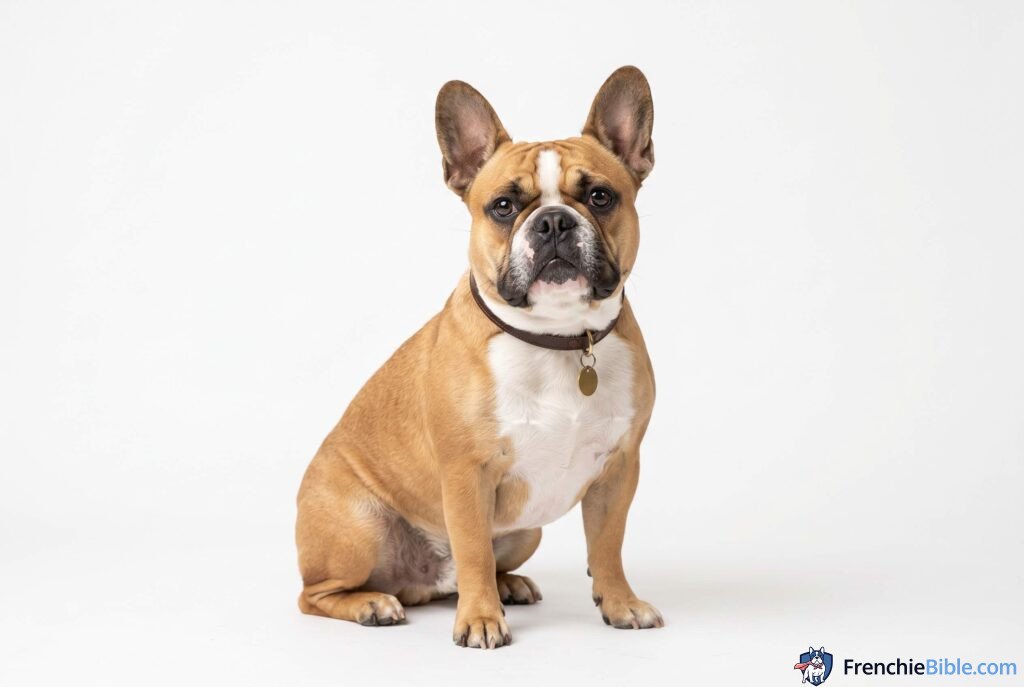
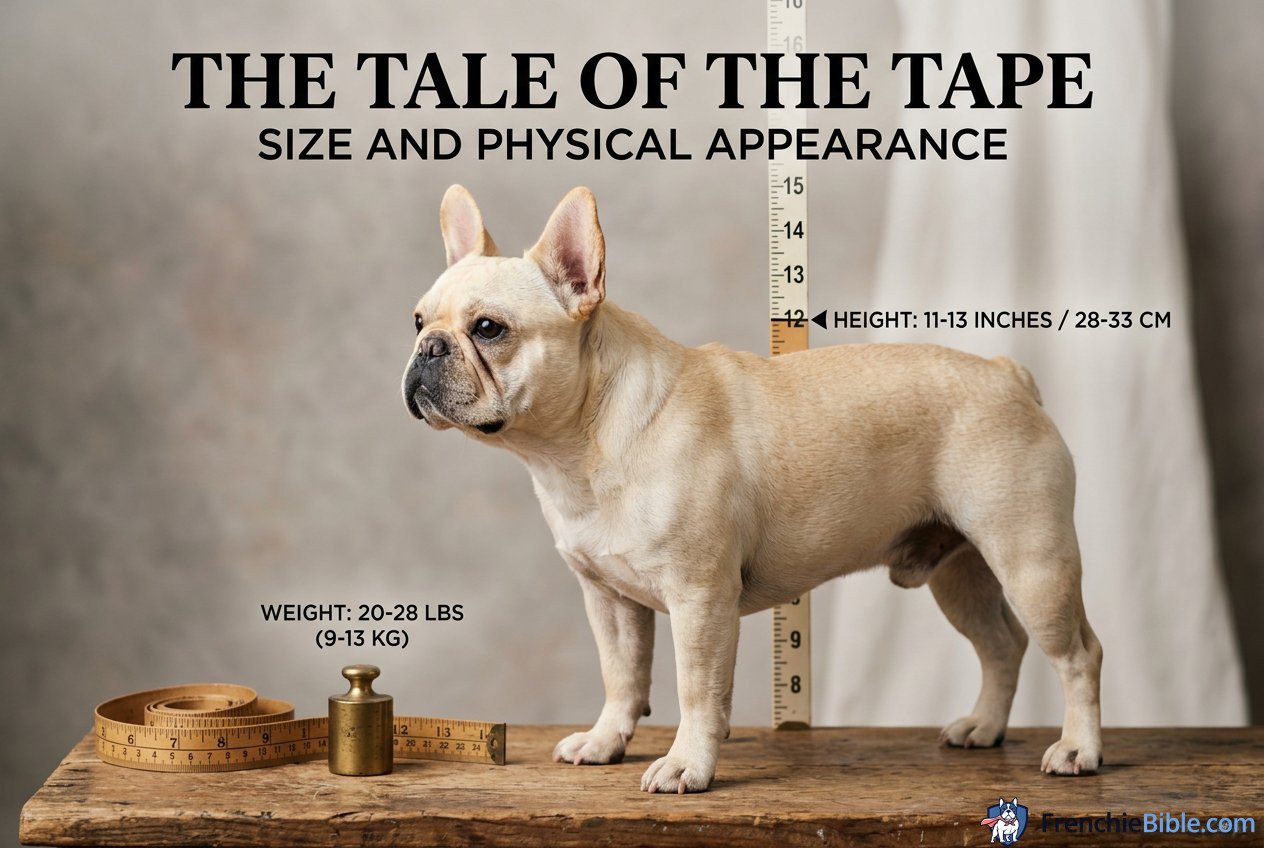
- Weight: The breed standard dictates they should not exceed 28 pounds. Most adults sit comfortably between 20 and 26 pounds.
- Height: They stand 11 to 13 inches at the shoulder.
- Ears & Face: Their defining feature is the “Bat Ear”—large, upright, and rounded at the top. They have fewer facial wrinkles than the English Bulldog and a slightly less exaggerated underbite.
The Verdict on Size: If you live in a small apartment with stairs, or need a dog you can physically pick up in an emergency, the French Bulldog is the clear winner. Lifting a struggling 55-pound English Bulldog into the back of an SUV is a two-person job.
Temperament and Energy Levels: The Couch Potato vs. The Clown
Both breeds are incredibly affectionate and make fantastic companions, but their daily energy output differs significantly.

The English Bulldog Temperament
English Bulldogs are the undisputed kings of the couch. They are famously docile, placid, and incredibly stubborn. An English Bulldog will bond deeply with its family but is often perfectly content to sleep for 18 hours a day. They are not dogs that will pester you for a walk; in fact, you often have to bribe them to go outside. They are courageous and can be fiercely protective of children in the home, but their default setting is “relaxed.”
The French Bulldog Temperament
Frenchies are often referred to as the “clowns of the dog world.” While they also love a good nap, they possess a much higher level of alertness and spunk compared to the English Bulldog. They are incredibly curious, playful, and thrive on being the center of attention. A Frenchie will follow you from room to room, desperate to be involved in whatever you are doing. They require more mental stimulation and interactive play than an English Bulldog.
The Verdict on Temperament: If you want an ultra-low-energy, immovable object that will snore gently at your feet all day, the English Bulldog is for you. If you want a quirky, interactive, silly shadow that wants to play before taking a nap, choose the Frenchie.
Health and Veterinary Care: The Brutal Reality
As a veterinary professional, this is the most critical section of the comparison. Both breeds are brachycephalic, meaning they both suffer from compressed skulls, shortened airways, and genetic anomalies. However, the scope of their health issues differs.

English Bulldog Health: A Veterinary Challenge
The English Bulldog is, unfortunately, one of the most structurally compromised breeds in existence. Their massive heads, heavy wrinkles, and wide-set shoulders create a perfect storm of medical needs.
- Skin and Fold Infections: The deep wrinkles on their face (especially the nose rope) and their tail pocket require daily cleaning to prevent severe yeast and bacterial infections.
- Orthopedic Nightmares: Due to their extreme width and heavy weight, English Bulldogs suffer tremendously from Hip Dysplasia, elbow dysplasia, and cruciate ligament (ACL) tears.
- Life Expectancy: Their lifespan is heartbreakingly short, averaging 8 to 10 years, with many succumbing to heart failure or cancer earlier.
French Bulldog Health: Spinal and Airway Focus
While Frenchies avoid some of the massive orthopedic weight-bearing issues of the English Bulldog, they have their own severe vulnerabilities.
- Spinal Fragility: Frenchies are highly prone to Intervertebral Disc Disease (IVDD). Their chondrodysplastic (dwarf) spines are fragile, and jumping off furniture can lead to ruptured discs and sudden paralysis of the hind legs.
- BOAS (Breathing Issues): While both breeds suffer from Brachycephalic Obstructive Airway Syndrome, Frenchies are highly active, meaning they are more likely to push themselves into respiratory distress and heatstroke during play.
- Life Expectancy: Frenchies generally outlive their English cousins, averaging 10 to 12 years (sometimes up to 14 years with excellent breeding and care).
The Verdict on Health: Neither breed is “healthy” by standard canine metrics. Both require owners who are financially prepared for massive vet bills and committed to purchasing pet insurance. However, the French Bulldog’s lighter frame generally makes them slightly more robust and gives them a longer lifespan.
Grooming and Daily Maintenance
- English Bulldogs require high maintenance. Their deep facial folds must be wiped out daily with medicated wipes and dried thoroughly. Their “tail pocket” (a deep crevice under the tail) must be cleaned constantly, or it will become infected and require surgical amputation.
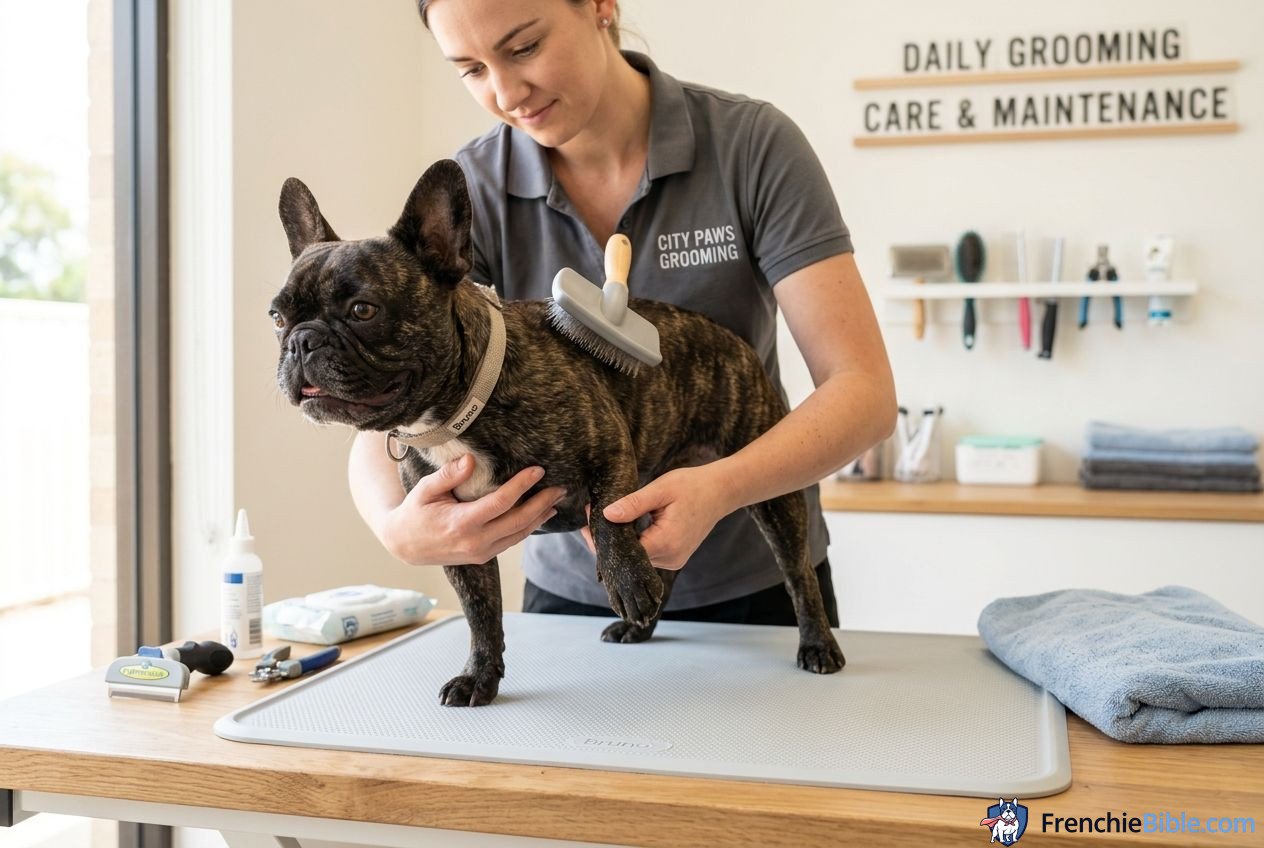
- French Bulldogs are moderate maintenance. They also have facial folds that need wiping, but they are shallower than the English Bulldog’s. They are notorious shedders (despite their short hair) and require regular brushing.
Conclusion
Choosing between a French Bulldog and an English Bulldog comes down to your physical capabilities, your home environment, and your tolerance for veterinary management.
If you want a majestic, heavy-duty, profoundly relaxed companion and are prepared for the daily hygiene maintenance their wrinkles require, the English Bulldog is a loyal friend unlike any other.
If you prefer a more portable, comical, and slightly more active dog—and are vigilant about protecting their fragile spine from jumping injuries—the French Bulldog will keep you laughing for over a decade.
Whichever you choose, buy from an ethical, health-testing preservation breeder, and invest in premium pet insurance on day one.
Frequently Asked Questions (FAQs)
1. Which breed is more expensive to buy?
Generally, French Bulldogs are more expensive upfront. A well-bred Frenchie usually costs between $3,500 and $6,000, while a well-bred English Bulldog typically ranges from $2,500 to $4,500. Both breeds require C-sections for birth, driving up the cost.
2. Which breed is better for apartment living?
The French Bulldog is the superior choice for an apartment. Their compact size (20-28 lbs) makes them easier to manage in small spaces, and if you live in a walk-up apartment, you can carry a Frenchie up the stairs. Carrying a 55-pound English Bulldog up stairs every day is not feasible for most people.
3. Do both breeds snore and drool?
Yes to snoring, but they differ on drooling. Because of their compromised airways, both breeds snore very loudly. However, English Bulldogs are notorious, heavy droolers due to their massive, loose jowls. French Bulldogs have tighter lips and generally do not drool unless they are overheated or staring at high-value food.
4. Are they good with other dogs?
Both breeds can be excellent with other dogs if socialized early. However, English Bulldogs can sometimes be same-sex aggressive or overly dominant due to their bulldog heritage. Frenchies are generally very dog-friendly, though their lack of a tail and snorting noises can sometimes be misread as aggression by other dog breeds.
5. Which breed is easier to train?
Neither breed will win an obedience competition, as both are incredibly stubborn. However, French Bulldogs are slightly easier to train because they are more food-motivated and have a higher desire to interact with their owners. English Bulldogs often simply refuse to move if they don’t see the point of the command.