

As a Frenchie owner, you are likely well-acquainted with the symphony of snorts, grunts, and snores that define the breed. However, finding a puddle of yellow bile or white foam on your floor is never a sound you want to hear.
Because of their unique brachycephalic (flat-faced) anatomy, vomiting in French Bulldogs is often more complex than in other breeds. It is frequently a crossroads between digestive health and respiratory mechanics. This comprehensive guide will help you decode your Frenchie’s symptoms and determine when home care is enough versus when you need to rush to the ER.
Related Reading: Training & Behavior | Frenchie Puppy Guide | Best Food for Frenchies
Legal Disclaimer: This article is for informational purposes only and does not constitute professional veterinary advice, diagnosis, or treatment. Always seek the advice of your veterinarian with any questions you may have regarding a medical condition. Never disregard professional advice because of something you have read online.
1. Decoding the Colors: What Your Frenchie’s Vomit is Telling You
In clinical terms, the appearance of the vomit provides crucial clues about where the issue originated.
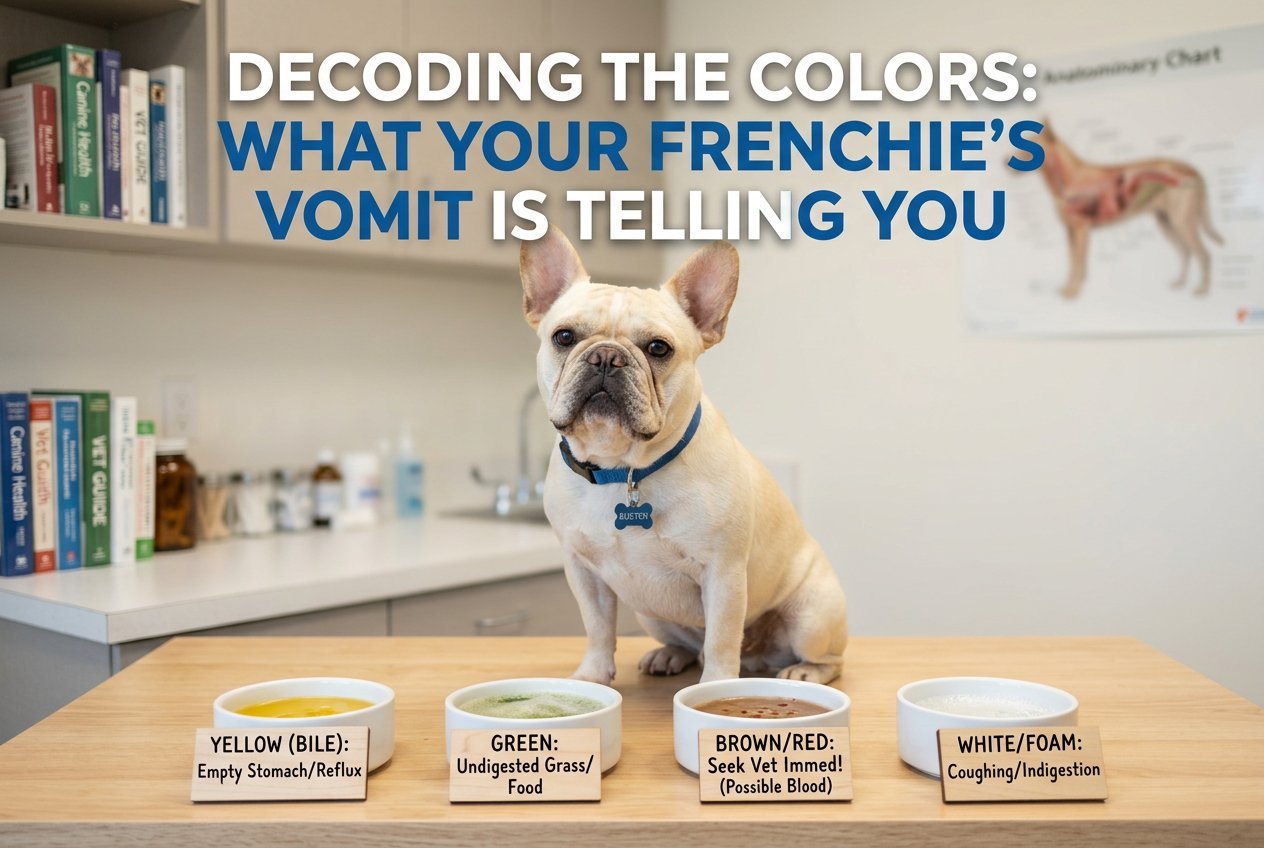
Vomiting Yellow Water (Bile)
Keywords: Bilious Vomiting Syndrome, Empty Stomach, Acid Reflux
If your Frenchie throws up yellow, frothy liquid—typically in the morning or late at night—this is likely bile. Bile is a digestive fluid produced by the liver. When a dog’s stomach remains empty for too long, bile can reflux from the small intestine into the stomach, causing irritation and subsequent vomiting.
- Practical Tip: This is often solved by feeding smaller, more frequent meals or giving a small snack right before bedtime.
Vomiting White Foam or Mucus
Keywords: Aerophagia, Excess Saliva, Respiratory Distress
White foam is usually a mixture of saliva and air. In French Bulldogs, this is heavily linked to Aerophagia (swallowing air). When a Frenchie pants heavily due to heat or excitement, their narrowed airways force them to gulp air, which then sits in the stomach and gets burped up as foamy mucus.
- Warning: If the white foam is accompanied by unproductive retching (trying to vomit but nothing comes out), this could be an emergency.
Regurgitation vs. Vomiting
It is vital to distinguish between the two. Regurgitation is a passive process where undigested food or liquid comes back up without abdominal effort. This is extremely common in Frenchies due to their esophageal structure and is often related to BOAS.
2. The Frenchie Anatomy: Why They Are Prone to Vomiting
To understand Frenchie health, we must look at their “Brachycephalic” traits.
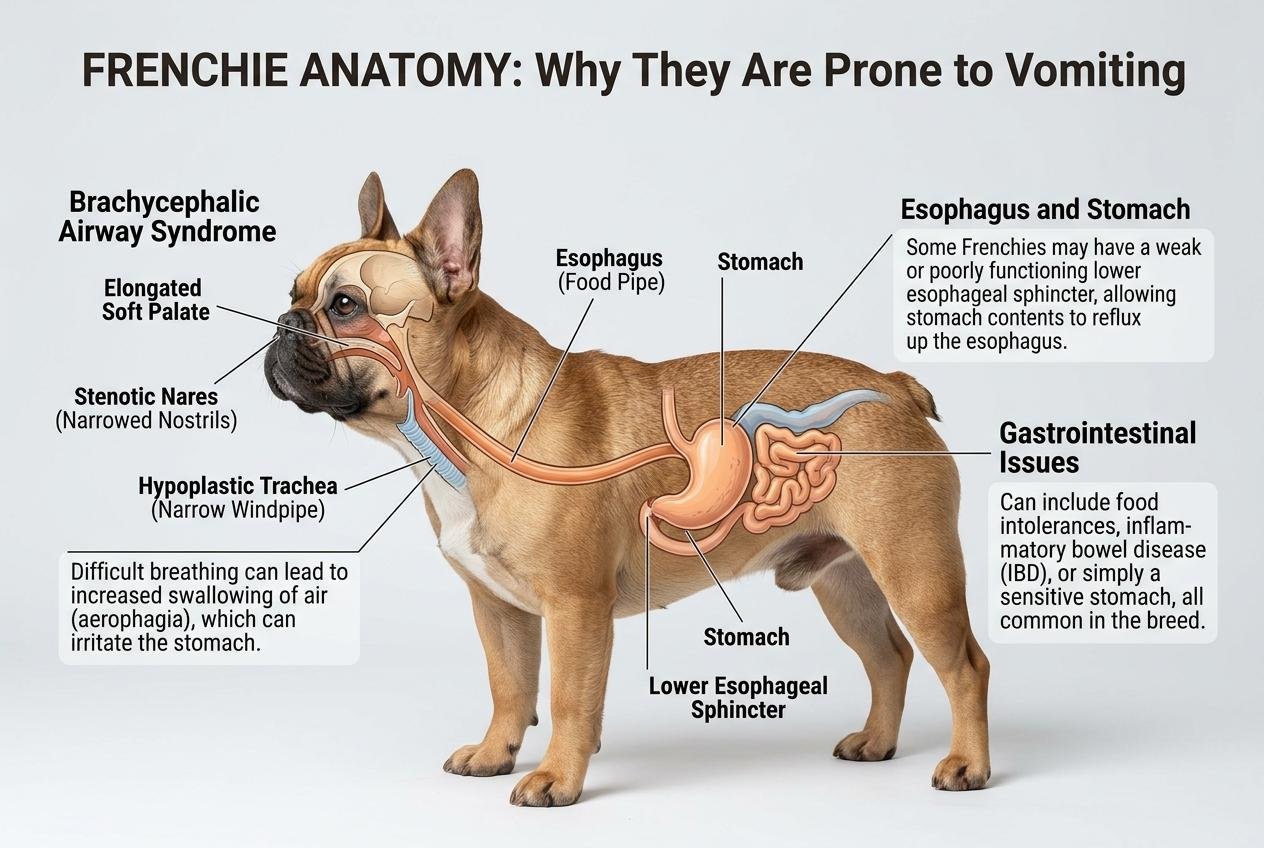
BOAS and Negative Pressure
Brachycephalic Obstructive Airway Syndrome (BOAS) involves narrow nostrils and an elongated soft palate. To breathe, Frenchies must create intense negative pressure in their chest. This pressure acts like a vacuum, pulling stomach acid and bile upward into the esophagus, leading to chronic inflammation and “reflux vomiting.”
Hiatal Hernias
Frenchies have a genetic predisposition to hiatal hernias, where a portion of the stomach slides back and forth into the chest cavity through the diaphragm. This anatomical defect is a leading cause of chronic regurgitation of white foam and food.
Pyloric Stenosis
This is a thickening of the muscle at the exit of the stomach. If your Frenchie experiences “projectile vomiting” hours after eating, the food may be blocked from entering the small intestine.
3. Red Flags: When Is It an Emergency?
While an occasional “tummy upset” happens, these 5 signs indicate a veterinary emergency:

- Frequency: Vomiting more than 3 times in a 24-hour period or being unable to keep water down.
- Unproductive Retching: Attempting to vomit but only producing a small amount of foam. This can indicate GDV (Bloat), which is life-threatening.
- Hematemesis (Blood): Bright red streaks or dark “coffee ground” appearances in the vomit.
- Lethargy and Pale Gums: If your dog is weak, unresponsive, or has white/grey gums, they may be in shock.
- Suspected Obstruction: Frenchies are notorious for swallowing non-food items. If a toy or sock is missing and the vomiting starts, go to the ER immediately for an X-ray.
4. Professional Home Care & Management
If the vomiting is mild and your Frenchie is still energetic, consider these steps:
The “Bland Diet” Protocol
- Fast with Caution: Healthy adult Frenchies can fast for 12 hours to let the gut rest. Do not fast puppies, as they can suffer from dangerous drops in blood sugar.
- Hydration: Offer ice chips or small spoonfuls of unflavored electrolytes (like Pedialyte) rather than a full bowl of water to prevent gulping.
- The 70/30 Rule: Once vomiting stops, feed a bland diet of 70% boiled white rice and 30% boiled chicken breast (no skin, no bones, no seasoning) for 2-3 days.
Nutritional Support
- Probiotics: Use high-quality canine-specific probiotics to restore gut flora.
- Digestive Enzymes: Can help Frenchies with sensitive systems break down proteins more efficiently.
5. Prevention: The Long-Term Success Plan
- Elevated Feeding: Use an elevated bowl stand to allow gravity to help food travel down the esophagus.
- Slow Feeders: Prevent “scarf and barf” by using slow-feed bowls or lick mats to reduce air swallowing.
- Weight Management: An overweight Frenchie has more difficulty breathing, which directly increases gastrointestinal reflux. Keep them lean!
- **Stress