

Disclaimer: The information provided in this comprehensive guide is for educational and informational purposes only. It is not intended as a substitute for professional veterinary advice, diagnosis, or treatment. As a practicing veterinarian and breeder, I always recommend seeking the direct advice of your local veterinarian with any questions you may have regarding your pet’s medical condition or specific health needs.
Introduction
In the bustling hearts of global metropolises—from the towering skyscrapers of New York City and the chic boulevards of Paris to the neon-lit streets of Tokyo and the sprawling apartments of London—one canine face reigns supreme. It is a face characterized by a smushed nose, soulful eyes, and unmistakable, oversized “bat ears.” The French Bulldog, affectionately known as the “Frenchie,” has not just climbed the ranks of canine popularity; it has completely shattered the ceiling. In 2022, the French Bulldog officially dethroned the Labrador Retriever, ending its record-breaking 31-year reign as the American Kennel Club’s (AKC) most popular breed. By 2023, the Frenchie solidified its position at the absolute #1 spot, proving this is not a passing trend but a fundamental shift in our relationship with companion animals.
Related Reading: Training & Behavior | Frenchie Puppy Guide | Best Food for Frenchies
But why? What is it about this compact, muscular, and somewhat comical-looking dog that has captured the hearts of urbanites worldwide? As a French Bulldog specialist veterinarian, a dedicated preservation breeder, and an SEO content director analyzing pet ownership trends, I have witnessed this phenomenon firsthand from multiple angles. The answer lies in the perfect intersection of modern urban lifestyles and the Frenchie’s unique biological and psychological traits. They are, quite simply, the “ceiling” of apartment dogs—the gold standard against which all other urban canine companions are measured.
This comprehensive 3,000+ word guide will deep-dive into the anatomy, temperament, health considerations, and daily realities of sharing a small living space with a French Bulldog. Whether you are a busy professional contemplating adding a dog to your high-rise apartment or an existing owner looking to optimize your Frenchie’s urban life, this article will provide you with unparalleled expert insights.
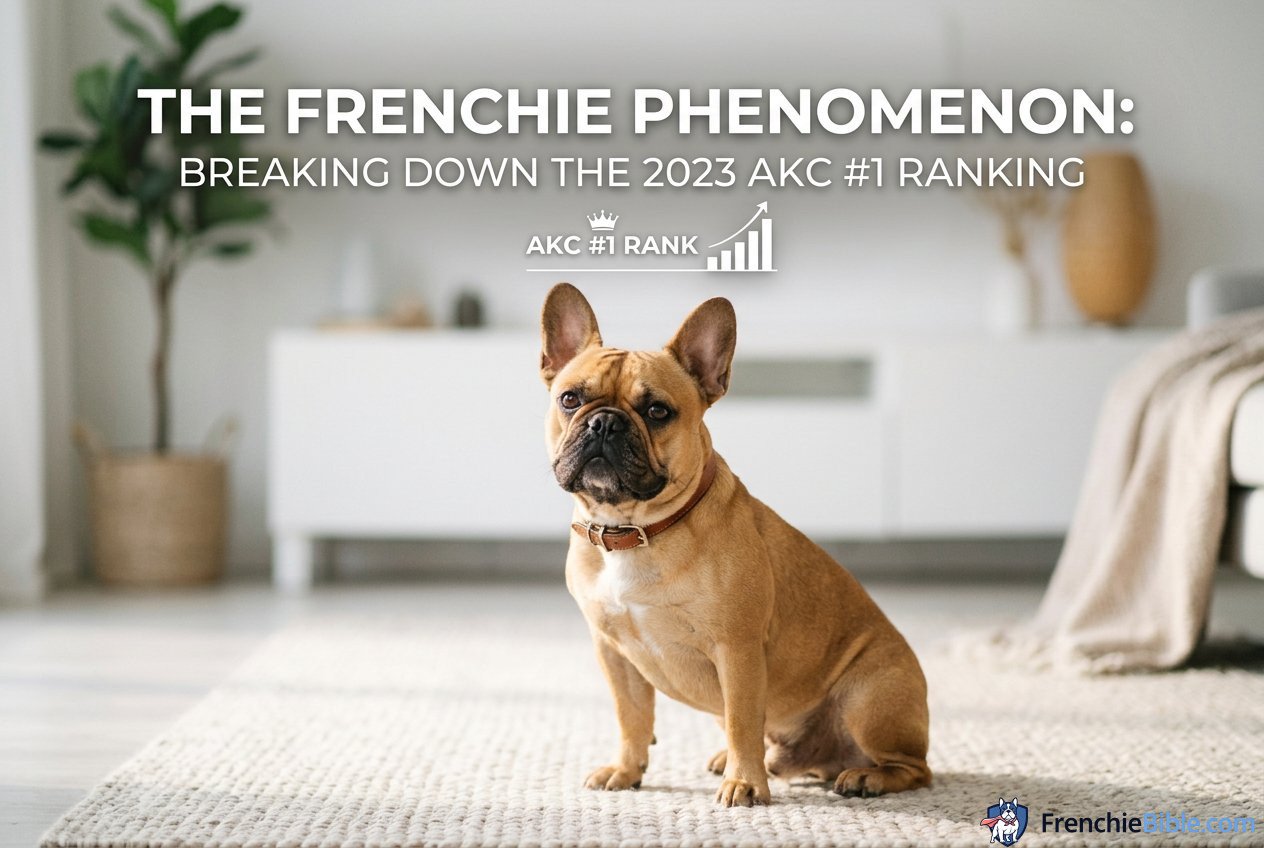
The Frenchie Phenomenon: Breaking Down the 2023 AKC #1 Ranking
To understand the French Bulldog’s dominance in 2023, we must first look backward. The breed’s journey is a fascinating tale of adaptation and resilience. Originating in England as a toy-sized version of the Bulldog, they were the favored companions of Nottingham lacemakers during the Industrial Revolution. When these artisans relocated to France in search of work, they brought their diminutive bulldogs with them. In the cafes and artistic circles of Paris, crosses were likely made with local ratters and terriers, eventually resulting in the distinct “bat-eared” Frenchie we know today. They were the dogs of the working class that quickly caught the eye of Parisian high society, eventually charming their way across the Atlantic to the United States.
Fast forward to the 21st century. The global population is increasingly urbanized. Real estate in major cities is at a premium, meaning living spaces are shrinking. The sprawling suburban backyards that accommodated high-energy breeds like Golden Retrievers, German Shepherds, and Pointers are becoming less common for the average young professional or city-dwelling family.
Enter the French Bulldog. The 2023 AKC #1 ranking is not an anomaly; it is a direct reflection of demographic shifts. Millennials and Gen Z, who make up a massive segment of new pet owners, are delaying having children and instead pouring their parental instincts into pets. They want a dog that can integrate seamlessly into a fast-paced, space-limited, and highly social lifestyle.
Furthermore, the impact of social media cannot be understated. Frenchies are incredibly photogenic, emotive, and naturally comedic. Their expressive faces and quirky behaviors make for viral content on Instagram and TikTok. Celebrities, influencers, and athletes are frequently photographed with their Frenchies, cementing the breed’s status as a luxury lifestyle icon. However, as a veterinary professional, I must emphasize that underneath this trendy exterior is a living, breathing creature with highly specific needs that must be respected.
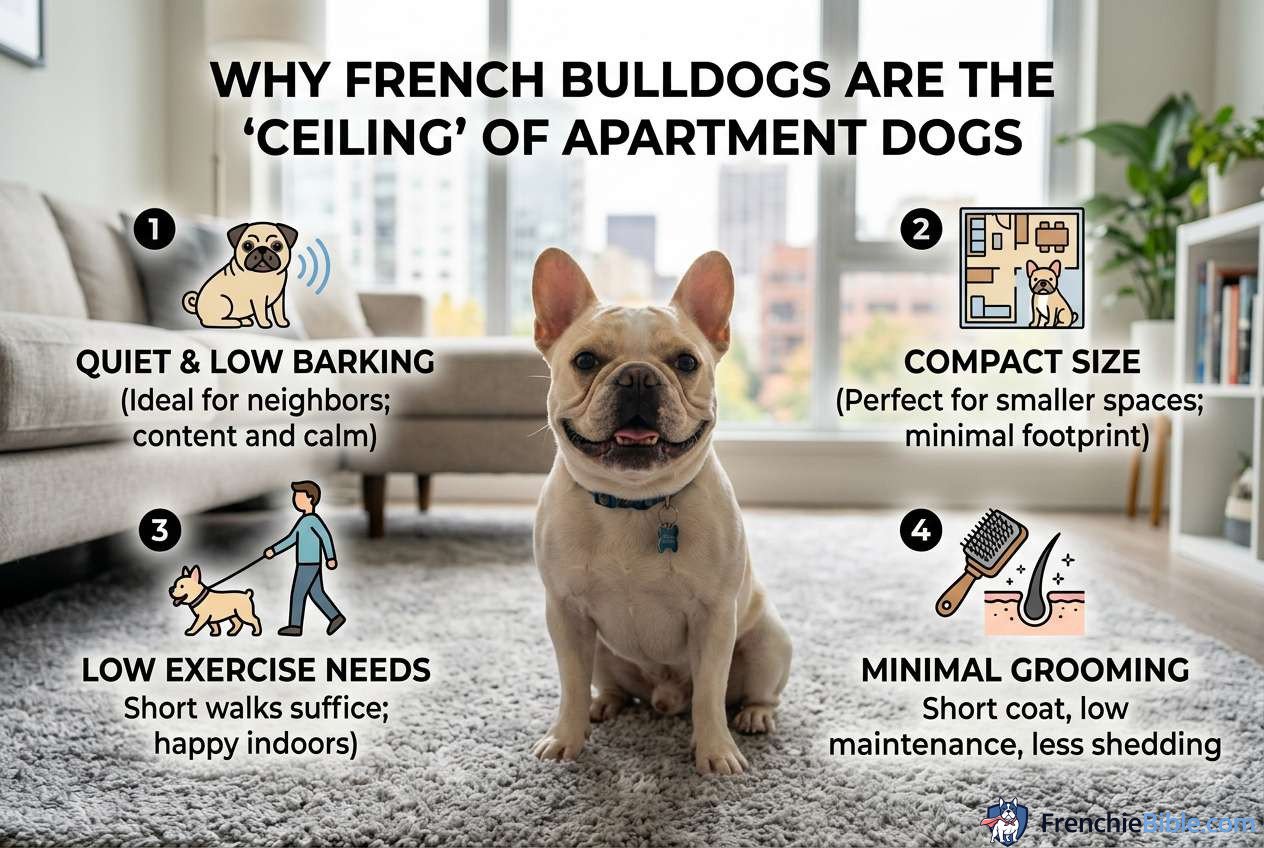
Why French Bulldogs Are the “Ceiling” of Apartment Dogs
When we say the French Bulldog is the “ceiling” of apartment dogs, we mean that they represent the pinnacle of suitability for small-space living. They check almost every box a city dweller could have for a canine roommate. Let us break down the specific attributes that make them the ultimate urban companions.
Compact Size with a Sturdy Build
Space is the most precious commodity in an apartment. Large breeds simply take up too much physical and mental room in a 600-square-foot flat. French Bulldogs are considered a small breed, typically weighing between 16 and 28 pounds (7.5 to 12.5 kg) and standing 11 to 13 inches tall at the shoulder.
However, unlike toy breeds (such as Chihuahuas, Pomeranians, or Italian Greyhounds), Frenchies are not delicate. They possess a heavy-bone structure, a broad chest, and a muscular physique. This sturdiness is a massive advantage in a city environment. They are robust enough to confidently navigate crowded sidewalks without the constant fear of being stepped on and injured. They aren’t easily blown over by a gust of wind between skyscrapers, and they possess a certain “gravitas” that makes them feel like a “big dog in a small package.” You get the robust, solid feel of a mastiff-type breed without the spatial requirements.
Low Exercise Requirements
This is perhaps the most significant factor driving their popularity among working professionals. The reality of modern city life often involves long working hours and exhausting commutes. Many people love the idea of a dog but realistically cannot commit to the two hours of vigorous running or hiking required by a Border Collie or a Husky.
French Bulldogs are famously low-energy. They are brachycephalic (flat-faced), which fundamentally alters their respiratory capacity and heat tolerance. They are not built for endurance running or intense physical exertion. For a healthy adult Frenchie, two short to moderate walks a day—typically 15 to 25 minutes each—along with some indoor playtime, are entirely sufficient to keep them physically and mentally stimulated.
They are sprinters, not marathon runners. They might get the “zoomies” and sprint around your living room coffee table for three minutes, but immediately afterward, they will collapse on the sofa for a three-hour nap. This low-maintenance exercise profile is a perfect match for an apartment dweller whose access to expansive green spaces might be limited.
The Quiet Companions: Minimal Barking
In apartment buildings, thin walls and shared corridors are a fact of life. A dog that barks incessantly at every footstep in the hallway or every siren outside will quickly make you the most hated tenant in the building, potentially leading to eviction or severe neighbor disputes.
French Bulldogs are exceptionally quiet dogs. While individual personalities vary, as a breed, they are not prone to nuisance barking. They do not have the high-alert guarding instincts of a terrier or the vocal nature of a hound. A Frenchie typically only barks to alert you to something genuinely unusual, or when they are highly excited during play.
Instead of communicating through loud barking, Frenchies utilize a delightful repertoire of grunts, snorts, snuffles, sighs, and occasional “yodels” or “screams” when they are feeling particularly dramatic or ignored. These low-decibel vocalizations are endearing to owners and, crucially, completely inaudible to your neighbors through the walls.
Adaptability and the “Chill” Temperament
French Bulldogs are incredibly adaptable to their owner’s routine. They are quintessential “velcro dogs”—they simply want to be wherever you are. If you are having a lazy Sunday binge-watching television, your Frenchie will be thrilled to snooze on your lap for eight hours straight. If you want to walk down to the local patio cafe for brunch, they will happily trot alongside you and sit under the table, soaking in the attention of passersby.
They do not require a strict, militaristic routine to remain sane. As long as their basic needs for food, potty breaks, and profound human affection are met, they are incredibly chill and easygoing roommates. They don’t pace the apartment out of boredom or destroy furniture from pent-up working drive (assuming they are past the puppy chewing phase). Their life goal is comfort and companionship.
The Urban Lifestyle Match: A Veterinarian & Breeder’s Perspective
Taking a dog into a densely populated urban environment presents unique challenges. The sights, sounds, smells, and physical obstacles of a city are vastly different from a quiet suburb. Here is how the Frenchie handles the concrete jungle.

Navigating City Streets and High-Rises
A well-socialized Frenchie thrives in the city. Their confident, slightly stubborn, but generally amiable nature makes them fantastic urban explorers.
Elevator rides are a non-issue. Unlike some breeds that may feel claustrophobic or reactive in the confined space of an elevator, a Frenchie usually uses the opportunity to solicit pets from your neighbors.
When it comes to walking on busy streets, their low center of gravity and steady temperament serve them well. However, as an owner, you must remain vigilant. Because they are so small and curious, they might try to scavenge discarded food on the sidewalk (a common city hazard). Their brachycephalic nature also means they should always be walked on a well-fitted harness, never a neck collar. A collar puts dangerous pressure on their fragile trachea and restricts airflow, which is a critical risk for a flat-faced breed. A high-quality, Y-shaped harness distributes pressure across their sturdy chest, ensuring safe and comfortable city walks.
Traveling and Socializing with a Frenchie
City living often involves public transport, taxis, and frequenting cafes and pubs. The Frenchie’s portable size makes them incredibly convenient for this lifestyle. Many modern cities have pet-friendly subway systems (often requiring the dog to be in a carrier, which is manageable for a Frenchie’s size) or allow dogs on buses.
They are the ultimate “patio dogs.” Their striking appearance and generally friendly demeanor make them magnets for attention. A French Bulldog sitting outside a cafe will invariably draw smiles and conversation. They generally get along well with other dogs and are famously good with humans, often displaying a comical, clownish personality that endears them to strangers.
For longer travel, their small size historically made them excellent candidates for in-cabin air travel. However, a crucial veterinary disclaimer is needed here: Due to the respiratory risks associated with brachycephalic breeds, many major airlines have instituted strict bans on French Bulldogs flying in the cargo hold, and some have even restricted them from the cabin. If you are a jet-setting urbanite who plans to fly frequently with your dog, you must meticulously research current airline policies regarding flat-faced breeds. For road trips or train journeys, however, they are exceptional and peaceful travel companions.
Health and Care in an Apartment Setting: What You Must Know
As a veterinarian and ethical breeder, this is the most critical section of this guide. The very physical traits that make the French Bulldog so cute and suited for apartments (the flat face, the compact body) are intimately linked to severe health vulnerabilities. Owning a Frenchie requires a proactive, educated, and financially prepared owner.
Temperature Control is Non-Negotiable
This cannot be overstated: French Bulldogs cannot tolerate heat or high humidity. Their brachycephalic (short-skulled) anatomy means their nasal passages are compressed, their soft palates are often elongated, and their tracheas can be narrow. This condition, collectively known as Brachycephalic Airway Obstruction Syndrome (BOAS), drastically impairs their ability to cool themselves through panting.
In a city apartment, especially during the summer, temperature control is a matter of life and death. You cannot leave a French Bulldog in an un-air-conditioned apartment on a hot day. They will suffer from heatstroke incredibly quickly, which can be fatal in a matter of minutes.
Urban owners must:
1. Guarantee reliable air conditioning in their apartment.
2. Only walk their Frenchie early in the morning or late at night during summer months. The pavement in cities absorbs heat and can burn their paws, while the ambient heat will overwhelm their respiratory system.
3. Invest in cooling mats, cooling vests, and always carry portable water bowls during walks.
If you are an apartment dweller without AC, or if you enjoy spending your summer days hiking in the sun, a French Bulldog is absolutely the wrong breed for you.
Joint and Spine Health: The IVDD Risk
French Bulldogs are a chondrodysplastic breed—they are essentially canine dwarves with normal-sized bodies and shortened limbs. This genetic mutation affects the development of their cartilage and bones, making them highly susceptible to Intervertebral Disc Disease (IVDD).
IVDD occurs when the cushioning discs between the vertebrae of the spine harden, bulge, or burst, pressing on the spinal cord. This causes excruciating pain, nerve damage, and frequently, sudden paralysis of the hind legs.
In an apartment, the biggest enemies to a Frenchie’s spine are your furniture and your stairs. Jumping up onto or down from a high bed or a sofa exerts massive, sudden concussive force on their fragile spines. Over time, or sometimes in a single bad jump, this can trigger an IVDD episode.
To protect your apartment Frenchie, you MUST:
1. Provide ramps or pet stairs leading up to your bed and sofa, and strictly train them to use them from puppyhood.
2. Absolutely forbid jumping off furniture.
3. Use extreme caution on stairs. If you live in a walk-up apartment (no elevator) above the second floor, you should carry your adult Frenchie up and down the stairs to minimize spinal wear and tear.
4. Support their chest and hindquarters simultaneously whenever you pick them up. Never lift a Frenchie by their front armpits alone.
Weight Management: The Obesity Trap
Because they require so little exercise and love to lounge, French Bulldogs are highly prone to obesity. Furthermore, their pleading, soulful eyes make them master manipulators when it comes to begging for human food.
In a small apartment, extra weight is a death sentence for a Frenchie. Every single extra pound exacerbates their breathing difficulties (fat accumulates around the airway, worsening BOAS) and adds disastrous stress to their already vulnerable spine and joints.
As a vet, I see countless overweight Frenchies. You must be ruthless with their diet. Feed them a high-quality, scientifically formulated diet in strictly measured portions. Treats should make up no more than 10% of their daily caloric intake. Carrots, blueberries, or green beans make excellent low-calorie snacks. If you cannot easily feel your Frenchie’s ribs without pressing hard, and if they do not have a defined waistline when viewed from above, they are overweight and need immediate dietary intervention.
The Cost of Urban Royalty: Financial Considerations
Owning a French Bulldog in a city is a significant financial undertaking. They are often referred to as “luxury dogs” not just because of their high initial purchase price, but due to their ongoing maintenance costs.
- Initial Purchase Price: An ethically bred French Bulldog puppy from a preservation breeder who performs comprehensive health testing will cost anywhere from $3,500 to $8,000 USD (or equivalent in your local currency). If you see a Frenchie advertised for $1,000, run away. You are likely supporting a puppy mill or a backyard breeder, and you will pay tenfold in veterinary bills later.
- Veterinary Care and Insurance: This is non-negotiable. Pet insurance is mandatory for French Bulldog owners. Because of their predisposition to BOAS, IVDD, skin allergies, and gastrointestinal issues, veterinary bills can be astronomical. An emergency IVDD surgery (hemilaminectomy) by a board-certified neurologist can easily cost $8,000 to $12,000. BOAS surgery (nares resection and soft palate shortening) ranges from $2,500 to $5,000. You must have a robust insurance policy with high limits activated the day you bring the puppy home.
- Premium Nutrition and Gear: They often require specialized diets for allergies or sensitive stomachs. You will also be investing in high-quality harnesses, orthopedic beds, ramps, and cooling gear.
- City Specific Costs: Factor in the cost of dog walkers if you work long hours, premium pet sitting, and potential pet rent or pet deposits required by your apartment management.
Preparing Your Apartment for a French Bulldog
If you have decided that a Frenchie is the right fit, here is how you prepare your urban sanctuary for their arrival:
- Puppy-Proofing: Frenchie puppies are curious and will chew. Remove all toxic plants, secure loose electrical cords, and store cleaning supplies and medications in high, locked cabinets. Because they are low to the ground, they will find things you dropped under the sofa months ago.
- The Safe Zone: Create a designated, safe area using a playpen or a properly sized crate. This should include their bed, water, and safe chew toys. This is crucial for potty training and giving them a safe retreat when they are overwhelmed.
- Temperature Tech: Ensure your AC is serviced. Consider setting up a smart thermostat so you can monitor and control the apartment’s temperature remotely while you are at work.
- Furniture Modifications: Install and train them on sofa and bed ramps before they learn the bad habit of jumping.
- Flooring Safety: Hardwood or tile floors can be slippery and dangerous for their joints, especially when running. Invest in non-slip rugs or runners in high-traffic areas of your apartment to give them traction and protect their developing hips and spine.
Ethical Breeding: The Key to a Healthy City Companion
As a preservation breeder, I must use this platform to address the dark side of the French Bulldog’s explosive popularity. The AKC #1 ranking has attracted thousands of unscrupulous breeders looking to make a quick profit at the expense of the dogs’ health.
They are breeding for extreme, unacknowledged colors (“fluffy,” “merle,” “isabella,” “hairless”) or extreme sizes (“micro” or “teacup” Frenchies). These fad trends are genetic disasters, compounding the breed’s existing health issues with deafness, blindness, severe skin diseases, and even more compromised airways.
If you are bringing a Frenchie into your apartment, you have a moral obligation to source the dog ethically.
- Demand Health Testing: A reputable breeder will openly share the OFA (Orthopedic Foundation for Animals) results for the parents’ hearts, patellas, and eyes.
- Spinal X-Rays: Crucially, ask if the breeder x-rays the spines of their breeding dogs to check for hemivertebrae and other spinal anomalies.
- BOAS Grading: Progressive breeders are now utilizing respiratory function grading schemes.
- Meet the Parents: You must see the conditions the dogs are raised in and assess the breathing and temperament of the mother.
An ethically bred Frenchie is a masterpiece of companionship. A poorly bred one is a tragedy of suffering and financial ruin. Choose wisely.
Conclusion
The French Bulldog did not become the world’s most popular dog breed by accident. For the modern urban dweller living in an apartment, they represent the absolute zenith of canine companionship. They offer the substantial, comforting presence of a larger dog wrapped in a compact, low-maintenance, and irresistibly charming package.
They will sleep while you work, quietly entertain you with their clownish antics, and draw smiles from strangers on city streets. However, this urban royalty comes with strict conditions. They demand air conditioning, unwavering protection for their fragile spines, strict weight management, and significant financial preparedness.
If you can meet their unique physiological needs, a French Bulldog will turn your small apartment into a home overflowing with character, loyalty, and deep, quiet love. They truly are the ceiling of apartment dogs.
Frequently Asked Questions (FAQ)
Can French Bulldogs be left alone during work hours?
Yes, but within reason. Adult French Bulldogs are generally low-energy and will sleep for the majority of the day while you are at work. A standard 8-hour workday is manageable for a healthy adult, provided they are given a good walk in the morning and immediately upon your return. However, puppies cannot hold their bladders that long and require midday breaks. If you work exceptionally long hours (10-12 hours regularly), you must budget for a midday dog walker to allow them to relieve themselves and break up the monotony.
Are French Bulldogs difficult to potty train in an apartment?
Frenchies can be notoriously stubborn, which sometimes translates to slower potty training compared to breeds like Poodles or Golden Retrievers. In a high-rise apartment without immediate access to a backyard, potty training requires immense consistency. Crate training is highly recommended. Many apartment dwellers successfully use indoor potty solutions like fresh grass patches (e.g., Fresh Patch) on their balconies for convenience during the puppy phase or during extreme weather, but outdoor training should be the ultimate goal.
do french bulldogs shed a lot?
While they have a short, single coat, French Bulldogs do shed. It is not the massive clumps of fur you see from a Husky, but they shed small, coarse hairs continuously year-round, with heavier shedding periods in the spring and fall. Because the hairs are short and stiff, they can weave themselves into apartment upholstery and clothing. Regular brushing (1-2 times a week) with a rubber grooming mitt will significantly reduce the hair in your apartment.
How much does a French Bulldog cost?
The initial purchase price for an ethically bred, health-tested French Bulldog from a reputable breeder typically ranges from $3,500 to $8,000 USD. “Rare” or “fad” colors often sold by unethical breeders can be priced even higher, but these should be avoided due to severe health risks. Beyond the purchase price, owners must budget for high veterinary costs, mandatory premium pet insurance (often $70-$150+ per month), high-quality food, and specialized gear like harnesses and ramps.
Are they good with children in a small space?
Generally, yes. French Bulldogs are known for being affectionate and patient, making them excellent family dogs. They are sturdy enough to handle clumsy toddler interactions better than fragile toy breeds. However, in a small apartment, it is vital to teach children how to properly respect the dog’s space. Children must be strictly taught never to pick the dog up (due to the risk of dropping them and causing spinal injury) and to leave the dog alone when it is resting in its crate or bed. All interactions between dogs and young children should always be supervised.