Disclaimer: The information provided in this article is for educational and informational purposes only. I am an experienced French Bulldog expert and breeder, not a licensed veterinarian. The treatments and medications mentioned below represent standard veterinary practices and my personal management experience. Always consult your local veterinarian for an accurate diagnosis and treatment plan for your dog.
At 3:00 AM, you’re abruptly woken up by that sound. Schlorp, schlorp, schlorp. You turn on the light, and there’s your French Bulldog, obsessively chewing on their paws, licking between their toes until the skin is angry, red, and swollen.
Related Reading: Training & Behavior | Frenchie Puppy Guide | Best Food for Frenchies
Many new Frenchie parents assume their dog is just “cleaning themselves” or feeling a little bored. But take it from someone who has spent over a decade breeding and caring for these beautiful little gremlins: if your Frenchie is constantly licking their paws, it’s a glaring red flag.
French Bulldogs are genetically predisposed to a variety of skin issues. Their heavy, front-loaded body structure puts extra pressure on their paws, causing their toes to splay out and collect moisture and debris. Worse still, licking creates a vicious cycle. The saliva creates a damp environment, bacteria and yeast multiply, the itch gets worse, and they bite harder.
Today, I’m opening up my playbook. We’re going to decode exactly why your Frenchie is obsessed with their feet and lay out an actionable, step-by-step guide to stop the itch and cure the infection for good.
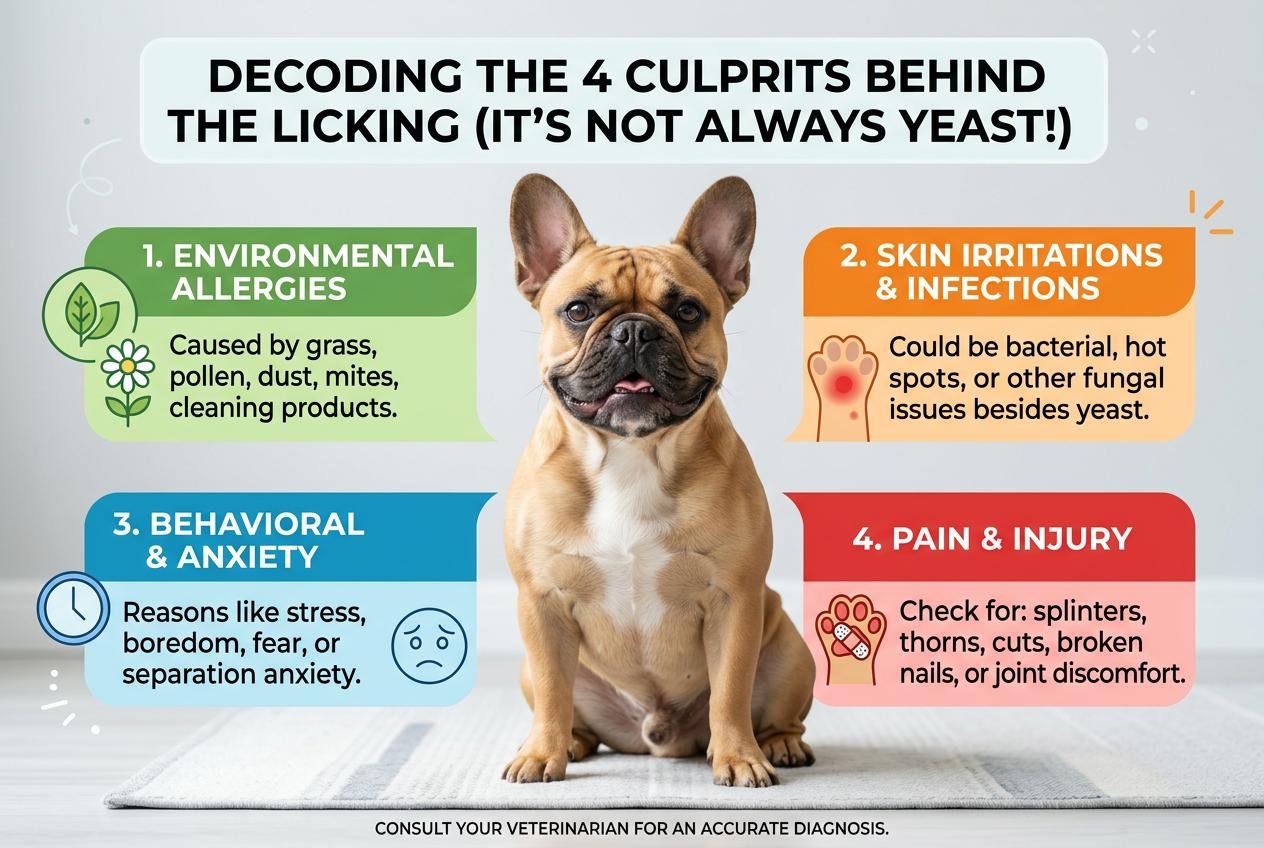
Decoding the 4 Culprits Behind the Licking (It’s Not Always Yeast!)
Every time a frantic Frenchie owner calls me asking, “Does my dog have athlete’s foot?” I have to walk them back. The root cause is rarely just one thing.
Culprit 1: The Fungal & Bacterial Rave
Frenchie paw pads are tight and poorly ventilated. When they step in puddles or sweat through their pads, the space between their toes becomes a tropical greenhouse. Malassezia (a type of yeast) and Staph bacteria thrive here. Once they overpopulate, the skin becomes inflamed, incredibly itchy, and crusty.
Culprit 2: Interdigital Cysts (Furuncles) – The Frenchie’s Nemesis
If you look between your Frenchie’s toes and see a shiny, red, fluid-filled bump that looks like a blister or a blood boil, you’re dealing with an interdigital cyst (technically known as a furuncle). These occur when friction drives coarse hairs back into the hair follicle, causing it to rupture beneath the skin. It’s a deep tissue infection and is agonizingly painful for your dog.
Culprit 3: The Allergy Abyss
Frenchies are notoriously allergic dogs. Sometimes, paw licking has nothing to do with the paws themselves. Food allergies (like an intolerance to chicken or beef) or environmental allergies (pollen, grass mites, dust) cause systemic itching. The paws just happen to be the most accessible place for them to scratch with their teeth.
Culprit 4: Behavioral OCD
Don’t underestimate canine psychology. Frenchies that are under-stimulated, anxious, or bored will lick their paws to release endorphins (feel-good hormones). Over time, this self-soothing behavior morphs into obsessive-compulsive disorder.
The Golden Diagnostics: How to Read Your Frenchie’s Paws at Home
Before you rush to the clinic, you can do a quick 3-step triage at home to figure out what you’re up against:
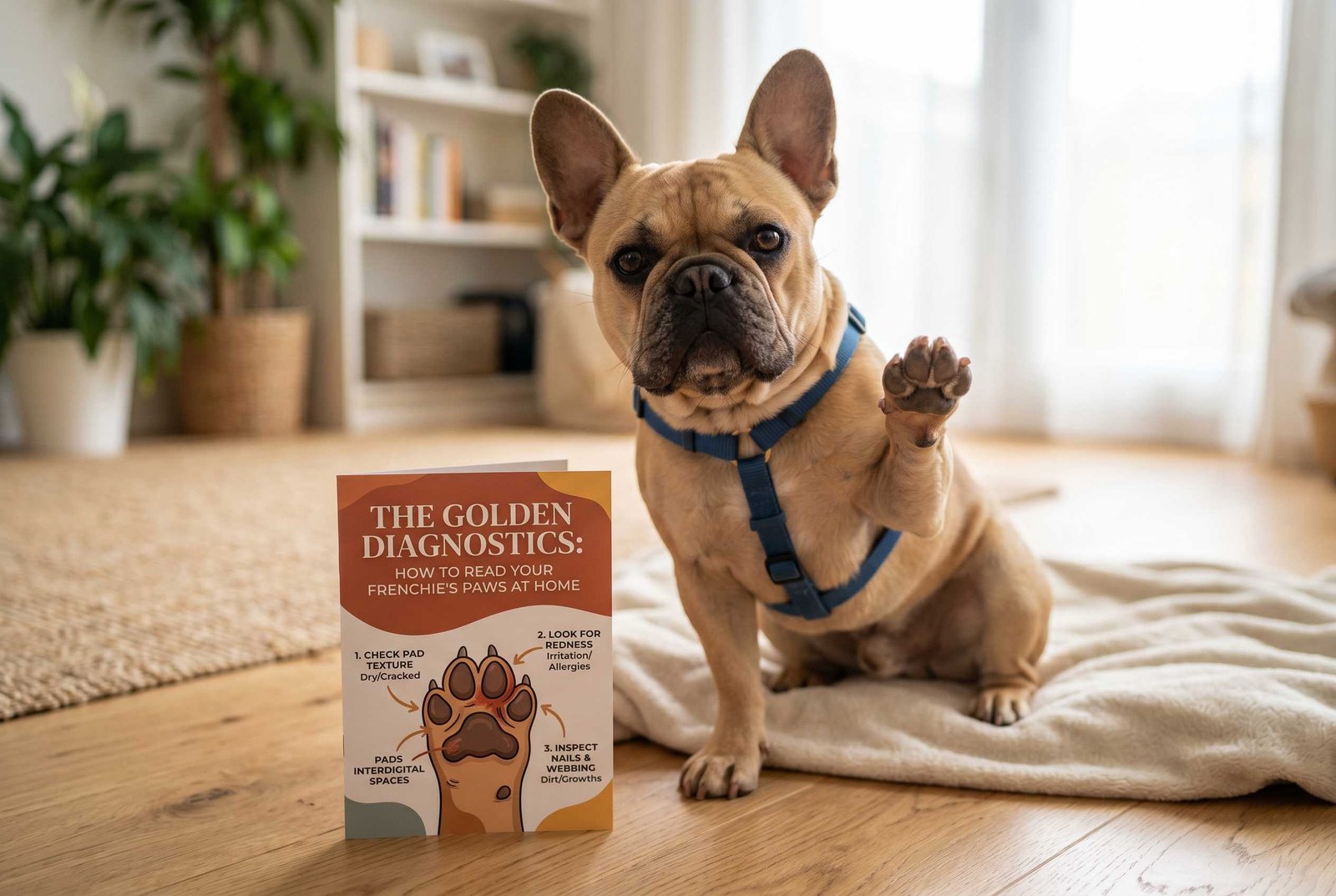
- The Sniff Test: Pick up your Frenchie’s paw and take a whiff. If it smells intensely like Fritos or old corn chips, congratulations, you have a classic yeast (fungal) infection. If it smells sour, rotting, or foul, you are likely dealing with a bacterial infection or pus.
- The Visual Inspection: Spread their toes gently. Do you see dark brown, rusty discharge and crusting? That’s yeast. Do you see a bright red, swollen nodule? That’s a cyst.
- The Touch Test: Gently press on the paw pads. If your Frenchie aggressively pulls away, yelps, or growls, there is deep tissue inflammation. This pain level usually points to cysts rather than surface yeast.
The Expert’s Action Plan: A Tiered Approach to Healing
Here is how experienced owners manage flare-ups at home, and what you can expect when you visit your vet.
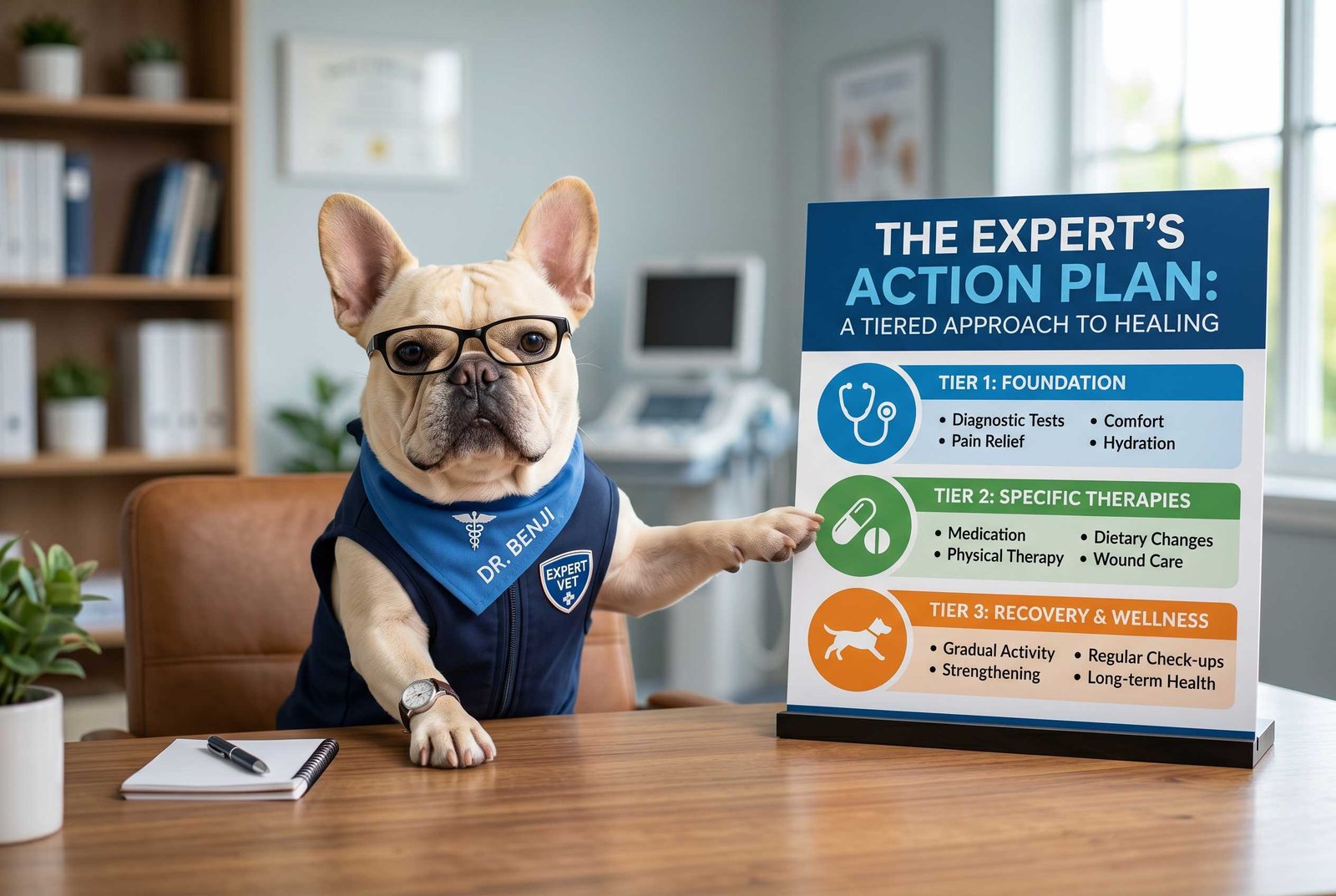
Tier 1 (Mild Redness & Occasional Licking): At-Home Management
If the paws are just starting to look pink and the licking is mild, do not jump straight to antibiotics. My go-to strategy is using medicated wipes containing 2%-4% Chlorhexidine and 1% Ketoconazole.
- The Secret Technique: Wipe thoroughly between the toes, but leave the medication on the skin for at least 5 minutes to do its job.
- After 5 minutes, dab it with a paper towel and use a blow dryer on the COOL setting to dry the paw completely. If you leave the paw damp, the yeast will just come back.
- Bonus: Epsom salt soaks (using plain, unscented Epsom salt in warm water for 5-10 minutes) are incredible for drawing out toxins and reducing swelling.
Tier 2 (Moderate/Severe Infection, Broken Skin): Veterinary Intervention
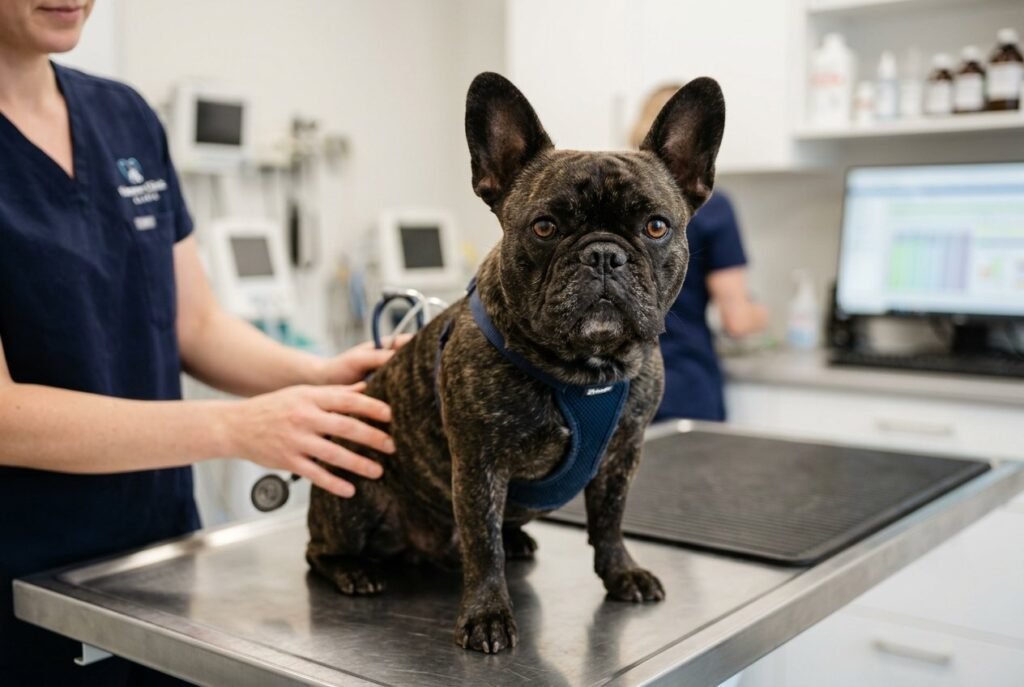
If the toes are bleeding, oozing, or reeking, you need a vet. They will likely perform a cytology (swab) to see exactly what’s growing there.
- Your vet will typically prescribe oral antibiotics (like Cephalexin) for Staph, or oral antifungals.
- To stop the manic licking immediately, ask your vet about an Apoquel prescription or a Cytopoint injection. These are game-changers for instantly shutting down the itch signals in the brain so the paws can actually heal.
Tier 3 (Stubborn Interdigital Cysts): The Long War
Never, ever try to pop a cyst at home with a needle! You will only push the infection deeper into the foot. Alongside medications and Epsom soaks, progressive veterinary clinics often use Cold Laser Therapy to drastically reduce inflammation and speed up cell repair. Only in the most extreme, chronic cases is surgical removal of the tissue considered.
Banishing Relapses: My 10-Year Daily Paw Care Routine
Treating the infection puts out the fire, but your daily routine is the fireproofing. Here’s what keeps my Frenchies’ paws pristine year-round:
1. Stop Washing, Start Wiping (And DRYING!)
When you come in from a rainy walk, don’t throw them in the tub. Tap water trapped in toe folds is a disaster. Use unscented hypoallergenic baby wipes or medicated foam to clean the dirt, absorb the moisture with a microfiber towel, and blow-dry the paws on cool. Absolute dryness is the golden rule.
2. Nutritional Warfare: Build the Barrier
A Frenchie’s skin health starts in their gut. If you feed them a diet packed with fillers, their skin barrier will be weak. I heavily supplement my dogs’ diets with high-quality Omega-3 Fish Oil and a Zinc supplement. These naturally reduce systemic inflammation and strengthen the skin barrier against allergens. If allergies are suspected, work with your vet to switch to a hydrolyzed protein or novel protein diet (like rabbit or venison) for 8 weeks.
3. Aggressive Pedicures
If your Frenchie’s nails touch the ground, they are too long. Long nails force the toe bones apart, creating a wider gap that scoops up dirt, allergens, and moisture. Use a Dremel (nail grinder) weekly to keep them short. Also, carefully trim the hair between their paw pads so it doesn’t act like a mop soaking up sweat.
Beware: Common Mistakes Ruining Your Dog’s Paws
- Mistake 1: Using Peroxide or Rubbing Alcohol. Stop! These harsh chemicals destroy healthy healing tissue along with the bacteria. It will dry out the paw pads until they crack open, inviting worse infections.
- Mistake 2: Leaving Dog Boots on Too Long. Dogs sweat through their paw pads. While boots are great for hot pavement or salted winter roads, leaving them on for hours turns their feet into a sweaty, yeast-breeding sauna.
- Mistake 3: The Wrong E-Collar. Frenchies have thick, short necks and flat faces. Standard hard plastic cones will choke them or induce panic. Invest in an inflatable “donut” collar or a soft, wide cone. It blocks them from reaching their feet without cutting off their airway.
Final Thoughts
Your French Bulldog’s chubby little paws carry them through their world. While this breed undoubtedly requires higher maintenance, armed with the right knowledge—keeping them dry, treating the exact root cause, and physically blocking the licking—you can completely eradicate these nasty infections.
Frequently Asked Questions (FAQ)
Q1: My Frenchie’s paws are red, but the skin isn’t broken. Do I need antibiotics?
Usually, no. This is the perfect time to intervene with Chlorhexidine wipes, ensure the paws are bone-dry, and put a soft cone on them for a few days to break the licking habit. If it doesn’t improve in 72 hours, call your vet.
Q2: Can I still take my Frenchie for walks while they are being treated?
Yes, but avoid wet grass, mud, or dusty trails. If the ground is wet, pop on some waterproof silicone booties just for the walk. The moment you get home, take them off, wipe the paws, and blow-dry them.