Disclaimer: The information provided in this article is for educational and informational purposes only and is not intended as medical advice. I am a French Bulldog specialist and breeder, but every dog is unique. If your French Bulldog is experiencing severe twitches, convulsions, or any symptoms that cause you concern, please consult your veterinarian immediately for a proper diagnosis and treatment plan.
If you are a French Bulldog owner, you have likely spent a considerable amount of time watching your little bat-eared companion sleep. They snore, they snort, they sleep in bizarre positions, and very often, they twitch. For many new and even experienced Frenchie parents, seeing their dog’s paws paddle, their lips quiver, or their eyelids flutter rapidly can trigger immediate alarm. You might find yourself staring at them, heart racing, wondering: Is my Frenchie just having an intense dream about chasing a squirrel, or is this a sign of a neurological problem like a seizure?
Related Reading: Training & Behavior | Frenchie Puppy Guide | Best Food for Frenchies
This is one of the most common concerns brought to my veterinary practice. Because French Bulldogs are predisposed to certain genetic and neurological conditions, it is entirely justified for owners to be hyper-vigilant. However, understanding the difference between normal sleep behaviors and abnormal neurological episodes is crucial for your peace of mind and for your dog’s long-term health.
In this comprehensive guide, we will dive deep into the fascinating world of canine sleep, explore exactly why your French Bulldog twitches, how to differentiate a dream from a medical emergency, and what you can do to ensure your furry friend is getting the restorative, healthy rest they need.
1. Understanding the French Bulldog Sleep Cycle
To understand why your French Bulldog twitches, we first need to understand how they sleep. Dogs, much like humans, go through different stages of sleep. A typical adult French Bulldog sleeps anywhere from 12 to 14 hours a day, while puppies and senior dogs may sleep up to 18 hours.
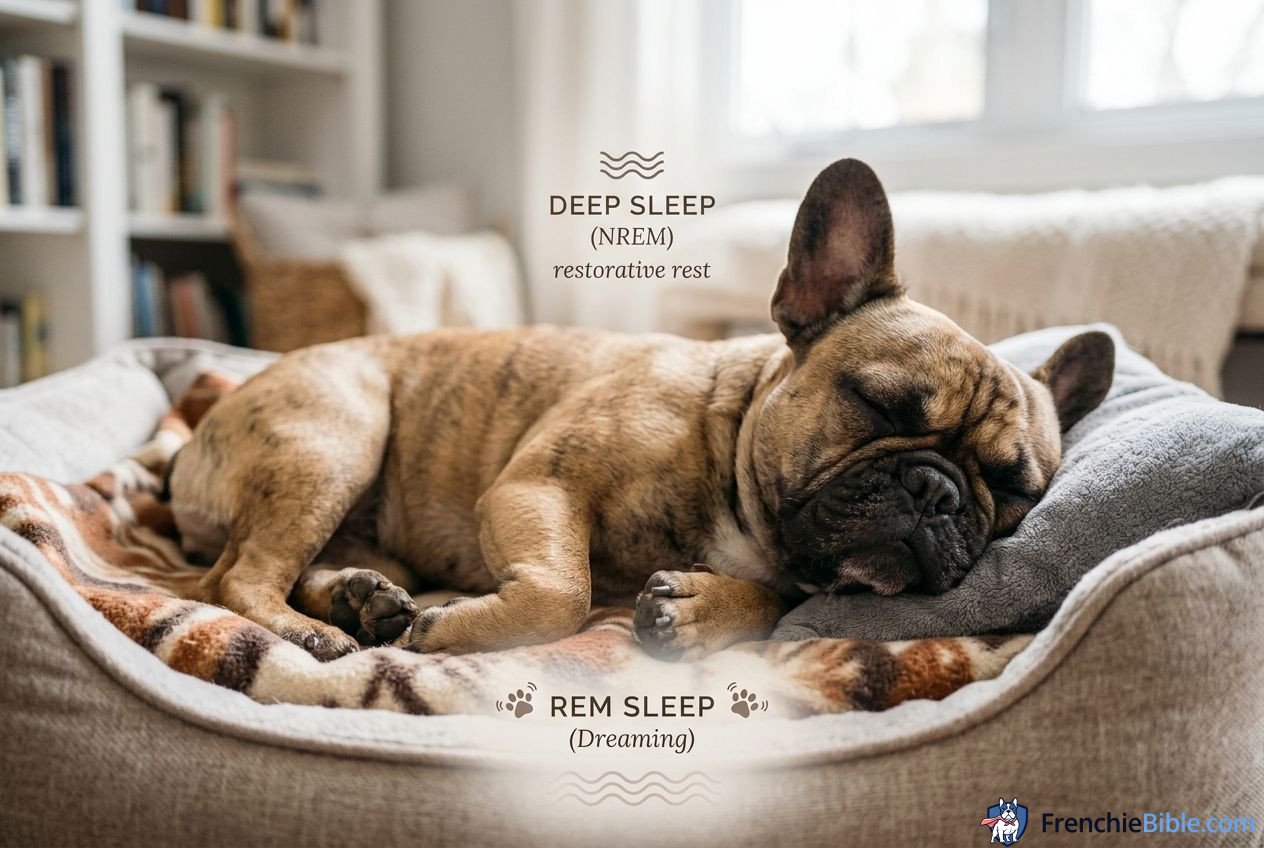
Their sleep is generally divided into two main phases: Non-Rapid Eye Movement (NREM) sleep and Rapid Eye Movement (REM) sleep.
The NREM Phase: The Wind Down
When your Frenchie first closes their eyes and drifts off, they enter the NREM phase. During this stage, their breathing slows, their heart rate drops, and their blood pressure decreases. This is a quiet, restorative phase of sleep where the body focuses on repairing tissues, building bone and muscle, and strengthening the immune system. If you call their name gently, they will likely wake up easily. You rarely see twitching during NREM sleep.
The REM Phase: The Dream Zone
After about 15 to 20 minutes of NREM sleep, your Frenchie will transition into REM sleep. This is the stage where the magic—and the twitching—happens. During REM sleep, brain activity significantly increases, reaching levels similar to when the dog is awake. This is the phase where dogs (and humans) dream.
During REM sleep, a structure in the brainstem called the pons plays a critical role. The pons is responsible for paralyzing the large, voluntary muscles in the body, preventing the dog from physically acting out their dreams. However, this “paralysis switch” isn’t entirely perfect, especially in puppies and senior dogs. Small electrical signals escape, leading to the minor twitches, paddling paws, and vocalizations you observe.
Because French Bulldogs are incredibly expressive and have prominent facial features, you might notice their twitches more than you would in a fluffier breed. Their jowls might flutter, their big eyes might dart back and forth under closed lids, and their specialized breathing anatomy means you’ll likely hear a symphony of grunts, whines, and soft barks.
2. Normal Twitching: The “Dreaming Dog” Phenomenon
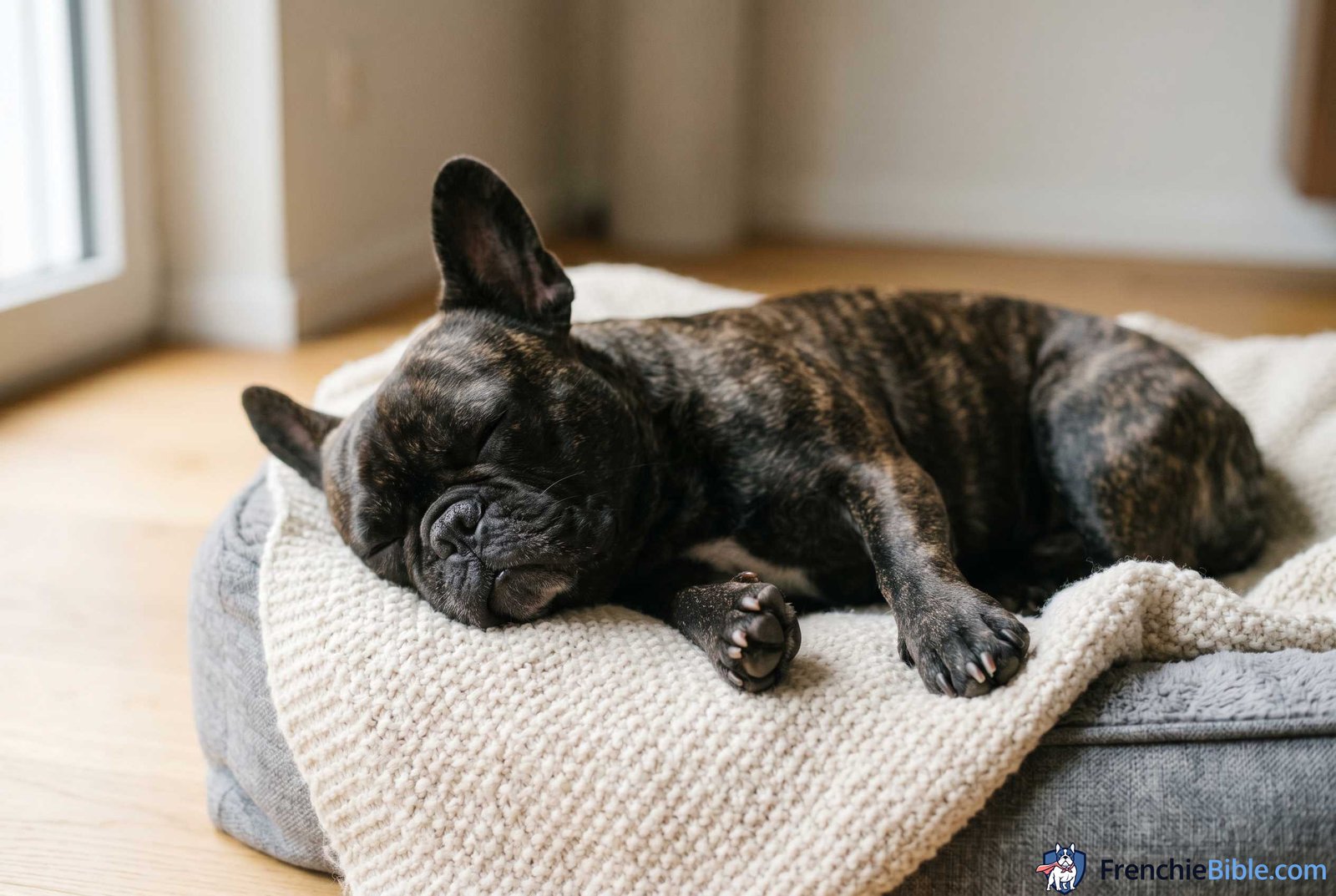
Before you panic and rush to the emergency vet, it’s vital to recognize what normal sleep twitching looks like. More often than not, those little jerks and spasms are simply the physical manifestation of an active dream.
Identifying Normal REM Twitches
Here are the classic signs that your Frenchie is just enjoying a vivid dream:
- Brief and Sporadic Movements: Dream twitches are usually short-lived. A paw might paddle for five seconds, stop, and then a lip might quiver a minute later. The movements are not rhythmic or sustained.
- Location of Twitches: The movements are typically confined to the extremities and the face. You’ll see flicking ears, twitching whiskers, rapid eye movement under the eyelids, and paws kicking as if they are running.
- Vocalizations: Soft whimpering, muffled barks, whining, or even a low growl are entirely normal during REM sleep. They are “talking” in their sleep.
- Easy to Wake (Though Not Recommended): If you gently call your dog’s name in a normal tone of voice, they will usually wake up, perhaps looking a bit groggy or disoriented for a split second before returning to normal behavior.
- No Post-Sleep Confusion: Once awake from a dream, a healthy Frenchie will stretch, yawn, and go about their business. There is no lingering confusion, staggering, or lethargy.
Why Do Puppies and Seniors Twitch More?
If you have a Frenchie puppy, you might notice they twitch violently and frequently. This is completely normal! In puppies, the brainstem (specifically the pons) is still developing. That “paralysis switch” isn’t fully operational yet, so their dream movements are much more exaggerated. This intense REM sleep is crucial for their brain development and the processing of new daily experiences.
Conversely, senior Frenchies may also experience an increase in sleep twitching. As dogs age, the efficiency of the pons can weaken, allowing more movement to slip through during dreams.
3. When Twitching Becomes a Concern: Neurological and Medical Issues
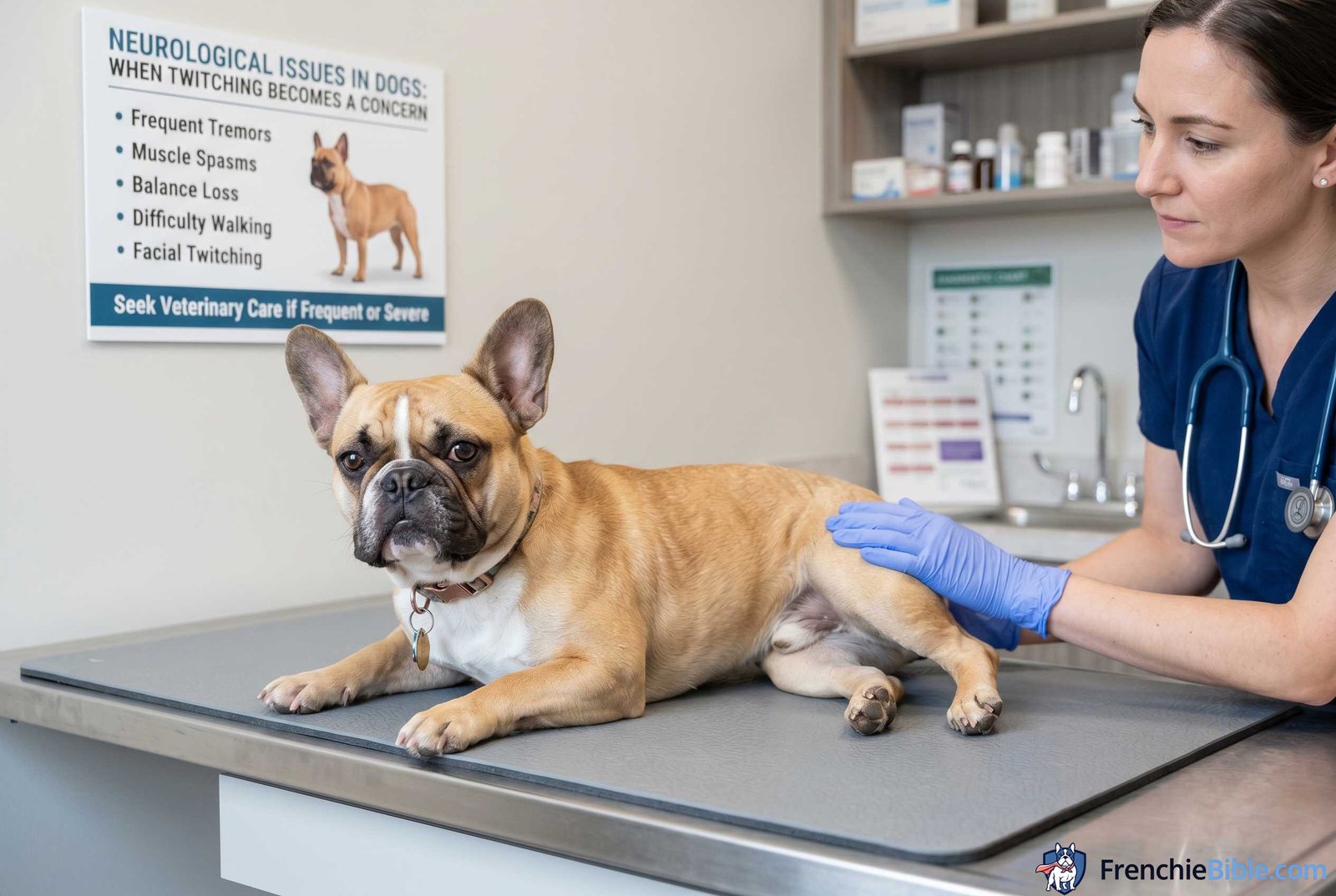
While the vast majority of sleep twitching is harmless, as a French Bulldog specialist, I must emphasize that this breed is prone to specific health issues that can cause abnormal tremors, spasms, or seizures. It is your job as an owner to recognize when a twitch crosses the line into a medical symptom.
Seizures vs. Sleep Twitching: The Key Differences
The most significant fear owners have is that their sleeping dog is actually having a seizure. A seizure is a sudden, uncontrolled electrical disturbance in the brain. Here is how you can tell the difference between a dream and a seizure:
- Rhythm and Intensity: Dream twitches are sporadic and random. Seizure convulsions are typically rhythmic, repetitive, and violent. The whole body will often go rigid (tonic phase) before rhythmic jerking begins (clonic phase).
- Responsiveness: If you call a dreaming dog’s name loudly, they will wake up. A dog having a seizure is unconscious and completely unresponsive to your voice or touch. Never try to wake a dog by shaking them or putting your hands near their mouth during a suspected seizure.
- Bodily Functions: Dogs having a seizure frequently lose control of their bladder or bowels. They may also drool excessively or foam at the mouth. This rarely happens during a normal dream.
- The Post-Ictal Phase: This is the most crucial differentiator. After a dream, a dog wakes up normal. After a seizure, a dog enters the “post-ictal” phase. They will appear deeply confused, disoriented, temporarily blind, pacing restlessly, or profoundly exhausted. This phase can last for minutes to hours.
Epilepsy in French Bulldogs
French Bulldogs can suffer from Idiopathic Epilepsy, a genetic condition causing unprovoked seizures. These seizures can happen at any time, including during sleep (often during the transition between wakefulness and sleep or during light sleep stages). If your dog’s “twitches” resemble the seizure characteristics listed above, veterinary intervention is non-negotiable.
Hypoglycemia (Low Blood Sugar)
Particularly in young Frenchie puppies, sudden drops in blood sugar can cause tremors, shivering, and twitching that might be mistaken for sleep movements if the puppy is resting. Hypoglycemia twitches are usually accompanied by profound lethargy, pale gums, and weakness. It is a medical emergency that requires immediate glucose administration.
IVDD (Intervertebral Disc Disease) and Nerve Spasms
French Bulldogs are a chondrodystrophic breed, meaning they have a genetic predisposition to dwarfism characteristics, making their spines vulnerable. Intervertebral Disc Disease (IVDD) is highly prevalent. If a disc is compressing the spinal cord or a nerve root, the dog may experience sharp pains or involuntary muscle spasms in their legs or back.
While this usually manifests when awake, a dog adjusting its position during sleep might trigger a nerve spasm. If your dog wakes up yelping from a twitch, or if the twitching is isolated to the hind legs and accompanied by a reluctance to walk or a hunched back when awake, suspect spinal issues over dreaming.
Sleep Disorders in Brachycephalic Breeds
As a brachycephalic (flat-faced) breed, French Bulldogs are the poster children for Brachycephalic Obstructive Airway Syndrome (BOAS). Their elongated soft palates, narrow tracheas, and stenotic nares make breathing a chore.
This anatomy severely impacts their sleep. Many Frenchies suffer from Sleep Apnea, where their airway temporarily collapses, cutting off oxygen. When oxygen levels drop, the brain panics and sends a sudden jolt to wake the dog up to breathe. This can look like a sudden, violent twitch or gasp.
If your dog’s twitching is accompanied by choking sounds, sudden gagging, or waking up gasping for air, they are likely struggling with sleep apnea, not having a fun dream. This chronic lack of oxygen places tremendous strain on their heart and requires veterinary evaluation, often necessitating corrective airway surgery.
Other Potential Causes of Abnormal Tremors
- Toxins: Ingestion of toxic plants, chocolate, xylitol, or certain household chemicals can cause neurological tremors.
- Electrolyte Imbalances: Severe dehydration or imbalances in calcium or potassium can lead to muscle spasms.
- Infections/Inflammation: Conditions like encephalitis or meningitis (inflammation of the brain) can cause neurological symptoms.
4. How to Respond When Your Frenchie Twitches
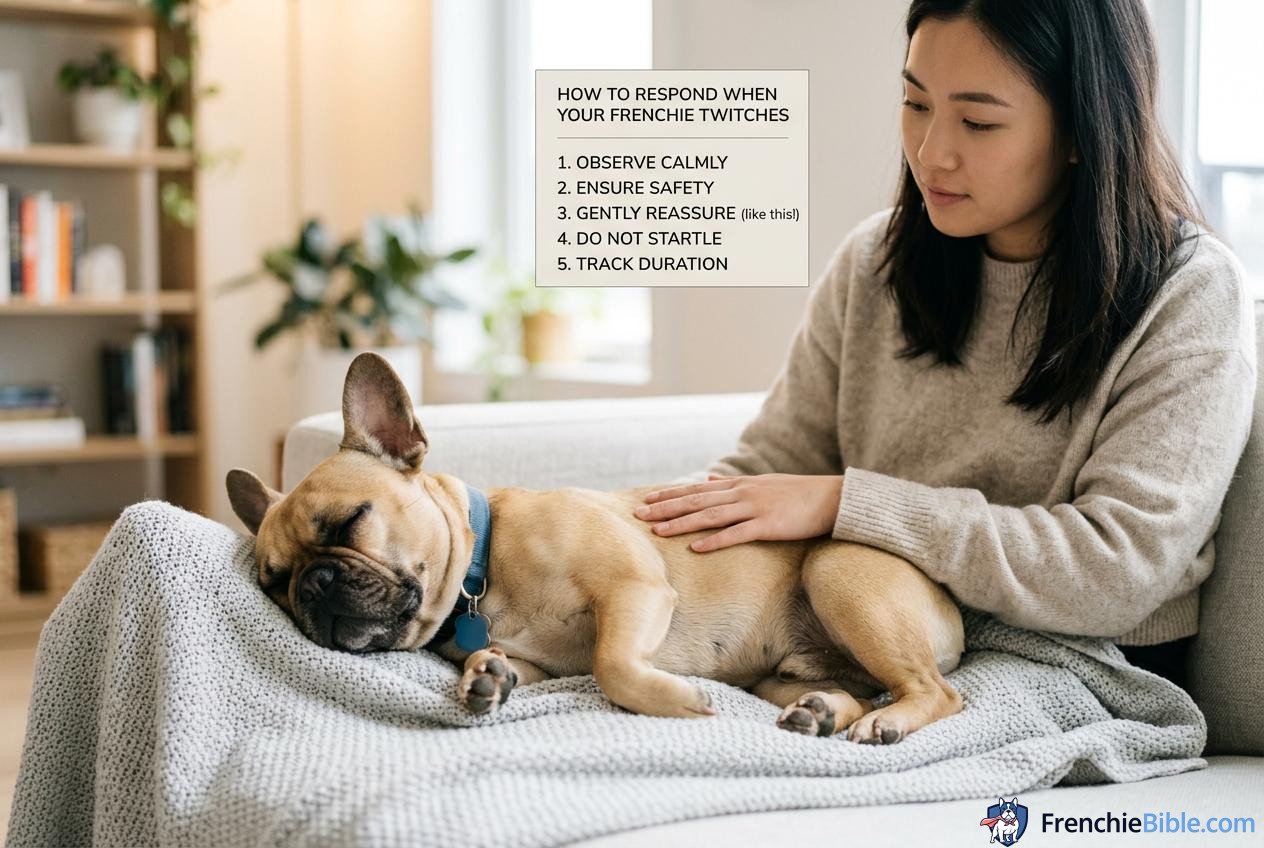
Now that you know the difference between dreaming and danger, how should you react when you see your little Frenchie paddling away in their sleep?
1. Observe and Document (The “Wait and See” Approach)
If the movements fit the description of REM sleep dreaming (sporadic, face and paws, breathing is steady), do nothing. Sit back, smile, and wonder what they are dreaming about.
If you are unsure if it’s a dream or something more insidious, do not panic. Grab your smartphone and start recording a video. Make sure the room is well-lit and capture the dog’s whole body, focusing on the specific twitches and their face.
Try calling their name in a normal, calm voice. Record their reaction (or lack thereof). If they wake up easily, you can stop recording. If they don’t, keep filming. This video will be the most valuable tool your veterinarian has in making a diagnosis. Describing a twitch is hard; showing a video is definitive.
2. Should You Wake Them Up?
As the old adage goes, “Let sleeping dogs lie.” You should generally never wake a sleeping, dreaming dog.
During REM sleep, dogs are deeply immersed in their dreams. Waking them abruptly can startle them severely. In their disoriented state, transitioning instantly from a dream (which might involve defending a bone from a perceived threat) to reality, they might exhibit a “sleep startle reflex.” This can result in an involuntary snap or bite, even from the sweetest Frenchie.
Furthermore, waking them interrupts their crucial REM sleep cycle. Chronic sleep interruption leads to sleep deprivation, which suppresses the immune system, increases stress hormones, and negatively impacts their overall health and mood.
The Exception: The only time you should gently wake a dreaming dog is if they seem to be having an incredibly distressing nightmare—whimpering loudly, crying, or showing signs of severe distress. Even then, do not touch them. Stand a few feet away and call their name softly and happily until they open their eyes.
3. Creating a Safe Sleep Environment
Whether they are having a wild dream or you are monitoring for potential neurological issues, safety is paramount.
- Ground Level is Best: Frenchies should not sleep on high beds or couches where a vigorous dream-kick could send them tumbling to the floor, risking spinal injury (remember IVDD).
- Comfortable Bedding: Provide an orthopedic bed that supports their spine and joints.
- Temperature Control: Frenchies cannot regulate their body temperature well. Ensure their sleep area is cool and well-ventilated to prevent overheating, which can exacerbate breathing issues during sleep.
5. Preventative Care and Supporting Neurological Health
As a responsible owner, your goal is to support your Frenchie’s overall health, which in turn supports a healthy brain and nervous system, reducing the risk of pathological twitches.
Diet and Nutrition for Brain Health
A high-quality, biologically appropriate diet is the foundation of health. The nervous system relies on specific nutrients to function correctly:
- Omega-3 Fatty Acids: DHA and EPA, found in fish oils (like krill or wild-caught salmon oil), are essential for brain health, reducing inflammation, and supporting cognitive function.
- Antioxidants: Foods rich in vitamins E and C, as well as blueberries and dark leafy greens (given in dog-safe moderation), help combat oxidative stress in brain cells.
- B-Vitamins: Crucial for nerve function. Ensure your dog’s food meets all AAFCO guidelines for vitamin profiles.
- Maintain an Ideal Weight: Obesity drastically worsens BOAS (breathing issues), which leads to sleep apnea and oxygen deprivation to the brain. Keep your Frenchie lean! You should be able to see a waistline and easily feel (but not see) their ribs.
Managing Stress and Anxiety
Chronic stress takes a toll on a dog’s neurological system and sleep quality. Frenchies are velcro dogs; they thrive on human companionship.
- Ensure they get adequate, low-impact daily exercise (like short walks in cool weather) to burn off physical and mental energy.
- Provide mental stimulation through puzzle toys, snuffle mats, and positive reinforcement training.
- Maintain a predictable daily routine. Dogs find comfort in knowing what to expect.
Regular Veterinary Check-ups
Annual (or bi-annual for seniors) veterinary exams are non-negotiable. Your vet will listen to their heart, check their airway, evaluate their neurological reflexes, and run blood panels to catch hidden issues (like organ dysfunction or electrolyte imbalances) before they manifest as severe symptoms like seizures.
6. Conclusion: Peace of Mind for Frenchie Parents
Watching your French Bulldog sleep should be a source of joy, not a source of constant anxiety. By understanding the normal stages of the canine sleep cycle, you can learn to appreciate those little paw paddles and lip quivers as signs of a healthy, active brain processing a happy day.
However, armed with the knowledge of your breed’s specific health vulnerabilities, you are now equipped to be an advocate for your dog. You know how to distinguish between a dream and a seizure, you understand the implications of sleep apnea, and you know exactly when to pull out your camera and when to call the vet.
Provide a safe sleeping environment, feed a brain-supporting diet, manage their weight to protect their airways, and most importantly, let your little sleeping beauty dream on.
7. Frequently Asked Questions (FAQ)
Q1: How can I tell for sure if my Frenchie is having a dream or a seizure?
Answer: The quickest test is responsiveness. If you call their name in a normal voice and they wake up, it was a dream. If they are unresponsive, rigid, paddling violently and rhythmically, drooling excessively, or lose bowel/bladder control, it is likely a seizure. Furthermore, a dog recovering from a seizure will be disoriented and exhausted (post-ictal), while a dreaming dog will wake up acting completely normal.
Q2: Should I wake my French Bulldog up if they are twitching a lot?
Answer: Generally, no. Waking a sleeping dog interrupts their crucial REM sleep, which they need for mental and physical restoration. Additionally, waking them abruptly can trigger a startle reflex, causing them to accidentally bite. Only wake them (using your voice, not your hands) if they seem to be trapped in a severely distressing nightmare.
Q3: My Frenchie puppy twitches violently when sleeping. Is this normal?
Answer: Yes, it is very common and usually completely normal. Puppies have underdeveloped brainstems. The part of the brain responsible for paralyzing voluntary muscles during REM sleep isn’t fully efficient yet, so their dream movements are much more pronounced than in adult dogs.
Q4: My French Bulldog stops breathing for a few seconds while sleeping, then wakes up with a gasp and a twitch. What is this?
Answer: This is a classic symptom of Sleep Apnea, which is incredibly common in brachycephalic (flat-faced) breeds due to their compromised airways (BOAS). The airway collapses, oxygen drops, and the brain jolts the dog awake to breathe. This is a medical issue that puts strain on the heart and requires veterinary evaluation to see if surgical airway correction is needed.
Q5: When should I take a video of my dog sleeping?
Answer: You should take a video anytime you observe sleep movements that seem abnormal, overly violent, rhythmic, or if they are accompanied by signs of distress, gasping for air, or a prolonged recovery period after waking. A video is the absolute best tool you can provide your veterinarian to help them make an accurate diagnosis between a sleep disorder, a dream, or a neurological event.
Disclaimer: I am a French Bulldog breeding expert with over a decade of hands-on experience with this breed. I am not An Experienced Breedererinarian. The information in this article is for educational purposes only. Always consult your veterinarian regarding your dog’s specific health needs and care.
Disclaimer: I am a French Bulldog breeding expert with over a decade of hands-on experience with this breed. I am not a veterinarian. The information in this article is for educational purposes only. Always consult your veterinarian regarding your dog’s specific health needs and care.