
Disclaimer: The information provided in this article is strictly for educational and informational purposes. While I draw upon over a decade of specialized experience as a French Bulldog breeder, behaviorist, and veterinary professional, I am not your dog’s attending veterinarian. The content herein does not constitute professional medical advice, diagnosis, or treatment. Always consult with a licensed, practicing veterinarian in your local jurisdiction before making any significant changes to your dog’s diet, especially if they suffer from underlying health conditions, chronic vomiting, or severe gastrointestinal distress.
If you share your home with a French Bulldog, you already know the drill. You are sitting on the couch watching a movie, your adorable little bat-eared companion is sleeping peacefully at your feet, and suddenly—without warning—it hits you. A smell so potent, so eye-watering, that it clears the room.
Related Reading: Training & Behavior | Frenchie Puppy Guide | Best Food for Frenchies
French Bulldog flatulence is the stuff of legends. It’s heavily joked about on social media and meme pages. But as a veterinary professional and a breeder who has whelped and raised hundreds of Frenchies over the last ten years, let me be very clear: Constant, room-clearing gas is not “normal” or “cute.” It is a clinical sign of a highly sensitive stomach and a gastrointestinal tract in distress.
Frenchies are notorious for having incredibly sensitive digestive systems. Beyond the toxic farts, many suffer from chronic soft stools, intermittent diarrhea, loud stomach gurgling (borborygmi), and relentless itchiness. These symptoms are almost always tethered to one culprit: their diet.
If you are exhausted from waking up to explosive diarrhea on your rugs, or if you simply want to breathe clean air in your own living room again, you are in the right place. In this comprehensive guide, we are going to dive deep into the anatomy of the Frenchie digestive system, uncover the exact ingredients causing these miserable symptoms, and review the 5 best hypoallergenic dog foods for French Bulldogs that have literally saved lives—and sanity—in my clinic.
The Anatomy of a Frenchie: Why Are Their Stomachs So Sensitive?
To fix the problem, you first have to understand the physiology of the breed. French Bulldogs are not built like Golden Retrievers or German Shepherds. Their bodies are highly specialized, and their digestive tracts are unforgiving.
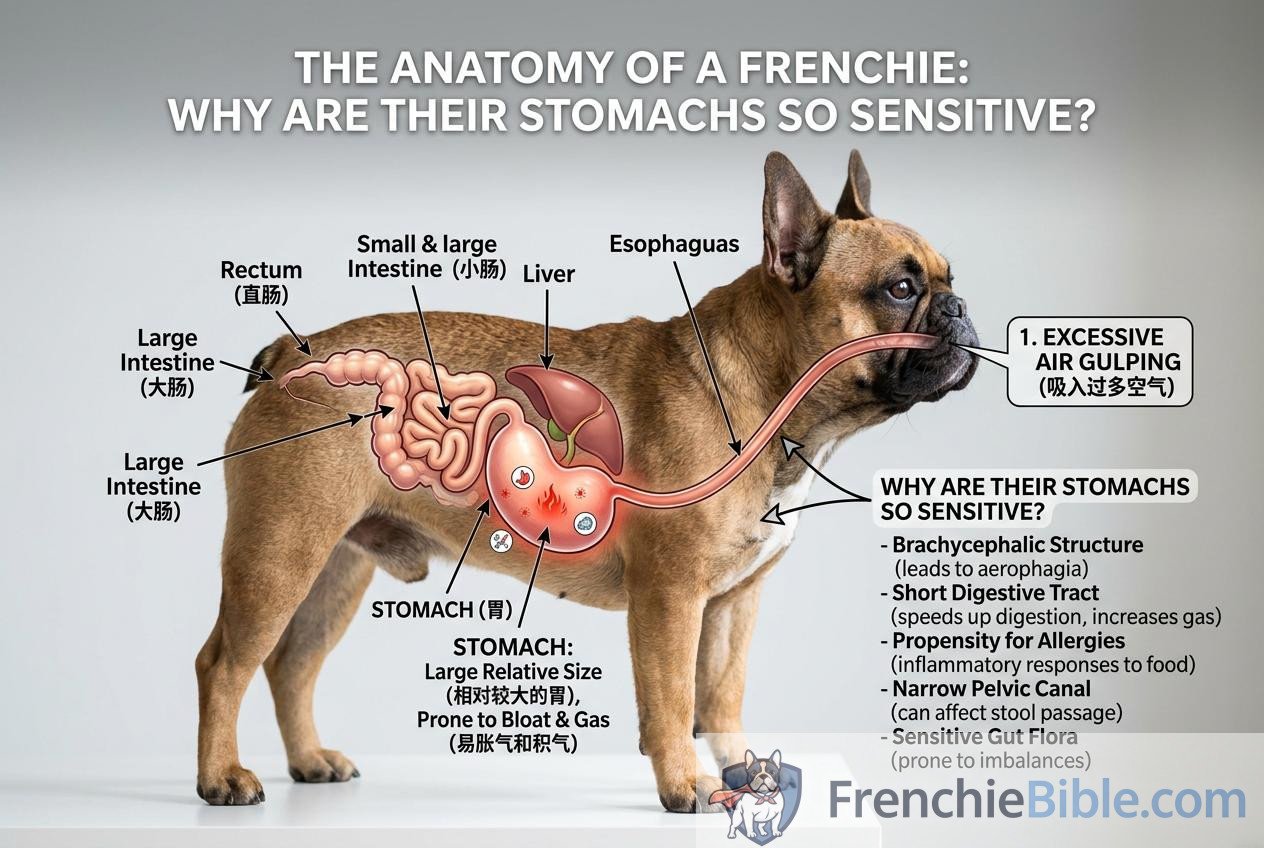
1. Brachycephalic Anatomy and Aerophagia
French Bulldogs are a brachycephalic breed, meaning they have a compressed, flattened skull. This cute, smushed face comes with a heavy physiological cost known as Brachycephalic Obstructive Airway Syndrome (BOAS). Because their nasal passages and tracheas are narrow, they struggle to breathe efficiently.
How does this relate to their stomach? Aerophagia.
When a Frenchie eats, they cannot breathe through their nose effectively. Therefore, they gulp their food while simultaneously gasping for air through their mouth. They swallow massive amounts of atmospheric air along with their kibble. When that air travels down into the stomach and intestines, it mixes with fermenting food. The result? Unbearable flatulence and painful bloating.
2. Genetic Predisposition to Food Intolerances
Through decades of selective breeding focusing on appearance rather than internal robust health, the French Bulldog gene pool has developed a severe predisposition to immune-mediated allergies.
Unlike humans, who usually show food allergies through anaphylaxis (throat swelling) or hives, dogs manifest food allergies in two primary ways:
- Dermatological: Chronic ear infections, chewing the paws raw, red inflamed bellies (erythema), and hair loss.
- Gastrointestinal: Chronic soft stools, mucous in the feces, vomiting bile in the mornings, and severe gas.
3. The Short-Gut Phenomenon
While not clinically “short” in length compared to other breeds their size, the transit time in a Frenchie’s gut is rapid. If you feed them complex, hard-to-digest carbohydrates (like corn, wheat, or cheap soy), their body does not have the time or the correct enzymatic profile to break them down. The undigested carbohydrates enter the large intestine where bacteria ferment them, producing immense amounts of noxious sulfur gas.
The Silent Killers in Your Frenchie’s Kibble
If you are dealing with a French Bulldog with a sensitive stomach, you must become an obsessive ingredient-label reader. The pet food industry is heavily deregulated, and the marketing on the front of the bag rarely matches the chemistry on the back.
Here are the top dietary triggers you must eliminate if you want to fix your Frenchie’s gut:
1. The Big Three Proteins: Beef, Chicken, and Lamb
This shocks most owners. People naturally assume grains are the enemy. However, multiple peer-reviewed veterinary dermatological studies have proven that the most common allergens for dogs are the actual animal proteins they are eating.
Because beef, chicken, and lamb are the most overused proteins in commercial dog foods, French Bulldogs are exposed to them constantly from puppyhood. Over time, their immune system falsely identifies these protein molecules as hostile invaders and attacks them, causing severe gastrointestinal inflammation. If your dog is having chronic diarrhea, stopping chicken is step number one.
2. Cheap, Fermentable Carbohydrates
As mentioned earlier, grains are not inherently evil. A high-quality, complex grain like oatmeal or brown rice can provide excellent fiber to firm up a Frenchie’s stool.
However, cheap fillers—specifically corn, wheat gluten, and soy—are highly fermentable. They are used by pet food companies to boost the protein percentage on the label without paying for expensive meat. When a Frenchie eats corn, it sits in the colon and ferments like a brewery, creating massive amounts of gas.
3. High-Fat Content
Frenchies have delicate pancreases. Diets that are incredibly high in fat (such as many commercial raw diets, “performance” kibbles, or feeding your dog table scraps like bacon grease) can trigger acute pancreatitis. This is a life-threatening condition where the pancreas becomes severely inflamed. Even in milder cases, a diet too high in fat will cause the stool to become greasy, yellow, and liquid.
How Hypoallergenic Diets Work
When we talk about a “hypoallergenic dog food for Frenchies,” we are usually referring to one of two scientific approaches to bypass the dog’s immune system.
Approach 1: Novel Proteins
A novel protein diet uses an animal meat that the Frenchie’s immune system has never encountered before. Because the body has no memory of it, it does not mount an inflammatory attack. Common novel proteins include Venison, Kangaroo, Duck, Rabbit, and Alligator.
Approach 2: Hydrolyzed Proteins
This is the pinnacle of veterinary science for sensitive stomachs. In a hydrolyzed diet, the protein (often soy or chicken liver) is blasted with water and enzymes, breaking the protein molecules down into tiny peptides. These peptides are so microscopically small that the French Bulldog’s immune system literally cannot detect them. It is the closest thing to a “reset button” for a severely inflamed gut.
The 5 Best Hypoallergenic Dog Foods for French Bulldogs
Based on my clinical experience, extensive feeding trials in my breeding program, and countless success stories from desperate owners, here are the top 5 life-saving formulas for Frenchies with severe stomach issues.
1. Purina Pro Plan Veterinary Diets HA Hydrolyzed
The Ultimate Reset Button for Severe IBD and Allergies
When a French Bulldog comes into my clinic suffering from bloody diarrhea, scratching their ears until they bleed, and dropping weight rapidly, this is the prescription I reach for immediately.
- How it works: Purina HA is a fully hydrolyzed diet. The primary protein is usually soy, but because it has been broken down at the molecular level, the dog’s body doesn’t recognize it as soy. It is incredibly easy to digest, creating virtually no residue in the gut.
- The Results: This food stops the allergic cascade dead in its tracks. Gas is usually eliminated within 48 hours. Stools firm up within a week. It acts as an elimination diet; if your Frenchie gets better on HA, we know definitively that they have a food allergy.
- Breeder’s Note: Yes, it requires a prescription from your vet, and yes, it is expensive. But it is vastly cheaper than paying for monthly steroid injections, Apoquel prescriptions, and emergency vet visits for gastroenteritis.
2. Royal Canin Veterinary Diet Selected Protein (Adult PR – Rabbit & Potato)
The Best Novel Protein Prescription Diet
If you (or your dog) prefer a meat-based diet rather than a hydrolyzed vegetarian formula, Royal Canin’s Selected Protein line is the gold standard for clinical novelty.
- How it works: This formula uses Rabbit as the sole animal protein source and Potato as the sole carbohydrate source. Rabbit is a highly digestible, extremely lean, and cooling meat. It is incredibly rare in commercial dog food, making it the perfect novel protein.
- The Results: This is a miracle worker for Frenchies whose stomach issues are tied directly to poultry or beef. The potato provides a soothing, easily digestible carbohydrate base that slows down gut transit time, allowing the colon to absorb water and form a solid stool.
- Breeder’s Note: Royal Canin includes an optimal blend of Omega-3 fatty acids (EPA and DHA) in this formula. Not only does it fix the diarrhea, but you will notice a massive reduction in skin redness (erythema) and paw licking within about four weeks of transitioning.
3. Natural Balance Limited Ingredient Diet (Salmon & Sweet Potato)
The Best Over-The-Counter Option for Mild Sensitivities
Not every Frenchie needs a $100 bag of prescription food. If your dog just has occasional soft stools and bad gas, but is generally healthy, Natural Balance is my go-to over-the-counter recommendation.
- How it works: The “Limited Ingredient Diet” (LID) philosophy is simple: fewer ingredients mean fewer chances for an allergic reaction. This formula uses real Salmon (a fantastic source of skin-healing Omega fatty acids) and Sweet Potato (a complex, non-fermenting carbohydrate).
- The Results: Because it completely excludes chicken, beef, dairy, and cheap grains, it naturally eliminates 90% of the common dietary triggers. The sweet potato provides an excellent source of dietary fiber, which is crucial for bulking up Frenchie stools and helping them naturally express their anal glands.
- Breeder’s Note: Be aware that because this is an over-the-counter food, it is produced in a facility that likely processes chicken or beef. There can be microscopic cross-contamination. It is perfect for mild sensitivities, but not strict enough for dogs with severe, life-threatening anaphylactic food allergies.
4. The Farmer’s Dog (Pork Recipe)
The Best Fresh Food Option for Picky Eaters and Digestion
Kibble is extruded at extremely high heat, which destroys many natural digestive enzymes. Fresh, gently cooked food is revolutionizing how we treat French Bulldog digestive issues.
- How it works: The Farmer’s Dog uses human-grade meat and vegetables, cooked gently at low temperatures, and flash-frozen. Their Pork recipe is particularly excellent for Frenchies. Pork is highly digestible, and the recipe includes sweet potatoes and green beans for gut-soothing fiber.
- The Results: Because the food is roughly 70% moisture (compared to 10% in dry kibble), it requires almost no effort from the Frenchie’s body to digest. There is no hard kibble to break down, and absolutely no synthetic fillers to ferment into gas.
- Breeder’s Note: If your Frenchie suffers from acid reflux (frequent lip smacking, gulping, or vomiting white foam in the morning), transitioning to a high-moisture fresh diet often cures the reflux entirely. Furthermore, because the meals are pre-portioned, it prevents the overfeeding that leads to obesity and exacerbates BOAS.
5. Ziwi Peak Air-Dried (Venison Recipe)
The Best Alternative to a Raw Diet
Many owners want to feed a raw diet to cure their dog’s allergies, but are terrified of the bacterial risks (Salmonella) or the danger of a Frenchie choking on a raw bone. Ziwi Peak is the ultimate compromise.
- How it works: Ziwi Peak sources free-range Venison from New Zealand and gently air-dries the meat. This process kills pathogenic bacteria but preserves the raw nutritional profile. It contains 96% meat, organs, and New Zealand Green Mussels.
- The Results: Venison is a phenomenal novel protein for Frenchies. Because this food is practically zero-carbohydrate, there is literally nothing in the gut to ferment. This is the ultimate gas-killer. Dogs fed Ziwi Peak have the smallest, driest, and least odorous stools I have ever seen in my veterinary career.
- Breeder’s Note: This food is incredibly nutrient-dense. You feed much less volume than you would with standard kibble. If you overfeed Ziwi Peak, your Frenchie will get loose stools from the richness. Measure it precisely using a kitchen scale, not a measuring cup.
How to Safely Transition a Sensitive Frenchie to a New Food
If you take away nothing else from this article, remember this: Never change a French Bulldog’s food abruptly.
Their microbiome is highly specific to what they are currently eating. If you suddenly dump a bowl of novel protein into their system, their gut flora will panic, resulting in massive inflammation and severe diarrhea.
When dealing with a sensitive stomach, you must transition slower than normal. I recommend a 14-day transition protocol:
- Days 1-4: 25% New Food / 75% Old Food
- Days 5-8: 50% New Food / 50% Old Food
- Days 9-12: 75% New Food / 25% Old Food
- Days 13-14: 100% New Food
Crucial Tip: During the transition, add a veterinary-grade probiotic (like Purina Pro Plan FortiFlora) to their meals. This introduces billions of beneficial bacteria to the gut, helping to digest the new protein and drastically reducing the chances of a diarrhea flare-up.
If your Frenchie develops liquid stool during the transition, stop advancing the ratio. Hold at the current mix until the stool firms up, and then proceed.
The Breeder’s Final Word on Gut Health
Owning a French Bulldog is an incredible privilege, but it requires a proactive approach to their health. You cannot afford to be passive about what goes into their bowl.
If your dog is suffering from relentless flatulence, chronic diarrhea, or red, itchy skin, stop buying different flavors of cheap kibble at the grocery store. You are simply rotating through the same inflammatory ingredients.
Take a clinical approach. Consult your vet about a prescription hydrolyzed diet like Purina HA or a novel protein like Royal Canin Rabbit to establish a baseline of health. Once the gut is healed, you can explore high-quality, limited-ingredient maintenance diets like Natural Balance or fresh options like The Farmer’s Dog.
Your Frenchie’s immune system, skin health, and respiratory stamina are all fundamentally rooted in their gut. Fix the diet, and you will very likely fix the dog.
Frequently Asked Questions (FAQ) About French Bulldog Digestive Issues
1. Why does my French Bulldog vomit yellow foam in the mornings?
This is known as Bilious Vomiting Syndrome (BVS). Because Frenchies have highly acidic stomachs, if their stomach is empty for too long overnight, the bile irritates the stomach lining, causing them to vomit a yellow or white foam. The easiest fix is to give them a small, high-protein snack (like a spoonful of their regular food or a piece of boiled chicken) right before bedtime to give the stomach acid something to digest overnight.
2. Is a slow-feeder bowl really necessary for a Frenchie?
Absolutely. Because of their brachycephalic (flat) faces, Frenchies inhale air when they gulp their food. This swallowed air leads directly to severe gas and bloating. A slow-feeder bowl or a snuffle mat forces them to eat one piece of kibble at a time, drastically reducing aerophagia (air swallowing) and improving digestion.
3. Should I give my French Bulldog yogurt for probiotics?
While plain, unsweetened Greek yogurt does contain probiotics, I generally advise against it for Frenchies with severe stomach issues. Many French Bulldogs are lactose intolerant, and dairy is a highly common dietary allergen that can trigger diarrhea and skin itching. Instead, use a canine-specific powdered probiotic supplement prescribed by your vet.
4. How long does it take to see results after switching to a hypoallergenic dog food?
Gastrointestinal symptoms (like gas and diarrhea) usually improve rapidly, often within 3 to 7 days on a new, appropriate diet. However, if you are feeding a hypoallergenic diet to cure dermatological issues (like paw licking and ear infections), it takes much longer. It takes the skin approximately 8 to 12 weeks to completely turn over and clear the old allergens from the system. You must be patient and strict—no treats during this trial period!
5. Are grain-free diets better for a Frenchie’s sensitive stomach?
Not necessarily. Unless your Frenchie has been explicitly diagnosed with a grain allergy by a veterinarian, grains are rarely the issue. The FDA has warned about potential links between boutique grain-free diets (which use high amounts of peas, lentils, and potatoes as fillers) and a deadly heart condition called Dilated Cardiomyopathy (DCM). Usually, the true culprit of the sensitive stomach is the protein source (chicken/beef), not the grains. Stick to healthy, complex grains like oatmeal unless a vet advises otherwise.