as a French Bulldog expert and breeder and breeder with years of experience I have heard it all. Frenchie owners come to my breeding program with a variety of concerns—some funny, some serious, and some simply revolting. One of the most common, yet least discussed, issues is a behavior that leaves owners disgusted and deeply concerned: their beloved, squishy-faced companion eating their own feces.
If you have just witnessed your French Bulldog snacking on their own stool (or the stool of another animal), take a deep breath. You are not alone, and your dog is not broken. This behavior, scientifically known as coprophagia, is incredibly common in the canine world, particularly among certain breeds and puppies. However, the fact that it is common does not make it acceptable, nor does it mean it should be ignored.
Related Reading: Health & Diet | Grooming & Care
In this comprehensive guide, we are going to dive deep into the mind and digestive system of your French Bulldog. We will explore the evolutionary roots of this behavior, the critical distinction between behavioral and medical causes, and most importantly, how to stop it. Because Frenchies have unique physiological and psychological traits, a generic approach often falls short. Instead, we must use a dual approach: addressing both nutrition and behavior simultaneously to cure your French Bulldog of this unsavory habit.
Understanding Coprophagia: What Is It?
Coprophagia is the act of ingesting feces. In dogs, this can manifest in a few different ways:
1. Autocoprophagia: Eating their own stool.
2. Allocoprophagia: Eating the stool of other dogs.
3. Interspecific Coprophagia: Eating the stool of other species (cats, deer, rabbits, horses, etc.).
While eating rabbit pellets or cat poop is often a scavenging behavior driven by the high protein content in those specific feces, eating their own stool or the stool of other dogs in the household points to a different set of triggers. In French Bulldogs, autocoprophagia is particularly prevalent during the puppy stages but can persist into adulthood if not appropriately addressed.
To understand how to stop coprophagia, we first must understand why a creature with such a strong sense of smell would willingly consume waste.
The Evolutionary and Biological Roots of Stool Eating
Before we pathologize your Frenchie’s behavior, it is helpful to understand the evolutionary context. Dogs are descendants of wolves, and while they have been domesticated for thousands of years, certain instinctual behaviors remain hardwired into their DNA.
The Scavenger Instinct
Ancestral canines were not just hunters; they were opportunistic scavengers. In times of scarcity, they would consume whatever was available to survive. Feces—especially from herbivores—contain partially digested nutrients, vitamins, and minerals. From an evolutionary standpoint, eating feces was a survival mechanism that provided a secondary source of nutrition when fresh prey was unavailable.
The Maternal Clean-Up Crew
If you have ever watched a mother French Bulldog care for her newborn puppies, you have witnessed coprophagia in action. For the first few weeks of life, puppies cannot eliminate on their own. The mother must stimulate their anogenital region by licking, and she cleans up the resulting waste by eating it. This is a crucial evolutionary adaptation designed to keep the den clean, reduce odors that might attract predators, and protect the vulnerable litter from hygiene-related diseases.
The Puppy Phase
Puppies learn by observing their mother. Because they see their mother eating stool, puppies may mimic this behavior. Additionally, puppies explore the world with their mouths. A piece of dried stool in the yard might just seem like an interesting object to chew on. For most puppies, this is a passing phase that they outgrow by the time they are nine to twelve months old. However, if the behavior is inadvertently reinforced by the owner, or if there is an underlying issue, the habit can solidify.
Why Is My French Bulldog Eating Poop? (The Core Reasons)
When a French Bulldog eats poop, there is almost always an underlying reason. As a specialist I categorize these reasons into two main buckets: Nutritional/Medical and Behavioral/Psychological. Identifying which category your Frenchie falls into is the first step toward a cure.
1. Nutritional Deficiencies and Malabsorption
French Bulldogs are notorious for their sensitive stomachs and digestive quirks. If their diet is not perfectly balanced or if their body is struggling to absorb nutrients, they may turn to their stool as a way to “recycle” what they missed the first time around.
- Poor Quality Diet: If you are feeding your Frenchie a low-quality kibble filled with fillers like corn, soy, and wheat, their body is likely processing the food very quickly. The resulting stool will contain a high amount of undigested nutrients, making it smell and taste like food to your dog.
- Malabsorption Syndromes: Some Frenchies suffer from conditions where their intestines fail to absorb nutrients properly. Even if you feed them the best food in the world, the nutrients pass right through them. Their instinct tells them they are starving, so they eat the nutrient-rich stool to compensate.
- Exocrine Pancreatic Insufficiency (EPI): The pancreas is responsible for producing digestive enzymes. In EPI, the pancreas fails to produce enough of these enzymes, leading to incomplete digestion. Dogs with EPI are chronically hungry, lose weight despite a healthy appetite, and frequently eat their own voluminous, greasy stools.
- Intestinal Parasites: Worms (like roundworms, hookworms, and tapeworms) attach to the intestinal wall and steal nutrients from your dog’s food. A Frenchie with a heavy parasite load will feel constantly depleted and may resort to coprophagia to replenish lost nutrients.
- Vitamin and Mineral Deficiencies: A lack of specific vitamins (particularly B vitamins) or minerals (like iron) can trigger a condition called pica, which is the craving and ingestion of non-food items. Coprophagia is a common manifestation of pica in dogs.
- Gut Microbiome Imbalance: The digestive tract relies on a delicate balance of healthy bacteria to break down food. If this microbiome is disrupted (due to antibiotics, stress, or poor diet), digestion suffers, leading to nutrient-rich stool that the dog might want to eat.
2. Behavioral and Psychological Triggers
If your vet has ruled out all medical and nutritional issues, the root cause of your Frenchie’s coprophagia is likely behavioral. French Bulldogs are highly intelligent, deeply emotional, and fiercely attached to their owners. Their mental state significantly impacts their behavior.
- Anxiety and Stress: Frenchies are prone to separation anxiety and general stress. Coprophagia can be a self-soothing behavior, much like a human biting their nails. Changes in the household, a new baby, a new pet, or lack of routine can all trigger stress-induced stool eating.
- Attention-Seeking Behavior: French Bulldogs crave attention. If your Frenchie eats poop and you immediately run over, shout, wave your arms, and chase them around the yard to get it out of their mouth, you have just rewarded them. To a dog seeking attention, even negative attention is better than no attention. They learn that eating poop is guaranteed to make you interact with them.
- Boredom and Lack of Stimulation: Despite their lazy reputation Frenchies need mental and physical stimulation. A bored dog left alone in a yard for hours will find ways to entertain themselves. Unfortunately, playing with and eating feces is a readily available activity.
- The “Clean Room” Obsession (Overzealous Housetraining): If you were harsh or punitive during the potty-training phase—rubbing their nose in it or yelling when they had an accident inside—your Frenchie may have learned to associate poop with punishment. If they have an accident, they might eat the evidence to hide it from you and avoid your wrath.
- Confinement Issues: Dogs that spend too much time in a crate or a small pen may eat their feces simply to keep their sleeping area clean. This is especially common in puppies that come from puppy mills or irresponsible breeders where they were forced to live in cramped, unsanitary conditions.
3. Underlying Medical Conditions
Certain systemic diseases can increase a dog’s appetite dramatically (polyphagia), driving them to eat anything they can find, including stool.
- Diabetes Mellitus: Diabetes causes a dog’s body to be unable to utilize glucose properly, leading to cellular starvation despite eating normal amounts of food.
- Cushing’s Disease (Hyperadrenocorticism): This condition involves the overproduction of cortisol by the adrenal glands, which significantly increases hunger and thirst.
- Thyroid Issues: Hyperthyroidism (though rare in dogs) can increase metabolic rate and appetite.
- Medication Side Effects: Corticosteroids (like your veterinarian may recommend a corticosteroid medication (never use without veterinary guidance)), which are sometimes prescribed to Frenchies for allergies or spinal issues (like IVDD), cause extreme hunger and can trigger coprophagia.
The Dual Approach: Part 1 – Nutritional Interventions
Because French Bulldogs are so prone to digestive sensitivities, the first step in stopping coprophagia is completely overhauling their nutritional profile. You must ensure that their body is efficiently digesting and absorbing every calorie and nutrient they consume.
1. Upgrade Their Diet: Quality Over Quantity
Move away from highly processed, filler-heavy commercial kibbles. Look for a diet where a high-quality protein source (like turkey, lamb, or salmon) is the first ingredient. French Bulldogs often do better on limited-ingredient diets that are easier for their short digestive tracts to process.
Consider transitioning to a fresh food diet, a gently cooked diet, or a high-end, grain-inclusive kibble formulated for sensitive stomachs. The goal is to produce small, firm, relatively odorless stools. If the stool smells exactly like the food going in, the food is not being digested properly, making it highly appetizing to the dog.
2. Introduce Digestive Enzymes
This is perhaps the most critical step for French Bulldogs. Digestive enzymes help break down proteins, fats, and carbohydrates in the stomach before they reach the intestines. By adding an enzyme powder to your Frenchie’s meals, you ensure that the food is fully processed. This leaves the resulting stool devoid of any undigested food particles, making it completely unappealing to eat.
3. Support the Gut with Probiotics
Probiotics introduce healthy, beneficial bacteria into the gut microbiome. A robust microbiome improves nutrient absorption, reduces flatulence (a major bonus for Frenchie owners!), and helps firm up the stool. Look for a probiotic specifically formulated for canines that includes strains like Enterococcus faecium and Bacillus coagulans.
4. Utilize Stool Deterrents
There are several commercial and natural additives designed to make a dog’s stool taste terrible to them.
- Pineapple/Pineapple Juice: Pineapple contains an enzyme called bromelain. When digested, it alters the taste and smell of the stool, making it repulsive to the dog. Add a few small chunks of fresh pineapple to their meals.
- Pumpkin: Pure, unsweetened canned pumpkin (not pie filling) is excellent for digestion due to its fiber content, and many dogs dislike the taste of it once it has been processed and passed.
- Meat Tenderizer (MSG): A sprinkle of MSG-based meat tenderizer on the food is an old breeder trick. It changes the chemical composition of the stool, making it bitter. (Ensure the tenderizer does not contain onion or garlic powder, which are toxic to dogs).
- Commercial Coprophagia Deterrents: Products like “For-Bid” or “Coprophagia Soft Chews” contain ingredients like yucca schidigera, chamomile, and MSG to deter eating.
Note: If you have a multi-dog household, the deterrent must be fed to the dog whose poop is being eaten, not just the dog doing the eating.
5. Medical Checkups and Parasite Control
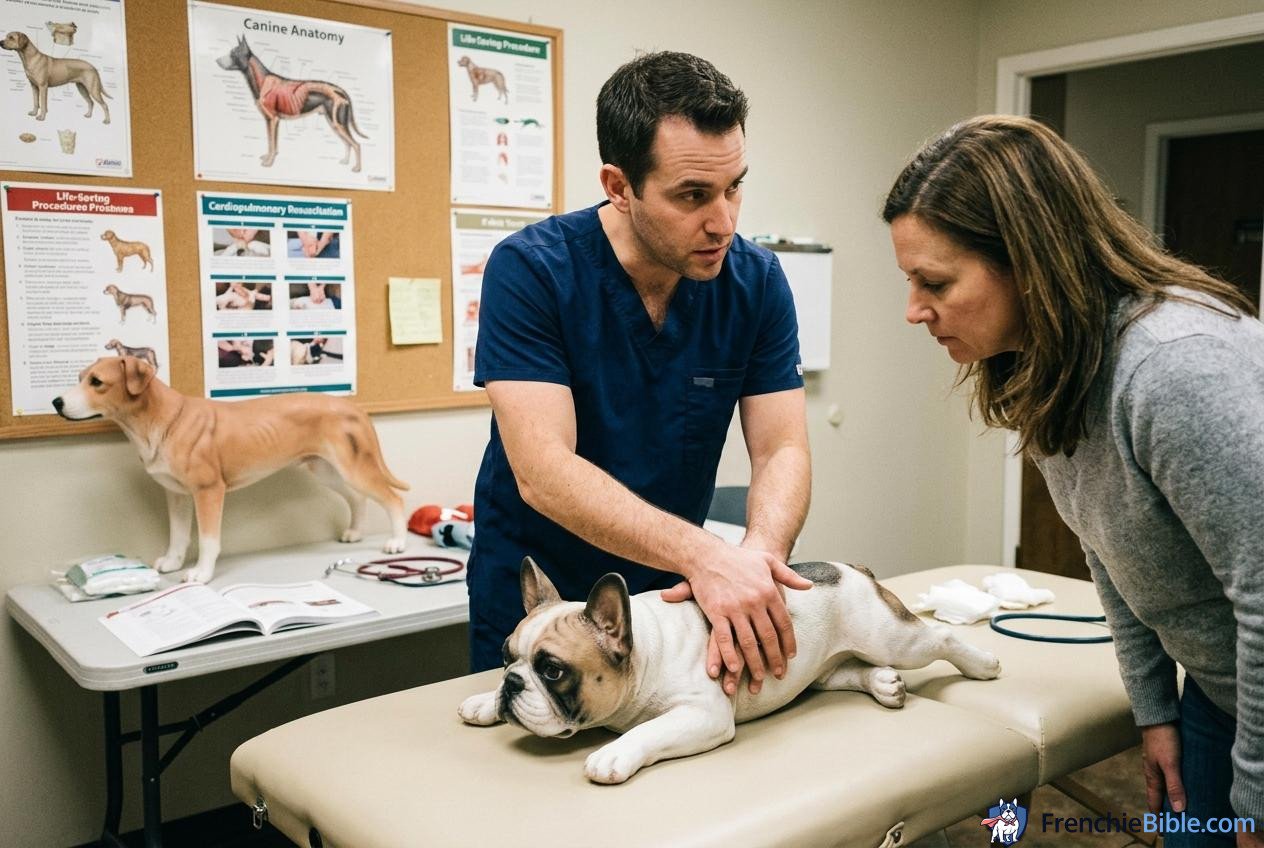
Ensure your Frenchie is on a strict, vet-recommended parasite prevention protocol. Bring a fresh stool sample to your veterinarian every 6-12 months for a fecal floatation test to rule out worms and giardia. If you suspect malabsorption or EPI, request a blood test called a TLI (Trypsin-Like Immunoreactivity) test.
6. Adjust the Feeding Schedule
If your Frenchie is only fed once a day, they may be experiencing intense hunger spikes. Split their daily caloric intake into two or three smaller meals. Keeping their blood sugar stable and their stomach slightly full can reduce the desperate scavenging behavior that leads to poop eating.
The Dual Approach: Part 2 – Behavioral Modification and Training
Nutritional changes will fix the desire to eat poop, but behavioral training is required to break the habit. Dogs are creatures of routine, and if eating poop has become a daily ritual, you have to disrupt that pattern.
1. The Power of Immediate Cleanup (Management)
This is the most effective behavioral intervention: Remove the opportunity. You cannot train a dog to stop eating poop if you leave poop in the yard.
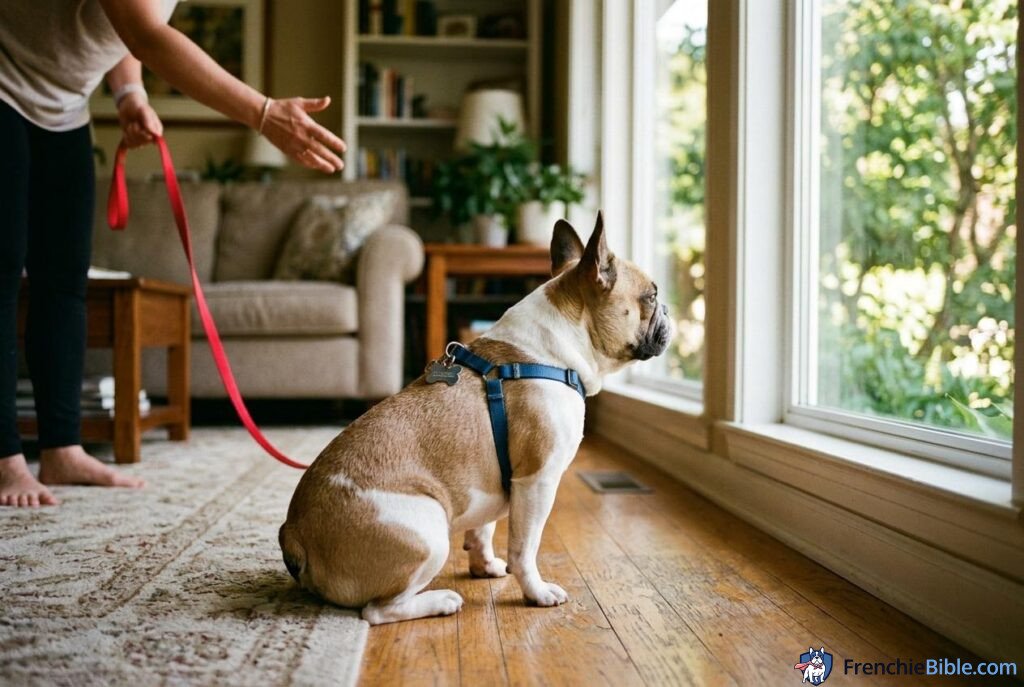
- Accompany your Frenchie outside every single time they go to the bathroom.
- Keep them on a leash, even in your fenced-in backyard.
- The moment they finish defecating, praise them, hand them a high-value treat, and immediately scoop the poop.
If the poop is gone before they even have a chance to turn around and look at it, the behavior cannot occur. Over time, the habit will fade.
2. Master the “Leave It” Command
The “Leave It” command is essential for Frenchie owners. It teaches the dog that ignoring something tempting yields a greater reward.
- Start training indoors with a low-value treat on the floor. When the dog goes for it, cover it with your foot or hand and say “Leave it.”
- When they look away from the treat and look at you, immediately reward them with a much higher-value treat (like a piece of chicken or cheese) from your other hand.
- Once they have mastered this indoors, move the training to the yard. When they use the bathroom and turn to sniff the stool, enthusiastically say “Leave it!” and offer an irresistible reward.
3. Change the Bathroom Routine
Break the environmental association. If your Frenchie always eats poop in the back right corner of the yard, stop letting them go there. Put them on a leash and walk them in the front yard or down the street for their potty breaks. The change in scenery provides mental distraction and removes the environmental cues that trigger the coprophagia.
4. Provide Adequate Mental and Physical Stimulation
French Bulldogs do not need miles of running, but they do need mental workouts. A tired dog is a good dog.
- Use puzzle toys, snuffle mats, and Kongs stuffed with healthy treats to keep their brains occupied.
- Engage in 10-15 minute obedience training sessions twice a day.
- Ensure they are getting appropriate daily walks (weather permitting, avoiding the heat of the day).
When a dog is mentally fulfilled, they are far less likely to resort to obsessive behaviors like stool eating out of boredom.
5. Never Punish
Do not rub their nose in it, do not yell, and do not swat them. As mentioned earlier, punishment can cause anxiety and actually increase the likelihood of coprophagia as they try to hide the evidence of their accidents. Keep your reactions neutral. If you catch them in the act, simply interrupt the behavior calmly (a sharp clap or a whistle) and redirect them to a toy or a training command.
6. Provide Appropriate Chew Alternatives
Frenchies love to chew. Provide them with safe, durable chew toys like Nylabones Benebones, or tough rubber toys. If their chewing instinct is satisfied on appropriate items, they will be less inclined to chew on dried feces in the yard.
Special Considerations for French Bulldog Puppies
As a breeder I see coprophagia most frequently in litters between the ages of 8 weeks and 6 months. During this time, they are transitioning from their mother’s milk to solid food, their digestive systems are maturing, and they are exploring the world.
- The Weaning Process: Ensure the transition to solid food is slow and involves highly digestible puppy formulas.
- Puppy Mills vs. Reputable Breeders: Puppies from pet stores or puppy mills often develop coprophagia because they were kept in tiny cages where they had to eat, sleep, and defecate in the same square foot of space. Breaking this habit in a mill rescue requires immense patience, extreme cleanliness, and strict confinement management (making sure their crate is appropriately sized so they don’t soil where they sleep).
- Teething: Between 4 and 6 months Frenchies are teething. Their gums hurt, and they want to put everything in their mouths. Providing frozen carrots, frozen Kongs, and puppy-specific teething rings can distract them from eating stool.
The Dangers of Coprophagia: Is It Harmful?
Many owners ask me, “Is it dangerous for my Frenchie to eat poop?” The honest answer is: it depends, but it is certainly a health risk.
- Parasite Re-infection: If your dog has worms, they pass the eggs in their stool. By eating the stool, they re-infect themselves, making it impossible to clear the parasite burden.
- Pathogen Transmission: Stool can harbor harmful bacteria like Salmonella, E. coli, and Campylobacter. While dogs have stronger stomach acids than humans, an excessive load of these bacteria can cause severe gastrointestinal distress, vomiting, and bloody diarrhea.
- Parvovirus: If your Frenchie eats the stool of an unvaccinated, infected dog, they can easily contract Parvovirus, which is highly contagious and frequently fatal in young or weak dogs.
- Medication Toxicity: If your dog eats the stool of another dog that is currently on medication (like pain killers, heartworm prevention, or antibiotics), your dog is ingesting a metabolized portion of those drugs, which can cause toxicity.
- Zoonotic Risks: If your dog eats feces filled with bacteria or parasites, and then comes inside and licks your face, or your children’s faces, they can transmit those pathogens to the human family members.
Case Studies from the Clinic
To illustrate how this dual approach works in practice, let’s look at two common scenarios I see in my breeding experience.
Case Study 1: “Boredom Buster Bella”
The Patient: Bella, a 2-year-old spayed female Frenchie.
The Problem: Bella’s owners work long hours. Bella has a doggy door to access the fenced backyard. Recently, owners noticed Bella eating her own dried stool in the yard.
The Assessment: Bloodwork and fecal exams were totally normal. Bella is fed a high-quality diet. The diagnosis: Environmental boredom and lack of supervision.
The Solution:
- Behavioral: The doggy door was locked. Bella was only allowed outside on a leash under direct supervision. The yard was deep-cleaned. Owners hired a midday dog walker to break up the long days and provide mental stimulation.
- Nutritional: Added a mild probiotic to support gut health and sprinkled MSG-based deterrent on her food for two weeks to break the taste association.
The Result: Within three weeks, the behavior stopped completely.
Case Study 2: “Hungry Hugo”
The Patient: Hugo, an 8-month-old male Frenchie.
The Problem: Hugo eats his poop immediately after passing it. He is slightly underweight despite eating his full daily ration of kibble, and his stools are large, loose, and foul-smelling.
The Assessment: Fecal test revealed a heavy load of Giardia (an intestinal parasite). The poor digestion caused by the parasite made his stool smell like undigested food.
The Solution:
- Medical/Nutritional: Prescribed a course of Panacur to clear the Giardia. Transitioned Hugo to a highly digestible prescription gastrointestinal diet. Added digestive enzymes and a strong probiotic to rebuild his gut flora.
- Behavioral: Owners were instructed to leash-walk Hugo for potty breaks and immediately pull him away and reward him with boiled chicken the second he finished defecating.
The Result: Once the Giardia was cleared and his gut healed, his stool firmed up and lost its “food” scent. Combined with the “leave it” training Hugo lost all interest in his feces within a month.
Step-by-Step Action Plan to Stop Your Frenchie from Eating Poop
If you are dealing with coprophagia right now, follow this strict protocol:
- Visit the Vet: Rule out parasites EPI, and metabolic diseases. Bring a fresh stool sample.
- Clean the Yard: Go outside right now and pick up every single piece of feces in your yard.
- Supervise 100%: Your Frenchie is no longer allowed in the yard alone. Leash them for every potty break.
- Pick it Up Immediately: Scoop the poop the second it hits the ground.
- Upgrade the Diet: Switch to a high-quality, highly digestible food.
- Add Supplements: Introduce digestive enzymes and a canine-specific probiotic to their daily meals.
- Try a Deterrent: Add fresh pineapple or a commercial deterrent to their food.
- Train “Leave It”: Heavily reward your dog for turning their head away from the stool.
- Increase Stimulation: Add an extra 15-minute training or play session to their daily routine to combat boredom.
Frequently Asked Questions (FAQ)
Q: Will my French Bulldog outgrow eating poop?
A: If it is a puppy exploring the world, they often outgrow it by 1 year of age. However, if the behavior is caused by a nutritional deficiency or has become a deeply ingrained behavioral habit, they will not outgrow it without active intervention from you.
Q: Is it true that feeding them their own poop cures them?
A: Absolutely not. This is a dangerous myth. Feeding a dog feces exposes them to high levels of bacteria and parasites and actively reinforces the behavior you are trying to stop.
Q: Why does my Frenchie only eat frozen poop in the winter (“poopsicles”)?
A: Frozen stool has a different texture that many dogs find appealing—it is crunchy and less odorous. The solution is the same: immediate cleanup. Do not leave poop in the yard to freeze.
Q: Can I just use a muzzle when they go outside?
A: A basket muzzle can be a useful temporary management tool to prevent them from ingesting the stool while you are working on the underlying nutritional and training fixes. However, a muzzle does not cure the root cause of the behavior; it only physically blocks it.
Q: I feed my dog a raw diet, but they still eat poop. Why?
A: While raw diets are highly digestible, some dogs on raw diets may still experience coprophagia if the diet is not perfectly balanced (e.g., lacking specific minerals) or if they have an underlying absorption issue. Furthermore, behavioral habits (like boredom) can occur regardless of the diet fed.
Conclusion
Dealing with a French Bulldog that eats poop is undoubtedly frustrating and unpleasant. However, by taking a step back and acting as a detective, you can solve this issue. Remember that your Frenchie is not doing this to gross you out or make you angry; they are responding to an internal drive—whether that drive is nutritional starvation at a cellular level, a disrupted gut microbiome, anxiety, or simple boredom.
By employing this dual approach—optimizing their digestive health through premium nutrition and supplements, while simultaneously managing their environment and retraining their behavior—you can successfully break the cycle of coprophagia. Be patient, be consistent, and always have your poop bags ready the moment you step outside!
Disclaimer: We are not veterinarians and do not hold veterinary medical licenses. The information provided in this article is based on years of breeding and daily care experience and is for educational purposes only. It should not replace professional veterinary advice. Always consult with a licensed veterinarian if you have concerns about your French Bulldog’s health or before starting any new treatment.