Disclaimer: The information provided in this comprehensive guide is for educational and informational purposes only. It does not substitute for professional veterinary advice, diagnosis, or treatment. As a experienced French Bulldog breeder and experienced breeder, I strongly advise consulting with your local, trusted veterinarian to develop a personalized care and wellness plan tailored specifically to your Frenchie’s unique physical and emotional needs.
If you work a standard 9-to-5 job, you might be wondering, “Can I realistically own a French Bulldog?” The short answer is a cautious yes, but it requires meticulous planning, unwavering dedication, and a deep, nuanced understanding of the breed’s highly specific physical and psychological needs. French Bulldogs are affectionately known worldwide as “Velcro dogs” for a very valid reason—they thrive on, and indeed require, human companionship. They can and often do struggle when left alone for extended periods.
Related Reading: Training & Behavior | Frenchie Puppy Guide | Best Food for Frenchies
In this exhaustive, authoritative guide, written from the dual, expert perspective of a experienced French Bulldog breeder and a seasoned, ethical breeder, we will explore exactly how long a Frenchie can safely stay home alone. We will delve deeply into the clinical realities of their bladder capacity, how to effectively manage and prevent separation anxiety, the profound impact of isolation on their mental health, and how to create a highly structured daily routine that ensures your bat-eared companion remains happy, healthy, and emotionally fulfilled while you are diligently working at the office.
The 9-to-5 Dilemma: Can French Bulldogs Handle Full-Time Working Owners?
The modern reality is that the vast majority of dog owners work full-time outside the home. However, bringing a French Bulldog into a household where the home is completely empty for 8 to 10 hours a day presents unique, sometimes formidable challenges that must not be taken lightly by prospective or current owners.
The Reality of Leaving Your Frenchie Alone: A Breed Analysis
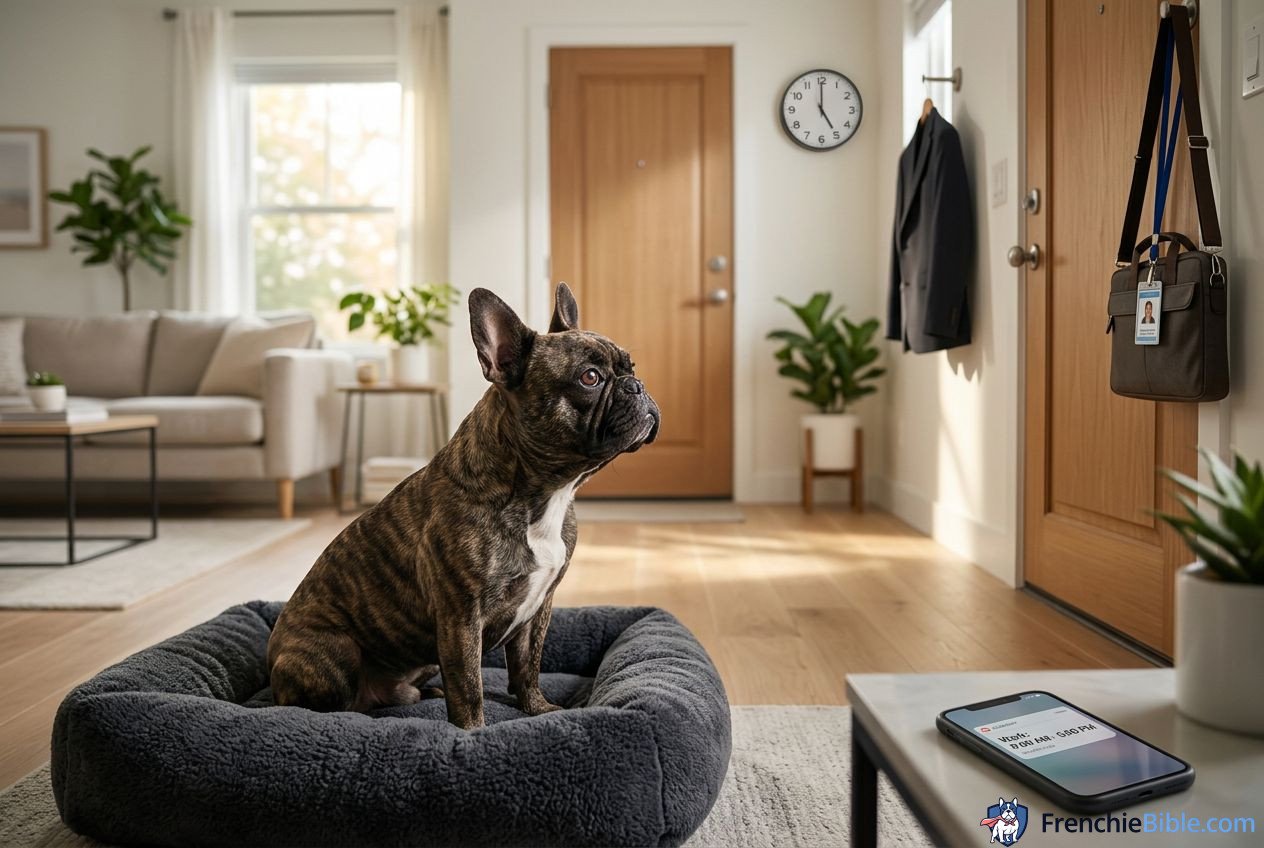
To understand why French Bulldogs struggle with isolation, we must look at their history and genetics. French Bulldogs were not bred to work fields, herd sheep, or guard estates. They were specifically bred in the 19th century by lace makers in England and later in France for one singular, primary purpose: to be a companion lap dog. Unlike working breeds such as Border Collies, Siberian Huskies, or German Shepherds, who were bred to operate independently or alongside humans in active roles, the Frenchie was developed over generations to simply be physically close to their human pack.
This genetic predisposition means they are fundamentally, neurologically wired to require social interaction. Leaving a French Bulldog alone for a full 9-to-5 workday without any intervention, stimulation, or mid-day break is generally not recommended by veterinary professionals or responsible breeders. It is not just about the emotional toll of loneliness; there are significant physiological limitations at play, particularly regarding their bladder control and their brachycephalic (flat-faced) anatomy, which makes them highly susceptible to fatal temperature fluctuations if left unsupervised in an un-air-conditioned environment.
The “Velcro Dog” Personality: Understanding Deep Frenchie Attachment
As a breeder who has placed hundreds of puppies in loving homes, I constantly remind prospective owners that Frenchies are emotional sponges. They attach themselves deeply, almost obsessively, to their primary caregivers. This “Velcro dog” personality is exactly what makes them such incredibly loving, endearing pets. They want to be involved in every aspect of your life—watching you cook, sitting on your feet while you work, and sleeping under the covers with you. But this trait is a double-edged sword.
When deprived of this expected social interaction, a French Bulldog doesn’t just get slightly bored; they can become deeply distressed. Prolonged isolation can rapidly lead to severe behavioral issues, canine depression, destructive chewing, and clinical separation anxiety. If you work long hours, you must be financially and logistically prepared to supplement your absence with mid-day visits, professional dog walkers, or structured doggy daycare. Your presence is their primary currency for happiness.
Exactly How Long Can a French Bulldog Be Left Home Alone? The Clinical Breakdown
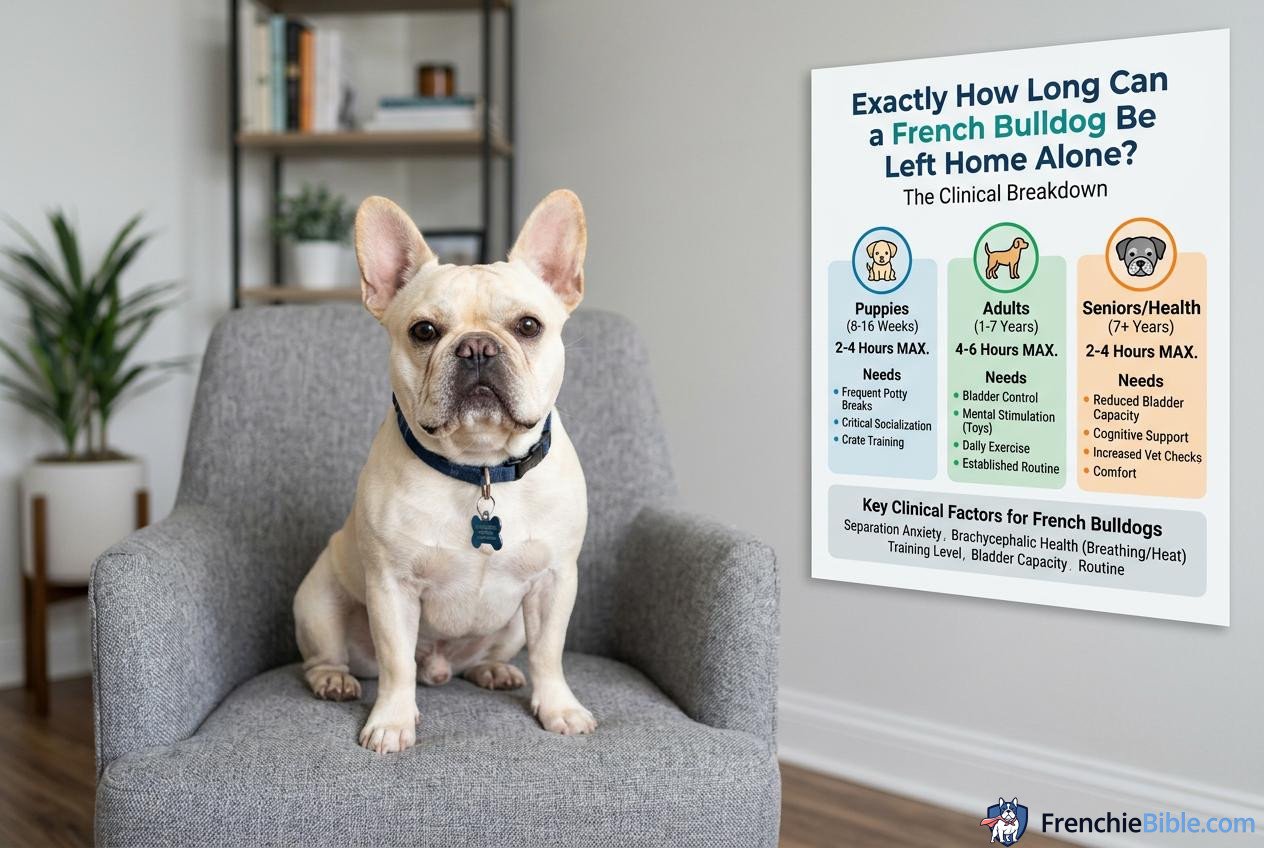
The golden question asked by every working owner is: How many hours is definitively too many? The answer is not a flat number; it depends heavily on the age, health status, physiological development, and individual temperament of your French Bulldog. Let’s break this down clinically by life stage.
Puppies (8 Weeks to 6 Months): The Intensive Care Phase
French Bulldog puppies have minuscule, undeveloped bladders and require near-constant supervision, rigorous socialization, and persistent potty training. Leaving a puppy alone for a full workday is akin to leaving an infant unattended; it is simply not feasible.
- 8 to 10 Weeks: Maximum 1 to 2 hours. At this crucial developmental stage, they are essentially infants. They need incredibly frequent potty breaks (often 10-15 times a day), feeding three to four times a day to prevent hypoglycemia, and constant positive reinforcement training. Leaving an 8-week-old puppy alone while you work a 9-to-5 job is a guaranteed recipe for house-soiling, anxiety development, and severe behavioral issues later in life.
- 3 to 6 Months: Maximum 3 to 4 hours. As they grow physically, their bladder capacity increases slightly. The general veterinary rule of thumb is that a puppy can hold their bladder for one hour per month of age (e.g., a 4-month-old can hold it for 4 hours). However, this is just a biological maximum, not a recommendation. Furthermore, they are heavily teething and actively exploring their world at this age, meaning they desperately need supervision to prevent them from swallowing dangerous household objects, chewing electrical cords, or developing destructive habits.
If you work full-time and are bringing home a Frenchie puppy, you must arrange for someone—a pet sitter, a neighbor, or a family member—to visit them multiple times a day. There is no compromise here.
Adult French Bulldogs (6 Months to 7 Years): The Maintenance Phase
A healthy, well-adjusted, and adequately exercised adult French Bulldog can typically hold their bladder and manage being alone psychologically for about 4 to 6 hours. In some exceptional, highly trained, and low-energy cases, they can push this to 8 hours.
However, speaking purely With my background in French Bulldog breeding concerned with long-term urological health, I strongly advise against regularly leaving an adult Frenchie alone for a full 8 hours without offering a potty break. Forcing any dog, but particularly this breed, to hold their highly concentrated urine for prolonged periods on a daily basis drastically increases the likelihood of developing painful Urinary Tract Infections (UTIs), struvite or calcium oxalate urinary crystals, and severe bladder stones—conditions to which Frenchies are already genetically predisposed. Chronic urine retention weakens the detrusor muscle of the bladder, potentially leading to incontinence in their later years.
Senior Frenchies (7+ Years): Returning to Frequent Needs
As French Bulldogs enter their senior years, their physiological and psychological needs change once again, often mimicking the demands of puppyhood. Their sphincter control and bladder tone may weaken, and they may develop age-related conditions such as degenerative joint disease (osteoarthritis), canine cognitive dysfunction (doggy dementia), or chronic kidney disease (CKD), which causes increased thirst and urination.
Senior Frenchies should generally not be left alone for more than 2 to 4 hours. They will undoubtedly need more frequent trips outside to relieve themselves. Furthermore, older dogs often suffer from increased generalized anxiety and require more emotional comfort, physical assistance (like lifting them onto the sofa to look out the window), and medical monitoring than younger adults.
Bladder Control and Potty Breaks: The Veterinary Science
From a strictly veterinary standpoint, a canine’s urinary system is not anatomically designed to hold waste for 10 hours a day. Urine is a waste product. When urine sits stagnant in the bladder for extended periods, it becomes highly concentrated. This dark, concentrated urine creates an absolutely ideal, warm breeding ground for bacteria traveling up the urethra.
Furthermore, holding urine for too long physically stretches the bladder wall. Over months and years, this can lead to permanent loss of muscle tone, resulting in urinary incontinence or a dangerous inability to fully empty the bladder (urinary retention), which can back up into the kidneys. If you work a standard 9-to-5 shift, and you factor in a 30-to-60-minute commute each way, you are likely gone from the house for 9 to 11 hours. This is definitively, unequivocally too long for a French Bulldog to go without a designated bathroom break.
Separation Anxiety vs. Simple Boredom: Knowing the Clinical Difference
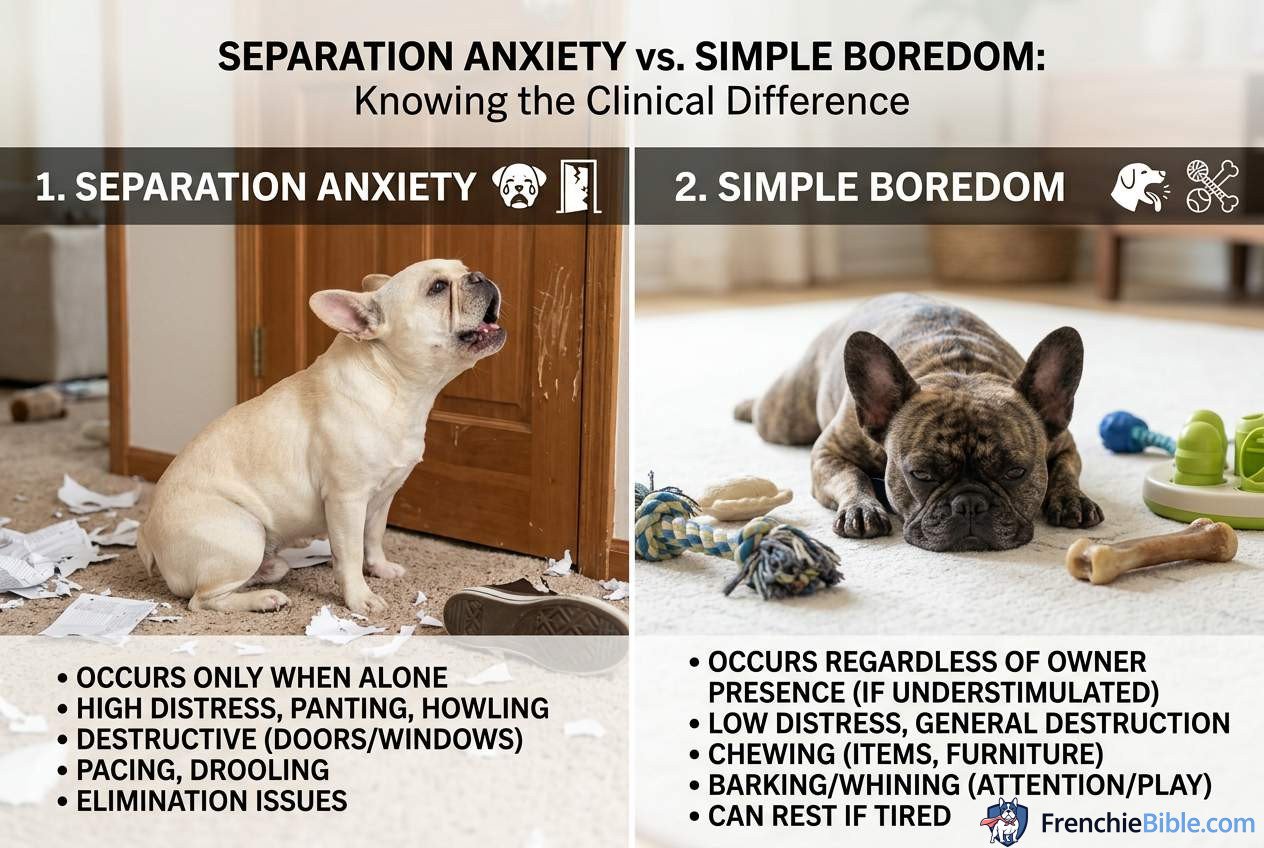
Working owners must learn to keenly observe and distinguish between a dog that is simply bored out of its mind and a dog that is suffering from clinical, panic-inducing separation anxiety. The management and treatment strategies for each scenario are entirely different. Treating panic with puzzle toys will fail, and treating boredom with heavy medication is inappropriate.
Signs of True Separation Anxiety (A Panic Disorder)
Separation anxiety in dogs is a legitimate panic response. The dog is genuinely terrified, experiencing a massive spike in cortisol and adrenaline, simply because they are separated from their primary attachment figure. With my background in French Bulldog breeding, I see this frequently in Frenchies due to their Velcro nature. Symptoms are dramatic and include:
- Vocalization: Incessant, frantic howling, high-pitched barking, or crying that begins the exact moment you leave, or even in anticipation as you are preparing to leave (e.g., picking up your keys triggers shaking).
- Destructive Behavior at Exit Points: Chewing, scratching, or digging frantically at doors, windowsills, or the bars of their crates in a desperate, panic-driven attempt to escape and find you. They are not chewing your slippers; they are destroying the door frame.
- Inappropriate Elimination: Peeing or defecating indoors despite being fully and reliably house-trained. This is not out of spite; it is an involuntary physiological response to sheer panic.
- Pacing and Panting: Excessive hypersalivation (drooling so much their chest is wet), relentless pacing in a specific pattern, and a complete inability to settle down or sleep while you are gone.
- Self-Harm: In severe, heartbreaking cases, dogs may break their nails, injure their paws, or fracture their teeth trying to escape confinement.
Veterinary Treatment for Separation Anxiety: This requires a multi-pronged approach involving strict desensitization training, counter-conditioning protocols, and almost always, veterinary intervention. We frequently prescribe daily SSRI or TCA anti-anxiety medications (such as your veterinarian may recommend a anti-anxiety medication (never use without veterinary guidance)/your veterinarian may recommend a anti-anxiety medication (never use without veterinary guidance) or Clomipramine) to lower their baseline panic threshold enough so that behavioral training can actually be processed and become effective.
Signs of Simple Boredom (Lack of Stimulation)
A bored Frenchie is not panicking; their heart rate is normal. They are simply under-stimulated and looking for a job to do to pass the time. Symptoms include:
- Opportunistic Chewing: Chewing on your expensive shoes, the TV remote, or the edge of the rug because they are easily accessible, smell like you, and are fun to destroy.
- Garbage Raiding: Tipping over the bathroom trash can looking for interesting smells or snacks.
- Intermittent Barking: Barking at sounds outside the window, the mail carrier, or out of sheer frustration, but not the frantic, continuous, distressed howling of an anxious dog. They bark, then go to sleep, then bark again.
Treatment for Boredom: This is much easier to resolve. It requires significantly more physical exercise before you leave, providing high-value puzzle toys, and enhancing their environmental enrichment. A tired dog is a good dog.
Creating the Perfect Safe Space for Your Home-Alone Frenchie
If you must leave your French Bulldog alone while you work, setting up an appropriate, hazard-free, and emotionally comforting safe environment is paramount to their physical safety and overall well-being.
To Crate or Not to Crate? The Great Debate
Crate training, when executed correctly, can be incredibly beneficial. Dogs are den animals by instinct, and a properly introduced crate can become a place of immense comfort, security, and relaxation. It is their personal bedroom.
However, a crate should absolutely never be used as a multi-hour prison for a working owner’s convenience. No dog, and especially not a French Bulldog with their unique physiological structure, should ever be locked in a small crate for 8 to 10 hours straight. This practice is highly detrimental to their muscular development, joint health (increasing stiffness and IVDD risks), and psychological state.
If you choose to crate your dog while you work to prevent destruction, you must have a dog walker or pet sitter come mid-day to let them out for a minimum of 30 to 45 minutes of active exercise, potty time, stretching, and human interaction.
Setting Up a Puppy Playpen or Designated Safe Room
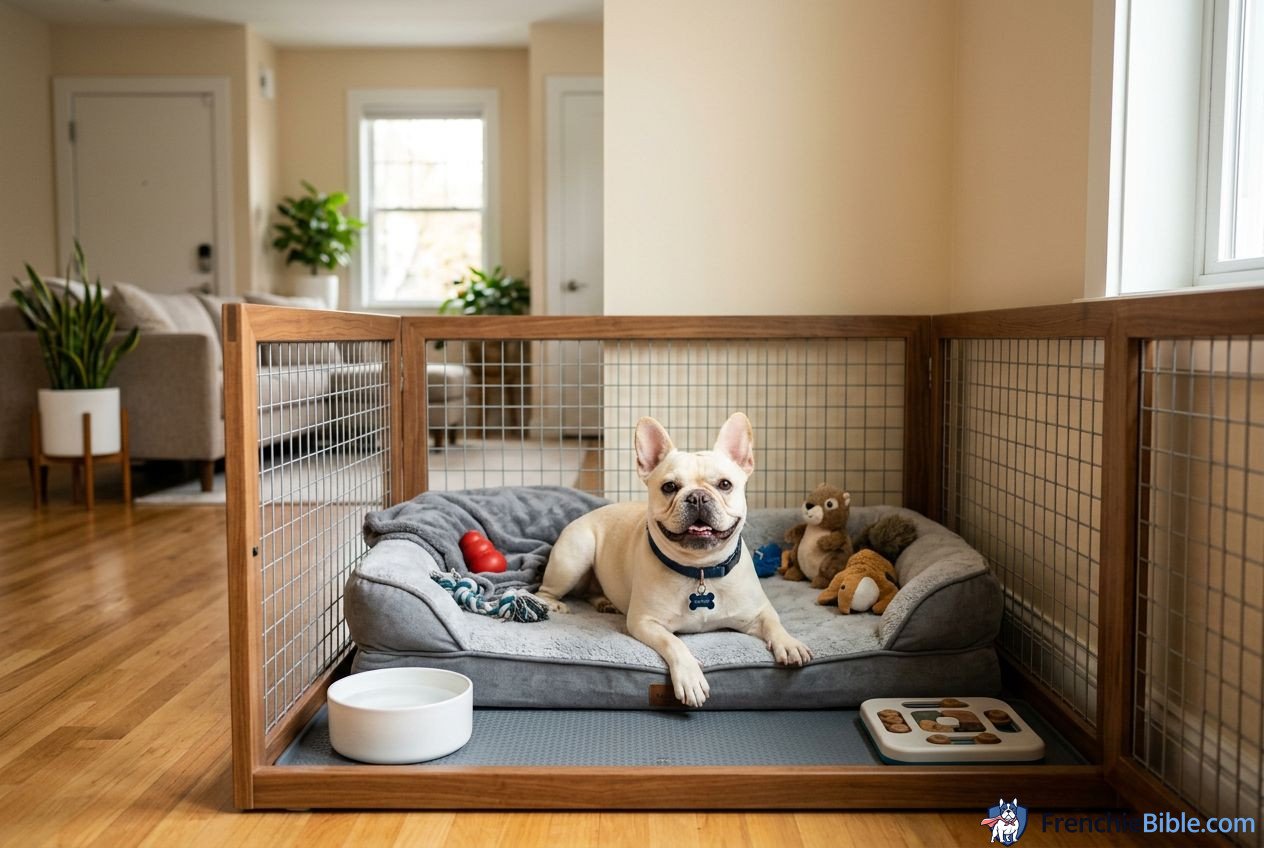
A vastly superior alternative to all-day crating for full-time working owners is establishing a designated “safe room” or utilizing a heavy-duty, large exercise pen (playpen).
- Location Choice: Choose a room with hard, non-porous floors for easy clean-up in case of inevitable accidents (like a kitchen, bathroom, or laundry room), or set up a sturdy playpen in the corner of the living room where they can still feel integrated into the home environment.
- Orthopedic Bedding: Provide a high-quality, memory foam orthopedic bed. Frenchies are genetically prone to chondrodystrophy and Intervertebral Disc Disease (IVDD). A supportive bed is essential to protect their spine when they sleep for hours.
- Designated Potty Area: If you are utilizing a playpen for a puppy or a senior dog with weak control, explicitly include a designated potty area (such as high-quality pee pads, a washable whelping pad, or a fresh indoor grass patch). Critically, place this potty area as far away from their sleeping bed and food bowls as the pen allows. Dogs naturally do not want to soil where they sleep and eat.
- Safe Water Access: Provide a heavy, ceramic, or un-tippable weighted water bowl. Hydration is absolutely critical for brachycephalic dogs to regulate temperature, but you don’t want them tipping over a light metal bowl in the first hour and sitting in a wet, damp pen all day without water.
- Strict Hazard Removal: View the room from a dog’s eye level. Ensure there are absolutely no electrical cords available to chew, toxic house plants (like Monstera or Pothos) within reach, blind cords they could strangle on, or small objects they could swallow leading to a surgical obstruction.
Temperature Control: A Critical, Non-Negotiable Lifesaver for Brachycephalic Breeds
As an emergency veterinarian, I cannot stress this singular point enough: Meticulous temperature control is a literal matter of life and death for French Bulldogs.
Because of their brachycephalic (flat-faced) anatomy—which clinically includes an elongated soft palate, stenotic nares (narrow, pinched nostrils), everted laryngeal saccules, and a hypoplastic (narrow) trachea—they simply cannot pant effectively to naturally cool themselves down like a Golden Retriever can. Their anatomical airway resistance means they overheat incredibly fast, leading to heat exhaustion, heatstroke, organ failure, and death in a matter of minutes to hours.
When leaving your Frenchie alone in the house:
- Air Conditioning is Mandatory, Not Optional: In the spring and summer months, the Central Air Conditioning must be left on. Setting the thermostat to a comfortable 68-72°F (20-22°C) is ideal. Do not turn the AC off or set it to 80°F to save money on your electric bill. Treating a heatstroke emergency in the ICU will cost thousands of dollars, and it frequently costs the dog their life.
- Invest in Smart Thermostats: Invest in a smart thermostat (like a Nest or Ecobee) that sends push alerts directly to your smartphone if the ambient temperature in your house unexpectedly spikes due to an HVAC failure or a neighborhood power outage. This early warning can allow you to rush home or send a neighbor to rescue your dog.
- Avoid Direct Sun Exposure: Ensure their crate, playpen, or designated bed is not sitting in a spot that receives direct, intense sunlight through a window during the peak heat of the day. A sunny spot that feels nice at 9 AM can become a dangerously hot greenhouse by 2 PM.
- Winter Heating: In winter, ensure the house is adequately heated. Frenchies have very short, single coats and zero undercoat. They do not have the insulation to withstand freezing indoor temperatures. Consider safe, cord-free heating pads or warm sweaters if your house is drafty.
The Working Owner’s French Bulldog Schedule (A Detailed Step-by-Step Daily Routine)
Success with a Frenchie while working full-time lies entirely in strict routine. Dogs absolutely thrive on predictability; knowing what comes next lowers their baseline anxiety. Here is a realistic, healthy, and vet-approved daily schedule for a full-time working Frenchie owner.
The Morning Rush: Pre-Work Essentials (You Must Wake Up Earlier)
You cannot wake up 20 minutes before you need to rush out the door, throw food in a bowl, and expect your French Bulldog to be perfectly fine all day. Working owners must commit to becoming early risers.
- 6:00 AM – Wake Up and Immediate Potty: Take your dog outside immediately upon waking. Praise them heavily for going to the bathroom. This ensures their bladder is empty right away.
- 6:15 AM – Morning Exercise (The Most Crucial Step): A physically tired and mentally satisfied dog is a good dog. Take your Frenchie for a dedicated 20 to 30-minute walk. Important Veterinary Note: In hot summer weather, this early morning walk is absolutely vital to get their exercise in before the sun gets dangerously hot. Do not over-exert them or force them to jog, but ensure they get enough continuous movement and sniffing time to burn off the energy they accumulated while sleeping. Sniffing is incredibly tiring for a dog’s brain.
- 6:45 AM – Breakfast and Mental Training: Feed them their measured morning meal. Instead of a bowl, consider using a snuffle mat or a slow feeder. Spend 5 to 10 minutes doing basic obedience training (sit, stay, paw, leave it). Mental stimulation and focusing on you tires a dog out just as much, if not more, than purely physical exercise.
- 7:30 AM – The Cool Down Period: Allow your dog to relax, pant out their exercise, and settle their heart rate while you shower, eat breakfast, and get ready for work.
- 8:00 AM – The Calm Departure: Give them a high-value, long-lasting puzzle toy (like a deeply frozen Kong securely stuffed with dog-safe peanut butter, plain Greek yogurt, or soaked kibble) right as you walk out the door. Crucial advice: Do not make a big, dramatic, emotional fuss about leaving. Do not say “Mommy will miss you so much!” in a high-pitched voice. Keep departures utterly calm, boring, and business-like. Your anxiety will instantly transfer to them.
Mid-Day Solutions: Dog Walkers, Daycare, and Trusted Neighbors
If you work a standard 9-to-5, plus commute time, this mid-day break is non-negotiable for the urological and emotional health of a French Bulldog.
- 12:00 PM to 1:00 PM – The Essential Mid-Day Visit: Have a hired professional dog walker, a very trusted neighbor, or a willing family member come to your house.
- What exactly needs to happen during this visit: The dog must be taken outside to fully relieve themselves (both pee and poop). They should get 15-20 minutes of engaging play indoors or a short, leisurely walk (only if weather/heat permits), and their water bowl must be washed and refreshed with cool water. This single visit breaks up the long, monotonous day, prevents painful bladder issues, and provides a spike of joyful social interaction.
The Evening Reunion: Making Up for Lost Time
When you finally get home at 5:30 PM, you may be exhausted from work, but your Frenchie has been waiting for this exact moment all day. You must be mentally prepared to dedicate your evening to them.
- 5:30 PM – Immediate Potty and Calm Greeting: Take them outside to their potty spot the absolute second you get home. Keep the initial greeting calm. If they are jumping frantically, ignore them until all four paws are on the floor. This avoids encouraging over-excitement or inducing submissive urination.
- 6:00 PM – Evening Exercise and Bonding: Another 20 to 30-minute walk, or if they are tired, a highly focused, interactive play session (tug-of-war, fetch) in the yard or living room.
- 7:00 PM – Dinner Time: Feed their second measured meal.
- 8:00 PM to Bedtime – Quality Companion Time: This is the core of why you got a Frenchie. This is what they live for. Let them cuddle next to you on the couch, gently brush their coat to remove loose hair, use dog-safe wipes to meticulously clean their facial folds and tail pocket (crucial to prevent yeast infections), and just allow them to exist near you.
Mental and Physical Enrichment for the Home-Alone Frenchie
Leaving an intelligent, companion-bred dog alone in a silent house for hours with absolutely nothing to do is a guaranteed recipe for destructive behavior and depression. You must provide robust environmental enrichment.
Interactive Toys and Slow Puzzle Feeders
- Frozen Kongs and Toppls: These are the holy grail of durable dog toys for working owners. Stuff a rubber Kong or West Paw Toppl with their daily kibble allowance, mix in some wet food, unsweetened applesauce, or dog-safe peanut butter, and freeze it solid overnight. It can easily take a Frenchie 30-45 minutes of intense focus to lick it clean, providing excellent mental stimulation, tiring their jaw, and physically soothing their anxiety through the repetitive licking motion.
- Snuffle Mats: These are thick fabric mats where you bury and hide dry kibble or high-value treats. The dog has to actively use their nose to sniff out the food, perfectly mimicking natural canine foraging behaviors. This is incredibly tiring for their brain.
- Lick Mats: Spread plain yogurt, 100% pure pumpkin puree (never pie filling with xylitol/spices), or mashed sweet potato on a textured silicone mat and freeze it. Licking releases massive amounts of endorphins in a dog’s brain, naturally and chemically calming them down.
- Safe Chew Toys: Provide heavy-duty chew toys like properly sized Nylabones or Benebones (always monitor when you are home first to ensure they aren’t aggressive chewers who swallow large, dangerous chunks). Veterinary Warning: Absolutely avoid all rawhide products. Rawhide is a severe choking hazard, is processed with toxic chemicals, and frequently causes life-threatening intestinal blockages—a highly invasive abdominal surgery I perform far too often in my clinic.
Calming Aids and Sensory Comfort Strategies
- Background Noise (Auditory Enrichment): Leave the TV or a radio on at a low, conversational volume. There are specific YouTube channels, Spotify playlists, and streaming services (like DogTV) designed specifically with relaxing acoustic music and visual frequencies optimized for dogs. This continuous background noise effectively masks sudden outside noises (slamming car doors, sirens, barking neighbor dogs) that might suddenly trigger anxiety or nuisance barking.
- Pheromone Diffusers: Veterinary-grade products like Adaptil plug-in diffusers release synthetic Dog Appeasing Pheromones (DAP). These chemically mimic the comforting, calming scent a mother dog naturally emits when nursing her newborn puppies. These can significantly reduce mild to moderate anxiety levels and promote a sense of safety.
- Your Scent (Olfactory Comfort): Leave a recently worn, unwashed t-shirt or a piece of your clothing tucked into their bed. Your specific scent is highly comforting to a Velcro dog and reminds them of your eventual return.
- Pet Monitoring Cameras: Invest in a two-way Wi-Fi pet camera (such as a Furbo, Wyze cam, or Ring indoor cam). This allows you to visually check on their safety and anxiety levels throughout the workday from your desk. Some premium cameras let you remotely toss treats and speak to your dog. Cautionary Note: While checking in is great for your peace of mind, speaking to a highly anxious dog through a disembodied camera speaker can sometimes severely confuse them, causing them to frantically search the house for you, ultimately making the anxiety much worse. Use the voice communication features with extreme caution.
The Dietary Needs of a Sedentary Home-Alone Frenchie
A critical aspect often overlooked by working owners is nutrition. French Bulldogs are notoriously prone to obesity. If your Frenchie spends 8-10 hours a day sleeping while you work, they are burning far fewer calories than a dog that runs around a farm all day.
With my background in French Bulldog breeding, I urge you to strictly measure their food using a standard measuring cup, not just by “eyeballing” it. Overfeeding a sedentary Frenchie leads to rapid weight gain. Excess weight exacerbates breathing issues (Brachycephalic Obstructive Airway Syndrome – BOAS), puts immense strain on their fragile spinal discs (increasing IVDD risk), and dramatically shortens their lifespan.
If you are using puzzle toys (like Kongs) while you are at work, the calories from the peanut butter or treats must be subtracted from their daily kibble allowance.
Alternatives to Leaving Your French Bulldog Alone All Day
If leaving your dog home for 8 hours with a single mid-day walker simply isn’t working, or if you have a young puppy or a dog with severe separation anxiety, you must consider these alternatives to maintain their welfare.
Doggy Daycare: The Pros, Cons, and Medical Risks for Frenchies
Doggy daycare can be a fantastic, energy-draining outlet for socialization, but it is absolutely not suitable for every Frenchie, and you must vet the facility rigorously.
- The Pros: They get to socialize and play with other dogs, they are supervised all day by humans, and they will invariably come home utterly exhausted, allowing you to relax in the evening.
- The Cons: French Bulldogs are incredibly prone to overheating. A busy, loud, chaotic daycare with non-stop running can be physically dangerous if the staff is not specifically trained to constantly monitor brachycephalic breeds for respiratory distress. Furthermore, Frenchies are heavily prone to severe spinal injuries. Roughhousing with larger, heavier dogs, or jumping off play equipment, is a massive medical risk.
- The Vet’s Strict Advice: If you decide to utilize a daycare, ensure they have a strictly enforced separate area for small/medium dogs. Ensure they have heavily air-conditioned indoor play spaces. Most importantly, ensure they enforce mandatory, crated nap times. Frenchies often do not know when to stop and will literally play in the heat until they collapse. The staff must be trained to recognize the subtle sounds of stridor (wheezing/gasping) that indicate an airway emergency.
Hiring a Professional Pet Sitter or Dedicated Dog Walker
For many working Frenchie owners, this is often the safest, least stressful, and most reliable option. A professional comes directly to your home, where your dog is already comfortable and safe from the chaotic, high-arousal environment of a daycare pack.
Ensure the walker you hire is properly bonded, insured, and ideally Pet CPR and First Aid certified. Be very clear with them about the limitations of a French Bulldog in the heat—instruct them that if the temperature is above 75°F (24°C), the “walk” should be a quick potty break followed by indoor air-conditioned playtime, not a march around the neighborhood.
Bringing Your Frenchie to Work (If Allowed)
With the welcome rise of pet-friendly corporate workplaces, this is becoming a highly viable option for many. Frenchies make excellent office dogs because, unlike high-energy terriers, they generally prefer sleeping under a desk or on a dedicated bed to running around the office.
If you choose this route, ensure your office environment is physically safe (no open trash cans with toxic foods), heavily temperature-controlled, and that your dog is well-socialized enough not to bark aggressively at every delivery person or coworker who walks past your desk.
Frequently Asked Questions (FAQ)
Can a French Bulldog hold their pee for 12 hours while I work a long shift?
Absolutely not. As An Experienced Breedererinary professional, I categorically state that forcing any dog, especially a small breed with a proportionally small bladder like a French Bulldog, to hold their urine for 12 hours is bordering on cruelty and is medically dangerous. It drastically, demonstrably increases the risk of painful urinary tract infections, the formation of surgical bladder stones, and long-term, irreversible incontinence. If you are gone for 12 hours, you have an ethical obligation to hire someone to let them out mid-way through your shift.
Will getting a second dog or a cat help my French Bulldog’s separation anxiety?
It might, but it is a massive, unpredictable gamble. Sometimes, getting a second stable, calm dog provides the constant canine companionship the Frenchie craves, and the anxiety notably subsides. However, just as often, the new puppy learns the anxious, destructive behaviors from your first dog, and suddenly you are dealing with two dogs destroying your drywall and howling all day. Never get a second dog solely to act as an emotional support animal for your first dog; get a second dog because you want a second dog.
Should I leave the lights on for my dog when I go to work early in the morning?
Dogs possess excellent low-light vision, significantly better than humans due to the tapetum lucidum in their eyes. However, leaving them in pitch-black darkness when the sun goes down in the winter can be disorienting and depressing. Leaving a soft lamp on, or relying on natural daylight through the windows during the day, is perfectly fine. The more important sensory input for their comfort is leaving soft auditory background noise playing.
At what age can a Frenchie puppy stay home alone for a full 8 hours?
Technically, never without a potty break. Even a healthy adult Frenchie should have a break halfway through an 8-hour day for optimal urological health. A puppy should never, under any circumstances, be left alone for 8 continuous hours. By 8 to 10 months of age, their bladders are fully physically developed, but the 4 to 6-hour maximum rule without a bathroom break still firmly applies for their lifelong health.
Why does my Frenchie act mad or guilty at me when I finally get home?
They aren’t “mad” or “guilty”—canines do not experience spite, vindictiveness, or complex guilt the way humans do. If they are acting aloof, or displaying submissive behaviors (like intensely tucking their tail, flattening their ears, avoiding direct eye contact, or submissive urination), it is usually because they are immensely overstimulated, anxious about the sudden energy change of the reunion, or reacting directly to your frustrated energy if you walk in and see a mess. Keep all greetings incredibly calm, low-key, and positive.
Do French Bulldogs sleep all day when I am at work?
Usually, yes. A healthy adult dog naturally sleeps between 12 to 14 hours a day. If they have been properly exercised in the morning, and they do not suffer from separation anxiety, a Frenchie will spend the vast majority of your workday happily snoozing on the couch or in their safe space, waiting for you to return.
Conclusion: The Reality of the Working Frenchie Owner
Owning a French Bulldog while simultaneously working a demanding 9-to-5 job is entirely possible, but it is absolutely not a passive, hands-off endeavor. It requires a tangible financial commitment (budgeting for dog walkers, specialized daycares, robust interactive toys, and potential vet bills) and a highly significant time commitment both before the sun comes up and after you clock out.
As both An Experienced Breedererinarian who treats the consequences of neglect and a breeder who deeply loves this breed, my ultimate, honest advice is to closely evaluate your current lifestyle. If you regularly work unpredictable 10-12 hour days, frequently travel overnight for business, or are simply too physically exhausted after work to walk, train, and play with a dog, a French Bulldog is not the right breed for you at this time.
However, if you are genuinely willing to put in the early morning effort, arrange reliable mid-day care, meticulously control their environment, and eagerly dedicate your evenings to your bat-eared companion, you will be deeply rewarded. You will share your life with one of the most loving, humorous, emotionally intelligent, and profoundly affectionate dogs in the canine world.