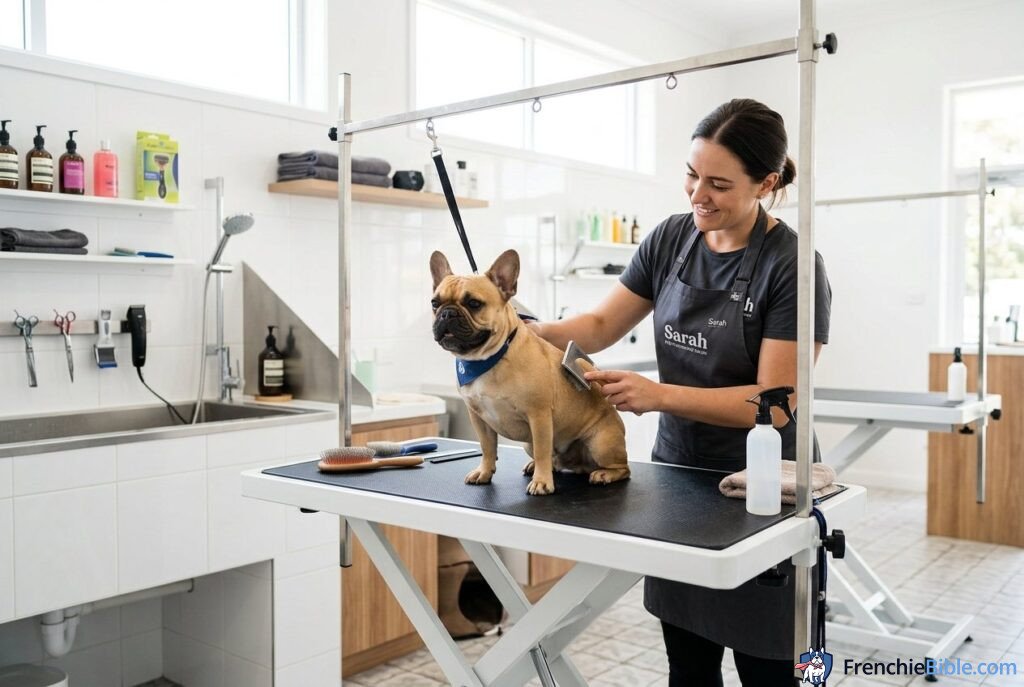
Welcome, fellow Frenchie enthusiasts! If you are reading this, you probably know the struggle all too well. You casually bring out the nail clippers, and your usually sweet, potato-like French Bulldog suddenly transforms into a thrashing, screaming gremlin. As a French Bulldog breeding expert with over a decade of hands-on experience I have seen it all. From the infamous “Frenchie death scream” to the dramatic alligator rolls, nail trims can quickly become a nightmare for both the dog and the owner.
However, nail care is absolutely critical for the health, comfort, and longevity of your French Bulldog. Over the years I have tested countless grooming tools, techniques, and behavioral strategies. I can confidently say that switching from traditional clippers to a high-quality, quiet nail grinder is the single most effective way to eliminate the stress of paw-dicures for timid and anxious dogs.
Related Reading: Training & Behavior | Grooming & Care | French Bulldog Colors
In this comprehensive, deep-dive guide I will share my decade of expertise on why Frenchies hate nail trims, why grinders are superior to clippers, what specific features to look for in a grinder, and a detailed review of the best quiet nail grinders on the market today. I will also provide a step-by-step behavioral protocol to help your fearful Frenchie learn to tolerate—and perhaps even enjoy—the grinding process. Let’s get started!
The Anatomy of a French Bulldog’s Paw: Why Nail Care is Non-Negotiable
To understand why nail care is so vital, we must first understand the unique physical structure of the French Bulldog. Frenchies are a chondrodysplastic breed, meaning they have a specific form of dwarfism that results in short, sturdy limbs and a heavy, compact body. This unique anatomy places a significant amount of stress on their joints, particularly their shoulders, elbows, hips, and knees.
The Impact of Long Nails on Posture and Gait
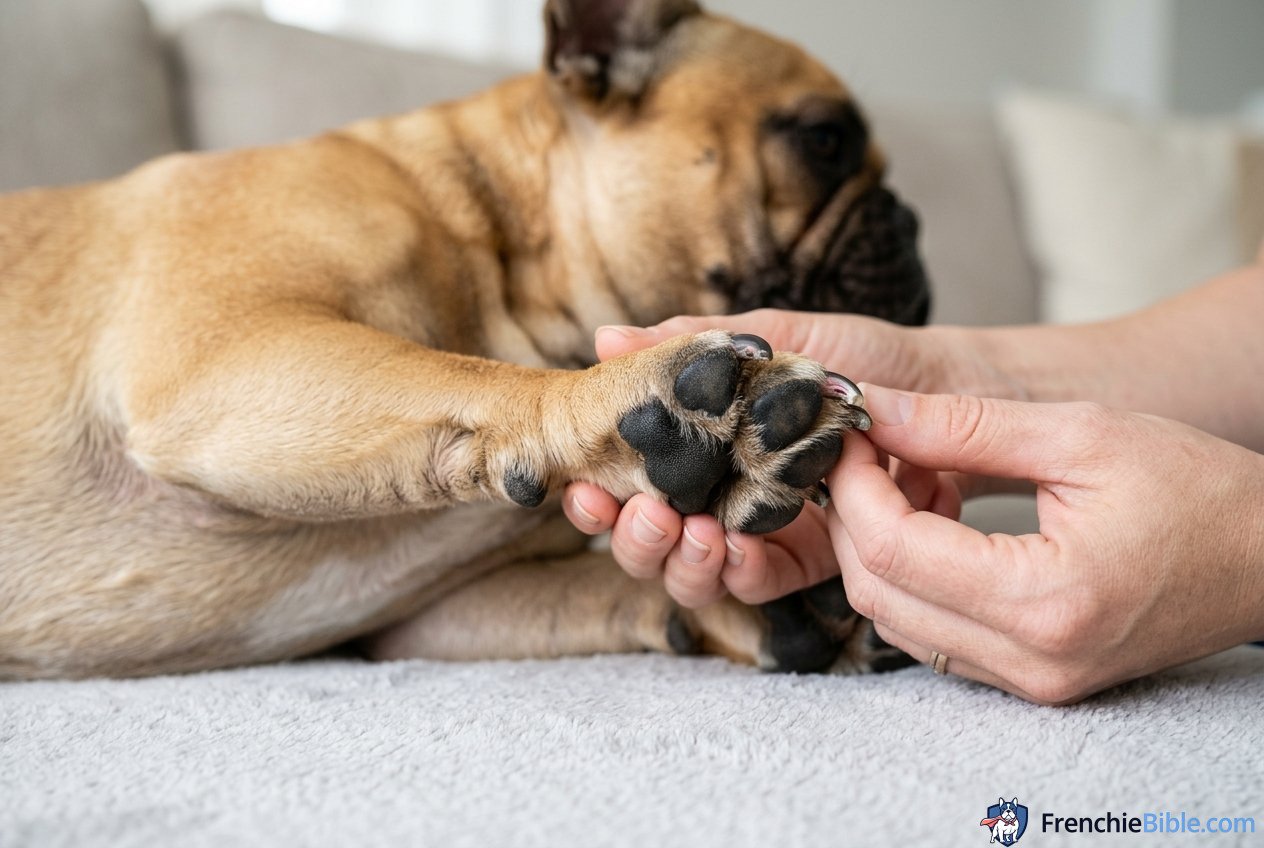
When a French Bulldog’s nails grow too long, they hit the ground with every step. This might seem harmless, but biomechanically, it is disastrous. Long nails push the toes upward and backward, forcing the dog to shift their weight backward onto the heel of their paw pad. This unnatural weight distribution alters their entire posture.
Over time, this altered gait strains the tendons, ligaments, and joints of the legs. For a breed already prone to orthopedic issues like patellar luxation, hip dysplasia, and intervertebral disc disease (IVDD), adding structural stress through long nails is a recipe for early-onset arthritis and chronic pain.
The Hidden Danger of Splayed Toes
Furthermore, long nails cause the toes to splay or spread apart. A healthy Frenchie paw should be tight and compact, often referred to as a “cat foot.” When the toes splay due to long nails, the paw loses its shock-absorbing capabilities. This makes running, jumping, and even walking on hard surfaces incredibly uncomfortable.
The Quick: The Heart of the Nail
The most intimidating part of nail maintenance is the “quick.” The quick is the living, vascular core of the nail, containing blood vessels and nerve endings. If you cut into the quick, it bleeds profusely and causes the dog significant pain. One of the primary reasons nail care must be consistent is that the quick grows along with the nail. If you let the nails grow too long, the quick extends further down. Regular, frequent trimming or grinding forces the quick to recede, allowing you to maintain a shorter, healthier nail length.
Why Do French Bulldogs Hate Nail Trimming So Much?
If your Frenchie reacts to nail trims as if their life is in danger, you are not alone. This is an incredibly common behavioral issue in the breed. But why are they so dramatic about it? It usually comes down to a combination of physical sensitivity, psychological trauma, and breed-specific traits.
1. Paw Sensitivity
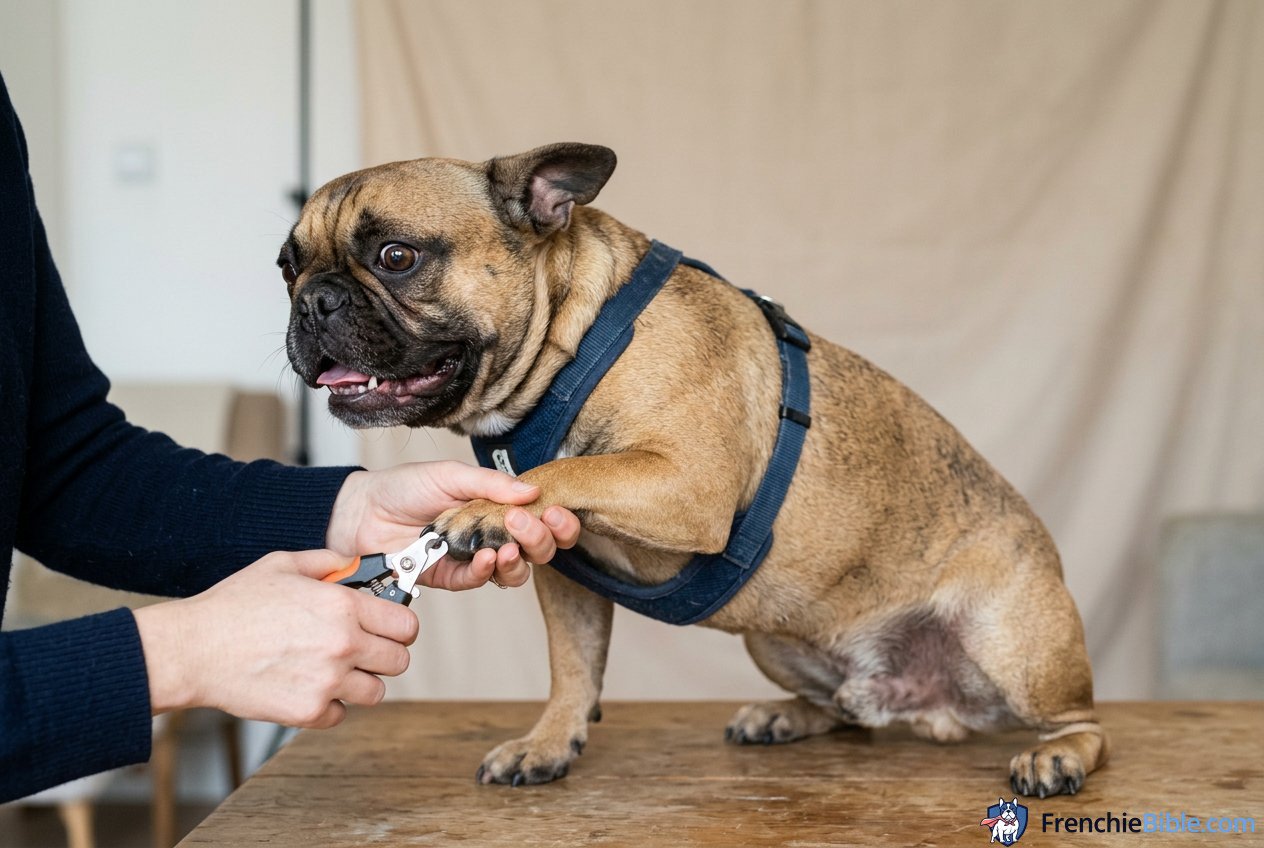
Dogs have an abundance of nerve endings in their paws. Their paw pads and nail beds are highly sensitive to pressure, temperature, and texture. French Bulldogs, in particular, can be quite sensitive to having their paws handled. If they were not desensitized to paw touching during their critical socialization period (between 3 and 16 weeks of age), they may naturally flinch or pull away when you grab their feet.
2. The “Pinching” Sensation of Clippers
Traditional nail clippers, even the sharpest ones, operate by crushing the nail before cutting through it. This squeezing pressure sends a shockwave down the nail directly into the sensitive quick. Even if you do not cut the quick itself, the pinching sensation can be highly uncomfortable or even painful for a small dog.
3. Past Trauma and Negative Associations
Dogs have excellent associative memories. If a Frenchie has ever been “quicked” (had their quick cut) by a groomer An Experienced Breeder, or an owner, they will remember the pain, the blood, and the panic. From that moment on, the sight of the clippers becomes a trigger for a fight-or-flight response. Even if they have never been cut, if previous nail trim sessions involved being pinned down, yelled at, or forcibly restrained, the dog will associate the process with intense fear and stress.
4. The Stubborn Frenchie Temperament
Let’s be honest: French Bulldogs are incredibly intelligent, but they are also notoriously stubborn. Once a Frenchie decides they do not like something, it takes a monumental amount of patience and bribery to change their mind. Their strong, muscular bodies make it difficult to restrain them safely, and their dramatic vocalizations can easily guilt-trip an owner into giving up.
Clippers vs. Grinders: Why Grinders are Superior for Frenchies
As a seasoned breeder I have completely transitioned away from traditional clippers in favor of rotary nail grinders. While clippers are faster, the benefits of a grinder far outweigh the extra time it takes.
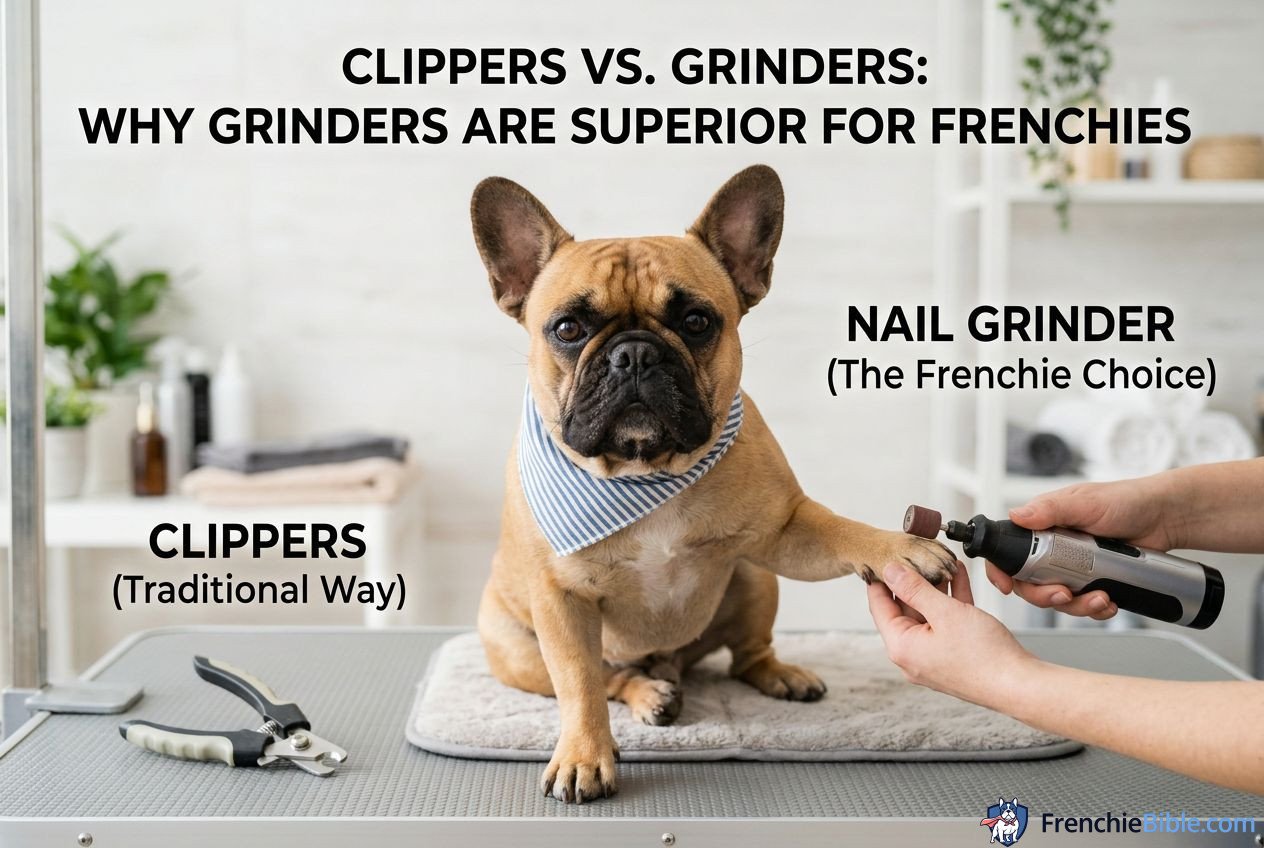
The Problem with Clippers
- Risk of Quicking: It is incredibly easy to accidentally cut the quick, especially if your Frenchie has solid black nails where the quick is invisible.
- Crushing Pressure: As mentioned, the mechanical action of clipping causes a squeezing pressure that many dogs find intolerable.
- Sharp Edges: Clippers leave the nail with sharp, jagged edges that can scratch hardwood floors, furniture, and your skin.
- Micro-Cracks: Dull clippers can cause the nail shell to splinter or crack, leading to painful infections.
The Benefits of Nail Grinders
- Precision and Safety: A grinder slowly files away the nail, millimeter by millimeter. This drastically reduces the risk of hitting the quick. As you grind, you can see the cross-section of the nail change, giving you a clear warning when you are getting too close to the blood vessel.
- Smooth Finish: Grinders leave the nail perfectly smooth and rounded. No more scratching!
- Receding the Quick: Because you can safely grind right up to the very edge of the quick without cutting it, grinding is the most effective way to encourage a long quick to recede over time.
- Zero Pinching: There is no mechanical crushing pressure. The dog only feels a mild vibration, which is much easier to desensitize them to.
What Makes a Nail Grinder “Quiet” and Suitable for Timid Dogs?
Not all nail grinders are created equal. If you buy a cheap, generic grinder from the hardware store, it will likely sound like a chainsaw and vibrate violently. For a timid French Bulldog, this will only replace the fear of clippers with the fear of the grinder. When evaluating grinders I look for three critical factors: Noise Level Vibration, and Motor Quality.
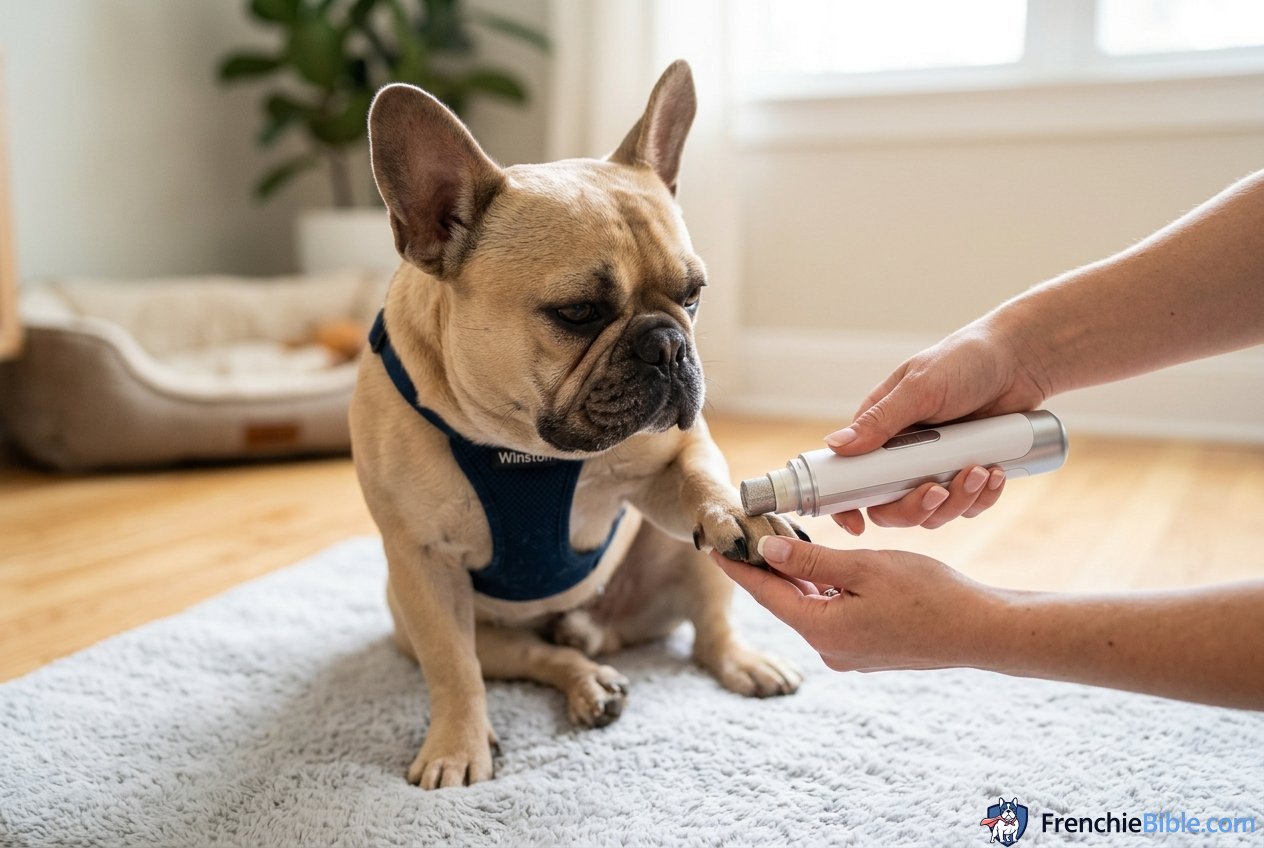
1. Decibel Level (Noise)
Dogs have a far more acute sense of hearing than humans. A high-pitched, whining motor can be physically painful to their ears. The best quiet nail grinders operate at a noise level below 50 decibels (dB). For context, 50 dB is equivalent to the hum of a quiet refrigerator or a gentle rainfall. Anything louder than 60 dB is likely to trigger anxiety in a fearful dog.
2. Low Vibration
While the noise might scare them initially, the vibration is what they feel on their nail bed. High vibration translates to a terrifying buzzing sensation traveling up their leg. Premium grinders use advanced brass bearings and perfectly balanced rotary shafts to minimize vibration, ensuring a smooth, steady grind.
3. Motor Power and Torque
Here is the catch: a grinder can be whisper-quiet, but if the motor is weak, it will stop spinning the moment you press it against the dog’s thick nail. French Bulldogs have surprisingly thick, tough nails. A good grinder must have sufficient torque (twisting force) to file down a thick nail without stalling, while still maintaining a low noise profile.
4. Grinding Bit Material
Most modern pet grinders use a diamond drum bit. Unlike sandpaper bands that wear out quickly and generate a lot of heat, diamond bits are incredibly durable, grind efficiently, and stay relatively cool. Heat buildup is a major concern; if the nail gets too hot from the friction, it will burn the quick.
Top Quiet Nail Grinders for Timid French Bulldogs (The Reviews)
Based on years of hands-on experience grooming litters of puppies and adult French Bulldogs I have compiled a detailed review of the best quiet nail grinders on the market.
1. Casfuy Dog Nail Grinder (Best Overall for Frenchies)
The Casfuy grinder is the holy grail of pet nail grooming and my personal go-to for most of my dogs. It perfectly balances power, quietness, and affordability.
Key Features:
– Noise Level: Under 50 dB. It emits a very low, soft hum that rarely startles even the most skittish dogs.
– Motor: Features a 2-speed switch. The lower speed is perfect for puppies and desensitization, while the higher speed easily tackles thick adult Frenchie nails.
– Grinding Bit: Diamond bit grinder that lasts for years without needing replacement.
– Ports: It has three size ports. I find the medium port perfect for isolating a Frenchie’s nail while protecting the surrounding hair and paw pad.
– Battery Life: USB rechargeable with a built-in battery that lasts up to 2 hours of continuous use.
Pros:
– Exceptionally quiet and low vibration.
– Powerful enough for thick black nails.
– Ergonomic design makes it easy to maneuver around the paw.
– Excellent value for the price.
Cons:
– The LED light version (an upgraded model) is sometimes too bright and can distract the dog.
The Breeder’s Verdict: If you are unsure where to start, buy the Casfuy. It has successfully converted dozens of clipper-phobic Frenchies in my breeding program into calm, relaxed participants.
2. Dremel 7350-PET (Best Premium / Professional Choice)
Dremel is the undisputed king of rotary tools. While their older pet models were notoriously loud, the 7350-PET is a massive leap forward in acoustic engineering.
Key Features:
– Noise Level: Significantly quieter than previous Dremel models, operating with a smooth, refined mechanical purr.
– Motor: Unmatched torque. This grinder will not bog down, no matter how hard you press.
– Battery: 4V lithium-ion battery holds a charge for months and provides consistent power from 100% down to 1%.
– Accessories: Compatible with the massive ecosystem of Dremel bits and sanding bands.
Pros:
– Industrial-grade durability.
– Incredible power reduces grinding time in half.
– Ergonomically designed to feel like a high-end pen.
Cons:
– More expensive than generic brands.
– Slightly heavier, which can cause hand fatigue during long sessions.
– Uses sanding bands which need frequent replacing, though diamond bits can be purchased separately.
The Breeder’s Verdict: For multi-dog households or those who want a tool that will last a lifetime, the Dremel is unmatched. However, it is slightly louder than the Casfuy, so extreme anxiety cases might need a slower introduction.
3. LuckyTail Dog Nail Grinder (Best for Severe Anxiety)
The LuckyTail grinder was designed specifically with anxious pets in mind. It is engineered to be the absolute quietest grinder on the market.
Key Features:
– Noise Level: Whisper-quiet, operating at around 30-40 dB. It is barely audible in a quiet room.
– Vibration: Almost undetectable vibration.
– Safety: Features a protective cap that only exposes a tiny sliver of the grinding stone, making it virtually impossible to accidentally catch paw hair.
Pros:
– The best choice for dogs with severe PTSD related to nail trimming.
– Extremely lightweight.
– The safety cap provides peace of mind for nervous owners.
Cons:
– The motor lacks the high torque of the Dremel. Grinding thick adult nails takes noticeably longer.
– The battery life is average.
The Breeder’s Verdict: If your Frenchie screams at the mere sight of a grooming tool, the LuckyTail is your savior. The trade-off is speed; you will spend more time per nail, but the stress-free experience is worth it.
4. Boshel Dog Nail Grinder (Best Budget-Friendly Quiet Option)
Boshel is a well-known name in pet grooming, and their grinder offers excellent performance for those on a tight budget.
Key Features:
– Noise Level: Under 50 dB, comparable to the Casfuy.
– Design: Compact and easy to hold, with a straightforward 2-speed operation.
– Bit: Diamond drum bit included.
Pros:
– Very affordable without sacrificing much quality.
– Quiet operation.
– Good battery life.
Cons:
– The plastic casing feels a bit cheap compared to premium models.
– The motor can stall if too much pressure is applied.
The Breeder’s Verdict: A fantastic entry-level grinder. If you are not ready to invest heavily but want to transition away from clippers, the Boshel will get the job done admirably.
5. Toozey Dog Nail Grinder (Best Battery Life)
The Toozey grinder stands out for its digital display and massive battery capacity.
Key Features:
– Noise Level: Low noise, below 50 dB.
– Display: A handy LED screen shows the current battery percentage and speed setting.
– Battery Life: Up to 10 hours of continuous use on a single charge.
Pros:
– You will rarely, if ever, run out of battery mid-grind.
– The LED screen is a very convenient feature.
– Built-in LED light helps illuminate the quick on lighter nails.
Cons:
– The built-in light is practically useless on black nails.
– Slightly bulkier than other models to accommodate the larger battery.
The Breeder’s Verdict: Excellent for breeders or owners of multiple dogs who do marathon grooming sessions and hate constantly recharging their tools.
The Step-by-Step Desensitization Protocol: From Terrified to Tolerant
Buying a quiet grinder is only half the battle. If you simply turn it on and grab your Frenchie’s paw, they will still panic. You must employ a behavioral technique called counter-conditioning and desensitization. This process rewires your dog’s brain to associate the grinder with highly valuable rewards rather than fear.
Please note: This protocol requires extreme patience. Do not rush the steps. If your dog shows signs of stress (panting, lip licking, yawning, pulling away), you have moved too fast. Take a step back.
The Gear You Will Need:
- Your quiet nail grinder.
- High-value treats (boiled chicken, hot dogs, cheese, or freeze-dried liver). Regular kibble will not work.
- A lick mat smeared with peanut butter or cream cheese (xylitol-free!).
- A quiet, distraction-free room.
Week 1: Creating Positive Associations (No Grinding)
- The Introduction: Sit on the floor with your Frenchie. Place the grinder (turned off) on the floor. Every time your dog looks at or sniffs the grinder, enthusiastically praise them and give a high-value treat. Repeat this for 3-5 minutes a day for a few days. The goal is for the dog to think, “Oh boy, the grinder is out! That means chicken!”
- Handling the Paws: Without the grinder, practice touching your dog’s paws. Touch a toe, give a treat. Gently squeeze a nail, give a treat. If they pull away, do not force it. Simply lower your criteria and touch higher up on the leg, gradually working your way down to the toes over several sessions.
- The Sound: Once they love the sight of the grinder, it is time to introduce the sound. Turn the grinder on its lowest setting while it is hidden behind your back or across the room. Immediately rain down high-value treats for 10 seconds, then turn the grinder off and stop the treats. Repeat until the sound of the grinder causes your dog to look at you eagerly expecting a treat.
Week 2: Bringing the Sound Closer
- Proximity: Turn the grinder on and place it on a table near the dog. Feed treats continuously while the grinder runs.
- Vibration Introduction: Turn the grinder on and touch the handle (not the spinning bit) to your dog’s shoulder or thigh. Give a jackpot of treats. We want them to feel the vibration on a non-sensitive part of their body and associate it with food.
- Moving to the Paws: Gradually move the vibrating handle down their leg until you can touch the handle against their paw pad without them reacting negatively.
Week 3: The First Touch
- The Lick Mat: Smear a lick mat with peanut butter and stick it to the wall or floor. Let your Frenchie start licking.
- The “Tap”: While they are distracted by the lick mat, turn on the grinder. Gently hold a paw, isolate one nail, and touch the spinning grinder to the tip of the nail for literally ONE SECOND. Tap, and immediately pull away. Praise lavishly.
- End on a High Note: Do one or two nails with just a one-second tap, then put the grinder away and give a jackpot reward. Do not try to do a full paw.
Week 4: Gradual Expansion
- Increasing Duration: Over the next week, increase the grinding time from one second to three seconds, then to five seconds.
- Working Through the Paws: Gradually increase the number of nails you do in one session. If your dog gets antsy after one paw, stop. It is perfectly fine to do one paw a day over four days!
Pro Breeder Tips: How to Actually Grind the Nails
Once your Frenchie is desensitized, you need to execute the grind effectively and safely.
1. The Proper Hold
Never hold your Frenchie down forcibly. This triggers panic. Instead, use a “football hold.” Tuck your Frenchie’s body under your arm against your side, supporting their chest with your forearm. This makes them feel secure and restricts their ability to squirm backward, while leaving your hands free to handle the paw and the grinder. For front paws, simply pick up the paw and bend it naturally at the wrist.
2. Isolating the Nail
Use your thumb and index finger to gently press down on the toe pad. This extends the nail outward and pushes the surrounding fur away from the grinder, preventing hair from getting caught in the rotary spindle.
3. The 45-Degree Angle
Hold the grinder at a 45-degree angle to the tip of the nail. Grind the very tip flat, then carefully round out the harsh edges on the top and sides.
4. The “Tap and Release” Method
Never hold the grinder against the nail continuously for more than 3-5 seconds. Friction creates heat, and a hot grinder bit will burn the sensitive quick, causing pain. Grind for a few seconds, pull away to let it cool, and then resume.
5. Identifying the Quick
On white nails, the quick is easy to see as a pinkish tube inside the nail. Stop grinding well before you reach the pink.
On black nails (common in Frenchies), you cannot see the quick from the side. Instead, look at the cross-section (the tip) of the nail as you grind. As you get closer to the quick, the dry, powdery center of the nail will change to a dark, fleshy, shiny oval (sometimes called the “bullseye”). The moment you see this shiny center STOP. You have reached the quick.
6. The “Alternative Angle” Trick
If the quick is very long, you can help it recede faster by grinding the top of the nail shell slightly thinner, rather than just grinding the tip flat. By removing the hard outer shell directly above the quick, you expose the quick to more air and pressure, which encourages it to naturally shrink back over the next few days.
Frequently Asked Questions (FAQs) about French Bulldog Nail Grinding
Q1: How often should I grind my French Bulldog’s nails?
As a general rule, you should aim to grind your Frenchie’s nails every 1 to 2 weeks. Consistent, frequent maintenance is the key to keeping the quick short and the nails at a healthy length. If you hear their nails clicking on hard floors, they are already too long.
Q2: My Frenchie is absolutely terrified and the desensitization is not working. What should I do?
If your dog has severe trauma, you may need to consult a professional force-free dog trainer. In the meantime, you can ask a professional groomer or veterinarian to use a grooming hammock. A hammock suspends the dog safely in the air, removing their leverage to thrash and roll, making the process much faster and safer. However, continue working on positive association at home.
Q3: Can I use a human nail file or Dremel tool?
Human nail files are nowhere near strong enough for dog nails. A standard hardware Dremel can be used, but you must be extremely careful. Hardware Dremels are often heavier, louder, and spin at incredibly high RPMs, which can generate dangerous amounts of heat very quickly. Pet-specific grinders are calibrated for safety.
Q4: What happens if I accidentally grind into the quick?
Do not panic. While grinders are safer, it is still possible to hit the quick. If you see blood, remain calm. Apply styptic powder (like Kwik Stop) or cornstarch directly to the bleeding nail tip and apply firm pressure for 30 seconds to stop the bleeding. Give your dog a treat, apologize, and end the session for the day to avoid compounding the trauma.
Q5: Should I use the protective guard on the grinder?
Many grinders come with a plastic cap with holes for the nails. For small puppies, these can be helpful. However, for adult French Bulldogs with thick nails I find the guards restrictive. They block your view of the nail cross-section, making it harder to see the quick. I recommend removing the guard and using the bare grinding wheel, but be careful to keep long paw hair out of the way.
Disclaimer
Disclaimer: I am a French Bulldog breeding expert and enthusiast with over a decade of hands-on experience in breed care, genetics, and grooming. However, I am NOT a licensed veterinarian, nor do I possess any formal medical qualifications. The information, tips, and techniques provided in this article are based solely on my personal experience, professional breeding practices, and extensive research. This content is intended for educational and informational purposes only and should absolutely not be construed as veterinary medical advice. Every dog is unique, and anatomical or health issues can vary. If your French Bulldog is experiencing extreme anxiety, paw pain, limping, orthopedic issues, or if you are unsure about performing grooming procedures at home, please consult a qualified, licensed veterinarian or a certified professional dog trainer for personalized guidance. Do not disregard professional medical advice or delay in seeking it because of something you have read in this article.