Welcome to one of the most memorable, hilarious, and sometimes chaotic milestones in your journey as a French Bulldog parent—the very first bath! If you are sitting there staring at your wrinkly, bat-eared little gremlin and wondering how on earth to get them clean without causing a total meltdown, you are in exactly the right place. Over my ten years as a passionate French Bulldog breeder, I have introduced countless litters to the wonderful world of water and suds. I have seen it all: the brave little land-sharks who try to bite the water, the dramatic screamers who act like they are melting, and the stubborn “statues” who refuse to move a single muscle once their paws get wet.
Bathing a Frenchie puppy isn’t just about washing away the inevitable puppy mess (though that is certainly important when they’ve just stepped in something questionable!); it is about setting the foundation for a lifetime of positive grooming experiences. French Bulldogs are notoriously stubborn, incredibly smart, and have memories like elephants. If their first bath is terrifying, you will be fighting a losing battle every single time bath day rolls around for the next decade.
Related Reading: Health & Diet | Frenchie Puppy Guide
In this comprehensive, step-by-step guide, I am going to share my closely guarded breeder secrets for a completely stress-free first bath. We will dive deep into everything from finding the absolute perfect water temperature for a brachycephalic breed, mastering the handling techniques for their unique top-heavy body shape, to my foolproof anti-spook strategies that will keep your puppy calm, happy, and maybe even enjoying the process. Let’s get those adorable wrinkles squeaky clean and build an unbreakable bond of trust with your new best friend!
Why the First Bath is Crucial for a Frenchie Puppy
You might be thinking, “It’s just a bath, how hard can it be? Dogs get wet all the time!” But when it comes to French Bulldogs, the first bath is much more than a hygiene routine; it is a foundational behavioral event. Frenchies possess a robust, muscular build but a surprisingly sensitive disposition. They are deeply attuned to their environment and remember scary experiences vividly.
Building Lifelong Bath-Time Confidence
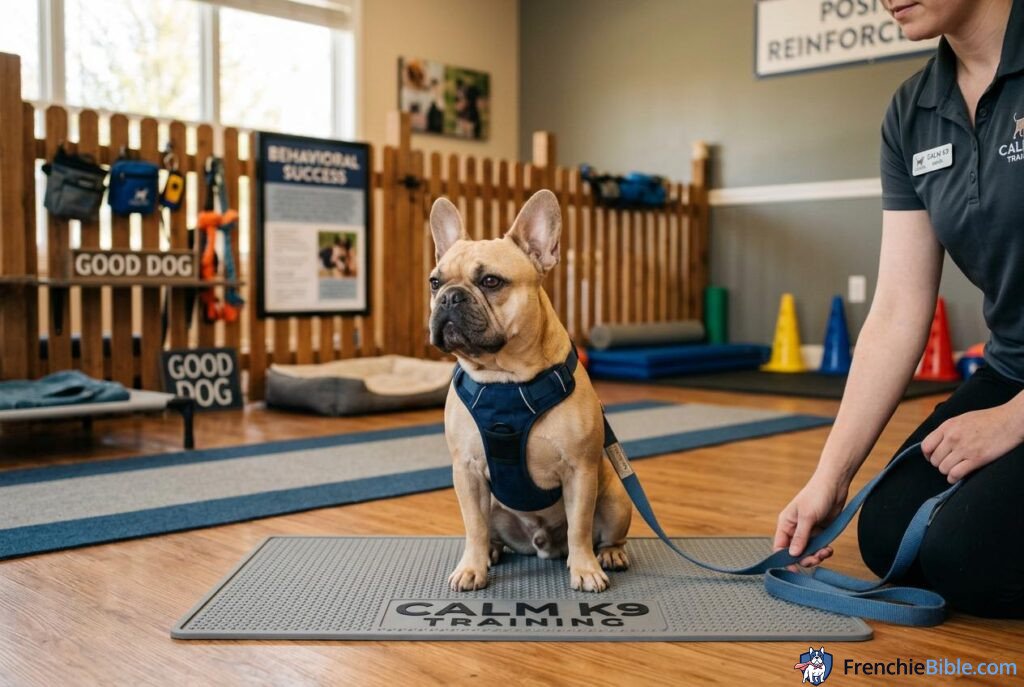
When I raise a litter, I consider the first bath to be a vital part of their early neurological stimulation and socialization. If a puppy associates water, the sound of the faucet, the slippery floor, and the smell of shampoo with panic, slipping, or uncomfortable temperatures, they will develop a deep-seated aversion. A confident Frenchie who tolerates—or actively loves—baths is a joy to groom. A terrified, thrashing 28-pound adult French Bulldog in a bathtub is an absolute nightmare, a massive mess waiting to happen, and a physical hazard to both you and the dog. By taking the time, patience, and effort to make this first experience calm, soothing, and highly rewarding, you are investing in years of peaceful, easy grooming sessions. You want them to view the bath as a “spa day” with their favorite human, not a punishment.
Protecting Their Terribly Sensitive Skin
Beyond behavioral conditioning, French Bulldogs are genetically prone to sensitive skin, environmental allergies, yeast overgrowth, and contact dermatitis. Their first bath is your very first opportunity to establish a proactive, healthy skin care routine. Using the wrong grooming products, the incorrect water temperature, or failing to dry their intricate facial and body folds properly can trigger acute skin irritation almost immediately. Our goal is to gently cleanse the coat and skin of environmental allergens and dirt while carefully preserving the delicate natural lipid oils that protect their epidermal barrier. A bad bath can lead to dry, flaky skin, which leads to scratching, which leads to hot spots. We want to avoid that cycle from day one.
Preparation: Setting Up for a Stress-Free Bath
The biggest, most common mistake new owners make is carrying the puppy into the bathroom and turning on the water before they have everything they need within arm’s reach. Once your puppy is wet and slippery, you absolutely cannot leave them unattended for a single second. Preparation is your best friend. Set the stage for success before the puppy even knows what is happening.
Gathering the Right Supplies
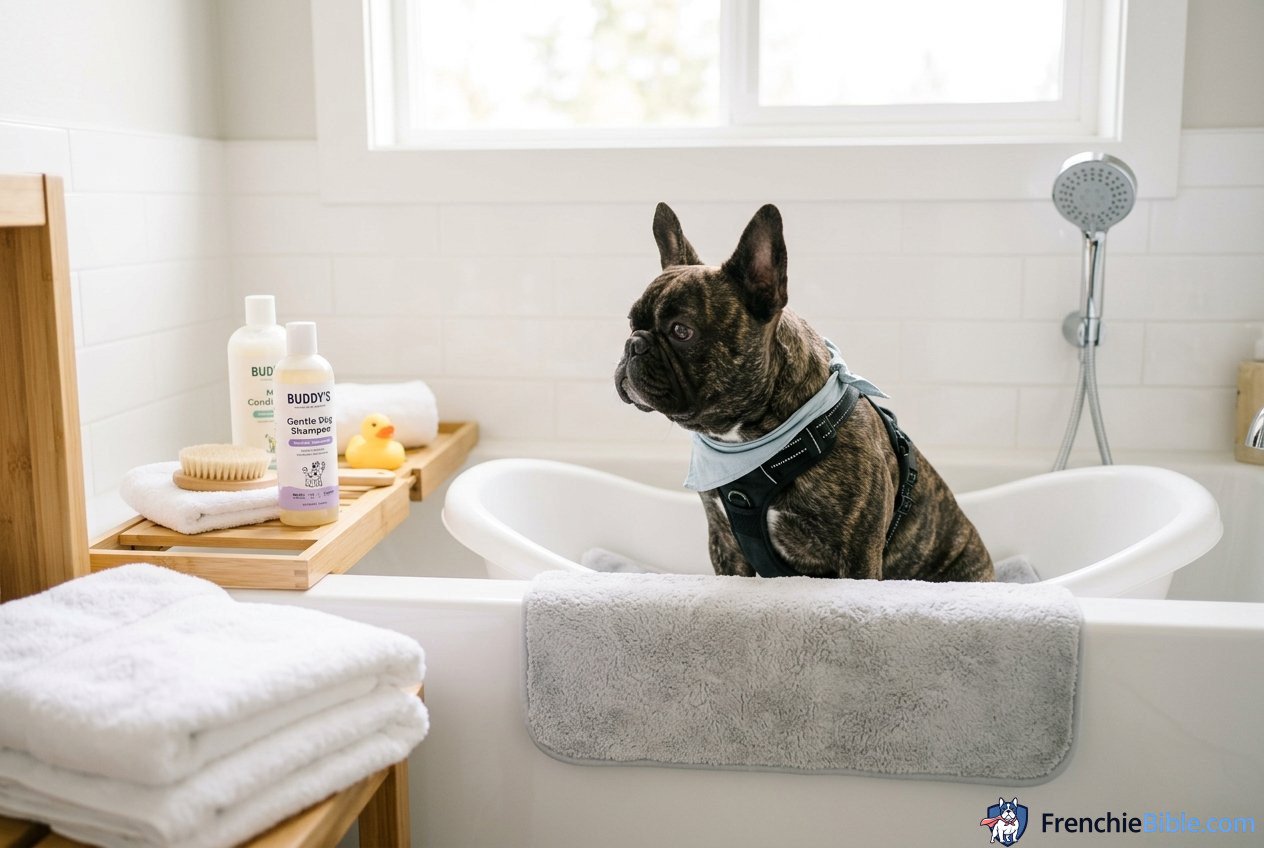
Before you bring your oblivious puppy into the grooming area, assemble your “Frenchie Spa Kit.” You will need:
– Premium Puppy-Safe Shampoo: Choose a high-quality, tearless, hypoallergenic oatmeal or aloe vera-based puppy shampoo. Absolutely avoid anything with heavy artificial fragrances, dyes, or harsh sulfates.
– A Plastic Cup or Small Pitcher: I never, ever use a high-pressure showerhead for a first bath. The sudden noise, the snake-like hose, and the water pressure are almost universally terrifying to a baby Frenchie. A simple plastic cup allows for gentle, warm, controlled pouring.
– A Rubber Non-Slip Mat: This is non-negotiable. Frenchies are incredibly top-heavy (all chest and head) and have terrible balance on slippery porcelain or fiberglass surfaces. If their paws slide out from under them, they will immediately panic and enter fight-or-flight mode. Use a textured rubber bath mat, or if you don’t have one, lay a heavy, wet towel completely flat on the bottom of the sink or tub.
– Multiple Dry, Fluffy Towels: Have at least three to four large towels ready. One to wrap them in immediately to prevent shivering, one for thorough rubbing and drying, and a couple for backup or laying on the floor.
– High-Value Treats: Think peanut butter (you must ensure it is 100% xylitol-free!), small bits of boiled chicken breast, or a textured lick mat.
– Soft Washcloths or Hypoallergenic Pet Wipes: Essential for cleaning the delicate face, ears, and deep wrinkles safely without dumping water on their head.
Choosing the Right Location
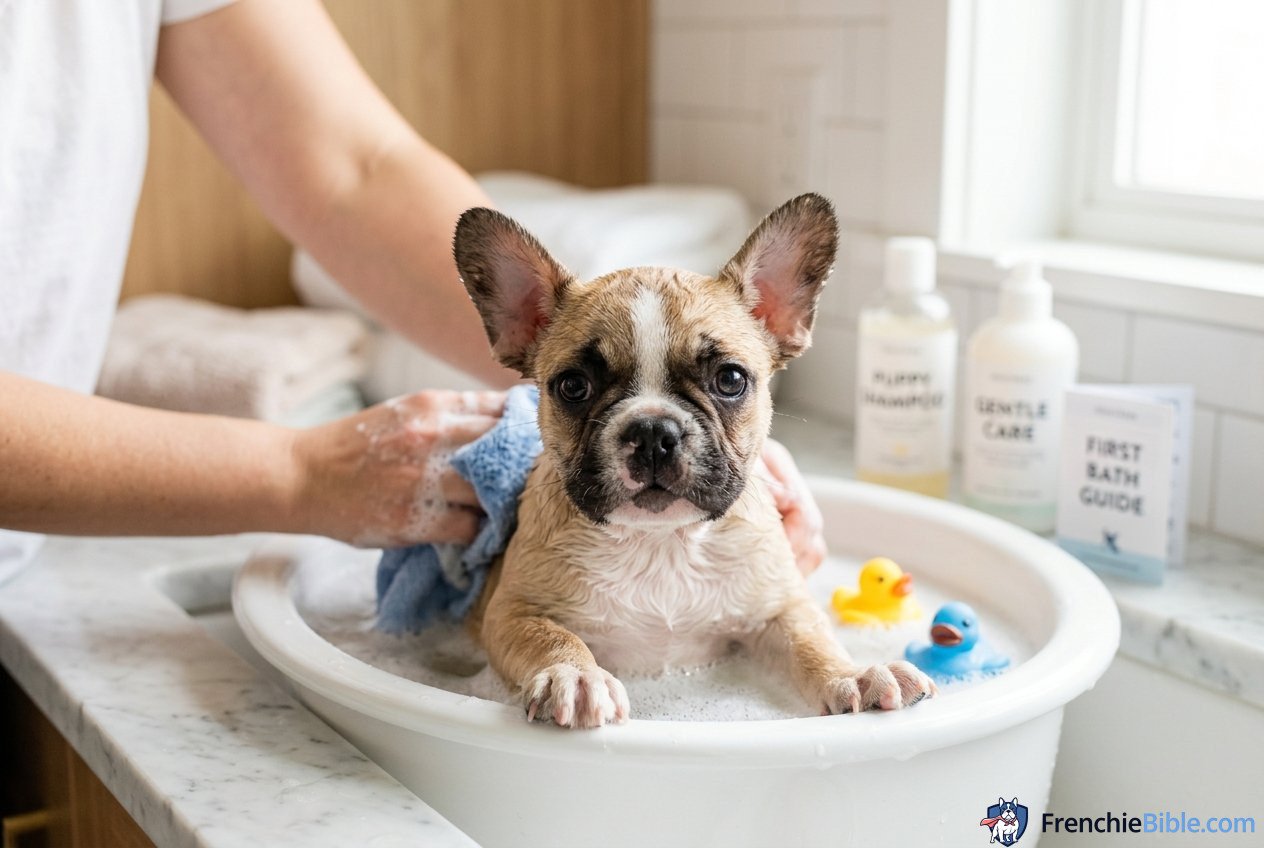
For a Frenchie puppy’s very first bath, the kitchen sink or a small utility sink is vastly superior to a massive master bathtub. The sink is at your waist height, which saves your lower back and allows you to maintain close, comforting, face-to-face physical contact with your puppy. A large human bathtub can feel like a vast, echoing, slippery cavern to a tiny puppy, drastically increasing their anxiety. If you absolutely must use a bathtub, I recommend placing a smaller plastic wash basin or a laundry basket inside the tub to contain them and make the space feel secure and enclosed.
Brushing Before Bathing
Always give your puppy a gentle brush before getting them wet. While Frenchies have short, smooth hair, they do shed surprisingly heavily. Removing loose fur, dander, and surface dirt beforehand means the shampoo can actually reach the skin to do its job. Furthermore, the act of gentle brushing relaxes the puppy, mimics the mother’s grooming, and gets them used to your physical touch before the stimulating sensation of water is introduced.
The Golden Rule: Perfect Water Temperature for Frenchies
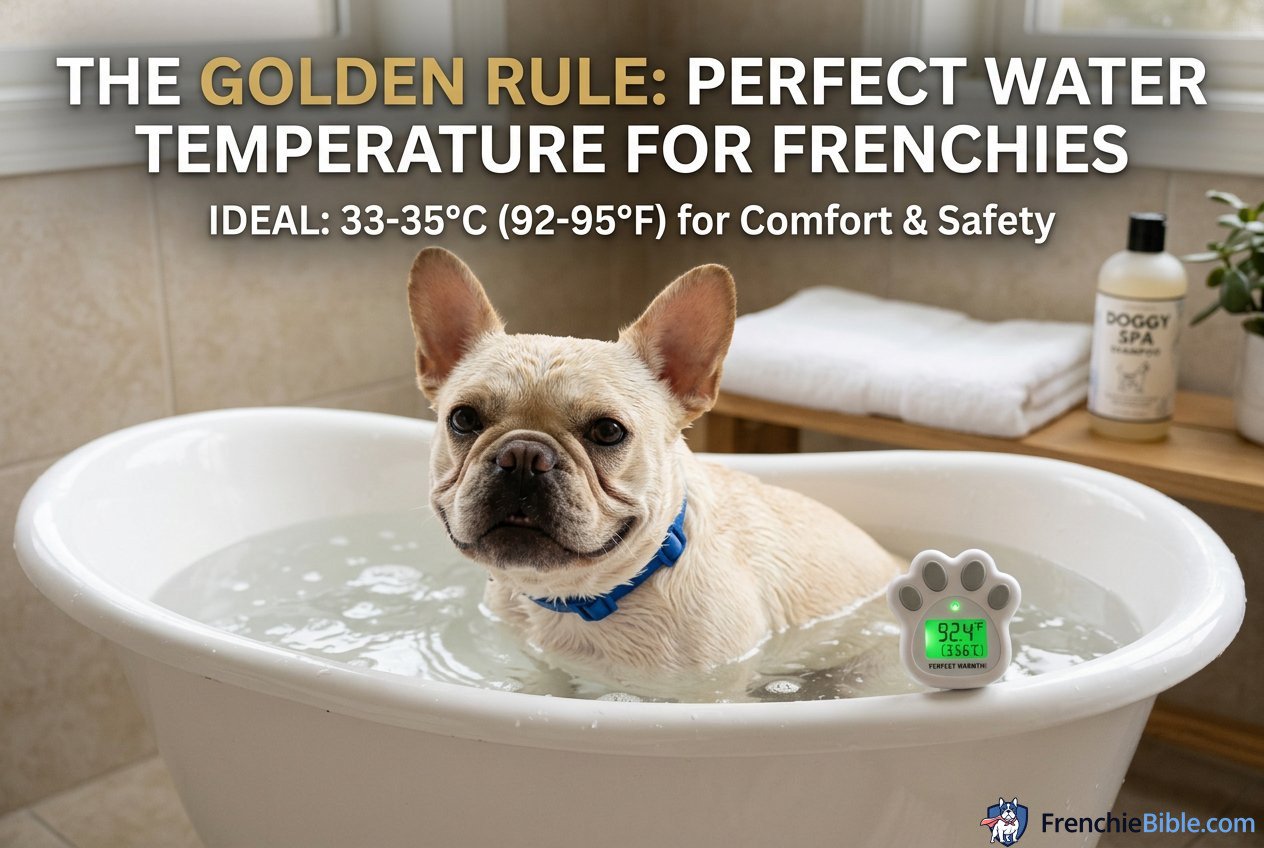
If there is one absolute secret I can impart to you from my years of breeding, it is this: getting the water temperature right is the single most important factor in preventing a puppy meltdown.
Why Temperature Matters So Much for Brachycephalic Breeds
French Bulldogs are a brachycephalic (flat-faced) breed. Because of their shortened snouts, elongated soft palates, and narrow tracheas, their respiratory systems are compromised. They have a notoriously difficult time regulating their core body temperature compared to dogs with longer snouts (like Golden Retrievers or Poodles). They cannot pant efficiently enough to cool down quickly if they overheat, and conversely, they lack the thick, insulating undercoat to keep them warm when they are wet and exposed to air.
If the bath water is too hot, your Frenchie will rapidly overheat, begin to pant heavily, their skin will flush red, and they will become physically distressed. If the water is too cold, they will shiver violently, panic, and associate the bath with freezing, miserable discomfort.
How to Test the Water Correctly
The water should be perfectly lukewarm—tepid, really. It should feel comfortably warm and soothing on the thin skin on the inside of your wrist, very much like testing a baby’s formula bottle. If it feels like a nice, hot, steamy shower that you would enjoy, it is significantly too hot for your Frenchie. Aim for water that is roughly body temperature or just slightly cooler.
When you run the water, let it run for a solid minute to ensure the temperature has fully stabilized before bringing the puppy anywhere near the sink. I always fill the sink an inch or two before putting the puppy in, so the scary, roaring sound of rushing water is turned off or minimized during the initial introduction.
Step-by-Step Bathing Techniques for French Bulldog Puppies
Now that the stage is meticulously set, the environment is calm, and the water is perfect, it is time for the main event. Move slowly, speak softly, and project calm, confident, upbeat energy. Your puppy is highly intuitive and will feed directly off your emotional state.
Step 1: The Gentle Introduction to Water
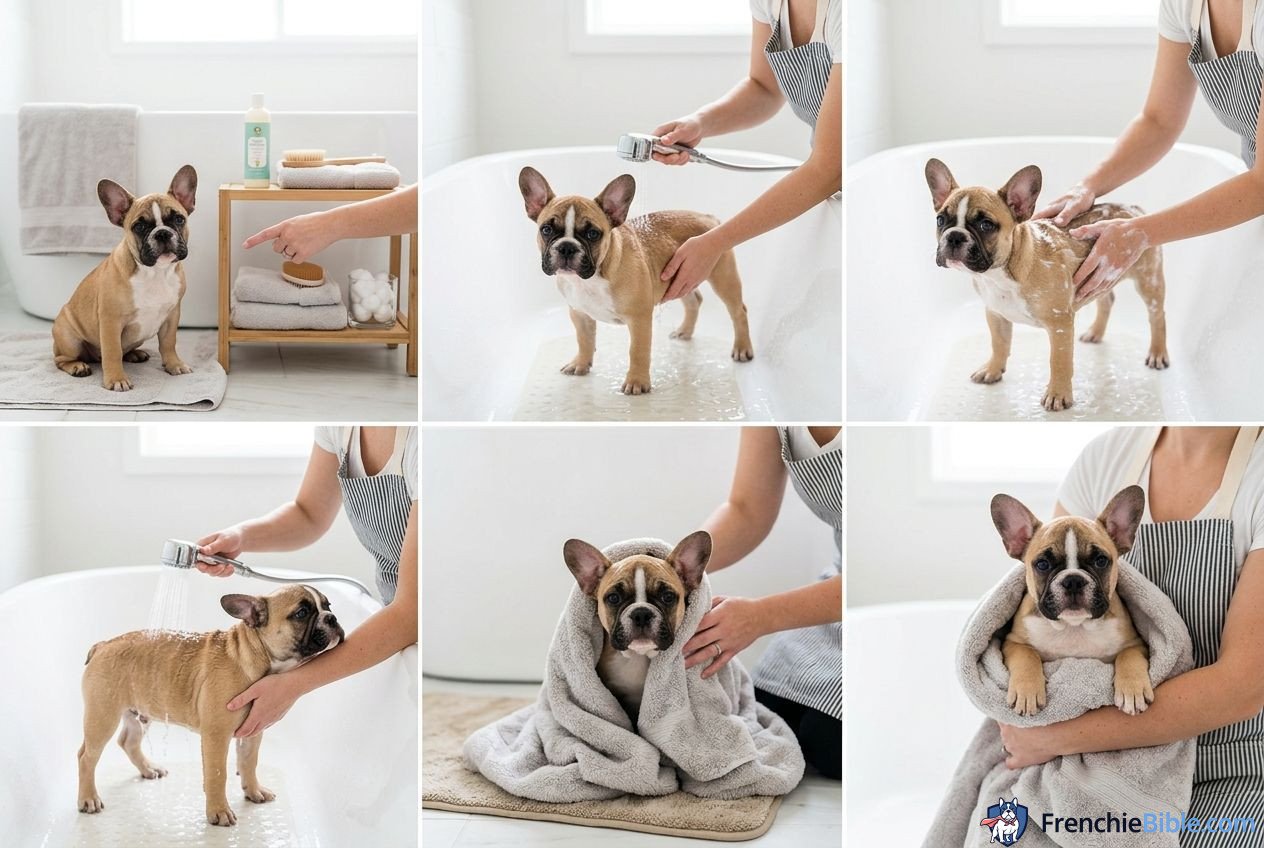
Place your puppy gently on the non-slip mat in the sink. Do not turn the faucet on directly over them. Instead, use your plastic cup to gently scoop the lukewarm water you already prepared. Start at their back paws and rear end, and slowly work your way up their back and sides. Talk to them continuously in a high-pitched, happy, reassuring voice (“Good boy! What a brave, handsome puppy!”).
Keep one hand securely under their chest or resting firmly on their shoulder at all times. This constant, grounding physical contact reassures them that you have them and prevents them from attempting a sudden, slippery flying leap out of the sink, which could cause serious injury.
Step 2: Applying the Shampoo Correctly
Once the body (from the neck down only) is thoroughly wet to the skin, dispense a small amount of the puppy shampoo into your wet hands and rub them together to create a rich lather. Do not squirt the cold shampoo directly from the bottle onto the dog’s back; it can be a startling sensation.
Massage the lathered shampoo deep into their coat using your fingertips. Frenchies absolutely love a good scratch! Work the lather into their broad chest, down their little stubby legs, carefully under their belly, and along their back. This should feel like a luxurious massage. Take your time here. If the puppy starts to get antsy, squirmy, or nervous, pause immediately, offer a lick of peanut butter from a spoon, and resume only when they settle.
Step 3: Cleaning the Famous Frenchie Folds
This is arguably the most critical part of Frenchie hygiene and requires special attention. Their deep facial wrinkles, their tightly curled tail pocket, and their delicate underbelly areas are dark, warm breeding grounds for yeast and bacterial infections if not cleaned and dried meticulously.
However, you must absolutely never pour water over their head! Frenchies despise having water splashed in their faces, and getting water down their wide, bat-like ear canals will almost certainly lead to painful, expensive ear infections.
Instead of pouring water, take a soft, damp washcloth, apply just a tiny speck of tearless puppy shampoo, and gently lift the heavy facial folds to wipe away dirt, eye boogers, and grime. Pay special attention to the deep, moist rope wrinkle right over their nose. Use a separate, clean, damp cloth (or thoroughly rinse the first one) to meticulously wipe away all the soapy residue. The face must be cleaned, but it must be done with surgical precision and care.
Step 4: The Rinsing Process
Leaving invisible shampoo residue on a Frenchie’s skin is a guaranteed recipe for dry, itchy, inflamed contact dermatitis. You must rinse thoroughly, and then rinse again just to be sure.
Using your cup, gently pour clean, lukewarm water over their body, working methodically from the neck down to the tail. Use your free hand to firmly squeegee the water out of their coat as you pour, checking carefully for any hidden pockets of suds in their armpits, groin, or under their chin. Continue rinsing until the water runs completely crystal clear and the coat literally squeaks cleanly under your fingers.
Remember again, completely avoid pouring water over the head. Cup your hand over their ears to shield them as you rinse the neck and shoulder area.
Anti-Spook Strategies: Keeping Your Puppy Calm
Even with perfect preparation and execution, some puppies are naturally more fearful or sensitive. Over the years of handling different temperaments, I’ve developed a few foolproof psychological strategies to keep the peace and prevent panic.
The Peanut Butter Distraction Technique
This is my ultimate secret weapon and it works on 95% of food-motivated Frenchies. Smear a generous, thick dollop of xylitol-free peanut butter directly on the tile wall of the sink or tub, right at the puppy’s natural eye level. While they are intensely busy enthusiastically licking the peanut butter, they will barely notice that you are washing their back half. Licking is also a naturally soothing, self-regulating behavior for dogs; the physical act of licking releases endorphins in their brain and actively lowers their heart rate. If you don’t want to put peanut butter on your bathroom walls, purchase a silicone lick mat with suction cups on the back and stick that to the wall instead.
Using a Calm Voice and Positive Reinforcement
Puppies are highly empathetic creatures. If you are stressed, rushing, frustrated, and holding your breath, your puppy will instantly think, “Oh no, my human is terrified, we must be in terrible danger!”
Force yourself to physically relax. Breathe slowly and deeply. Keep up a constant stream of soft, happy, encouraging chatter. Praise every tiny positive reaction. If they stand still for five seconds, praise them profusely. If they let you wash a paw without violently pulling away, praise them and give a tiny treat. Positive reinforcement builds long-term confidence.
Handling the “Frog Dog” Squirm
Frenchies are notorious for the classic “frog dog” maneuver—suddenly dropping their heavy belly flat to the floor and splaying their hind legs out backward like a frog, refusing to budge. If your puppy pancakes in the sink, do not drag them up by the collar or pull on their fragile legs.
Instead, slide your flat hand underneath their broad chest, lift very gently to support their front weight, and use your other hand to offer a high-value treat right in front of their nose to encourage them to stand up naturally. Patience is key here. If they really need to sit down for a moment to feel secure while you wash their back, just let them sit. There is no rush.
Post-Bath Routine: Drying and Rewarding
The bath isn’t successfully over when you turn off the water. The drying process is just as important for a Frenchie’s long-term health and comfort as the washing part.
The Towel Wrap and Snuggle
As soon as the final rinse is complete, gently lift your wet puppy out of the sink and immediately wrap them tightly in a large, dry, warm towel. Think of it exactly like swaddling a newborn baby. This prevents them from shivering as the air hits their wet skin and gives them an immediate sense of deep security after the highly stimulating bath experience.
Hold them close to your chest, sit down, and give them a few minutes of quiet, warm snuggling. Let them calm down and realize the “scary” water part is officially over. Then, use the towel to vigorously rub them down, massaging their muscles, which most Frenchies find highly enjoyable and comforting.
Why You Should Avoid High-Heat Blow Dryers
I strongly and vehemently advise against using standard human hair dryers on French Bulldog puppies. The high-pitched motor noise is absolutely terrifying to their large, sensitive bat ears, and the intense heat can very easily burn their thin skin or cause them to rapidly overheat due to their compromised brachycephalic breathing.
If you must use a dryer because you live in a very cold, freezing climate, you must use a pet-specific force dryer on the lowest possible heat setting (or use the “cool” setting on a human dryer) and hold the nozzle at least a foot away from their body, keeping it constantly moving. Never, ever point it at their face or ears. Honestly, for a short-coated breed like a Frenchie, a very thorough towel drying followed by allowing them to air-dry naturally in a warm, draft-free room is usually perfectly sufficient and vastly less stressful for the dog.
Cleaning the Ears and Drying the Wrinkles
This final step is absolutely vital for preventing expensive vet visits. Take a completely dry, soft cloth, a cotton pad, or a tissue and gently, meticulously wipe out the inside of their facial wrinkles and tail pocket. Any moisture trapped in these dark, warm folds will quickly turn into a nasty yeast infection or bacterial hot spot. They must be bone dry to the touch.
Next, take a dry cotton ball (never use a Q-tip in a dog’s ear!) and gently wipe the visible inside of their ear flap to ensure absolutely no stray drops of water made their way inside during the bath. If their ear canals remain wet, they are highly prone to painful fungal and bacterial ear infections.
Finally, once they are dry, give them a massive jackpot of treats, play energetically with their favorite toy, and let them experience the joyous “post-bath zoomies.” Ending the grooming session on an incredibly high, fun note ensures they will be much more cooperative and less fearful the next time bath day comes around.
Common Mistakes to Avoid During Your Frenchie’s Bath
Even with the very best intentions and a heart full of love, new owners can make simple errors that ruin the bath experience and cause health issues. Here are the most common pitfalls I constantly warn all my new puppy buyers about.
Bathing Too Frequently
Unless your Frenchie puppy has literally rolled in mud, feces, or something foul-smelling, they absolutely do not need weekly baths. Over-bathing strips the essential, protective natural oils from their coat and skin. This leads directly to dry, flaky skin, chronic itching, a dull coat, and increased vulnerability to environmental allergens. For a normal, indoor Frenchie, a full water-and-shampoo bath every 4 to 8 weeks is usually more than plenty. Between full baths, rely on high-quality, hypoallergenic pet wipes to quickly clean their paws after walks, wipe their face, and clean their bum to keep them smelling fresh without drying out their skin.
Using Human Shampoo
Never, ever use human shampoo, human baby shampoo, or dish soap on your French Bulldog. Human skin has a completely different pH level (more acidic) than dog skin (more neutral). Human products, even the gentle ones, are too harsh for dogs and will aggressively strip their lipid barrier, causing severe irritation, chemical burns in some cases, and leaving them totally vulnerable to bacterial and yeast infections. Always invest the money in a high-quality shampoo formulated specifically for canine skin pH.
Getting Water in the Ears
I know I have said it before, but I cannot emphasize this enough. Frenchie ears are basically large, open funnels attached directly to their heads. Water trapped down deep in the ear canal is a guaranteed recipe for a raging, painful ear infection that will require vet-prescribed ear drops. Always wash from the neck down, use a carefully controlled damp cloth for the face, and physically cup your hand over their ears to shield them when rinsing the neck area. Prevention is the only way here.
FAQs About Bathing a French Bulldog Puppy
How often should I bathe my Frenchie puppy?
Generally speaking, a full bath every 4 to 8 weeks is perfectly sufficient for a French Bulldog. If they get particularly dirty or smelly, you can bathe them sooner, but frequent weekly bathing strips their skin of essential protective oils, leading to severe dryness and itching. Rely heavily on hypoallergenic pet wipes for daily spot cleaning of paws, wrinkles, and bottoms between major baths.
At what age can a French Bulldog puppy have its first full bath?
Puppies can safely have their first bath as young as 8 weeks old, which is usually around the time they go to their new forever homes. However, because they are so small and cannot regulate their body temperature well, you must ensure the bathroom is very warm, the water is strictly lukewarm, and you towel-dry them immediately and thoroughly so they do not catch a dangerous chill.
What kind of shampoo is absolutely best for a Frenchie’s sensitive skin?
Always look for a high-quality, tearless, hypoallergenic dog shampoo. Formulas containing soothing ingredients like colloidal oatmeal, aloe vera, or those specifically explicitly designed for dogs with sensitive skin or allergies are excellent choices for French Bulldogs. Completely avoid heavily scented shampoos, as the artificial fragrances are a common skin irritant.
How do I clean my puppy’s face and wrinkles without getting water in their nose or eyes?
You should never pour or spray water directly over a Frenchie’s face. Instead, use a damp, soft washcloth with just a tiny dab of tearless puppy shampoo to gently wipe their face and deep inside their nose ropes and wrinkles. Follow up immediately with a clean, damp cloth to wipe away any soapy residue, and finish by thoroughly drying the folds with a completely dry cloth or tissue. Moisture is the enemy of Frenchie wrinkles!
My puppy absolutely hates water and screams, what should I do?
Take it incredibly slow and de-escalate the situation. Start by just putting them in a completely dry sink and giving them high-value treats (like peanut butter or chicken). Gradually, over several days, introduce a tiny amount of warm water just on their paws, rewarding them constantly for staying calm. Make the training sessions extremely short (2-3 minutes) and purely positive. Never force them down, yell, or scold them, as this will only deeply cement their intense fear of the bath.
Disclaimer: We are not veterinarians and do not hold veterinary medical licenses. The information provided in this article is based on years of breeding and daily care experience and is for educational purposes only. It should not replace professional veterinary advice. Always consult with a licensed veterinarian if you have concerns about your French Bulldog’s health or before starting any new treatment.
Disclaimer: I am a French Bulldog breeding expert with over a decade of hands-on experience with this breed. I am not a veterinarian. The information in this article is for educational purposes only. Always consult your veterinarian regarding your dog’s specific health needs and care.