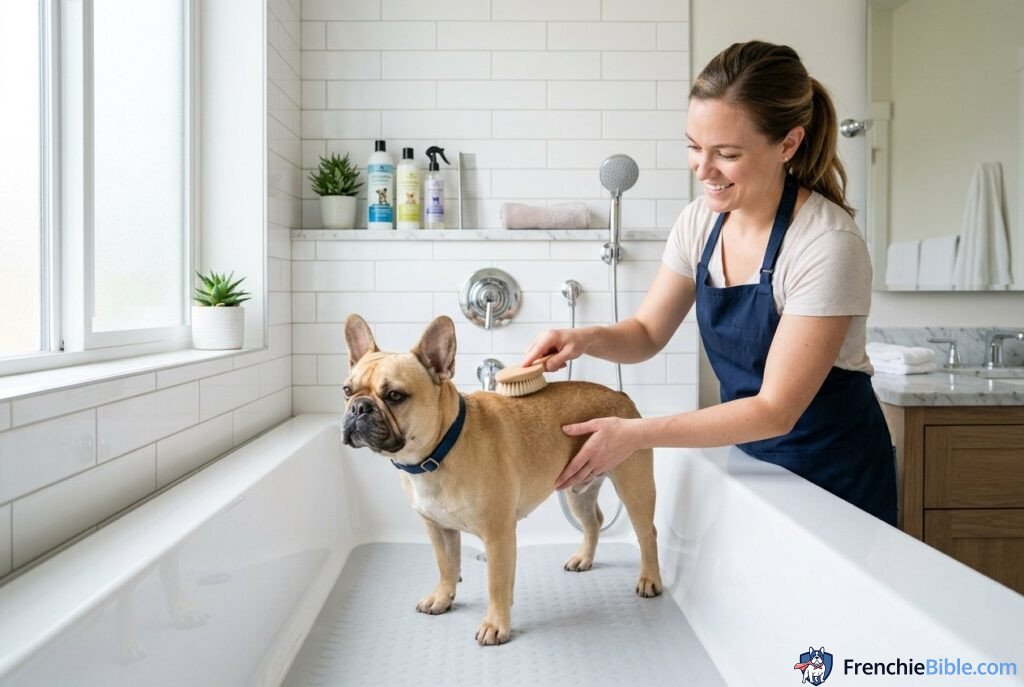
Welcome to the ultimate guide to monitoring and managing the health of your French Bulldog. Drawing from over a decade of dedicated, hands-on experience as a professional French Bulldog breeder I have seen first-hand how incredibly vital a proactive approach is when it comes to the well-being of this beloved breed. French Bulldogs are charming, affectionate, and full of personality, but they also come with a unique set of physical traits and potential health challenges that require a vigilant eye and a structured care routine.
Whether you are bringing home your very first Frenchie puppy or you are an experienced owner looking to optimize your adult dog’s daily care, establishing a comprehensive health diary is one of the most impactful things you can do. A health diary isn’t just a scrapbook; it is a critical tool for tracking essential metrics like digestive health (yes, we are going to talk a lot about poop!), weight progression, and vaccination schedules. By maintaining detailed records, you transition from reactive pet ownership to proactive health management, ensuring your furry best friend lives the longest, happiest, and healthiest life possible.
Related Reading: Training & Behavior | Grooming & Care | French Bulldog Colors
In this exhaustive guide, we will dive deep into the daily routines and observations that make up a robust health diary. We will explore what a normal Frenchie stool looks like versus when you should be concerned, how to accurately track their growth and weight to prevent obesity (a common issue in the breed), and the complete timeline for puppy and adult vaccinations. Let’s embark on this journey to master your French Bulldog’s health tracking.
Why Keep a Health Diary for Your French Bulldog?
You might wonder if keeping a written or digital log of your dog’s bodily functions, weight, and vet visits is truly necessary. From a breeder’s perspective, the answer is a resounding yes. French Bulldogs are a brachycephalic (flat-faced) and chondrodystrophic (dwarf) breed. These unique anatomical features mean they can be more susceptible to certain health issues, such as breathing difficulties, spinal problems, allergies, and digestive sensitivities.

Spotting Issues Early
Dogs are incredibly stoic creatures. Their instinct is often to hide pain or discomfort, a evolutionary trait passed down from their wild ancestors. By the time a Frenchie is actively showing signs of illness—such as lethargy, refusing food, or vocalizing pain—the underlying issue may have been developing for days or even weeks. A health diary allows you to notice subtle micro-changes in their routine. Did their stool become slightly softer over the last three days? Has their weight crept up by half a pound this month? Are they drinking slightly more water than usual? These tiny data points, when tracked consistently, serve as early warning systems, allowing you to address potential problems before they escalate into emergencies.
Communicating with Your Vet
When you do need to consult a professional, data is your best friend. Imagine arriving at the veterinary clinic because your Frenchie is experiencing gastrointestinal upset. Your vet will ask a series of questions: “When did the diarrhea start? What color was it? Have they eaten anything unusual? Have they lost weight recently?” If you are relying solely on memory, particularly in a stressful situation, you might give inaccurate or incomplete information.
However, if you can present a detailed health diary that shows exactly when the consistency changed, what their last three meals were, and their exact weight from two weeks ago, you are providing your vet with a treasure trove of diagnostic clues. This level of detail can significantly speed up the diagnostic process, reduce the need for unnecessary testing, and lead to a more accurate treatment plan. It bridges the gap between your daily observations and the clinical expertise of the veterinary team.
Establishing a Baseline of “Normal”
Every French Bulldog is a unique individual. What is considered “normal” for one dog might be abnormal for another. Some Frenchies have naturally softer stools, while others might consistently be on the leaner side of the weight spectrum. By tracking your specific dog’s metrics over time, you establish their unique baseline. Once you know their normal parameters, identifying deviations becomes incredibly easy and intuitive.
The French Bulldog Poop Chart: What Does Your Dog’s Stool Tell You?
It might not be the most glamorous topic, but as any experienced breeder will tell you, a dog’s stool is the window to their gastrointestinal health. French Bulldogs are notorious for having sensitive stomachs, prone to food intolerances, allergies, and stress-induced digestive upset. Learning how to “read” your dog’s poop is an essential skill for any owner.
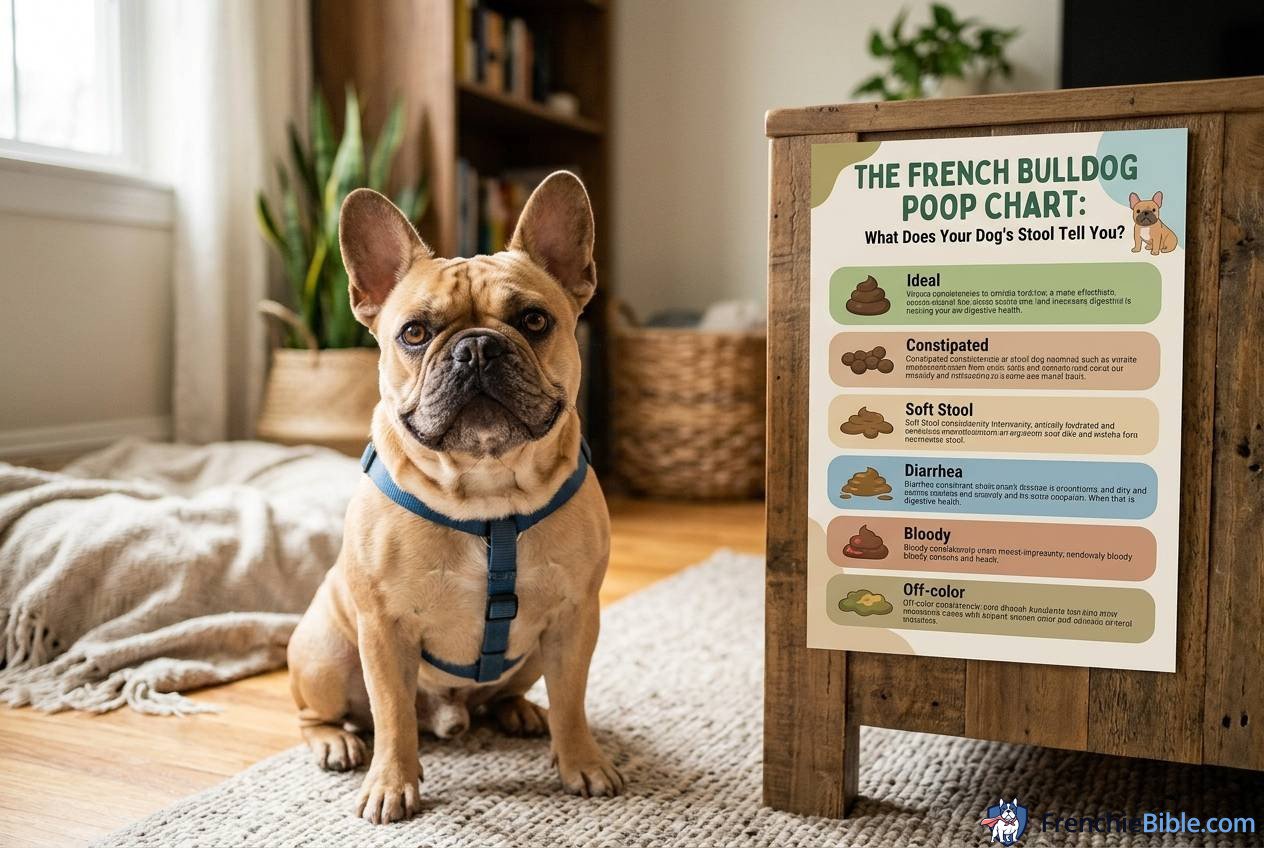
When analyzing stool, you are looking at four main criteria: Color Consistency Content, and Coating.
The Ideal Frenchie Poop: Color and Consistency
Color: The ideal color for a healthy French Bulldog’s stool is a rich, chocolate brown. This color indicates that the food is being digested properly and that healthy amounts of bile (which aids in fat digestion) are being processed through the system.
Consistency: The consistency should be firm but slightly pliable, often described as similar to Play-Doh. It should hold its shape when you pick it up with a doggy bag, leaving very little to no residue on the grass. It should be segmented, looking a bit like a log or a caterpillar.
Content: When you look at the stool, it should be uniform. You shouldn’t see large, undigested chunks of food.
Coating: A healthy stool should not have a visible coating. If you notice a slimy or mucus-like layer over the poop, this is an indication of inflammation in the large intestine.
Red Flags: When to Worry About Diarrhea or Constipation
Monitoring deviations from the ideal chocolate-brown log is crucial. Here is a breakdown of what different colors and consistencies might mean:
Decoding Stool Consistency Issues
- Soft but Formed: If the stool is shaped like a log but is very soft and squishy, and leaves a smear on the grass, this is often the first sign of a mild dietary upset. It could be due to a sudden change in treats, a slightly rich meal, or mild stress. It’s usually not an immediate cause for panic but warrants close observation for the next 24-48 hours.
- Pudding-Like Consistency (Diarrhea): Stool that has no distinct shape and resembles thick pudding indicates significant inflammation in the digestive tract. This can be caused by food intolerances, sudden dietary changes, bacterial imbalances, or parasites. If this persists for more than 48 hours, or is accompanied by vomiting or lethargy, it requires professional attention.
- Watery Diarrhea: This is a severe red flag. Completely liquid stool means the intestines are moving food through far too quickly to absorb water or nutrients. This can lead to rapid dehydration, especially in puppies and smaller dogs like Frenchies. Causes can range from severe viral infections (like Parvovirus in unvaccinated puppies) to toxic ingestion. This requires immediate veterinary intervention.
- Hard Dry, and Crumbly (Constipation): If the stool looks like small, hard pebbles and your dog is straining to pass them, they are constipated. This can be caused by a lack of dietary fiber, inadequate water intake, lack of exercise, or even underlying metabolic issues. Ensuring they have access to fresh water and adding a small amount of plain, unsweetened pumpkin puree to their diet can sometimes help mild cases.
Decoding Stool Color Changes
- Black or Tarry (Melena): This is highly concerning. Black, tar-like stool usually indicates bleeding in the upper gastrointestinal tract (stomach or small intestine). The blood is digested as it moves through the system, turning black. This requires an immediate trip to the vet.
- Red Streaks (Hematochezia): Bright red blood in or on the stool indicates bleeding in the lower digestive tract (large intestine or rectum). This could be due to severe inflammation (colitis), parasites, or even a tear near the anus.
- Yellow or Orange: This can sometimes be caused by dietary choices (eating a lot of carrots or squash), but it can also indicate issues with the liver, gallbladder, or a very rapid transit time through the intestines where bile isn’t fully processed.
- White Chalky, or Grey: This can suggest an issue with the pancreas or gallbladder, meaning the dog isn’t producing or releasing the necessary enzymes and bile for proper digestion. It can also occur in dogs on a poorly balanced raw bone diet (too much bone).
- Green: If your dog has been eating a large amount of grass, their stool might appear green. However, it can also be a sign of a fast transit time or ingestion of a toxin like rat poison (which is often dyed green).
The Impact of Diet on Digestion
The single biggest factor influencing your French Bulldog’s stool is their diet. Because of their sensitive systems, finding the right protein and carbohydrate sources is critical. Many Frenchies struggle with common proteins like chicken or beef, requiring a switch to novel proteins like lamb, salmon, or venison.
If you are feeding a high-quality, easily digestible diet that agrees with your dog, their stool volume should be relatively small and compact. If they are producing massive, frequent piles of stool, it often means the food is full of cheap fillers (like corn or soy) that their body cannot process, resulting in large amounts of waste.
How to Safely Transition Dog Food
One of the most common causes of acute diarrhea in French Bulldogs is a rapid change in diet. Their gut microbiome needs time to adjust to new ingredients and macronutrient profiles. If you need to switch their food, you must do it gradually over a period of 7 to 10 days to minimize digestive upset.
Here is the breeder-recommended schedule for transitioning dog food:
- Days 1-2: 75% Old Food, 25% New Food
- Days 3-4: 50% Old Food, 50% New Food
- Days 5-6: 25% Old Food, 75% New Food
- Days 7+: 100% New Food
Throughout this transition, carefully monitor the poop chart in your health diary. If you notice significant softening or diarrhea at any stage, slow down the transition. Go back to the previous ratio for a few extra days until their stool firms up before moving forward again.
Tracking Your French Bulldog’s Weight and Growth
Managing a French Bulldog’s weight is one of the most critical responsibilities of ownership. These dogs have a sturdy, compact build, but their heavy bone structure and specific body type make them highly susceptible to obesity. Carrying extra weight places tremendous stress on their spine (exacerbating the risk of Intervertebral Disc Disease – IVDD) and makes breathing significantly harder for their already compromised brachycephalic airways.
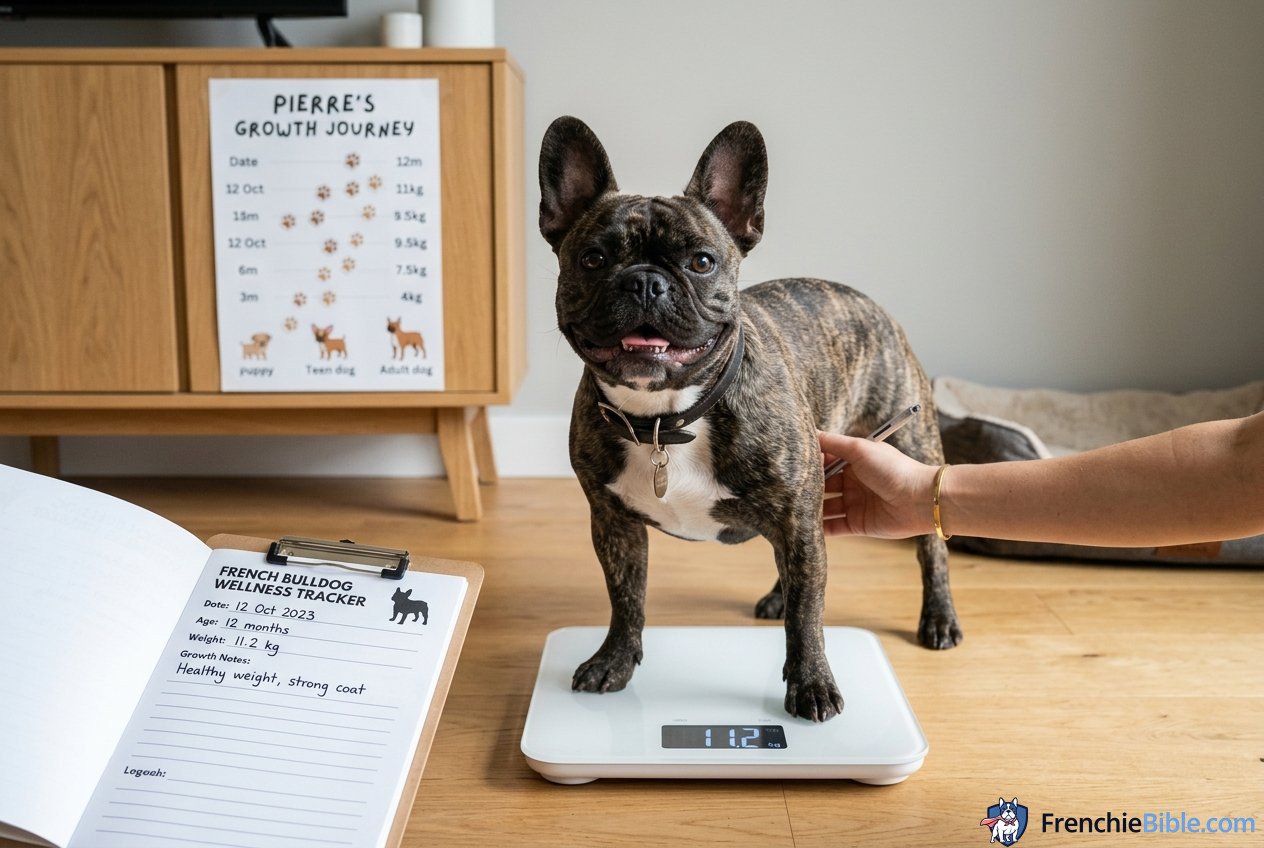
The Growth Stages of a French Bulldog
Understanding the normal growth trajectory of a Frenchie helps you know what to expect and when to adjust their caloric intake.
The Rapid Growth Phase (0-6 Months):
During this time, your puppy is growing exponentially. They need a high-quality puppy formula rich in protein, fats, and essential minerals like calcium and phosphorus for bone development. You should be weighing your puppy weekly during this stage. They will gain weight steadily, but you must ensure they aren’t growing too fast, which can cause joint issues later in life.
The Filling Out Phase (6-12 Months):
Around 6 months, their vertical growth begins to slow down significantly. Instead of getting taller, they start to “fill out,” developing the broad chest and muscular shoulders characteristic of the breed. This is a crucial transition period. Many owners continue feeding large puppy portions during this phase, leading to rapid, unhealthy fat gain. You must begin to carefully adjust their portions based on their body condition, not just their age.
Adulthood (12 Months and Beyond):
By 12 to 14 months, most French Bulldogs have reached their full structural size, though they may continue to add muscle mass until they are about two years old. At this stage, they should transition to a high-quality adult maintenance diet. Weight tracking should be done at least monthly, and more frequently if you are actively trying to help them lose or gain weight.
Healthy Weight Ranges for Male and Female Frenchies
It is important to remember that weight is just a number. The “ideal” weight varies wildly depending on the dog’s genetics, bone structure, and overall size. However, standard breed guidelines suggest:
- Adult Male French Bulldogs: Typically range between 20 to 28 pounds (9 to 12.5 kg).
- Adult Female French Bulldogs: Typically range between 16 to 24 pounds (7.5 to 11 kg).
While these numbers provide a general baseline, a 26-pound male might be perfectly lean and muscular, while a smaller-framed 22-pound male might be severely overweight. Therefore, the scale is only half the equation; the Body Condition Score is the other, more important half.
Body Condition Score: How to Tell if Your Frenchie is Overweight
The Body Condition Score (BCS) is a visual and tactile assessment of your dog’s body fat. It is typically measured on a scale of 1 to 9 (or 1 to 5). An ideal score is a 4 or 5 out of 9.
Here is how you perform a BCS assessment on your Frenchie at home:
- The Rib Test: Place your thumbs on your dog’s spine and spread your fingers across their rib cage. You should be able to feel their ribs easily without pressing hard, but the ribs should not be visibly protruding through the skin. It should feel similar to the back of your hand. If it feels like the palm of your hand (a thick layer of padding), they are overweight.
- The Profile View (The Tuck): Look at your dog from the side. The chest should be deep, and the abdomen should tuck upwards slightly behind the rib cage. While Frenchies have a naturally blocky build and don’t have as severe a tuck as a Greyhound, there should still be a visible upward slope. If their belly is flat or sagging downwards, they are carrying excess weight.
- The Overhead View (The Waist): Look down at your dog from above. You should see a noticeable waistline behind the ribs, creating a slight hourglass shape before the hips. If their body resembles an oval or a straight cylinder from shoulders to hips, they are overweight.
Diet and Exercise for Weight Management
If your health diary indicates your Frenchie is creeping above their ideal BCS, immediate action is required.
Caloric Control: Weight loss in dogs is roughly 80% diet and 20% exercise. Start by precisely measuring their food with a digital kitchen scale, rather than a measuring cup, to ensure accuracy. Cut their daily caloric intake by 10-15%. Be mindful of treats! Treats should make up no more than 10% of their daily calories. Swap high-calorie biscuits for low-calorie options like small pieces of carrot, cucumber, or plain green beans.
Safe Exercise: French Bulldogs need daily exercise to maintain muscle tone and cardiovascular health, but it must be tailored to their physical limitations.
- Avoid Heat: Never exercise a Frenchie in the heat of the day. Stick to early mornings or late evenings to prevent heatstroke.
- Low Impact: Avoid activities that require excessive jumping or twisting, which can strain their spine.
- Consistent Walks: Multiple short, brisk walks (15-20 minutes each) are far better than one exhausting, long hike.
- Observe Breathing: Always monitor their breathing during exercise. If they are panting excessively, making loud rasping noises, or seem sluggish, stop immediately and let them rest in a cool environment.
The Complete French Bulldog Vaccination Schedule
Vaccinations are the cornerstone of preventative healthcare. They protect your French Bulldog from highly contagious, often fatal diseases. As a responsible owner, adhering strictly to the recommended vaccination schedule is non-negotiable.
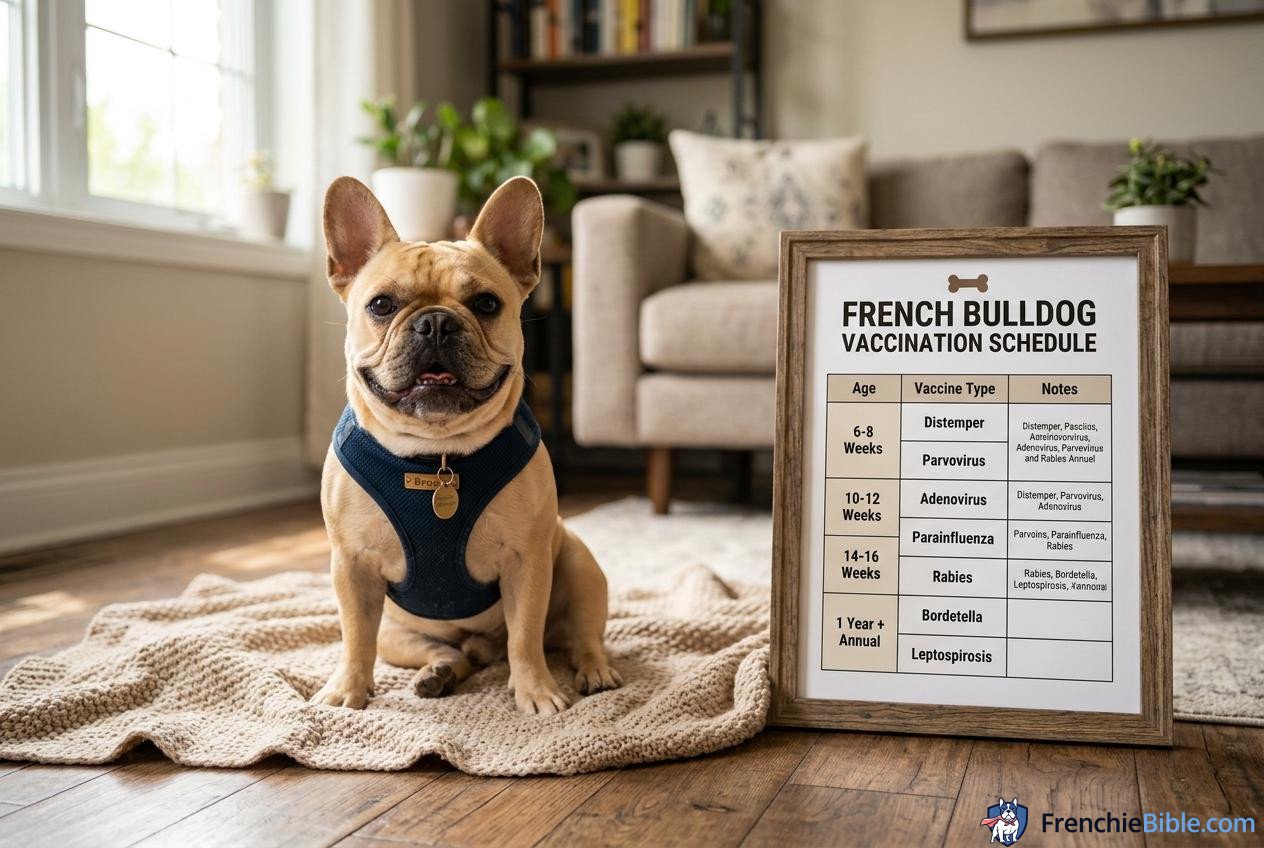
Vaccines stimulate the dog’s immune system to recognize and fight specific pathogens without causing the disease itself. When tracking this in your health diary, always record the date of the vaccine, the specific type of vaccine given, and the due date for the next booster.
Core Vaccines Every Frenchie Needs
Core vaccines are those recommended for all dogs, regardless of their location or lifestyle, because the diseases they prevent are severe, highly infectious, and globally distributed.
- Canine Parvovirus (CPV): A highly contagious viral illness that attacks the intestines, causing severe vomiting, bloody diarrhea, and rapid, life-threatening dehydration. Puppies are incredibly susceptible.
- Canine Distemper Virus (CDV): A severe viral disease that attacks the respiratory, gastrointestinal, and nervous systems. It is often fatal, and dogs that survive may suffer permanent neurological damage.
- Canine Adenovirus (CAV-2): This virus causes infectious canine hepatitis, a severe disease affecting the liver, kidneys, spleen, and lungs. The vaccine also provides cross-protection against CAV-1, a common cause of kennel cough.
- Rabies: A fatal viral disease that attacks the central nervous system. It is zoonotic, meaning it can be transmitted from animals to humans, making this vaccine a legal requirement in most countries and states.
Note: The first three core vaccines (Parvo Distemper Adenovirus) are often combined into a single shot, commonly referred to as the DHPP or DAPP vaccine (which also includes Parainfluenza).
Non-Core Vaccines (Lifestyle Dependent)
Non-core vaccines are administered based on your dog’s specific lifestyle, geographic location, and risk of exposure.
- Bordetella Bronchiseptica (Kennel Cough): Highly recommended if your Frenchie attends daycare, visits dog parks, goes to grooming salons, or is boarded. It protects against the most common bacterial cause of canine infectious respiratory disease.
- Leptospirosis: This is a bacterial disease spread through the urine of infected wildlife (like rats, raccoons, or deer) in soil or stagnant water. If you live in an area with high wildlife traffic, or if your dog frequently hikes near lakes or streams, this vaccine is crucial. The disease can cause severe kidney and liver failure.
- Canine Influenza (Dog Flu): Recommended for dogs that are frequently in highly populated dog environments (shows, large boarding facilities).
- Lyme Disease: Recommended if you live in an area where ticks carrying Lyme disease are prevalent and your dog spends time in wooded or grassy areas.
Puppy Vaccination Timeline
Puppies receive antibodies from their mother’s milk (colostrum) in the first few days of life. However, these maternal antibodies gradually fade, and they can actually interfere with early vaccinations. This is why puppies require a series of boosters to ensure their immune system properly responds to the vaccine.
Here is a standard puppy vaccination schedule (always consult your local professional for regional variations):
- 6-8 Weeks: DHPP (Distemper Parvovirus Adenovirus Parainfluenza). Note: Before this age, the puppy should remain safely indoors with their mother to avoid exposure to diseases.
- 9-11 Weeks: DHPP Booster Bordetella (if required based on lifestyle).
- 12-14 Weeks: DHPP Booster Leptospirosis (first dose, if required) Canine Influenza (first dose, if required).
- 15-17 Weeks: DHPP Final Puppy Booster Rabies (required by law, usually given around 16 weeks) Leptospirosis Booster Canine Influenza Booster.
Crucial Breeder Advice: Until your puppy has received their final round of puppy shots (usually around 16-17 weeks), they are NOT fully protected against diseases like Parvovirus. During this time, they should not be allowed to walk in public areas where unknown dogs frequent (parks, pet stores, sidewalks). Socialization is critical, but it must be done safely (e.g., carrying them, organizing playdates in private, sanitized yards with fully vaccinated adult dogs).
Adult Booster Shots
Once the initial puppy series is complete, adult dogs require periodic boosters to maintain their immunity.
- At 1 Year of Age (or 1 year after the final puppy shots): A booster of DHPP and Rabies is required.
- Every 1 to 3 Years Thereafter:
- Rabies: Depending on local laws and the specific vaccine used, boosters are required every 1 or 3 years.
- DHPP: Most modern guidelines recommend boosting core vaccines every 3 years for adult dogs. Alternatively, you can ask for a “titer test” – a blood test that measures the dog’s existing antibody levels to determine if a booster is actually necessary.
- Non-Core Vaccines: Vaccines like Bordetella Leptospirosis, and Canine Influenza require annual boosters to remain effective.
Managing Vaccine Side Effects
Just like humans, dogs can experience mild side effects after receiving a vaccination. This is a normal sign that the immune system is responding and building protection.
Normal Mild Side Effects (Lasting 1-2 Days):
- Mild lethargy or sleepiness.
- Slight decrease in appetite.
- Mild tenderness or a small, firm bump at the injection site.
- A low-grade fever.
If you notice these signs, allow your Frenchie to rest in a quiet, comfortable space. Do not force them to eat or exercise.
Severe Reactions (Require Immediate Emergency Attention):
While rare, severe allergic reactions (anaphylaxis) can occur, usually within minutes to hours after the injection. Look out for:
- Vomiting or persistent diarrhea.
- Facial swelling (especially around the muzzle and eyes).
- Hives or severe itchiness.
- Difficulty breathing or severe coughing.
- Collapse or extreme weakness.
If you observe any of these severe symptoms, rush your dog to the nearest emergency clinic immediately. Always note any past reactions in your health diary so the vet can administer preventative medications (like antihistamines) prior to future vaccines.
Integrating Health Tracking into Your Daily Routine
Creating a health diary might sound like a lot of work, but it quickly becomes second nature once integrated into your daily routine. The goal is consistency, not perfection.
Tools and Apps for Tracking
You don’t need fancy equipment to keep a good health diary.
The Traditional Method: A simple physical notebook dedicated solely to your dog is highly effective. Keep it near their food bowl or wherever you keep their supplies. Create columns for the Date Time Food Intake Stool Quality (Color/Consistency) Weight (recorded weekly or monthly), and a Notes section for general observations (e.g., “scratched ears more than usual today,” “seemed tired after short walk”).
Digital Tracking: Many owners prefer the convenience of smartphone apps. There are numerous pet health tracker apps available (such as 11pets PetDesk, or even a simple dedicated Google Sheet) that allow you to log data quickly, set reminders for flea/tick preventatives and upcoming vaccines, and easily share records electronically.
Building Habits with Your Puppy
The best time to start a health diary is the day you bring your Frenchie home.
- The Morning Check: When you take them out for their first potty of the day, actively observe their stool. Make a quick mental note of the color and consistency.
- Mealtime Monitoring: Note how enthusiastically they eat. Are they finishing their bowl? Are they leaving food behind?
- The Weekly Weigh-In: Pick a specific day (e.g. Sunday morning before breakfast) for a weekly weigh-in. Consistency is key for accurate tracking.
- Monthly Review: At the end of every month, take five minutes to review the diary. Look for trends. Has their weight been steadily creeping up? Have there been multiple instances of soft stool? Identifying these long-term trends is where the diary truly proves its value.
By dedicating just a few minutes a day to observation and recording, you empower yourself with the knowledge needed to advocate for your French Bulldog’s health, ensuring they thrive by your side for years to come.
Frequently Asked Questions (FAQ)
Q1: How often should a healthy French Bulldog poop in a day?
A: A healthy adult French Bulldog will typically poop 1 to 3 times a day, usually shortly after meals. Puppies, because of their faster metabolism and more frequent feeding schedule, may poop 3 to 5 times a day. If your adult dog is pooping more than 4 times a day, or producing massive volumes of stool, it may indicate that their body is not efficiently digesting their current food, and a dietary evaluation is necessary.
Q2: My Frenchie is suddenly dragging their bottom on the floor (scooting). Is this related to their stool?
A: Scooting is a very common behavior and is almost always an indication of irritation in the anal area. The most frequent cause is impacted or full anal glands. Normally, healthy, firm stools apply pressure as they pass, naturally expressing these small scent glands. If your dog has had a bout of soft stool or diarrhea, the glands may not empty properly, becoming full and uncomfortable. While occasionally related to tapeworms, anal gland issues are the primary culprit. Tracking stool consistency in your diary can help predict or prevent this issue.
Q3: Is it normal for my Frenchie to snore, or is that a sign they are overweight?
A: Because French Bulldogs are a brachycephalic breed with shortened airways, some mild snoring or snorting is considered typical for the breed. However, obesity significantly exacerbates these respiratory noises. Excess fat tissue in the neck and chest further compresses their narrow airways. If you notice your dog’s snoring becoming louder, if they struggle to breathe during mild exertion, or if they experience sleep apnea (pauses in breathing while sleeping), you must evaluate their weight and consult a professional immediately, as this is a serious health risk.
Q4: Can I bathe my Frenchie if they have diarrhea and get messy?
A: Yes, keeping them clean is important for hygiene and preventing skin irritation. However Frenchies are prone to getting chilled, and bathing can be stressful. If they only have a small mess on their rear, try using unscented, hypoallergenic pet wipes for a spot clean. If a full bath is necessary, use lukewarm water, a gentle oatmeal-based dog shampoo, and ensure they are dried thoroughly and kept in a warm draft-free room afterward. Never bathe a sick dog if they are extremely lethargic or shivering.
Q5: Should I give my Frenchie probiotics to help with their digestion and stool quality?
A: Probiotics can be an excellent addition to a Frenchie’s diet, especially if they have a history of sensitive stomachs, are recovering from illness, or are transitioning to a new food. Probiotics introduce beneficial bacteria into the gut microbiome, which can improve digestion, firm up stools, and support the immune system. Always look for a high-quality canine-specific probiotic powder or chew, rather than human yogurt, which often contains dairy and sugars that can upset a dog’s stomach.
Disclaimer: The information provided in this article is based on over ten years of professional breeding experience and general knowledge of French Bulldog care. I am not a licensed veterinarian, and I do not hold any medical qualifications. The contents of this article are intended for informational and educational purposes only and should never be used as a substitute for professional veterinary advice, diagnosis, or treatment. Always consult with a licensed veterinarian regarding any health concerns, dietary changes, or medical conditions your pet may be experiencing. Do not disregard professional medical advice or delay in seeking it because of something you have read in this article.