
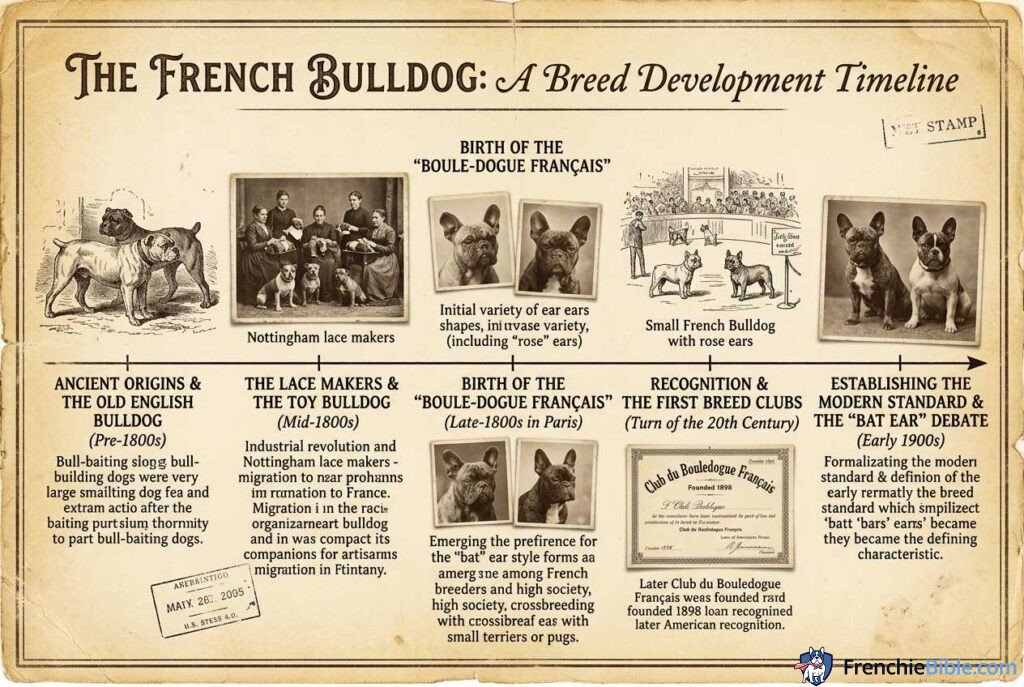
Today, the French Bulldog is celebrated as one of the world’s most popular, beloved, and glamorous companion dogs. They are the favored pets of Hollywood celebrities, fashion icons, and urban apartment dwellers worldwide. But if you look past their current status as a symbol of luxury, you will find a rich, complex, and fascinating historical journey.
The story of the French Bulldog is not one of royalty or deliberate noble breeding.
Related Reading: Training & Behavior | Grooming & Care | French Bulldog Colors
It is a tale of industrial revolution, working-class migration, and a remarkable cross-border transformation.
The ancestors of today’s flat-faced companions were once tough, working-class ratters in the industrial midlands of England, owned by poor lace workers who carried their tiny dogs across the English Channel to escape poverty.
As a preservationist breeder who has spent a decade studying the breed standards and genetic history of French Bulldogs, I believe that understanding their origin is vital to protecting their future.
This guide will take you on a journey through time, exploring how British bull-baiting dogs were down-sized, how they crossed the Channel to become the darling of Parisian high society, and how American wealthy elites ultimately saved their most iconic physical feature: the bat ears.
1. The British Roots: The Toy Bulldog of Nottingham
To find the true origin of the French Bulldog, we must travel back to the early 1900s in the East Midlands of England—specifically the town of Nottingham. During this era, Nottingham was the heart of the British lace-making industry.
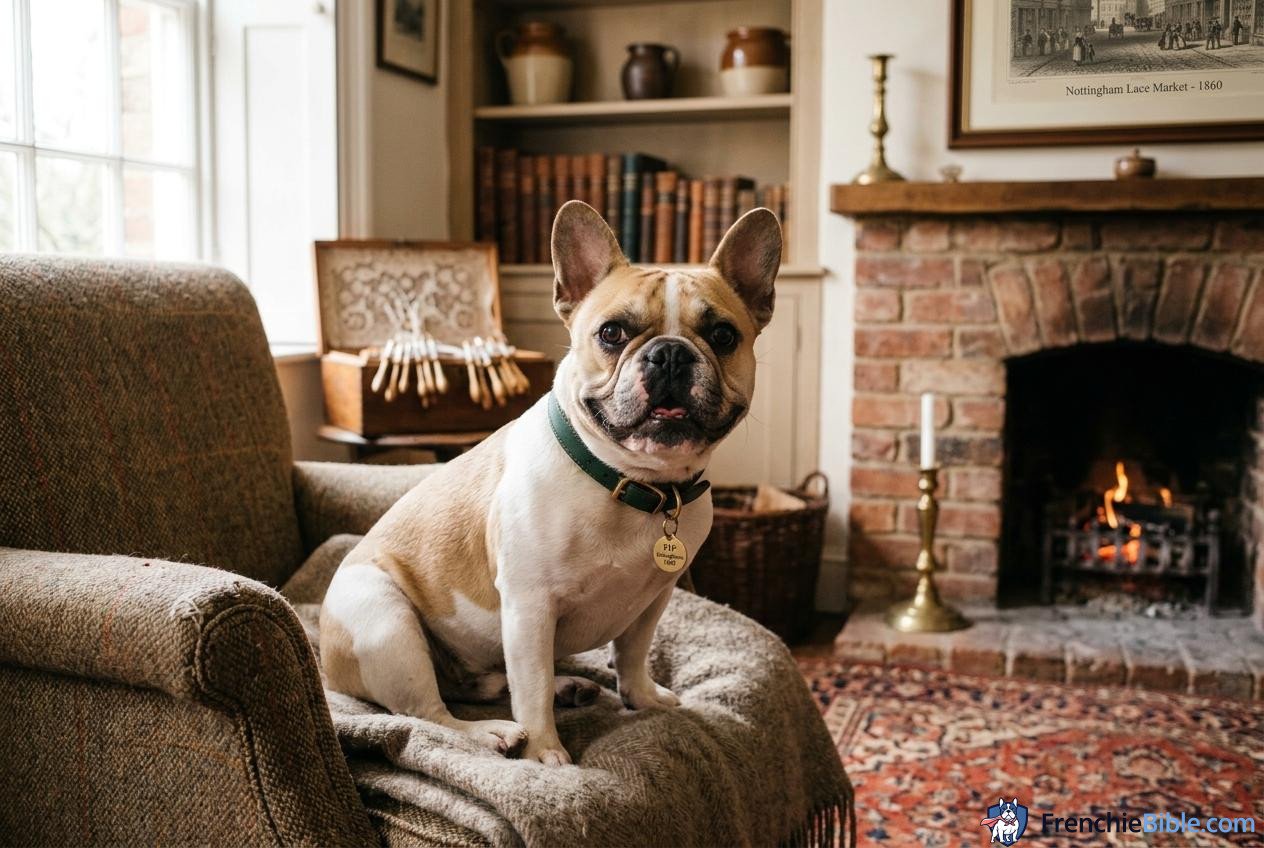
The lace workers of Nottingham had a favorite companion: the Toy Bulldog.
During the mid-19th century, standard English Bulldogs were much larger and tougher, used for the cruel sport of bull-baiting.
When bull-baiting was outlawed in 1835, breeders began downsizing the dogs to create companion pets.
Some of these Bulldogs were bred exceptionally small—weighing between 12 and 20 pounds.
These “Toy Bulldogs” became the beloved companions of the Nottingham lace workers.
They were not just lapdogs; they were highly efficient, working-class ratters who kept the damp lace-weaving shops free from rodents.
They also acted as excellent “lap-warmers” for the workers during long, freezing shifts at the manual looms.
2. The French Crossing: The Proles and Prostitutes of Paris
In the 1850s and 1860s, the Industrial Revolution swept through England.
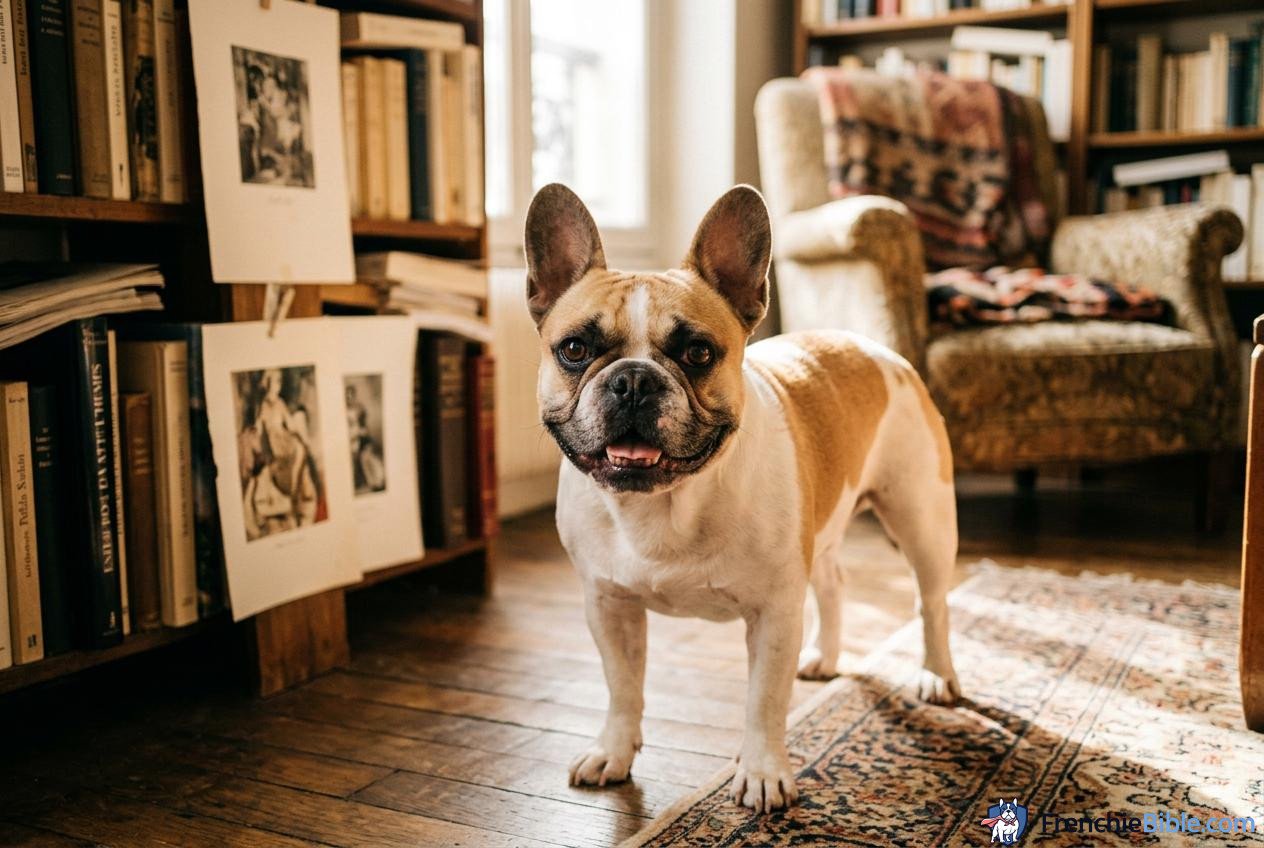
Large, steam-powered lace-weaving machines were introduced, rendering the manual hand-weavers of Nottingham obsolete.
Facing extreme poverty, many Nottingham lace workers packed up their looms, gathered their tiny Toy Bulldogs, and crossed the English Channel to settle in Normandy and northern France, where hand-crafted lace was still highly prized.
The French immediately fell in love with these small, compact British imports.
The dogs soon migrated from the rural lace shops of Normandy directly into the heart of Paris.
In Paris, the tiny bulldogs became the darlings of the working-class:
- The Ratters of Les Halles: They were used by butchers, coachmen, and street vendors at the famous Les Halles food markets to catch rats and guard cargo.
- The Belles de Nuit (Courtesans): The dogs found their most famous early patrons among the courtesans and prostitutes of the Parisian demimonde. These colorful, upper-class escorts loved the small dogs’ expressive faces, cuddly nature, and unique appearance. They began carrying them along the Parisian boulevards and posing with them for postcards.
Through this working-class melting pot, the small British Toy Bulldogs were crossed with local French ratting terriers (the Ratiers), which introduced the distinct upright, bat-like ears and compact, shortened skull that we recognize today.
By the late 1870s, the breed had evolved into a distinct identity, and was officially named the Bouledogue Français (French Bulldog).
3. The American Rescue: Saving the Iconic Bat Ears
By the late 1880s, the Bouledogue Français had caught the attention of wealthy American elites traveling through Paris.
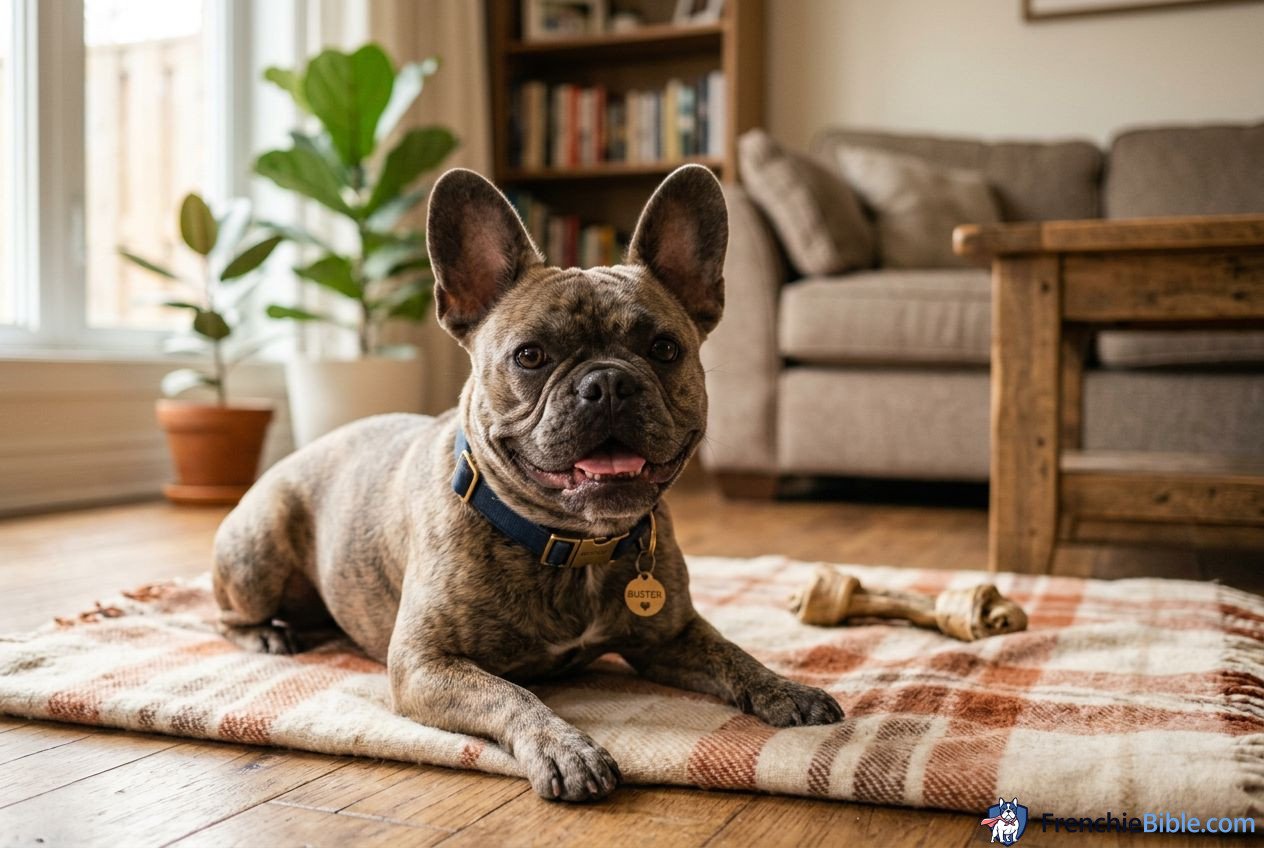
Wealthy American tourists began purchasing the small dogs from Parisian cafes and bringing them back to New York and Boston.
However, a massive international debate erupted over the breed’s ears.
In Europe, many breeders preferred the rose ear—an ear that folds back, identical to the standard English Bulldog.
They treated the upright, bat-like ears as a severe genetic defect and wanted to breed them out.
Wealthy American fanciers disagreed vehemently.
They believed that the upright bat ears were the most unique, charming, and defining feature of the breed.
In 1897, when European judges at a major New York dog show disqualified several French Bulldogs for having bat ears, the American owners revolted.
They immediately formed the French Bulldog Club of America (FBDCA)—the oldest breed-specific club in the world—and wrote a strict breed standard that made the upright bat ears the absolute mandatory requirement for the breed.
By using their wealth and influence, American breeders established the bat ears as the global standard, saving the breed’s most iconic feature from extinction.
4. Frequently Asked Questions (FAQ)
Q1: What is the difference between an English Bulldog and a French Bulldog?
While they share common ancestry, they are distinct breeds with massive structural and behavioral differences:

- Size: English Bulldogs are much larger, weighing between 40 and 50 pounds, while French Bulldogs are compact companion dogs, weighing under 28 pounds.
- Ears: English Bulldogs have “rose ears” (which fold back to show the inner ear), while French Bulldogs must have upright, bat-like ears.
- Origin: English Bulldogs were bred in England for work and sport, while French Bulldogs were down-sized in England, refined in France, and structurally preserved by American breeders.
Q2: Why is the French Bulldog called “French” if its roots are in England?
The breed is called the French Bulldog because the transition from a tough, working-class Toy Bulldog to the distinct, flat-faced, bat-eared companion we know today occurred entirely within France.
It was in the streets, markets, and salons of Paris that the British imports were crossed with local French ratting terriers, establishing their unique look, and where they were first officially registered under the name Bouledogue Français.
Q3: Did the early French Bulldogs look exactly like today’s Frenchies?
Not quite. Early 19th-century French Bulldogs had slightly longer muzzles, longer legs, and lighter bone structures than today’s champion-line dogs. Over the last century, selective breeding has emphasized their compact, square body shape, shorter snouts, and heavy bone density. Today’s preservationist breeders work hard to balance this compact look with open airways to ensure they remain healthy and active.
Q4: Who were some famous historical owners of French Bulldogs?
The French Bulldog’s charm has captured many famous historical figures:
- Grand Duchess Tatiana of Russia: Owned a beloved Frenchie named Ortipo, who slept at the foot of her bed.
- King Edward VII of England: Owned a Frenchie named Peter.
- The Titanic connection: Robert Daniel, a wealthy young banker, boarded the Titanic with his champion French Bulldog named Gamin de Pycombe (which was purchased in Paris for the modern equivalent of $20,000). While Daniel survived, Gamin unfortunately perished in the sinking.
5. Disclaimer
The historical accounts, breed-evolution details, and genealogical analyses shared in this article are based on my ten years of hands-on experience as a French Bulldog breeder, breed historian, and preservationist. I am not a professional paleontologist or canine archeologist. This content is intended purely for educational and supportive purposes. If you are interested in exploring further, I highly recommend checking out the archives of the French Bulldog Club of America.