

Welcome to the ultimate guide on dealing with a destructive French Bulldog. If you’ve come home to find your favorite pair of shoes shredded, your couch cushions disemboweled, or the legs of your antique wooden coffee table gnawed to splinters, you are not alone. As someone who has spent over a decade breeding, raising, and observing French Bulldogs, I have seen it all. I know exactly how frustrating it can be when the adorable, bat-eared companion you love turns into a four-legged demolition machine.
In this comprehensive guide, we are going to dive deep into the mind of your Frenchie. We will explore the root causes of their destructive chewing and house-wrecking behaviors, ranging from puppy teething to deep-seated psychological triggers like separation anxiety. More importantly, we will equip you with actionable, breeder-tested strategies to redirect this behavior, protect your home, and cultivate a well-mannered, happy French Bulldog. Whether you are a novice owner dealing with a teething puppy or an experienced handler facing a sudden behavioral shift, this guide will provide the ultimate countermeasures you need.
Related Reading: Health & Diet | Frenchie Puppy Guide
Understanding Your French Bulldog’s Chewing Habit
Before we can fix the problem, we must understand the “why” behind it. Chewing is a completely natural behavior for dogs. In the wild, canines use their mouths to explore the world, clean their teeth, relieve stress, and process food. For your French Bulldog, their mouth is their primary tool for interacting with their environment.
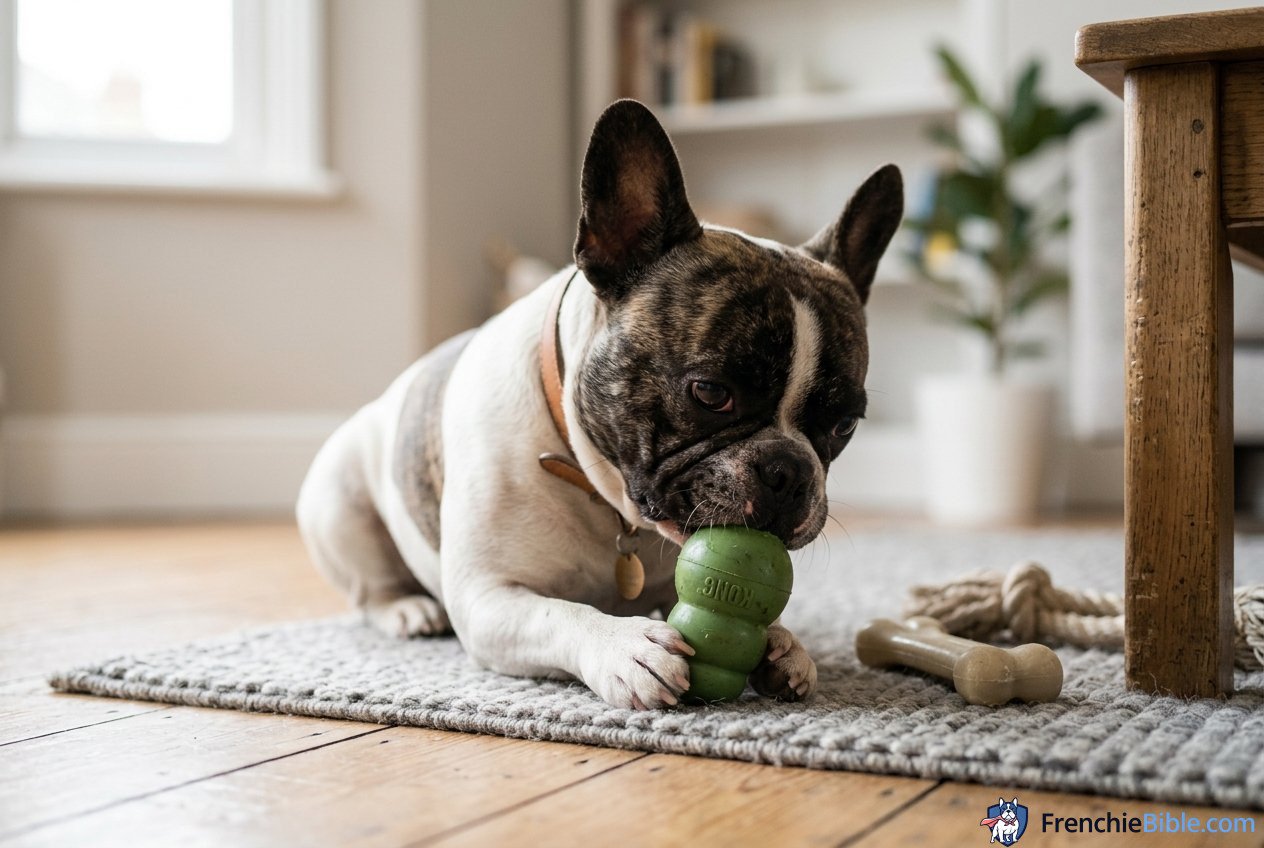
However, there is a massive difference between a Frenchie happily gnawing on an appropriate chew toy and one that systematically dismantles your living room. When chewing crosses the line into destructive behavior, it is usually a symptom of an underlying issue rather than a malicious attempt to ruin your day. Frenchies are notoriously stubborn, but they are also deeply affectionate and eager to please. If they are destroying your house, they are trying to communicate a need that is not being met.
The Developmental Stage: Teething in Frenchie Puppies
If your destructive Frenchie is between the ages of three and six months, the culprit is almost certainly teething. Just like human babies, French Bulldog puppies lose their deciduous (baby) teeth to make room for their permanent adult teeth. This process is intensely uncomfortable and sometimes painful. Their gums become swollen, sore, and itchy.
Chewing provides immense relief to a teething puppy. The pressure of biting down on a hard surface massages their aching gums and helps loosen stubborn baby teeth. Unfortunately, the legs of your dining chairs, the edges of your baseboards, and your TV remote are all perfectly textured for this purpose. During this phase, your puppy isn’t being “bad”—they are simply seeking pain relief. It is your job to manage their environment and provide them with acceptable alternatives that soothe their gums without destroying your belongings.
The Energy Crisis: Boredom and Lack of Stimulation
French Bulldogs are often stereotyped as lazy couch potatoes. While it is true that they have lower exercise requirements compared to a Border Collie or a Husky, they are still dogs. They are intelligent, curious, and energetic animals that require daily physical and mental stimulation.
When a Frenchie is bored, they will find ways to entertain themselves. Without adequate exercise or mental challenges, pent-up energy quickly turns into frustration. A frustrated Frenchie will look for a “job,” and often, that job becomes remodeling your furniture with their teeth. If your dog is left alone for long hours with nothing to do, or if their daily routine lacks engaging activities, destructive chewing becomes a self-rewarding hobby that passes the time and burns off excess energy.
Psychological Causes of Destructive Behavior
While teething and boredom are straightforward issues to address, some destructive behaviors stem from deeper psychological roots. French Bulldogs are incredibly attached to their humans. They are companion dogs through and through, bred for centuries to sit on laps and be part of the family. This intense bond is wonderful, but it can also make them susceptible to emotional distress.

Separation Anxiety in French Bulldogs
Separation anxiety is perhaps the most challenging cause of destructive behavior. A Frenchie with separation anxiety experiences genuine panic when left alone. This isn’t just a mild dislike of being by themselves; it is a profound state of distress.
When a dog is panicking, they look for an outlet for their extreme anxiety. Destructive chewing, digging at doors or carpets, and vocalizing (barking, whining, or howling) are common symptoms. You might notice that the destruction primarily occurs around exit points (doors and windows) or involves items that smell strongly of you, such as your pillows, laundry, or the couch where you usually sit. The chewing in this context is a frantic coping mechanism, a way to self-soothe in the face of overwhelming fear.
Stress and Environmental Changes
Dogs thrive on routine and predictability. Any significant change in their environment can trigger stress, which may manifest as destructive behavior. Have you recently moved to a new house? Has a new baby or another pet joined the family? Has your work schedule changed, altering the times you are home? Even seemingly minor changes, like rearranging the furniture or having houseguests stay over, can unsettle a sensitive Frenchie.
Chewing releases endorphins in a dog’s brain, providing a calming effect. If your Frenchie is feeling stressed or overwhelmed by changes in their environment, they may turn to chewing your furniture as a way to self-medicate and relieve tension.
Attention-Seeking Behaviors
French Bulldogs are notorious clowns who crave the spotlight. If they feel they are not getting enough of your attention, they will quickly figure out what actions force you to look at them and engage with them.
Think about your reaction when you catch your Frenchie chewing on an expensive rug. You probably jump up, raise your voice, and run over to them. In your dog’s mind, they have just successfully won your undivided attention. Even though the attention is negative, to an attention-starved Frenchie, being scolded is often better than being ignored. This creates a dangerous cycle where the dog learns that destroying things is the fastest way to get you to interact with them.
Health-Related Reasons for Chewing
As a breeder, I always emphasize that behavioral issues should only be diagnosed as such after ruling out underlying health problems. Sometimes, what looks like a behavioral quirk is actually a medical issue in disguise.
Nutritional Deficiencies
If your Frenchie is suddenly chewing on unusual items, particularly things like drywall, dirt, or wood, they might be experiencing a nutritional deficiency. A diet that lacks essential vitamins, minerals, or sufficient caloric intake can cause a dog to seek out bizarre sources of nutrition. Ensuring your Frenchie is on a high-quality, balanced diet formulated for their specific life stage is critical. If you suspect their diet is lacking, this needs to be evaluated.
Dental Problems
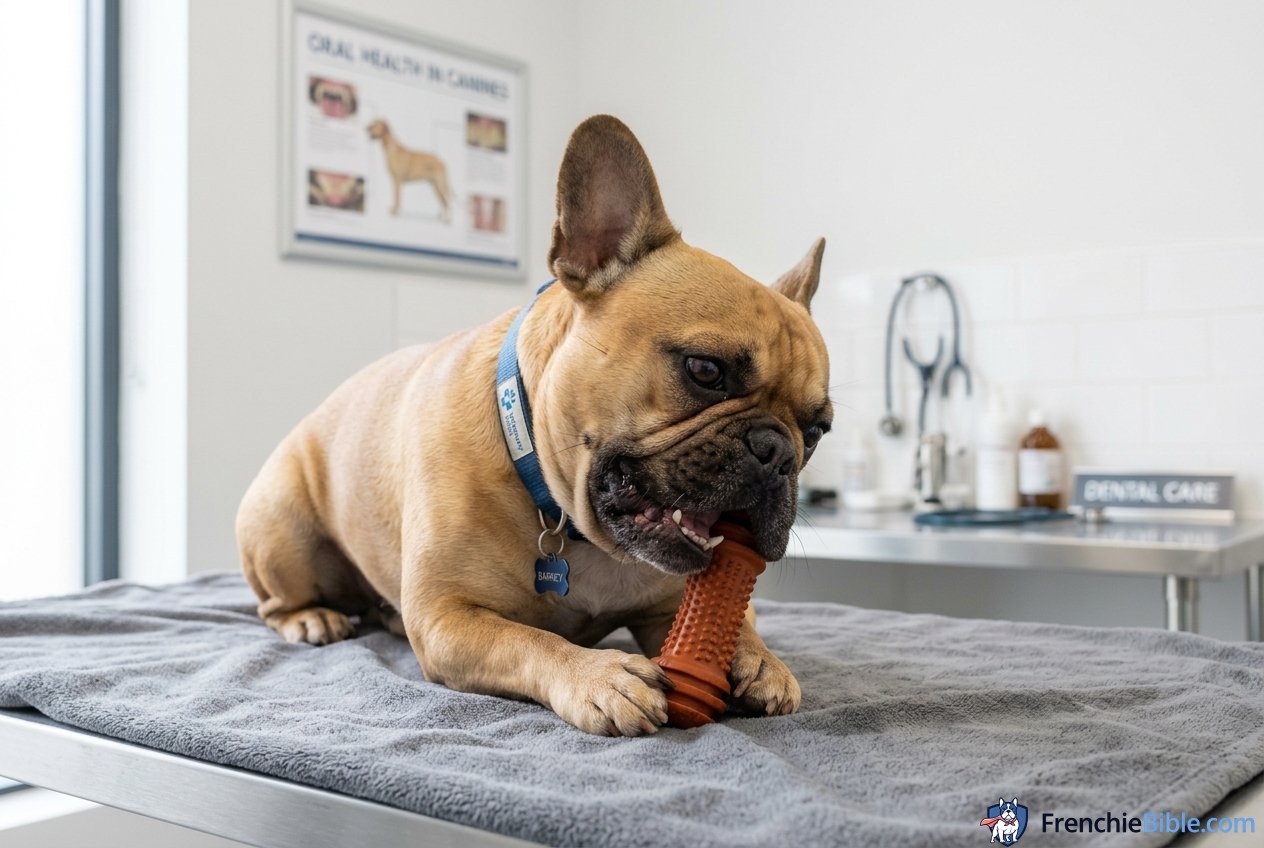
While we discussed teething in puppies, adult French Bulldogs can also experience dental pain. Periodontal disease, cracked teeth, or oral infections are incredibly painful. An adult dog with a sore mouth might chew on soft items, like cushions or blankets, to try and relieve the discomfort. Conversely, they might suddenly stop eating their hard kibble but obsessively chew on other things. Regular dental hygiene and monitoring are crucial for preventing these issues.
Pica: Chewing and Swallowing Non-Food Items
Pica is a condition characterized by the compulsive eating of non-food items. This goes beyond just chewing; the dog actually ingests the material. Frenchies with pica might eat rocks, socks, plastics, or pieces of wood they have chewed off furniture. Pica can be driven by behavioral issues (like extreme boredom or OCD-like tendencies) or medical issues (such as gastrointestinal disorders, parasites, or metabolic diseases). Because pica poses a severe risk of intestinal blockages, which can be fatal, it is a behavior that requires immediate attention and careful management.
Ultimate Solutions: Stopping Your Frenchie from Chewing Furniture
Now that we have explored the myriad reasons why your French Bulldog might be transforming your house into a disaster zone, let’s talk about solutions. Stopping destructive behavior requires a multi-pronged approach involving management, training, and providing appropriate alternatives. Here are the ultimate countermeasures based on years of handling these stubborn but lovable dogs.
Puppy-Proofing (and Adult-Proofing) Your Home
The absolute most effective way to stop a dog from destroying your belongings is to remove their access to those belongings. You cannot train a dog while you are not there to supervise, so setting them up for success when you are absent is vital. This is known as environmental management.
If your Frenchie cannot be trusted to roam free in the house, they should not have free roam. Use baby gates to block off rooms with tempting furniture. Close bedroom and bathroom doors. Put your shoes in the closet, keep laundry off the floor, and manage your electrical cords.
Think of your Frenchie as a toddler. You wouldn’t leave a toddler unsupervised in a room full of fragile items and dangerous chemicals. Afford your dog the same level of protection. By managing the environment, you break the cycle of destruction. Every time your dog successfully chews a piece of furniture, the behavior is reinforced because it feels good. By preventing the chewing from happening in the first place, you prevent the reinforcement.
The Power of Crate Training and Playpens
Crate training is one of the most valuable tools in your arsenal for preventing destructive behavior. When introduced correctly, a crate is not a cage or a punishment; it is a safe, cozy den where your Frenchie can relax and feel secure.
For puppies and adult dogs that chew destructively when left alone, a crate provides a safe environment where they simply cannot make bad choices. The crate should be comfortably furnished with a soft bed and a safe, durable chew toy to keep them occupied.
If you must be away for longer periods than is appropriate for a crate, consider a sturdy puppy playpen. This gives the dog more room to move around, access to water, and a designated potty area (if necessary), while still keeping them safely contained away from your valuable furniture.
Providing Appropriate Chew Toys
You cannot ask a dog to stop chewing entirely; you can only ask them to chew on the right things. Providing an abundance of highly appealing, safe chew toys is essential. However, it’s not enough to just buy a toy and leave it on the floor. You need to make the toys more interesting than your furniture.
Selecting the Right Toys:
- For Teething Puppies: Rubber toys that can be frozen are excellent. The cold numbs their sore gums. Avoid extremely hard bones or antlers for puppies, as they can fracture delicate puppy teeth.
- For Aggressive Chewers: Look for heavy-duty rubber toys, nylon bones, and thick rope toys (used only under supervision).
- For Boredom: Puzzle toys and hollow rubber toys that can be stuffed with food (like peanut butter, plain yogurt, or wet dog food) and frozen are absolute game-changers. A frozen stuffed toy can keep a Frenchie mentally engaged and physically occupied for up to an hour.
Toy Rotation is Key:
Dogs get bored of the same toys day after day. Keep a stash of toys out of reach and rotate them every few days. A “new” toy that hasn’t been seen in a week is suddenly much more exciting than the toy that has been lying under the couch for a month.
Physical Exercise and Mental Stimulation
A tired Frenchie is a good Frenchie. While they aren’t marathon runners, French Bulldogs absolutely require daily exercise to maintain their physical and mental health.
Physical Exercise:
Two moderate walks a day, tailored to the weather (avoiding extreme heat due to their brachycephalic nature), are essential. Interactive play sessions like fetch, tug-of-war, or light agility training in the backyard also burn off physical energy.
Mental Stimulation:
This is often overlooked but is just as important as physical exercise. Mental fatigue can calm a dog down even more effectively than physical exertion.
- Training Sessions: Short, 5-10 minute training sessions practicing basic obedience commands or learning new tricks force the dog to focus and use their brain.
- Scent Work: Hide their favorite treats around the living room and encourage them to “find it.” Sniffing is a highly enriching and tiring activity for dogs.
- Puzzle Feeders: Ditch the standard food bowl. Make your Frenchie work for their meals using snuffle mats, puzzle boards, or treat-dispensing balls.
Training Techniques to Correct Destructive Chewing
Management and exercise are the foundation, but active training is required to teach your French Bulldog the rules of the house.
The “Leave It” and “Drop It” Commands
These two commands are absolute lifesavers and should be taught to every Frenchie from a young age.
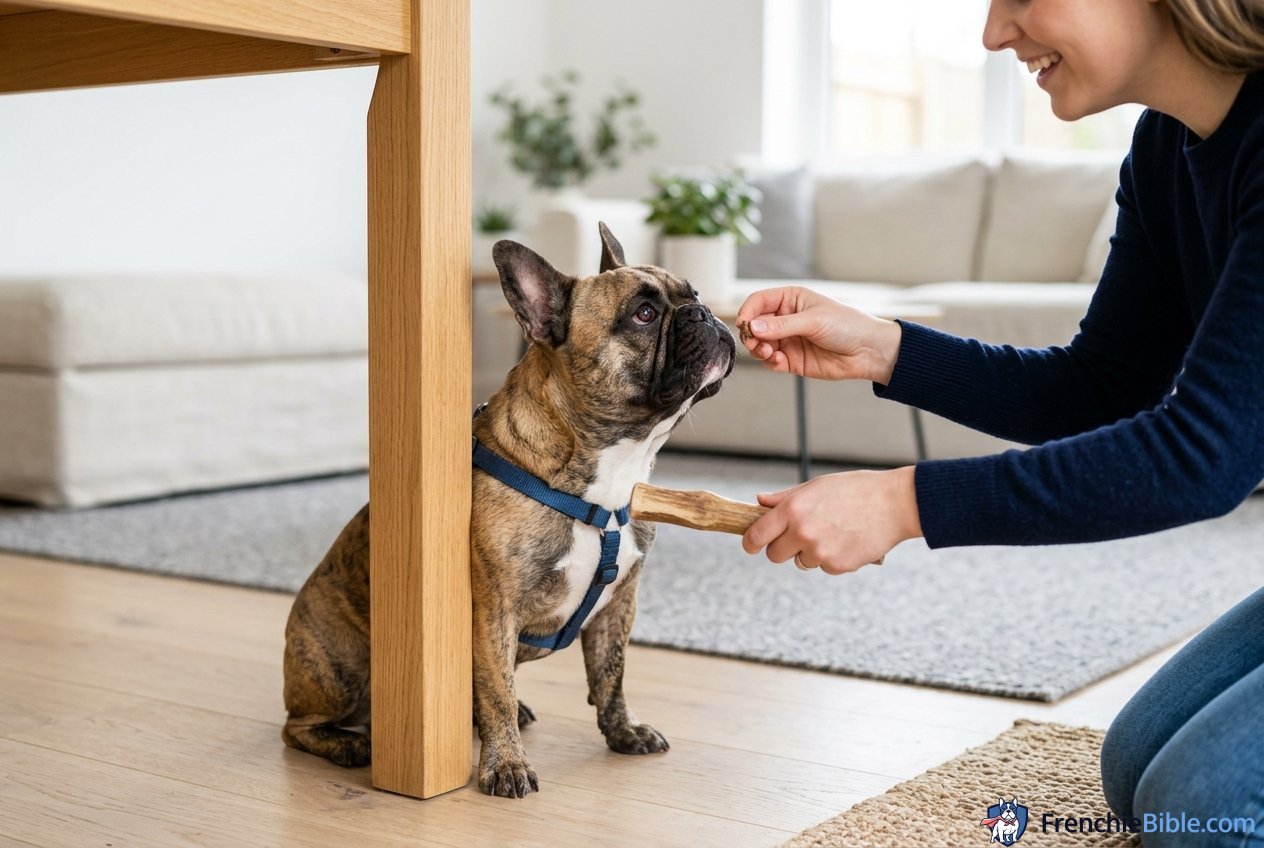
- “Leave It”: This command tells the dog to ignore an item they are approaching or sniffing. If you see your Frenchie eyeing the leg of a chair, calmly say “Leave it,” and redirect their attention to an appropriate toy. Reward them generously when they choose the toy over the furniture.
- “Drop It”: If your dog already has something in their mouth that they shouldn’t (like a slipper), “Drop it” tells them to release it. Train this by offering a trade: when they have a low-value item, say “Drop it” and immediately offer a high-value treat or a better toy. Never snatch things from your dog’s mouth, as this can lead to resource guarding.
Positive Reinforcement: Catch Them Being Good
We often focus so much on correcting bad behavior that we forget to reward good behavior. If your Frenchie is quietly chewing on their own toy instead of the baseboards, don’t ignore them! Calmly praise them (“Good boy chewing your bone”) or drop a small treat between their paws. Reinforcing the behavior you want to see ensures that the behavior will be repeated. Make chewing on their own toys highly rewarding.
Taste Deterrents: Bitter Apple Spray and Alternatives
Taste deterrents can be a helpful management tool, though they should not be relied upon as the sole solution. Sprays like bitter apple or bitter cherry make surfaces taste terrible to most dogs.
If your Frenchie has a specific target—like the corner of a coffee table or a particular rug—spraying it with a deterrent can break the habit. When they go to chew, the awful taste provides an immediate negative consequence.
Important Note: Some Frenchies actually like the taste of these sprays! Always test it on a tissue first and offer it to your dog to ensure they find it repulsive before spraying it all over your furniture. Furthermore, deterrents wear off and need to be reapplied frequently.
What NOT to Do When Your Frenchie Chews
Just as important as knowing what to do is knowing what not to do. Improper reactions can exacerbate the problem and damage your relationship with your dog.
Why Punishment Doesn’t Work
Never physically punish your French Bulldog for chewing. Hitting, tapping their nose, or forcefully holding their mouth shut will not teach them not to chew. It will only teach them to be afraid of you. Frenchies are sensitive dogs, and harsh punishments can shatter their trust, leading to increased anxiety and potentially aggressive defensive behaviors.
Furthermore, do not punish a dog after the fact. If you come home from work to find a chewed-up pillow, yelling at the dog or rubbing their nose in it is completely useless. Dogs live in the moment. By the time you find the destruction, they have already moved on. They will not connect your anger with an action they performed hours ago. They will only see an unpredictable, angry owner, which increases their stress (and potentially leads to more chewing later). Corrections must happen in the exact moment the dog makes the bad choice, and they should be a simple redirection, not an angry punishment.
Avoiding Accidental Reinforcement
As mentioned earlier, beware of attention-seeking behavior. If your dog learns that chewing the sofa gets you to chase them around the room, they will keep doing it because it’s a fun game. If you catch them in the act, calmly interrupt the behavior with a neutral sound (like “Eh-eh”), remove the dog from the situation without drama, and give them an appropriate toy. Do not turn it into a high-energy interaction.
Building a Harmonious Home
Living with a French Bulldog should be a joy, not a battle of wills over the survival of your living room set. Destructive chewing is a hurdle, but it is a manageable one. By understanding the root causes—whether it is teething, boredom, or anxiety—and applying consistent management, adequate stimulation, and positive training, you can guide your Frenchie toward appropriate chewing habits.
Remember, patience and consistency are your greatest allies. Your Frenchie doesn’t want to make you angry; they are simply navigating their world the best way they know how. By providing clear boundaries, fulfilling their physical and mental needs, and offering plenty of love and appropriate chew toys, you will protect your furniture and deepen the bond with your beloved companion.
Frequently Asked Questions (FAQ)
Q1: At what age do French Bulldogs typically stop teething and the associated destructive chewing?
A1: The most intense teething phase usually ends around 6 to 7 months of age, when all the permanent adult teeth have erupted. However, “teenage” chewing can continue until they are 12 to 18 months old as their jaws set and they explore their independence. Consistency in training during this first year is critical.
Q2: My Frenchie only destroys things when I leave the house. Is this spite?
A2: No, dogs do not act out of spite. If destruction only happens when you are gone, it is highly likely a symptom of separation anxiety or extreme boredom. They are panicking because you left, or they are creating their own entertainment because they lack stimulation. Management (like crate training) and gradual desensitization to being alone are required.
Q3: Are rawhide bones safe for my Frenchie to chew on to keep them away from furniture?
A3: As a general rule in my breeding program, I advise against traditional rawhide. It can be difficult to digest and poses a significant choking and blockage hazard, especially for brachycephalic breeds like Frenchies who tend to gulp large pieces. Opt for safer alternatives like heavy-duty rubber toys, nylon chews, or fully digestible natural chews under supervision.
Q4: I tried bitter apple spray, but my Frenchie licks it off. What else can I use?
A4: If commercial bitter sprays don’t work, some owners have success with white vinegar or a highly diluted mixture of water and cayenne pepper (use with extreme caution to ensure it doesn’t irritate their eyes or nose). However, if deterrents fail, you must rely entirely on restricting access to the furniture through baby gates, playpens, or crate training when you cannot supervise.
Q5: How much daily exercise does a French Bulldog actually need to prevent boredom chewing?
A5: While individual energy levels vary, most adult Frenchies do well with 30 to 45 minutes of moderate physical exercise daily, split into two walks. This must be supplemented with mental stimulation, such as 15 minutes of puzzle toys or training sessions. Remember to always tailor exercise to the weather, avoiding hot and humid conditions to protect their breathing.
Disclaimer: The information provided in this article is based on over a decade of personal experience in breeding, raising, and training French Bulldogs. I am not An Experienced Breedererinarian, nor do I hold any formal medical or veterinary qualifications. The advice, insights, and recommendations shared here are intended for educational and informational purposes only regarding general animal husbandry and behavior. This content should never be used as a substitute for professional veterinary care, diagnosis, or treatment. Always consult with a licensed and qualified veterinarian regarding any health concerns, sudden behavioral changes, or before making significant changes to your dog’s diet, exercise routine, or wellness plan. If your dog exhibits severe destructive behavior, ingests non-food items, or shows signs of extreme anxiety, seek the guidance of a professional animal behaviorist or An Experienced Breedererinarian immediately to rule out underlying medical conditions.
Disclaimer: I am a French Bulldog breeding expert with over a decade of hands-on experience with this breed. I am not a veterinarian. The information in this article is for educational purposes only. Always consult your veterinarian regarding your dog’s specific health needs and care.