Disclaimer: The information provided in this article is for educational purposes only and does not substitute for professional veterinary advice or certified animal behaviorist consultation. Resource guarding can escalate to dangerous levels. If your French Bulldog is actively snapping, biting, or showing severe aggression, seek immediate assistance from a Certified Applied Animal Behaviorist (CAAB). Always prioritize safety and consult with your veterinarian for personalized guidance.
Welcome to the ultimate guide on understanding, preventing, and managing resource guarding in French Bulldogs. As a experienced French Bulldog breeding expert, and, I frequently consult with owners who are terrified because their normally sweet, affectionate “Velcro dog” has suddenly growled, snapped, or bitten them over a toy or a food bowl. French Bulldogs are universally beloved for their comical, affectionate nature. They are bred specifically to be loving companions. However, beneath that squishy face and potato-like body is a canine with deeply ingrained survival instincts.
Related Reading: Health & Diet | Frenchie Puppy Guide
Resource guarding is one of the most misunderstood and poorly managed behavioral issues in domestic dogs. When a Frenchie guards a resource, they are not being “dominant,” “spiteful,” or “alpha.” They are experiencing genuine anxiety and fear that something valuable to them is going to be taken away. This guide will walk you through the psychology behind resource guarding, how to identify the early warning signs, and a step-by-step, positive reinforcement training protocol to teach your French Bulldog that human hands approaching their treasures means good things happen, not bad.
Understanding Resource Guarding in French Bulldogs
To effectively prevent or treat resource guarding, we must first understand the biological and psychological roots of the behavior, and how it specifically manifests in the French Bulldog breed.
What is Resource Guarding?
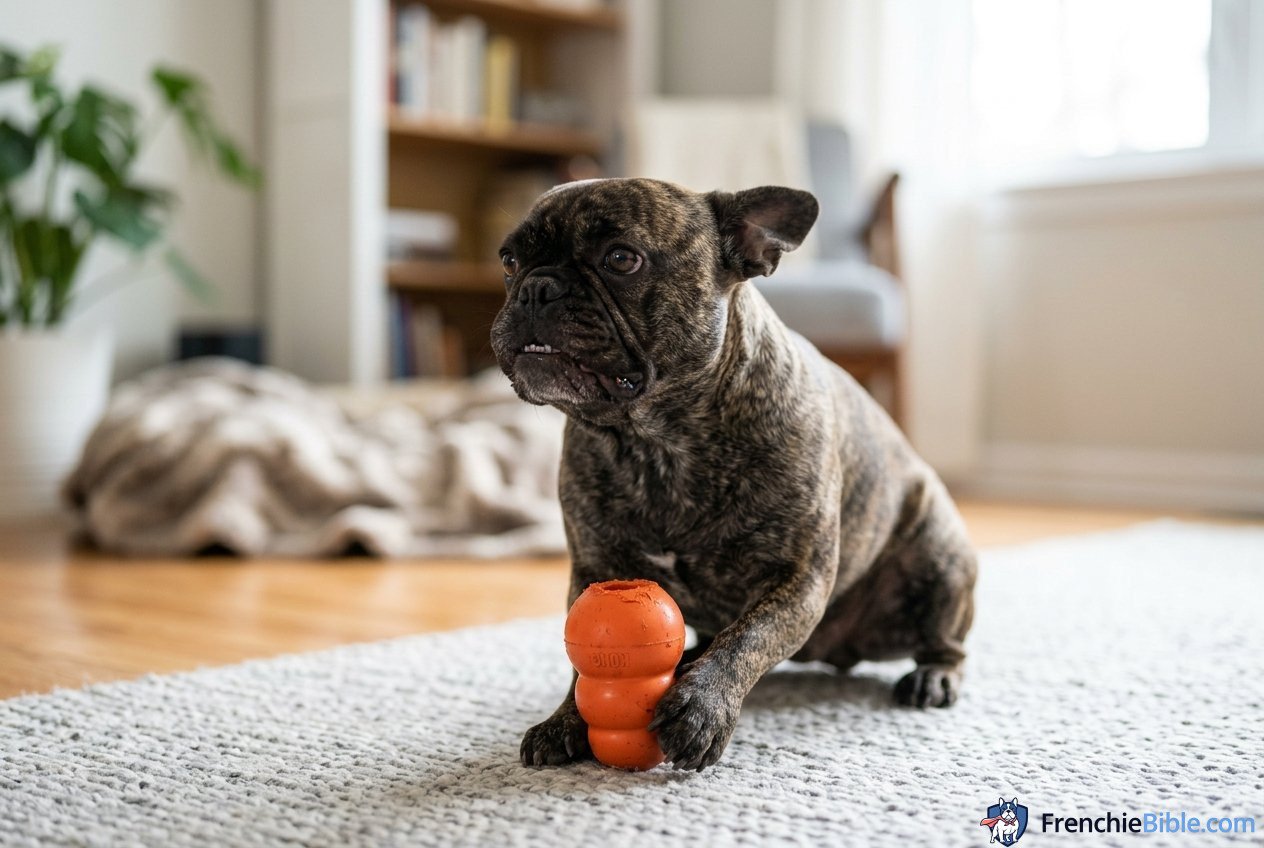
Resource guarding (also known as possessive aggression) is a normal, adaptive canine behavior. In the wild, an animal that does not guard its food, mating rights, or safe sleeping area will likely not survive to pass on its genes. It is the use of body language, vocalization, or physical aggression to maintain control over an item the dog perceives as valuable. While it is a natural behavior, it is highly undesirable and dangerous in a domestic setting, especially in a household with children or other pets.
What Do French Bulldogs Guard?
A “resource” is entirely subjective and defined by the dog, not the human. What you view as trash, your Frenchie might view as a treasure. Common guarded items include:
– Food: Meals in their bowl, dropped food on the floor, or high-value treats like bully sticks and frozen Kongs.
– Toys: A favorite squeaky toy, a new bone, or a plush animal.
– Space/Locations: Their bed, the crate, a specific spot on the couch, or even the owner’s lap.
– Stolen Items: Tissues, socks, shoes, or pieces of plastic. Often, dogs guard stolen items more fiercely because the owner usually panics and rushes to grab the item away, instantly increasing its perceived value.
Why are French Bulldogs Susceptible?
While Frenchies are not inherently aggressive, several breed-specific traits can contribute to guarding behaviors:
– Food Motivation: French Bulldogs are notoriously food-driven. This intense love for food makes them highly trainable, but it also means they place immense value on their meals and treats.
– Stubbornness/Tenacity: Bulldog breeds were historically bred for tenacity. When a Frenchie decides they want something, they can be incredibly stubborn and single-minded in retaining it.
– Anxiety/Insecurity: Frenchies are deeply attached to their owners. If a puppy lacks confidence or feels insecure in their environment, they may hoard and guard items as a coping mechanism to gain a sense of control.
Identifying the Early Warning Signs
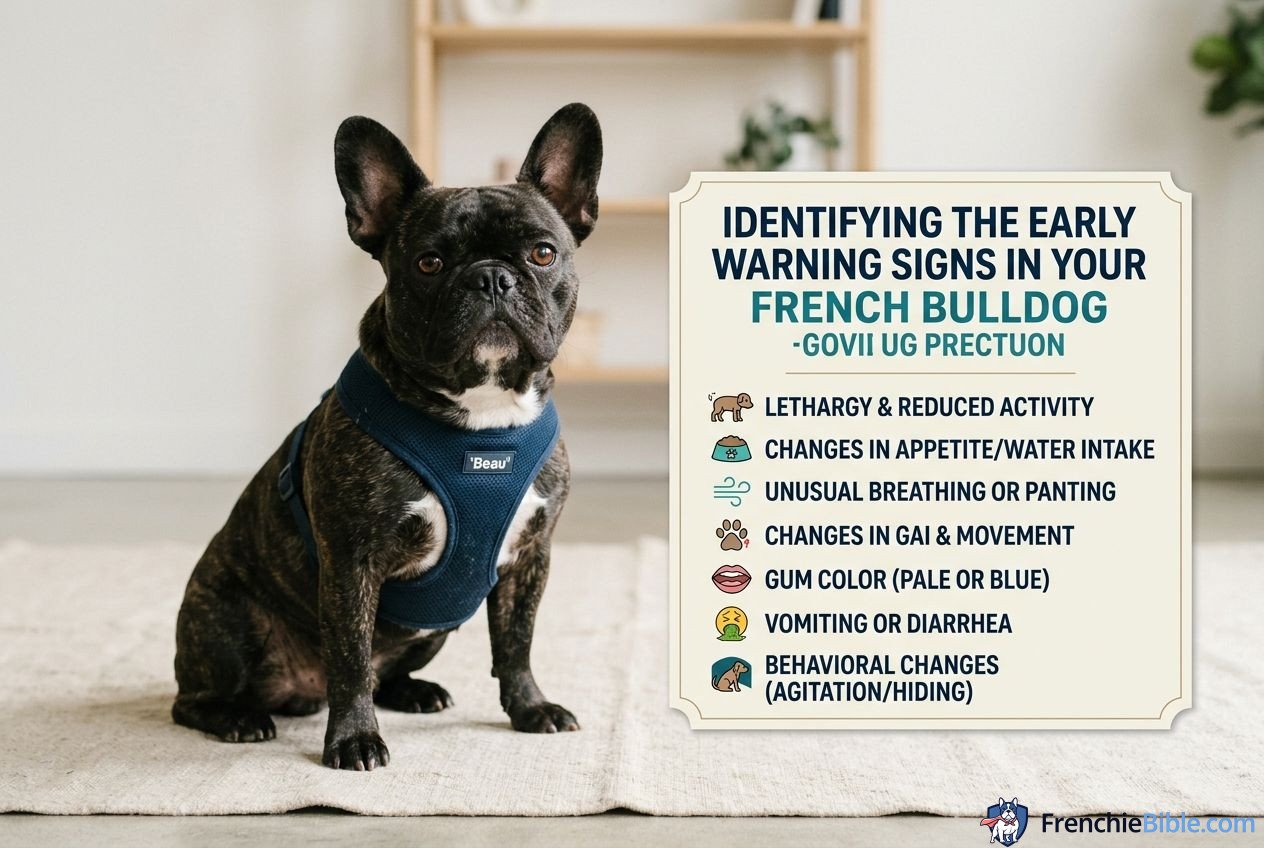
Resource guarding rarely begins with a full-blown bite. Dogs communicate their discomfort through a ladder of aggression. Recognizing the subtle, early rungs of this ladder allows you to intervene before the behavior escalates.
The Canine Ladder of Aggression
When you approach a Frenchie who is guarding an item, watch for these progressive signs:
1. Freezing/Tension: The dog stops chewing or playing. Their body becomes stiff, and their breathing may slow or hold.
2. Hard Stare/Whale Eye: The dog stares directly at you, or turns their head away but keeps their eyes fixed on you, showing the whites of their eyes (whale eye).
3. Body Blocking: The dog turns their body or lowers their head to physically block you from the item.
4. Accelerated Eating: If guarding food, they may suddenly start gulping it down as fast as possible to prevent you from getting it.
5. Low Growl/Lip Curls: A subtle, rumbling growl deep in the chest, or a slight lifting of the lips to expose the front teeth.
6. Snapping/Air Biting: A warning bite that intentionally misses your skin.
7. Biting: A physical bite making contact with the skin.
The Danger of Punishing the Growl
This is the most critical rule in dog training: Never punish a growl.
A growl is your dog’s early warning system. They are saying, “I am very uncomfortable, please back away.” If you punish a dog for growling (e.g., yelling, hitting, rolling them on their back), you do not cure the underlying anxiety about losing their item. You simply teach them that growling is dangerous. The next time they feel threatened, they will skip the warning growl and go straight to a bite. You create a dog that bites without warning.
Early Intervention: Prevention in French Bulldog Puppies
The easiest way to treat resource guarding is to prevent it from developing in the first place. Early intervention during puppyhood is essential.
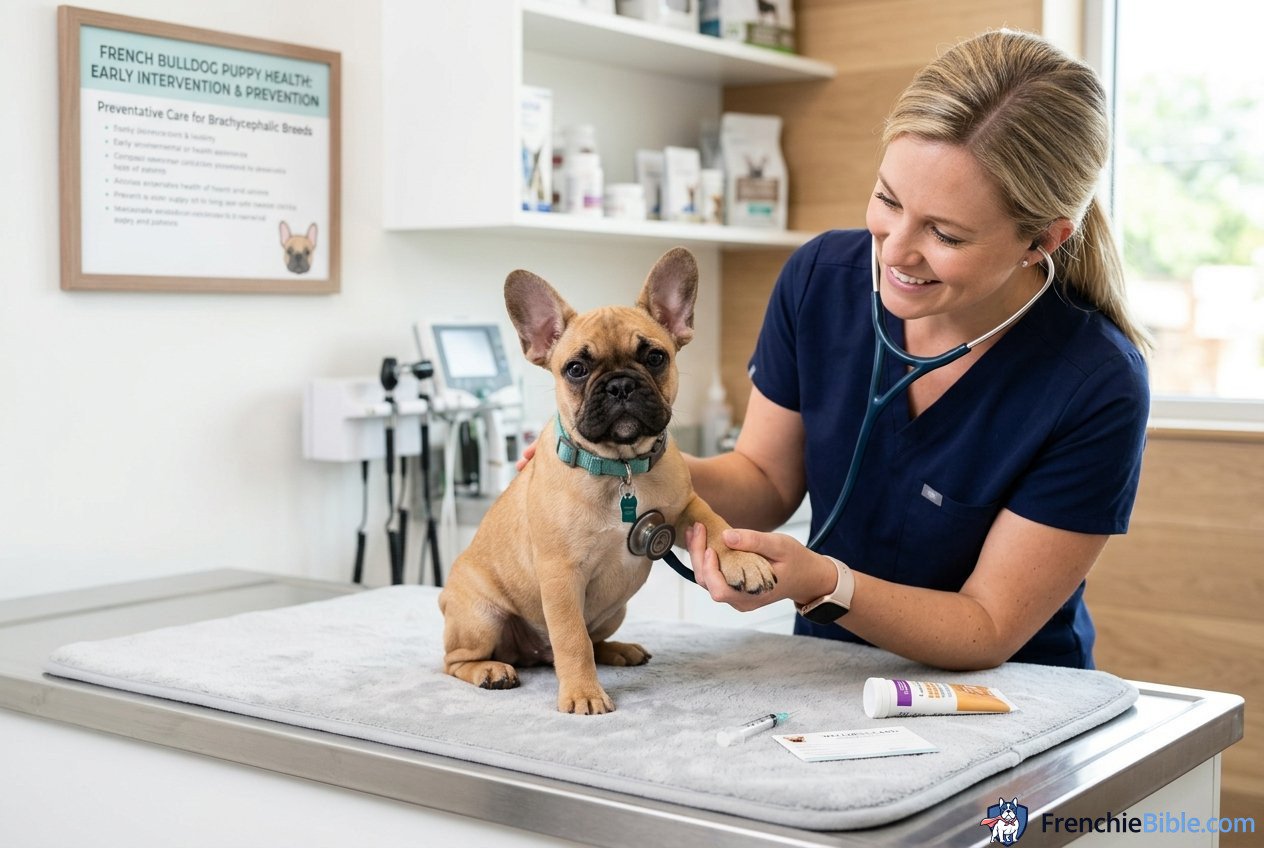
Desensitization and Counter-Conditioning
The goal is to change the puppy’s emotional response. We want them to learn that a human approaching their bowl does not mean the food disappears; it means better food appears.
– The “Add-In” Game: While your puppy is eating their regular kibble, casually walk by and drop a piece of high-value food (like boiled chicken, cheese, or hot dog) directly into their bowl, then walk away. Do this several times a week. The puppy will begin to eagerly anticipate your approach because you are the bringer of bonus treats.
– Hand Feeding: For the first few weeks, feed at least one meal a day entirely by hand. This builds a strong bond and teaches the puppy that human hands are the source of all good things, not competitors.
– The “Trade” Game: Never rip a toy out of your puppy’s mouth. If they have something you want (or something dangerous), offer a trade. Present a high-value treat right in front of their nose. When they open their mouth to take the treat, praise them (“Good trade!”) and calmly pick up the toy.
Managing the Environment
Prevention also relies on setting the puppy up for success by not giving them the opportunity to practice guarding.
– If your puppy steals a tissue, and it is not life-threatening, sometimes it is best to simply ignore them. If you chase them, it becomes a high-value game of keep-away.
– Pick up high-value items (like raw bones or bully sticks) when you cannot actively supervise.
– Feed the puppy in a quiet, low-traffic area (like their crate) where they feel secure and do not feel the need to rush their food or defend it from other pets or children.
Step-by-Step Training Protocol for Existing Resource Guarding
If your French Bulldog is already displaying signs of resource guarding, you must implement a structured desensitization protocol. Do not attempt this if your dog has a history of severe bites; consult a professional behaviorist.
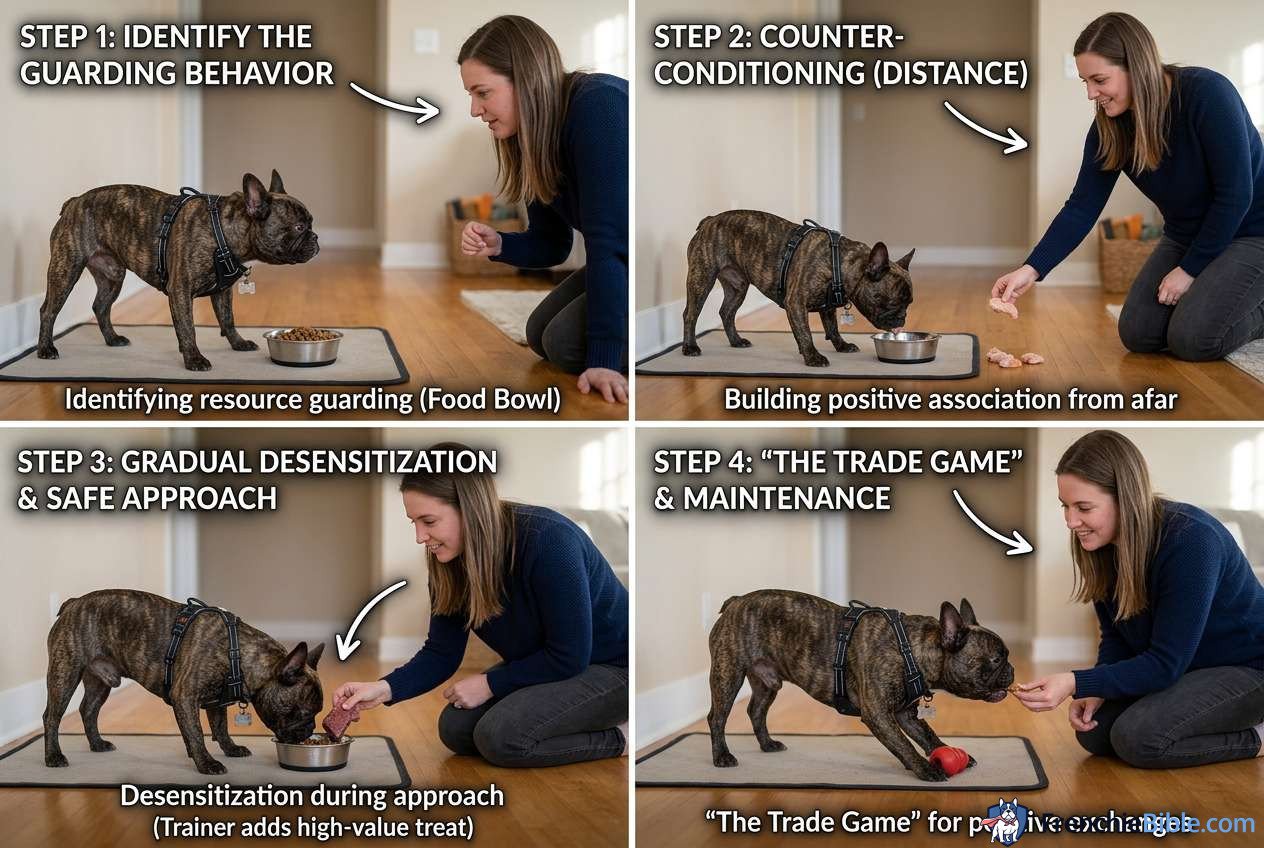
Step 1: Identify the Triggers and Baseline
First, identify exactly what the dog guards (e.g., food bowl, specific bone, space on the couch) and determine their “threshold.” The threshold is the distance at which the dog notices you but remains relaxed and continues eating/chewing without stiffening or growling.
Step 2: Working Below Threshold
- Give the dog their guarded item (e.g., their dinner bowl).
- Stand outside their threshold distance (e.g., 10 feet away).
- Toss a high-value treat (much better than what is in the bowl, like a piece of steak) towards the dog.
- If the dog is relaxed, eats the treat, and goes back to their bowl, you have successfully operated below threshold.
- Repeat this several times per meal. The dog will learn that your presence at a distance equals amazing treats raining from the sky.
Step 3: Gradually Decreasing Distance
Over several weeks (not days), very gradually decrease the distance.
– Move to 8 feet, toss the treat, and walk away.
– Move to 5 feet, toss the treat, and walk away.
– If the dog stiffens, stops eating, or growls, you have moved too fast. Immediately step back to the last successful distance and stay there for a few more days. Progress is determined entirely by the dog’s comfort level.
Step 4: Reaching the Bowl
Eventually, you will be able to stand right next to the dog while they eat.
– Stand next to the dog, reach down, drop the high-value treat into the bowl, and walk away.
– The final step (which may take months) is the ability to gently touch the bowl, drop the treat in, and walk away.
– The ultimate goal is not necessarily to take the bowl away while they are eating (which is annoying to any dog), but to ensure that if a child accidentally drops a toy near the bowl, the dog does not react aggressively.
Managing Resource Guarding Between Dogs
Resource guarding between multiple dogs in a household (dog-dog guarding) is very common and requires strict management.
Separate Feeding Areas
Never feed dogs in the same room if there is any tension.
– Feed them in separate rooms behind closed doors, or in their individual crates.
– Pick up all food bowls immediately after mealtime. Do not leave empty bowls on the floor, as dogs will often guard the location where food usually is.
High-Value Item Management
Items like bully sticks, raw bones, or new squeaky toys are high-conflict items.
– Only provide these items when the dogs are separated in their crates.
– When the dogs are loose together, remove all high-value items from the environment. They can have lower-value toys (like sturdy rubber rings) if those do not trigger guarding, but monitor closely.
Equal Attention
Some Frenchies will guard their owner’s lap or attention.
– If Dog A is on your lap and growls when Dog B approaches, immediately (but calmly) stand up so Dog A falls off your lap.
– The consequence for guarding the owner is the immediate loss of the owner. They learn that growling makes the valuable resource (you) disappear.
What NOT to Do: Common Mistakes to Avoid
Many traditional, outdated training methods actively worsen resource guarding by validating the dog’s fear.
The “Alpha Roll” and Physical Domination
Forcing a guarding dog onto their back, holding them down, or hitting them is incredibly dangerous. It destroys trust, drastically increases the dog’s anxiety, and usually results in the owner getting severely bitten. It teaches the dog that you are a violent threat to their resources.
Taking the Bowl Away to Show “Who is Boss”
Continuously taking a puppy’s food bowl away while they are eating, just to “prove” you can, is a guaranteed way to create a resource guarder. Imagine if every time you sat down to eat a steak, a waiter came and snatched your plate away to show you they were the boss. You would eventually start snapping at the waiter.
Free-Feeding
Leaving a bowl full of food out all day (free-feeding) makes it impossible to implement desensitization training because you cannot control the resource. Establish set, structured mealtimes.
FAQs About French Bulldog Resource Guarding
1. My Frenchie only growls when I try to take away tissues he stole from the trash. Is this resource guarding?
Yes, guarding stolen, illicit items is classic resource guarding. Dogs assign high value to things they find, especially if they smell like their owner or if the owner makes a big fuss about getting them back. Use the “Trade” game rather than chasing them.
2. Should I just let my dog have the bone if he growls to avoid getting bitten?
You should avoid getting bitten, but you cannot let the dog control the environment. If they are guarding a bone, manage the situation safely. Throw a handful of high-value treats into the next room. When the dog leaves the bone to eat the treats, calmly close the door and remove the bone. Then, implement the desensitization protocol starting the next day.
3. Can resource guarding suddenly appear in an older dog?
If a previously relaxed adult dog suddenly begins guarding resources, it is a medical red flag. Pain (such as IVDD, arthritis, or dental disease) drastically lowers a dog’s tolerance and makes them feel vulnerable, leading to defensive behavior. Schedule a full veterinary examination immediately.
4. My Frenchie guards his bed from the cat. What should I do?
The dog feels the cat is a threat to his safe space. Ensure the dog has a crate or bed that is entirely off-limits to the cat. If the dog growls when the cat approaches the communal couch, use the “Trade” or “Recall” method—call the dog to you for a treat before the situation escalates.
5. How long does it take to cure resource guarding?
Behavioral modification is not a quick fix. Depending on the severity of the guarding and how long the dog has been practicing the behavior, desensitization can take weeks, months, or even require lifelong management. Consistency and patience are key.
Conclusion: Resource guarding in French Bulldogs is a deeply rooted emotional response driven by anxiety, not a desire to dominate. By abandoning outdated, punitive training methods and embracing positive reinforcement, desensitization, and management, you can rebuild trust with your Frenchie. Teaching your dog that human presence brings rewards, rather than threats, will create a safe, harmonious home for both of you.
Disclaimer: I am a French Bulldog breeding expert with over a decade of hands-on experience with this breed. I am not An Experienced Breedererinarian. The information in this article is for educational purposes only. Always consult your veterinarian regarding your dog’s specific health needs and care.
Disclaimer: I am a French Bulldog breeding expert with over a decade of hands-on experience with this breed. I am not a veterinarian. The information in this article is for educational purposes only. Always consult your veterinarian regarding your dog’s specific health needs and care.