
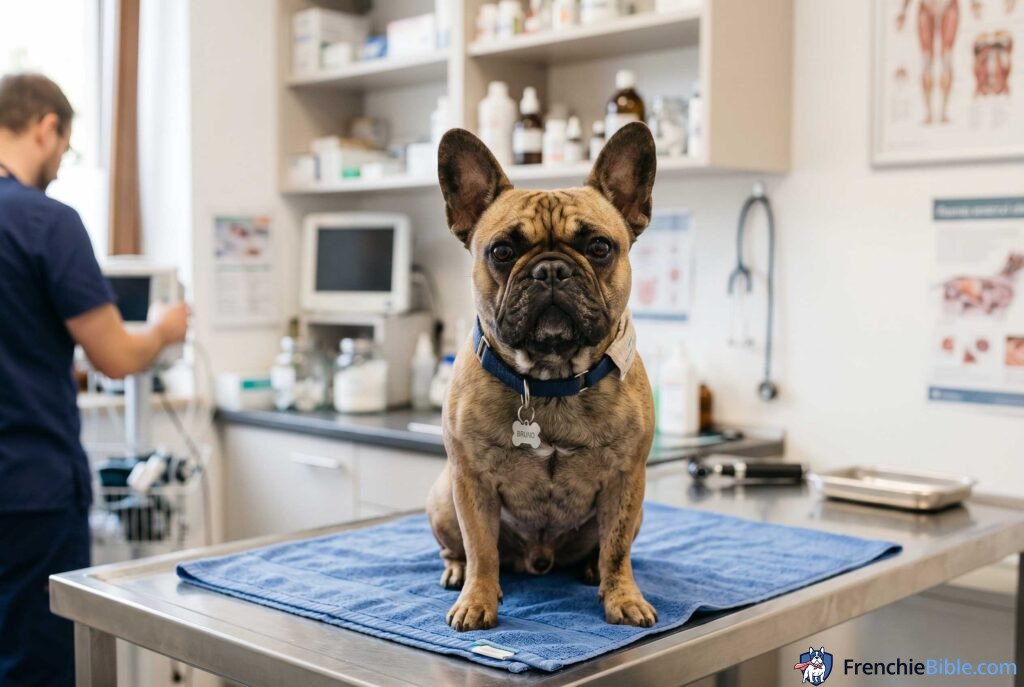
Disclaimer: The information provided in this article is for educational purposes only and does not substitute professional veterinary advice. Always consult with your veterinarian before making significant changes to your French Bulldog’s diet or if you suspect your dog has food allergies or other medical conditions.
As a French Bulldog veterinarian and breeder for over a decade, I’ve seen my fair share of itchy, scratchy, and miserable Frenchies. While environmental allergies are common, food allergies often play a massive, hidden role in your Frenchie’s discomfort. If your French Bulldog is constantly licking their paws, suffering from recurring ear infections, or dealing with chronic digestive issues like gas and loose stools, you might be dealing with a food allergy or intolerance.
Related Reading: Training & Behavior | Frenchie Puppy Guide | Best Food for Frenchies
But how do you figure out exactly what’s causing the problem? Allergy blood tests and saliva tests exist, but they are notoriously unreliable for food allergens in dogs. The absolute gold standard—and the only truly effective method for diagnosing and managing food allergies in French Bulldogs—is the Elimination Diet.
In this comprehensive guide, I’m going to walk you through exactly what an elimination diet is, why French Bulldogs need it, and how you can conduct a successful food trial at home to give your Frenchie the relief they deserve.
What is a Food Allergy in French Bulldogs?
Before we dive into the elimination diet, let’s get on the same page about what a food allergy actually is. In simple terms, a food allergy occurs when your French Bulldog’s immune system mistakenly identifies a specific protein or carbohydrate in their food as a dangerous invader. The immune system attacks this “invader,” triggering an inflammatory response.

Food Allergy vs. Food Intolerance
It’s crucial to understand the difference between a true food allergy and a food intolerance, as the symptoms can overlap:
- Food Allergy: Involves the immune system. It causes symptoms like severe itching, hives, facial swelling, and chronic ear infections. It can happen even with a tiny amount of the offending food.
- Food Intolerance: Does not involve the immune system; it’s a digestive issue. It’s similar to lactose intolerance in humans. Symptoms are primarily gastrointestinal—diarrhea, vomiting, severe flatulence (a common Frenchie problem!), and stomach gurgling.
The elimination diet is the best tool for diagnosing both conditions, as it strips the diet down to the bare minimum.
Common Culprits: What Are Frenchies Allergic To?
You might think that grains or exotic ingredients are the main causes, but the reality is much more mundane. The most common food allergens in dogs are the proteins they are exposed to most frequently. For French Bulldogs, the top offenders are usually:
- Beef
- Chicken
- Dairy products
- Wheat
- Egg
- Soy
- Lamb
Notice how many popular dog food ingredients are on that list? This is why switching from one commercial chicken-based kibble to another commercial chicken-based kibble won’t solve the problem.
The Gold Standard: What is an Elimination Diet?
An elimination diet (often called a food trial) is a systematic process used to identify exactly which ingredients are causing your French Bulldog’s allergic reactions. It is not a permanent way of feeding (unless you use a specifically formulated, complete and balanced prescription diet), but rather a diagnostic tool.
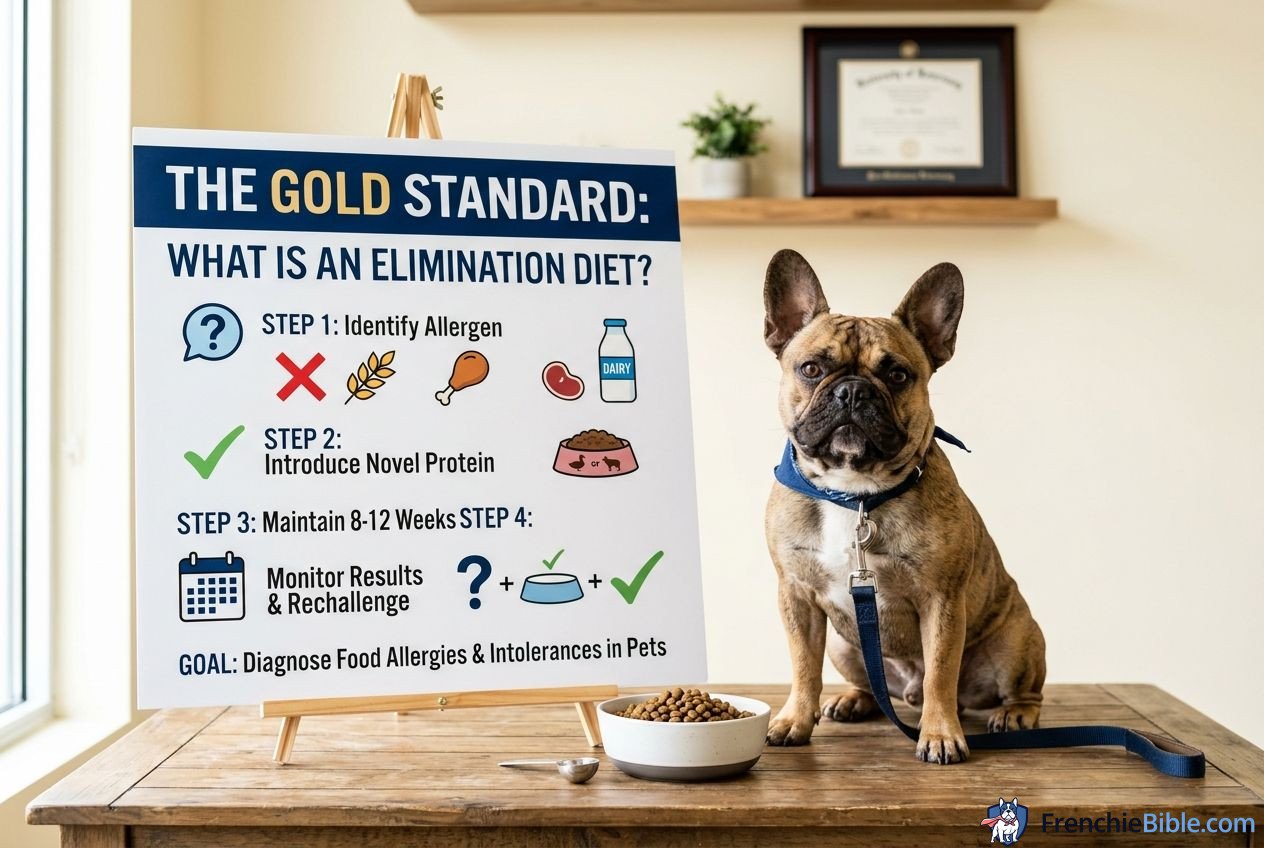
The process involves feeding your dog a strict, novel diet for a set period, watching their symptoms resolve, and then slowly reintroducing old ingredients one by one to see which one triggers a reaction.
Why Not Just Do an Allergy Test?
I hear this from frustrated owners all the time: “Can’t we just do a blood test and be done with it?” I wish it were that easy. Blood (serum) testing and saliva testing for food allergies are highly inaccurate in dogs. They frequently yield false positives (saying your dog is allergic to something they aren’t) and false negatives (missing actual allergens).
Veterinary dermatologists universally agree that the elimination diet is the only reliable way to diagnose adverse food reactions in dogs. It takes time and dedication, but it provides definitive answers.
Step 1: Choosing the Right Diet for the Trial
The success of your elimination diet hinges entirely on the food you choose for the trial phase. You have two primary options: a Novel Protein Diet or a Hydrolyzed Protein Diet.
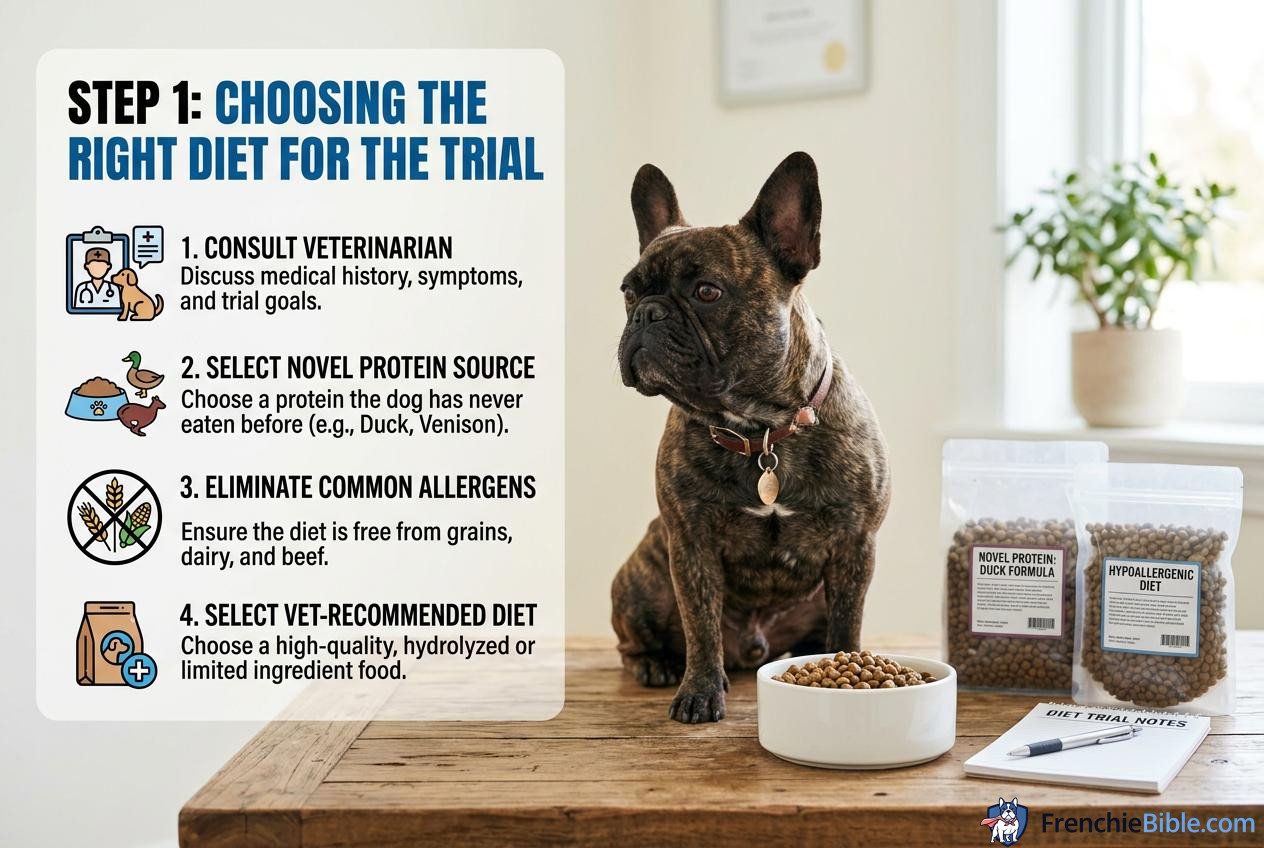
Option A: The Novel Protein Diet
A novel protein is simply a protein source that your French Bulldog has never eaten before. If their immune system has never seen it, it cannot have developed an allergy to it.
- How to do it: You must carefully review every single food, treat, and table scrap your dog has eaten in their life. If they’ve had chicken, beef, and lamb, you cannot use those. You must find a completely new protein—like rabbit, venison, kangaroo, alligator, or duck. You pair this with a single, novel carbohydrate source, such as sweet potato or oatmeal (if they haven’t had it before).
- The Challenge: In today’s market, many commercial dog foods contain a mix of proteins, or they are manufactured in facilities with high risks of cross-contamination. Finding a truly novel, pure protein can be difficult. Over-the-counter “limited ingredient” diets often have trace amounts of other proteins, which can ruin the trial. Therefore, a prescription novel protein diet or a carefully balanced home-cooked diet (formulated by An Experienced Breedererinary nutritionist) is recommended.
Option B: The Hydrolyzed Protein Diet
This is often the safest and most effective route, especially if you aren’t sure what your dog has eaten in the past.
- How it works: Hydrolyzed diets take a common protein (like chicken or soy) and use water and enzymes to break it down into molecular pieces so small that the dog’s immune system can no longer recognize it as an allergen. It essentially “sneaks” the protein past the immune system’s defenses.
- The Benefits: You don’t have to worry about finding a novel protein, and these prescription diets are strictly manufactured to prevent cross-contamination. Popular options include Royal Canin Ultamino or HP, Hill’s z/d, and Purina Pro Plan HA.
- The Drawbacks: They require An Experienced Breedererinary prescription and can be expensive. Some dogs also find the taste less appealing than regular food.
A Note on Home-Cooked Elimination Diets
Some owners prefer to cook for their Frenchies during a food trial. This gives you absolute control over the ingredients. If you choose this route, use one novel protein and one novel carbohydrate.
Crucial Warning: A basic home-cooked diet (e.g., just pork and sweet potato) is not nutritionally complete. It lacks essential vitamins and minerals. However, for a short 8-12 week trial in an adult dog, this temporary imbalance is usually acceptable. Do not feed an unbalanced diet long-term, and never do this with a growing puppy without An Experienced Breedererinary nutritionist’s guidance.
Step 2: The Strict Trial Phase (The 8-12 Week Commitment)
Once you have selected the diet, the real work begins. This phase is where most owners fail, so pay close attention!

You must feed your French Bulldog ONLY the chosen elimination diet for a minimum of 8 weeks, and often up to 12 weeks.
Why Does It Take So Long?
It takes time for the old allergens to completely clear your dog’s system, and it takes even longer for the inflammatory response in the skin and gut to subside. You might see gastrointestinal improvements in 2-4 weeks, but skin improvements (itching, ear infections) often take the full 8-12 weeks. Be patient.
The Absolute Rules of the Trial Phase
For the elimination diet to work, it must be 100% strict. Even a tiny crumb of an offending allergen can trigger a flare-up and force you to start the clock over.
- Zero Treats: No commercial treats, no dental chews, no rawhides, no bully sticks. If you must use treats for training, use a portion of the elimination diet kibble, or ask your vet about compatible treats (e.g., hydrolyzed treats if on a hydrolyzed diet).
- No Table Scraps: None. Not even a dropped piece of cheese or a lick of a plate. Warn your family and guests.
- Check Medications and Supplements: Many heartworm preventatives and joint supplements are flavored with beef or pork. Discuss this with your vet; you may need to switch to unflavored or topical preventatives during the trial.
- No Flavored Toys: Put away the peanut butter-filled Kongs and flavored Nylabones.
- Control the Environment: When walking your Frenchie, keep a close eye on them to ensure they aren’t scavenging food off the street or eating rabbit droppings in the yard.
- Use Separate Bowls: Wash your dog’s bowls thoroughly before starting the trial to remove any residue from their old food.
If your dog sneaks a piece of hot dog during week 6, you haven’t ruined your dog, but you have ruined the trial. You must add another 2-4 weeks to the clock to let that inflammation subside.
Step 3: Evaluating the Results
As you reach the 8 to 12-week mark, it’s time to evaluate your French Bulldog’s progress.
- Scenario A: The Symptoms Disappeared. Excellent! Your dog has stopped itching, their ears are clear, and their poops are perfect. This strongly suggests that food was the problem. You are now ready for the Challenge Phase.
- Scenario B: The Symptoms Remained Unchanged. If you were 100% strict and there is absolutely no improvement after 12 weeks, your dog likely does not have a food allergy. They are more likely suffering from environmental allergies (atopy) to things like pollen, dust mites, or mold. You and your vet will need to explore environmental allergy management.
- Scenario C: Partial Improvement. If the symptoms improved by 50%, your dog might have both food allergies and environmental allergies. This is very common in French Bulldogs. You will proceed to the Challenge Phase to confirm the food component, while simultaneously treating the environmental component.
Step 4: The Challenge Phase (Reintroduction)
If your dog improved on the elimination diet, the next step is the “Challenge.” This is how you prove definitively that the original diet was causing the issue, and not just a coincidence (like a change in seasons).
- Reintroduce the Old Diet: You will suddenly switch your dog back to their original, pre-trial food.
- Watch for a Reaction: Monitor your dog closely. If they have a food allergy, their symptoms (itching, diarrhea, etc.) will usually return rapidly—often within a few hours to a few days, though it can take up to two weeks.
- Return to the Elimination Diet: The moment the symptoms return, immediately stop the old food and put them back on the strict elimination diet until the symptoms disappear again.
Congratulations! You have officially diagnosed a food allergy.
Step 5: Identifying the Specific Allergen (Provocation)
Now that you know your Frenchie is allergic to something in their old food, you can choose to stay on the elimination diet long-term (if it is a complete and balanced prescription diet) or you can identify the specific triggers.
To identify the specific allergens, you perform single-ingredient provocations:
- While your dog is stable on the elimination diet, add a small amount of a single, pure ingredient to their bowl. For example, add a piece of boiled, plain chicken breast.
- Feed this addition for up to two weeks.
- If a reaction occurs (itching, ear redness, loose stool), your dog is allergic to chicken. Stop the chicken, wait for symptoms to resolve on the elimination diet, and then test the next ingredient (e.g., beef, wheat, dairy).
- If no reaction occurs after two weeks, chicken is safe. You can then move on to testing the next ingredient.
By systematically testing individual ingredients, you can build a list of “safe” foods and “unsafe” foods. This allows you to eventually transition your French Bulldog to a high-quality, over-the-counter diet that avoids their specific triggers, saving you money on prescription food in the long run.
Managing Your Frenchie’s Diet Long-Term
Once you know what your French Bulldog is allergic to, management is entirely about strict avoidance.
- Read Labels Religiously: Dog food manufacturers frequently change their formulas. A food that was safe last year might contain your dog’s allergen this year. Always read the ingredient panel when buying a new bag.
- Watch for Cross-Contamination: If your dog is highly sensitive, even foods manufactured in the same facility as their allergen can trigger a reaction.
- Stick to the Safe List: Keep a clear list of what your dog can and cannot eat, and make sure anyone who cares for your dog (family, pet sitters, dog walkers) understands the absolute importance of sticking to the safe list.
Conducting an elimination diet is a test of patience, but for a French Bulldog suffering from chronic allergies, it is the most rewarding detective work you will ever do. Seeing your dog finally comfortable in their own skin is worth every moment of effort.
Frequently Asked Questions (FAQs)
1. Can my French Bulldog suddenly develop a food allergy to a food they’ve eaten for years?
Yes, absolutely. In fact, this is the most common way food allergies develop. It takes time and repeated exposure for the immune system to sensitize to a protein and decide it is an “enemy.” A dog rarely reacts to a food the very first time they eat it.
2. Is grain-free dog food better for Frenchies with allergies?
Not necessarily. While dogs can be allergic to grains like wheat or corn, allergies to animal proteins (beef, chicken, dairy) are significantly more common. Switching to a grain-free diet that still contains the offending protein (e.g., switching from chicken and rice to chicken and peas) will not fix the allergy. Furthermore, grain-free diets have been linked to heart issues (DCM) in some dogs, so consult your vet before making that switch.
3. I feed my Frenchie a raw diet, can they still have food allergies?
Yes. A raw diet does not prevent or cure food allergies if it contains the protein your dog is allergic to. If your Frenchie is allergic to beef, they will react to raw beef just as violently as they would to cooked beef kibble.
4. How long does it take for itching to stop once the allergen is removed?
Gastrointestinal symptoms (vomiting, diarrhea) often improve within 1-3 weeks. However, skin symptoms, such as severe itching and paw licking, take much longer. It takes time for the inflammation in the skin to calm down and for the skin barrier to heal. You must commit to the elimination diet for 8-12 weeks to see true dermatological improvement.
5. Can I give my dog flavored chew toys during the elimination diet?
No. Many popular chew toys (like Nylabones or certain rubber bones) are impregnated with artificial or natural flavorings (like beef or chicken flavor). These trace amounts are enough to trigger an allergic reaction and ruin your food trial. Stick to unflavored nylon or rubber toys during the trial phase.
Disclaimer: I am a French Bulldog breeding expert with over a decade of hands-on experience with this breed. I am not An Experienced Breedererinarian. The information in this article is for educational purposes only. Always consult your veterinarian regarding your dog’s specific health needs and care.
Disclaimer: I am a French Bulldog breeding expert with over a decade of hands-on experience with this breed. I am not a veterinarian. The information in this article is for educational purposes only. Always consult your veterinarian regarding your dog’s specific health needs and care.