
French Bulldogs are known for their playful, affectionate, and sometimes incredibly stubborn personalities. They explore the world with their mouths, much like human toddlers. While it is completely normal for a Frenchie puppy to chew on toys (and occasionally a shoe) during the teething phase, there is a distinct and dangerous line between normal chewing and the compulsive consumption of non-food items. If you find your French Bulldog obsessively swallowing rocks, eating mouthfuls of dirt, or passing entire socks in their stool, you are likely dealing with a serious condition known as Pica.
as a French Bulldog expert and breeder and breeder, I have seen firsthand the devastating—and often fatal—consequences of unmanaged Pica. It is not just a quirky behavioral habit; it is a complex medical and psychological issue that requires immediate intervention. In this comprehensive guide, we will explore the underlying causes of Pica in French Bulldogs, the severe life-threatening dangers it poses, and actionable, veterinary-approved strategies to correct this behavior and keep your beloved companion safe.
Related Reading: Health & Diet | Frenchie Puppy Guide
What is Pica in Dogs?
Pica (pronounced PIE-kuh) is a medical and behavioral condition characterized by the persistent craving and compulsive ingestion of non-nutritive, non-food items. While a dog with a standard chewing habit might destroy a toy and accidentally swallow a piece, a dog with Pica actively seeks out and consumes specific inappropriate materials.
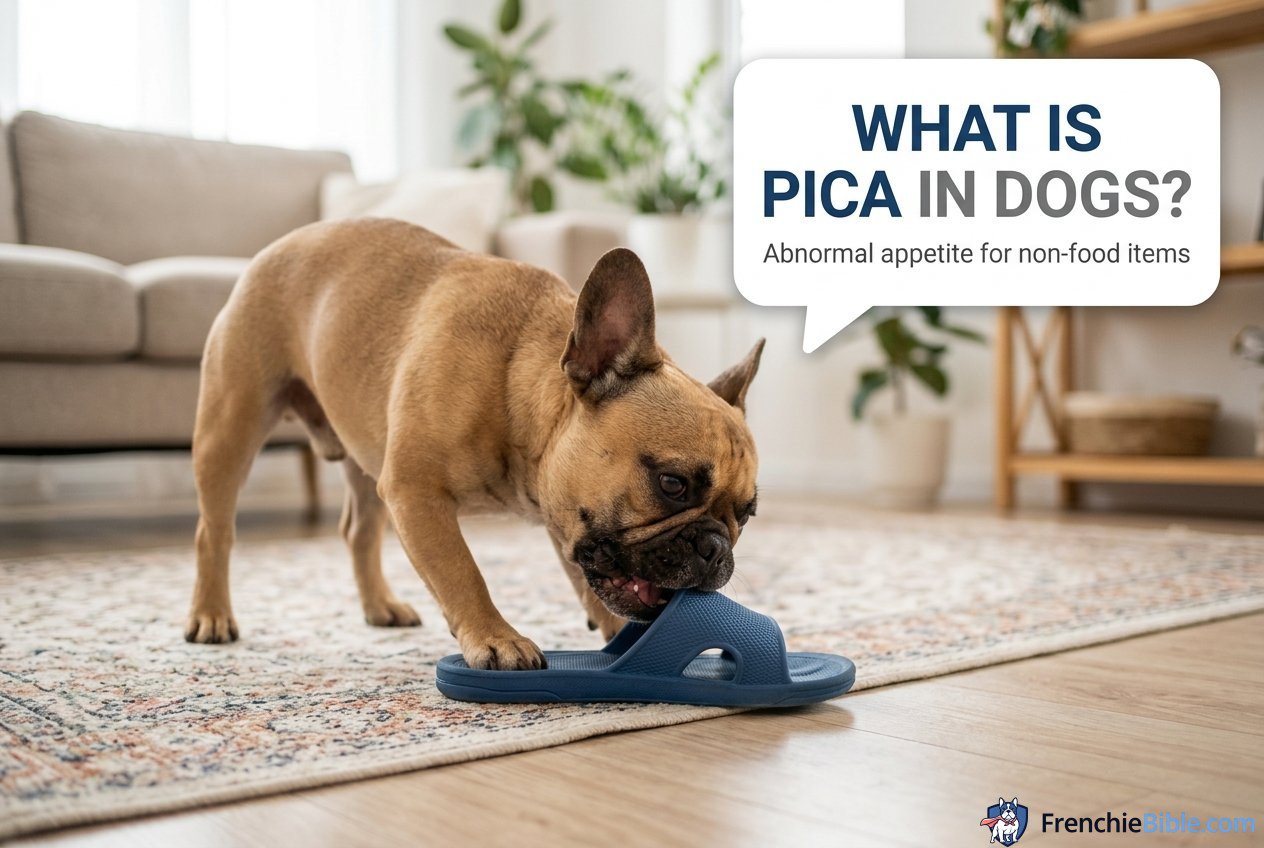
Common items consumed by French Bulldogs with Pica include:
– Rocks, gravel, and pebbles
– Dirt, sand, and clay
– Socks, underwear, and other fabrics
– Feces (a specific type of Pica known as Coprophagia)
– Plastic, drywall, and wood
– Hair or fuzz from tennis balls
Pica can affect any breed, but French Bulldogs, with their high food motivation and tendency toward obsessive-compulsive behaviors, can be particularly susceptible. The condition can manifest suddenly in an adult dog or develop gradually from puppyhood.
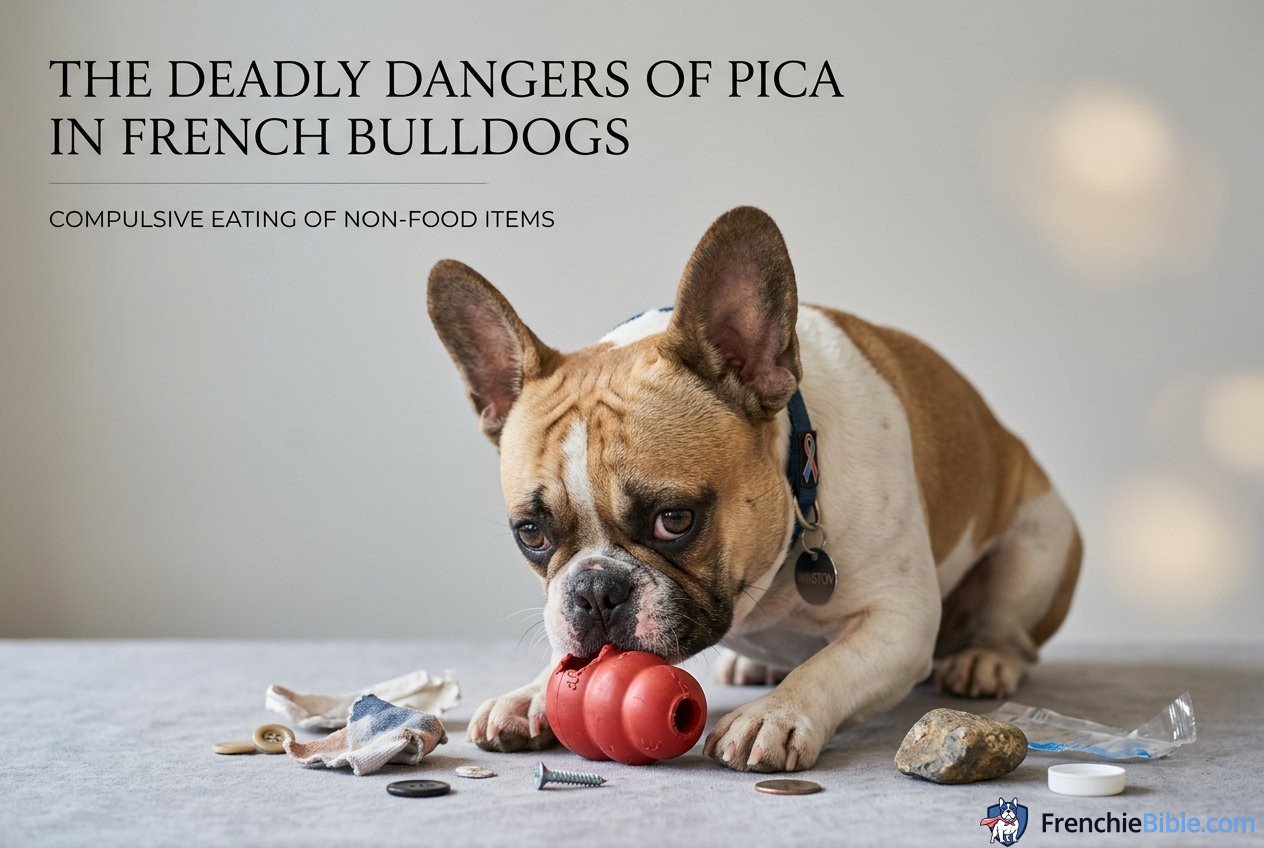
The Deadly Dangers of Pica in French Bulldogs
It is crucial to understand that Pica is not a harmless eccentricity. It is a potentially lethal condition. French Bulldogs have a compact, sensitive gastrointestinal tract, making the ingestion of foreign objects especially dangerous. Here are the primary risks associated with Pica:
1. Gastrointestinal Obstruction (Bowel Blockage)
This is the most common and immediate danger of Pica. When a Frenchie swallows a rock, a sock, or a large piece of plastic, the object can easily become lodged in the stomach or the narrow passageways of the intestines.
A bowel blockage is a life-threatening veterinary emergency. The foreign object cuts off the blood supply to the surrounding intestinal tissue, causing the tissue to necrose (die) rapidly. As the tissue dies, the intestines can rupture, spilling bacteria and fecal matter into the abdominal cavity, leading to sepsis and, without immediate surgical intervention, death.
Signs of a Gastrointestinal Obstruction include:
– Vomiting (especially inability to keep water down)
– Loss of appetite
– Lethargy and severe weakness
– Abdominal pain (the dog may cry out when touched or adopt a hunched “prayer” position)
– Straining to defecate, or producing small amounts of liquid stool
– Swollen, tight abdomen
If you suspect an obstruction, do not wait. Go to an emergency veterinarian immediately. Emergency exploratory surgery to remove a blockage can cost thousands of dollars, highlighting the critical need for prevention.
2. Toxicity and Poisoning
Many non-food items are highly toxic to dogs. If your Frenchie is eating dirt, they may be ingesting pesticides, herbicides, fertilizers, or toxic mold. If they are chewing on drywall, treated wood, or certain plastics, they are exposing themselves to heavy metals and toxic chemicals. Even pennies (which contain zinc) can cause severe hemolytic anemia and kidney failure if swallowed.
3. Dental and Oral Trauma
French Bulldogs already have a brachycephalic (flat-faced) skull structure, which crowds their teeth and makes them prone to dental disease. Chewing on rocks, hard plastics, or metal can fracture their teeth, leading to severe pain, root infections, and the need for expensive dental extractions. It can also cause lacerations to the gums, tongue, and the roof of the mouth.
4. Internal Lacerations and Punctures
Sharp objects, such as splinters of wood, shards of hard plastic, or sharp stones, can slice through the delicate lining of the esophagus, stomach, and intestines as they pass through the digestive tract. This can cause severe internal bleeding and fatal peritonitis (inflammation of the abdominal lining).
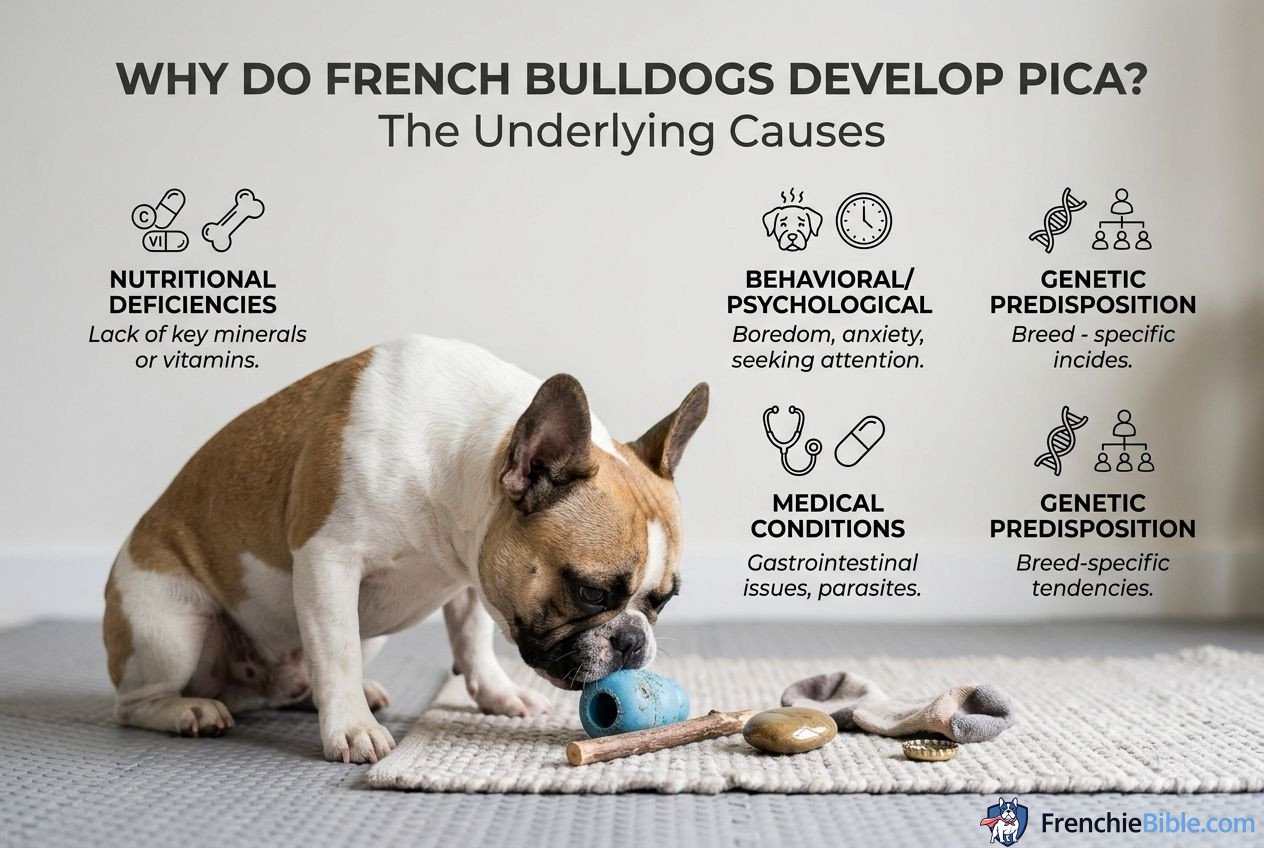
Why Do French Bulldogs Develop Pica? The Underlying Causes
To successfully treat and correct Pica, we must first determine why the dog is eating non-food items. The causes of Pica are generally divided into two main categories: Medical and Behavioral/Psychological.
Medical Causes of Pica
Before assuming your Frenchie’s rock-eating habit is just bad behavior, you must rule out underlying medical conditions. In many cases, a dog eats dirt or rocks because their body is desperately trying to correct a physiological imbalance.
1. Nutritional Deficiencies and Malnutrition:
If a dog is not absorbing enough nutrients from their food, they may instinctively eat dirt or rocks in an attempt to acquire missing minerals (like iron, calcium, or zinc). This can happen if the dog is being fed a poor-quality diet, but it is more commonly caused by underlying malabsorption issues.
2. Exocrine Pancreatic Insufficiency (EPI):
EPI is a condition where the pancreas fails to produce the digestive enzymes necessary to break down food. A dog with EPI is essentially starving, regardless of how much they eat, and they may turn to eating anything in sight to satisfy their intense hunger.
3. Inflammatory Bowel Disease (IBD) and Parasites:
Chronic inflammation of the intestinal tract or heavy infestations of intestinal parasites (like hookworms or roundworms) can interfere with nutrient absorption and cause severe gastrointestinal discomfort, leading the dog to eat odd objects in an attempt to soothe their stomach.
4. Anemia:
Dogs with severe anemia (low red blood cell count), sometimes caused by hookworms or autoimmune diseases, frequently exhibit Pica—specifically, the eating of dirt or clay.
5. Neurological Disorders and Medications:
Certain brain lesions or neurological conditions can alter a dog’s appetite and behavior. Additionally, medications like corticosteroids (e.g., your veterinarian may recommend a corticosteroid medication (never use without veterinary guidance)), frequently prescribed for French Bulldog allergies, dramatically increase appetite and can trigger Pica-like scavenging behaviors.
Behavioral and Psychological Causes of Pica
If a thorough veterinary workup gives your Frenchie a clean bill of health, the Pica is likely rooted in their psychology or environment.
1. Boredom and Lack of Stimulation:
French Bulldogs are intelligent, energetic companions. If they are left alone for long periods without adequate physical exercise or mental enrichment, they will find ways to entertain themselves. Chewing and swallowing objects can become an obsessive coping mechanism for profound boredom.
2. Stress and Anxiety:
Like humans who bite their nails or stress-eat when anxious, dogs engage in displacement behaviors to soothe themselves. Separation anxiety, changes in the household (a new baby, moving to a new home), or lack of a predictable routine can trigger compulsive Pica. The physical act of chewing releases endorphins, making it a self-soothing—albeit dangerous—habit.
3. Attention-Seeking Behavior:
Frenchies are highly social and crave your attention. If they realize that picking up a rock or a sock immediately causes you to jump up, yell, and chase them around the yard, they have successfully turned Pica into a highly rewarding game of “keep-away.” To a bored dog, negative attention is better than no attention at all.
4. Compulsive Disorders:
In some cases, Pica is a true obsessive-compulsive disorder (OCD). The dog becomes fixated on a specific item (e.g., they must eat every piece of gravel they see) and cannot break the fixation without medical and behavioral intervention.
How to Correct Pica in Your French Bulldog: A Step-by-Step Guide
Addressing Pica requires a multi-faceted approach. You cannot simply punish a dog for eating rocks and expect the behavior to stop; you must address the root cause and meticulously manage their environment.
Step 1: The Veterinary Workup (Crucial First Step)
You cannot train away a medical issue. If your Frenchie starts eating non-food items, book An Experienced Breeder appointment immediately.
What to ask your vet for:
– A comprehensive physical exam.
– A full blood panel and biochemistry profile (to check organ function and look for anemia or imbalances).
– A fecal exam (to rule out parasites).
– Specific gastrointestinal testing (like a TLI test for Exocrine Pancreatic Insufficiency or a B12/Folate test for malabsorption) if indicated.
If your vet identifies a medical cause, treating the underlying illness (e.g., prescribing digestive enzymes for EPI or deworming medication for parasites) will often resolve the Pica entirely.
Step 2: Strict Environmental Management
While you are working on training and addressing underlying causes, you must ensure your dog physically cannot ingest dangerous items. Management prevents the dog from practicing the behavior and keeps them out of the emergency room.
- Clear the House: If your dog eats socks, you can no longer leave laundry on the floor. Period. Use tall hampers with locking lids. Keep closet doors closed. Pick up all small items, hair ties, and children’s toys.
- Leash Supervision Outdoors: If your Frenchie eats rocks or dirt, they can no longer be allowed to roam the yard unsupervised. Take them out on a leash for bathroom breaks. If they attempt to eat a rock, gently guide them away.
- Muzzle Training: For dogs with severe, obsessive Pica, a basket muzzle is a lifesaver. A properly fitted basket muzzle (specifically designed for brachycephalic breeds) allows the dog to pant, drink water, and take treats, but prevents them from picking up rocks or sticks off the ground. Condition the dog to love the muzzle using positive reinforcement. It is not a punishment; it is a vital safety tool.
Step 3: Stop the “Keep-Away” Game
If your dog picks up a forbidden item, do not panic and do not chase them. Chasing turns the dangerous behavior into a fun game.
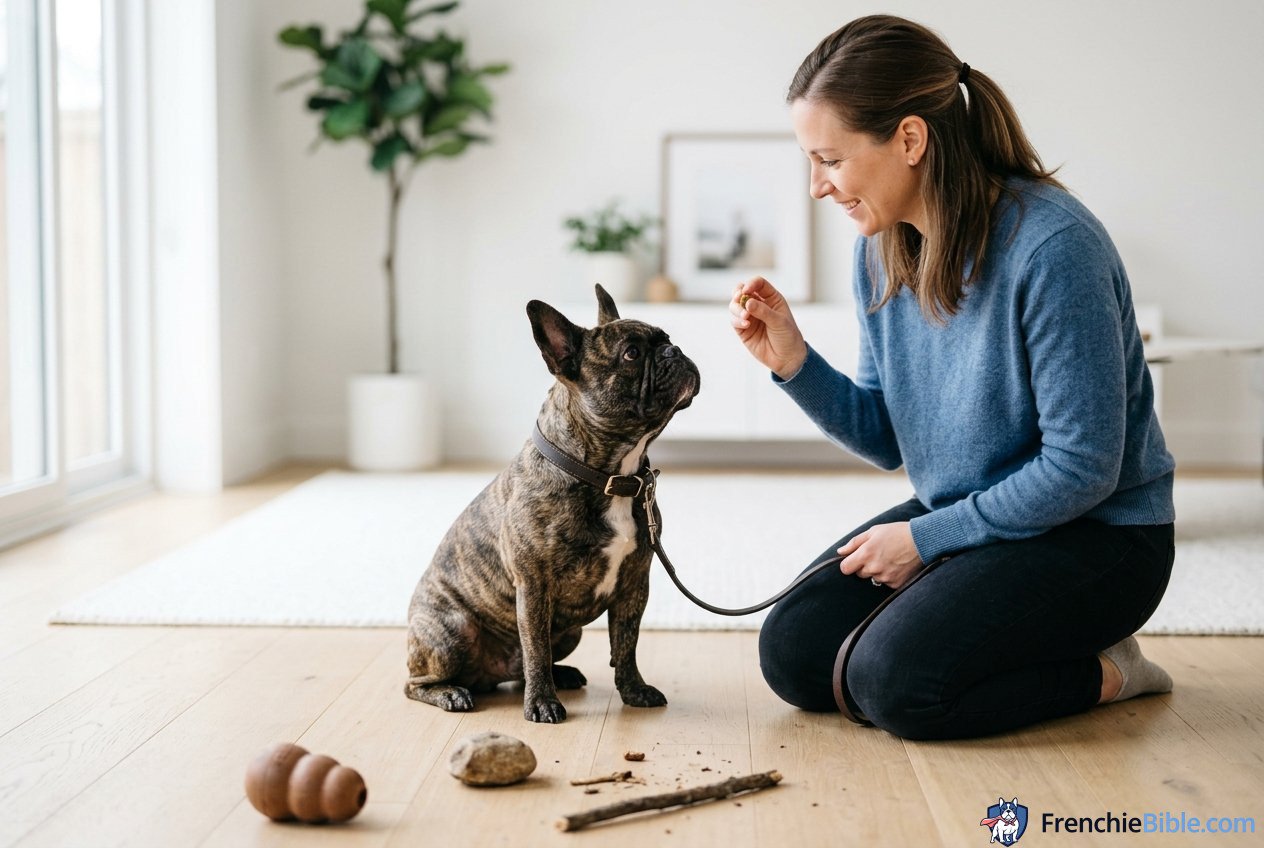
Instead, practice trading. Keep high-value treats (like boiled chicken or hot dogs) on you at all times. If your Frenchie grabs a sock, excitedly show them the high-value treat and happily say, “Trade!” When they drop the sock to eat the chicken, praise them profusely and calmly pick up the sock. You are teaching them that giving up the inappropriate item results in an even better reward.
Step 4: Teach the “Leave It” and “Drop It” Commands
These two commands are non-negotiable for a dog with Pica.
“Leave It” (Prevention): This command tells the dog to ignore an item before they pick it up. Practice this daily. Place a boring item on the floor. When your dog moves toward it, say “Leave it.” The moment they look away from the item and look at you, reward them heavily with a treat from your hand. Gradually increase the temptation of the items on the floor.
“Drop It” (Emergency Response): This tells the dog to spit out what is already in their mouth. Practice with their favorite toys. While they are holding a toy, offer a high-value treat right in front of their nose. When they open their mouth to take the treat, say “Drop it.” Once they understand the concept, you can begin using the command before showing the treat.
Step 5: Increase Mental and Physical Enrichment
If boredom or anxiety is the root cause of the Pica, you must provide appropriate outlets for your Frenchie’s energy and natural chewing instincts.
- Provide Safe Chews: Give them items they are allowed to destroy and ingest safely. High-quality, veterinary-approved dental chews, fully digestible bully sticks (supervised), or Kong toys stuffed with frozen dog-safe peanut butter or wet food provide hours of safe chewing satisfaction.
- Mental Stimulation: Frenchies are smart. Ditch the food bowl and feed them their meals in puzzle toys, snuffle mats, or treat-dispensing balls. This forces them to use their brains and satisfies their natural foraging instincts, which can drastically reduce scavenging behavior.
- Adequate Exercise: Ensure they are getting enough daily walks (temperature permitting, given their brachycephalic nature) and interactive play sessions to burn off nervous energy.
Step 6: Consult An Experienced Breedererinary Behaviorist
If you have ruled out medical issues, optimized their environment, increased enrichment, and the Pica remains obsessive and unmanageable, you are likely dealing with a compulsive disorder.
At this stage, you need the expertise of a experienced Behaviorist (DACVB). They can design a specialized, intensive behavior modification protocol and may prescribe anti-anxiety medications, such as SSRIs (like your veterinarian may recommend a anti-anxiety medication (never use without veterinary guidance)), which are often highly effective in treating canine compulsive disorders.
FAQ: Understanding Pica in French Bulldogs
Q: My Frenchie puppy eats dirt occasionally. Is this Pica?
A: Puppies explore the world with their mouths, and occasional dirt-nibbling or stick-chewing is normal puppy behavior. However, if the puppy is obsessively seeking out dirt to eat, consuming large mouthfuls, or swallowing rocks, it crosses into Pica and must be addressed immediately to prevent blockages.
Q: Can I use hot sauce or bitter apple spray on rocks to stop my dog from eating them?
A: Taste deterrents are rarely effective for true Pica. A dog with a compulsive disorder will often eat the rock despite the bad taste, or simply move on to a different rock. Furthermore, you cannot coat your entire yard in hot sauce. Environmental management and training are much more effective.
Q: Is Coprophagia (eating poop) considered Pica?
A: Yes, Coprophagia is a specific sub-category of Pica. It can be caused by the same medical issues (malabsorption, parasites) or behavioral issues (boredom, anxiety, observing other dogs). It is highly common but should still be evaluated by An Experienced Breeder, especially to rule out internal parasites.
Q: Will changing my dog’s food cure Pica?
A: If the Pica is caused by a nutritional deficiency or a food allergy causing gastrointestinal upset, switching to a high-quality, easily digestible, or prescription diet (under veterinary guidance) may resolve the behavior. However, if the Pica is behavioral, a diet change alone will not fix it.
Q: How do I know if my Frenchie swallowed something dangerous?
A: If your dog exhibits any signs of a bowel obstruction—vomiting, severe lethargy, loss of appetite, hunched posture, or abdominal pain—treat it as an emergency. It is always better to have your vet perform an X-ray or ultrasound and find nothing than to wait until the intestine ruptures.
Conclusion
Pica in French Bulldogs is a terrifying condition for any owner to manage. The constant vigilance required to ensure your dog doesn’t consume a deadly object is exhausting. However, by understanding that Pica is a symptom of a deeper issue—whether a hidden medical illness, profound boredom, or severe anxiety—you can take the necessary steps to heal your dog.
Never ignore your Frenchie’s habit of eating rocks, dirt, or socks, assuming they will simply “grow out of it.” Partner with your veterinarian to rule out health issues, implement strict environmental management, prioritize positive reinforcement training (“Leave it” and “Drop it”), and provide ample mental enrichment. With patience, dedication, and professional guidance, you can protect your French Bulldog from the life-threatening dangers of Pica and ensure they live a long, happy, and safe life.
Disclaimer: We are not veterinarians and do not hold veterinary medical licenses. The information provided in this article is based on years of breeding and daily care experience and is for educational purposes only. It should not replace professional veterinary advice. Always consult with a licensed veterinarian if you have concerns about your French Bulldog’s health or before starting any new treatment.
Disclaimer: I am a French Bulldog breeding expert with over a decade of hands-on experience with this breed. I am not a veterinarian. The information in this article is for educational purposes only. Always consult your veterinarian regarding your dog’s specific health needs and care.