
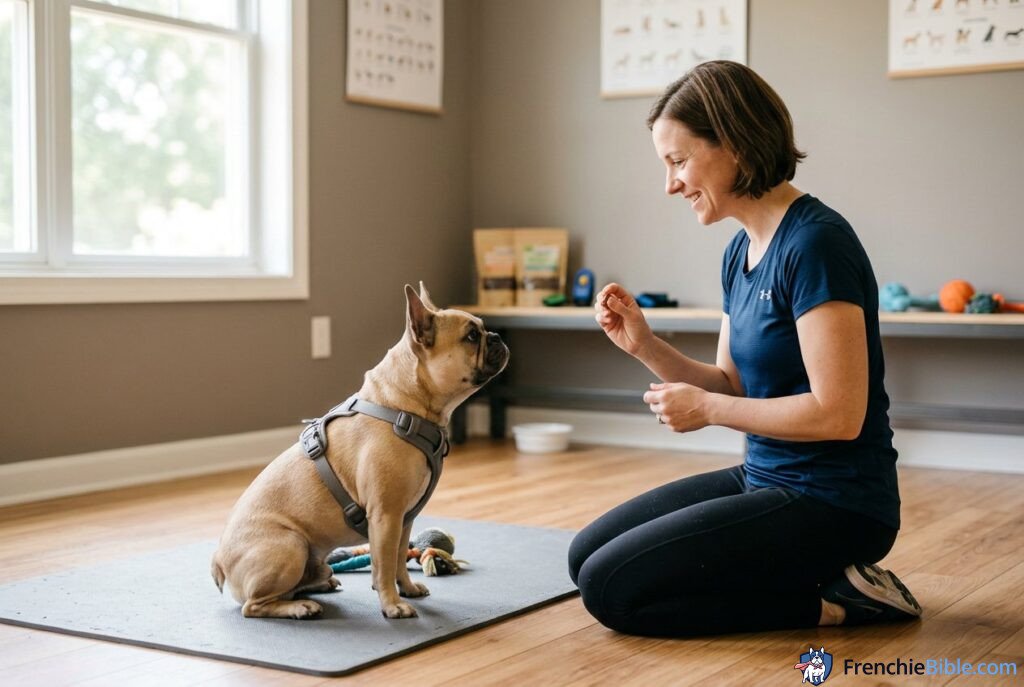
Disclaimer: The information provided in this comprehensive guide is intended for educational and informational purposes only. It does not constitute professional veterinary advice, diagnosis, or treatment. French Bulldogs have unique physiological traits, and it is crucial to consult with a licensed veterinarian or a certified professional dog trainer before introducing new physical activities or behavioral training regimens. Always prioritize your dog’s safety, health, and individual limitations.
Introduction to the World of Canine Interactive Play
When we think of French Bulldogs, we often picture adorable, bat-eared companions snuggling on the couch, snoring gently. While their affectionate nature is undeniable, it is easy to forget that beneath that squishy, compact exterior lies a dog with natural canine instincts, sudden and intense energy bursts, and a deep-seated need for physical and mental stimulation. As a specialized French Bulldog veterinarian and breeding expert with years of clinical and behavioral observation, I frequently encounter owners who struggle with behavioral issues—such as excessive mouthing, hyperactivity, and poor impulse control—that stem directly from a lack of structured, purposeful play. One of the most misunderstood and underutilized tools in a dog owner’s training arsenal is the simple game of tug-of-war.
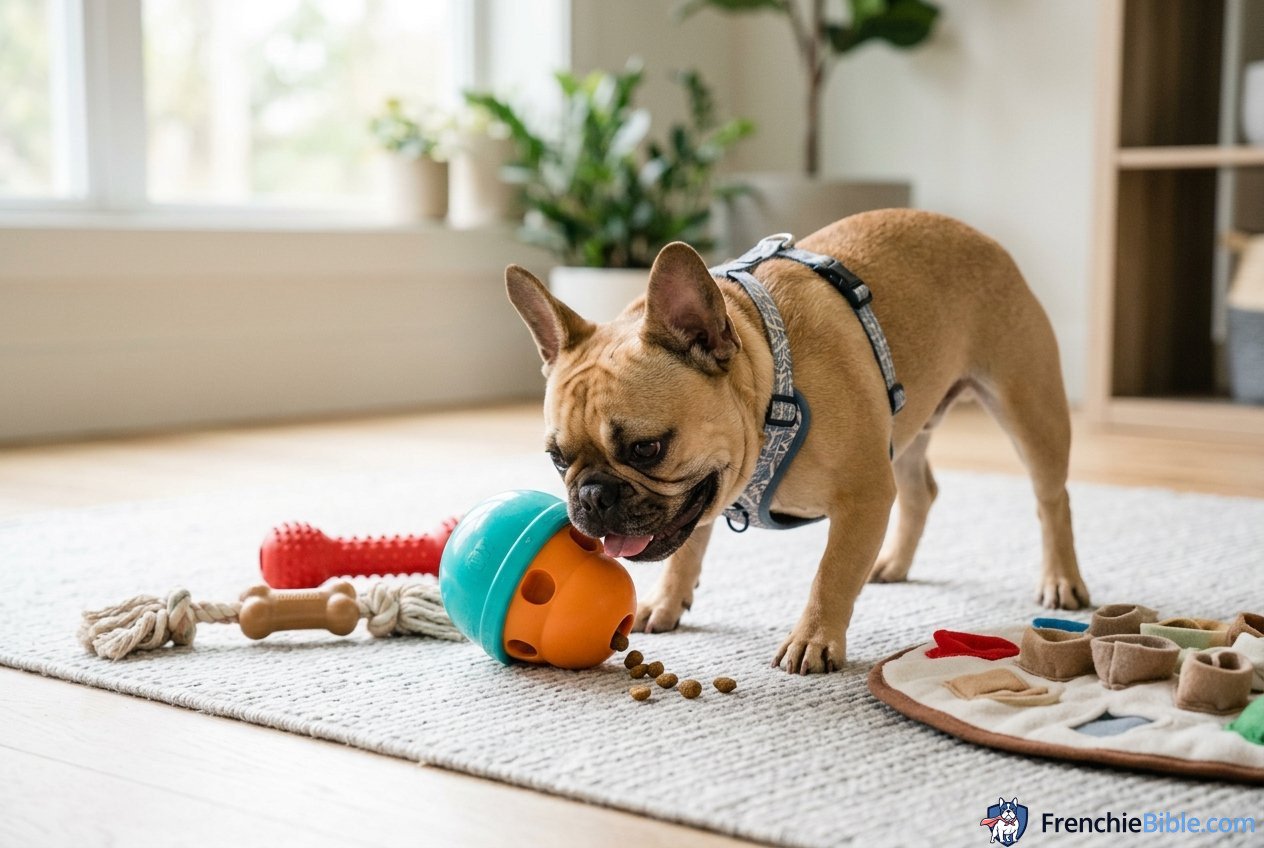
Related Reading: Health & Diet | Frenchie Puppy Guide
For decades, tug-of-war has been surrounded by myths, misconceptions, and outdated training advice. Some archaic training philosophies suggested that playing tug would inevitably make a dog aggressive, dominant, or prone to biting humans. However, modern canine behavioral science, backed by extensive veterinary consensus, has thoroughly debunked these theories. When played correctly and under strict guidelines, structured indoor tug-of-war is not just a game; it is a highly effective, multifaceted training tool. It is the perfect interaction for establishing rules, teaching profound impulse control, and strengthening the relational bond between you and your French Bulldog.
In this exhaustive guide, we will explore every nuance of playing indoor tug-of-war with your Frenchie. We will delve deeply into the veterinary considerations specific to the brachycephalic breed, the behavioral psychology behind the canine prey drive, step-by-step training protocols, and exactly how to use this engaging game to foster a well-behaved, balanced, and physically fit French Bulldog.
The Behavioral Psychology: Why Tug-of-War is Crucial for French Bulldogs
French Bulldogs, despite their small stature and current role as premier lap dogs, are robust and tenacious. Historically descended from bull-baiting ancestors and later refined by Parisian lacemakers, they still retain a certain level of prey drive and a fundamental desire to grip, pull, and dissect. Understanding this psychology is the absolute first step in utilizing tug-of-war effectively.
Fulfilling Natural Canine Instincts Safely
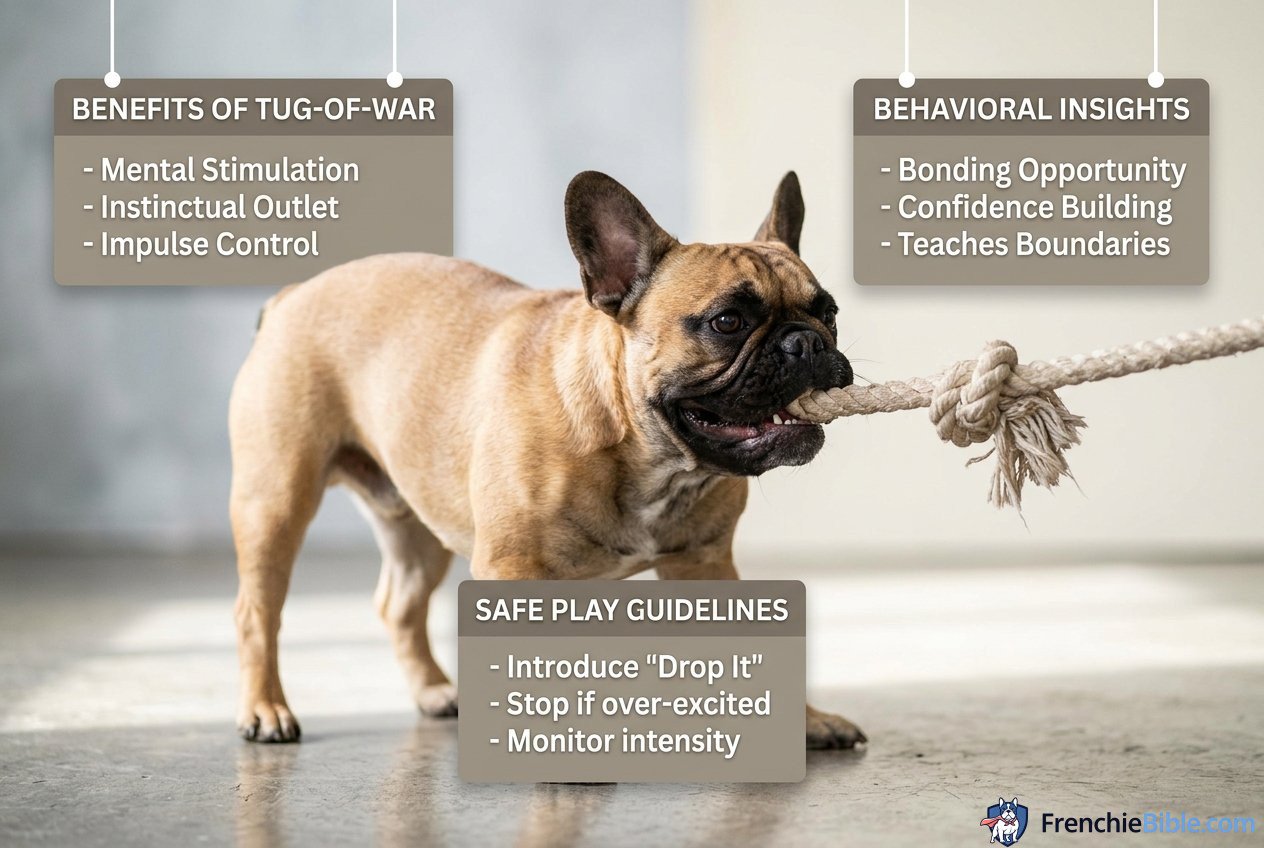
Every domestic dog possesses a hardwired sequence of predatory behaviors: orient, eye, stalk, chase, grab-bite, kill-bite, dissect, and consume. While companion dogs rarely execute this full sequence (and we certainly do not want them to), the intrinsic desire to engage in parts of it remains deeply embedded in their DNA. Tug-of-war safely taps into the “chase,” “grab-bite,” and “pull” aspects of their natural drive in a completely controlled environment.
When you engage your Frenchie in a game of tug, you are providing a healthy, acceptable outlet for these hardwired instincts. Without an appropriate outlet, dogs often redirect these behaviors onto inappropriate items—your shoes, the legs of your dining room table, or even your hands and ankles. By offering a specific tug toy and engaging in the game with them, you are clearly communicating, “This is the appropriate place to use your teeth, your strength, and your energy.” This fulfillment leads to a more relaxed, contented dog who is less likely to engage in destructive behaviors.
Teaching Impulse Control and Arousal Regulation
One of the most significant challenges in training a French Bulldog is managing their excitement levels. They are notorious for going from zero to one hundred in a matter of seconds, resulting in frantic “zoomies,” jumping, or over-aroused mouthing. Tug-of-war serves as a masterclass in arousal regulation.
The game inherently acts as a simulated high-stress, high-excitement scenario. By integrating non-negotiable rules—such as dropping the toy on command, waiting for permission to grab it, or pausing the game immediately when teeth touch skin—you are teaching your Frenchie how to think, process information, and respond to verbal commands even when their adrenaline is spiking. They learn the invaluable lesson that they must control their impulses in order to keep the fun going. This emotional regulation translates directly to better behavior in other high-arousal situations, such as greeting guests at the door, encountering other dogs on walks, or visiting the veterinary clinic.
Establishing the Owner as the Ultimate Resource
In the canine behavioral paradigm, controlling valuable resources is a sign of leadership, stability, and trust. In a game of tug-of-war, the toy itself is entirely inert and uninteresting without your active participation. You bring the toy to life. You control the start and the end of the game. You dictate the rules of engagement.
This dynamic naturally establishes you as the ultimate source of fun, reward, and structure. Your French Bulldog learns that cooperating with you yields the highest possible return on their energy investment. This methodology is infinitely more effective and humane than outdated “alpha” rolling, physical corrections, or dominance-based training methods. You are building a relationship based on mutual respect, joyful cooperation, and the clear understanding that you are a fair, consistent leader who provides structured access to their favorite activities.
The Veterinary Perspective: Physical Considerations for Frenchies
With my background in French Bulldog breeding specializing in brachycephalic (flat-faced) breeds, I must strongly emphasize that playing physical games with French Bulldogs requires a uniquely nuanced approach. Their charming but abnormal anatomy presents specific vulnerabilities that must be rigorously respected during any physical exertion, particularly tug-of-war.

Brachycephalic Airway Syndrome (BOAS) Awareness
The vast majority of French Bulldogs suffer from varying degrees of Brachycephalic Obstructive Airway Syndrome (BOAS). Their anatomical anomalies—including elongated soft palates, stenotic nares (pinched, narrow nostrils), hypoplastic tracheas (narrow windpipes), and everted laryngeal saccules—make breathing inherently more difficult than in normocephalic (normal-nosed) breeds.
During rigorous play, a dog’s metabolic rate and oxygen demand increase significantly. When a Frenchie plays tug, they often clamp their jaws down firmly on the toy, which forces them to breathe almost entirely through their compromised nasal passages. If the game is too intense, lacks breaks, or lasts too long, they can rapidly become hypoxic (oxygen-deprived) and hyperthermic (overheated).
Veterinary Guidelines for Breathing and Respiration:
- Keep Sessions strictly Short: Indoor tug sessions should be exceptionally brief—no more than 3 to 5 minutes at a time. It is a sprint, not a marathon.
- Monitor Respiration Continuously: Listen carefully to their breathing sounds. If you hear excessive wheezing, stridor (a high-pitched gasping sound), or stertor (heavy snoring sounds while awake), or if you notice their gums or tongue turning dark red, purple, or bluish, stop the game immediately.
- Allow Full Recovery: Give ample time between sessions (at least 30 to 60 minutes) for their respiratory rate and heart rate to return to a normal, resting baseline.
- Climate Control is Mandatory: Indoor play is highly recommended for this breed precisely because you can control the ambient temperature. Never play vigorous games in hot, humid, or poorly ventilated environments. Air conditioning is a Frenchie’s best friend.
Protecting the Cervical Spine and Neck Anatomy
French Bulldogs are genetically predisposed to Intervertebral Disc Disease (IVDD) and frequently present with congenital spinal abnormalities such as hemivertebrae (butterfly-shaped vertebrae) or transitional vertebrae. The cervical (neck) and thoracic sections of their spine are particularly vulnerable to sudden, jarring, or twisting movements.
When playing tug, humans often make the critical mistake of pulling the toy sharply upwards or violently shaking it from side to side. These human-initiated actions put tremendous, unnatural concussive stress on the dog’s delicate cervical discs.
Veterinary Guidelines for Spinal Safety:
- Horizontal Play Only: Always keep the toy parallel to the floor, exactly at the dog’s natural head and neck height. Do not force them to crank their neck upward.
- No Vertical Lifting: Absolutely never lift your Frenchie’s front legs off the ground by the toy. This creates a severe fulcrum effect on the spine and is a direct recipe for catastrophic spinal cord injury, herniated discs, or jaw trauma.
- Side-to-Side with Extreme Caution: If you move the toy side-to-side to stimulate prey drive, use gentle, slow, sweeping motions. Avoid harsh, whiplash-inducing jerks. The safest method is to let the dog dictate the strength and direction of the pulling and shaking.
- Act as an Anchor, Not an Aggressor: Often, the safest and most effective way to play is to simply hold the toy firmly with both hands, brace your core, and act as a shock absorber. Let the dog do the backing up, pulling, and head-shaking while you provide steady resistance.
Dental Health, Jaw Strength, and Bite Inhibition
French Bulldogs possess surprisingly strong, wide, brachycephalic jaws designed for gripping and holding. However, their teeth are often crowded, misaligned, or rotated due to their drastically shortened maxillary (upper jaw) bones. This crowding makes them highly susceptible to periodontal disease, early tooth loss, and tooth fractures (particularly the canine teeth and carnassial teeth).
Using an inappropriate toy—such as hard nylon, deer antlers, or thick, abrasive ropes—can fracture teeth, wear down enamel, or severely traumatize the gingival (gum) tissue. Furthermore, puppies engaging in tug while teething require specialized care so as not to cause acute pain or disrupt the proper eruption of their permanent adult teeth.
Veterinary Guidelines for Dental Safety:
- Appropriate Materials are Non-Negotiable: Choose softer, forgiving materials that yield to the bite. Braided fleece, sturdy but pliable rubber, or synthetic firehose material are ideal.
- Routine Inspection for Damage: Before every play session, regularly inspect tug toys for sharp edges, compromised integrity, or frayed fibers that could be inadvertently swallowed, potentially causing fatal linear foreign body obstructions in the gastrointestinal tract.
- Puppy Considerations: For puppies under 6 months of age, play must be exceptionally gentle. The goal is to build confidence and association, not to test strength. Avoid putting torque on emerging adult teeth.
How to Play Tug-of-War to Teach Rules and Discipline
Now that we possess a thorough understanding of the physiological realities and veterinary precautions, let’s examine exactly how to utilize indoor tug-of-war as a highly structured training exercise to establish rules, boundaries, and canine discipline.
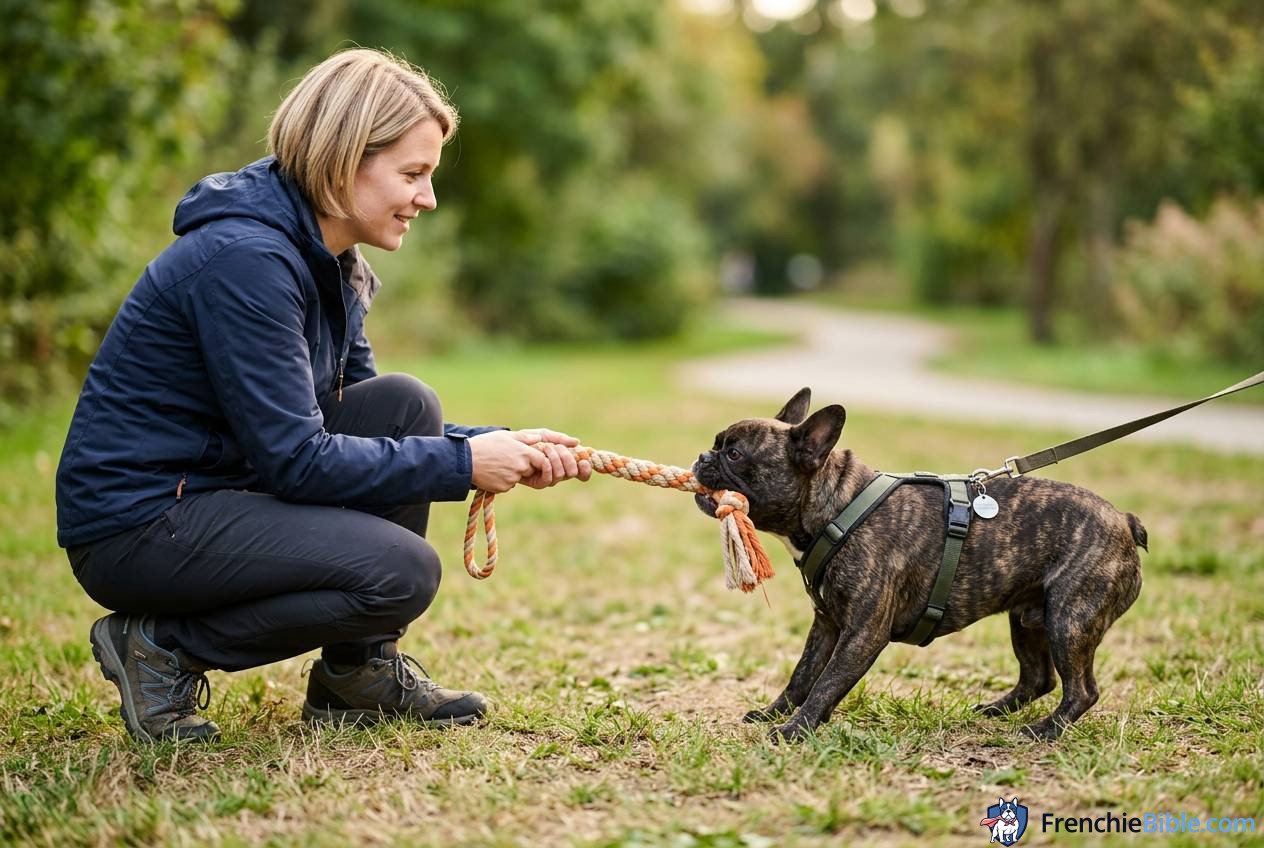
The primary objective is not to exhaust the dog physically (which is dangerous for a Frenchie), but to engage them intensely on a mental level and teach them that access to fun is contingent upon following your rules. The following parameters are non-negotiable and form the bedrock of a polite, well-adjusted companion animal.
The “Drop It” Command: The Ultimate Rule of Engagement
The single most critical rule of tug-of-war is that the dog must immediately release the toy when commanded. If your dog refuses to let go, you are no longer playing a cooperative, mutually beneficial game; you are actively fighting over a resource, which breeds conflict. Teaching a reliable “Drop it” (or “Out,” “Release,” “Give”) builds immense psychological impulse control.
A Step-by-Step Guide to Teaching “Drop It” during Tug:
1. Engage in Mild Play: Start a gentle game of tug. Allow the dog to grip the toy confidently and begin pulling.
2. Immobilize the Toy (Make it “Dead”): To signal the end of the active play round, abruptly stop pulling back. Freeze your arms, lock your elbows against your torso, and become perfectly still. The toy must become completely “dead” and uninteresting.
3. Wait for the Voluntary Release: A dead, unmoving toy is boring to a dog’s prey drive. Most dogs will eventually loosen their grip and let go because the stimulating resistance is gone. Do not repeat the verbal command multiple times; simply say “Drop it” once in a calm, firm tone and wait.
4. Mark and Reward the Release: The absolute instant your dog opens their mouth and releases the toy, precisely mark the behavior (say a sharp, enthusiastic “Yes!” or use a training clicker) and immediately, excitedly initiate the game of tug again.
5. The Reward IS the Game: In this specific scenario, restarting the game of tug is the ultimate reward for relinquishing the toy. This reinforces a crucial concept in the dog’s mind: obeying the “Drop it” command doesn’t end the fun; rather, it is the magic key that ensures the fun continues.
6. Troubleshooting Stubbornness: If your Frenchie is particularly tenacious and refuses to let go of a dead toy after 10-15 seconds, introduce a highly desirable, smelly treat (like a tiny piece of hot dog or freeze-dried liver). Put the treat directly to their nose. As they inevitably open their mouth to consume the high-value treat, say “Drop it,” deliver the treat, and then present the toy again to resume play. Over time, fade the food lure out.
Setting the Boundaries: Zero Tolerance for Teeth on Skin
French Bulldogs have large mouths relative to their head size and sometimes display poor physical coordination when they reach high states of arousal. It is relatively common for them to accidentally nip your hand or fingers while frantically trying to re-grip the toy for a better hold. However, whether accidental or intentional, this behavior must be addressed instantaneously to teach strict bite inhibition and spatial boundaries.
Enforcing the No-Teeth Rule:
- The Immediate Consequence: If you feel canine teeth make contact with your skin or your clothing—even a slight graze—the game stops that very millisecond.
- The Vocal Marker and Penalty: Emit a sharp, sudden noise like “Ah-ah!” or “Oops!” or a high-pitched “Yip!” (mimicking a hurt littermate). Do not yell angrily; the goal is to surprise, not terrify. Immediately drop your end of the toy, stand up straight, cross your arms over your chest, turn your back, and completely ignore the dog for 15 to 30 seconds.
- The Psychological Lesson: This negative punishment (removing something desirable to decrease a behavior) teaches the dog a profound lesson: a lack of mouth control instantly results in the total loss of their favorite toy and their favorite playmate.
- Resuming Play: After the brief timeout period, if the dog has calmed down and is sitting quietly, you may pick up the toy and invite them to play again. Absolute consistency is paramount here; you must enforce this rule 100% of the time without exception.
Controlling the Intensity, Duration, and Start/Stop Mechanics
As the leader of the game, you must dictate the pace, the energy level, and the duration. This teaches your dog to constantly monitor your behavior, follow your lead, and prevents them from spiraling into a frantic, overstimulated state.
- The Start and Stop: Always initiate the game with a clear verbal cue, such as “Take it,” “Get it,” or “Strike.” Do not allow the dog to snatch the toy from your hand uninvited or jump up to grab it. If they lunge prematurely, quickly hide the toy behind your back or tuck it under your arm until they offer a calm, default behavior, such as a “Sit.”
- Modulating Energy Levels: During the 3-minute session, actively vary the intensity. Have 10 seconds of strong, active pulling followed immediately by 10 seconds of soft, gentle, slow tugging. This dynamic shift requires the dog to pay close attention to your body language and actively adjust their own physical exertion and bite pressure accordingly.
- Ending on a Positive, Calm Note: Always conclude the game before the dog becomes physically exhausted, audibly panting heavily, or behaviorally overstimulated. End the final session with a crisp “Drop it,” verbally praise them, put the toy away completely out of sight (in a closet or drawer), and immediately offer a calming, low-arousal activity. This could be a stuffed, frozen Kong, a lick mat, or a quiet, gentle massage session to bring their heart rate back down.
Choosing the Right Tug Toys for French Bulldogs
Selecting the correct equipment is not merely a matter of preference; it is a vital safety requirement. Not all dog toys are created equal, and many popular options found in pet stores are entirely unsuitable for a French Bulldog’s specific jaw structure, dental health, and playing style.
Material Considerations: Prioritizing Safety and Ergonomics
The ideal material must be durable enough to withstand a Frenchie’s remarkably strong grip, yet soft and forgiving enough not to damage their crowded dentition or traumatize their gums.
- Braided Fleece Tugs: Tightly braided fleece is arguably the gold standard for indoor tug-of-war. It is incredibly soft on the mouth, highly stretchy (which acts as a natural, built-in shock absorber for their neck), and easily machine washable. It is exceptionally gentle on puppy teeth and safe for senior dogs with compromised dental health.
- Real or Synthetic Firehose Material: Toys constructed from firehose material are outstanding for durability and longevity. They are naturally flat, making them incredibly easy for a brachycephalic dog with a short muzzle to grip securely, and they are highly tear and puncture-resistant.
- Durable, Pliable Rubber (e.g., Kong or West Paw brands): Long, tubular rubber tug toys with designated handles on both ends can be excellent, provided the specific rubber compound has a significant amount of “give” or flex to it. Rigid, hard plastics or nylons must be avoided entirely, as they are a primary cause of slab fractures in canine teeth.
- Bungee Handle Tugs: Toys that incorporate an elastic bungee section directly into the handle are highly recommended, specifically for Frenchies. The bungee mechanism acts as an active buffer, dramatically reducing the sudden, concussive jolts on both the dog’s cervical spine and the owner’s shoulder, elbow, and wrist joints.
Size and Shape Guidelines
The physical design and dimensions of the toy directly impact how safely and effectively the game can be played.
- Length is Crucial for Safety: The toy must be sufficiently long to keep your hands at a safe distance from the dog’s mouth, especially when they shake their head or re-grip. A proper tug toy should ideally measure at least 18 to 24 inches in total length. Short, stubby toys practically invite accidental hand nips and make it difficult to play without leaning uncomfortably over the dog.
- Defined Target Areas: Toys designed with a clear, bulky, or distinctively textured “bite zone” at one end and a designated handle at the other help naturally direct the dog to grab the correct portion of the toy, further protecting your hands and establishing clear physical boundaries.
- The Danger of Thick Ropes: While rope toys are ubiquitous, thick, tightly knotted, hard ropes can be exceedingly difficult for a Frenchie’s flat face and wide jaw to grasp properly. More importantly, as the rope inevitably frays during play, the long, durable cotton or synthetic strings can be easily ingested. These strings can cause fatal linear foreign body obstructions in the intestines, requiring emergency abdominal surgery. If you insist on using a rope toy, ensure it is extremely tightly woven, use it only under direct supervision, and discard it the moment it begins to fray.
Step-by-Step Guide: Teaching Your Frenchie to Play Tug Safely
If your French Bulldog has never played tug, shows no initial interest, or if you need to systematically retrain a dog that plays inappropriately or aggressively, follow this structured, progressive approach.
Step 1: Introducing the Toy and Activating Prey Drive
Do not simply shove the toy into the dog’s face and expect them to understand. Prey does not attack predators.
- Begin in a quiet, familiar, distraction-free indoor environment, like a carpeted living room.
- Hold the toy near the ground and drag it slowly along the floor, moving it away from the dog. This mimics the movement of fleeing prey, which triggers the chase instinct.
- Incorporate erratic, sudden, jerky movements to further stimulate their interest. Hide it partially under a rug or behind a piece of furniture.
- Offer enthusiastic verbal praise the moment the dog shows visual interest, perks their ears, or moves to sniff the toy.
Step 2: Engaging the Grip and Building Confidence
Once they are tracking the toy, encourage them to commit to a grip.
- Use an excited, high-pitched, encouraging voice.
- When the dog successfully bites the toy, instantly mark it with a “Yes!” or “Good take it!”
- Apply very light, steady tension. Do not yank or pull hard; just provide enough gentle resistance so the dog feels the physical need to clamp down and hold on.
- Let them win frequently. Especially early in the training process, let go of the toy often. Allow them to prance around with their “prize.” A dog that never experiences victory will quickly lose interest and stop playing entirely.
Step 3: Integrating the Rules and Structure
Once the dog actively enjoys gripping and pulling, introduce the necessary behavioral structure.
- Play actively for just 15-20 seconds.
- Apply the “dead toy” immobilization technique to execute the “Drop it” command as detailed in the previous section.
- Once they drop it, ensure they offer a calm behavior (like a “Sit”) and wait patiently for the verbal “Take it” command before you restart the game.
- Gradually and systematically increase the duration of the active tugging segments and decrease the time you allow for them to comply with the “Drop it” command.
Step 4: Adding Distractions and Generalizing the Behavior
Once your Frenchie is a reliable, polite tug-of-war expert in the living room, begin using the game as a high-value functional reward in other training scenarios.
- During a normal obedience session, ask for a “Sit,” “Down,” or “Stay.”
- Instead of offering a traditional food treat, dramatically whip out the tug toy from behind your back and play an intense game for 10 seconds as the ultimate reward.
- This advanced technique teaches the dog that high-level obedience and impulse control yield high-level, exciting rewards, significantly improving their overall responsiveness and enthusiasm for training.
Common Mistakes to Avoid During Tug-of-War
Even dedicated, well-meaning owners can inadvertently cause severe physical harm or create lasting behavioral issues if they fall victim to these common mistakes.
Mistake 1: Pulling Too Hard, Upwards, or Violently Shaking
As extensively highlighted in the veterinary section, you must never pull the toy upward, lifting the dog’s front paws off the ground. Never helicopter the dog, swing them, or shake their head violently. This is a primary, preventable cause of devastating cervical disc ruptures and spinal trauma in French Bulldogs. Always pull horizontally, parallel to the ground, and let the dog initiate any shaking motions.
Mistake 2: The “Alpha” Fallacy (Never Letting the Dog Win)
An antiquated, thoroughly debunked myth states that if you allow the dog to win the game of tug, they will view themselves as the “alpha” or pack leader, leading to dominance aggression. This is scientifically inaccurate and fundamentally misunderstands canine psychology.
Consider human interaction: if you play a competitive game with a friend and they crush you every single time, never allowing you to score a point, you will eventually become frustrated and stop playing with them. The exact same psychological principle applies to your dog. Letting them win builds their confidence, deeply strengthens their drive to interact with you, and ensures the game remains mutually highly reinforcing. True leadership is not defined by who physically possesses the toy at the end of the game, but rather by who gracefully dictates the rules (the starts, the stops, the drops, the intensity) throughout the entire interaction.
Mistake 3: Ignoring Signs of Overheating, Hypoxia, or Distress
French Bulldogs are famously stoic, stubborn, and possess a surprisingly high prey drive. They will frequently attempt to continue playing even when they are physically exhausted, oxygen-deprived, or dangerously overheating. It is the sole responsibility of the owner to act as the governor and monitor their physiological state. If their tongue becomes excessively wide, dark, or begins curling upward at the edges (often called a “spatula tongue”), or if their breathing becomes raspy, labored, or erratic, you must terminate the session immediately. Ensure all indoor play environments are cool, air-conditioned, and well-ventilated.
Mistake 4: Using Tug as a Teasing or Taunting Tool
Never hold the toy just out of their reach for prolonged periods, slap their face or body with it to provoke them, or use it to intentionally frustrate them. This malicious approach builds chronic anxiety, frustration, and neurotic behavior rather than a healthy, balanced play drive. The toy should always be an accessible, engaging, and fair target that they have a reasonable opportunity to successfully capture.
The Role of Tug-of-War in Holistic Behavior Modification
Beyond teaching general obedience and manners, a structured game of tug-of-war can be deployed as a highly potent tool for addressing and resolving specific behavioral issues commonly observed in French Bulldogs.
Redirecting Destructive Chewing and Mouthing
Teething puppies and chronically bored adult dogs often resort to chewing on inappropriate items like furniture legs, baseboards, or expensive shoes. These items offer rigid resistance, which is deeply satisfying to a dog’s jaw muscles. By providing a structured, daily game of tug, you proactively satisfy their physical need for resistance and jaw exercise. If you happen to catch your dog actively chewing something inappropriate, immediately interrupt them with a firm verbal correction, physically guide them away from the object, and instantaneously initiate a brief, engaging game of tug with an approved toy. Through this repetition, you are actively teaching them what is acceptable to chew, rather than simply punishing them for what not to chew.
Managing Leash Reactivity and Environmental Over-Arousal
Many Frenchies become overly excited, frustrated, or reactive when they see other dogs, squirrels, or unfamiliar people while on walks. Because properly structured tug-of-war fundamentally teaches the dog to focus intensely on the handler and follow complex commands even when they are highly physiologically stimulated, it can be seamlessly transitioned into a tool for managing reactivity.
By rigorously practicing obedience commands (Sit, Look at me, Drop it) interspersed with intense, short games of tug indoors, you are actively building a psychological “control switch” in the dog’s brain. Eventually, you can bring a small, pocket-sized tug toy on walks. When a trigger appears, you can use the toy as a high-value distraction, rapidly redirecting their intense focus away from the environmental trigger and onto a positive, highly engaging, and familiar interaction with you.
Building Confidence in Fearful, Timid, or Rescue Dogs
Some French Bulldogs, particularly those from rescue situations or those with poor early socialization, can be timid, nervous, or easily startled by novel stimuli. A very gentle, highly encouraging game of tug, where the dog is explicitly allowed to win frequently and easily, can significantly boost their self-esteem and confidence. It provides an entirely safe, structured environment for them to exert physical force, act “tough,” and achieve a definitive “victory.” Over time, this repeated feeling of empowerment translates into a noticeably more confident, resilient demeanor in everyday life.
Frequently Asked Questions (FAQ)
To ensure this guide provides a truly comprehensive resource for all scenarios, let’s address the most common and pressing questions French Bulldog owners have regarding the implementation of indoor tug-of-war.
Q1: Will playing tug-of-war make my French Bulldog inherently aggressive towards humans or other animals?
Answer: Absolutely not. This is perhaps the most persistent and damaging myth in dog training. When played correctly with strict, enforced rules (especially the mandatory “Drop it” command and absolute zero tolerance for teeth touching skin), tug-of-war actually achieves the exact opposite. It actively teaches bite inhibition, profound impulse control, and deference to the owner’s leadership. It provides a healthy, biologically appropriate outlet for natural prey drives, significantly reducing overall frustration and dramatically decreasing the likelihood of aggressive or destructive behavioral issues.
Q2: My Frenchie gets very intense and growls loudly during tug. Should I be concerned and stop the game immediately?
Answer: In the vast majority of cases, growling during play is entirely normal and expected; it is clinically referred to as “play growling” and is a vocalization of excitement, physical effort, and joy, not genuine aggression. You can easily distinguish a harmless play growl from a dangerous aggressive growl by carefully observing the dog’s overall body language. If their body is loose, wiggly, their eyes are soft, and they are engaging playfully with the toy (often dropping into a “play bow”), the growling is perfectly fine. However, if their body becomes suddenly stiff or rigid, the ears are pinned flat against the skull, the gaze becomes hard, whale-eyed, and unblinking, or if the dog guards the toy fiercely and snaps when you attempt to implement the “Drop it” command, you must stop immediately. This indicates resource guarding, and you should consult a certified professional canine behaviorist.
Q3: How often, and for how long, should I play tug-of-war with my Frenchie each day?
Answer: The ideal frequency depends largely on the individual dog’s age, health, and baseline energy levels. However, as a general rule tailored for brachycephalic breeds, 1 to 3 very short sessions per day is excellent. Crucially, each session should only last between 3 to 5 minutes. It is vastly superior—both behaviorally and medically—to have multiple short, highly structured, high-intensity bursts of play rather than one long, exhausting 20-minute session. Prolonged exertion significantly increases the risk of BOAS-related respiratory crises or hyperthermia.
Q4: My puppy is currently 5 months old and their teeth are falling out. Can we still play tug?
Answer: Yes, you can, but it requires extreme caution and modification. Between 4 to 6 months of age, Frenchie puppies undergo the painful process of losing their deciduous (baby) teeth and erupting permanent adult teeth. Vigorous or forceful tugging during this window can cause acute pain, prematurely rip out baby teeth before they are ready, or even alter the angle of incoming adult teeth, leading to lifelong malocclusion. During this sensitive phase, use only the softest fleece toys, pull with barely any resistance, and let the puppy do 90% of the work. If you observe any blood on the toy, immediately stop the game and switch to offering gentle, soothing chewing activities (like a chilled, rubber teething ring) until the gingival tissues heal.
Q5: What is the correct response if my dog lunges aggressively for the toy before I say the “Take it” command?
Answer: You must never reward impulsive or demanding behavior. If they lunge, immediately hide the toy behind your back, stand perfectly still, and break eye contact. Wait silently for the dog to process the situation, calm down, and offer a default, polite behavior, such as a “Sit.” Once they are sitting calmly and looking up at you for direction, give the verbal “Take it” command and present the toy. Absolute consistency in requiring a calm, submissive state before the fun begins will rapidly eliminate impulsive lunging and demanding behaviors.
Q6: Is it safe for my two French Bulldogs to play tug-of-war together without my involvement?
Answer: Yes, this is generally safe, provided both dogs are well-socialized, have a balanced relationship, and critically, have zero history of resource guarding or inter-dog aggression. However, you should always carefully monitor their play to ensure it remains reciprocal and doesn’t escalate into a genuine conflict. Toys designed with two distinct handles or specific gripping ends are best for dog-to-dog tug. Always supervise the interaction, listen for changes in the tone of their growls, and be fully prepared to step in, use the “Drop it” command, and end the game if the arousal levels become too intense or one dog becomes a bully.
Q7: My French Bulldog has a prior medical history of IVDD (Intervertebral Disc Disease). Is tug-of-war still a safe activity for them?
Answer: Generally speaking, if your Frenchie has a diagnosed history of IVDD, has undergone previous spinal surgery (such as a spinal decompression surgery (discuss with your veterinarian)), or suffers from recurring episodes of neck or back pain, traditional tug-of-war is strictly contraindicated and not recommended. The inevitable torque, pulling, and jarring motions inherent to the game can easily trigger a catastrophic spinal relapse or herniate another disc. You must consult your specific veterinary neurologist or orthopedic surgeon before engaging in any pull-resistance games. They will likely recommend avoiding the game entirely or suggest alternative, low-impact cognitive enrichment activities to keep your dog mentally stimulated without jeopardizing their fragile spinal column.
Conclusion: The Ultimate Tool for Connection, Discipline, and Health
In the capable hands of an informed and observant owner, indoor tug-of-war transcends being merely a simple game designed to burn off a few minutes of excess energy. It is a profound, highly effective psychological tool that speaks directly and clearly to a dog’s most primal, natural instincts. By consistently engaging your French Bulldog in structured, rigorously rule-bound tug sessions, you are actively teaching them invaluable life skills: emotional regulation under pressure, iron-clad impulse control, and reliable bite inhibition.
Furthermore, you are cementing your role not as a dominator, but as a fair, exciting, and consistent leader who provides access to joy. The physical benefits—when managed carefully and strictly with their unique brachycephalic airway and vulnerable spinal anatomy in mind—include healthy muscle engagement, cardiovascular conditioning in a climate-controlled environment, and necessary dental stimulation.
As you incorporate this into your routine, always remember the core veterinary and behavioral tenets: prioritize safety above all else, absolutely insist on the reliable execution of the “Drop it” command, strictly enforce the zero-tolerance boundary for teeth on skin, and vigilantly monitor their respiratory rate and body temperature. By diligently integrating these principles, indoor tug-of-war will rapidly evolve from a simple pastime into the perfect, most rewarding interaction for establishing a deep, respectful, and wonderfully rule-oriented relationship with your beloved French Bulldog.
Disclaimer: I am a French Bulldog breeding expert with over a decade of hands-on experience with this breed. I am not a veterinarian. The information in this article is for educational purposes only. Always consult your veterinarian regarding your dog’s specific health needs and care.