Welcome to what might be one of the most important guides you will read as a French Bulldog owner. As a dedicated French Bulldog breeder and enthusiast with over 10 years of hands-on experience I have raised countless litters, managed adult packs, and observed every possible nuance of Frenchie behavior. One of the most common questions I receive from both novice and veteran owners is: “How do I know if my Frenchie is just playing or if they are actually being aggressive?”
It is a valid and crucial question. French Bulldogs are a unique breed with distinct physical characteristics and a playing style that can often be misinterpreted. Their flat faces, large bat ears, lack of a prominent tail, and stocky, muscular bodies mean they don’t communicate exactly like other dogs. Furthermore, their play often involves weird noises—grunting, snorting, and gremlin-like growls—that can sound quite terrifying to the untrained ear.
Related Reading: Health & Diet | Grooming & Care
In this comprehensive, deep-dive guide, we will explore the intricate world of french bulldog body language. We will break down exactly what normal, healthy play looks and sounds like, and critically, how to identify the subtle and obvious red flags of true aggression. Whether you are dealing with a new puppy finding its place in your home, or an adult Frenchie interacting with other dogs at the park, this guide will equip you with the expert knowledge needed to interpret their behavior accurately and intervene appropriately when necessary.
The French Bulldog’s Unique Play Style
Before we can identify aggression, we first need to understand what “normal” looks like for a French Bulldog. Unlike a Golden Retriever or a Border Collie Frenchies have a very specific, sometimes bizarre, way of engaging with their world and their playmates. Their physical limitations and breed history shape their play behavior in fascinating ways.
The “Gremlin” Noises and Grunts
If there is one thing that confuses new Frenchie owners the most, it is the soundtrack of their playtime. French Bulldogs are a brachycephalic (flat-faced) breed. This anatomy affects their soft palate and airways, meaning that physical exertion often results in a symphony of snorts, grunts, and wheezes.
When a Frenchie gets excited during play, these noises amplify. They may emit low rumbling growls, high-pitched gargles, and sounds that are best described as resembling a small gremlin or a piglet. To an outsider, a Frenchie wrestling with another dog while making these intense, guttural sounds can easily look and sound like a vicious fight. However, in the vast majority of cases, this is purely vocal play. It is their way of expressing joy, excitement, and engagement. Understanding that a noisy Frenchie is often a happy Frenchie is the first step in decoding their behavior.
Roughhousing and Body Slams
French Bulldogs are essentially tiny tanks. They have compact, heavy-boned, and incredibly muscular bodies. Because they lack the long legs and agility of some other breeds, their play tends to be very physical, grounded, and close-quarters.
They love to wrestle, body slam, and “hip check” their playmates. It is very common to see two Frenchies charging at each other, bumping chests, and rolling around on the floor in what looks like a heavy-weight wrestling match. They often use their strong heads and shoulders to push and shove. While this can look intimidating, especially if they are playing with a more delicate breed, it is completely natural for them. They are robust little dogs who enjoy a bit of rough-and-tumble interaction.
The Frenchie “Zoomies”
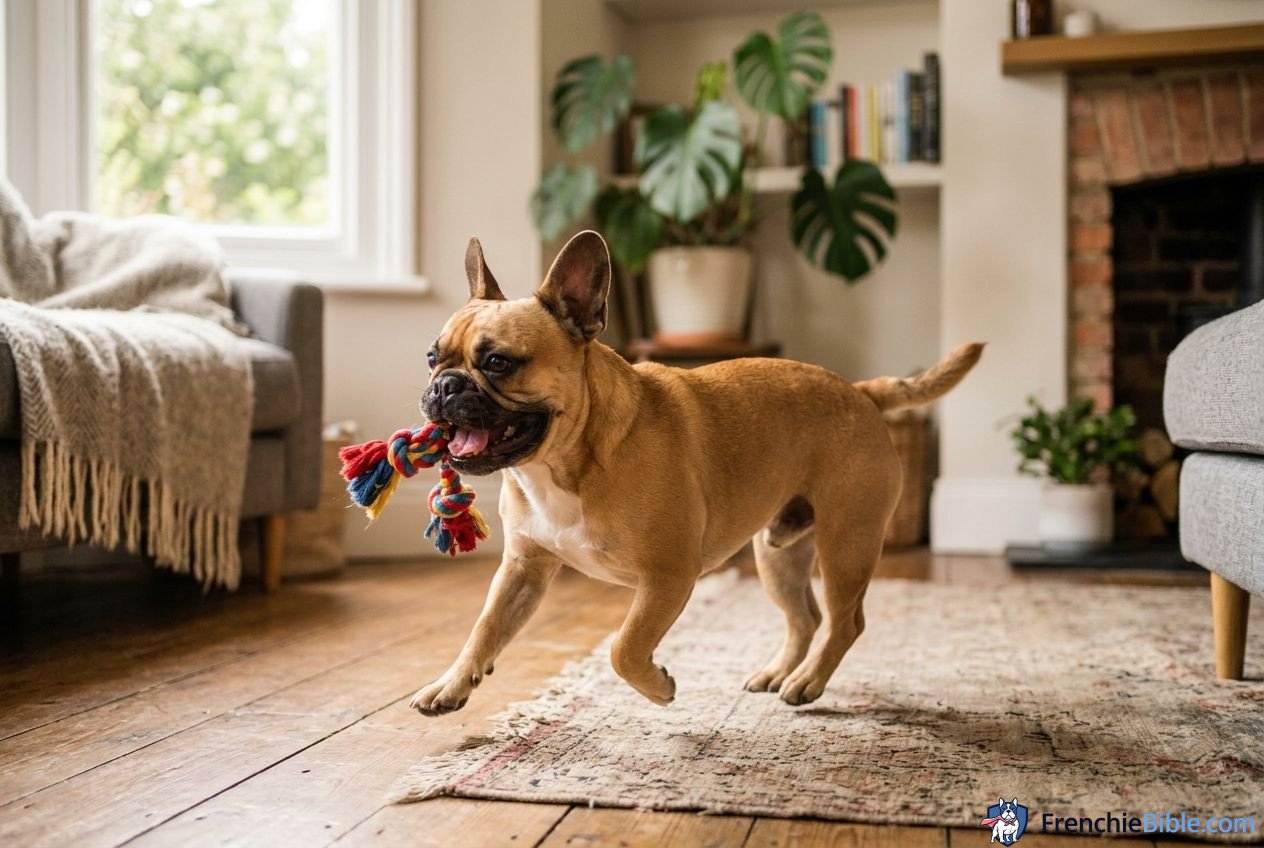
Another hallmark of Frenchie play is the “zoomies”—technically known as Frenetic Random Activity Periods (FRAPs). Out of nowhere, your Frenchie might tuck their invisible tail, pin their ears back, and sprint around the room or yard at top speed, often in circles or figure-eights.
During the zoomies, they might randomly body slam a piece of furniture (or you!), grab a toy and aggressively shake it, or let out sharp barks. This sudden burst of intense energy is a classic release of pent-up excitement and joy. It is not an aggressive charge; it is pure, unadulterated canine exuberance.
Understanding French Bulldog Body Language: The Basics
To differentiate between play and aggression, you must become fluent in your dog’s body language. Because Frenchies lack a long tail—which is a primary communication tool for most dogs—we have to pay much closer attention to their face, ears, and overall body posture.

Ear Positions
The French Bulldog’s large, upright “bat ears” are highly expressive and serve as excellent barometers for their mood.
- Relaxed/Neutral: Ears are upright but not rigidly stiff, pointing slightly forward or resting naturally. This indicates a calm, content dog.
- Pinned Back/Flattened: Ears pulled tightly against the head can indicate fear, anxiety, or submission. In a highly aroused, aggressive state, ears may also be pinned back to protect them during a potential fight.
- Swiveling/Perked: If the ears are moving around or perked highly forward, the dog is alert, curious, and intensely focused on something. This can happen during play, but a hyper-focused, stiff stare combined with perked ears can also precede an aggressive reaction.
Eye Contact and Gaze
The eyes reveal a tremendous amount of information.
- Soft Eyes: The eyes are relaxed, sometimes slightly squinty or almond-shaped. The gaze is loose and shifting, not locked onto one target. This is the hallmark of a happy, playful Frenchie.
- Hard Stare: The eyes are wide, round, and the dog locks its gaze onto a person, another dog, or an object without blinking or looking away. A hard, unwavering stare is a dominant or aggressive signal, often acting as a warning before a lunge or snap.
- Whale Eye: This occurs when the dog turns its head slightly away but keeps its eyes fixed on you or the trigger, exposing the white part (sclera) of the eye in a half-moon shape. Whale eye is a strong indicator of stress, fear, and discomfort, and it can quickly escalate to defensive aggression if the dog feels cornered.
Mouth and Teeth Expressions
Because Frenchies have wide mouths and underbites, their teeth are often visible even when they are relaxed. You must learn to distinguish a relaxed mouth from an aggressive snarl.
- The “Play Face”: The mouth is open, relaxed, and panting softly. The lips are loose, and the corners of the mouth may even turn up slightly in what looks like a “smile.” Even if teeth are showing due to their underbite, there is no tension in the muzzle.
- Submissive Grin: Some Frenchies will pull their lips back horizontally to show their front teeth in a submissive grin. This is an appeasement gesture, meaning “I come in peace,” and is accompanied by a loose, wiggly body.
- Aggressive Snarl/Bared Teeth: The lips are pulled back tightly, curling upward to expose the teeth, often wrinkling the top of the muzzle. This is accompanied by tension in the face and a low, menacing growl. This is a clear “back off” signal.
Posture and Stance
The overall rigidity of the dog’s body is one of the most reliable indicators of their emotional state.
- Loose and Wiggly: A playing Frenchie will have a loose, bouncy, and flexible body posture. Their movements might be exaggerated, curvy, and bouncy.
- Stiff and Rigid: If a Frenchie suddenly freezes, stiffens its legs, raises its head high, and squares its shoulders, the situation is tense. A rigid body means the dog is on high alert, stressed, or preparing for an aggressive encounter.
Signs of Healthy Happy Play in French Bulldogs
Now that we understand the basics, let’s look at the unmistakable signs that your Frenchie is engaging in healthy, positive play. When you observe these behaviors, you can relax and let the fun continue.
The Play Bow
The play bow is the universal canine invitation to play. The dog lowers its front elbows to the ground while keeping its rear end elevated in the air. For Frenchies, this sometimes looks a bit clumsy due to their short legs, but the intent is clear. A play bow communicates, “Everything I do next, even if it looks rough, is just for fun.” You will often see Frenchies execute a quick play bow before launching into a zoomie or initiating a wrestling match.
Role Reversals During Play
Healthy play is a two-way street characterized by give-and-take. If two dogs are playing appropriately, you will see frequent role reversals. One moment, your Frenchie might be the one chasing or pinning the other dog down; the next moment, they will happily allow themselves to be chased or pinned.
If one dog is constantly the aggressor, relentlessly chasing or pinning the other without ever taking a submissive turn, the interaction is no longer balanced play and may escalate into bullying or a fight.
Bouncy and Exaggerated Movements
Play movements are purposefully inefficient. Instead of walking normally, a playing Frenchie might hop, bound, or prance. They might throw their paws in the air or exaggerate their movements. This “looseness” in their body mechanics is a clear signal that they are relaxed and not preparing for a real conflict, which would require tight, efficient, and direct movements.
Open Relaxed Mouth and “Play Face”
As mentioned earlier, the “play face” is crucial. During healthy play, even when wrestling aggressively or gnawing on each other’s necks, the dogs’ mouths will remain loose and open. If you see wide, panting mouths and relaxed facial muscles, the dogs are having a good time, regardless of how terrifying their play growls might sound.
Pauses and Taking Breaks
Good play naturally ebbs and flows. Dogs that are playing well will naturally disengage for a few seconds, shake off their coats, sniff the ground, or take a quick breather before re-engaging. These mini-breaks are essential for regulating arousal levels and preventing play from boiling over into aggression. If the play is continuous, escalating, and never pauses, you may need to step in and enforce a break.
Red Flags: Recognizing Aggression in Frenchies
While Frenchies are generally affectionate and comical, they can exhibit aggression just like any other breed. Identifying the shift from play to aggression—or recognizing when a dog is aggressive from the start—is vital for everyone’s safety.
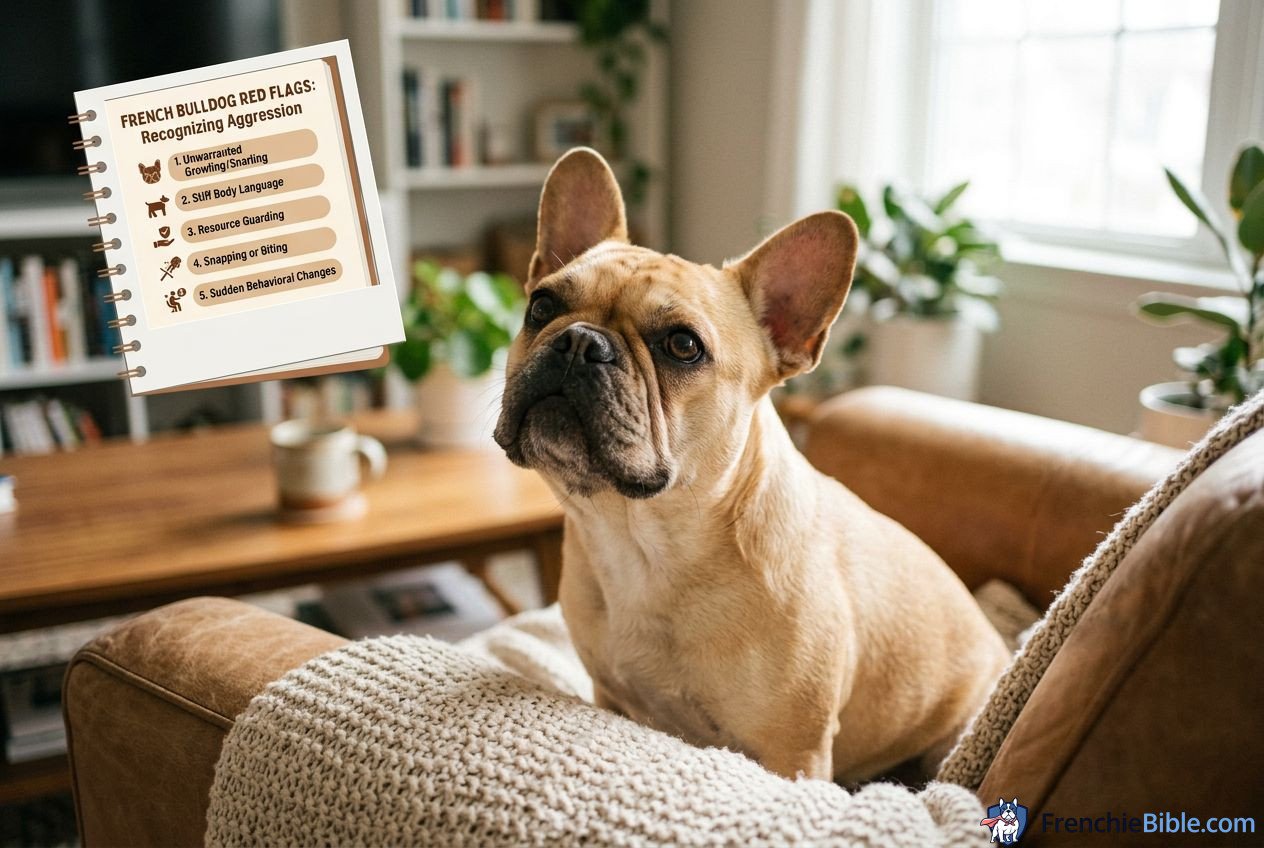
Stiff Rigid Posture
This is often the very first sign of trouble. If your Frenchie goes from being loose and wiggly to completely frozen and stiff as a board, the dynamic has changed. This “freeze” often happens when a dog is feeling threatened, guarding a resource, or preparing to strike. A stiff body is a warning sign that the dog is no longer comfortable.
Hard Stare and Whale Eye
As discussed in the basics, prolonged, unblinking eye contact is a challenge in the dog world. If your Frenchie locks eyes with another dog and refuses to look away, tension is building. If this is accompanied by the “whale eye” (showing the whites of the eyes while turning the head slightly away), the dog is highly stressed and feels defensive. Do not ignore these visual warnings.
Snarling Growling, and Bared Teeth (The Difference from Play Growls)
We know Frenchies make gremlin noises when they play, so how do you tell a play growl from an aggressive growl?
- Play Growls: Usually higher in pitch, varied in tone, and often stop and start. They are accompanied by a loose body and bouncy movements.
- Aggressive Growls: Usually a continuous, low-pitched, deep rumble that seems to vibrate from the dog’s chest. The mouth may be closed tightly, or the lips may curl back severely to expose the teeth. The body will be stiff and rigid. An aggressive snarl is a serious warning that a bite is imminent if the trigger does not retreat.
Lunging with Intent and Snap Reactions
In play, a dog might lunge, but their body will be curvy, and their mouth will be open and soft. In an aggressive encounter, a lunge is direct, fast, and accompanied by a hard, snapping mouth. If your Frenchie snaps the air near another dog or person (a “warning snap”) or lunges with a stiff body and closed mouth, this is not play.
Raised Hackles (Piloerection)
The hair along the dog’s spine—from the base of the neck down to the tail area—may stand straight up. This is known as piloerection or “raised hackles.” While hackles can go up due to extreme excitement or arousal during play, when combined with a stiff posture, a hard stare, or a low growl, it is a clear physiological sign of aggression, fear, or intense stress.
Play Aggression vs. True Aggression: Key Differences
Sometimes, what owners perceive as true aggression is actually “play aggression”—play behavior that has simply gotten out of hand due to over-arousal.
Context is Everything
Always look at the broader context of the situation. Are the dogs fighting over a specific high-value item (like a bone or a toy)? If so, you are likely dealing with resource guarding (true aggression). Were the dogs happily wrestling for ten minutes before things got intense? This is likely play that escalated due to over-arousal.
Vocalization Differences
Again, listen carefully. Play aggression might sound incredibly loud and chaotic, but the tones will fluctuate. True aggression is often quieter before the attack, marked by a low, steady rumble, followed by intense, sharp, and serious snapping sounds if a fight breaks out.
Bite Inhibition
Dogs with good bite inhibition know how to use their mouths gently during play. They may mouth your hands or another dog’s neck, but they do not apply pressure that causes pain or breaks the skin. If a Frenchie is playing but repeatedly bites hard enough to cause a yelp from another dog or pain to a human, they either lack bite inhibition or the interaction has crossed the line into aggression. True aggression is intended to cause harm; play aggression, even when rough, is not.
Common Triggers for french bulldog aggression
Understanding why a Frenchie might become aggressive can help you prevent incidents before they occur. Even the sweetest dog can react aggressively under the wrong circumstances.
Resource Guarding (Food Toys Owners)
Resource guarding is one of the most common causes of aggression in dogs. A Frenchie may become stiff, growl, or snap if another dog or a person approaches their food bowl, a favorite chew toy, a comfortable resting spot, or even their favorite human. This is an instinctual behavior driven by the fear of losing something valuable. If you notice resource guarding, it is crucial to manage the environment (e.g., feed dogs separately) and work on positive reinforcement training to change their emotional response to humans or dogs approaching their “treasures.”
Fear and Anxiety-Based Aggression
The phrase “fight or flight” applies perfectly here. If a Frenchie feels fearful, cornered, or overwhelmed and cannot escape (flight), they may resort to aggression (fight) to protect themselves. This often happens in unfamiliar environments, at the vet clinic, when forced to interact with intimidating dogs, or when handled roughly by strangers or children. A fearful dog will often show whale eye, pin their ears back, and try to retreat before resorting to a snap or bite.
Leash Reactivity and Barrier Frustration
Many Frenchies are perfectly friendly off-leash but transform into barking, lunging terrors when on a leash or behind a fence. This is often “barrier frustration.” They see another dog and want to interact, but the leash or fence prevents them from doing so naturally. This intense frustration can boil over into aggressive-looking behavior.
Pain-Induced Aggression
If an older Frenchie or a normally docile dog suddenly starts showing signs of aggression, the very first thing to consider is pain. Frenchies are prone to various health issues, including spinal problems (IVDD), joint pain, and ear infections. If they are hurting, they may growl or snap to prevent you or another dog from touching them and causing further pain.
How to Safely Intervene and De-escalate
If you determine that your Frenchie is displaying true aggression or if their play has escalated to a dangerous level, you must step in quickly and safely.
The “Time-Out” Method
If play is getting too rough, but a full fight hasn’t broken out, use a cheerful but firm voice to interrupt them (e.g., clapping your hands or saying “Okay, break time!”). Separate the dogs and give them a mandatory time-out for a few minutes until their arousal levels drop. You can separate them by a baby gate or put them in different rooms. Once they are calm, they can try interacting again.
Redirection and Positive Reinforcement
If you notice your Frenchie stiffening up or staring hard at a trigger (like another dog approaching their toy), immediately redirect their attention before they react. Use a high-value treat or a cheerful voice to break their focus. Call them to you and reward them heavily for looking away from the trigger and focusing on you instead. This teaches them that ignoring the trigger leads to positive outcomes.
Avoiding Physical Punishment
Never hit, kick, or use “alpha rolls” (forcing the dog onto its back) to correct aggressive behavior. Physical punishment will only increase the dog’s fear and stress, potentially making the aggression much worse. It destroys trust. Aggression must be managed with environmental control, desensitization, and positive reinforcement training.
If a serious fight has broken out, do NOT reach in with your hands to pull them apart, as you will likely get bitten. Use a physical barrier (like a piece of cardboard or a chair), make a loud noise to startle them, or use the “wheelbarrow method” (grabbing the aggressive dog’s back legs and lifting them like a wheelbarrow, walking backward away from the other dog).
When to Seek Professional Help
If your French Bulldog is displaying unprovoked aggression, aggressively guarding resources, biting humans or other dogs, or if you feel fearful of your own dog, it is time to seek professional intervention.
Look for a certified applied animal behaviorist (CAAB) or a professional dog trainer who specializes in behavior modification using positive reinforcement, fear-free methods. Do not attempt to “fix” severe aggression on your own using internet tutorials, as poorly executed training can exacerbate the problem and lead to dangerous consequences.
Managing behavior takes patience, consistency, and a deep understanding of how your dog communicates. By learning to read their body language, you can ensure that your Frenchie lives a happy, balanced life, and that their playtimes remain safe and joyful for everyone involved.
Frequently Asked Questions (FAQ)
1. Why does my Frenchie sound like they are trying to kill the other dog when they play?
French Bulldogs are brachycephalic, meaning their shortened airways produce loud snorts, grunts, and deep rumbles when they breathe heavily during exertion. These gremlin-like noises are almost always a sign of excitement and intense play, not aggression, as long as the dog’s body posture remains loose and bouncy.
2. My French Bulldog bites my ankles when I walk. Is this aggression?
This is typically not true aggression, but rather intense play behavior, prey drive, or herding instinct kicking in. It is often a demand for attention. While not aggressive, it is an undesirable behavior that should be redirected immediately. Stop moving, give a firm “No,” and redirect their mouth to an appropriate toy.
3. How do I stop my Frenchie from being aggressive over their food bowl?
Resource guarding requires careful management. Do not stick your hands in their food bowl to “show them who is boss,” as this confirms their fear that you will steal their food. Instead, manage the environment by feeding them in a quiet, isolated space. Consult a positive reinforcement trainer to implement a desensitization protocol where you safely teach the dog that your approach means better treats are coming, not that their food is being taken away.
4. Can a French Bulldog’s play style be too rough for other breeds?
Yes. Frenchies are heavy, muscular, and love full-body contact and wrestling. More delicate breeds, or dogs that prefer a game of chase over a wrestling match, can easily be intimidated or accidentally injured by a Frenchie’s tank-like play style. Always supervise interactions and intervene if the other dog seems overwhelmed, trying to escape, or showing signs of stress.
5. Are French Bulldogs naturally aggressive dogs?
No French Bulldogs are not inherently aggressive. They are bred to be companion animals and are generally affectionate, clownish, and sociable. However, like any breed, poor genetics, lack of early socialization, traumatic experiences, pain, or poor training can lead to aggressive behaviors.
Disclaimer: I am a seasoned French Bulldog breeder and enthusiast sharing my years of hands-on experience and behavioral observations. I am not a licensed veterinarian, and I hold no medical qualifications. The information provided in this article regarding behavior, physical signs, and potential pain triggers is for educational purposes only and must not be used as a substitute for professional veterinary advice, diagnosis, or treatment. If your dog is exhibiting sudden behavioral changes or severe aggression, please consult a licensed veterinarian to rule out underlying medical issues.
Disclaimer: I am a French Bulldog breeding expert with over a decade of hands-on experience with this breed. I am not a veterinarian. The information in this article is for educational purposes only. Always consult your veterinarian regarding your dog’s specific health needs and care.