As a seasoned French Bulldog breeder with over ten years of hands-on experience I have whelped, raised, and bathed countless Frenchies. Over the years, one of the most common and critical concerns I hear from both novice owners bringing home their first puppy and seasoned owners dealing with a rambunctious adult is how to safely navigate the bathing process. Specifically, the challenge lies in getting them thoroughly clean without getting water into their sensitive ears and distinctive, abbreviated noses. French Bulldogs, with their adorable, oversized bat ears and flat (brachycephalic) faces, are uniquely vulnerable during bath time. Water in the ears can lead to stubborn, recurrent, and intensely painful yeast or bacterial infections, while water inhaled through their short, compromised nasal passages can cause serious respiratory distress, panic, or even life-threatening aspiration pneumonia.
In this comprehensive, deep-dive guide I will share my top breeding and caregiving secrets, developed and refined over a decade of daily interaction with this incredible breed. We will explore everything you need to know to ensure bath time is a stress-free, safe, and positive experience for your Frenchie. We will cover the specific anatomical reasons why Frenchies are so susceptible to water-related issues, meticulous preparation techniques, step-by-step bathing methods focused entirely on safety and control, and rigorous aftercare protocols. By following these guidelines, you can confidently keep your furry companion clean, comfortable, and healthy for years to come.
Related Reading: Training & Behavior | Grooming & Care | French Bulldog Colors
Understanding the French Bulldog’s Unique Anatomy and Associated Risks
To effectively protect your French Bulldog during a bath, it is absolutely essential to first understand why they are at a significantly higher risk compared to other dog breeds. Their charming, distinctive physical characteristics—the very traits that make us fall in love with them—are exactly what make bathing them a delicate and sometimes precarious task. We are not dealing with a Labrador Retriever or a standard Poodle; we are dealing with a breed that requires specialized handling.
The Vulnerability of the Iconic “Bat Ears”
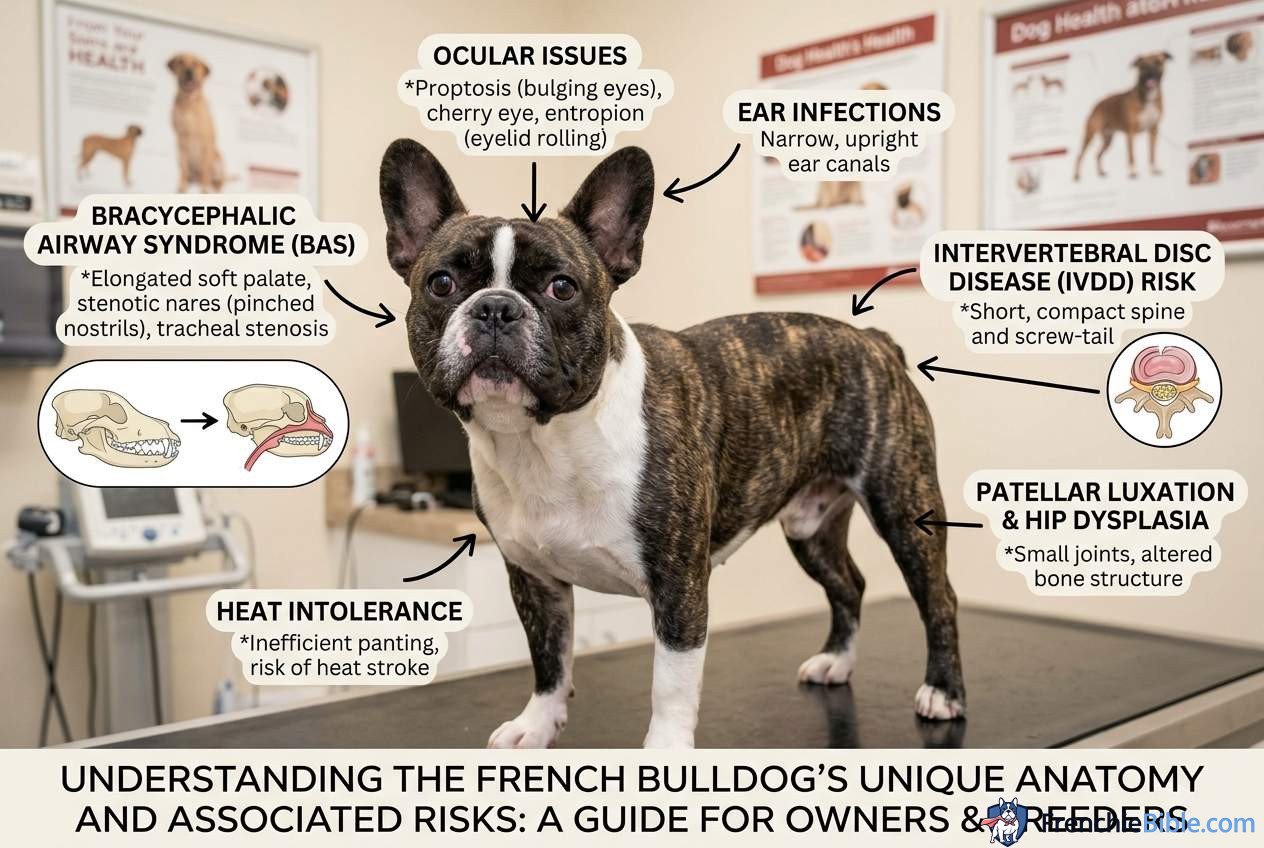
French Bulldogs are universally recognized by their large, erect, wide-open “bat ears.” While these ears are incredibly expressive, acting almost like radar dishes for every sound in your home, their structure presents a significant grooming challenge. These wide-open ear canals act almost like funnels for falling water, splashes, and humidity.
Unlike breeds with heavy, floppy ears (like Basset Hounds or Spaniels) that naturally drape over and protect the ear canal from environmental debris and moisture, a Frenchie’s ears are completely exposed to the elements. When water enters a Frenchie’s ear during a bath, the complex shape of the internal ear canal can trap that moisture deep inside, where air circulation is poor. This dark, warm, and persistently moist environment is the absolute perfect breeding ground for microscopic invaders.
Bacteria and yeast organisms, which naturally live on the skin in small, manageable numbers, explode in population when given these ideal conditions. This rapid overgrowth quickly leads to otitis externa, a painful inflammation and infection of the outer ear canal. An ear infection is not just a minor annoyance; it can cause intense, maddening itching, leading the dog to violently shake their head or scratch relentlessly at their ears, sometimes causing secondary trauma like aural hematomas (blood blisters in the ear flap). You will often notice a foul, yeasty, or sweet-smelling odor, redness, swelling, and a dark brown or yellowish discharge. Preventing water entry is the absolute first line of defense against these chronic and distressing ear issues.
The Severe Risks of a Brachycephalic Airway
The term “brachycephalic” is derived from Greek roots meaning “short head.” This refers to the shortened, pushed-in face, flat muzzle, and undershot jaw that is the hallmark of the French Bulldog breed. While undeniably cute, this shortened skull structure means that all the anatomical components of their upper respiratory tract are compressed into a much smaller space than nature originally intended.
They often suffer from Brachycephalic Obstructive Airway Syndrome (BOAS). This condition typically includes elongated soft palates (which can flap and block the airway), everted laryngeal saccules, and, most visibly, stenotic nares (narrow, pinched, or slit-like nostrils). Because of these complex anatomical quirks, breathing is already significantly more laborious for a Frenchie than for a dog with a standard, elongated snout. They have to work harder just to pull air into their lungs.
If water splashes forcefully, or if water is accidentally poured over their head and into their nose, they face a severe crisis. Unlike a dog with a long snout, a Frenchie cannot easily or forcefully sneeze the water out or clear their airway efficiently. Even a relatively small amount of inhaled water can cause immediate coughing, sputtering, gagging, and sheer panic as they struggle to breathe.
In more severe cases, or if a dog inhales deeply out of shock, the water can bypass the upper airway and enter the lungs. This introduces non-sterile bathwater, potentially mixed with shampoo residue and dirt, directly into the delicate lung tissue. This leads to aspiration pneumonia, an incredibly serious, rapidly progressing, and potentially life-threatening inflammation and infection of the lungs. The stakes during a bath are genuinely high, which is why protecting their nose is a non-negotiable priority.
Essential Preparations Before the Bath: Setting the Stage for Success
The key to a successful, safe, and stress-free bath lies almost entirely in the preparation. If you are scrambling around looking for a towel or the shampoo bottle while trying to hold a wet, slippery, squirming, and potentially anxious Frenchie, mistakes are vastly more likely to happen. When mistakes happen, water gets into places it shouldn’t. You must gather everything you need and prepare the environment completely before you even think about turning on the water.
Choosing the Optimal Bathing Location
Where you choose to bathe your Frenchie significantly impacts your ability to control them and the water flow. A large, deep human bathtub might seem logical, but it can be overwhelming for a small, heavy-bodied dog and incredibly hard on your knees and back.
– The Deep Kitchen Sink or Utility Sink: For young puppies and smaller adult Frenchies, a deep, wide kitchen sink equipped with a pull-out spray attachment is often the absolute ideal setup. It brings the dog up to a comfortable working height for you, saving your back and allowing for much better, closer physical control.
– A Walk-In Shower with a Wand: If you prefer or must use a walk-in shower, ensure you are utilizing a handheld showerhead on a long hose. This is virtually non-negotiable for bathing a Frenchie safely. You need precise, pinpoint control over the direction, pressure, and volume of the water flow. A fixed showerhead pouring from above is a recipe for disaster with a brachycephalic breed.
– A Dedicated Raised Dog Grooming Tub: If you have multiple dogs or bathe your dog frequently, investing in a raised, professional-style dog grooming tub can be a life-changing investment. These often come with built-in restraints and are perfectly scaled for canine bathing.
The Golden Rule of the Bathing Surface: Whichever location you choose, you absolutely must use a high-quality, heavy-duty, non-slip rubber mat covering the entire bottom surface. French Bulldogs have short legs and heavy, dense bodies. They are not naturally agile on slick surfaces. If they feel their paws slipping on wet porcelain or stainless steel, they will immediately panic. A panicking dog will flail, struggle, and shake, making them nearly impossible to control safely and drastically increasing the risk of water splashing directly into their face and ears. Security underfoot equals a calmer dog.
Gathering and Organizing Your Bathing Arsenal
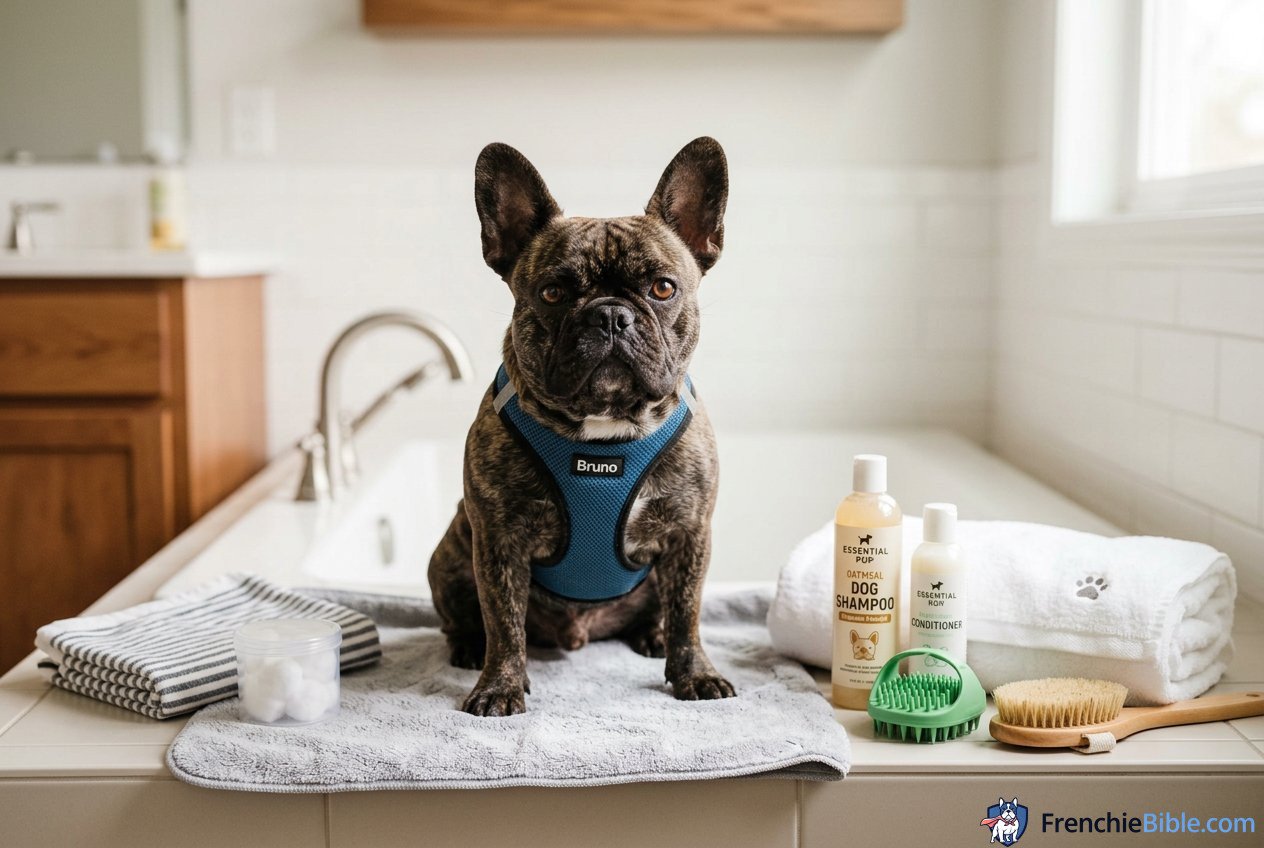
Having your tools perfectly organized and within arm’s reach is crucial. Once your hands are on the dog, you shouldn’t have to step away. You will need:
– High-Quality Breed-Appropriate Shampoo: Select a tear-free, hypoallergenic, ultra-gentle dog shampoo. Avoid anything containing harsh detergents, artificial heavy fragrances, or cheap chemicals. Frenchies are notorious for their sensitive skin, environmental allergies, and contact dermatitis. Oatmeal-based or aloe-infused shampoos are often excellent choices.
– Abundant Towel Supply: Have at least three to four soft, highly absorbent towels ready. Microfiber pet towels are excellent as they pull moisture rapidly from the dense coat.
– The Facial Cleaning Tool: A small, soft, completely clean washcloth, a dedicated natural sea sponge, or gentle pet facial wipes. This is exclusively for the head and face.
– The Ear Protection: Jumbo-sized, premium cotton balls. (Let me reiterate: do NOT use cotton swabs or Q-tips under any circumstances).
– The Rinsing Tool (If no sprayer): If you do not have a handheld showerhead, you must have a large plastic pitcher or a specialized dog bathing cup with a contoured edge designed to pour water cleanly without splashing.
– Post-Bath Supplies: Dog-safe, vet-approved liquid ear cleaning solution, a high-quality wrinkle balm or soothing skin butter, and dry tissues or gauze pads.
– Positive Reinforcement: High-value, waterproof treats (like small pieces of hot dog or cheese) or a lick mat smeared with dog-safe peanut butter to reward calm, cooperative behavior.
The Breeder’s Secret Weapon: Preparing the Cotton Balls for Ear Protection
This is perhaps the single most important preventative measure I teach my puppy buyers. Before the dog even enters the bathroom, take two large, clean, dry cotton balls. Gently pull them apart slightly with your fingers. You want to make them fluffy, airy, and adaptable to the unique shape of your dog’s ear canal, rather than a hard, dense wad of cotton.
Carefully and calmly place one fluffed cotton ball gently into the very outer opening of each ear canal.
Crucial Application Tip: Do not force or push the cotton ball deep into the ear canal! It should sit securely and comfortably resting just inside the outer opening, acting as a physical, absorbent barrier to catch and soak up any stray splashes, mist, or rogue droplets of water. You must ensure the cotton ball is large enough that it absolutely cannot be accidentally pushed or shaken too far down into the ear. Make a mental note—or say it out loud—”Two cotton balls in.” You must remember to take the exact same number out later. Leaving a damp cotton ball in the ear is worse than getting water in it.
The Step-by-Step Guide to a Flawless Water-Safe Bath
Now that your environment is prepped, your tools are ready, and your dog’s ears are physically protected, it is time to begin the actual bathing process. The overriding, fundamental principle for the next ten to fifteen minutes is absolute control. You must exert calm, confident control over the water flow, your dog’s body movements, and the overall sensory environment.
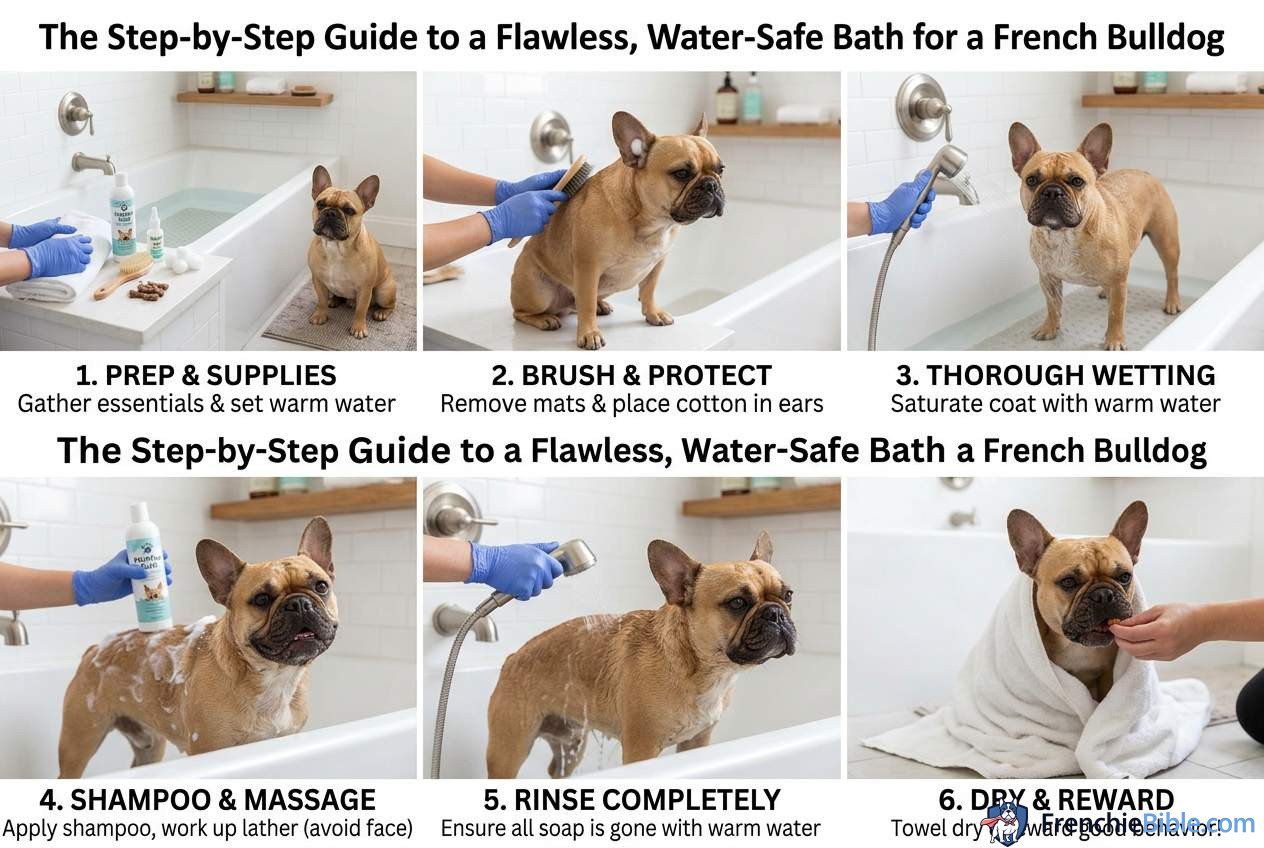
Step 1: Securing Your Frenchie and Calibrating the Water
Lift or guide your Frenchie onto the non-slip mat in your tub or sink. From this moment forward, keep at least one hand firmly but gently on their body at all times. This provides them with a sense of security and physical grounding, and it gives you immediate physical feedback on their stress levels and intention to move.
Turn the water on, pointing it away from the dog. Carefully test and calibrate the water temperature on the sensitive skin of your inner wrist or forearm. It should be pleasantly lukewarm—neither too hot nor too cold. French Bulldogs have poor thermoregulation due to their compromised airways. They cannot pant effectively to cool down if the water is too hot, which can lead to rapid overheating and respiratory distress. Conversely, freezing cold water is a miserable experience that will make them fight the bath next time. Aim for a comfortable, tepid temperature.
Step 2: The Deliberate and Controlled Wetting Process
The most important rule of the wetting phase is this: Never, under any circumstances, pour a pitcher of water directly over your French Bulldog’s head, and never aim a shower wand directly at their face or ears.
If you are using a handheld sprayer, bring the nozzle very close to their skin, almost touching the coat. Start from the back of the neck, right behind the shoulder blades, and work your way slowly down the back, along the flanks, down the tail, and finally down each leg. Keep the water pressure set to low or medium. By keeping the nozzle close to the body, you practically eliminate splashing and misting in the air.
If you are relying on a pitcher, fill it and pour the water slowly, in a thick, controlled stream, over their back and sides. Again, always start from the neck down, guiding the water flow with your free hand to ensure it runs down toward the drain, not pooling or splashing upwards.
Step 3: Applying Shampoo and Massaging the Body
Once the body from the neck down is thoroughly saturated with water, dispense an appropriate amount of your gentle, tear-free shampoo. Begin massaging it deeply into their coat, using your fingers to reach through the dense fur to the skin, creating a rich, cleansing lather. Be sure to pay attention to the underbelly, the chest, the armpits, and down the legs to the paws.
During this lathering step, continuously monitor your dog’s body language. Keep your own movements slow, calm, and deeply soothing. Use a reassuring, low-pitched voice. If you feel your dog tense up, or if they begin the characteristic wind-up that precedes a full-body shake, immediately but gently place a firm hand flat on the back of their neck or across their shoulders, applying slight downward pressure. This physical cue often interrupts the instinct to shake. A vigorous, wet-dog shake while they are covered in soapy water can send suds and water flying violently in every direction, almost guaranteeing it will end up in their face, eyes, and ears.
Step 4: The Crucial Body Rinse
Rinsing must be done with meticulous care and patience. Leaving leftover shampoo residue on a Frenchie’s sensitive skin can cause severe contact dermatitis, intense itching, and hot spots.
Using your handheld sprayer (kept close to the skin as before) or your pitcher, begin rinsing from the neck down. Watch the water running off the dog. Continue rinsing, section by section, until the water runs completely clear, with absolutely no bubbles or milky residue.
Here is a vital technique: While rinsing the neck and shoulder area, use your free, non-spraying hand as a physical shield. Cup your hand firmly around the back of their head and the base of their skull. This physical barrier ensures that the stream of water flows safely down the back and body, preventing any rogue streams from traveling up the neck and splashing into the ears from behind.
Step 5: Tackling the Face and Head—The Most Critical Phase of All
This is the moment where the most intense focus and care are required. Do not use the shower wand, the sprayer, or the pitcher to rinse or wet your French Bulldog’s head. Ever. This is where the majority of accidents happen.
Instead, put down the sprayer. Take the clean washcloth, natural sponge, or facial wipe you prepared earlier. Dampen the cloth with warm, clean water from the faucet. Wring it out thoroughly until it is merely moist and damp, absolutely not dripping or holding excess water.
Cleaning the Face and Cheeks: Use the damp cloth to gently wipe down their cheeks, chin, and forehead, wiping away any accumulated dirt, food debris, or eye discharge. Pay meticulous, gentle attention to their deep facial folds and wrinkles. You can use a very tiny, pea-sized drop of tear-free shampoo on the cloth if their face is particularly grimy or oily, but in most cases, plain warm water and mechanical wiping are entirely sufficient.
Protecting the Vulnerable Nose: By exclusively using a damp, thoroughly wrung-out cloth, you entirely eliminate the risk of a stream of water running down their snout and into their nares. Carefully wipe the top of the muzzle and around the sides of the nose. Never, ever push the wet cloth directly over or against the open nostrils. Be gentle; their noses are sensitive.
Cleaning the Head and Ears: Use the damp cloth to wipe the top of their skull and the outside of their ear flaps (the pinnae). You want to remove dust and dander from the outside of the ear. Do absolutely nothing to clean the inside of the ear canal during the bath itself. That is a separate task for a dry environment.
The Final Facial Rinse: If you used any soap whatsoever on the facial cloth, you must rinse the cloth thoroughly under clean, running water, wring it out completely until it is just damp again, and wipe the entire face and folds a second (or third) time to guarantee that all soap residue is completely removed. Soap left in a facial fold will cause severe irritation.
Handling Unpredictable Movements and Unexpected Splashes
Even with the most meticulous preparation and flawless execution, dogs are living creatures, and unpredictability is a factor. Your dog might suddenly jump, jerk their head, or water might bounce off the side of the tub and splash.
If you see water flying toward their face, react quickly but calmly. Gently place your hand on their head and tilt their snout downward, pointing their nose toward the floor. This simple change in gravity encourages the water to run off their snout rather than traveling up the nasal passages.
If they do snort a tiny bit of water and start sputtering, sneezing, or reverse sneezing, stop the bath immediately. Turn off the water. Do not panic. Let them clear their airway on their own. Use a dry towel to immediately and gently blot their face, nose, and eyes dry. Only resume the bath once they are breathing normally and have calmed down.
Rigorous Post-Bath Care: Drying Wrinkle Maintenance, and Ear Care
The bath is far from over when the water is turned off and the drain is open. In my experience as a breeder, proper, meticulous drying is just as important—if not more important—than the washing phase when it comes to preventing painful skin and ear infections.
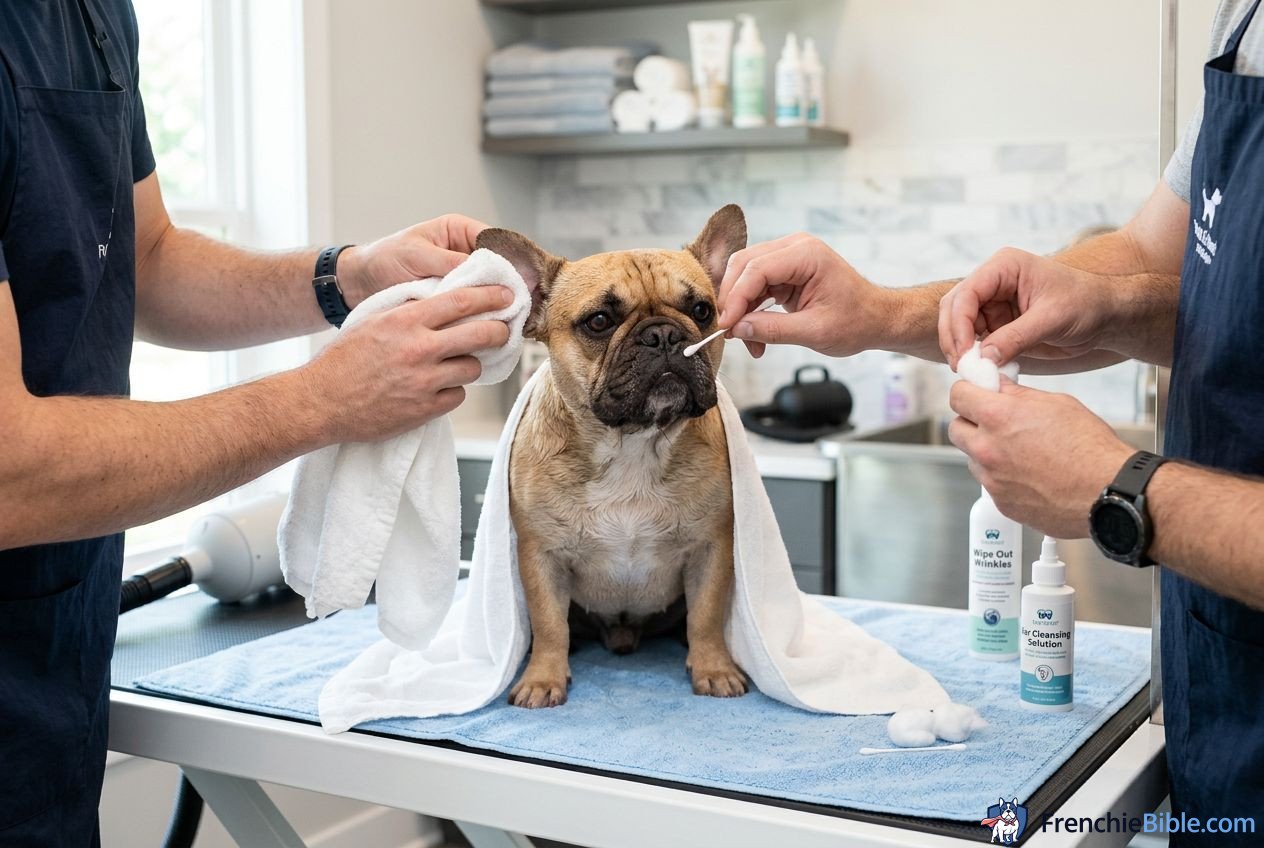
Step 1: The Initial Thorough Towel Dry
As soon as the water is off, while the dog is still in the tub, drape your largest, most absorbent towel completely over your Frenchie, enveloping them like a burrito. Gently press the towel into their coat, squeezing the water out of their dense fur. Do not rub vigorously back and forth in a scrubbing motion. Rubbing can irritate their sensitive skin, tangle the hair, and create friction that Frenchies often find unpleasant. Squeeze, press, and blot. Work your way down their legs and gently dry their paws and between their toes.
Step 2: The Critical Removal of the Ear Protection
Immediately after the initial towel dry, before you do anything else, remove the cotton balls from their ears. “Two went in, two must come out.” Inspect the cotton balls. If they are completely dry on the inside and only slightly damp on the very outer edge, they did their job perfectly, and your technique was excellent! If they are soaked completely through, you know you need to adjust your spraying and rinsing technique next time to be considerably more careful around the head and neck area.
Step 3: Meticulous Drying of the Ears
Take a fresh, completely dry cotton ball or a soft, dry piece of medical gauze. Wrap it around your index finger and gently, carefully wipe the very outer, visible part of the ear canal and the inner flap of the ear (the pinna). You are doing this to remove any residual moisture that might have snuck past the initial cotton barrier, or condensation that has accumulated simply from being in a humid bathroom environment.
The Absolute Rule of Ear Drying: Never stick your finger, a Q-tip, or any long object deep down into the vertical or horizontal ear canal. You will pack debris tightly against the eardrum or potentially rupture it. Only clean what you can easily see. If you strongly suspect a significant amount of water bypassed the cotton balls and entered deep into the ear, contact your vet for advice; they may recommend administering a specific, drying, alcohol-based ear drop formulated to evaporate trapped water safely.
Step 4: The Lifesaving Step: Drying the Wrinkles and Folds
This step is paramount for the health and comfort of French Bulldogs. The deep, expressive folds around their nose (the nose rope), under their eyes, and sometimes on their cheeks trap moisture with alarming efficiency.
Take a soft, dry, clean facial tissue, a dry piece of gauze, or a specialized dry dog wrinkle wipe. You must gently pry open every single facial fold and gently pat the inside of the crevice until it is completely, unequivocally bone dry.
Leaving even a microscopic amount of moisture trapped in these dark, warm folds will inevitably lead to yeast overgrowth, bacterial dermatitis (skin fold pyoderma), intense itching, redness, raw skin, and a distinctively foul, cheesy odor.
After ensuring the folds are perfectly dry I highly recommend applying a very thin, sparing layer of a high-quality, vet-approved wrinkle balm, snout soother, or a natural barrier cream (like plain petroleum jelly or coconut oil, if your vet agrees). This creates a waterproof barrier against future moisture (from drinking or tearing) and soothes any friction-irritated skin.
Step 5: Final Drying Techniques
If your Frenchie tolerates noise and blowing air, you can utilize a pet-specific high-velocity blow dryer. Use it exclusively on the absolute lowest heat setting, or ideally, the “no heat/cool” setting. Keep the dryer nozzle moving constantly back and forth to prevent concentrating heat on one spot, and hold it at a safe distance from the skin.
Crucial Warning: Never, under any circumstances, aim the high-velocity air flow directly at their face, into their open ears, or at their nose. This is terrifying for them and can cause injury.
Many Frenchies, however, are deeply terrified of blow dryers. If this is the case, do not force it. Simply give them a second, thorough towel-down with dry towels, and allow them to air dry in a warm, draft-free room. They will likely race around the house doing the “zoomies” to generate body heat and shake off the remaining moisture.
Recognizing the Dangerous Signs of Water Intrusion
Even the most careful, experienced owner can have a momentary lapse or an accident. It is absolutely crucial for the health of your dog that you know exactly what warning signs to look for if you suspect water has bypassed your defenses and entered the ears or respiratory tract.
Warning Signs of Water in the Ears (Developing Otitis)
If water made it deep into the ear canal and was not effectively dried out, a bacterial or yeast infection can begin brewing in a matter of hours or days. Watch your dog closely for:
– Frequent, violent, or continuous head shaking.
– Obsessive pawing, scratching, or rubbing of the ears against furniture or the carpet.
– Noticeable redness, heat, or swelling of the inner ear flap or the opening of the canal.
– A dark brown, waxy, yellow, or purulent (pus-like) discharge inside the ear.
– A distinct, yeasty, sweet, or distinctly foul odor emanating from the ears.
– Whining, crying, or pulling away sharply when the head or ears are touched or petted.
If you observe these signs, do not attempt to treat it at home with over-the-counter remedies. You need veterinary diagnosis to determine if it is yeast, bacteria, or both, and the appropriate prescription medication.
Emergency Signs of Water in the Nose or Lungs (Aspiration)
Water inhalation is a true medical emergency for a brachycephalic dog. If your dog aspirated bathwater, symptoms may appear almost immediately during the bath, or they can develop insidiously over the following 24 to 48 hours as pneumonia sets in. Watch vigilantly for:
– Persistent, harsh coughing, hacking, or gagging.
– Wheezing, raspy, or noticeably noisy breathing (worse than their usual snuffling).
– Shortness of breath, shallow breathing, or an abnormally rapid respiratory rate while resting.
– Profound lethargy, extreme weakness, or reluctance to move.
– A sudden and complete loss of appetite.
– Pale, grey, or blue-tinged gums and tongue (cyanosis), which is a critical sign of severe oxygen deprivation.
– A hot nose or feeling hot to the touch (fever).
If you observe any of these respiratory signs following a bath where water may have been inhaled, you must seek immediate, emergency veterinary care. Aspiration pneumonia progresses frighteningly fast and can be fatal if not treated aggressively with oxygen therapy and strong antibiotics. Do not wait to see if they get better.
Behavioral Conditioning: Building a Positive Bath Time Association
If your Frenchie is absolutely terrified of the bath, they will struggle, thrash, panic, and try to escape. Handling a panicking, wet, muscular dog makes it incredibly difficult, if not impossible, to safely keep water out of their ears and nose. Training your dog to tolerate—or ideally, even enjoy—bath time is a worthwhile investment of your time that pays dividends in their health and your sanity.
Systematic Desensitization Techniques
If you are lucky enough to have a young puppy, start early and make it fun. Place them in the completely dry tub or sink. Do not turn on the water. Offer extremely high-value treats, lavish praise, and play with their favorite toy. Let them associate the physical location of the tub with overwhelmingly positive things. After a few days, gradually introduce the sound of running water in the background, but still do not wet the dog. Slowly work your way up to getting their feet wet, rewarding them constantly.
For older dogs with established bath anxiety, you must take it very slowly. You might start by simply wiping them down with a warm, damp cloth while they stand in the living room, offering treats continuously. Gradually move the wiping process closer to the bathroom, and eventually into the dry tub, over a period of weeks.
Utilizing High-Value Distractions
A widely used and highly effective breeder trick is to smear a generous dollop of dog-safe peanut butter (you must absolutely ensure it is completely free of Xylitol, an artificial sweetener toxic to dogs) or a specialized lickable pet treat onto the tiled wall of the shower or the side of the grooming tub, right at their nose level. Licking is a naturally calming, self-soothing behavior for dogs. While they are intently focused on licking the treat off the wall, they are distracted from the bathing process, allowing you to calmly and efficiently wash and rinse their body. Lick mats with suction cups attached to the tub wall are brilliant for this.
Regulating Your Own Energy and Emotion
Dogs are incredibly intuitive creatures and master readers of human body language. They will instantly pick up on your anxiety, frustration, or nervousness. If you approach bath time feeling stressed, rushed, or anticipating a massive struggle, your Frenchie will sense your tension and immediately become anxious and defensive too. Before you begin, take a deep breath. Speak in a calm, soothing, low-pitched voice. Move with deliberate, gentle, and predictable motions. Your calm leadership will help them understand there is nothing to fear.
The Importance of Routine Maintenance: Minimizing the Need for Baths
One of the best ways to prevent bath-time accidents is simply to bathe your dog less often. To minimize the frequency of full, wet baths (and thus drastically reduce the risk of water exposure to the ears and nose), you must implement a strong, consistent routine of daily and weekly hygiene maintenance.
French Bulldogs generally only truly need a full, soapy bath every 4 to 8 weeks, depending heavily on their activity level, whether they roll in dirt, and their individual skin health. Over-bathing can actually be detrimental, stripping their skin of its natural, protective oils, leading to severe dry skin, flaking, and increased susceptibility to allergens.
The Daily Wipe-Down Routine
Invest in a good brand of hypoallergenic, unscented dog grooming wipes. Every day, especially after walks, use these wipes to clean their paws, wipe down their underbelly, clean their anal area, and meticulously clean their facial folds. This daily maintenance keeps surface dirt, pollen, and bacteria at bay, keeping them smelling fresh and extending the time between full baths.
Establishing a Routine Ear Cleaning Schedule
Use An Experienced Breeder-approved, gentle liquid ear cleaner every one to two weeks, or strictly as recommended by your veterinary professional based on your dog’s specific needs. The correct method is to apply the liquid cleaner generously to a clean cotton ball, and then use that damp cotton ball to thoroughly wipe out the visible folds and crevices of the outer ear flap and the opening of the canal.
Important Note: Never pour or squirt liquid ear cleaner directly from the bottle into the ear canal unless you have been specifically instructed to do so and shown the correct technique by veterinary professional to treat a specifically diagnosed medical condition. For routine cleaning, the damp cotton ball method is vastly safer and highly effective.
Conclusion
Bathing a French Bulldog is not the same as washing a typical dog; it requires a specific, specialized skill set, a deep understanding of their unique anatomical vulnerabilities, and unwavering attention to detail. By consistently utilizing preventative measures like the cotton ball ear plug technique, prioritizing a tightly controlled, washcloth-only method for cleaning the head and face, and ensuring meticulous, exhaustive post-bath drying of the ears and facial folds, you can effectively and safely protect your dog’s most sensitive areas.
Remember, the ultimate goal of the bath is not just to have a clean dog, but to maintain a healthy, comfortable, and happy companion. Rushing through the process is where mistakes happen. Patience, thorough preparation, a calm demeanor, and the right techniques are your best and most effective tools in ensuring that bath time transforms from a stressful chore into a safe, routine, and perhaps even bonding experience for both you and your beloved Frenchie.
Frequently Asked Questions (FAQs)
Q1: Can I use human shampoo, baby shampoo, or dish soap to bathe my French Bulldog?
A: Absolutely not. This is highly discouraged. Human skin and dog skin have significantly different pH levels. The canine acid mantle, which protects their skin from bacteria, is very delicate. Human shampoos, even the mildest baby shampoos, are too acidic for dogs and can strip their natural oils, leading to severe dry, flaky, irritated skin, and potentially triggering allergic reactions or hot spots. Dish soap is even worse, as it is designed to strip heavy grease and will severely damage a dog’s skin barrier. Always use a high-quality, pH-balanced shampoo specifically formulated for dogs, preferably one that is hypoallergenic.
Q2: My Frenchie’s facial wrinkles smell awful, like corn chips or old cheese, even right after a bath. What should I do?
A: A persistent, foul odor emanating from the facial wrinkles is almost always indicative of a yeast or bacterial overgrowth. This is primarily caused by moisture (from tears, drinking, or inadequate drying after a bath) becoming trapped in the dark, warm folds. First, evaluate your drying technique: ensure you are getting the folds 100% bone dry after every bath and daily wipe-down. If the odor persists despite perfect hygiene, or if the skin inside the fold looks red, inflamed, raw, or has any sort of discharge, you are dealing with an active infection. You must consult your veterinarian for an appropriate medicated wipe, topical ointment, or oral treatment.
Q3: Exactly how deep should I place the cotton balls in my dog’s ears before the bath?
A: The cotton ball should only be placed gently at the very outer opening of the ear canal. It should be fluffed up so it is large enough that it absolutely cannot accidentally slip or be shaken deep inside the canal. It serves purely as a surface barrier to catch splashes, not as a tight internal plug. Never use force to push it down into the canal, as this can cause discomfort and make the dog panic.
Q4: Is it safe to use Q-tips (cotton swabs) to dry the inside of my Frenchie’s ears after the bath to make sure I get all the water?
A: No, absolutely not. Using Q-tips or any long cotton swabs inside a dog’s ear is highly dangerous and strongly advised against by professionals. You cannot see the eardrum, and you can very easily push debris, wax, and moisture further down the canal, compacting it against the eardrum. In a worst-case scenario, a sudden movement by the dog while the swab is in the ear can easily rupture the delicate eardrum, causing permanent hearing damage and extreme pain. Only use large cotton balls or gauze wrapped around your finger to wipe the visible, outer portions of the ear that you can easily see.
Q5: During the bath, my Frenchie accidentally snorted/inhaled some water. They coughed and sputtered a few times but seem perfectly fine and normal now. Should I still be worried?
A: Yes, you should maintain a high level of vigilance. Even if they seem perfectly fine initially after coughing up the water, it is critically important to monitor them very closely for the next 24 to 48 hours. Aspiration pneumonia does not always appear instantly; it can take hours or a couple of days for the lung inflammation and infection to develop and show outward signs. Watch them like a hawk for signs such as lethargy, a loss of appetite, persistent coughing, wheezing, or unusually rapid or shallow breathing while resting. If you have any concerns or notice even subtle changes in their breathing or behavior, it is always safest to contact your veterinarian immediately for a check-up.
Disclaimer: The comprehensive information, techniques, and advice provided in this article are based strictly on over ten years of hands-on, practical experience in French Bulldog breeding, daily care, and husbandry. While I am a highly seasoned breeder and dedicated caregiver who deals with these issues daily, I am NOT a licensed veterinarian, and I hold no formal medical or veterinary qualifications whatsoever. The advice, grooming techniques, and behavioral observations shared in this guide are intended strictly for general educational and informational purposes only. This content should never, under any circumstances, be construed as professional medical advice, veterinary diagnosis, or a prescribed treatment plan. Every single dog is biologically unique, and medical conditions can present in vastly different ways. If your French Bulldog is exhibiting any signs of illness, respiratory distress, suspected ear infections, skin conditions, or any other health or behavioral concerns, you must consult a qualified, licensed veterinarian immediately. Never delay seeking professional veterinary care, and never disregard professional medical advice, because of something you have read in this article or anywhere else online. Your veterinarian is the only qualified professional who can diagnose and treat your pet.