As someone who has dedicated the last ten years to breeding, raising, and loving French Bulldogs, I can tell you that bringing a new Frenchie puppy into your home is one of the most rewarding experiences imaginable. They are affectionate, comical, fiercely loyal, and absolutely bursting with personality. However, beneath that charmingly stubborn exterior lies a sensitive dog that requires a highly specific care routine—especially when it comes to grooming and physical handling.
One of the most common and frustrating challenges I hear from new owners, and even experienced dog owners who are new to the breed, is the sheer panic their Frenchie exhibits when it’s time to clip their nails, clean their facial wrinkles, or check their ears. If you’ve ever tried to wrestle a 25-pound muscle-bound Frenchie who absolutely refuses to have their paws touched, you know exactly what I mean. They turn into little greased pigs, wiggling, thrashing, and sometimes even snapping out of fear. It’s exhausting for you, it’s terrifying for them, and it often leads to a breakdown in trust.
Related Reading: Health & Diet | Frenchie Puppy Guide
But I am here to tell you that it absolutely does not have to be this way. The secret to a cooperative, calm Frenchie lies in early and consistent desensitization. Getting your French Bulldog used to being touched isn’t just a matter of convenience; it’s a foundational aspect of their puppy training that ensures a lifetime of stress-free grooming, easier veterinary examinations, and a much deeper bond between the two of you.
In this comprehensive, deep-dive guide, I will share the exact step-by-step methods, philosophies, and practical tips I use with my own litters to raise confident, relaxed Frenchies who actually look forward to their grooming routines. Grab a cup of coffee, take a deep breath, and let’s get your Frenchie comfortable in their own skin.
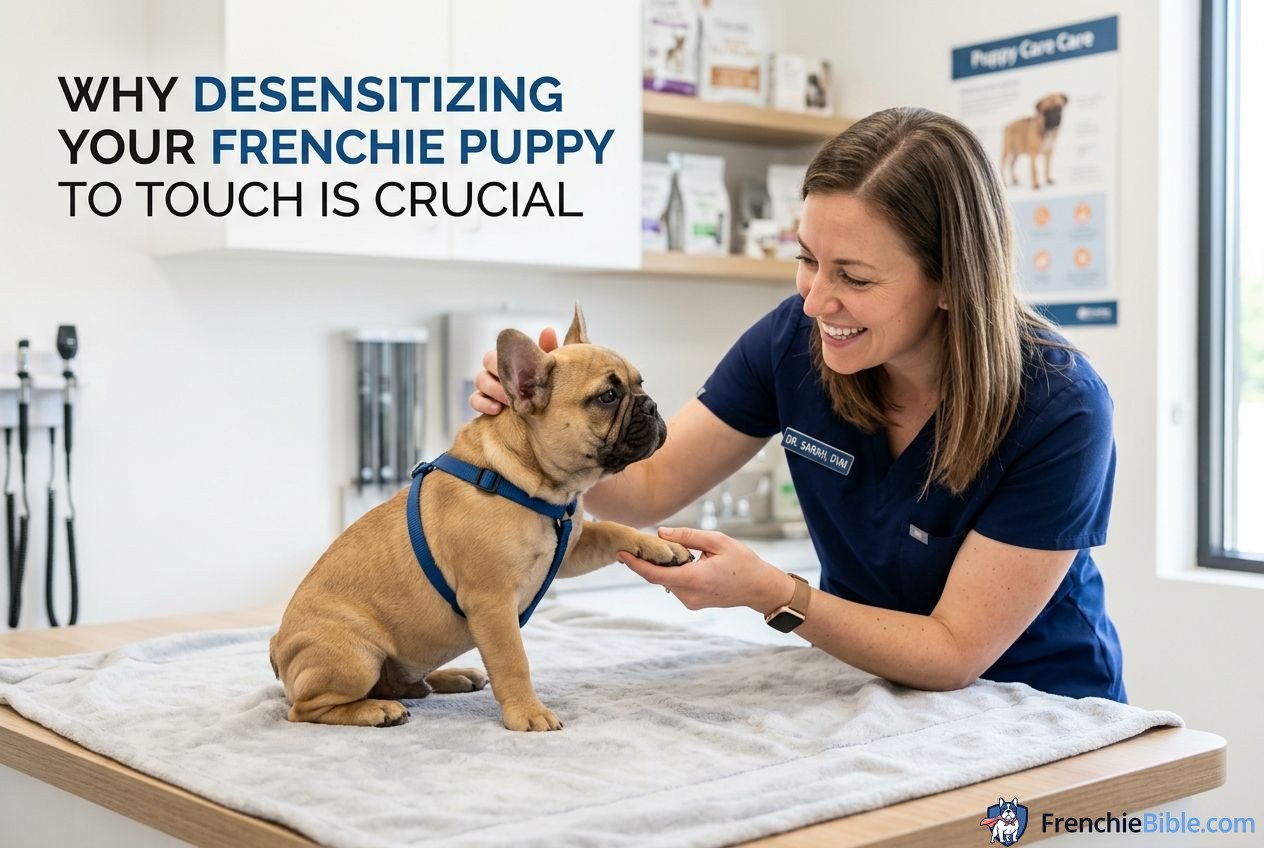
Why Desensitizing Your Frenchie Puppy to Touch is Crucial
To truly understand why touch desensitization is so important, you first have to understand the physical and psychological makeup of the French Bulldog. They are a unique breed, classified as brachycephalic (flat-faced), prone to deep skin folds, and possessing a sturdy, compact, and often surprisingly strong build. Their specific physical traits dictate a strict and non-negotiable grooming regimen. You simply cannot ignore their wrinkles, tail pockets, ears, or nails without risking serious health complications.
The Breeder’s Perspective on Early Handling
In my whelping box, touch training begins the very moment the puppies are born. Before their eyes are even open, I am gently handling their paws, stroking their tiny faces, rubbing their ears, and touching their bellies. Why? Because early neurological stimulation sets the stage for a well-adjusted, confident adult dog.
When you bring your puppy home at eight or ten weeks old, the window for crucial socialization is wide open, but it closes rapidly around the 14 to 16-week mark. If you wait until your Frenchie is six months old to introduce the nail clippers or the wrinkle wipes, you are setting yourself up for a massive uphill battle. You are fighting against their natural instinct to protect their vulnerable areas.
Desensitization means gradually exposing your puppy to a stimulus (like touching their paws, holding their face, or turning on a nail grinder) at a level that does not provoke fear, and rewarding them for remaining calm. Over time, the puppy associates the handling with positive outcomes—usually delicious, high-value treats or deep, calming affection. It is a psychological rewiring that says, “Human hands bring good things, not pain or restraint.”
Preventing Fear and Aggression During Grooming
It is vital to understand that many behavioral issues in adult dogs, particularly those labeled as “aggression” during grooming, actually stem from profound fear. A Frenchie who snaps, growls, or thrashes during a nail trim isn’t being “bad,” “dominant,” or “stubborn”; they are genuinely terrified of what is happening to them.
By spending just five to ten minutes a day getting your puppy used to touch, you are building an enormous reservoir of trust. You are teaching them that your hands bring comfort, safety, and rewards, not restraint, pinching, and discomfort. This trust translates to easier vet visits (where the vet will need to examine their teeth, ears, and paws), smoother grooming sessions, and a much stronger, more harmonious bond between you and your dog.
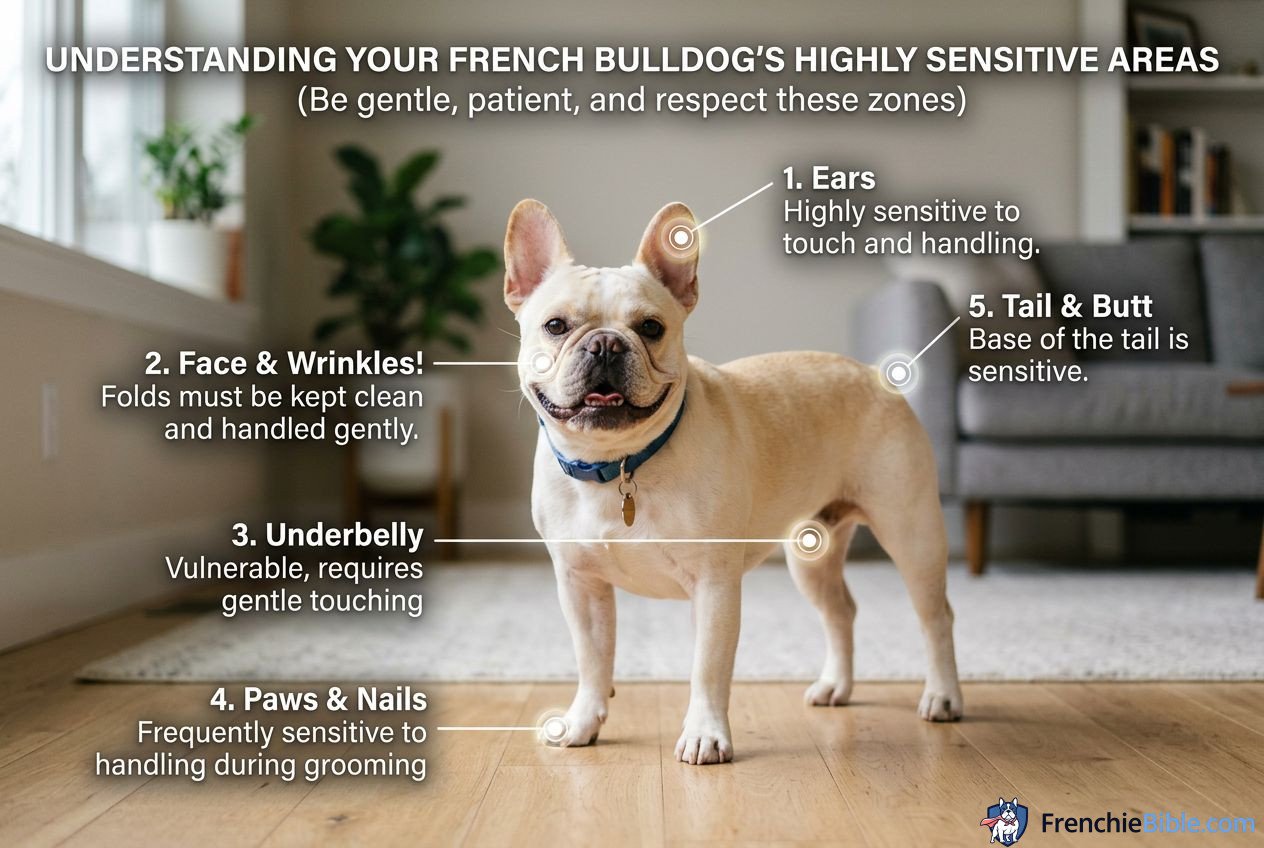
Understanding Your French Bulldog’s Highly Sensitive Areas
Before we dive into the specific “how-to” steps, we need to map out exactly where a Frenchie is most sensitive. Not all body parts are created equal in the eyes of a dog, and touching certain areas triggers instinctive defensive reactions.
The Paws (Crucial for Nail Clipping)
Almost all dogs naturally protect their paws. Their paw pads are highly sensitive, filled with nerve endings, and are absolutely essential for their mobility, balance, and survival. For a Frenchie, having their paws suddenly grabbed and squeezed can feel incredibly vulnerable and threatening.
Nail trimming is universally the most dreaded task for dog owners, but it is critical. Long nails can permanently alter a dog’s gait, force their toes to splay out unnaturally, cause early-onset arthritis in their joints, and lead to painful breaks or torn quicks. Therefore, paw desensitization is absolutely non-negotiable. Your Frenchie must learn to surrender their paws to you willingly.
The Face and Wrinkles (Essential for Infection Prevention)
A French Bulldog’s flat face is their defining, adorable feature, but those deep wrinkles—especially the heavy rope across their nose and the folds leading down from their eyes—are perfect breeding grounds for yeast, bacteria, and fungal infections if not kept impeccably clean and dry.
Many Frenchies naturally shy away from hands approaching their face directly, particularly if they’ve previously experienced a cold, wet wipe being aggressively shoved into their folds, or if they have had stinging tear stain remover splashed near their eyes. The face is a highly vulnerable zone, and they need to trust that your hands are gentle.
The Ears and the Infamous Tail Pocket
Frenchies have large, upright “bat ears” that act like funnels for dirt, debris, and allergens. They need regular cleaning to prevent agonizing ear infections. Because the ears are sensitive and the ear canal goes deep, dogs are naturally protective of them.
Additionally, many (though not all) Frenchies have tight tail pockets—a small indentation, fold of skin, or deep crevice around the base of their stubby tail. This area can trap dirt, dead skin, moisture, and even fecal matter. It needs to be cleaned and dried just like their facial wrinkles. Touching the rear end and tail area can make some dogs very skittish or cause them to immediately sit down to protect the area, so it must be included in your daily handling routine.
Tools of the Trade: Setting Yourself Up for Grooming Success
Having the right tools can make a monumental difference in how your Frenchie perceives grooming. Using dull clippers that crush the nail instead of cutting it, or harsh chemical wipes that sting their eyes, will instantly undo all your desensitization work.
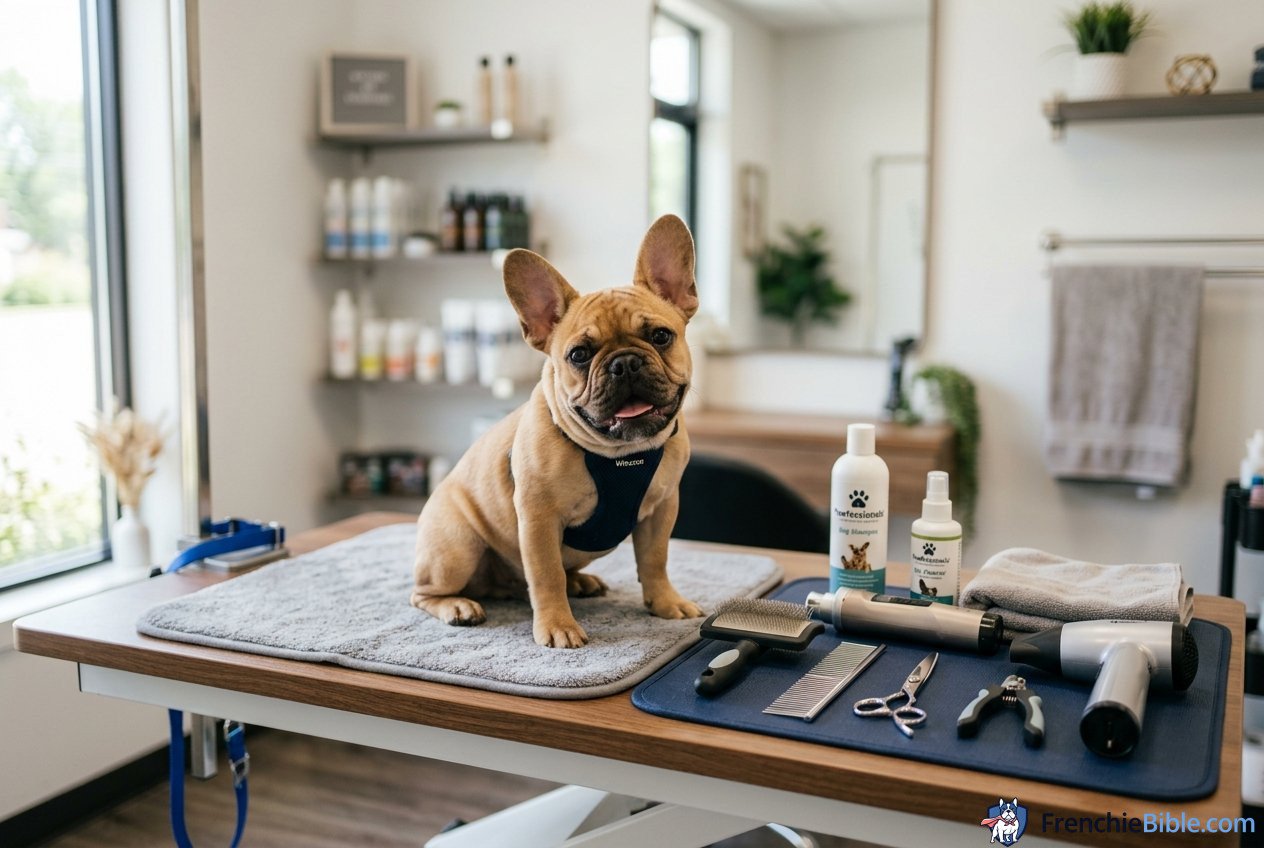
Choosing the Right Nail Clippers and Grinders
For French Bulldogs, who have incredibly thick, dense nails, you need heavy-duty, high-quality clippers. I always recommend scissor-style clippers (often called plier-style) rather than the guillotine style. Guillotine clippers tend to squeeze and crush the nail before cutting, which is painful and frightening for the dog. Ensure the blades are razor-sharp. If you have to squeeze hard to make the cut, your blades are dull and need replacing.
Many breeders and owners prefer using a nail grinder, such as a Dremel tool designed for pets. Grinders allow you to slowly file away the nail, rounding out sharp edges and drastically reducing the risk of hitting the quick (the sensitive blood vessel inside the nail). However, grinders vibrate and make a whining noise. This means your desensitization process must include getting your puppy used to both the sound of the motor and the strange vibration sensation on their paw pads before you ever touch it to their nail.
Selecting the Safest Wrinkle Wipes and Balms
When it comes to cleaning the face and tail pocket, avoid human baby wipes. They often contain fragrances, alcohol, or pH levels that are completely inappropriate for a dog’s delicate skin, leading to severe irritation.
Instead, opt for veterinary-approved dog wrinkle wipes that contain soothing, natural ingredients like aloe vera, chamomile, or mild chlorhexidine if they are prone to yeast. If you prefer a DIY approach, a soft cotton pad moistened with warm water or a highly diluted, unsweetened green tea solution can work wonders.
After cleaning and meticulously drying the wrinkles, many owners find success applying a specialized wrinkle balm. These balms act as a moisture barrier, preventing tears and drool from irritating the skin, and they often possess natural antibacterial and antifungal properties. When introducing a balm, let your puppy sniff the tin first, give them a treat, and then gently apply a tiny dab, following up with another treat.
The Foundation: Setting the Stage for Successful Touch Training
Before you ever pick up a tool, you need to set the environment and your own mindset for success.
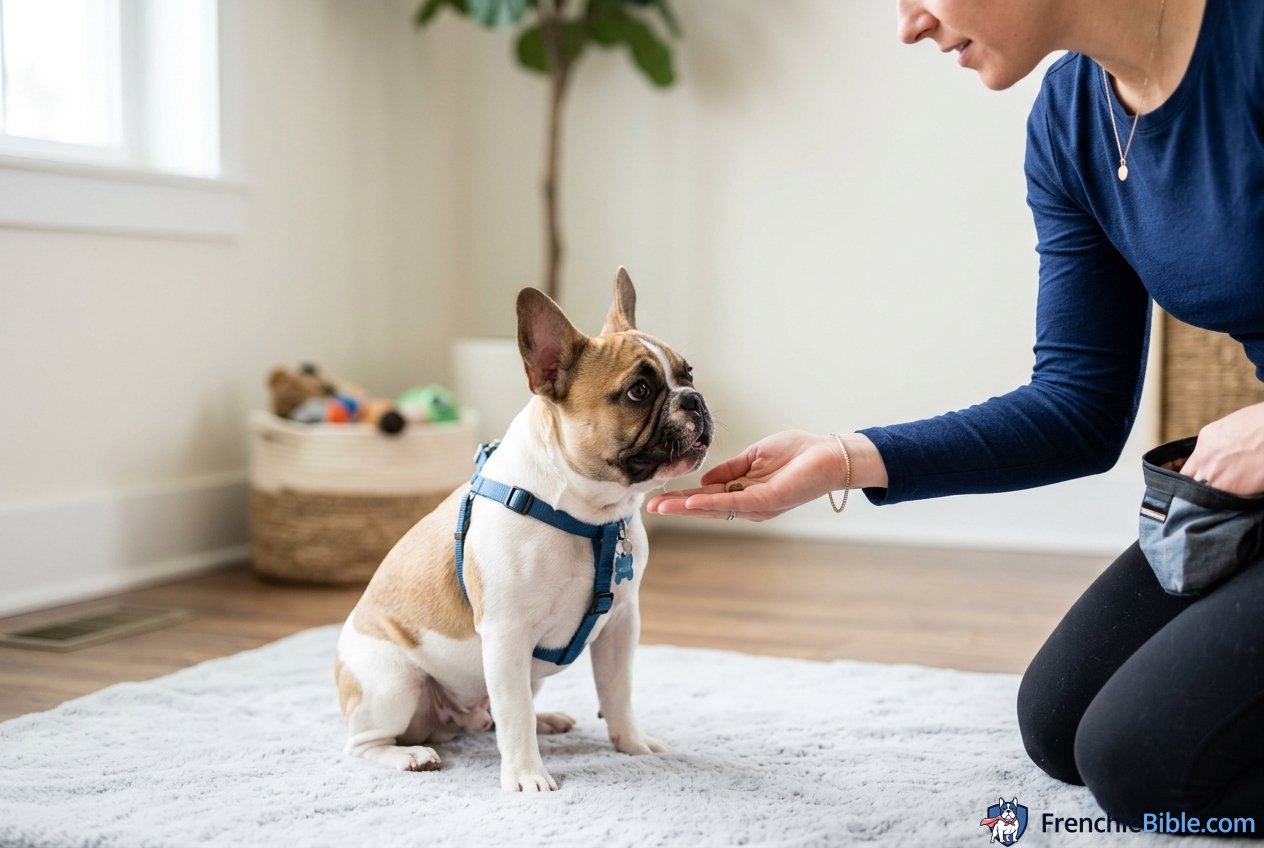
Step 1: Start When They Are Sleepy and Relaxed
The absolute best time to introduce touch training is NOT when your puppy is experiencing the wild “zoomies,” nor right before mealtime when they are overly excited. Wait until they are genuinely tired after a long play session, a training game, or a walk. Wait until they are naturally settling down for a nap.
When they are sleepy, their defenses are naturally down. Their energy is low, and they are much more receptive to slow, gentle handling. Sit on the floor with them or invite them onto the couch. Cultivate a calm, soothing energy within yourself. If you are stressed about clipping their nails, they will smell the cortisol on you and immediately become stressed too. Let them lie in your lap or right next to you. This relaxed physical state sets the perfect foundation for building positive associations.
Step 2: The Unbeatable Power of Positive Reinforcement
You will need high-value treats. And by high-value, I am not talking about their regular dry kibble or a hard, boring biscuit. You need to use something they absolutely lose their minds over, something they only get during grooming and handling sessions.
In my experience, the best options include:
– Tiny, pea-sized pieces of plain boiled chicken.
– Plain freeze-dried liver or salmon.
– Small dabs of dog-safe peanut butter (absolutely MUST be xylitol-free).
– Squeeze tubes of dog-safe meat paste or plain cream cheese.
The psychological goal is to create an immediate, powerful positive association: “When my human touches my paw, I get chicken. I love when my human touches my paw! Please touch my paw more!”
Step 3: Gradually Introducing Grooming Tools (The Visual and Auditory Phase)
Do not just whip out the terrifying metal nail clippers and go directly for the toes. The sight, the metallic smell, and the sound of the clippers can be terrifying to a puppy. You must introduce the tools incredibly slowly.
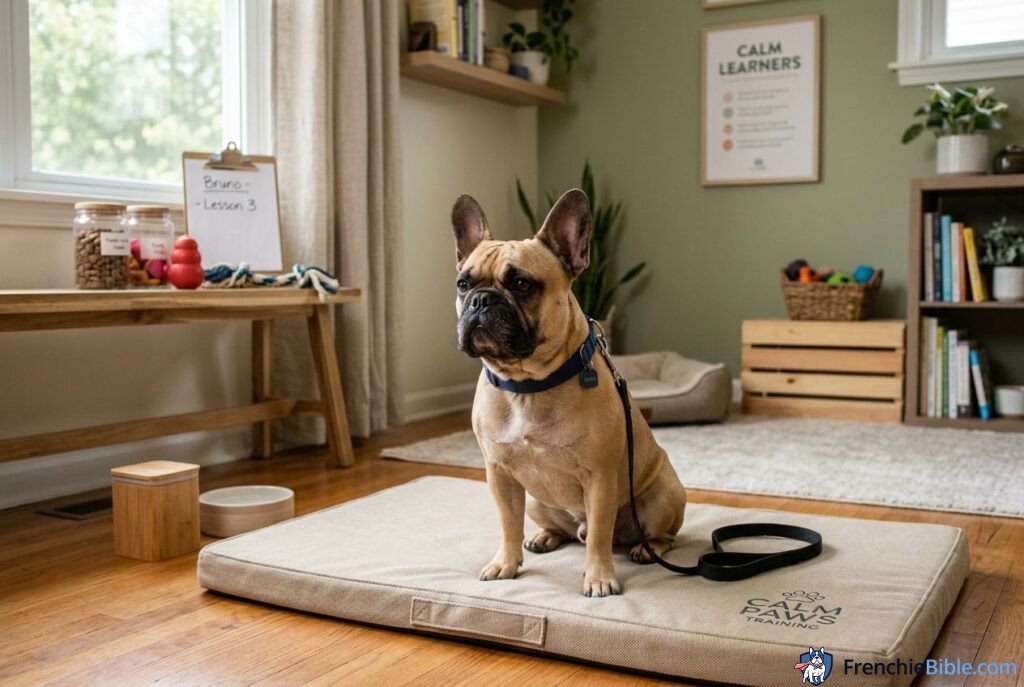
Let them sniff the clippers while they lie on the floor, and immediately give them a treat. Tap the clippers gently against their leg (without attempting to clip) and reward. If you use a nail grinder (like a Dremel), turn it on from across the room while they are eating their dinner or receiving treats. Gradually move the tool closer over a period of days or even weeks. They need to view these tools as neutral or positive objects, not instruments of torture.
Step-by-Step Specific Desensitization Techniques
Let’s break down the highly specific, day-by-day routines for the most critical grooming areas. Remember, you must tailor the speed of this progression to your individual dog.
Paw Handling for Stress-Free Nail Trims
Phase 1: The Casual Touch (Days 1-3)
While your puppy is sleepy and relaxed beside you, gently stroke their shoulder, moving your hand slowly down their leg towards the paw. Do not grab the paw. Just lightly brush your hand over the top of it. If they don’t pull away, say a bright, happy “Yes!” in a calm voice and immediately give a tiny treat. Repeat this three to four times on each leg. That is the entire session.
Phase 2: The Gentle Hold (Days 4-7)
Progress to gently resting your open hand on their paw, cupping it lightly for one to two seconds. Do not squeeze or restrict their movement. Say “Yes!” and treat. Gradually increase the duration you hold the paw to three seconds, then five seconds.
Crucial rule: If they pull their paw away, let them! Never clamp down and force them to stay in your grip. If you force them, you trigger their fight-or-flight response, and you confirm their fear that holding the paw means they are trapped. Letting them pull away teaches them they are in control and safe, which ironically makes them more willing to leave their paw in your hand.
Phase 3: Massaging the Pads, Toes, and Exposing the Nail (Week 2)
Once they are completely comfortable with you holding their paw for ten seconds without pulling away, start gently massaging the leathery paw pads with your thumb. Treat. Then, lightly touch and wiggle each individual toe. Treat.
Next comes the most important part for nail clipping: apply very gentle pressure to the top of the toe knuckle and the bottom of the pad simultaneously to extend and expose the nail. Reward heavily for every single step of tolerance. This mimics the exact physical sensation of preparing to clip.
Phase 4: Introducing the Clippers or Grinder (Week 3 and Beyond)
Bring the clippers out. Hold them in one hand while you massage the paw with the other. Reward. Tap the cold metal of the clippers against the nail several times. Reward.
Finally, when you feel they are completely relaxed (perhaps even dozing off), clip the very tiny, sharp tip of one single nail. Reward with a massive jackpot of treats (five or six pieces of chicken in a row), throw a little party with praise, and stop for the day. Yes, just one nail. The next day, try two nails. Over time, you will be able to do all four paws in one session without any stress.
Face Touching for Easy Wrinkle Cleaning
Cleaning a Frenchie’s wrinkles requires you to get up close and personal with their eyes and nose, which can feel very invasive to them.
The Chin Rest Technique (A Breeder’s Secret Weapon)
I highly recommend teaching your Frenchie a “chin rest” behavior. It is a game-changer. I place my flat hand out, palm up, and use a treat in my other hand to lure their head down so their chin rests heavily on my open palm. The second they rest their chin, I say “Yes!” and they get the treat.
Practice this until they willingly drop their chin into your hand when you present it. This teaches them that placing their face in your hand is a rewarding, fun game that they control, rather than feeling like you are grabbing their face.
Desensitizing to the Wipe
Many dogs absolutely hate the cold, wet feeling of dog wipes. Start dry. Take a soft, dry tissue or a dry cotton makeup pad. While they are resting their chin in your hand, gently stroke the side of their cheek with the dry pad, avoiding the eyes and the deep nose rope at first. Treat immediately.
Slowly progress to gently wiping the top of the muzzle. Then, carefully swipe the dry cotton pad just inside the fold of the wrinkle. Praise them softly and deliver the treat.
Once they completely tolerate the dry pad without flinching, switch to a slightly damp, warm washcloth, or a dog-safe wrinkle wipe that you have warmed slightly in your hands. Make the motion quick, smooth, and gentle. Do not scrub vigorously. The skin inside those folds is highly sensitive and easily micro-torn. A gentle swipe to remove moisture and debris, an immediate treat, and lots of praise. Over time, they will learn that the wrinkle wipe means top-tier snacks are coming.
Advanced Handling: The Ears and the Tail Pocket
Ear Desensitization
Frenchie ears are prone to waxy buildup and yeast. Start by gently rubbing the thick base of the ears from the outside during cuddle time. Most Frenchies lean into this and groan with pleasure.
Next, gently lift the large ear flap to expose the inner ear and touch the inside ridges lightly with your bare finger. Treat.
Finally, introduce a dry cotton ball or a dog-safe ear wipe just at the opening of the ear canal. Gently wipe the visible ridges. Never, ever push a Q-tip or anything else deep down into the ear canal. If you need deep cleaning, use a liquid vet-approved ear flush, massage the base to loosen debris, and let them shake it out. Reward heavily after the shake.
The Tail Pocket
This area can be highly sensitive, especially if it’s currently irritated, red, or infected. It is a blind spot for the dog, so touching it can startle them.
Have your dog stand or lie on their side. Stroke their back, moving down towards the tail. Lift their stubby tail gently and wipe the area around and inside the pocket with a soft, dry tissue first. Treat heavily from the front so they associate the touch on their rear with food at their mouth.
If your dog spins around rapidly, tucks their tail tightly, or sits down immediately, do not force the issue. They are telling you they are uncomfortable. Try again later when they are deeply relaxed, and use higher value treats. If the tail pocket is severely red or foul-smelling, it may be infected and painful, which is why they won’t let you touch it. In this case, An Experienced Breedererinary visit is necessary before further desensitization.
Common Mistakes to Avoid During Touch Training
In my years of breeding and mentoring new puppy owners, I’ve seen loving owners make a few critical errors that inadvertently set their training back by months.
1. Moving Too Fast (The Timeline Trap)
The absolute biggest mistake is rushing the process. Desensitization happens strictly on the dog’s timeline, not yours. You cannot force trust. If you move to clipping a nail before the dog is completely, 100% comfortable with having their paw squeezed and the nail exposed, you break the fragile trust you’ve started to build.
It is infinitely better to spend an entire month just practicing holding paws and tapping them with a spoon, than to rush a nail trim on week two and traumatize the puppy. Patience is not just a virtue here; it is the only path to success.
2. Forcing the Interaction and Physical Restraint
Never pin your puppy down to the floor to force a nail trim or a wrinkle cleaning. Do not put them in a headlock. While there are extreme medical situations in a clinic where An Experienced Breeder staff must do what is necessary for the dog’s safety, in your daily home routine, forcing a struggling, panicking puppy will only escalate their fear into potential defense-aggression.
If your puppy struggles violently, let them go immediately. Evaluate what went wrong—did you move too fast? Were you squeezing their paw too hard? Were the clippers too cold? Adjust your approach, take a step back in the training phases, and try again the next day.
3. Ignoring Subtle Body Language
Dogs speak loudly and clearly through their body language long before they ever growl or snap. You must learn to read your Frenchie’s subtle cues.
A stiff body, “whale eye” (where they turn their head slightly but look at you out of the corner of their eye, showing the whites), rapid lip licking when no food is present, sudden yawning, turning their head away, panting when it’s not hot, or freezing stiffly are all distinct signs of stress.
If you see these signs, you have pushed the boundary too far. Back down immediately. Ask them for a simple, highly rewarding command they know well (like “sit” or “touch”), give them a jackpot reward for that simple task to rebuild their confidence, and end the session on that positive note.
Maintaining the Habit as Your Frenchie Grows into Adulthood
Puppyhood (8 to 16 weeks) is the golden window and the ideal time to establish these behaviors effortlessly, but the work absolutely does not stop when they turn one year old. Maintenance is key to preventing regression.
Even when your adult Frenchie is perfectly behaved, continue to handle their paws while watching TV, clean their wrinkles regularly (even if they look mostly clean), check their ears, and reward them for calm behavior during these routine maintenance checks.
Make grooming a dedicated bonding experience rather than a rushed chore you hate doing. Put on some calming music, sit in a comfortable spot with good lighting, have your high-value treats prepped, and take your time. Talk to them in a soothing voice.
With consistency, boundless patience, and plenty of positive reinforcement, your French Bulldog will not only tolerate being touched—they will actively enjoy the attention and the treats that come with it.
I’ve had many adult dogs in my breeding program who literally fall asleep and snore while I’m using the loud Dremel grinder on their nails, simply because we built such an unshakable foundation of trust and profound relaxation when they were tiny puppies. You can achieve this exact same dynamic. Your relationship with your Frenchie will be significantly deeper, and their physical health will be vastly improved because you took the time to teach them that the world—and specifically your hands—are a safe place.
Frequently Asked Questions (FAQs)
Q1: How long should each touch training session last?
Keep sessions extremely short, especially for young puppies with short attention spans. One to three minutes per session is plenty. You can do this two or three times a day. It is much more effective to have frequent, short, highly positive sessions than one long, exhausting, stressful session that ends in frustration for both of you.
Q2: My Frenchie is already a 3-year-old adult and turns into a demon for nail trims. Is it too late to desensitize them?
It is never too late, but it will require significantly more time, consistency, and patience than starting with a puppy. An adult dog with deeply established fears requires a psychological process called counter-conditioning alongside the desensitization. You must move at a glacial pace. You might spend two weeks just feeding them their favorite meal with the nail clippers sitting on the floor three feet away. Consistency and utilizing the absolute highest-value rewards (like real steak or roast beef) are crucial. If they are severely aggressive, consult a certified positive-reinforcement behaviorist.
Q3: What should I do if I accidentally cut the quick while trimming their nails and it bleeds?
It happens to the best of us, even professionals! The most important thing is to stay completely calm. If you gasp, panic, or apologize profusely, your dog will read your energy and panic too. Always have styptic powder (like Kwik Stop) open and ready before you start clipping. Apply a pinch to the bleeding nail to stop it immediately. Give your dog a massive jackpot of treats, praise them calmly, and absolutely stop the nail trimming session for the day. You want their final memory of the event to be the mountain of chicken they received, not the momentary pinch.
Q4: How often do I really need to clean my Frenchie’s facial wrinkles and tail pocket?
This depends entirely on the individual dog, their environment, their diet, and the depth of their specific wrinkles. For some “heavy” Frenchies with deep folds and watery eyes, a daily wipe is necessary to prevent tear stains, yeast overgrowth, and foul odors. For others with tighter skin and shallower folds, checking and wiping two to three times a week might suffice. The golden rule is: always ensure the wrinkle is dried completely with a clean tissue after wiping with a damp cloth to prevent trapping moisture, which causes infection.
Q5: My puppy thinks the brush or the clippers are toys and constantly tries to bite them. What should I do?
This is very common and is often just playful puppy behavior, though it can sometimes be a sign of mild anxiety displacement. Do not punish them. Instead, give your puppy an alternative, acceptable thing to focus on and chew. Smear some peanut butter on a lick mat and stick it to the floor, or provide a high-value, long-lasting chew (like a bully stick) for them to focus intensely on while you gently introduce the brush or clippers to their body. Redirect their mouth, don’t fight it.
Disclaimer: We are not veterinarians and do not hold veterinary medical licenses. The information provided in this article is based on years of breeding and daily care experience and is for educational purposes only. It should not replace professional veterinary advice. Always consult with a licensed veterinarian if you have concerns about your French Bulldog’s health or before starting any new treatment.
Disclaimer: I am a French Bulldog breeding expert with over a decade of hands-on experience with this breed. I am not a veterinarian. The information in this article is for educational purposes only. Always consult your veterinarian regarding your dog’s specific health needs and care.