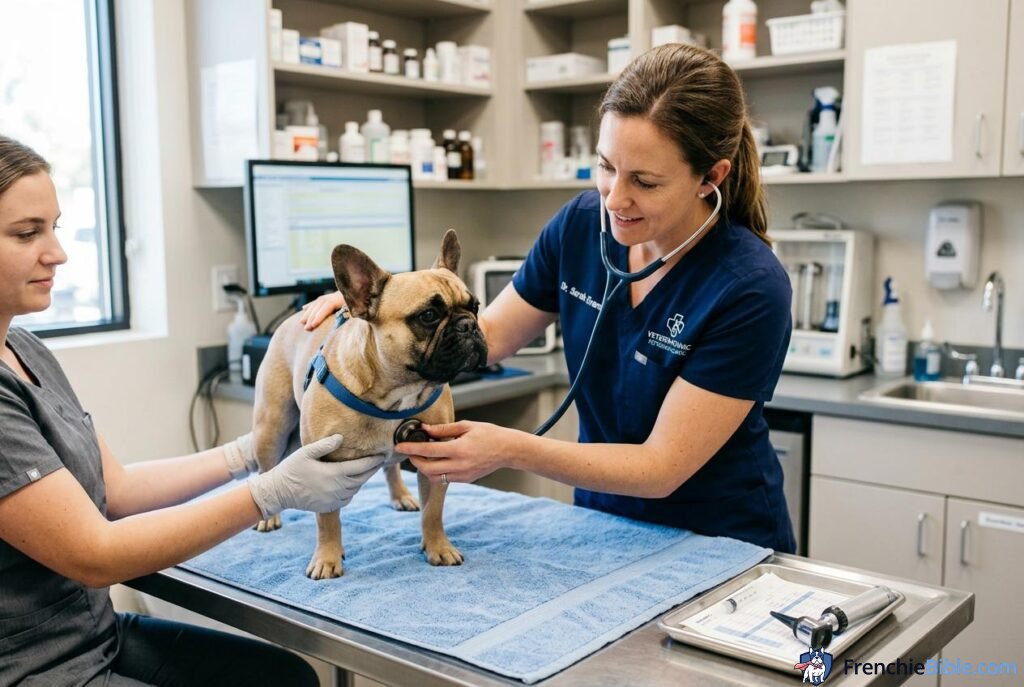
For French Bulldog owners, the distinctive “snoring,” “snorting,” and “grunting” sounds of the breed are often treated as cute, characteristic traits. In reality, these sounds are the desperate cries of a compromised respiratory system. They are the primary symptoms of Brachycephalic Obstructive Airway Syndrome (BOAS)—a progressive, life-threatening upper airway obstruction that affects a massive percentage of flat-faced dogs.
BOAS is not a single, isolated defect. It is a cluster of anatomical malformations:
Related Reading: Training & Behavior | Grooming & Care | French Bulldog Colors
- Stenotic Nares: Pinched, narrow nostrils that act like a straw pinched shut.
- Elongated Soft Palate: A flap of excess tissue at the roof of the mouth that hangs down into the throat, physically blocking the windpipe.
- Everted Laryngeal Saccules: Small tissue pouches inside the larynx that get pulled into the airway due to high breathing pressure.
- Hypoplastic Trachea: An abnormally narrow windpipe.
If these obstructions are not corrected early, the chronic high pressure inside your Frenchie’s chest will lead to laryngeal collapse—a terminal stage of respiratory failure where the entire cartilage structure of the throat collapses inward, leading to asphyxiation.
As a preservationist breeder who has spent a decade refining airway health in French Bulldogs, I have learned that timing is everything when it comes to airway correction.
This guide will break down the progression of BOAS, explain why waiting until your Frenchie is “mature” is a fatal mistake, and outline the optimal age for corrective surgery.
1. The Vicious Cycle of Airway Pressure: How BOAS Leads to Throat Collapse
To understand why early surgical correction is vital, we must explore the physics of a Frenchie’s breathing.

When a dog draws air into their lungs, they create a natural vacuum pressure inside their chest and throat. In a healthy dog with wide nostrils, this vacuum is extremely mild.
However, because your Frenchie has pinched nostrils (stenotic nares), they must exert immense physical effort to pull air through their nose. This massive physical suction creates a high, chronic negative pressure inside their airway.
With every single breath, this suction pulls the excess tissue of their elongated soft palate directly into the opening of the windpipe. Over months and years, this constant, violent flapping causes the soft palate tissue to become chronically inflamed, swollen, and thickened, further narrowing the airway.
As the negative pressure increases, it begins to pull on the delicate tissues inside the larynx. Eventually, the laryngeal saccules (tissue pouches directly in front of the vocal cords) are sucked inside-out, physically blocking the airway.
Finally, the chronic, high-suction pressure weakens the thyroid and cricoid cartilages of the throat. The larynx loses its rigid structural integrity and collapses inward—a condition known as laryngeal collapse. Once a Frenchie reaches Stage 3 laryngeal collapse, there is no surgical cure; they will require a permanent tracheostomy (a breathing hole in their neck) to survive.
2. Why Waiting is a Fatal Mistake: The Optimal Age for BOAS Surgery
A common misconception among pet parents is that they should wait until their Frenchie is “fully grown” (around 18 to 24 months) before scheduling airway surgery.
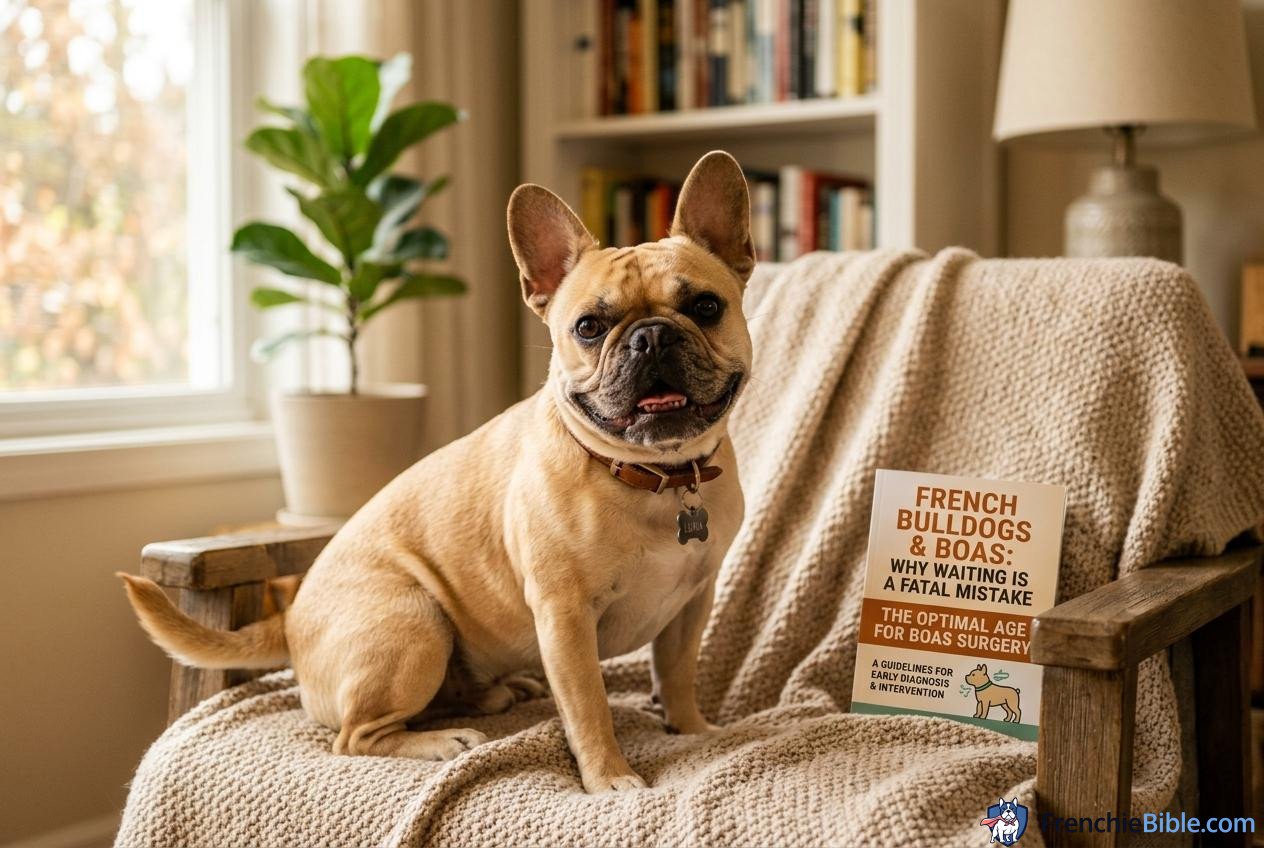
This is an outdated, dangerous practice.
The Golden Window: 6 to 12 Months of Age
In my breeding program, we advocate for early intervention. The optimal age for corrective BOAS surgery (soft palate resection and nostril widening) is between 6 and 12 months of age.
- Before Permanent Tissue Changes occur: By operating before 12 months, you correct the pinched nostrils and elongated palate before the constant negative pressure has caused permanent swelling, scarring, and thickening of the soft palate tissue.
- Preventing Saccule Eversion: Early correction ensures the laryngeal saccules are never sucked inside-out, reducing the complexity of the surgery and drastically improving the recovery outcome.
- Better Anesthetic Safety: Young, healthy Frenchies between 6 and 12 months have strong, elastic lung tissue and robust hearts, making anesthesia significantly safer than operating on a 3-year-old dog who has suffered from chronic oxygen deprivation and cardiovascular strain.
3. The Surgical Solutions: Laser Resection vs. Cold Steel
If your Frenchie requires corrective airway surgery, your veterinary surgeon will typically perform two main procedures:
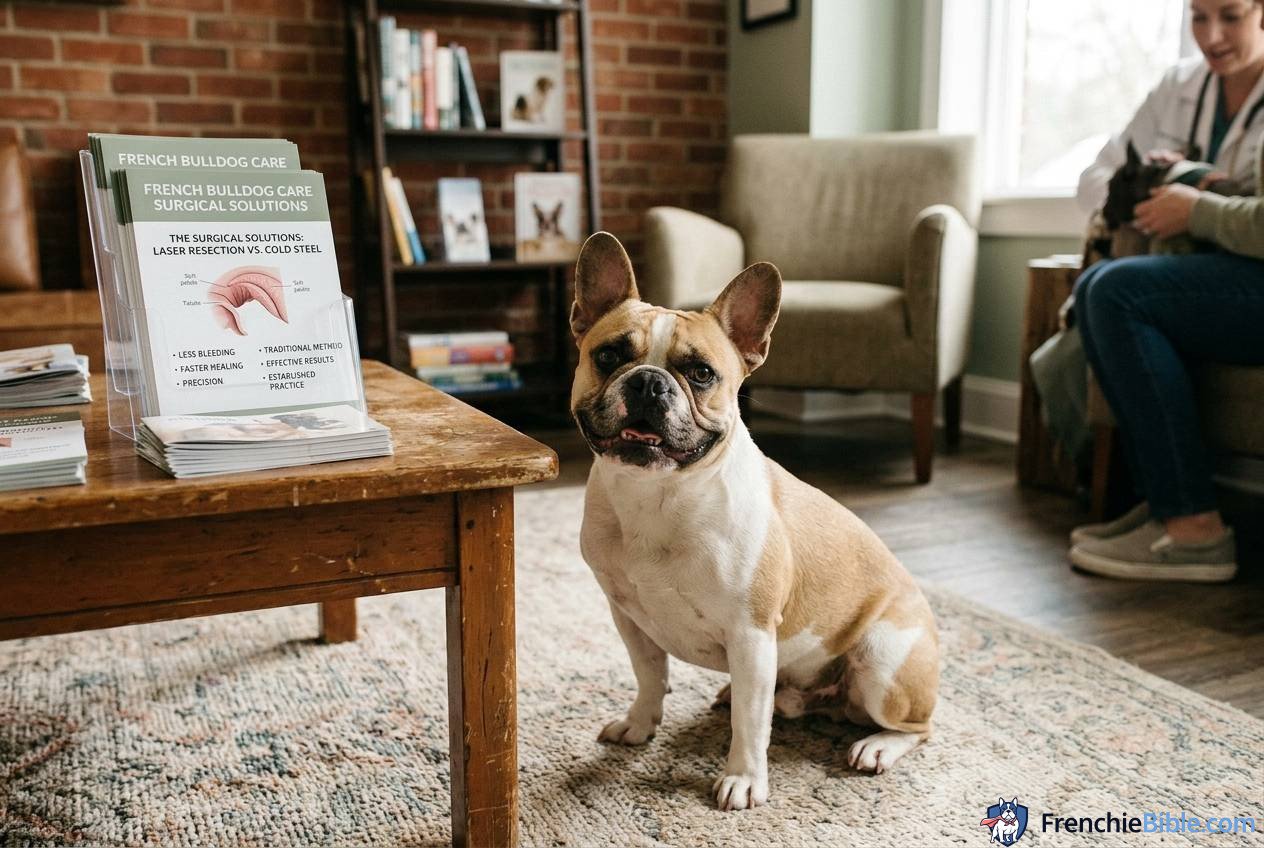
- Nares Widening (Alaroplasty): Removing a small wedge of cartilage from each nostril margin to double or triple the nasal airway opening.
- Soft Palate Resection (Palatoplasty): Trimming the excess tissue flap at the back of the throat.
Laser vs. Cold Steel
- CO2 Laser Resection: This is the absolute gold standard. The laser cut instantly cauterizes blood vessels and seals nerve endings as it slices. This results in virtually zero postoperative bleeding and minimal swelling—which is crucial, because any swelling in a Frenchie’s throat post-surgery can cause immediate respiratory obstruction.
- Traditional Scalpel (Cold Steel): This method requires manual suturing to control bleeding. It causes significantly more trauma and postoperative tissue swelling, requiring a longer recovery window and higher intensive care monitoring.
4. Frequently Asked Questions (FAQ)
Q1: My Frenchie snorst and snorts but has never fainted. Do they still need BOAS surgery?
Yes. Many owners make the mistake of waiting until their Frenchie has an active collapse or fainting spell before scheduling surgery.

Snoring, heavy panting in mild heat, and constant snorting are clear indicators of respiratory obstruction.
By waiting for a fainting spell, you are waiting until the airway tissue has already suffered from chronic, irreversible damage and the larynx has begun to weaken. Corrective surgery is a preventative procedure designed to stop airway collapse before it starts.
Q2: How is anesthesia managed safely for a brachycephalic breed like the Frenchie?
Anesthesia is the most stressful part of BOAS surgery for owners. To ensure absolute safety, the veterinary team must follow a strict brachycephalic protocol:
1. Pre-Oxygenation: Providing 100% oxygen via a mask for 10 minutes before induction.
2. Rapid Intubation: Placing a secure breathing tube (endotracheal tube) immediately after they fall asleep to lock the airway open.
3. Late Extubation: Leaving the breathing tube in place after surgery until the Frenchie is fully awake, alert, and actively swallowing to ensure they can breathe independently before the tube is removed.
Q3: Can a Frenchie’s widened nostrils “shrink” or close back up after surgery?
During the first 7 to 10 days post-surgery, the nostrils will form scabs and swell, which can temporarily make them look smaller. However, once the scabs fall off and the tissue heals, the widened opening is permanent. The nostril cartilage cannot physically grow back or shrink once the wedge has been surgically removed.
Q4: Will BOAS surgery completely stop my Frenchie from snoring?
While BOAS surgery drastically improves your Frenchie’s ability to draw oxygen, reduce chest pressure, and run comfortably, it may not completely eliminate snoring. Some mild snoring can still occur because of their shortened skull structure and naturally thick neck tissues. However, the snoring will sound significantly lighter, and the dangerous, gasping-for-air sleep apnea events will stop entirely.
5. Disclaimer
The airway health assessments and surgical timelines shared in this article are based on my ten years of hands-on experience breeding, raising, and showing French Bulldogs. I am not a veterinarian, and this content is intended purely for supportive, educational, and preventative purposes. BOAS is a progressive, structural disorder. If your French Bulldog is experiencing blue gums, fainting, extreme heat intolerance, or severe respiratory distress, please transport your dog to a professional emergency veterinary hospital or a board-certified veterinary surgeon immediately.