
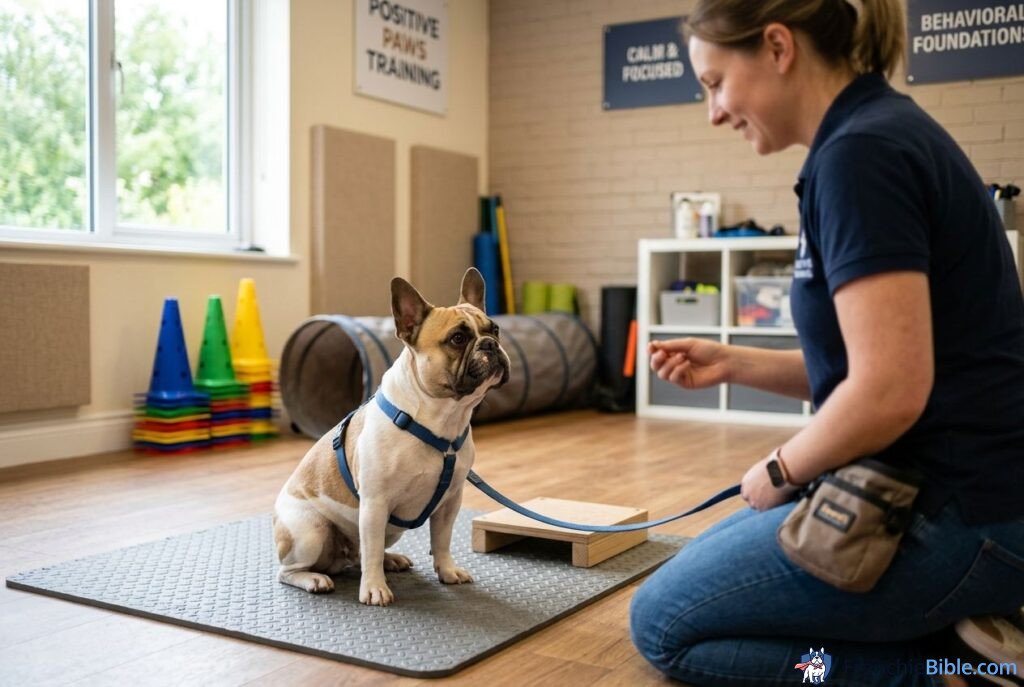
If you are a French Bulldog owner, you are likely familiar with their charming, comical, and sometimes baffling antics. However, one behavior that often leaves owners embarrassed, frustrated, or simply confused is humping. It is a common misconception that humping—also known as mounting—is strictly a sexual behavior driven by intact (unneutered) hormones. Consequently, many owners are perplexed when they bring their beloved Frenchie home from the vet after a spay or neuter procedure, only to find them vigorously humping their favorite stuffed animal, a fluffy pillow, or even the leg of an unsuspecting houseguest.
as a French Bulldog expert and breeder and breeder with decades of experience, combined with a deep understanding of canine psychology, I frequently encounter owners asking: “Why is my neutered French Bulldog still humping?” The answer lies in a complex interplay of psychological mechanisms, behavioral conditioning, and occasional underlying medical issues. In this comprehensive guide, we will dive deep into the psychology of French Bulldog humping, why it persists after desexing, and how you can manage and redirect this behavior effectively.
Related Reading: Health & Diet | Frenchie Puppy Guide
Understanding French Bulldog Humping Behavior: It’s Not Always About Mating
To address the root cause of humping, we must first dismantle the myth that mounting is exclusively sexual. While sexual reproduction is certainly the biological origin of the behavior, dogs—especially intelligent, emotionally complex breeds like French Bulldogs—have adapted the physical act of humping to serve various other functions in their daily lives.
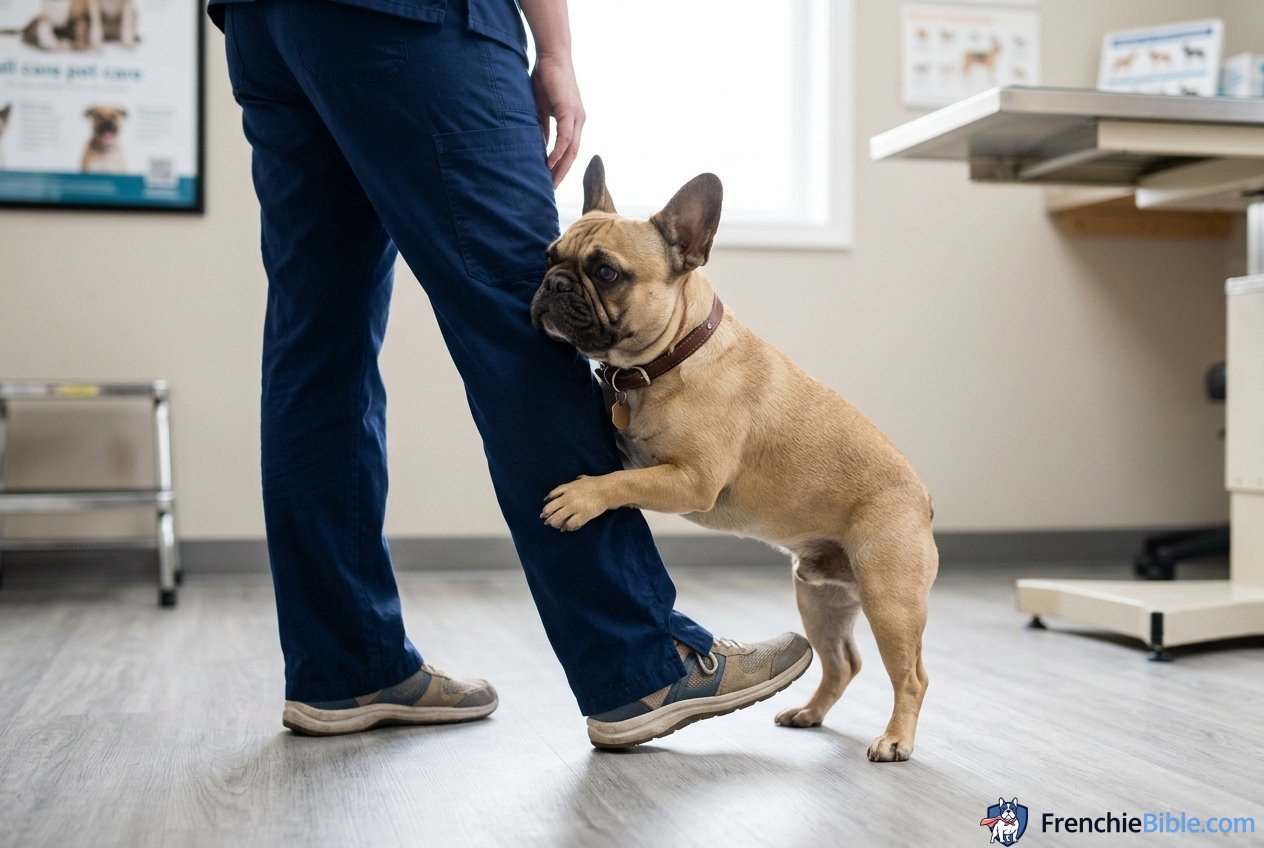
In the canine world, behavior is rarely one-dimensional. Humping is a part of a dog’s normal behavioral repertoire, much like barking, digging, or chewing. Both male and female dogs hump. Intact dogs hump, and neutered or spayed dogs hump. Puppies often begin humping long before they reach sexual maturity, sometimes as early as a few weeks of age during roughhouse play with their littermates.
When your Frenchie humps a toy or a person, they are using a deeply ingrained physical action to express a completely different internal state. Understanding what that state is—whether it’s excitement, anxiety, frustration, or a cry for attention—is the key to addressing the behavior.
The Role of Genetics and Breed Traits in Frenchies
French Bulldogs are a unique breed with specific temperamental traits. They are known for their high affection levels, strong desire for human companionship, and bursts of high energy (often referred to as the “zoomies”). They are also incredibly stubborn and can be prone to obsessive behaviors if not provided with adequate mental and physical stimulation.
Because Frenchies form such tight, sometimes anxious bonds with their owners, their emotional states can fluctuate dramatically. They are prone to over-arousal. When a Frenchie becomes over-aroused—whether positively through play or negatively through stress—their brain searches for an outlet to discharge that pent-up energy. For many Frenchies, humping becomes that outlet. It is a self-soothing, energy-releasing mechanism that has little to nothing to do with reproduction.
Why Do Neutered French Bulldogs Still Hump? The Psychological Mechanisms
Neutering (or spaying, in females) removes the reproductive organs and significantly reduces the levels of sex hormones like testosterone and estrogen. If humping were purely a sexually motivated behavior, neutering would eliminate it entirely. Studies show that neutering reduces humping in about 60% of male dogs. However, that leaves a significant portion of dogs who continue the behavior post-surgery.

Why? Because the behavior has transitioned from being hormonally driven to being psychologically and behaviorally driven. Once a behavior is learned and rehearsed, it creates neural pathways in the brain. If a dog found humping to be a satisfying way to relieve stress or gain attention before they were neutered, they will likely continue using that coping mechanism after the hormones are gone. Let’s break down the psychological mechanisms behind non-sexual humping.
1. Overstimulation and Excitement (The “Zoomie” Hump)
The most common reason a neutered French Bulldog humps is simply that they are over-excited. Frenchies are notorious for going from zero to one hundred in a matter of seconds. When they are playing vigorously, greeting a favorite person who just came home, or anticipating a walk, their nervous system becomes highly aroused.
Think of this state as an overflowing cup of energy. The dog’s brain is firing rapidly, and the physical body needs to express that intense excitement. For a Frenchie, running in circles or grabbing a toy might not be enough to dissipate the energy. Humping is an intense physical activity that serves as an outlet for this overstimulation. It is the canine equivalent of jumping up and down or shouting for joy.
If your Frenchie tends to hump their bed or a large stuffed toy right after a vigorous play session or when visitors arrive, it is almost certainly a manifestation of pure excitement and over-arousal rather than dominance or sexual desire.
2. Anxiety, Stress, and Compulsive Behaviors
Just as excitement can cause over-arousal, stress and anxiety can create a similar internal state that requires an outlet. Dogs, like humans, engage in displacement behaviors when they are anxious, conflicted, or unsure of how to handle a situation. Displacement behaviors are normal activities performed out of context in response to stress—like a human biting their nails or pacing back and forth.
For many French Bulldogs, humping is a coping mechanism for anxiety. The rhythmic, repetitive physical motion of mounting can actually be self-soothing and help lower their heart rate. If your Frenchie is thrust into an unfamiliar environment, meets a dog they find intimidating, or experiences a sudden change in routine, they may resort to humping a nearby object or person as a way to calm themselves down.
In some cases, this anxiety-driven behavior can evolve into a compulsive disorder. If a Frenchie is chronically stressed or lacks sufficient mental enrichment, they may begin to hump obsessively. If the behavior becomes frantic, difficult to interrupt, or takes up a significant portion of their day, it has likely crossed the line into a behavioral compulsion that requires professional intervention.
3. Attention-Seeking Behavior
French Bulldogs are the ultimate companion dogs; they crave human attention more than almost anything else. They are also incredibly smart and quickly learn what actions elicit a response from their owners.
If your French Bulldog humps your leg, what do you usually do? You likely stop what you are doing, look at them, and say, “No! Stop that!” You might physically push them away or laugh awkwardly. From your Frenchie’s perspective, any attention is good attention. If they are feeling bored or ignored, and they know that humping your leg guarantees that you will look at them and interact with them (even negatively), they will use that tool whenever they want your focus.
This psychological mechanism is rooted in operant conditioning. The dog performs an action (humping), and receives a reward (your attention). Over time, the behavior is reinforced. Neutering will not stop attention-seeking humping because the motivation is social connection, not reproductive instinct.
4. Play and Social Interaction
Among dogs, humping is a common component of play. When dogs play, they often mimic fighting, hunting, and mating behaviors. You will see them take turns chasing, wrestling, biting (with inhibited bite force), and yes, mounting each other.
In a play context, humping is usually reciprocal and accompanied by loose, wiggly body language, “play bows,” and open-mouthed “smiles.” It is a way for dogs to interact, test each other’s boundaries, and burn off energy. If your neutered Frenchie humps other dogs at the dog park, it may simply be their rather awkward way of initiating play. However, it is crucial to monitor this, as not all dogs appreciate being mounted, and it can quickly escalate into a fight if the other dog corrects your Frenchie aggressively.
5. Establishing Boundaries and Dominance (A Misunderstood Concept)
Historically, much of dog training was based on the “alpha dog” or “dominance” theory. While modern behavioral science has largely debunked the idea that dogs are constantly trying to dominate their human families, social status and boundary-setting do play a role in how dogs interact with one another.
Sometimes, a dog will hump another dog to establish control or assert social confidence in a specific situation. It can be a way of saying, “I am the boss of this particular interaction.” This type of humping is usually stiff, tense, and accompanied by other assertive body language (stiff tail, ears forward, staring).
However, it is vital to note that your Frenchie is almost certainly not trying to dominate you by humping your leg. When directed at humans, humping is almost always rooted in excitement, anxiety, or attention-seeking rather than a quest for household supremacy.
Medical Reasons for Humping in Neutered Frenchies
While we have established that psychological mechanisms are the primary drivers of humping in neutered dogs, we must never rule out medical issues. as a French Bulldog expert and breeder, my first step when presented with a new behavioral issue is to ensure there is no underlying physical discomfort. Humping can sometimes be a dog’s way of scratching an itch or alleviating pain in their genital region.
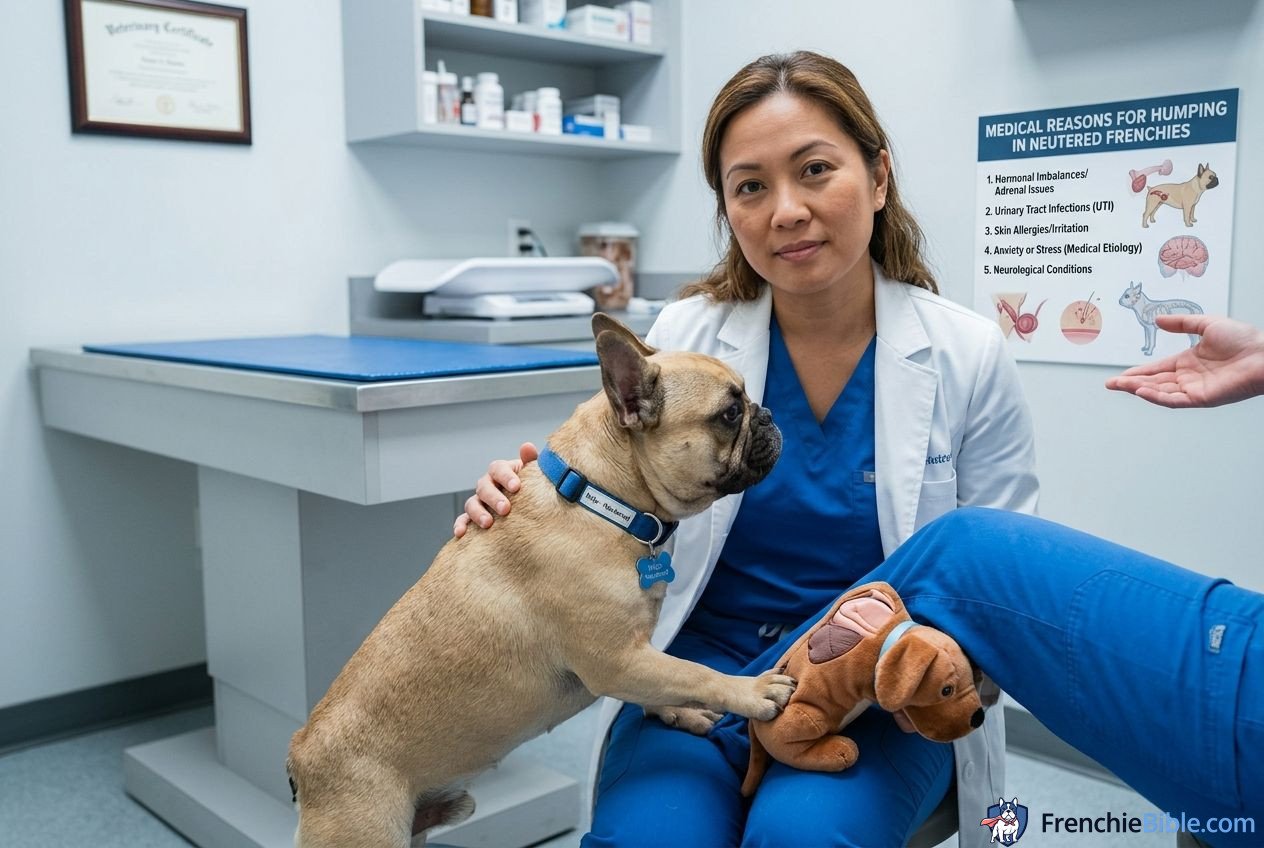
If your neutered Frenchie suddenly starts humping obsessively, out of nowhere, you should schedule An Experienced Breedererinary exam to rule out the following:
1. Urinary Tract Infections (UTIs)
A UTI can cause burning, itching, and a constant urge to urinate. The discomfort in the urethra and bladder can lead a dog to lick their genitals excessively or hump objects in an attempt to relieve the irritation. UTIs are relatively common and can be easily diagnosed with a simple urinalysis.
2. Skin Irritations and Allergies
French Bulldogs are notorious for their skin issues and allergies (both food and environmental). If your Frenchie has an allergic reaction or a localized skin infection (like a staph infection or yeast overgrowth) around their prepuce (the sheath covering the penis) or vulva, they may hump to relieve the intense itching. Check the area for redness, swelling, discharge, or a foul odor.
3. Prostate Issues (Even in Neutered Dogs)
While neutering drastically reduces the risk of prostate diseases like benign prostatic hyperplasia (BPH), neutered dogs can still develop prostate issues, including prostate infections or, more rarely, prostate cancer. An enlarged or painful prostate can cause discomfort that the dog tries to alleviate through mounting behavior.
4. Neurological Disorders
In extremely rare cases, compulsive humping can be a symptom of a neurological issue or seizure disorder. If the humping is accompanied by a glazed look in the dog’s eyes, unresponsiveness to your commands, or other neurological signs, immediate veterinary attention is required.
How to Stop Unwanted Humping Behavior in Your Frenchie
Once you have consulted your veterinarian and ruled out any medical issues, you can begin addressing the behavior through training and environmental management. Because humping is a deeply ingrained behavior that serves an emotional purpose for the dog, simply punishing them is rarely effective and can actually increase anxiety-driven humping.
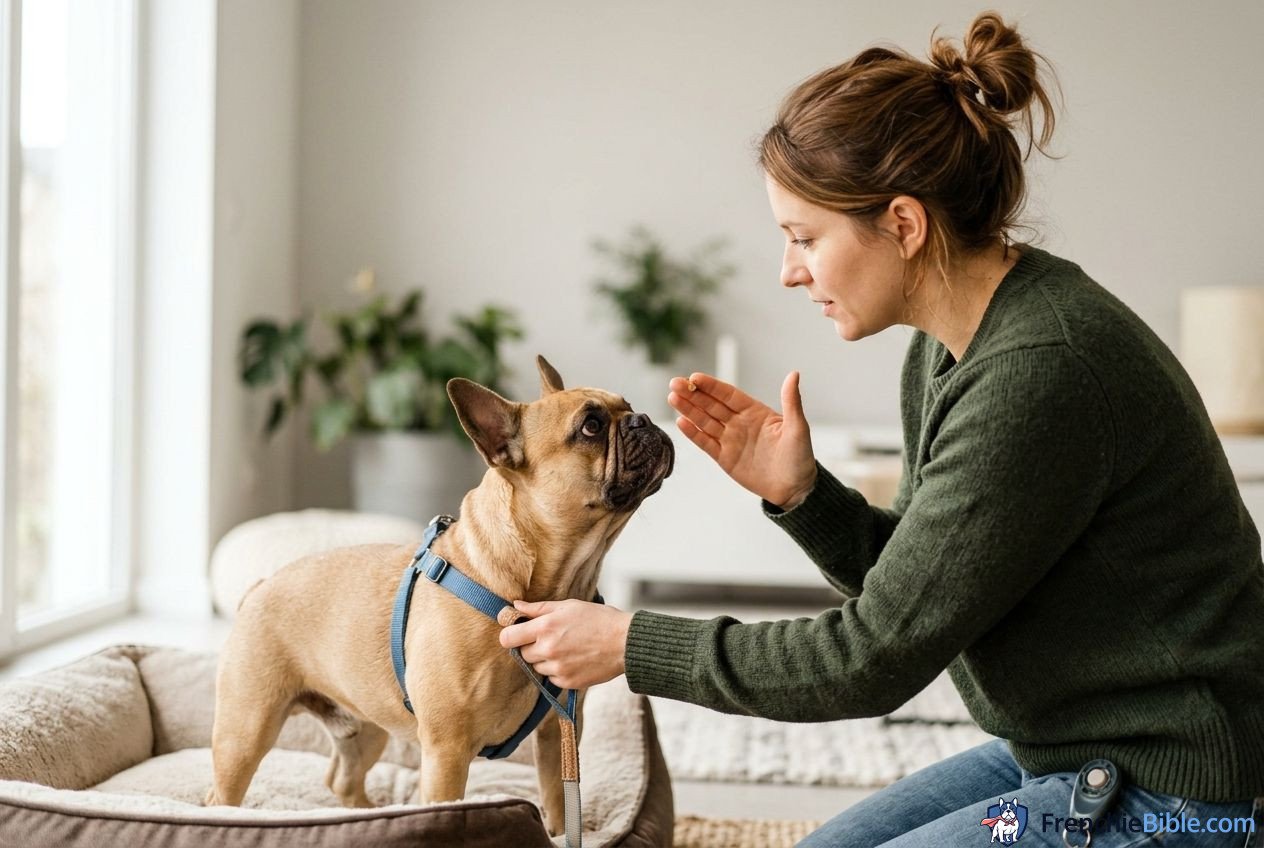
Here is a step-by-step, psychologically sound approach to stopping unwanted humping in your neutered French Bulldog.
1. Identify the Triggers
The first step in behavior modification is observation. Keep a journal for a week and note exactly when your Frenchie humps.
– Who are they humping? (A specific toy, a specific person, other dogs?)
– What happens immediately before the humping starts? (Did someone come to the door? Did you just finish playing? Is the dog tired?)
– What happens immediately after? (Do they fall asleep? Do you yell at them?)
Identifying the trigger will tell you whether you are dealing with excitement, anxiety, or attention-seeking behavior. Once you know the trigger, you can anticipate the humping and intervene before it happens.
2. Ignore and Redirect (For Attention-Seeking Humping)
If you determine that your Frenchie is humping your leg or arm for attention, you must completely remove the reward: your reaction.
When the dog latches onto you, do not speak to them, do not look at them, and do not push them away with your hands (which they may interpret as play). Simply stand up, turn your back, and walk out of the room. Close the door behind you for 10 to 15 seconds. This teaches the dog that humping does not result in attention; it results in the exact opposite—complete isolation.
When you return, if the dog is calm, ask them to “sit” and reward them with a treat and praise. You are teaching them an incompatible behavior: “You get attention for sitting calmly, not for humping.”
3. Redirection and Positive Reinforcement (For Excitement/Anxiety)
If the humping is driven by over-arousal or anxiety, your goal is to help the dog release that energy in an appropriate way. When you see the dog getting overly excited (the trigger), step in before the humping starts.
Ask your Frenchie to perform a command they know well, such as “sit,” “down,” or “go to your bed.” When they comply, reward them heavily with high-value treats. By giving them a job to do, you engage the thinking part of their brain and interrupt the emotional, reactive state that leads to humping.
Alternatively, redirect their energy onto an appropriate outlet. If they are over-stimulated, toss a ball, offer a chew bone, or give them a puzzle toy filled with frozen peanut butter. Licking and chewing are naturally calming behaviors for dogs and can help bring their arousal levels back down to baseline.
4. Teach the “Leave It” and “Drop It” Commands
“Leave it” is an essential command for any dog owner. It teaches the dog impulse control. If your Frenchie has a specific toy they love to hump, practice the “leave it” command with that toy.
When they approach the toy with “that look” in their eye, say “Leave it!” in a firm, calm voice. If they turn away from the toy and look at you, reward them immediately. Over time, they will learn that disengaging from their humping target is more rewarding than the act of humping itself.
5. Managing the Environment
Sometimes, the easiest solution is environmental management. If your Frenchie obsessively humps one specific fluffy pillow, remove the pillow from the environment. Out of sight, out of mind.
If they hump guests when they walk through the front door (a classic excitement trigger), put your Frenchie on a leash or behind a baby gate before the guests arrive. Allow the dog to calm down before introducing them to the visitors. Management prevents the dog from practicing the unwanted behavior, which allows the neural pathways associated with the habit to weaken over time.
6. Increasing Physical and Mental Stimulation
A tired dog is a good dog. French Bulldogs may not need the extensive exercise of a Border Collie, but they still require daily physical activity and, more importantly, mental enrichment.
If a dog is bored, their pent-up energy will manifest in undesirable behaviors, including humping. Ensure your Frenchie is getting:
– At least two moderate walks a day.
– Dedicated, structured play sessions.
– Mental stimulation through puzzle toys, snuffle mats, or trick training sessions.
– “Decompression walks” in nature where they are allowed to sniff freely, which is incredibly tiring for a dog’s brain.
7. Time-Outs for Over-Excitement
If your Frenchie is in a state of full “zoomie” arousal and redirecting them fails, they may need a forced time-out to calm their nervous system. If they begin humping vigorously, calmly take their collar and lead them to a quiet, dimly lit room or their crate (if they are crate-trained and view it as a safe space).
This is not a punishment, but a reset. Leave them there for a few minutes until you hear them settle down or sigh. Once their heart rate has lowered and the manic energy has dissipated, quietly let them out.
When to Seek Professional Help
While most humping behaviors can be managed with consistency and positive reinforcement training, there are times when professional intervention is necessary.
Consulting Your Veterinarian
As mentioned earlier, your first stop should always be your veterinarian to rule out UTIs, prostate issues, or skin allergies. Additionally, if the humping is accompanied by aggressive behavior (growling, snapping, or resource guarding the object they are humping), consult your vet immediately.
Working with a Certified Dog Behaviorist
If your French Bulldog’s humping has become an obsessive-compulsive disorder—meaning they cannot be distracted, they hump for hours a day, or they cause physical harm to themselves through chafing—you need the help of a experienced Behaviorist (DACVB) or a Certified Applied Animal Behaviorist (CAAB).
These professionals can assess your dog’s psychological state and may prescribe anti-anxiety medications (such as SSRIs) in conjunction with a strict behavioral modification plan. Do not attempt to use punishment-based training tools (like shock collars or alpha rolls) to stop compulsive humping, as this will drastically increase the dog’s anxiety and make the behavior much worse.
FAQ: French Bulldog Humping Behavior
To help you better understand and manage your Frenchie, here are answers to some of the most frequently asked questions regarding mounting behavior.
Will neutering my French Bulldog completely stop him from humping?
Not necessarily. While neutering eliminates the reproductive drive and reduces testosterone, humping is often a learned behavior driven by excitement, anxiety, or attention-seeking. If your dog learned that humping relieved stress or gained attention prior to neutering, the psychological habit will likely persist after the surgery. Neutering is a health and population control measure, not a magic cure for behavioral issues.
Is it normal for female French Bulldogs to hump?
Yes, absolutely. Humping is a species-typical behavior, not a gender-specific one. Both intact and spayed female dogs hump for the exact same psychological reasons male dogs do: over-arousal, anxiety, play initiation, and attention-seeking. It is completely normal canine behavior.
Should I let my French Bulldog hump his favorite toy?
This depends on your personal tolerance and the dog’s emotional state. If your dog occasionally humps a specific toy for a few minutes to release energy after a play session and is easily distracted away from it, it is generally harmless. However, if the humping becomes obsessive, if the dog guards the toy aggressively, or if they transition from humping the toy to humping people, you should intervene, remove the toy, and redirect the behavior.
At what age do French Bulldogs start humping?
Humping can start remarkably early. It is not uncommon to see puppies as young as 3 to 6 weeks old humping their littermates during play. At this age, it is a non-sexual play behavior that helps them develop motor skills and social boundaries. Sexual humping typically begins as the dog reaches puberty, which in French Bulldogs is usually between 6 and 9 months of age.
Why does my Frenchie only hump my leg and no one else’s?
Dogs are highly context-specific learners. If your Frenchie only humps your leg, it is likely because of the specific dynamic between the two of you. They may feel most comfortable expressing their over-arousal around you, or they may have learned that humping your leg specifically results in the exact type of attention they are craving. You will need to change your reaction (by ignoring and walking away) to break this specific habit.
Conclusion
Seeing your neutered French Bulldog furiously humping a pillow or a houseguest’s leg can be jarring, but it is important to remember that they are not acting out of sexual perversion or a desire to dominate your household. In the complex canine mind, humping is a multi-tool used to express excitement, alleviate anxiety, solicit play, or demand attention.
By understanding the psychological mechanisms behind the behavior, ruling out any medical discomfort with your veterinarian, and applying consistent, positive reinforcement-based training, you can help your Frenchie find more appropriate ways to express their big emotions. Remember to be patient; breaking a deeply ingrained behavioral habit takes time. With love, consistency, and a few well-timed “leave it” commands, you can guide your French Bulldog toward calmer, more polite behaviors.
Disclaimer: We are not veterinarians and do not hold veterinary medical licenses. The information provided in this article is based on years of breeding and daily care experience and is for educational purposes only. It should not replace professional veterinary advice. Always consult with a licensed veterinarian if you have concerns about your French Bulldog’s health or before starting any new treatment.
Disclaimer: I am a French Bulldog breeding expert with over a decade of hands-on experience with this breed. I am not a veterinarian. The information in this article is for educational purposes only. Always consult your veterinarian regarding your dog’s specific health needs and care.