Introduction
as a French Bulldog expert and breeder and a breeder with decades of experience I am frequently approached by prospective and current owners who are navigating the complex reality of balancing a full-time career with dog ownership. The question that echoes through my breeding program and breeding facility more than any other is: “I work a 9-to-5 job; how long can a French Bulldog stay home alone?”

The French Bulldog, with its undeniable charm, compact size, and relatively low exercise requirements, is often marketed as the ultimate apartment dog for the busy professional. However, beneath those bat-like ears and that comical, smushed face lies a soul that was bred specifically for one purpose: human companionship.
Related Reading: Training & Behavior | Grooming & Care | French Bulldog Colors
Leaving a French Bulldog alone for extended periods is not as straightforward as leaving a more independent breed like a Greyhound, a Basenji, or a livestock guardian dog. Frenchies are affectionately, and accurately, known as “Velcro dogs.” They thrive on interaction, physical proximity to their owners, and deep emotional connection. When the door closes and they are left behind, the silence can be deafening for these affectionate little dogs.
In this comprehensive, veterinarian-approved guide, we will explore the intricate dynamics of leaving a French Bulldog home alone. We will break down the acceptable time limits by age, discuss the profound physical and psychological impacts of prolonged isolation, and provide an extensive, actionable blueprint for working professionals who want to ensure their Frenchie remains happy, healthy, and emotionally secure while they are at the office. Whether you are considering bringing a Frenchie puppy into your life or are currently struggling with an anxious adult dog, this guide is designed to provide you with the strategies needed for success.
Understanding the French Bulldog Temperament and Dependency
To truly understand why leaving a French Bulldog alone is a complex and often emotionally charged issue, we must first look at their genetics, breeding history, and inherent psychological makeup. You cannot fight genetics, but you can understand them and accommodate them.
The Companion Dog Nature
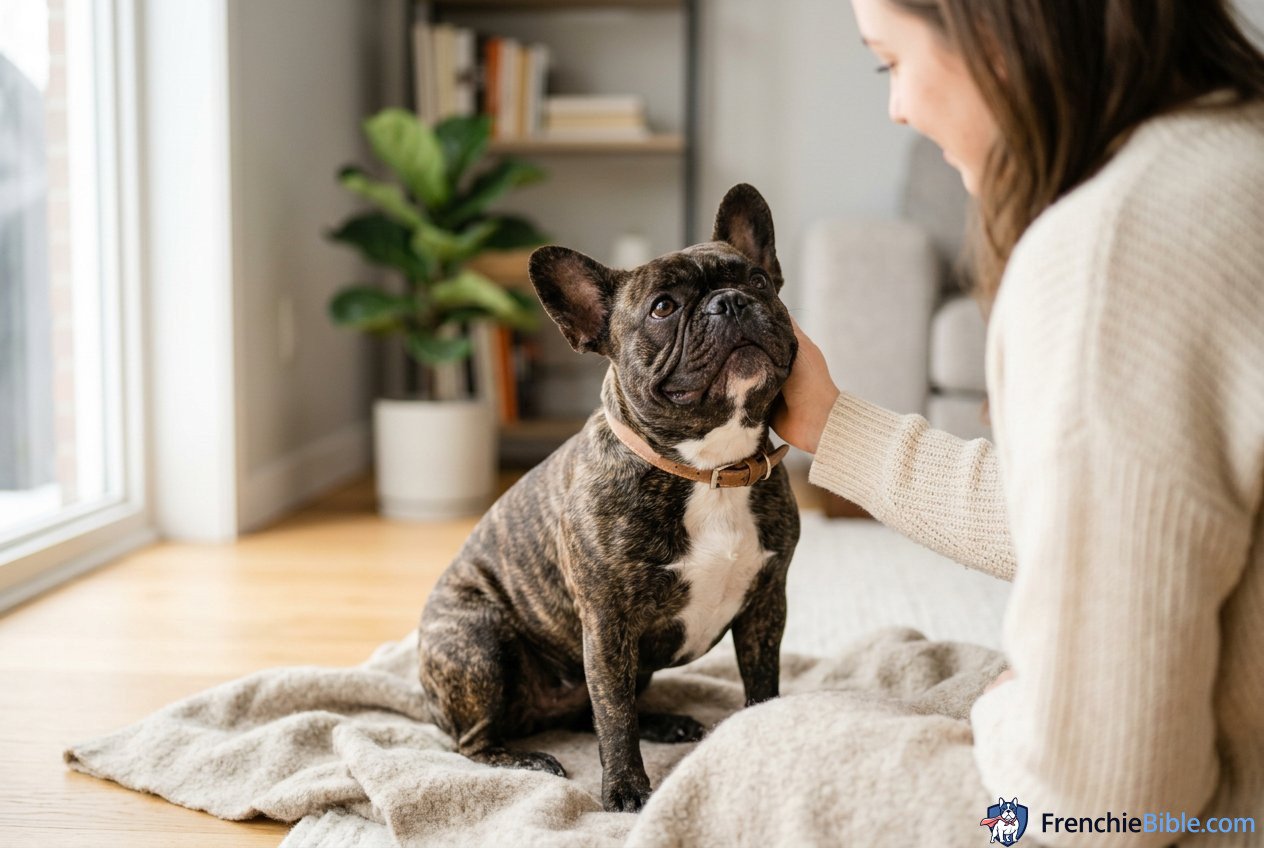
Unlike working breeds that were meticulously developed over centuries to herd sheep across vast Highlands, guard sprawling estates, or hunt game in dense forests, the French Bulldog has a very different origin story. Bred in the 19th century by lace workers in Nottingham England (and later popularized in the cafes of Paris France), their sole purpose was to be a lap warmer, a confidant, and a loyal companion. They do not have a “job” in the traditional canine sense; their job is you.
This deep-rooted genetic predisposition means that Frenchies do not just prefer human company; they physically and emotionally require it to feel secure and balanced. They are highly attuned to their owner’s emotions, body language, and daily routines. When a Frenchie is deprived of this connection, they do not just feel bored in the way a Husky might feel bored without a sled to pull—they feel fundamentally displaced and insecure.
Separation Anxiety in French Bulldogs
Because of their profound, bred-in dependency on human interaction French Bulldogs are disproportionately prone to separation anxiety compared to many other breeds. It is crucial to understand that separation anxiety is not mere naughtiness, spite, or a lack of training; it is a genuine panic disorder.
When left alone, a Frenchie suffering from separation anxiety experiences a massive spike in cortisol (the stress hormone). Their heart rate elevates, their breathing becomes rapid, and they enter a state of distress that manifests in various, often destructive, ways.
They may vocalize excessively—this isn’t just normal barking; it is often a high-pitched howling, whining, or “screaming” that can last for hours. They may destroy furniture, tear up carpets, or chew door frames in a desperate attempt to escape the house and find you. In severe cases, they may have inappropriate elimination accidents (urinating or defecating indoors) despite being fully and reliably house-trained when you are present. Understanding that Frenchies are genetically predisposed to this condition is the very first step in creating a lifestyle that accommodates their emotional needs while still allowing you to maintain your career.
How Long Can a French Bulldog Be Left Alone? (Age-by-Age Breakdown)
The length of time a French Bulldog can safely and comfortably be left alone is not a fixed, magical number. It is a sliding scale that is highly dependent on their age, physical development, bladder capacity, and individual temperament. Here is a definitive, age-by-age breakdown from a breeder’s perspective.
Puppies (8 Weeks to 6 Months)
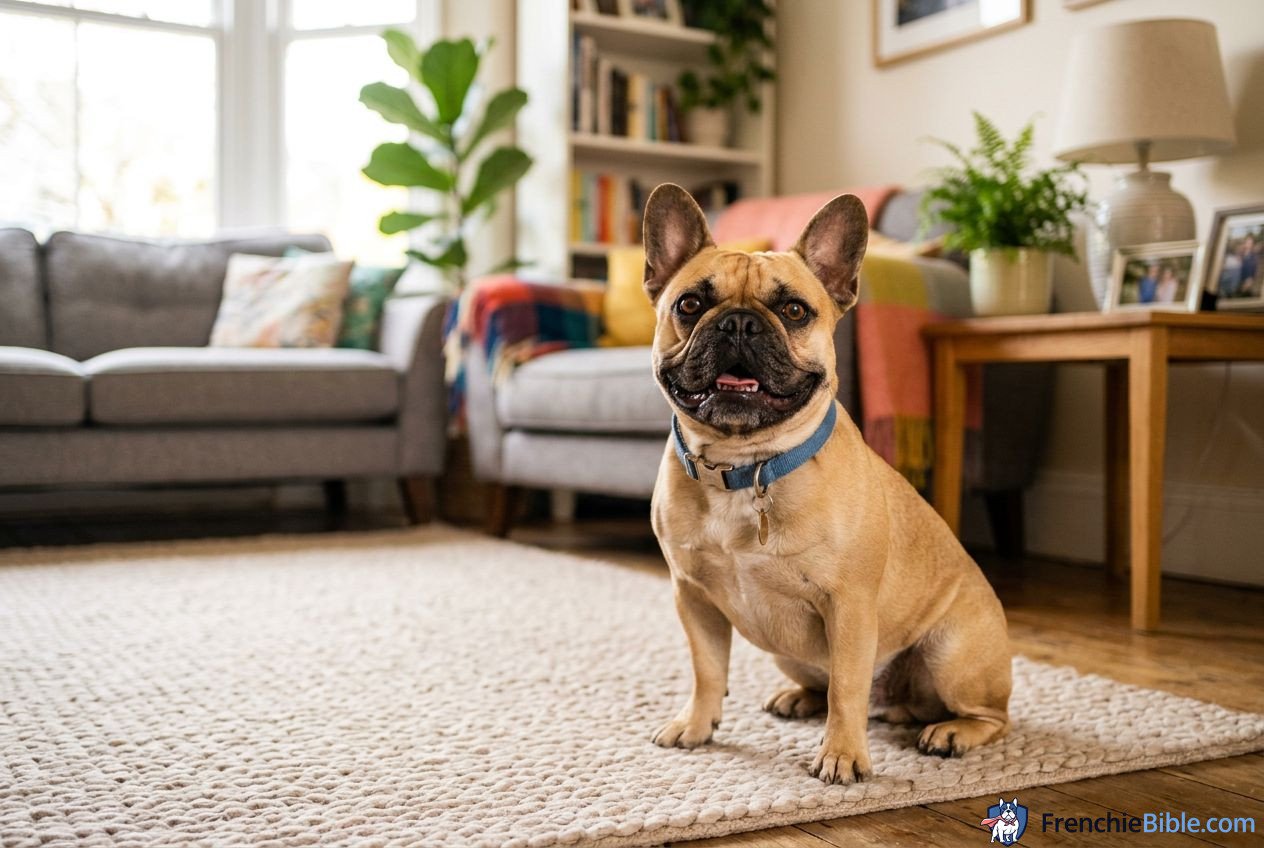
French Bulldog puppies are essentially human infants. They have tiny, underdeveloped bladders, incredibly high metabolic rates, and an intense, biological need for socialization, supervision, and frequent feeding.
- 8 to 10 Weeks: Maximum 1 to 2 hours. At this stage, they are just beginning to learn bladder control. They are also in a critical fear period and are highly susceptible to developing long-term anxiety if left in frightening isolation.
- 10 to 12 Weeks: Maximum 2 to 3 hours. They are gaining slightly more control, but accidents are still highly likely if left longer.
- 3 to 6 Months: A standard veterinary rule of thumb is one hour of bladder control per month of age. Therefore, a 4-month-old puppy can generally hold it for about 4 hours, and a 6-month-old for about 6 hours.
However, holding their bladder is only half the battle. Puppies need constant mental stimulation, consistent potty training reinforcement, socialization, and regular feeding schedules (often 3 to 4 meals a day). Leaving a young puppy alone for a full 8-hour workday is absolutely unacceptable. It will inevitably lead to severe behavioral issues, complete potty training failures, and extreme emotional distress that can permanently alter their personality.
Adolescents (6 Months to 1 Year)
During adolescence, a Frenchie’s bladder capacity increases significantly, but their energy levels, curiosity, and propensity for mischief also peak. This is the “teenage” phase.
- Maximum Time: 6 hours.
While a 10-month-old Frenchie might physically be capable of holding their bladder for a full 8 hours, it is highly discouraged. Adolescents left alone for too long will find their own ways to entertain themselves, which almost always involves destructive behavior. They might chew your baseboards, swallow dangerous objects, shred the sofa cushions, or develop neurotic habits like excessive pacing or obsessive licking. They have the physical stamina to hold it, but lack the mental maturity to settle for a full workday.
Adult Frenchies (1 to 7 Years)
A healthy, well-adjusted, thoroughly exercised adult French Bulldog has fully developed bladder and bowel control, and generally possesses a more stable, predictable temperament.
- Maximum Time: 8 hours (with significant caveats).
An adult Frenchie can physically hold their pee for an 8-hour workday. However, from veterinary and behavioral standpoint, 8 hours is the absolute maximum limit, and it should not be the daily norm without interventions. If you factor in a modest 30-minute commute each way, that 8-hour workday easily becomes 9 hours of total isolation. This is simply too long for a companion breed to be entirely solitary on a daily basis. If you must be gone this long, mid-day breaks (which we will discuss extensively later) are not just recommended; they are essential for long-term health and happiness.
Senior Frenchies (7+ Years)
As French Bulldogs enter their senior years, their physical capabilities inevitably decline. They may develop age-related incontinence, kidney insufficiency, diabetes, or painful arthritis, all of which make it difficult for them to hold their bladder or remain comfortable in one position for long periods.
- Maximum Time: 4 to 6 hours.
Senior dogs require much more frequent potty breaks. Furthermore, older dogs may experience Canine Cognitive Dysfunction (similar to dementia in humans), which can make them confused and highly anxious when left alone, even if they were perfectly fine with isolation in their younger years. Comfort, frequent checks, and accommodating their aging bodies become the priority.
The Impact of Being Left Alone Too Long
as a French Bulldog expert and breeder I have seen the devastating, compounding consequences of well-meaning owners overestimating their French Bulldog’s ability to cope with daily, prolonged isolation. The impacts are deeply physical and profoundly psychological.
Physical Consequences: Bladder Issues and Dehydration
Forcing a dog to hold its urine for 9, 10, or even 11 hours regularly is a recipe for a medical disaster. When urine sits in the bladder for extended periods, it becomes highly concentrated. This concentrated urine creates a perfect, warm breeding ground for bacteria.
This frequently leads to severe Urinary Tract Infections (UTIs), which are incredibly painful for the dog and require veterinary visits and antibiotic treatment. Furthermore, chronic urine retention drastically alters the pH of the urine and allows minerals to precipitate out, contributing to the formation of bladder stones (such as struvite or calcium oxalate stones). French Bulldogs are already somewhat genetically predisposed to urolithiasis (stone formation), and holding their urine exacerbates this risk exponentially. Severe cases require invasive, expensive cystotomy surgery to physically remove the stones.
Additionally, highly intelligent dogs that are punished for having accidents indoors may intentionally restrict their own water intake while you are gone to avoid the severe discomfort of having a full bladder. This leads to chronic, low-grade dehydration, which taxes the kidneys and negatively affects their overall organ function.
Psychological Impact: Canine Depression and Destructive Behavior
The psychological toll of isolation is often more insidious and profound than the physical one. Dogs are inherently pack animals; Frenchies are practically shadows that rely on your presence to define their reality. Prolonged, daily isolation leads to a state of chronic stress. This continuous stress elevates cortisol levels, which can suppress the immune system, making the dog more susceptible to illness, skin infections, and digestive issues.
Psychologically, this isolation manifests as true canine depression. The dog may become lethargic, lose their appetite, sleep excessively even when you are home, and show absolutely no interest in toys or play.
Alternatively, the stress can manifest outwardly as severe destructive behavior. A bored, anxious, under-stimulated Frenchie will chew, dig, and destroy to release pent-up nervous energy and stress. They aren’t doing it to make you angry; they are doing it because the physical act of chewing releases endorphins that temporarily self-soothe their panic.
Safety Concerns: Choking Hazards and Temperature Dysregulation
French Bulldogs are a brachycephalic (flat-faced) breed. This anatomical anomaly means they have a severely compromised upper respiratory system. They possess elongated soft palates, narrow tracheas, and stenotic nares (pinched nostrils). Because dogs do not sweat like humans, they rely entirely on panting to cool themselves down. A brachycephalic dog cannot pant efficiently enough to regulate their body temperature in warm environments.
If left alone in a house that becomes too hot during the summer—perhaps the air conditioning fails, or there is a localized power outage—a Frenchie can easily succumb to fatal heatstroke in a matter of hours. Their body temperature spikes, their organs begin to shut down, and without immediate medical intervention, they will die.
Furthermore, bored, anxious dogs chew things. Frenchies, with their strong, wide jaws, are notorious for chewing and swallowing foreign objects—socks, remote controls, pieces of their own dog bed, children’s toys. Without supervision, a swallowed object can cause an intestinal blockage, or a chewed item can become lodged in their narrow airway, leading to a choking incident that can become fatal before you even leave the office to come home.
The Role of Diet and Hydration When Left Alone
Managing your Frenchie’s diet and water intake is a delicate balancing act when you work a 9-to-5 job.
Feeding Schedules for the Working Owner
Free-feeding (leaving a bowl of food out all day) is highly discouraged for French Bulldogs. Firstly, they are prone to obesity, which drastically exacerbates their breathing and joint issues. Secondly, free-feeding makes it impossible to predict when they will need to defecate.
Instead, establish a strict twice-a-day feeding schedule. Feed them their morning meal at least 45 minutes to an hour before you leave for work. This gives their digestive system time to process the food, allowing them to empty their bowels on their morning walk before you lock the door. Feed the second meal in the evening when you return, again allowing time for an evening walk.
Managing Water Intake
Water management is tricky. You should never completely deprive a dog of water for 9 hours, as this leads to dehydration and kidney stress. However, leaving a massive gallon bowl of water out means they may drink out of boredom, filling their bladder and causing accidents or intense discomfort.
The best approach is to provide a measured amount of water. Leave enough water to keep them hydrated—usually about a cup or two for an adult Frenchie, depending on the temperature—but not an unlimited supply. Alternatively, you can use automated water dispensers that release small amounts periodically, or freeze a bowl of water overnight; as it melts throughout the day, it provides a slow, steady source of hydration without allowing them to gorge.
The 9-to-5 Working Owner’s Blueprint: Strategies for Success
If you work a traditional 9-to-5 job, have an unavoidable commute, and are absolutely committed to giving a French Bulldog a wonderful life, it is entirely possible. I have many clients who successfully manage this. However, it requires proactive, meticulous planning, significant financial investment, and a strict, unwavering daily routine. You cannot simply lock the door at 8:00 AM, hope for the best, and return at 6:00 PM.
Creating a Safe Comfortable, and Stimulating Environment
When you leave for work, your Frenchie’s environment must be a sanctuary, a place of rest and safety, not a stressful prison.
The Safe Zone Concept: Instead of allowing your Frenchie free roam of the entire house (which can be visually overwhelming, hard to protect, and full of hidden dangers), create a designated “safe zone.” This is vastly superior to locking them in a tiny crate all day. Use heavy-duty baby gates to block off a dog-proofed room like a kitchen, laundry room, or a designated spare bedroom. Alternatively, attach a large, sturdy puppy playpen to their open crate. This allows them to sleep in their den, but get up, stretch, drink water, and move around safely.
Comfort and Familiarity: Frenchies are prone to joint issues like IVDD and hip dysplasia. Provide a high-quality, supportive orthopedic bed. Furthermore, scent is a powerful soothing tool for dogs. Leave an item of clothing that you have worn recently—like an unwashed t-shirt or a towel you used after your shower—in their bed. Your scent will provide immense, lingering comfort throughout the day.
Non-Negotiable Temperature Control: Because of their brachycephalic nature, environmental temperature control is a life-or-death matter. The house or safe zone must be kept consistently cool, ideally between 68°F and 72°F (20°C – 22°C) during the warmer months. Ensure your HVAC system is reliable, and consider smart thermostats that alert your phone if the temperature in the house rises dangerously. In the winter, ensure they are warm enough, as their single coat and lack of body fat provide very little insulation against the cold.
The Critical Importance of Morning and Evening Routines
If your Frenchie is going to be resting, waiting, and sleeping for a large portion of the day, their mornings and evenings must be highly active, engaging, and fulfilling. You have to pack a day’s worth of living into those hours.
The Morning Routine (The Exhaustion Phase): A quick 5-minute potty break in the backyard while you drink your coffee is woefully insufficient. You must wake up 45 minutes to an hour earlier than you currently do. Take your Frenchie for a brisk, structured 20-30 minute walk (weather and temperature permitting). Engage their minds with a 10-minute obedience training session. Instead of feeding them from a bowl, feed their breakfast via a puzzle toy, a snuffle mat, or a frozen stuffed Kong to engage their foraging instincts and tire their brains. Remember the golden rule of dog ownership: A tired Frenchie is a good, sleepy, anxiety-free Frenchie.
The Evening Routine (The Reconnection Phase): When you return home, your dog has been waiting for this exact moment for 9 hours. Do not immediately sit on the couch, turn on the TV, and look at your phone. Greet them calmly but warmly. Immediately take them for another substantial walk to let them relieve themselves and smell the neighborhood. Play an interactive game of fetch or tug in the living room. Spend dedicated, quality time cuddling and brushing them. You must emotionally reconnect with them to fulfill their companion-breed needs.
Utilizing Professional Dog Walkers and Pet Sitters
For the standard 9-to-5 worker who cannot come home during the day, hiring a reliable mid-day dog walker is the single most important and effective investment you can make for your Frenchie’s health and happiness.
Having a professional dog walker come into your home between 12:00 PM and 2:00 PM breaks up the interminably long day. It allows the dog to empty their bladder completely, stretch their legs, get some fresh air, and, most importantly, receive a dedicated dose of human affection. This interaction completely resets their internal anxiety clock. It transforms a daunting 9-hour isolation period into two much more manageable 4.5-hour blocks, which adult Frenchies can handle easily.
Veterinary Warning: When interviewing potential walkers, you must ensure they have specific, demonstrable experience with brachycephalic breeds. They must know never to walk a Frenchie in the heat of the midday summer sun. They must be able to recognize the subtle early signs of respiratory distress, heat exhaustion, and over-exertion. A standard 30-minute brisk walk in July might be fine for a Labrador, but it could be lethal for a Frenchie. A midday “visit” for a Frenchie in the summer might just mean a quick potty break in the shade followed by 25 minutes of indoor playtime in the air conditioning.
Doggy Daycare: The Pros The Cons, and The Frenchie Nuances
Doggy daycare is another highly popular option for working professionals, but it is absolutely not a one-size-fits-all solution, and it carries specific risks for French Bulldogs.
The Pros: Daycare provides unparalleled canine socialization, continuous human interaction, and completely eliminates the isolation and boredom problem. You drop them off in the morning and pick up a delightfully exhausted, stimulated dog at the end of your workday.
The Cons and Breed-Specific Risks: Daycare environments are inherently loud, chaotic, and highly stimulating. Frenchies, with their compromised airways, are incredibly prone to overheating when excited. In a chaotic daycare environment, a Frenchie might play too hard, get overstimulated, and suffer heat exhaustion before the staff notices.
Furthermore French Bulldogs are genetically prone to severe back issues, specifically Intervertebral Disc Disease (IVDD). Roughhousing, jumping, or being rolled by larger, heavier dogs in a mixed-size daycare can cause catastrophic, paralyzing spinal injuries.
If you choose the daycare route, you must be extremely selective. Choose a boutique facility that strictly separates dogs by size and play style. The facility MUST enforce mandatory, quiet nap times in fully air-conditioned, separated areas. Finally, limit daycare attendance to 2 or maximum 3 times a week. Sending a Frenchie to daycare 5 days a week often leads to chronic overstimulation, exhaustion, and illness.
Technology to the Rescue: Monitoring and Interaction
In our modern age, technology can act as a powerful bridge between you and your pet while you are stuck at the office.
Two-Way Pet Cameras: Investing in a high-quality two-way pet camera (such as a Furbo Wyze, or Ring Indoor Cam) is highly recommended. It allows you to monitor your Frenchie’s behavior in real-time. Are they sleeping peacefully in their bed, or are they pacing, panting, and clawing at the door?
Some cameras allow you to toss treats and speak to your dog via a microphone. A word of caution: While tossing a treat is great, speaking to your dog through the camera can sometimes backfire. Hearing your disembodied voice might confuse an already anxious dog, causing them to frantically search the house for you, thereby increasing their stress levels. Use the microphone feature carefully and observe how your specific dog reacts.
Smart Toys and Automated Feeders: Automatic feeders can be programmed to dispense small amounts of kibble at scheduled times, breaking up the monotony of the long day. Smart toys, like automated rolling balls or interactive puzzle feeders that move unpredictably, can provide short bursts of entertainment.
Preparing Your French Bulldog to Stay Home Alone
You cannot take a two-week vacation, spend every waking second bonding with your new Frenchie puppy, and then suddenly leave for 9 hours on a Monday morning. That is a recipe for severe separation anxiety. You must proactively and systematically condition them to be alone.
Crate Training Basics for Frenchies
Crate training, when executed correctly, leverages a dog’s natural denning instinct. The crate should never, under any circumstances, be used as a punishment. It must be cultivated as the happiest, safest, most relaxing place in the entire house.
Start by feeding your Frenchie all their meals inside the crate with the door wide open. Throw high-value treats inside for them to find. Gradually, begin closing the door for very short periods (30 seconds, then 1 minute, then 5 minutes) while you remain in the room. Make the crate luxurious with a soft bed and safe chew toys. Cover the top and sides of a wire crate with a blanket to make it feel more enclosed and den-like. A properly crate-trained Frenchie will often voluntarily retreat to their crate to sleep while you are at work, feeling entirely secure in their personal sanctuary.
Crucial Caveat: As mentioned previously, no dog, and certainly not a Frenchie, should be locked inside a standard-sized crate for 8 to 9 hours straight. If you are gone that long, the crate must be left open and attached to a larger, secure exercise pen.
Gradual Desensitization to Departure Cues
Dogs are incredibly observant creatures of habit. They know exactly what your morning routine means. They know that when you put on your work shoes, grab your keys, pick up your briefcase, and put on your coat, you are about to abandon them. For a dog with budding separation anxiety, these “departure cues” trigger a massive spike in panic long before you even touch the front doorknob.
To combat this, you must systematically desensitize them to these cues. On a Saturday, put on your work shoes, grab your keys, and then sit on the couch and watch television. Pick up your briefcase and go into the kitchen to make a sandwich. Open and close the front door repeatedly without actually leaving. By decoupling these mundane actions from your actual departure, you rob the cues of their power, drastically reducing the anxiety associated with your morning routine.
When you do actually leave for work, make your departure incredibly boring. Do not engage in prolonged, emotional, high-pitched goodbyes (“Mommy is going to miss you so much! Be a good boy!”). This only heightens their arousal and anxiety. Simply give them their frozen Kong, say a quiet “see you later,” and leave. When you return home, ignore the dog for the first 3 to 5 minutes. Do not make eye contact or pet them until they have stopped jumping and whining and have settled down. Then, greet them calmly. You want to communicate that your coming and going is the most boring, normal thing in the world.
Mental Stimulation and Enrichment Strategies
A bored Frenchie is a destructive and anxious Frenchie. Before you leave for work, you must provide intense mental enrichment. Mental fatigue tires a dog out just as effectively, if not more so, than physical exercise.
- The Power of the Kong: A classic, heavy-duty rubber Kong is a lifesaver. Stuff it with a mixture of their daily kibble, dog-safe peanut butter (ensure it contains NO xylitol/birch sugar, which is highly toxic), plain Greek yogurt, and maybe some mashed banana. Freeze it rock solid overnight. Give it to them right as you walk out the door. A frozen Kong can keep a Frenchie intensely occupied for an hour or more, distracting them from your departure and rewarding them for being alone.
- Snuffle Mats: These fabric, fringed mats allow you to hide dry kibble or small treats deep within the material. This forces the dog to use their powerful sense of smell to forage for their food. Sniffing is incredibly stimulating and naturally tiring for a dog.
- Lick Mats: Smearing a textured silicone lick mat with pureed pumpkin, dog-safe liver pate, or yogurt and freezing it promotes continuous licking. The repetitive act of licking releases endorphins in a dog’s brain, which naturally soothes them and reduces heart rate and anxiety.
Veterinary Safety Note: Ensure all toys left with the dog are practically indestructible and appropriately sized. Never leave a Frenchie alone with rawhide chews, thin plastic toys, rope toys that can fray, or anything they could potentially tear apart and swallow while unsupervised.
Alternative Work Arrangements and Lifestyle Solutions
The traditional work landscape has changed dramatically in recent years, providing new opportunities and flexibilities for dedicated dog owners.
Working from Home and Hybrid Models
If you have the professional flexibility to work from home a few days a week, this drastically improves a French Bulldog’s quality of life. You don’t even need to be actively playing with them; simply being in the same room while you type on a computer or take conference calls fulfills their deep-seated need for proximity and pack presence. If you work a hybrid model (e.g., 3 days in the office, 2 days at home), try to strategically schedule your in-office days for when you can arrange a dog walker or send them to a carefully vetted daycare.
Taking Your Frenchie to Work
More and more modern, progressive offices are adopting pet-friendly policies. A well-behaved French Bulldog makes an absolutely excellent office companion. They are small, generally not prone to nuisance barking (unless alerting to a knock), and are typically very happy to simply snooze on a bed under your desk for 6 hours a day. If your workplace allows dogs, this is the ultimate solution. However, you must ensure your Frenchie is thoroughly socialized, reliably potty trained, and not disruptive to your colleagues’ productivity.
The Lunch Break Commute
If you are fortunate enough to live within a 15 to 20-minute drive of your workplace, commit to coming home for your lunch break every single day. That 45-minute midday break allows you to let the dog out to pee, give them a quick stroll around the block, and offer some concentrated affection. This single action completely negates the negative impacts of an 8-hour workday and saves you the cost of a dog walker.
Signs Your French Bulldog is Struggling with Isolation
Even with the absolute best preparation, environmental management, and routine, some French Bulldogs simply cannot tolerate being left alone for a standard workday due to their genetics and individual temperament. As a responsible, ethical owner, you must be observant and recognize the signs of severe distress.
Recognizing the Symptoms of Severe Anxiety
- Destructive Behavior Targeting Exits: Coming home to shredded pillows is one thing; coming home to deeply scratched front doors, chewed window sills, or destroyed door frames indicates a dog in a blind panic trying to escape to find you.
- House Soiling in a Trained Dog: If a dog that has been reliably potty trained for months suddenly starts urinating or defecating in the house while you are gone, it is often a sign of high anxiety (always consult your vet first to rule out a medical issue like a UTI or gastrointestinal distress).
- Excessive Non-Stop Vocalization: Receiving noise complaints from neighbors or building management about your dog howling, barking, or crying incessantly for hours while you are gone.
- Self-Harm and Mutilation: Anxious dogs will often turn their stress inward. They may lick their paws raw (creating lick granulomas or acral lick dermatitis), chew the fur off their own tails, or scratch themselves obsessively.
- Frantic Escape Attempts: Bending the thick metal bars of their crate, destroying blinds trying to get out windows, or injuring their teeth or nails trying to dig out of their safe zone.
- Physical Signs of Panic on Camera: If you check your pet camera and see your dog continuously pacing back and forth, panting heavily (a major sign of stress in dogs), drooling excessively, and completely unable to settle down or sleep for hours on end.
When to Consult a Professional
If your French Bulldog is exhibiting severe separation anxiety that is not mitigated by increased morning exercise, puzzle toys, leaving the TV on, and hiring a dog walker, you must escalate your intervention and seek professional help.
Do not punish the dog under any circumstances; you cannot punish a panic attack out of a dog. Punishing them when you get home will only make them terrified of your return, compounding the problem.
First, consult your veterinarian. We need to rule out any underlying medical causes for the behavior. In severe cases of clinical separation anxiety, your veterinarian may prescribe daily anti-anxiety medications (such as SSRIs like your veterinarian may recommend a anti-anxiety medication (never use without veterinary guidance)/your veterinarian may recommend a anti-anxiety medication (never use without veterinary guidance), or Clomipramine). Medication is not a magic cure, but it lowers the dog’s baseline panic threshold enough so that their brain can actually process and learn from behavioral modification training.
Simultaneously, you must consult a certified canine behaviorist (look for a CAAB or veterinary behaviorist, not just a basic obedience trainer at a pet store). They will work with you to implement a highly structured, systematic desensitization and counter-conditioning protocol. This is a long, often frustrating process, but it is necessary to save the dog’s mental health.
Financial Considerations of Being a Working Frenchie Owner
Being a responsible working Frenchie owner requires more than just time; it requires a significant financial commitment. The cost of a dog walker for a mid-day visit 5 days a week can easily add up to $300-$500 a month. Doggy daycare can be even more expensive, ranging from $400-$800 monthly depending on your location and the quality of the facility. Add to that the cost of high-quality food, puzzle toys, smart cameras, and potential veterinary bills, and the financial reality becomes clear. Before getting a Frenchie while working full-time, ensure your budget can comfortably accommodate these necessary support systems.
Navigating the Guilt of the Working Dog Owner
It is incredibly common for dedicated dog owners to feel a pervasive sense of guilt when leaving their French Bulldog to go to work. You see their sad, expressive eyes as you close the door, and it breaks your heart.
However, it is crucial to reframe this guilt into proactive action. Guilt does not help your dog; action does. Channel that energy into waking up earlier for their morning walk, into researching the best dog walkers in your area, and into ensuring your weekends are filled with enriching activities for them. Remember that millions of people successfully own dogs while working full-time. The goal is not perfection, but providing a safe, comfortable, and loving life. Your job provides the financial stability necessary to afford their high-quality food, their orthopedic beds, and their inevitable veterinary care.
Understanding the Stages of Separation Anxiety Recovery
If you are dealing with a Frenchie that has developed separation anxiety due to your work schedule, it’s important to understand that recovery is not linear. It is a journey with many ups and downs.
Stage 1: Management and Prevention. This is the immediate triage phase where you prevent the dog from experiencing the panic of isolation. This might mean utilizing daycare every single day, having a pet sitter stay at your house, or relying on friends and family to watch the dog while you begin training. The goal is zero panic.
Stage 2: Systematic Desensitization. This involves the incredibly slow, methodical process of leaving for mere seconds, then minutes, gradually building up their tolerance without triggering a panic response. This phase requires immense patience and often the guidance of a behaviorist.
Stage 3: Maintenance. Even when your dog reaches a point where they can successfully stay home alone for your workday, you must continue to maintain their routine. A sudden change in schedule, a stressful event, or a few missed morning walks can cause a regression.
Frequently Asked Questions (FAQ)
Can a French Bulldog hold their pee for 8 hours?
Physically, a healthy, adult French Bulldog (between the ages of 1 and 7) can usually hold their pee for 8 hours. However, just because they are physically capable of doing so does not mean they should be forced to do it daily. Forcing them to hold their bladder for 8-9 hours every single day significantly increases their risk of developing painful urinary tract infections, dangerous bladder stones, and causes immense physical discomfort. A midday break via a dog walker, a pet sitter, or coming home for lunch is highly, highly recommended by veterinarians.
Are Frenchies good pets for single working professionals?
French Bulldogs can be good pets for single working professionals, but only if that professional has the financial resources and the unwavering willingness to arrange daytime care. If you live completely alone, work a strict 9-to-5 job, commute an hour a day, and cannot afford a dog walker, pet sitter, or doggy daycare, a French Bulldog is emphatically not the right breed for you. They demand far too much human companionship for a lifestyle that leaves them isolated for 10 hours a day.
Should I get a second French Bulldog so they keep each other company while I am at work?
Getting a second dog to cure the first dog’s separation anxiety is a very common misconception, and it is usually a terrible idea. More often than not, the new dog simply learns the anxious, panicked behavior from the first dog, and you end up with two dogs destroying your house and howling all day. A second dog provides canine companionship, but French Bulldogs inherently crave human companionship. You must address the first dog’s anxiety through rigorous training, medication if necessary, and routine changes before even considering adding the stress of a second pet to the household.
Is it cruel to leave a Frenchie in a crate all day while I work?
Yes. Leaving any dog, but especially a highly social companion breed like a French Bulldog, locked inside a small crate where they can barely take two steps for 8 to 9 hours straight on a regular, daily basis is detrimental to their physical joints and their mental health. It borders on neglect. If you must be gone that long to earn a living, they require a much larger safe zone (such as an exercise pen attached to an open crate) and they absolutely require a midday potty and interaction break.
What is the absolute best toy to keep my Frenchie busy while I’m at work?
The best toys for a dog left alone are highly durable, interactive, food-dispensing toys that are completely safe for unsupervised play. A classic, heavy-duty rubber Kong toy stuffed with a mixture of their normal kibble, plain Greek yogurt, and a small amount of dog-safe peanut butter, and then frozen solid overnight in the freezer, is excellent. Depending on how tightly it is packed, it can take a Frenchie up to an hour of intense licking and chewing to clean it out. This provides intense mental stimulation, tires their jaws, and creates a highly rewarding experience that distracts them from your departure.
My Frenchie is suddenly destroying things when I leave, but he used to be fine. What happened?
Sudden behavioral changes always warrant veterinary visit first to rule out pain or illness (such as a UTI or a gastrointestinal issue making them anxious). If they receive a clean bill of health, consider environmental changes. Did you recently move? Did your work schedule change? Did a neighbor’s dog start barking all day? Did they have a frightening experience while you were gone (like a loud thunderstorm)? Identifying the trigger is key to addressing the regression in their behavior.
How do I introduce a new dog walker to my Frenchie?
Never have a new dog walker simply enter the house with their own key for the first time while you are away. Frenchies can be protective of their territory. Introduce the walker while you are home. Have the walker offer high-value treats and accompany you on a short walk. The next time, let the walker hold the leash while you walk with them. Gradually transition until the dog is completely comfortable leaving the house with the walker without you present.
Conclusion
Owning a French Bulldog while working a demanding 9-to-5 job is an exercise in dedication, strict routine, and constant compromise. These charming, incredibly affectionate, and wonderfully comical little dogs were explicitly bred for centuries to be by our sides. Asking them to spend large portions of their short lives in total isolation goes against their very genetics and their deepest nature.
However, it is not an impossible dream. With highly proactive planning—creating a safe and engaging environment, establishing rigorous, exhausting morning routines, financially investing in midday dog walkers or appropriate daycares, and utilizing modern monitoring technology—it is entirely possible to balance your professional career with fulfilling Frenchie parenthood.
Remember, as a dog owner, you are the absolute center of your French Bulldog’s universe. The long hours you are away at the office are hours they spend simply waiting for you to return to them. By understanding their profound psychological needs, respecting their physical limitations, and implementing the rigorous strategies outlined in this guide, you can ensure that the moment you finally walk through that front door is the absolute best part of both your day and theirs, secure in the knowledge that they have been safe, comfortable, and content in your absence.
Disclaimer: We are not veterinarians and do not hold veterinary medical licenses. The information provided in this article is based on years of breeding and daily care experience and is for educational purposes only. It should not replace professional veterinary advice. Always consult with a licensed veterinarian if you have concerns about your French Bulldog’s health or before starting any new treatment.