Welcome to the ultimate guide on one of the most iconic features of the French Bulldog: their magnificent, oversized “bat ears.” As a breeder with over a decade of experience dedicated to the health, conformation, and overall well-being of French Bulldogs I have fielded countless questions from anxious new owners. One of the most common and panic-inducing concerns is undoubtedly the dreaded “flop ear.” You bring home an adorable, wrinkly puppy with ears that hang down like a Beagle’s, and as the weeks turn into months, you find yourself staring at those ears every day, silently pleading with them to defy gravity.
If you are currently asking yourself, “Why aren’t my Frenchie’s ears standing up?” or “Should I tape my French Bulldog’s ears?”, take a deep breath. You are in the right place. In this comprehensive guide, we will dive deep into the fascinating world of Frenchie ear development. We will explore the timeline of when those ears should naturally erect, the biological and environmental factors that can cause a delay, nutritional considerations for strong cartilage, and a detailed, step-by-step tutorial on how to safely and effectively tape your French Bulldog’s ears if they need a little extra help.
Related Reading: Training & Behavior | Grooming & Care | French Bulldog Colors
Grab a cup of coffee, have your Frenchie snuggle up next to you, and let’s unravel the mystery of the French Bulldog flop ear.
Understanding the Iconic French Bulldog Ears
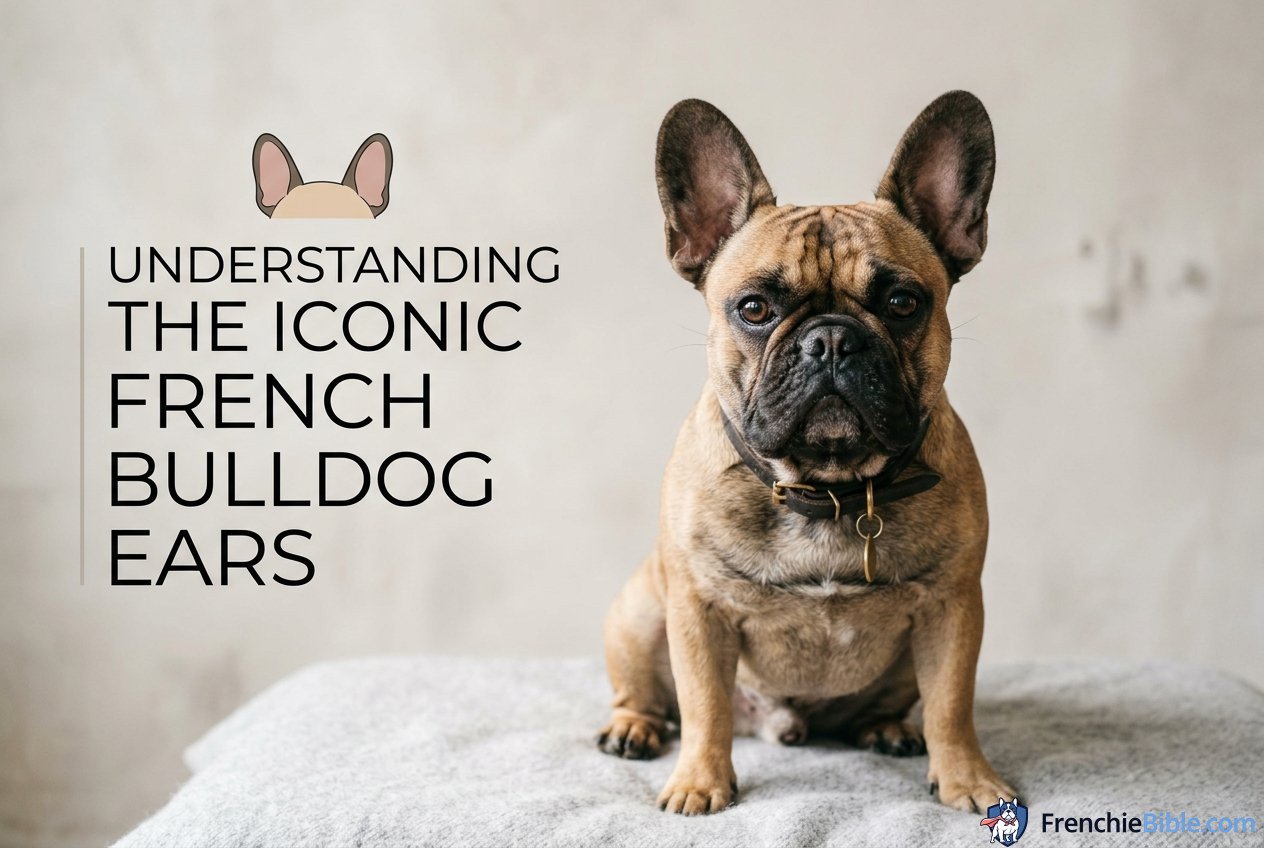
Before we can address why a Frenchie’s ears might not be standing up, it is crucial to understand what makes their ears so unique in the canine world. The French Bulldog’s “bat ears” are a breed standard hallmark, setting them apart from their English Bulldog cousins and almost every other breed recognized by major kennel clubs.
The Anatomy of a Frenchie’s Ear
A French Bulldog’s ear is essentially a large flap of skin, fur, and delicate cartilage. Unlike breeds with naturally dropped ears (like Spaniels or Hounds), the Frenchie’s ear base is broad, and the cartilage is genetically programmed to stiffen and support the weight of the ear flap (the pinna) as the puppy grows. The ear should be broad at the base, elongated, with a rounded top, set high on the head, and carried erect.
The structure relies heavily on the development of cartilage. Cartilage is a resilient and smooth elastic tissue, a rubber-like padding that covers and protects the ends of long bones at the joints and is a structural component of the rib cage, the ear, the nose, and the bronchial tubes. In the case of the Frenchie ear, the cartilage must become strong enough to act as an internal scaffold. This scaffold is what keeps those beautiful bat ears standing tall, ready to listen for the sound of the treat jar opening.
Why Do French Bulldogs Have “Bat Ears”?
The bat ear is a result of selective breeding over the late 19th and early 20th centuries. When lace makers from Nottingham relocated to Normandy France, during the Industrial Revolution, they brought their miniature bulldogs with them. These early dogs had a mix of ear shapes—some rose ears (like the English Bulldog) and some erect bat ears.
The French breeders and the wealthy Americans visiting Paris fell in love with the bat ear. In fact, it was the American breeders who vehemently fought to make the bat ear the official standard for the breed, eventually forming the French Bull Dog Club of America specifically to protect this trait. The bat ear is not just cute; it serves as a massive acoustic funnel, giving them surprisingly good hearing despite their sometimes stubborn selective deafness when called! They are iconic, functional, and deeply embedded in the breed’s history.
when do french bulldog ears stand up? The Normal Timeline
Patience is a virtue, especially when raising a French Bulldog puppy. As a breeder I always tell my puppy families that ear development is not a straight line; it is a rollercoaster. Understanding the timeline will save you a lot of unnecessary stress and prevent you from taking drastic measures too early.
The Newborn and Neonatal Stage (0 to 4 Weeks)
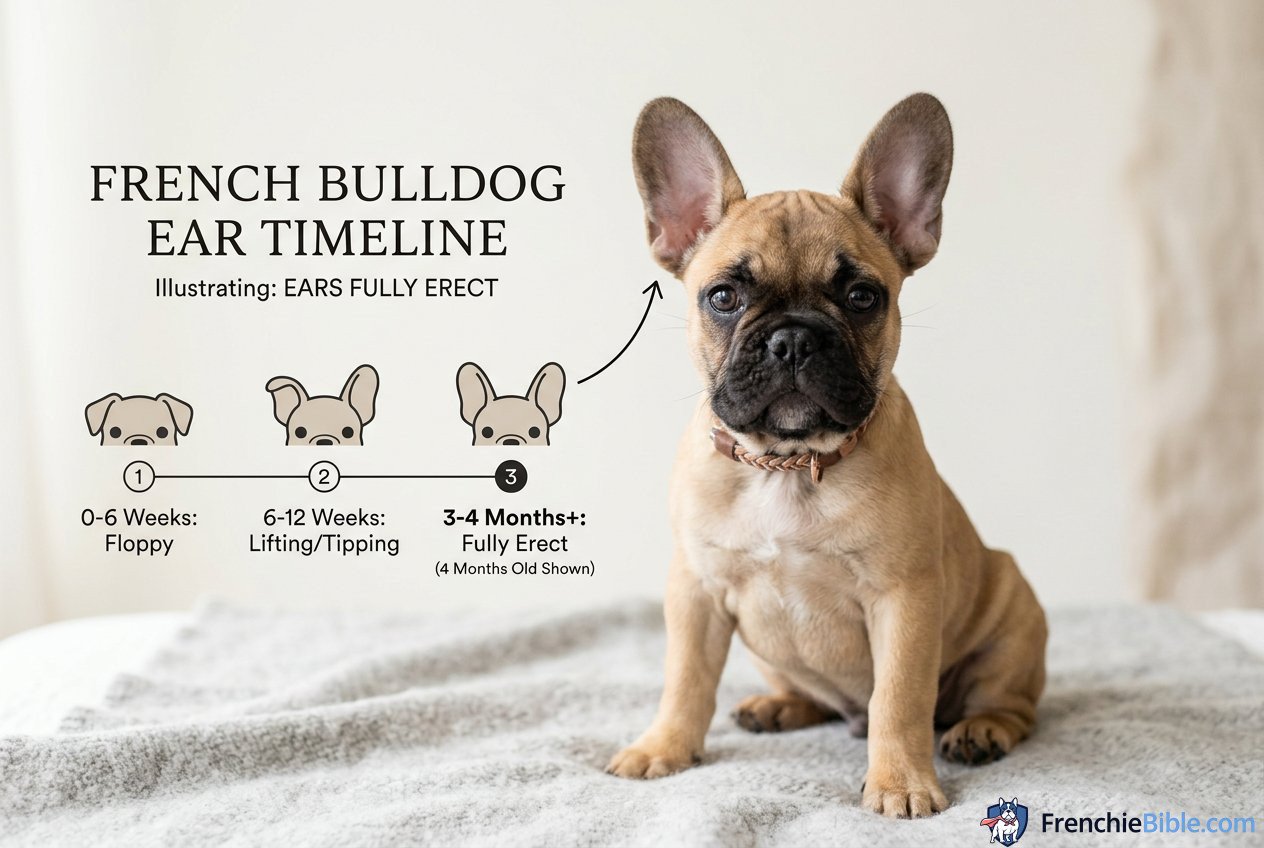
When French Bulldog puppies are born, their ears are completely sealed shut and folded flat against their heads. This protects their delicate inner ear canals as they develop in those crucial early days. Around two weeks of age, the ear canals begin to open, but the ears remain soft, velvety, and completely floppy. During this time, the cartilage is incredibly soft and pliable, lacking any structural integrity whatsoever. It is impossible to tell at this stage how the ears will eventually set.
The “Pop Up” Phase (5 to 7 Weeks)
For many Frenchies, the magic starts to happen between 5 and 7 weeks of age. As they become more alert and their cartilage begins to firm up, you might notice one or both ears starting to lift at the base. It is incredibly common for one ear to go up while the other stays down, giving the puppy a charming, asymmetrical look. Some puppies will have both ears firmly erect by the time they go to their new homes at 8 weeks, but this is not a hard and fast rule. Do not be alarmed if your 8-week-old puppy still looks like a tiny hound dog.
The Rollercoaster Teething Phase (8 Weeks to 6 Months)
This is the phase that causes the most panic among new owners. Your puppy might come home at 8 weeks with perfect, erect bat ears. Then, suddenly, at around 12 to 14 weeks of age, one or both ears flop back down. You might think you did something wrong, or that the ears are broken.
Do not panic! This is completely normal and expected.
Why does this happen? The answer lies in teething. Between 3 and 5 months of age, your puppy is losing their baby teeth and growing their adult teeth. This physiological process requires a massive amount of calcium. The body smartly prioritizes the development of strong adult teeth over the stiffening of ear cartilage. Therefore, the calcium is redirected from the ears to the jaw and teeth, causing the cartilage to temporarily weaken and the ears to flop.
During this teething period, you might see the ears go up and down daily. They might lean against each other, fold backward, curl at the tips, or go completely flat. This stage can last until the puppy is 6 to 7 months old and has finished cutting all their adult teeth. Only after the teething process is entirely complete does the body redirect resources back to finishing the cartilage hardening process.
Why Is My French Bulldog’s Ear Still Floppy?
If your Frenchie has reached 7 or 8 months of age and one or both ears are still firmly down, or if the ear leather feels exceptionally weak, there are several factors that could be at play. Based on my decade of breeding experience, here are the primary culprits behind a persistent flop ear.
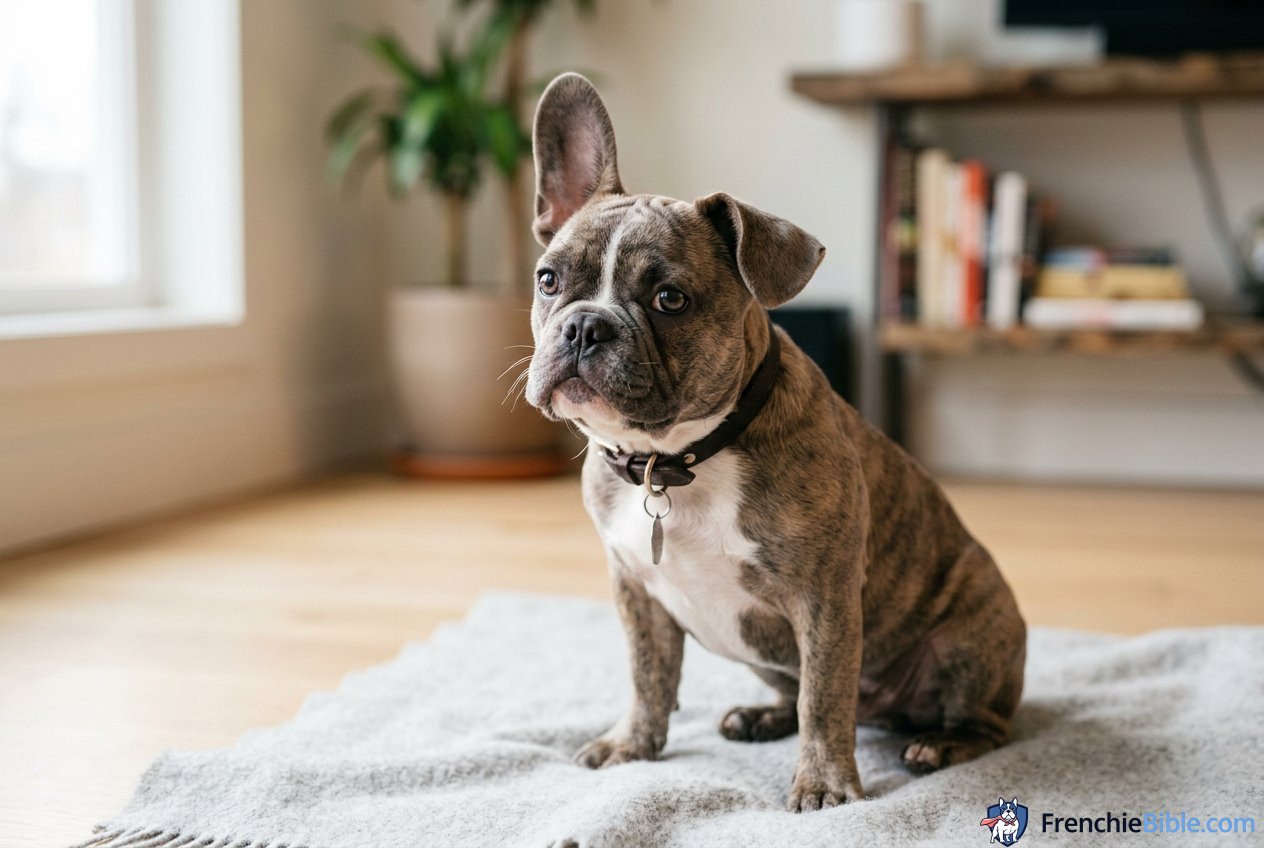
Genetics and Breeding
Genetics play the most significant role in ear set and carriage. If a puppy’s parents, grandparents, or great-grandparents had weak ear cartilage, heavy ear leather, or delayed ear erection, there is a strong chance the puppy will inherit those traits. This is why preserving strong ear genetics is a priority for experienced breeders.
A responsible breeder carefully selects breeding pairs to ensure strong ear sets. However, even with the best breeding, genetics can throw a curveball. Some lines simply take much longer for their ears to stand—sometimes up to 8 or 9 months. If you are concerned, your first point of contact should always be your breeder. Ask them about the ear development timeline of the parents and previous litters to get a realistic expectation for your puppy.
Heavy Ear Leather
Some French Bulldogs have thicker, heavier skin on their ears than others. This is known as “heavy ear leather.” While thick, velvety ears are lovely to pet, they are much harder for the developing cartilage to support. The heavier the ear flap, the stronger the cartilage needs to be to hold it up against gravity. Puppies with very large, heavy ears almost always take longer to achieve full erection and are the most common candidates for ear taping. If your puppy has massive, thick ears, extra patience is definitely required.
Calcium and Nutritional Deficiencies
As mentioned during the teething phase discussion, calcium is critical for cartilage development. If a puppy’s diet is severely deficient in calcium, or if they have an issue absorbing nutrients, the ear cartilage may never stiffen properly. However, before you rush out to buy calcium supplements, a word of extreme caution: over-supplementing calcium in growing puppies can cause devastating skeletal and joint disorders.
Large amounts of calcium can disrupt the delicate balance needed for bone growth, leading to conditions like hip dysplasia or osteochondritis dissecans (OCD). Always consult a professional before adding calcium to a balanced commercial diet. Often, feeding a high-quality, appropriately formulated puppy food is more than enough to provide the required nutrients without the risk of overdose.
Ear Infections and Trauma
A persistent flop ear can sometimes be a sign of an underlying issue rather than a developmental delay. Ear infections (otitis externa) are common in Frenchies due to their narrow ear canals and propensity for allergies. An infection causes inflammation, pain, and a buildup of fluid, making the ear heavy and uncomfortable. A puppy with an ear infection will instinctively hold the ear down to protect it and frequently scratch or shake their head.
Trauma can also cause a flop ear. Rough play with other dogs, pulling on the ears, or a hematoma (a blood blister in the ear flap caused by vigorous head shaking) can damage the delicate cartilage permanently. If the cartilage is broken or severely damaged by a hematoma, it may never stand properly again.
How to Help Your Frenchie’s Ears Stand Up: The Taping Method
If your Frenchie is past the peak teething stage (around 5-7 months old) and the ears are still floppy, or if your breeder recommends it due to heavy ear leather, you can intervene with ear taping.
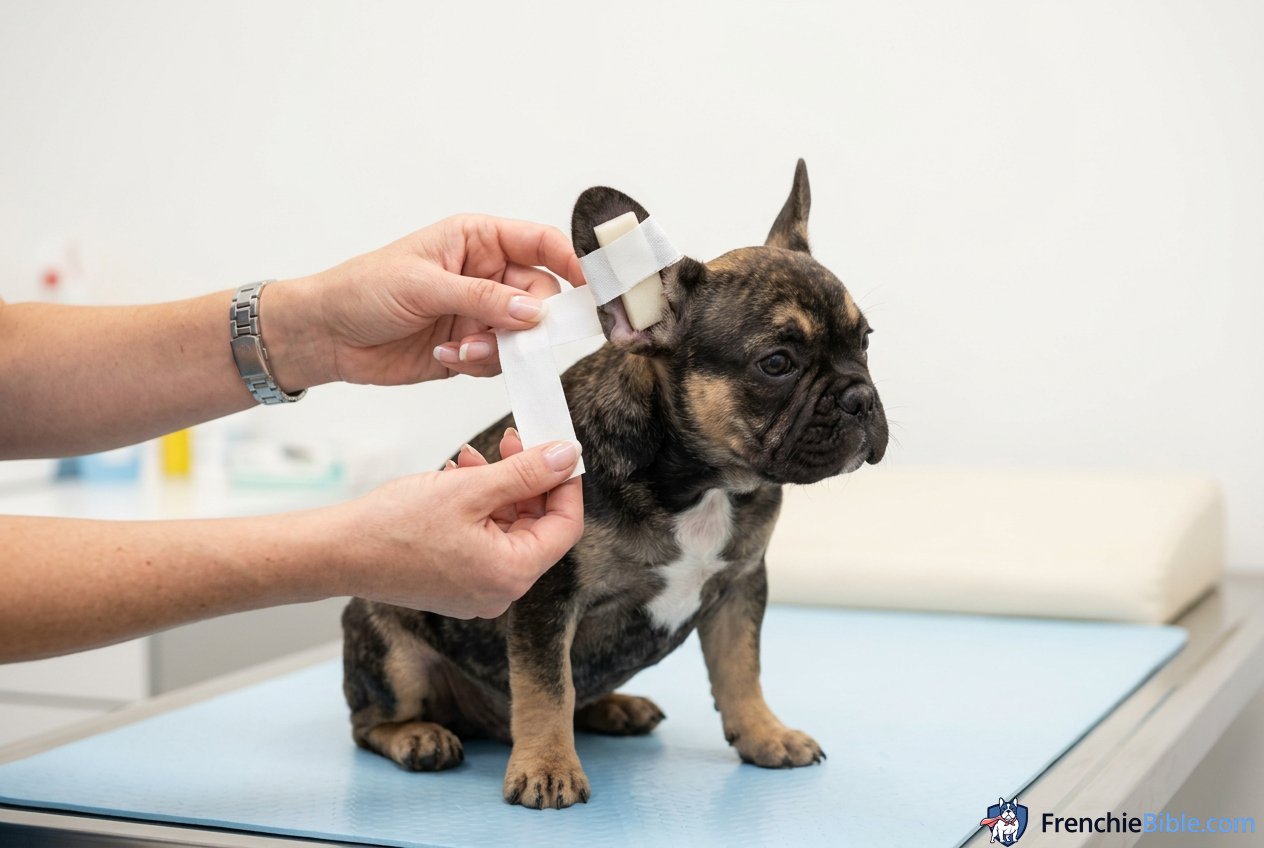
Ear taping is a safe, painless structural support system that holds the ear in the correct erect position while the cartilage finishes hardening. Think of it like a cast or a brace for the ear. It does not hurt the dog when done correctly, but it does require diligence from the owner.
When to Start Taping
Do not tape a puppy’s ears too early. Taping before the puppy is at least 3 to 4 months old is usually unnecessary and can cause undue stress, as the ears are likely to flop anyway during teething. The ideal window for taping, if necessary, is between 4 and 7 months. If you wait until the dog is a year old, the cartilage has likely permanently set, and taping will be entirely ineffective. Timing is everything.
Materials Needed for Ear Taping
Preparation is key. You want to make this process as quick and stress-free for your puppy as possible. Having everything laid out beforehand is essential. Do not use random household tapes, as they can rip out fur and cause severe skin damage.
- Breathable Medical Tape: The absolute best tape for this job is 1.5-inch or 2-inch wide breathable paper tape or porous athletic cloth tape (like Johnson & Johnson Zonas tape). Do NOT use duct tape, electrical tape, or standard masking tape. The skin must be able to breathe.
- Skin Adhesive/Glue (Optional but NOT Recommended): Some old-school breeders use skin adhesives like Tear Mender. I strongly advise against this for beginners. It is messy, can cause allergic reactions, and makes removal a nightmare. Stick to high-quality tape.
- Ear Cleanser and Cotton Balls: For cleaning the ear prior to taping. Tape will not stick to waxy or dirty ears.
- Blunt-nosed Medical Scissors: For safely cutting the tape near your squirming puppy. Never use sharp, pointy scissors near your dog’s face.
- High-Value Treats: Peanut butter, boiled chicken, or liver treats to distract and reward your puppy, turning a potentially scary experience into a positive one.
- An Assistant: Having a second person to hold the puppy and offer treats is invaluable and highly recommended.
Step-by-Step Guide to Taping Frenchie Ears
Follow these steps carefully to ensure the tape job is effective and comfortable for your dog. If at any point the dog seems in extreme distress, stop and try again later.
Step 1: Clean and Dry the Ears
The tape will not stick to dirty or oily ears. Use a gentle, dog-safe ear cleanser to wipe the inside of the ear flap. Use a dry cotton ball to remove any moisture. The ear must be 100% dry before applying tape, otherwise the tape will slide right off within hours.
Step 2: Prepare Your Tape Strips
Cut your breathable medical tape into several strips, approximately 3 to 4 inches long. Having these pre-cut and ready to go will make the process much faster, minimizing the time your puppy has to sit still.
Step 3: Distract and Position the Puppy
Have your assistant hold the puppy securely but gently in their lap, facing away from them. Have the assistant offer a steady stream of high-value treats (a spoon covered in peanut butter works wonders to keep them licking and distracted).
Step 4: Create the Base Wrap (The “Taco” Method)
There are a few ways to tape, but the “Taco” method is the most gentle and effective for Frenchies.
– Gently grasp the tip of the floppy ear and pull it straight up so the ear is taut and in the desired erect position.
– Notice how the natural fold of the ear curves backward. You want to support this natural curve.
– Take a piece of tape and wrap it horizontally around the base of the ear, close to the head.
– CRITICAL RULE: Do NOT wrap the tape tightly! You are simply creating a supportive cylinder. If you wrap the tape tightly like a tourniquet, you will cut off blood circulation to the ear flap, which can result in tissue death and the loss of the ear tip. The tape should gently rest on the fur, just secure enough to hold the shape.
Step 5: Reinforce the Cylinder
Add 2 or 3 more pieces of tape, overlapping them slightly as you move up the ear towards the tip. Always leave the very tip of the ear exposed so you can monitor the skin for any swelling, redness, or discoloration that might indicate the tape is too tight.
Step 6: The “Bridge” (If Both Ears Are Floppy)
If both ears are struggling to stand, they may have a tendency to flop outward like airplane wings once taped. To correct this, you need to create a bridge between the two taped ears to train them to stand vertically.
– Take a long piece of tape and attach it to the inside of the left taped ear.
– Pull it across the top of the head and attach it to the inside of the right taped ear.
– Place a second piece of tape sticky-side-down over the first piece so the bridge does not get stuck to the puppy’s head fur.
– The ears should now be standing perfectly parallel, pointing straight up at 11 o’clock and 1 o’clock positions.
How Long to Leave the Tape On
Leave the tape on for 3 to 4 days. Monitor the dog daily to ensure they are not aggressively scratching at the tape, which could cause sores. After 4 days, carefully use your blunt scissors to cut the tape off. Be incredibly careful not to cut the ear leather! Slowly peel the tape away, using a little mineral oil if the adhesive is stubborn.
Let the ears “breathe” for 24 hours. During this time, observe the ears. If they stand up on their own, congratulations! If they begin to wilt or flop completely after a few hours, re-tape them for another 3 to 4 days.
This process requires dedication. You may need to repeat the tape-and-rest cycle for several weeks before the cartilage fully hardens. Do not get discouraged if they flop again after the first round of taping. Consistency is the key to success here.
Diet and Nutrition for Ear Cartilage Development
As a breeder I cannot stress enough the impact of diet on a growing puppy’s physical development, including their ears. While genetics are the blueprint, nutrition provides the building blocks. You cannot build a strong structure without the right materials.
The Role of Calcium and Phosphorus
Cartilage relies heavily on a precise balance of calcium and phosphorus. Growing puppies need more of these minerals than adult dogs, but the ratio must be carefully maintained. Most high-quality, commercially available puppy foods formulated for medium breeds provide the exact ratio of calcium to phosphorus needed for healthy development. This is why feeding a high-quality kibble or professionally formulated raw diet is so important during the first year of life.
Safe Supplements to Consider
If your puppy is struggling with ear carriage during the teething phase, there are a few safe, holistic supplements you can add to their diet that support cartilage health without the risks of dangerous calcium overdosing.
- Unflavored Gelatin: Plain, unflavored gelatin (like Knox gelatin) is pure collagen protein, which is excellent for cartilage building. You can sprinkle a pinch over their food daily. It is safe, inexpensive, and often very effective.
- Glucosamine and Chondroitin: These supplements are commonly used for joint health in older dogs but can also support ear cartilage in growing puppies. Look for high-quality canine formulations rather than human supplements, which may contain artificial sweeteners like xylitol that are toxic to dogs.
- Plain Yogurt or Cottage Cheese: A small spoonful of plain, unsweetened yogurt or cottage cheese mixed into their kibble provides a safe, natural boost of calcium and beneficial probiotics for gut health.
- Bone Broth: Unsalted, dog-safe bone broth is rich in collagen and minerals. You can pour a small amount over their kibble to encourage eating and provide structural nutrients.
Note: Always introduce new foods slowly to avoid upsetting your Frenchie’s notoriously sensitive digestive system. Diarrhea will dehydrate the puppy and leach nutrients, counteracting your efforts.
Foods to Avoid
Avoid feeding your puppy a diet strictly composed of human table scraps or poorly balanced homemade diets. These often lack the necessary calcium or have a wildly skewed calcium-to-phosphorus ratio, which will severely hinder bone and cartilage development and almost guarantee floppy ears, not to mention a host of other skeletal issues. Stay away from calcium pills unless explicitly directed by a professional who has evaluated your dog’s specific blood work and diet.
Common Mistakes Owners Make with Floppy Ears
In their desperation to get those bat ears up to achieve the “perfect” Frenchie look, well-meaning owners often make mistakes that can actually delay the process or physically harm the dog.
Massaging the Ears Incorrectly
You may read online on various forums that massaging the base of the ear stimulates blood flow and helps cartilage harden. While gentle, affectionate petting is fine, vigorously rubbing, pinching, or massaging the ear cartilage can actually break down the delicate tissue fibers. This constant mechanical stress makes the ear permanently soft and floppy. Do not vigorously rub the ears! Leave them alone as much as possible.
Ignoring the Teething Process
The most common mistake is panicking at 14 weeks when the ears drop and immediately resorting to aggressive taping. Remember the teething rollercoaster! Taping during the peak teething phase is often an exercise in futility. The body simply does not have the calcium available to harden the ear, tape or no tape. Taping too early just causes frustration for you and annoyance for the puppy. Wait until the adult teeth are mostly in before intervening with tape.
Using Harsh Tapes or Glues
As mentioned earlier, using duct tape, electrical tape, superglue, or harsh skin adhesives is a massive mistake. I have seen puppies with severe skin infections, permanent hair loss, and scarring because an owner used inappropriate materials. Tape that does not breathe will trap moisture, leading to nasty bacterial or yeast infections under the tape. Always prioritize the puppy’s comfort, health, and safety over aesthetic goals.
When to Consult a Professional
While floppy ears are usually a harmless cosmetic issue or a temporary developmental phase that resolves with time, there are situations where you should seek professional guidance to rule out serious problems.
Signs of Ear Infections
If the floppy ear is accompanied by any of the following symptoms, skip the tape entirely and seek professional evaluation immediately:
– A foul, yeasty, or sweet odor coming from the ear canal.
– Dark brown, black, or yellowish discharge or debris that looks like coffee grounds.
– Redness, severe swelling, or heat in the ear flap or deep in the canal.
– The dog constantly scratching frantically at the ear, rubbing it along the carpet, or shaking their head violently.
– The dog yelping, crying, or pulling away aggressively when you touch the ear or the side of their face.
These are classic, unmistakable signs of an ear infection (bacterial or yeast) or an ear mite infestation. These conditions are painful and require appropriate medication to resolve. Taping an infected ear will only trap the infection and make it exponentially worse.
Understanding Your Dog’s Unique Timetable
Every Frenchie is an individual with their own genetic timeline. I have bred champion dogs whose ears were standing proudly at 6 weeks old, and I have had perfectly healthy, beautiful dogs from the exact same bloodlines whose ears didn’t stand up until they were 8 months old. If your dog is eating well, gaining appropriate weight, has a shiny coat, and is active and playful, a floppy ear is likely just a quirk of their personal developmental timetable.
If your French Bulldog reaches 12 to 14 months old and the ears are still down, it is safe to assume they will stay that way permanently. A “drop-eared” Frenchie is entirely disqualified from conformation dog shows, but let me assure you, they are absolutely no less lovable, loyal, comical, or wonderful as a family pet. If they end up with floppy ears forever, embrace their unique, individualized look!
Frequently Asked Questions (FAQ)
Q1: Will shaving the hair on my Frenchie’s ears help them stand up?
A1: Some old breeder tales suggest shaving the hair off the ear flap removes excess weight, helping the ear stand. While it technically removes a tiny fraction of weight, the difference is completely negligible. Frenchies do not have heavy ear furnishings like Terriers. Shaving is unnecessary, will not solve a cartilage issue, and will likely just make your puppy look very silly while the hair takes months to regrow.
Q2: Does chewing hard toys help with ear development?
A2: Yes! Providing your Frenchie puppy with appropriate, safe chew toys (like durable rubber toys, safe nylabones, or bully sticks) helps strengthen the jaw muscles. The muscles at the base of the jaw are anatomically connected to the muscles at the base of the ear. Strong jaw muscles from active chewing can provide a better, firmer foundation for the ear to stand erect.
Q3: Can stress cause my French Bulldog’s ears to flop?
A3: Yes, temporary physical or emotional stress can affect ear carriage. A sudden change in environment, a stressful vet visit, receiving vaccinations, a minor illness, or moving to a new home can temporarily cause one or both ears to drop. Once the puppy relaxes, recovers, and acclimates to their environment, the ears usually pop back up within a few days to a week.
Q4: Is it normal for the ears to curl backward before standing straight?
A4: Absolutely normal. This is affectionately known in the Frenchie community as “the flying nun” stage. As the cartilage hardens irregularly during the growing process, the tips of the ears may curl backward, fold horizontally, or lean inward toward each other, creating some very comical expressions. This awkward phase almost always corrects itself naturally as the cartilage fully matures and stiffens.
Q5: Can I tape just one ear if the other is already standing perfectly fine?
A5: Yes, you can absolutely tape only the floppy ear. However, pay close attention to how the taped ear sets. If the floppy ear tends to lean heavily to the side or across the top of the head when taped, you may still need to tape both ears and build a tape “bridge” between them. This bridge pulls the floppy ear upright and trains it to stand perfectly vertical to match the already erect ear.
Disclaimer: The information provided in this article is based solely on my extensive personal experience as a French Bulldog breeder and enthusiast over the past decade. I am not a licensed veterinarian, and I do not possess any formal medical qualifications or veterinary degrees. The advice regarding nutrition, ear taping methods, and developmental timelines is meant for educational and general informational purposes only. It is a sharing of breeding experience and should absolutely not be used as a substitute for professional veterinary care, diagnosis, or treatment. Always consult with a licensed, qualified veterinarian before starting your dog on any supplements, attempting to tape your dog’s ears yourself, or if you suspect your dog has an ear infection, ear trauma, or any other underlying health condition.