

Disclaimer: The information provided in this comprehensive guide is for educational and informational purposes only. While drawn from extensive experience in French Bulldog breeding and veterinary care, it does not substitute for professional veterinary diagnosis, advice, or medical treatment. Always consult your local veterinarian if your Frenchie is experiencing severe distress, unusual symptoms, or if you suspect a potentially life-threatening condition such as Pyometra.
If you are a French Bulldog owner, navigating your unspayed female’s heat cycles can be a complex journey. One of the most confusing and emotionally taxing experiences for both the dog and the owner is a condition known as a “false pregnancy” or “phantom pregnancy.” Scientifically referred to as pseudocyesis, this phenomenon can cause your Frenchie to act and look exactly as though she is expecting a litter of puppies, even when she absolutely is not.
Related Reading: Training & Behavior | Frenchie Puppy Guide | Best Food for Frenchies
As a French Bulldog specialist and breeding expert, I have witnessed countless owners panic when their female Frenchie begins hoarding toys, producing milk, or exhibiting sudden aggression weeks after her heat cycle. This comprehensive, 3000+ word guide is designed for both novice and advanced Frenchie owners. We will dive deep into the biological mechanics of false pregnancies, meticulously detail the physical and behavioral symptoms, outline the typical duration, and provide actionable, proven relief methods to help your beloved companion navigate this stressful period.
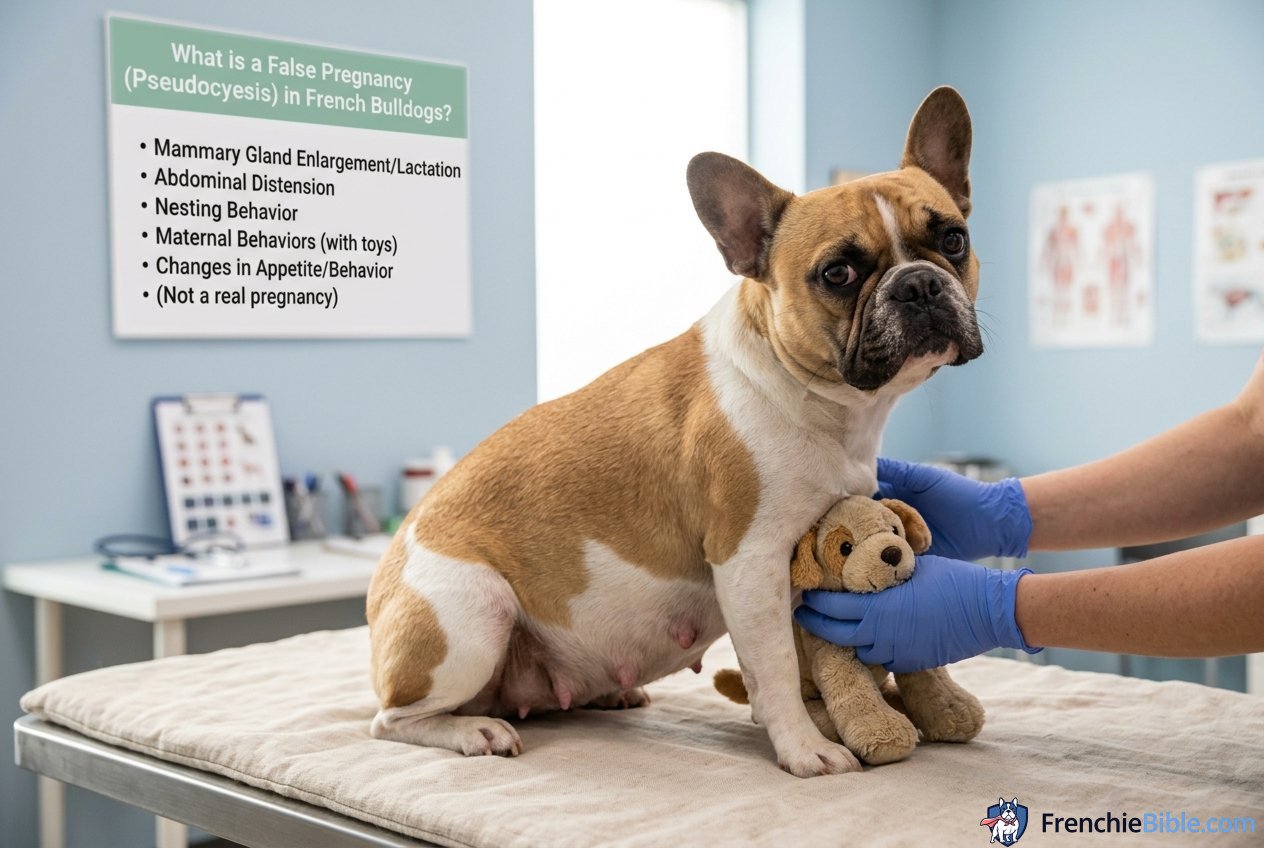
What is a False Pregnancy (Pseudocyesis) in French Bulldogs?
A false pregnancy is a completely natural, hormonally driven condition that occurs in intact (unspayed) female dogs. Unlike humans, where a false pregnancy is relatively rare and often psychological, canine pseudocyesis is deeply rooted in the evolutionary biology of the pack.
The Evolutionary Background
In wild dog packs or wolf packs, usually, only the alpha female breeds and has puppies. However, the subordinate females in the pack will often undergo a synchronized hormonal shift that mimics pregnancy. This evolutionary quirk allows the non-pregnant females to produce milk and help nurse, protect, and raise the alpha female’s pups, ensuring the survival of the pack. Even though your Frenchie is far removed from a wild wolf, her DNA still carries this ancient programming.
The Hormonal Rollercoaster
To understand why your French Bulldog is going through a phantom pregnancy, you must understand her reproductive cycle. The canine estrus cycle consists of four main stages: Proestrus, Estrus, Diestrus, and Anestrus.
When a female Frenchie goes into heat (Estrus) and then transitions out of it into the Diestrus phase, her body produces a hormone called progesterone. Progesterone is the hormone responsible for maintaining a pregnancy. In a fascinating biological twist, a dog’s body produces the exact same high levels of progesterone for about two months after ovulation, regardless of whether she was mated or not.
As the Diestrus phase ends (usually around 60 to 70 days after her heat cycle), progesterone levels drop rapidly. In some dogs, this sudden drop in progesterone triggers a massive spike in prolactin, the hormone responsible for maternal behaviors and milk production. It is this specific hormonal cocktail—crashing progesterone and surging prolactin—that tricks your Frenchie’s brain and body into believing she is about to give birth.
Detailed Symptoms of French Bulldog False Pregnancy
The symptoms of a false pregnancy can range from so mild they go unnoticed to so severe that they completely disrupt your household. Symptoms typically begin 4 to 9 weeks after the end of the Frenchie’s heat cycle. Because Frenchies are incredibly emotional and stubborn dogs by nature, their behavioral changes can be particularly pronounced.
Behavioral Changes (The Psychological Impact)
- Nesting and Digging Behavior: This is often the first sign. Your Frenchie may start obsessively digging at her bed, the couch, or blankets. She is attempting to build a safe, comfortable “whelping box” (a den) for her imaginary puppies.
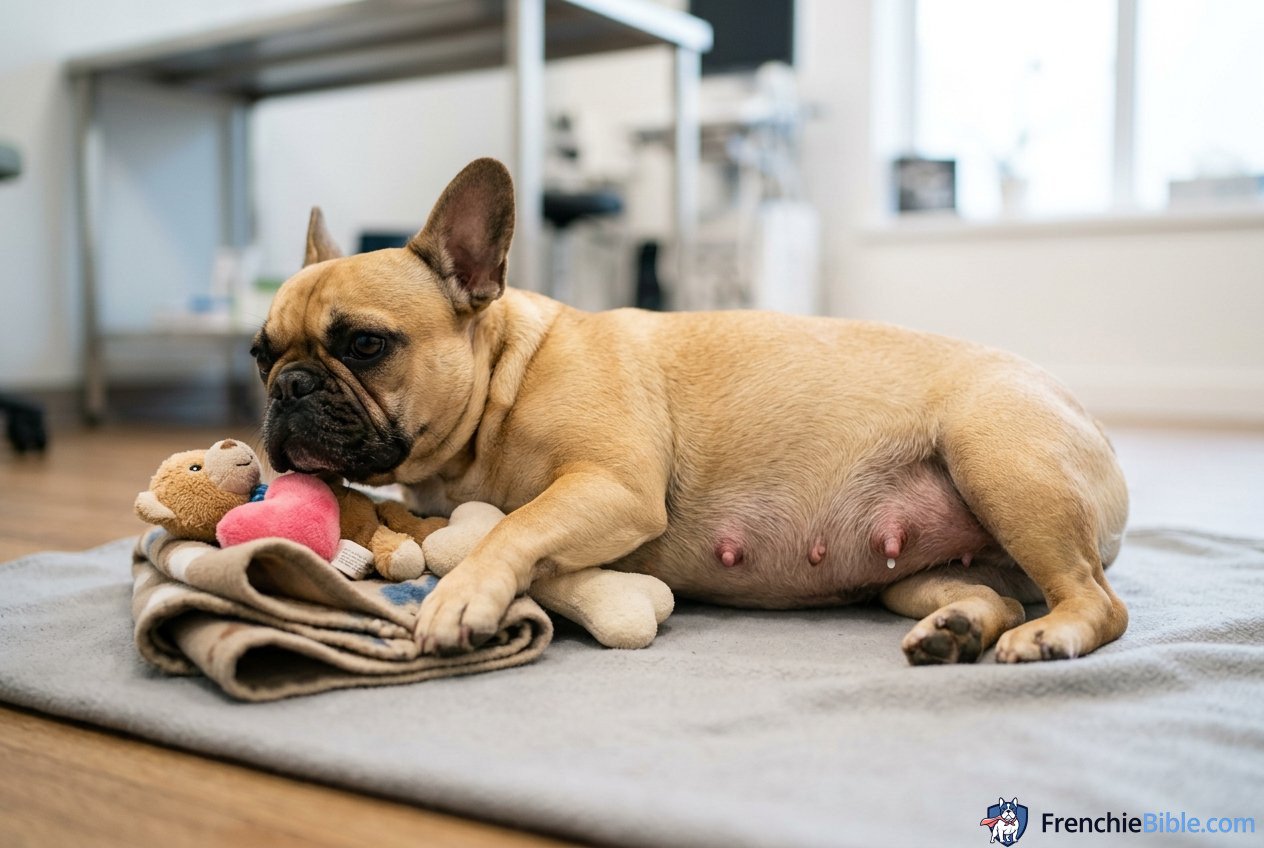
- Mothering Inanimate Objects: You might find your Frenchie carrying around squeaky toys, rolled-up socks, or slippers, treating them with immense care. She will bring these “surrogate puppies” back to her nest, groom them, and sleep curled around them.
- Anxiety and Restlessness: The hormonal surge can make your normally chill Frenchie pace the floors, pant heavily, and act unable to settle down. She may vocalize more, whining or crying at night.
- Aggression or Resource Guarding: Even the sweetest French Bulldog can become fiercely protective of her nesting area and her toys during a false pregnancy. She may growl, snap, or bare her teeth if you, other family members, or other pets approach her “puppies.”
- Lethargy and Depression: Some Frenchies take the opposite route. They become incredibly withdrawn, refuse to participate in their favorite activities, sleep all day, and look visibly depressed.
- Clinginess: Your Frenchie may become your shadow, demanding constant physical contact, reassurance, and affection as her maternal instincts go into overdrive.
Physical Changes (The Bodily Impact)
- Mammary Gland Enlargement: This is the most definitive physical sign. Your Frenchie’s nipples and mammary glands will become swollen, red, and warm to the touch. The swelling can be quite dramatic, especially in the rear teats.
- Milk Production (Lactation): Squeezing the nipples (which you should never do) or even normal friction from walking may cause the teats to express a clear, brownish, or milky-white fluid.
- Weight Gain and Abdominal Swelling: Her belly may distend, looking physically rounder and firmer as if she is carrying a litter. She may also gain a slight amount of actual body weight due to fluid retention.
- Loss of Appetite or Changes in Eating Habits: Some dogs experience “morning sickness” style nausea and refuse their kibble. Others might become ravenously hungry in preparation for feeding an imaginary litter.
- Vaginal Discharge: A very mild, clear, or slightly mucoid discharge can occasionally be seen. (Note: Heavy, foul-smelling, or pus-like discharge is a sign of Pyometra, a medical emergency. More on this below.)
- Elevated Temperature: A very slight, transient increase in body temperature can occur, though it rarely reaches true fever levels.
How Long Does a False Pregnancy Last?
The duration of a phantom pregnancy is one of the most common questions owners ask. Because the condition is driven by the natural, gradual clearing of hormones from the bloodstream, it cannot be cured overnight.
The Typical Timeline
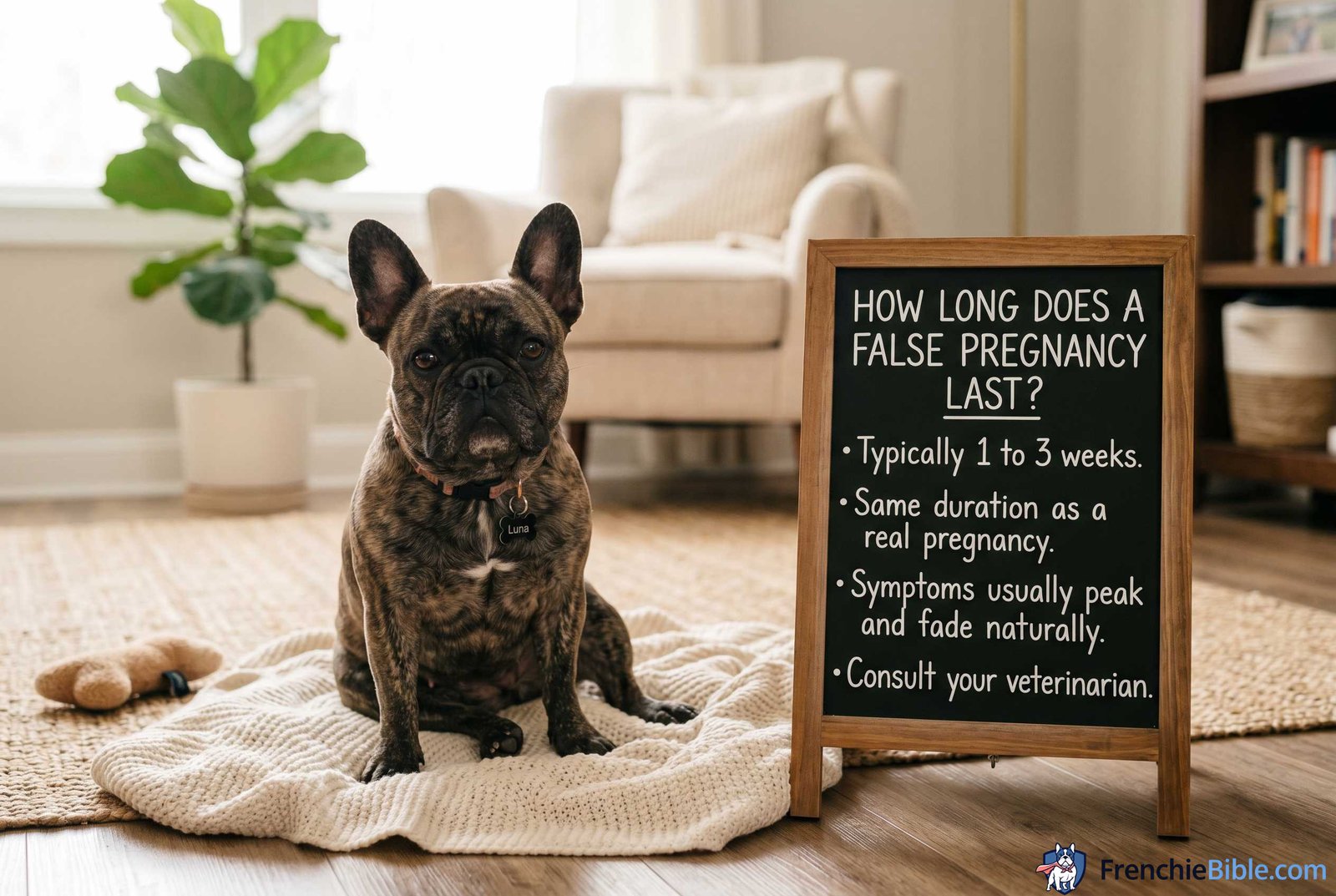
On average, a French Bulldog’s false pregnancy will last anywhere from 14 to 28 days (2 to 4 weeks).
- Week 1: Behavioral changes begin. Nesting and toy hoarding are most prominent.
- Week 2: Physical signs peak. Mammary glands are fully swollen, and milk production may begin.
- Week 3: Symptoms begin to plateau. If the owner manages the situation correctly (not stimulating the teats), milk production slows.
- Week 4: Hormones normalize. The dog abandons her nest and surrogate toys, and mammary swelling gradually subsides.
When to Be Concerned
While 2 to 4 weeks is standard, some highly sensitive Frenchies can experience prolonged symptoms lasting up to 6 or 8 weeks. If the condition persists beyond 4 weeks, or if the symptoms are causing severe psychological distress or physical complications (like mastitis), veterinary intervention is absolutely required.
Furthermore, once a Frenchie has experienced a false pregnancy, she has an extremely high likelihood—often over 70%—of experiencing it again after every subsequent heat cycle, and the symptoms often become progressively worse with each cycle.
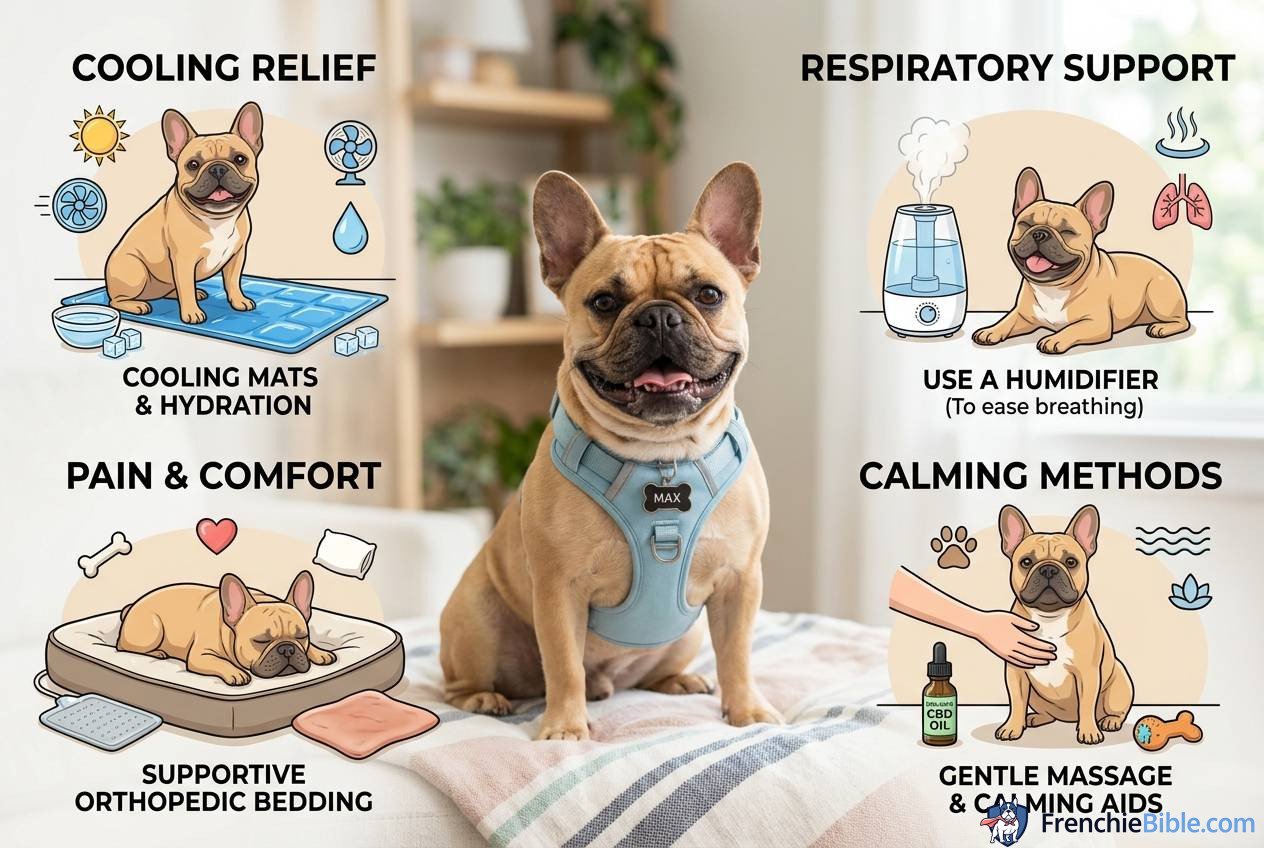
Actionable Relief Methods: How to Help Your Frenchie
Watching your French Bulldog suffer through the anxiety and physical discomfort of a false pregnancy can be heartbreaking. However, your actions as an owner are crucial. The wrong approach can accidentally prolong the condition, while the right management techniques can help her hormones balance out faster.
1. The “Tough Love” Approach to Toys and Nesting
As tempting as it is to let her cuddle her toys because she looks cute or sad, you are inadvertently feeding into her maternal delusions and keeping her prolactin levels high.
- Remove the Surrogate Puppies: When your Frenchie is outside or distracted, quietly gather up all the toys, socks, and items she is mothering and hide them out of sight and out of smell.
- Dismantle the Nest: Break up the blankets or pillows she is using to nest. Return her sleeping area to its normal state.
- Do Not Punish: If she searches frantically for her toys, do not scold her. Redirect her attention with a walk, a training session, or a puzzle feeder.
2. Strict Management of Mammary Glands (The “Do Not Touch” Rule)
This is the most critical mistake owners make.
- NEVER Milk Her: You might think you are relieving her physical pressure by expressing the milk. In reality, the physical stimulation of the teats sends a signal directly to her brain to produce more prolactin and more milk. You are creating a vicious cycle.
- Prevent Self-Nursing: Some Frenchies will lick their own teats to relieve the pressure, which also stimulates milk production. If you catch her doing this, you must put a soft recovery cone (like a surgical donut) on her, or have her wear a snug-fitting surgical suit or a modified t-shirt to block access to her belly.
- Cold Compresses: If her mammary glands look painfully swollen or hot, you can apply a cold compress (a bag of frozen peas wrapped in a soft towel) to her belly for 10-15 minutes at a time. The cold helps reduce inflammation and can mildly deter milk production.
3. Dietary and Hydration Adjustments (With Caution)
Modifying her intake can signal to her body that it cannot support a litter, prompting the cessation of lactation.
- Slight Caloric Reduction: Reducing her daily caloric intake by about 10-15% for a few days can help dry up her milk. However, since Frenchies have sensitive digestive systems, do not make drastic changes.
- Water Fasting (Consult Vet First): In older veterinary practices, a mild water restriction (e.g., removing the water bowl overnight) was used to stop milk production. Do not do this without speaking to your vet first, as Frenchies are prone to overheating and dehydration. A safer method is simply ensuring she isn’t drinking excessively out of boredom.
- Parsley: Some holistic practitioners suggest adding a small pinch of fresh, finely chopped parsley to her food. Parsley is a natural diuretic and is believed by some to help reduce lactation, though scientific evidence is anecdotal.
4. Increased Exercise and Mental Distraction
A tired dog is a happy dog, and an exhausted brain doesn’t have time to worry about imaginary puppies.
- Uptick in Physical Activity: Increase her daily walks. The physical exertion helps burn off the anxious energy and redirects her focus away from nesting.
- Mental Stimulation: Frenchies are smart. Engage her in new trick training, use snuffle mats, or provide a raw marrow bone (if her diet allows) to keep her brain occupied. The goal is to break the psychological loop of “I must care for my babies.”
Veterinary Treatments for Severe Cases
While home management is sufficient for most mild to moderate cases, severe false pregnancies require professional veterinary intervention. Do not hesitate to call your vet if your dog is aggressive, completely anorexic, or clearly in pain.
Medical Intervention: hormonal medication (discuss with your veterinarian) (hormonal medication (discuss with your veterinarian))
If the symptoms are severe, your vet may prescribe a medication called hormonal medication (discuss with your veterinarian) (often sold under the brand name hormonal medication (discuss with your veterinarian)).
- How it works: hormonal medication (discuss with your veterinarian) is a dopamine agonist. It specifically targets and inhibits the release of prolactin from the pituitary gland.
- Effectiveness: It is highly effective. Within a few days of starting the liquid medication, milk production usually stops, and the behavioral symptoms (nesting, anxiety) dissipate rapidly.
- Side Effects: The most common side effects are mild lethargy and vomiting. Because Frenchies have sensitive stomachs, your vet might recommend giving it with food or dividing the dose.
Treating Mastitis
If your Frenchie’s mammary glands become infected—a condition called mastitis—it is a serious medical issue.
- Signs of Mastitis: The teats will become hard, intensely red or purple, very hot, and extremely painful. The milk may turn yellow, green, or bloody. The dog will likely run a fever and act very sick.
- Treatment: Mastitis requires immediate veterinary care, including systemic antibiotics, anti-inflammatory medications (NSAIDs), and warm compresses.
The Ultimate Cure: Spaying (Ovariohysterectomy)
The only permanent, 100% effective cure and preventative measure for false pregnancies is to have your female French Bulldog spayed. By removing the ovaries and uterus, you eliminate the hormonal cycle (progesterone and prolactin spikes) entirely.
Crucial Timing Warning: You must never spay a dog while she is actively experiencing a false pregnancy. If you remove the ovaries while her prolactin levels are high, the false pregnancy symptoms can actually become locked in permanently, a rare but disastrous condition called a “permanent pseudocyesis.” You must wait until all physical and behavioral symptoms have completely resolved, usually about 2 to 3 months after the end of her heat cycle, before scheduling the spay surgery.
False Pregnancy vs. Pyometra: A Life-or-Death Distinction
As a French Bulldog expert, I cannot stress this section enough. False pregnancy symptoms can sometimes mimic the early signs of Pyometra, a severe, life-threatening infection of the uterus that affects unspayed females.
What is Pyometra?
During the heat cycle, the cervix opens to allow sperm to enter. This also allows bacteria from the vagina to enter the uterus. After the heat cycle, the cervix closes, and the high levels of progesterone create a perfect, thickened environment for bacteria to rapidly multiply, filling the uterus with toxic pus. Pyometra typically occurs 2 to 8 weeks after a heat cycle—the exact same timeframe as a false pregnancy.
How to Tell the Difference
| Symptom | False Pregnancy | Pyometra (Medical Emergency!) |
|---|---|---|
| Appetite | May eat slightly less or more | Complete loss of appetite (Anorexia) |
| Thirst/Urination | Normal | Excessive drinking and urination (Polyuria/Polydipsia) |
| Energy Level | Restless, anxious, or mildly tired | Profound lethargy, weakness, inability to stand |
| Vaginal Discharge | None, or very scant clear fluid | Thick, foul-smelling, yellow, green, or bloody pus (Note: “Closed Pyometra” has no discharge, making it even deadlier) |
| Abdomen | Plump, mimicking pregnancy | Distended, tight, and highly painful to the touch |
| Fever | Normal or very slightly elevated | High fever, or dangerously low temperature |
| Vomiting/Diarrhea | Rare | Common as toxins enter the bloodstream |
The Golden Rule: If you are ever in doubt whether your Frenchie is having a phantom pregnancy or pyometra, go to the emergency vet immediately. Pyometra can turn fatal in a matter of hours. A simple ultrasound and blood test can rule it out and give you peace of mind.
Nutritional Support During and After Pseudocyesis
While we discussed slightly reducing calories to dry up milk, overall nutritional support is vital for helping your Frenchie’s body recover from the hormonal stress.
- High-Quality Protein: Ensure her regular diet consists of high-quality, easily digestible animal protein. This helps maintain her muscle mass if she is being picky about eating.
- Omega-3 Fatty Acids: Adding a high-quality fish oil or krill oil supplement to her meals can help reduce systemic inflammation, particularly in the swollen mammary tissues.
- Probiotics: Hormonal stress can easily disrupt a Frenchie’s sensitive gut biome. A daily canine-specific probiotic will keep her digestive system running smoothly during the anxiety-inducing weeks of her false pregnancy.
FAQs about French Bulldog False Pregnancy
1. Can a spayed French Bulldog get a false pregnancy?
Generally, no. A true false pregnancy is driven by the estrus cycle. However, if a female was spayed while she was experiencing a false pregnancy, the sudden removal of progesterone can lock the prolactin levels high, causing prolonged or permanent symptoms. In extremely rare cases, an “ovarian remnant” (a tiny piece of ovarian tissue left behind during surgery) can trigger heat cycles and subsequent false pregnancies in a spayed dog.
2. Should I milk my French Bulldog to relieve the pressure and pain?
Absolutely NOT. This is the worst thing you can do. Milking the teats or applying warm compresses stimulates the exact biological pathways that tell the dog’s body to produce more milk. Leave the mammary glands alone, use cold compresses if they are hot, and put a surgical suit on her if she is licking herself.
3. Does having a false pregnancy mean she will be a good mother if I breed her?
No, there is no scientific correlation between the severity of a false pregnancy and a dog’s actual maternal abilities. A dog that obsessively mothers a squeaky toy might be an excellent mother to real puppies, or she might be completely overwhelmed and reject them. Breeding a dog simply because she is experiencing pseudocyesis is highly irresponsible.
4. How common is false pregnancy in Frenchies?
It is incredibly common across all canine breeds, including French Bulldogs. Studies suggest that over 50% of intact female dogs will experience at least one noticeable false pregnancy in their lifetime.
5. Will a false pregnancy happen after every heat cycle?
If she has had one, the chances of her having another one after her next heat cycle are very high. Furthermore, the symptoms tend to become more severe and last longer with each subsequent cycle. If you do not plan to ethically and professionally breed your French Bulldog, spaying her is the best option for her long-term physical and mental health.
By understanding the biology behind your Frenchie’s behavior and applying the correct management techniques, you can help your best friend pass through this confusing hormonal phase with minimal stress and discomfort.
Disclaimer: I am a French Bulldog breeding expert with over a decade of hands-on experience with this breed. I am not An Experienced Breedererinarian. The information in this article is for educational purposes only. Always consult your veterinarian regarding your dog’s specific health needs and care.
Disclaimer: I am a French Bulldog breeding expert with over a decade of hands-on experience with this breed. I am not a veterinarian. The information in this article is for educational purposes only. Always consult your veterinarian regarding your dog’s specific health needs and care.