
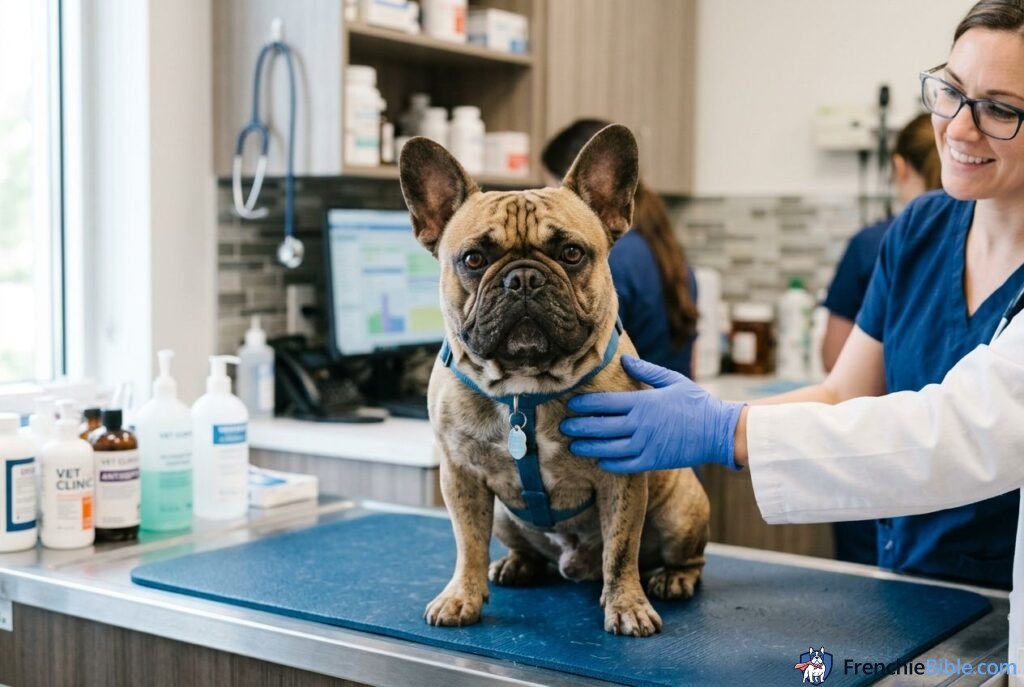
Disclaimer: I am An Experienced Breedererinary professional and breeder with over 10 years of experience, but the information provided in this article is for educational purposes only. It does not replace professional veterinary advice, diagnosis, or treatment. Always consult with your local veterinarian regarding the specific health needs and care of your dog.
As An Experienced Breedererinary specialist who has dedicated over a decade to the care and breeding of French Bulldogs, I receive frantic calls from dog parents all the time. One of the most common panicked questions I get goes something like this: “Doc, my Frenchie’s nipples are swollen, she’s hoarding all her squeaky toys in her bed, and she’s crying constantly. But she hasn’t been near a male dog! Is she pregnant?!”
Related Reading: Training & Behavior | Frenchie Puppy Guide | Best Food for Frenchies
If you are experiencing this with your unspayed female French Bulldog, take a deep breath. She is most likely not experiencing an immaculate conception. She is likely going through a phenomenon known as a “false pregnancy,” or pseudocyesis.
While a false pregnancy is completely natural, it can be incredibly distressing for both the dog and the owner. French Bulldogs are already deeply sensitive, emotional, and prone to anxiety, so the hormonal rollercoaster of a phantom pregnancy hits them particularly hard. In this complete guide, I will walk you through exactly what causes a false pregnancy, how to identify the symptoms, how long it lasts, and the best methods to bring your sweet girl some much-needed relief.
What is a False Pregnancy (Pseudocyesis)?
To understand a false pregnancy, we must briefly look at the canine reproductive cycle. Unlike humans, dogs go into heat (estrus) typically twice a year. After the heat cycle ends, a dog’s body enters a phase called diestrus.
During diestrus, the ovaries produce high levels of progesterone, the hormone responsible for maintaining a pregnancy. In humans, if an egg is not fertilized, progesterone levels drop quickly, triggering menstruation. But dogs are different. Whether a dog is actually pregnant or not, her progesterone levels remain elevated for about two months after her heat cycle ends.
As the diestrus phase concludes, progesterone levels finally drop, and another hormone, prolactin, begins to rise. Prolactin is the hormone that stimulates maternal behaviors and milk production. In some unspayed female French Bulldogs, the body overreacts to this hormonal shift. Her brain literally tricks her body into believing she is about to give birth. This is a false pregnancy.
Symptoms of a False Pregnancy in French Bulldogs
A false pregnancy manifests in two ways: physical changes and intense behavioral shifts. Because Frenchies are so dramatic by nature, the behavioral symptoms are often what owners notice first.
Behavioral Symptoms
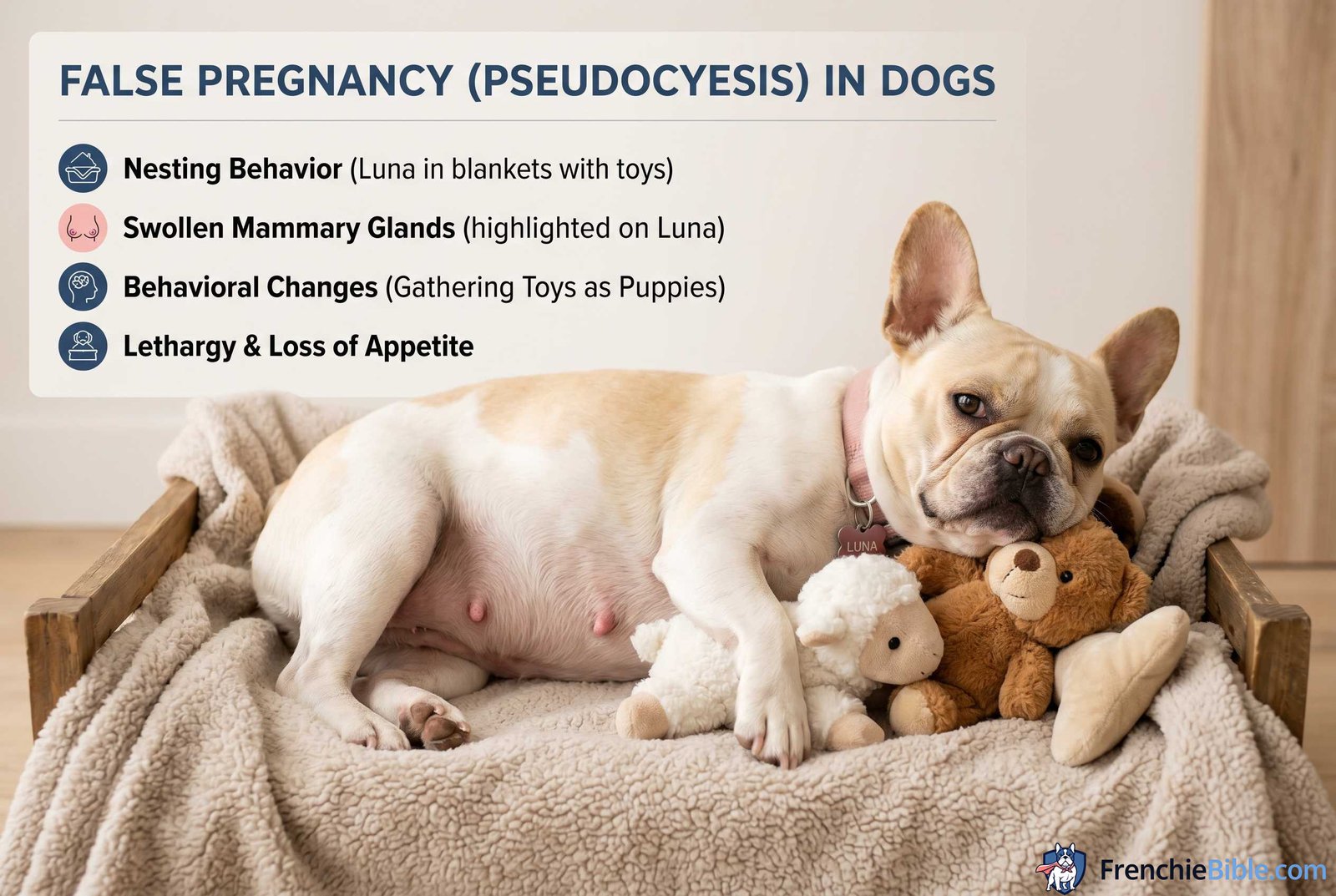
If your Frenchie is going through a phantom pregnancy, she is convinced she is a mother. You will likely see her exhibiting several of these behaviors:
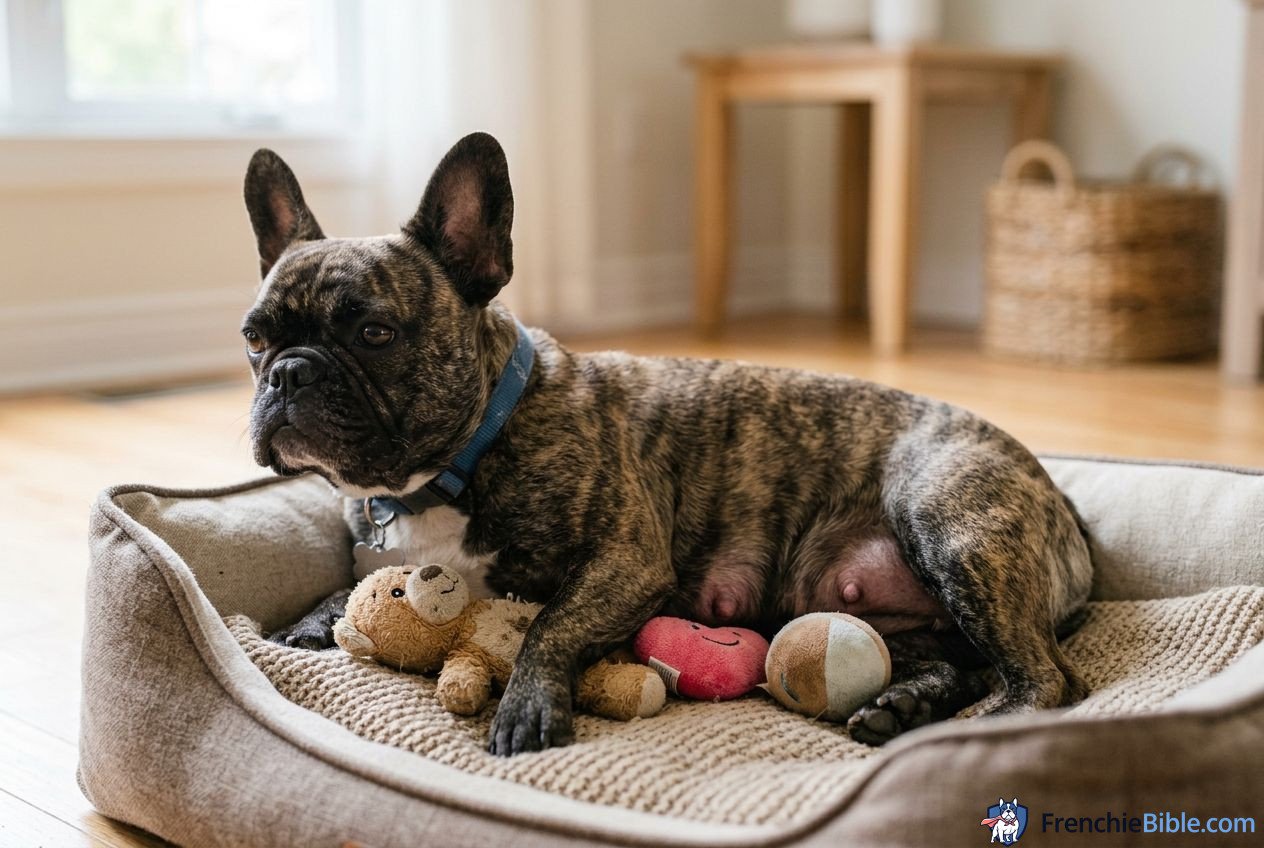
– Nesting: This is usually the first sign. She will relentlessly dig at her bed, blankets, or even your couch cushions, trying to create a safe “whelping box” for her imaginary puppies.
– Toy Hoarding: She will collect soft plush toys, socks, or slippers and carry them back to her nest. She will gently groom these objects, sleep curled around them, and may even become mildly aggressive if you try to take her “babies” away.
– Lethargy and Depression: Your normally playful Frenchie may refuse to go for walks, preferring to stay in her bed guarding her toys. She may seem deeply sad or depressed.
– Whining and Crying: You may hear her pacing the house, whining, or crying for no apparent reason. This is driven by hormonal anxiety.
– Loss of Appetite: Many dogs refuse to eat during the peak of a false pregnancy, mimicking the nausea and nesting behavior of an actual dog about to go into labor.
Physical Symptoms
The physical changes mimic an actual pregnancy so closely that even experienced owners can be fooled.
– Mammary Gland Enlargement: Her nipples and the surrounding mammary tissue will become significantly swollen and pink.
– Milk Production: This is the most shocking symptom for owners. If you squeeze her nipples, she may secrete a clear fluid, colostrum, or actual white milk.
– Weight Gain and Bloating: Her abdomen may become distended, making her look physically pregnant.
– Vomiting: Morning sickness-like symptoms can occur due to the shifting hormones.
How Long Does a False Pregnancy Last?
The timeline can vary, but generally, the symptoms of a false pregnancy begin 4 to 9 weeks after the end of her heat cycle.

Once the symptoms start, they typically last anywhere from 14 to 28 days. The timeline depends heavily on how the owner reacts to the situation. If managed correctly, the hormones will balance out, and she will return to her normal, goofy self within a few weeks. However, if managed incorrectly, the phantom pregnancy can be prolonged.
Relief Methods: How to Help Your French Bulldog
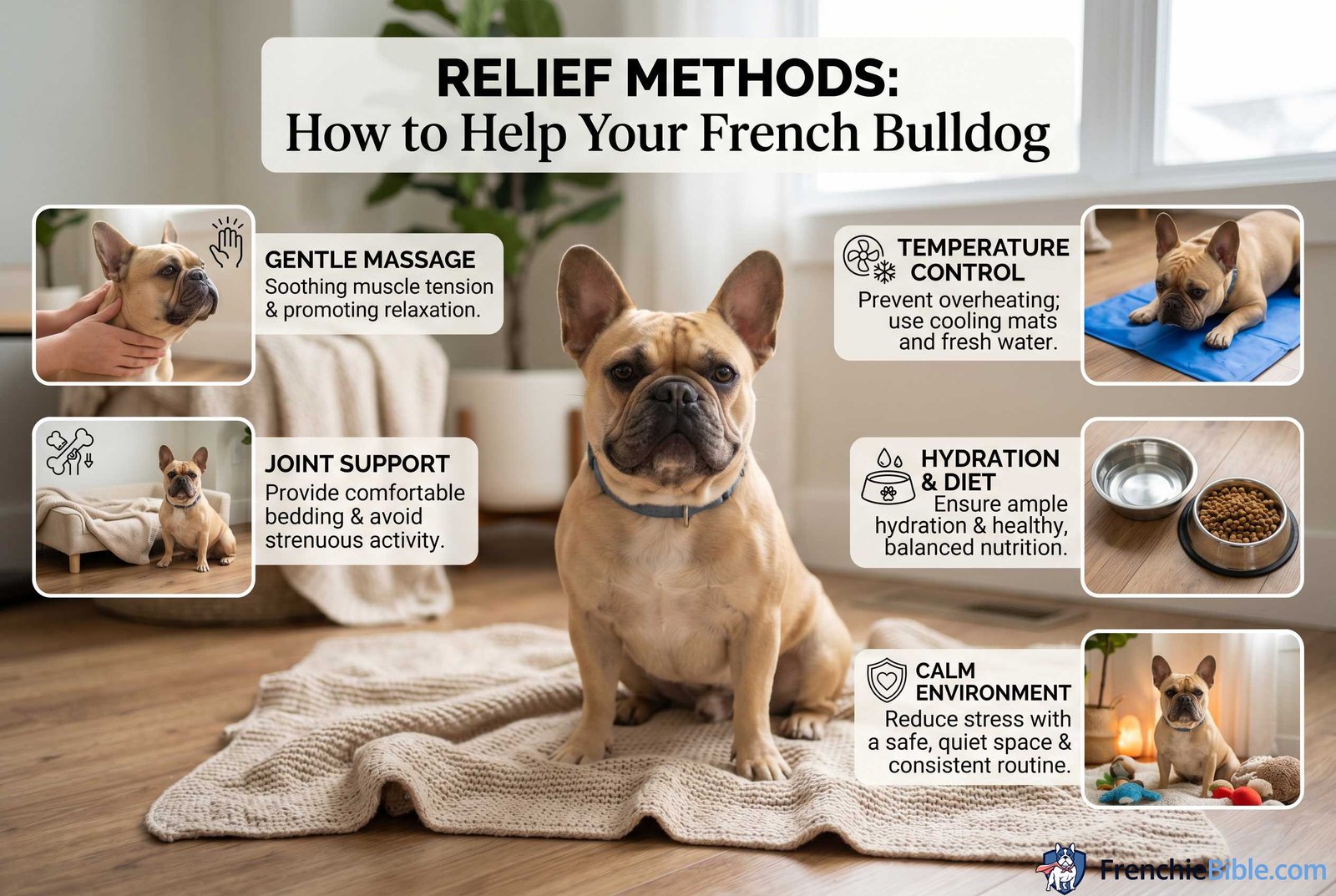
As An Experienced Breeder, I want to emphasize that while a false pregnancy is not a disease, it is deeply uncomfortable. Your Frenchie’s mammary glands are engorged and painful, and she is suffering from severe hormonal anxiety. Here is how you can help her through it safely.
1. DO NOT Touch the Mammary Glands
This is the most critical rule! When owners see swollen nipples, their first instinct is to apply warm compresses or milk the glands to relieve the pressure. Do not do this.
Stimulating the nipples—even just to check if she is still producing milk—sends a signal to her brain that “puppies are nursing.” This tells the body to produce more prolactin, creating more milk, and severely prolonging the false pregnancy. Leave her belly completely alone. If she is aggressively licking her own nipples to stimulate milk flow, you may need to put a soft surgical recovery suit or a “cone of shame” (E-collar) on her to physically stop the stimulation.
2. Remove the “Puppies”
It feels cruel, but you must remove the objects she is mothering. If she is hoarding a specific plush toy, wait until she goes outside to potty, and hide the toy completely out of sight.
If she is allowed to nurse and mother the toys, her brain will continue to believe she has a litter to care for, keeping her prolactin levels high. By removing the trigger, you help break the psychological cycle. Expect her to pace and whine for a day or two looking for her toys, but this is necessary for her hormones to reset.
3. Increase Exercise and Mental Stimulation
A tired dog is a dog with less time to obsess over imaginary puppies. You need to distract her brain. Take her on longer, brisk walks (weather permitting, always keeping BOAS in mind for Frenchies). Take her for car rides. Introduce new puzzle toys filled with high-value treats to force her brain to focus on problem-solving rather than maternal instincts.
4. Reduce Food Intake Slightly
If she is producing milk, her body is using calories to do so. In veterinary practice, we often recommend slightly reducing her food intake and withholding access to water during the overnight hours for a few days. Note: Only do this if your dog is otherwise perfectly healthy, and never restrict water during the day or if she has kidney issues. Reducing her caloric intake signals to the body that there are not enough resources to support a litter, which helps dry up milk production faster.
5. Try Natural Calming Supplements
Because the anxiety during a false pregnancy is so high, natural supplements can take the edge off. I frequently recommend veterinary-approved calming chews containing L-Theanine, Chamomile, or Valerian Root. CBD oil specifically formulated for dogs can also be highly effective in reducing the pacing and whining associated with hormonal stress.
When to See the Veterinarian
While most false pregnancies resolve on their own, medical intervention is sometimes necessary. You must bring your Frenchie to the vet if you notice:
– Mastitis: This is a dangerous infection of the mammary glands. If the milk becomes trapped and infected, the mammary tissue will become hard, hot to the touch, dark red or purple, and extremely painful. The milk may look yellow, green, or bloody. Mastitis requires immediate antibiotics and pain medication.
– Prolonged Symptoms: If she is still producing milk and acting depressed after 4 weeks, she needs medical help.
– Pyometra Risk: This is the most vital warning. The symptoms of a false pregnancy (lethargy, vomiting, lack of appetite, distended belly) are incredibly similar to Pyometra, a fatal infection of the uterus that occurs shortly after a heat cycle. If your dog has a fever, is drinking excessive amounts of water, or has a foul-smelling discharge from her vulva, it is a life-threatening emergency. If you are ever in doubt, go to the vet.
The Ultimate Solution: Spaying
If your French Bulldog goes through a false pregnancy once, she is highly likely to experience it after every single heat cycle for the rest of her life. The repeated swelling of the mammary glands significantly increases her risk of developing mammary cancer later in life.
Unless you are a professional, ethical breeder who is actively planning to breed your Frenchie, the only permanent cure for false pregnancies is to have her spayed.
Spaying removes the ovaries and uterus, completely halting the hormonal cycles that cause pseudocyesis. However, a crucial veterinary rule is: never spay a dog while she is actively in a false pregnancy. Doing so can permanently lock her in that hormonal state. You must wait until all symptoms have completely resolved, and the milk has dried up, before scheduling the surgery.
Conclusion
A phantom pregnancy can be a bizarre and stressful experience for a French Bulldog owner. Seeing your normally playful pup turn into an anxious, toy-hoarding mother is unsettling. However, by understanding the hormonal science behind it, removing the triggers, withholding mammary stimulation, and providing healthy distractions, you can help her navigate the hormonal storm. Ultimately, discussing a spay surgery with your veterinarian is the best gift you can give your Frenchie to ensure she lives a happy, hormonally balanced life free from the stress of phantom puppies.
Frequently Asked Questions (FAQs)
1. Can a false pregnancy happen after a dog’s very first heat cycle?
Yes, absolutely. A false pregnancy can occur after any heat cycle, regardless of the dog’s age. It is quite common for young French Bulldogs to experience a false pregnancy after their very first estrus cycle, which usually happens between 6 and 12 months of age.
2. Are there medications to stop a false pregnancy?
Yes. If the false pregnancy is severe, prolonged, or if the dog is producing massive amounts of milk that risk turning into mastitis, veterinarians can prescribe medications. Drugs like hormonal medication (discuss with your veterinarian) act as prolactin inhibitors, rapidly drying up the milk and resolving the behavioral symptoms within a few days.
3. Will my Frenchie’s personality permanently change after a false pregnancy?
No. While she may seem depressed, protective, or uncharacteristically moody during the pseudocyesis, this is entirely driven by hormones. Once the prolactin levels drop and her body resets, her normal, affectionate Frenchie personality will return completely.
4. My Frenchie is licking her swollen nipples constantly. How do I stop her?
Self-nursing is a major problem because it continuously stimulates milk production. You must physically prevent her from reaching her belly. You can use a traditional Elizabethan collar (the cone), an inflatable neck donut, or a surgical recovery suit (which looks like a doggy onesie) that covers her abdomen entirely.
5. I have an intact male dog in the house. Could she actually be pregnant?
If she had access to an intact male dog during her heat cycle, you must assume she is pregnant until proven otherwise. The symptoms of early pregnancy and false pregnancy are identical. You should take her to the vet around day 28-35 after the suspected mating for an ultrasound to confirm whether there are actual puppies in her uterus.
Disclaimer: I am a French Bulldog breeding expert with over a decade of hands-on experience with this breed. I am not An Experienced Breedererinarian. The information in this article is for educational purposes only. Always consult your veterinarian regarding your dog’s specific health needs and care.
Disclaimer: I am a French Bulldog breeding expert with over a decade of hands-on experience with this breed. I am not a veterinarian. The information in this article is for educational purposes only. Always consult your veterinarian regarding your dog’s specific health needs and care.