Disclaimer & Legal Notice:
The information provided in this article—including all behavioral training, nutritional, and health advice—is strictly for educational and informational purposes only. We are not your personal veterinarian. This content does not constitute professional veterinary diagnosis, treatment, or medical advice. French Bulldogs are prone to specific severe health conditions. Always consult with a licensed, primary care veterinarian before starting any new training protocols, administering supplements, or seeking medication for your dog’s severe anxiety.
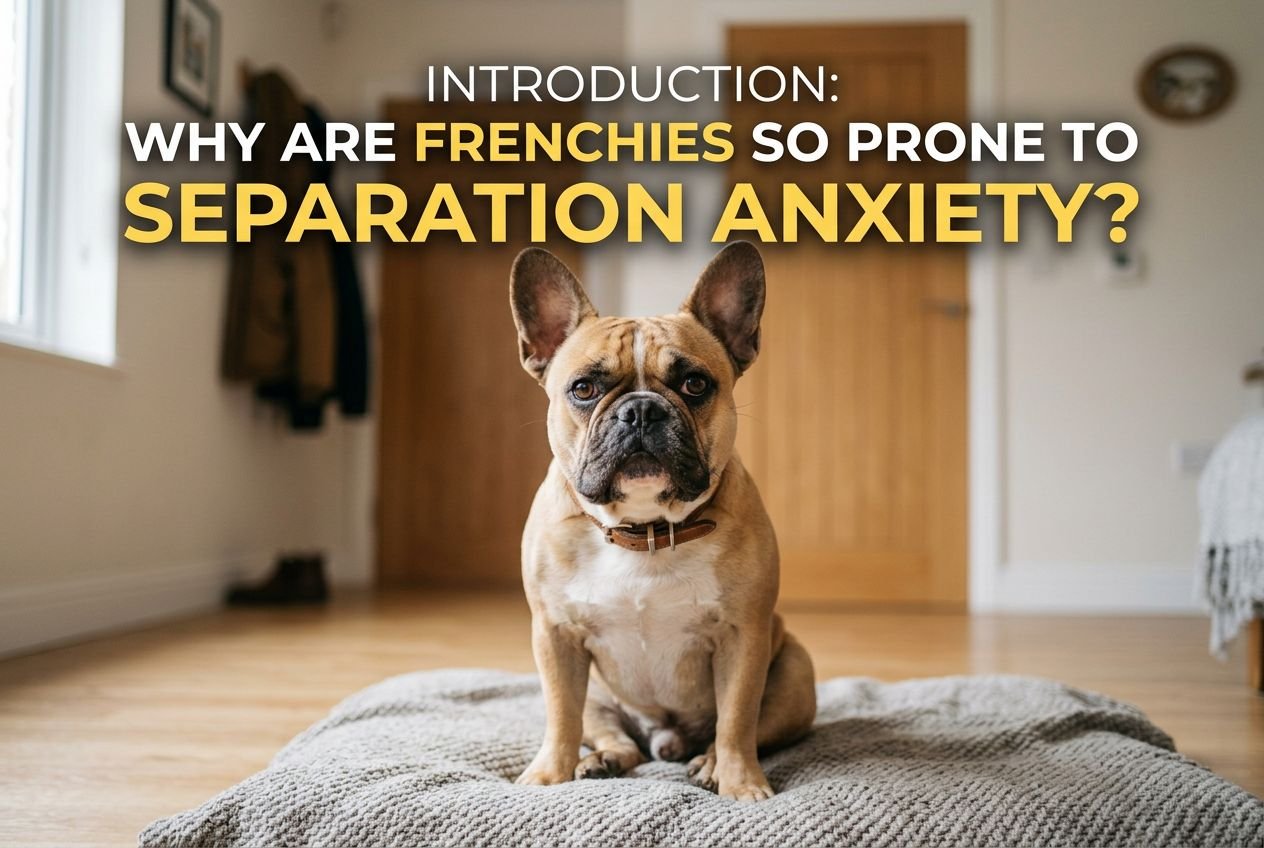
Introduction: Why Are Frenchies So Prone to Separation Anxiety?
As a seasoned French Bulldog specialist, breeder, and behavioral researcher, I frequently hear owners say in despair: “I just walked down the driveway to get the mail, and my Frenchie screamed like the world was ending.”
Related Reading: Health & Diet | Frenchie Puppy Guide
It’s crucial to understand that this is not your dog being spiteful or acting out. For hundreds of years, the French Bulldog was bred for one singular purpose: to be a human companion. This genetic blueprint makes them fiercely bonded to their owners. However, when this bond warps into french bulldog separation anxiety, it transitions from “love” into a debilitating psychological panic disorder.
Punishing your dog or simply letting them “cry it out” will not work. To truly save your dog’s sanity (and your furniture), you need a scientifically backed Systematic Desensitization Therapy and structured Dog Alone Training.
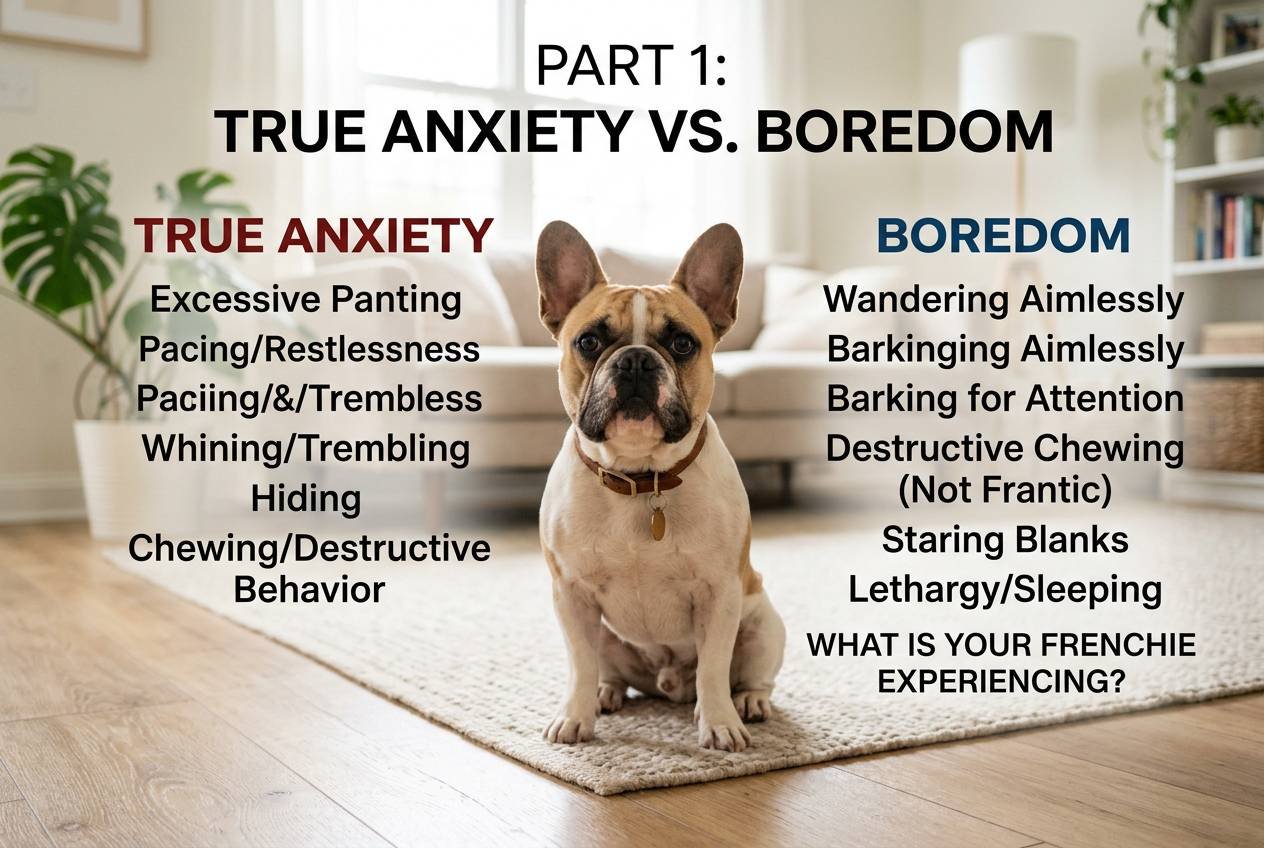
Part 1: True Anxiety vs. Boredom – What is Your Frenchie Experiencing?
Core Symptoms of French Bulldog Separation Anxiety
How do you know if your Frenchie is just a bored puppy chewing a shoe, or suffering from a clinical panic attack? The key indicator is timing. True separation anxiety usually peaks within the first 15 to 30 minutes of your departure. Look out for these red flags:
- Desperate Vocalization: High-pitched howling, screaming, or a continuous, frantic “pig-like” crying.
- Destruction at Exits: Frantically scratching or chewing at door frames, window blinds, or baby gates, trying to “escape” to find you.
- Stress Elimination: A perfectly potty-trained dog suddenly urinating or defecating near the front door or on your bed.
- Self-Mutilation: Compulsive licking of paws (causing sores) or chewing their own tail out of distress.
WARNING: The Deadly Physical Complications for Frenchies
Because of their unique anatomy, a panic attack is physically far more dangerous for a French Bulldog than for other breeds:
1. BOAS (Brachycephalic Obstructive Airway Syndrome) Crisis: When a Frenchie panics, they hyperventilate. This rapid, shallow breathing causes their already-elongated soft palates to become inflamed and swollen. This obstructs their airway further, rapidly leading to oxygen deprivation and potentially fatal Heatstroke, even in a cool room.
2. IVDD (Intervertebral Disc Disease) Risk: Frenchies are a chondrodysplastic (dwarf) breed with fragile spines. When an anxious Frenchie jumps repeatedly on their hind legs to scratch at a door, the extreme mechanical stress on their lumbar and cervical spine can trigger an acute ruptured disc, potentially leading to paralysis.
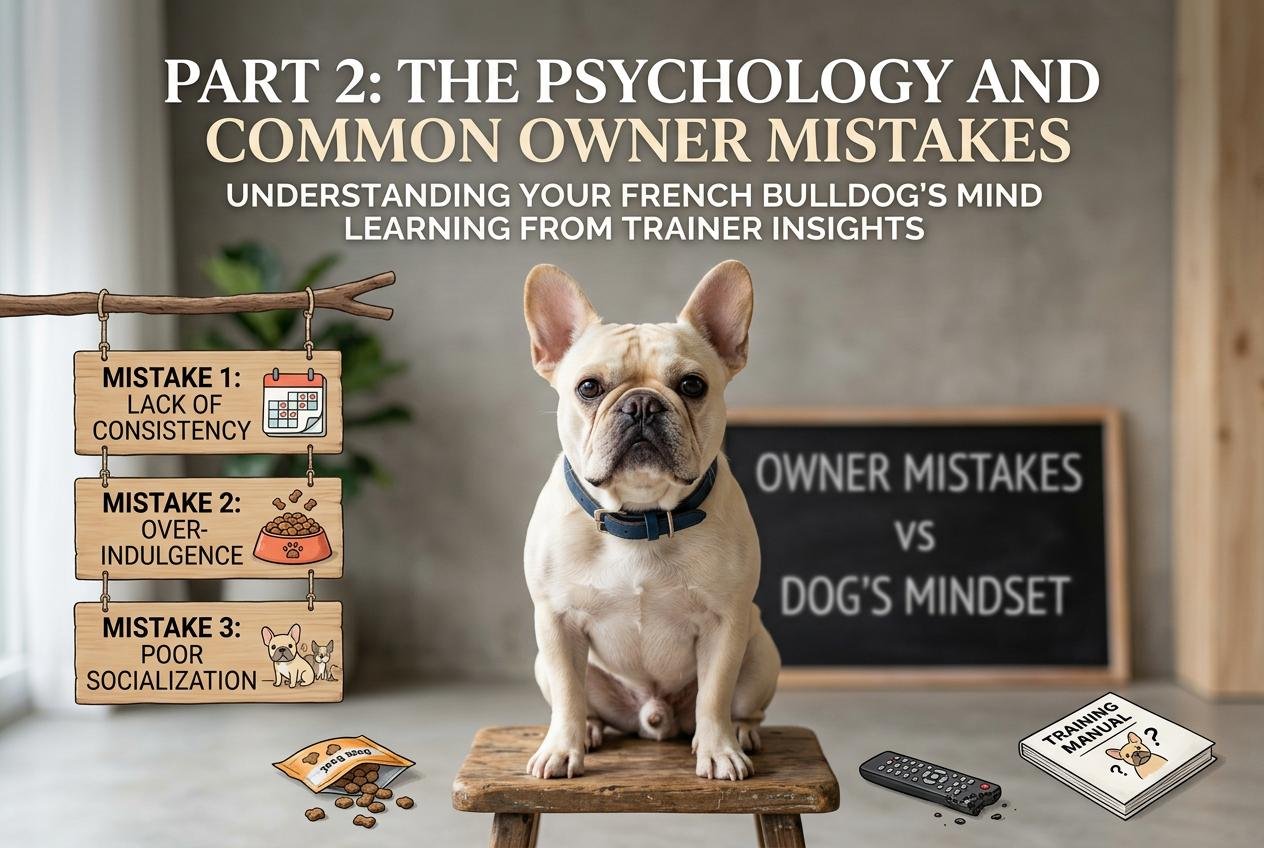
Part 2: The Psychology and Common Owner Mistakes
Unconscious Mistakes That “Fuel” the Anxiety
- The Emotional Rollercoaster: Hugging your dog, using a sad baby voice, and saying, “Mommy will be right back, don’t cry” before you leave, and then acting overly ecstatic when you return. In canine psychology, this creates a “Contrast Effect.” It teaches the dog that your absence is a terrifying, unnatural event.
- Punishing the Aftermath: You come home to a destroyed pillow and yell at your dog. Frenchies cannot connect your current anger with their past destruction. They only learn: “Owner coming home = Danger/Yelling,” which makes them even more anxious next time.
Understanding the Threshold of Panic
When your Frenchie is in the midst of an anxiety attack, their brain is flooded with cortisol (the stress hormone) and enters a “Fight or Flight” state. Any attempt at Frenchie Behavior Modification during this peak panic is useless. Their brain is effectively “offline” for learning. Our goal is to train them below this threshold.
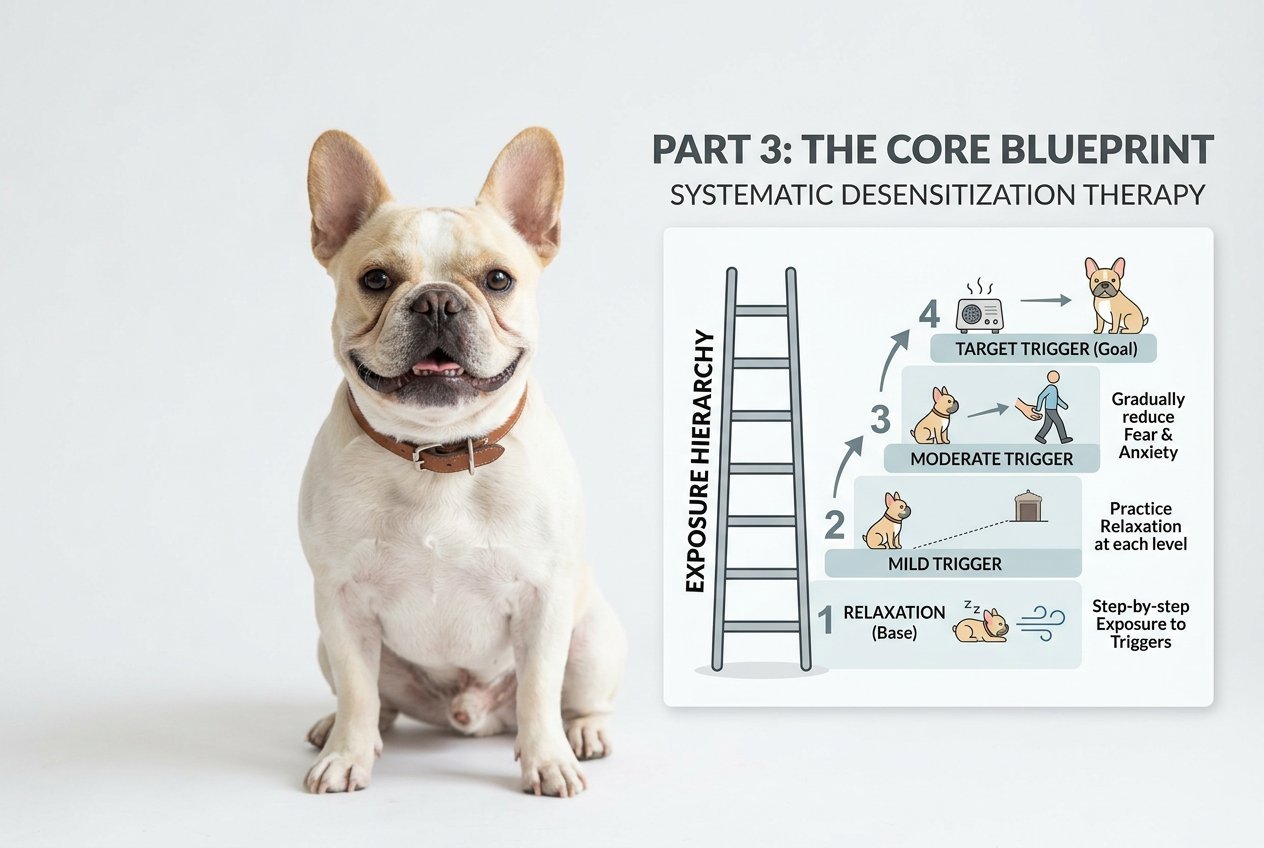
Part 3: The Core Blueprint – Systematic Desensitization Therapy
This is the most critical, actionable part of the guide. If you want to fix the problem, you must follow these steps precisely.
Step 1: Uncoupling Departure Cues (The Prep Phase)
Frenchies are highly observant. They have memorized the sequence of events that predicts your departure: putting on shoes, grabbing keys, putting on a coat. The moment you grab your keys, their anxiety spikes.
- Action Plan: Perform these triggers 10 to 15 times a day without leaving the house. Put on your coat, jingle your keys, pick up your purse—and then go sit on the couch and watch TV.
- The Goal: Break the association. We want the dog to learn that “keys jingling” means absolutely nothing.
Step 2: Micro-Absences (The Yoyo Method)
Once your Frenchie ignores your departure cues, start real Dog Alone Training using Micro-Absences.
- Action Plan: Walk to the door, turn the knob, let go, and walk away. If they remain calm, upgrade: open the door, step one foot out, step back in, and shut it. Upgrade again: step out, shut the door, count to 1 second, and immediately open it and walk back in.
- The Golden Rule (Reading Body Language): Watch for stress signals like lip licking, yawning, pinning ears back, or whale eye (showing the whites of their eyes). If you see these, you went too fast. Scale back the time. Never open the door while they are barking. Wait for a split second of silence before returning, so you don’t reward the vocalization.
Step 3: Duration & Dynamic Threshold Management
- The Milestone Timeline: 1 second -> 3 seconds -> 5 seconds -> 10 seconds -> 30 seconds -> 1 minute.
- Note: Progressing from 1 second to 1 minute is the most agonizing, tedious part of Systematic Desensitization. It might take two solid weeks. However, once your Frenchie can tolerate 15 minutes of being alone without panicking, jumping to 1 hour, and then 3 hours, becomes exponentially easier.
Part 4: Multi-Dimensional Support – Environment, Nutrition, and Vet Care
Crate Training Done Right (Avoid the Dangers!)
Never force a dog with severe separation anxiety into a locked crate and leave for hours. A panicking French Bulldog will bend crate wires, break their teeth, or cause a catastrophic IVDD spinal injury thrashing around.
- The Alternative: If the crate induces panic, use an open, dog-proofed safe room or a heavy-duty baby playpen. If you want to crate train, it must be a place where only amazing things happen. Keep the door open, feed them meals inside, and never use it as a punishment.
Mental Enrichment: Exhausting the Brain
Licking and chewing release endorphins (natural calming hormones) in a dog’s brain.
- Action Plan: Prepare several tough chew toys (like Kongs or LickiMats). Stuff them with pureed pumpkin, plain unsweetened yogurt, and dog-safe peanut butter (Check labels carefully: it MUST NOT contain Xylitol, which is highly toxic to dogs). Freeze them overnight. Give this high-value treat to your Frenchie only as you are walking out the door.
Nutritional & Veterinary Support
While you should always consult your local vet before starting regimens, many behavioral experts utilize supplements to take the edge off:
- L-Theanine & L-Tryptophan: Amino acids that naturally help support serotonin production and promote a calm state.
- Calming Probiotics: Strains like Bifidobacterium longum support the gut-brain axis, which is scientifically linked to emotional regulation in dogs.
- When to ask your vet for Prescription Medication: If your dog is self-mutilating or at risk of a BOAS crisis, talk to your licensed veterinarian about anti-anxiety medications (such as Fluoxetine or Gabapentin). Medication is not a failure. It is a tool to lower your dog’s baseline panic so that their brain is calm enough to actually learn from your desensitization training.
Part 5: Frenchie Behavior Modification FAQs
Q: When I get home, my Frenchie jumps, screams, and sometimes pee themselves from excitement. What do I do?
A: Completely ignore them. No touch, no talk, no eye contact. Take off your shoes, put down your bags, and go about your business. Wait until they have four paws on the floor and have stopped panting entirely. Only then should you calmly call them over for a gentle pet.
Q: I am watching my pet camera while at work, and my Frenchie is breathing very heavily (BOAS alert). Should I rush home?
A: With a Brachycephalic breed, physical safety comes first. If your dog’s tongue is turning purple, or they are struggling to breathe with severe rasping that isn’t stopping, you or an emergency contact with a spare key must intervene immediately to prevent heatstroke. This is exactly why Systematic Desensitization must be done in seconds and minutes—we never want to push the dog into a full-blown panic attack while we are far away.
Conclusion: Rebuilding Trust and Security
Curing French Bulldog Separation Anxiety is not a weekend project; there are no magic fixes. Systematic Desensitization requires immense patience, repetition, and consistency.
Remember, your Frenchie isn’t trying to destroy your home or make your life difficult—they are simply terrified of losing their world (you). By applying science-based training, strict safety protocols, and unconditional love, you can rebuild their confidence, eliminate their panic, and give both of you the peaceful life you deserve.
For more expert tips on French Bulldog health, BOAS management, and behavioral training, subscribe to our newsletter!