
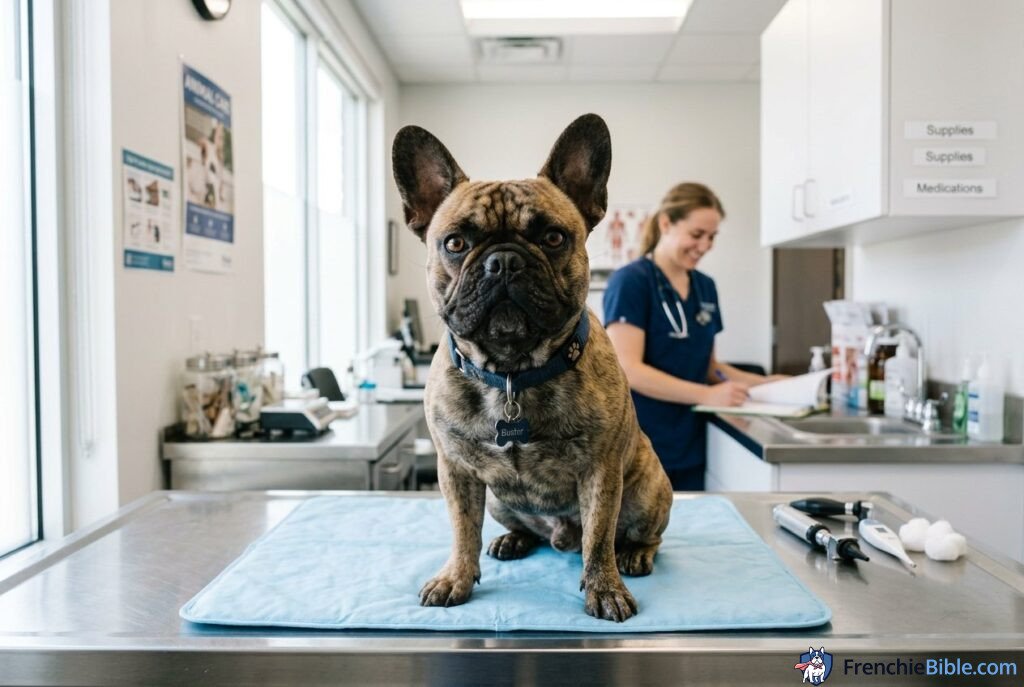
When the cold winter finally melts away, most of us look forward to the vibrant, blooming days of spring and the warm, sun-drenched afternoons of summer. We imagine taking our French Bulldogs on long walks through lush parks, letting them roll in the fresh green grass, and enjoying the great outdoors. However, for a significant number of French Bulldog owners, the arrival of spring and summer brings a dark cloud of anxiety. Instead of joyful romps, the season is marked by incessant scratching, relentless paw licking, red, inflamed skin, and endless trips to the veterinarian.
If you are watching your Frenchie suffer as the seasons change and asking yourself, “Can dogs really be allergic to pollen and grass?” the answer is a resounding and unfortunate yes. Just like humans, dogs can suffer from seasonal environmental allergies, often referred to as seasonal allergies, hay fever, or technically, atopic dermatitis (atopy).
Related Reading: Training & Behavior | Frenchie Puppy Guide | Best Food for Frenchies
as a French Bulldog expert and breeder and breeder, I have seen hundreds of Frenchies whose quality of life plummets during the spring and summer months due to environmental allergens. The French Bulldog breed, while undeniably charming, affectionate, and utterly adorable, is genetically predisposed to a myriad of allergy-related issues. Their unique physical characteristics, combined with inherited immune system quirks, make them particularly susceptible to the microscopic invaders that fill the air during the warmer months.
In this ultimate, comprehensive guide, we will dive deep into the world of French Bulldog environmental allergies. We will explore exactly why your Frenchie is reacting to pollen and grass, how to recognize the subtle and glaring signs of an allergic reaction, and most importantly, how to build an impenetrable defense strategy to protect your dog. From simple at-home management techniques and dietary adjustments to the latest cutting-edge veterinary treatments, this guide will equip you with the knowledge you need to help your French Bulldog enjoy a comfortable, itch-free spring and summer.
Understanding Environmental Allergies in French Bulldogs
To effectively combat seasonal allergies, we first need to understand the enemy. Environmental allergies in dogs fall under the umbrella term “Atopic Dermatitis” or “Atopy.”
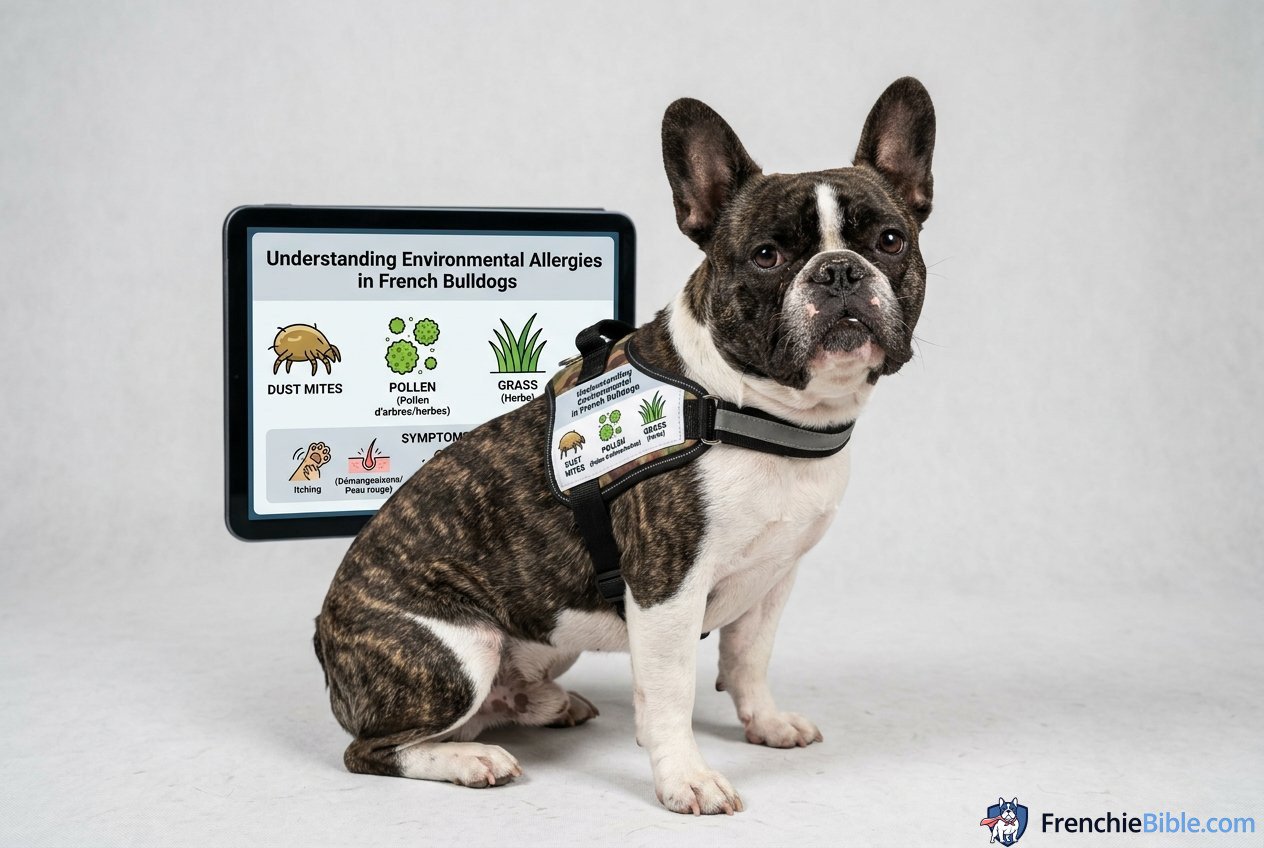
What is Canine Atopic Dermatitis?
Canine Atopic Dermatitis is a chronic, inflammatory skin disease associated with allergies. It is essentially an overreaction of the dog’s immune system to harmless airborne or environmental substances—known as allergens. In a healthy, non-allergic dog, inhaling a grain of oak tree pollen or brushing against a blade of Bermuda grass causes no reaction whatsoever. The immune system correctly identifies these substances as benign and ignores them.
However, in an atopic dog, the immune system makes a critical error. It misidentifies these common environmental elements as dangerous invaders. When the dog is exposed to the allergen (either through inhalation or, more commonly in dogs, through direct skin contact), the immune system launches a massive defensive strike. It triggers the release of histamine and other inflammatory mediators. In humans, this histamine release typically causes respiratory symptoms like sneezing, runny noses, and watery eyes (hay fever). But dogs have a different physiological response. In dogs, the mast cells that release histamine are highly concentrated in the skin. Therefore, their allergic reaction manifests primarily as severe skin inflammation and intense itching (pruritus).
Why Are French Bulldogs So Prone to Environmental Allergies?
It often seems like French Bulldogs are allergic to everything. Why is this breed so heavily represented in veterinary dermatology clinics? The vulnerability of Frenchies to environmental allergies is a multi-faceted issue:
- Genetic Predisposition: Atopy is highly heritable. Decades of breeding for specific physical traits (like the flat face and compact body) sometimes occurred at the expense of robust immune function. A significant percentage of French Bulldogs inherit the genetic markers that predispose them to overactive immune responses. If a Frenchie’s parents suffered from allergies, there is a very high probability the puppies will too.
- Defective Skin Barrier Function: Recent dermatological research indicates that atopic dogs actually have a genetically defective epidermal barrier. The outermost layer of their skin (the stratum corneum) lacks sufficient essential fatty acids and ceramides. Think of their skin like a brick wall where the mortar is crumbling. Because the barrier is weak, microscopic allergens like pollen and mold spores can easily penetrate the skin and trigger the immune system beneath. This also means their skin loses moisture rapidly, leading to dry, flaky, and easily irritated skin.
- Physical Anatomy: French Bulldogs are low to the ground. When they walk through grass, their unprotected bellies, armpits, and groins are in direct, constant contact with allergens. Furthermore, their single, relatively thin coat offers very little physical protection against environmental irritants compared to a thick, double-coated breed like a Husky.
- Skin Folds and Wrinkles: The adorable wrinkles that define the Frenchie face and tail pocket act as perfect traps for pollen, dust, and moisture. These dark, warm, and humid crevices become breeding grounds for secondary bacterial and yeast infections when the skin becomes inflamed from allergies.
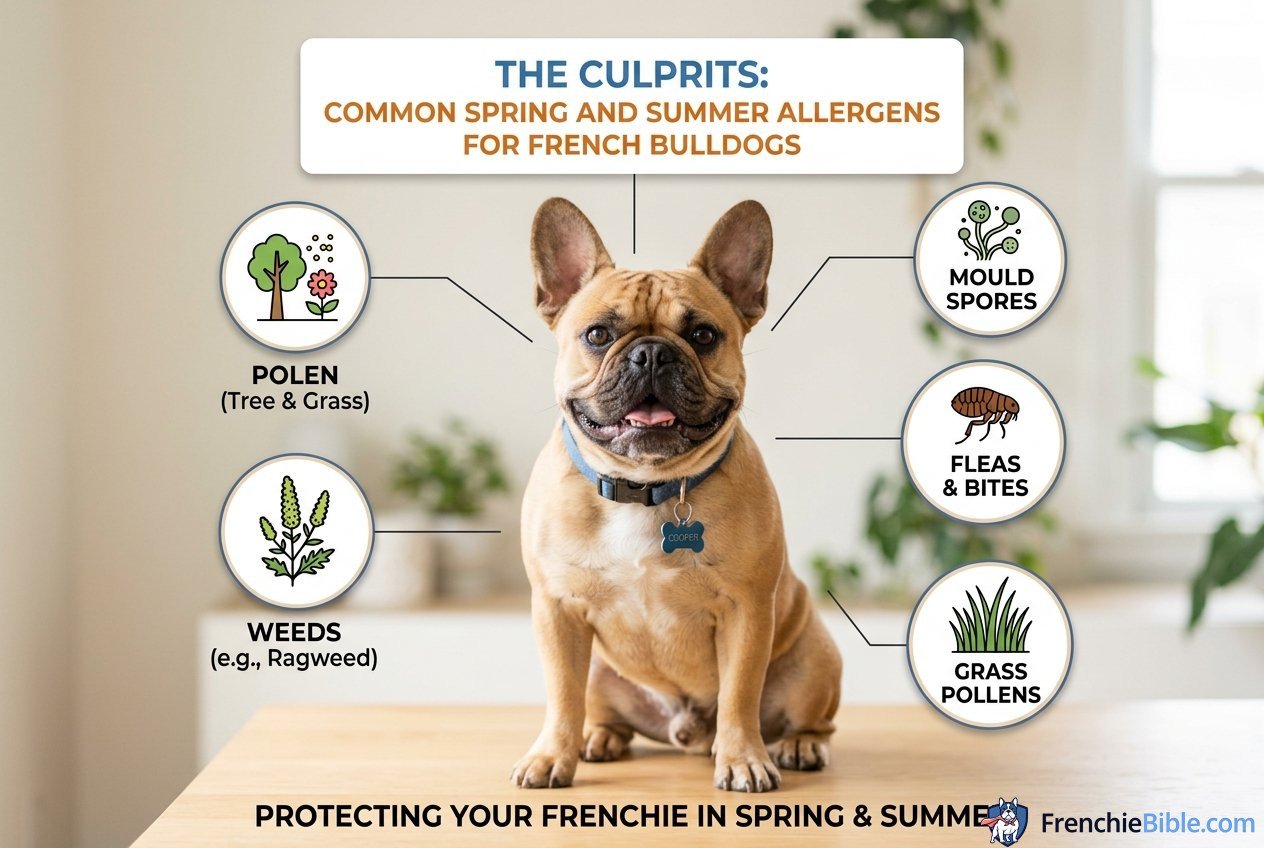
The Culprits: Common Spring and Summer Allergens for French Bulldogs
When the weather warms up, nature explodes with life, and the air becomes saturated with microscopic particles. While humans might track pollen counts on the local news, our dogs are experiencing these allergens on a much more intimate level. Here are the primary culprits responsible for your Frenchie’s spring and summer misery.
Pollen: The Invisible Enemy
Pollen is a fine-to-coarse powdery substance created by certain plants as part of their reproductive process. It is easily carried by the wind, meaning your dog doesn’t even need to be near the plant to be exposed; pollen can travel for miles. Pollen allergies typically follow a distinct seasonal pattern:
- Tree Pollen (Early to Late Spring): Trees are usually the first to pollinate as the weather warms. Common offenders include Oak, Birch, Cedar, Ash, Maple, Elm, and Pine. If your Frenchie starts scratching frantically in March or April, tree pollen is likely the culprit.
- Grass Pollen (Late Spring through Summer): Grasses are the dominant allergen during the summer months. Bermuda, Timothy, Orchard, Kentucky Bluegrass, and Sweet Vernal grasses produce massive amounts of pollen. Every time you or your neighbor mows the lawn, billions of grass pollen grains are kicked up into the air and settle on your dog’s skin and paws.
- Weed Pollen (Late Summer through Fall): As summer winds down, weed pollen takes over. Ragweed is the most notorious offender, but Pigweed, Sagebrush, and Russian Thistle are also common triggers.
Grass and Weeds: Direct Contact Allergies
Aside from inhaling the pollen produced by grasses, many French Bulldogs suffer from direct contact allergies to the grass itself. When a Frenchie’s sparsely haired belly and paws touch certain types of grass (like Bermuda or St. Augustine) or common lawn weeds (like dandelions or clover), the physical contact triggers an immediate, localized allergic reaction. This is why you might notice your dog’s belly turning bright pink or red immediately after laying in the yard. The sap, tiny hairs on the plant leaves, and the physical abrasion of the grass blades can all cause contact dermatitis.
Mold Spores
While mold is often considered an indoor allergen, outdoor mold spores thrive in the spring and summer, particularly in regions with high humidity and frequent summer thunderstorms. Mold grows on fallen leaves, compost piles, damp soil, and rotting wood. When these spores become airborne, they are easily inhaled or land on your dog’s coat. Unlike pollen, which has distinct seasons, mold spores can cause allergy flare-ups from early spring all the way until the first hard frost of winter.
Dust Mites (The Year-Round Nuisance Amplified in Summer)
Dust mites are a year-round indoor allergen, but they deserve a mention here because their populations explode during the warm, humid months of summer. If your home’s humidity rises above 50% in the summer, dust mites will thrive in your carpets, upholstery, and your dog’s bed. If your dog seems allergic indoors during the summer just as much as outdoors, dust mites might be a contributing factor to their overall “allergy load.”
Recognizing the Signs: Symptoms of Pollen and Grass Allergies in Frenchies
Because dogs absorb environmental allergens primarily through their skin, the symptoms of atopic dermatitis look very different from human hay fever. Identifying these symptoms early is crucial for preventing severe secondary infections. Here is what to look out for:
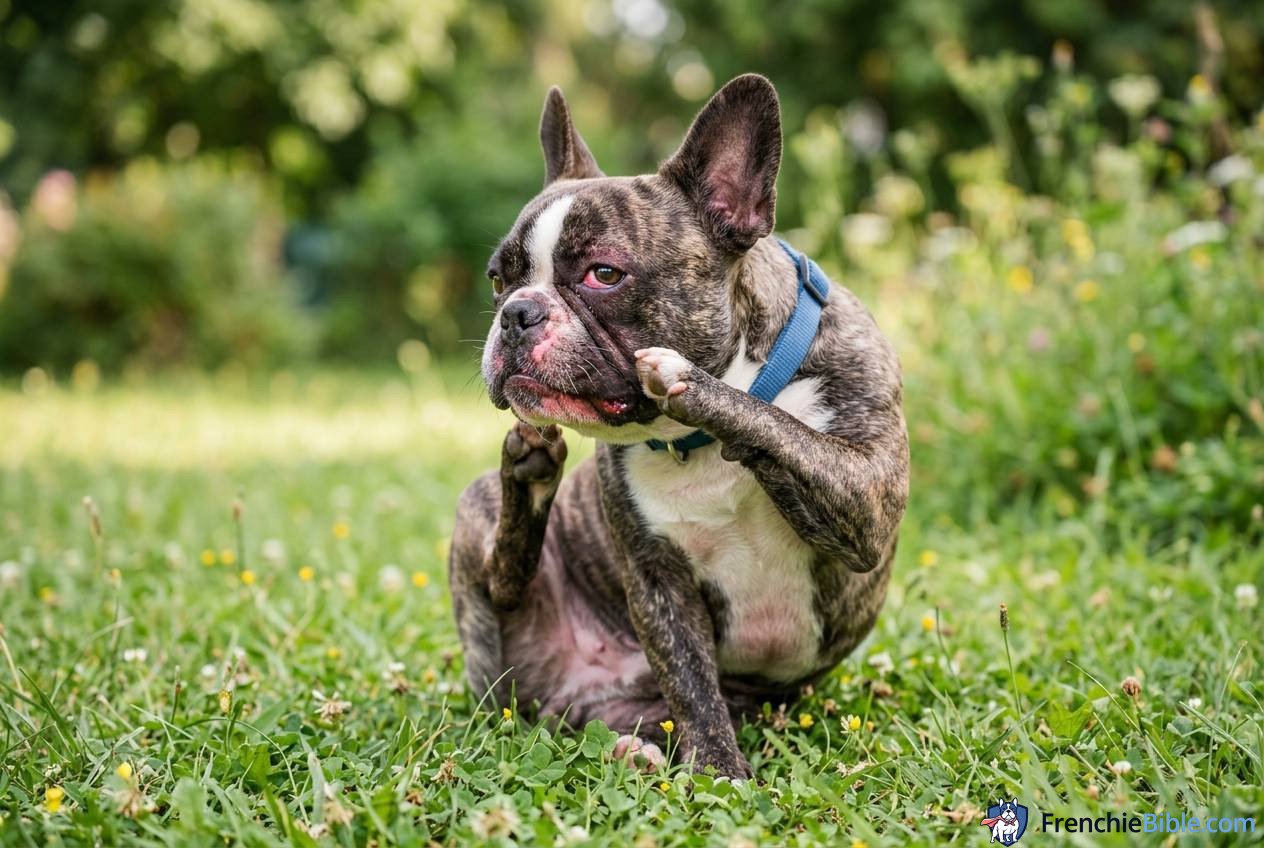
1. Intense Itching (Pruritus) and Scratching
This is the hallmark sign of environmental allergies. Your Frenchie will seem uncomfortably itchy. They will use their hind legs to scratch their armpits, flanks, and neck. You may notice them rubbing their face and body aggressively against the carpet, the sofa, or your legs to find relief. The itching can become so severe that it disrupts their sleep, and consequently, yours.
2. The Danger Zones: Paws and Ears
The paws and ears are the two most common areas affected by canine atopy, and they are often the first places symptoms appear.
- Obsessive Paw Licking and Chewing: When dogs walk outside, their paws pick up pollen, mold, and grass antigens. Because their skin barrier is weak, these allergens trigger severe inflammation between the toes (interdigital spaces) and on the paw pads. Your Frenchie will lick and chew their paws constantly in an attempt to soothe the itch. A telltale sign of chronic paw licking in fawn, white, or cream Frenchies is a rust or reddish-brown staining of the fur around the toes. This staining is caused by porphyrins, compounds found in dog saliva.
- Chronic Ear Infections (Otitis Externa): The skin lining the ear canal is an extension of the external skin. When the skin on the body becomes inflamed due to allergies, the skin inside the ears does too. The inflammation creates a warm, narrow, and moist environment—the perfect breeding ground for naturally occurring yeast (Malassezia) and bacteria to overgrow. If your Frenchie is constantly shaking their head, scratching their ears, or if you notice a foul, yeasty odor and dark discharge coming from their ears during the summer, environmental allergies are almost certainly the underlying cause.
3. Red, Inflamed Belly and Armpits
Because Frenchies have very little hair on their undersides, the belly, groin, and armpits are highly vulnerable to contact with grass and airborne pollen. In an allergic dog, the skin in these areas will appear bright pink, red, or angry. You might also notice hives (urticaria)—small, raised, red bumps that appear suddenly on the skin, particularly after a walk in the grass.
4. Facial Rubbing and Watery Eyes
While less common than skin symptoms, some French Bulldogs do exhibit signs similar to human hay fever. They may rub their faces along the floor due to itchy eyes or a tingly muzzle. You might observe clear, watery discharge from the eyes (epiphora), mild redness in the whites of the eyes (conjunctivitis), or occasional sneezing and reverse sneezing after sniffing the grass.
5. Secondary Skin Infections (Pyoderma and Malassezia Dermatitis)
This is the most frustrating and damaging consequence of allergies. When a Frenchie constantly scratches, licks, and chews at their itchy skin, they create microscopic tears and abrasions. They are essentially destroying their already fragile skin barrier. This allows the bacteria (typically Staphylococcus pseudintermedius) and yeast (Malassezia pachydermatis) that normally live harmlessly on the skin’s surface to invade the deeper layers and cause severe infections.
Signs of a secondary infection include:
- Crusty scabs and scaling skin.
- Pus-filled bumps (pustules) resembling pimples.
- Greasy, sticky skin with a foul, rancid, or “Fritos” corn chip odor (indicative of yeast).
- Thickened, darkened, elephant-like skin (hyperpigmentation and lichenification) from chronic, long-term inflammation and scratching.
- Hair loss (alopecia) in patches.
Diagnosing Environmental Allergies in Your French Bulldog
If you suspect your Frenchie is suffering from pollen or grass allergies, a trip to the veterinarian is mandatory. Diagnosing atopic dermatitis is what veterinarians call a “diagnosis of exclusion.” There is no single magic test that instantly proves a dog has environmental allergies; rather, the vet must systematically rule out every other possible cause of the itching.
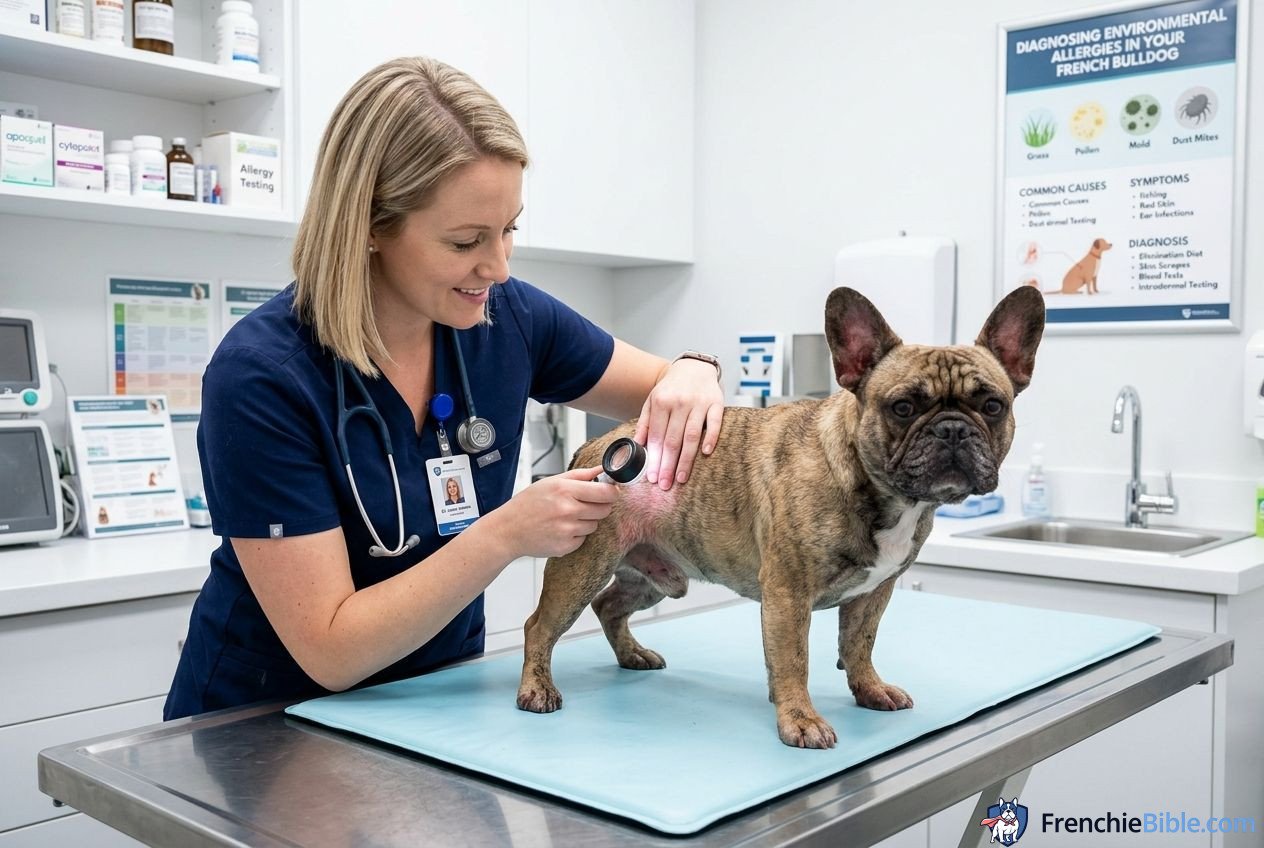
Step 1: Ruling Out Parasites
The first thing your vet will do is ensure your dog is not suffering from fleas, ticks, lice, or mites (like Sarcoptic or Demodectic mange). Even if you don’t see fleas, a single flea bite can cause intense itching in a dog with Flea Allergy Dermatitis (FAD). Your vet will likely perform a skin scraping and recommend a strict, veterinary-grade flea and tick preventative.
Step 2: Treating Secondary Infections
Before the underlying allergy can be addressed, any active bacterial or yeast infections on the skin or in the ears must be treated with antibiotics or antifungal medications. The infections themselves cause intense itching, so you won’t know the true baseline level of the dog’s allergic itch until the infections are cleared.
Step 3: The Food Trial (Ruling Out Food Allergies)
This is often the most frustrating step for owners, but it is medically necessary. Food allergies and environmental allergies manifest with the exact same symptoms: itchy skin, ear infections, and paw licking. Because you cannot reliably test for food allergies via blood or skin tests, the only way to rule out a food allergy is through an 8-to-12-week strict elimination diet. Your vet will prescribe a hydrolyzed protein diet or a novel protein diet. If the itching does not stop after 12 weeks on the strict diet, food allergies are ruled out, leaving environmental allergies (Atopy) as the final diagnosis.
(Note: It is very common for French Bulldogs to suffer from BOTH food and environmental allergies simultaneously. Dealing with one can often lower the dog’s overall “itch threshold,” making the other easier to manage.)
Step 4: Allergy Testing (Identifying the Specific Environmental Culprits)
Once the vet has confidently diagnosed Atopic Dermatitis, you can choose to pursue allergy testing. It is important to understand that allergy testing is not used to diagnose whether the dog has allergies; it is used only to identify exactly what the dog is allergic to, for the explicit purpose of formulating an allergy vaccine (immunotherapy).
There are two types of allergy testing:
1. Intradermal Skin Testing (IDST): This is the gold standard, usually performed by An Experienced Breedererinary dermatologist. The dog is sedated, a patch of fur is shaved, and tiny amounts of various allergens (trees, grasses, weeds, molds, dust mites) are injected under the skin. The dermatologist then monitors the skin for localized allergic reactions (hives/welts). This test is highly accurate but requires a specialist.
2. RAST / ELISA Blood Testing: This is a blood test that can be performed by your general practice veterinarian. The blood is sent to a lab to measure the levels of IgE antibodies produced against specific environmental allergens. While historically less accurate than skin testing, modern blood tests have improved significantly and are a convenient alternative for dogs who cannot undergo sedation or IDST.
The Ultimate Spring and Summer Allergy Prevention and Management Plan
Managing a French Bulldog with environmental allergies requires a multi-pronged approach. You cannot simply rely on a single pill; you must actively manage their environment, their skin barrier, and their immune system. Think of it as a daily maintenance routine.
1. Environmental Control: Keeping the Enemy Out
The goal here is simple: minimize the amount of pollen and allergens your dog comes into contact with, and remove them quickly when contact does occur.
- The Post-Walk Wipe Down: This is the single most effective, cheapest, and easiest intervention you can perform. Every single time your Frenchie comes inside from a walk or playing in the yard during allergy season, you MUST wipe them down. Use unscented, hypoallergenic baby wipes, specially formulated pet grooming wipes, or a damp washcloth. Wipe their paws (getting between the toes), their belly, their armpits, and their face (especially the wrinkles). This physically removes the pollen and grass sap before it has time to trigger a deep immune response.
- Frequent Paw Baths: If wiping isn’t enough, prepare a shallow basin with warm water and a few drops of hypoallergenic dog shampoo or a specialized chlorhexidine/your veterinarian may recommend a antifungal medication (never use without veterinary guidance) solution. Dip your dog’s paws in the basin for 2-3 minutes after outdoor excursions. Dry the paws thoroughly afterward, as moisture trapped between the toes promotes yeast growth.
- Upgrade Your Home’s Air Quality: Keep your windows closed during high pollen seasons (spring and summer), even on nice days. Run your air conditioning to filter the air, and ensure you change your HVAC filters frequently, upgrading to high-efficiency HEPA filters that can trap microscopic pollen and mold spores.
- Invest in a Standalone HEPA Air Purifier: Place a high-quality HEPA air purifier in the room where your Frenchie spends the most time, typically the living room or bedroom.
- Frequent Vacuuming and Washing: Vacuum your floors, carpets, and rugs at least twice a week using a vacuum equipped with a true HEPA filter. Wash your dog’s bedding, soft toys, and blankets weekly in hot water to destroy trapped pollen and kill dust mites.
2. Modifying Your Walking Routine
Small changes to your daily schedule can drastically reduce allergen exposure.
- Check the Pollen Forecast: Just like you check the weather, check your local pollen forecast. On days when pollen counts are exceptionally high, limit outdoor time to quick potty breaks.
- Time Your Walks Wisely: Pollen counts are typically highest in the early morning (5:00 AM to 10:00 AM) and late afternoon. Try to schedule your dog’s longest walks for the late morning or early evening when pollen levels are lower.
- Avoid Freshly Mowed Grass: Never walk your dog on or near a lawn that has just been mowed. The act of mowing kicks up massive clouds of grass pollen and aerosolizes plant sap. If your neighbor is mowing, walk in the opposite direction.
- Stick to Pavement: During the peak of grass allergy season, avoid walking your dog through fields, tall grass, or wooded areas. Stick to paved sidewalks, asphalt paths, or beaches if accessible. The less direct contact they have with vegetation, the better.
3. Skincare and Bathing Strategies
Bathing an allergic dog is a balancing act. You need to bathe them frequently to physically wash away the allergens that have penetrated their coat, but you must avoid using harsh shampoos that strip the natural oils from their already compromised skin barrier.
- Frequent, Gentle Bathing: During peak allergy season, bathing your Frenchie every 1 to 2 weeks is highly recommended. The mechanical action of water physically removes pollen, mold, and dust from the skin.
- Use the Right Shampoo: Never use human shampoo or dish soap on a dog. If your dog’s skin is simply itchy but not infected, use a soothing, hypoallergenic, soap-free, oatmeal-based, or aloe vera shampoo. Leave the lather on the dog for 5-10 minutes to allow the soothing ingredients to absorb before rinsing thoroughly.
- Medicated Shampoos for Infections: If your dog smells yeasty or has bacterial bumps, your vet will prescribe a medicated shampoo containing Chlorhexidine (antibacterial) and your veterinarian may recommend a antifungal medication (never use without veterinary guidance) or Miconazole (antifungal). These are crucial for resetting the skin microbiome.
- Moisturize the Skin Barrier: After bathing, consider using An Experienced Breedererinary-grade leave-on conditioner or ceramide spray (like Dermoscent or Douxo S3 Calm). These products help rebuild the damaged “brick and mortar” of the skin barrier, making it harder for allergens to penetrate in the future.
- Paw Balms: Apply a natural, lick-safe paw balm to their paw pads before walks. This creates a thin physical barrier against grass sap and allergens, and helps heal cracked, dry pads.
4. Clothing as a Protective Barrier
It might sound silly, but clothing is a highly effective tool against contact allergies. Putting a lightweight, breathable cotton t-shirt, a surgical recovery suit, or a specialized sun-shirt on your French Bulldog before they go outside creates a physical barrier between their sensitive belly/chest skin and the grass. Dog boots can also be used, though many Frenchies despise wearing them; however, they completely prevent allergens from touching the paws.
5. Nutritional Support for a Stronger Immune System
Diet plays a massive role in managing environmental allergies. While changing the food won’t cure a pollen allergy, certain nutrients can significantly reduce the severity of the inflammatory response.
- High-Dose Omega-3 Fatty Acids: Omega-3s (specifically EPA and DHA) found in high-quality fish oil, krill oil, or green-lipped mussel extract act as natural anti-inflammatories. They interrupt the inflammatory cascade in the body, reducing the severity of the itch. It can take 6-8 weeks of daily Omega-3 supplementation to see the full effect in the skin, so start supplementing before allergy season begins.
- Skin-Supporting Diets: Many commercial “skin and coat” dog foods are fortified with higher levels of Omega-3s, Vitamin E, Zinc, and Biotin, all of which support a healthy epidermal barrier.
- Probiotics for the Gut-Skin Axis: Roughly 70% of a dog’s immune system resides in the gut microbiome. Supplementing your Frenchie’s diet with a high-quality, canine-specific probiotic helps balance the gut flora, which in turn helps regulate the systemic immune response and reduce allergic overreactivity.
- Quercetin: “Nature’s your veterinarian may recommend a antihistamine (never use without veterinary guidance)”: Quercetin is a bioflavonoid compound found in fruits and vegetables. It has natural antihistamine and anti-inflammatory properties and can be a helpful natural supplement for mild allergy sufferers.
Veterinary Treatments for Severe Frenchie Allergies
When at-home management and environmental control are not enough, and your Frenchie is suffering, veterinary medical intervention is necessary. Do not let your dog suffer in silence; modern veterinary medicine offers incredibly effective tools for managing atopy.
Antihistamines: Do They Actually Work?
Many owners reach for over-the-counter human antihistamines like your veterinarian may recommend a antihistamine (never use without veterinary guidance) (your veterinarian may recommend a antihistamine (never use without veterinary guidance)), your veterinarian may recommend a antihistamine (never use without veterinary guidance) (your veterinarian may recommend a antihistamine (never use without veterinary guidance)), or your veterinarian may recommend a antihistamine (never use without veterinary guidance) (your veterinarian may recommend a antihistamine (never use without veterinary guidance)). Always consult your vet for the correct dosage before administering any human medication to a dog.
The reality is that antihistamines are notoriously ineffective for managing established allergic dermatitis in dogs. Unlike humans, histamine is not the primary chemical causing the itch in dogs; there are dozens of other inflammatory pathways involved. Antihistamines only work in about 25-30% of dogs, and usually only for very mild, early-stage symptoms. your veterinarian may recommend a antihistamine (never use without veterinary guidance) is often more useful for its sedative side effect, helping an itchy dog sleep through the night, rather than actually stopping the itch.
Corticosteroids (your veterinarian may recommend a corticosteroid medication (never use without veterinary guidance) / Temaril-P)
Steroids are cheap, fast-acting, and incredibly effective at shutting down the immune system’s inflammatory response and stopping the itch immediately. However, they are a double-edged sword. Long-term use of systemic steroids causes severe side effects, including increased thirst and urination, weight gain, liver damage, weakened immune system, and increased risk of diabetes. Steroids should generally be used only for short-term “rescue” therapy to break a severe itch cycle, not for long-term seasonal management.
Targeted Itch Relief: your veterinarian may recommend a anti-itch medication (never use without veterinary guidance) and your veterinarian may recommend a anti-itch injection (never use without veterinary guidance)
These two medications have revolutionized the treatment of canine atopic dermatitis in the last decade. They provide the itch-stopping power of steroids without the severe, whole-body side effects.
- your veterinarian may recommend a anti-itch medication (never use without veterinary guidance) (Oclacitinib): This is a daily oral pill. It works by specifically inhibiting the Janus kinase (JAK) enzymes, which are responsible for transmitting the “itch” signal from the allergic reaction to the brain. It works incredibly fast, often stopping itching within 4 to 24 hours. It is highly effective for Frenchies but must be given daily, and some dogs may experience mild GI upset or an increased susceptibility to mild infections if used long-term.
- your veterinarian may recommend a anti-itch injection (never use without veterinary guidance) (Lokivetmab): This is not a drug, but a biological therapy (a monoclonal antibody). Given as an injection at the vet clinic every 4 to 8 weeks, your veterinarian may recommend a anti-itch injection (never use without veterinary guidance) specifically targets and neutralizes Interleukin-31 (IL-31), the main protein responsible for triggering the sensation of itch in dogs. Because it is an antibody and not a chemical drug, it is processed by the body exactly like normal proteins and does not rely on the liver or kidneys for metabolism. It is exceptionally safe for long-term use and is a godsend for many Frenchie owners during the summer months.
Allergen-Specific Immunotherapy (Allergy Shots or Drops)
If you pursued allergy testing (skin or blood) and identified exactly what pollens and grasses your dog is allergic to, the ultimate long-term treatment is Immunotherapy (ASIT).
A custom vaccine is created containing microscopic, diluted amounts of your dog’s specific allergens. This is administered either via subcutaneous injections (shots) given at home or via sublingual drops (under the tongue) given daily. The goal is to slowly, gradually desensitize the dog’s immune system to the allergens over time, retraining the body to stop reacting.
Immunotherapy is the only treatment that attempts to actually cure or alter the underlying disease process, rather than just masking the symptoms. It requires patience, as it can take 6 to 12 months to see significant results, and it is effective in about 60-70% of dogs.
French Bulldog Breeder Insights: Preventing Allergies Before They Start
As a breeder, the fight against allergies begins long before a puppy is exposed to spring pollen. The rising prevalence of atopic dermatitis in French Bulldogs demands responsible breeding practices.
- Selective Breeding and Genetic Screening: Breeders must be ruthlessly honest about the health history of their breeding stock. Dogs that suffer from severe, chronic environmental allergies, recurrent ear infections, or require year-round your veterinarian may recommend a anti-itch medication (never use without veterinary guidance)/your veterinarian may recommend a anti-itch injection (never use without veterinary guidance) should not be bred. Atopy is highly heritable, and breeding allergic dogs guarantees that the suffering will be passed down to the next generation.
- Early Environmental Socialization: There is emerging evidence (the “Hygiene Hypothesis”) suggesting that exposing puppies to a wide variety of natural environments, dirts, and harmless microbes early in life helps “train” the immune system to respond appropriately, potentially reducing the risk of developing allergies later. Keeping a puppy in a completely sterile, indoor environment may actually increase their risk of atopy.
- Building a Robust Microbiome: A healthy immune system begins in the gut. Breeders should focus on establishing a strong, diverse gut microbiome in puppies from the moment they are weaned, utilizing species-appropriate diets and high-quality puppy probiotics.
Living Joyfully with an Allergic Frenchie in Spring and Summer
Discovering that your French Bulldog is allergic to the very grass they love to play in can be deeply frustrating and disheartening. It often feels like a constant, exhausting battle against invisible enemies.
However, it is entirely possible for an allergic Frenchie to live a happy, comfortable, and active life. Success relies on vigilance, consistency, and a strong partnership with your veterinarian. By understanding the triggers, meticulously managing their environment with daily wipe-downs and air filtration, supporting their skin barrier with nutrition and proper bathing, and utilizing modern veterinary treatments like your veterinarian may recommend a anti-itch injection (never use without veterinary guidance) or Immunotherapy when needed, you can take back control of the season. Spring and summer can once again be a time of joy, sunshine, and comfortable outdoor adventures with your beloved Frenchie.
Frequently Asked Questions (FAQ)
1. My French Bulldog is 3 years old and never had allergies before. Can they suddenly develop them now?
Yes, absolutely. Environmental allergies (Atopic Dermatitis) typically develop between the ages of 1 and 3 years old, although they can emerge at any age. It often takes repeated exposure over several seasons for the immune system to become sensitized and start overreacting to the allergens.
2. Are French Bulldogs allergic to specific types of grass, like Bermuda or St. Augustine?
Dogs can be allergic to the pollen produced by any grass, but Bermuda, Timothy, Orchard, and Johnson grasses are notorious pollen producers. Furthermore, Frenchies are highly susceptible to contact allergies from the sap and abrasive texture of tough grasses like Bermuda or St. Augustine. If your dog breaks out in a red rash on their belly immediately after laying on a specific lawn, a contact allergy is highly likely.
3. Does feeding local honey cure my dog’s pollen allergies?
The idea that eating local honey can cure allergies is a persistent myth in both human and veterinary medicine. The theory is that local honey contains local pollen, which desensitizes the body. However, the pollen that bees collect for honey is typically heavy, sticky flower pollen. The pollen that causes allergies in dogs (and humans) is the light, wind-blown pollen from trees, grasses, and weeds. Therefore, local honey does not contain the specific allergens causing your dog’s distress and will not cure their Atopy.
4. How often should I bathe my allergic Frenchie during the summer?
During peak allergy season (spring and summer), bathing your dog once a week to every two weeks is generally recommended. The goal is to physically wash the invisible pollen and mold spores off their skin and coat. However, it is critical that you use a gentle, hypoallergenic, soap-free oatmeal or aloe dog shampoo so you do not strip the natural oils and damage their already fragile skin barrier. If your dog has a yeast or bacterial skin infection, your vet will prescribe a medicated shampoo that may need to be used twice a week.
5. Can I just give my French Bulldog your veterinarian may recommend a antihistamine (never use without veterinary guidance) or your veterinarian may recommend a antihistamine (never use without veterinary guidance) every day during the summer?
You should never give your dog human medications without consulting your veterinarian first for the correct, safe dosage. While over-the-counter antihistamines are generally safe, they are unfortunately not very effective at stopping the intense allergic itch in dogs. They only work in a small percentage of cases. If your dog is significantly uncomfortable, scratching constantly, or losing hair, rely on veterinary-specific treatments like your veterinarian may recommend a anti-itch medication (never use without veterinary guidance), your veterinarian may recommend a anti-itch injection (never use without veterinary guidance), or medicated topicals rather than over-the-counter human pills.
6. My Frenchie has rusty-colored stains all over their paws. Is this from the grass?
While walking in wet grass can cause temporary dirt stains, chronic, deep rusty-red or brown staining between the toes and on the tops of the paws is a classic sign of an allergic dog excessively licking and chewing their feet. The reddish color comes from porphyrins, which are iron-containing compounds naturally present in dog saliva, tears, and urine. When they constantly lick their itchy, inflamed paws, the saliva stains the fur.
7. Is an air purifier actually worth it for a dog with pollen allergies?
Yes. A high-quality air purifier equipped with a true HEPA filter is an excellent investment for an atopic dog. Because dogs spend a massive portion of their lives indoors, ensuring the indoor air quality is as free from pollen, mold spores, and dust mites as possible gives their overworked immune systems a much-needed break and significantly reduces their overall “allergen load.”
Disclaimer: We are not veterinarians and do not hold veterinary medical licenses. The information provided in this article is based on years of breeding and daily care experience and is for educational purposes only. It should not replace professional veterinary advice. Always consult with a licensed veterinarian if you have concerns about your French Bulldog’s health or before starting any new treatment.
Disclaimer: I am a French Bulldog breeding expert with over a decade of hands-on experience with this breed. I am not a veterinarian. The information in this article is for educational purposes only. Always consult your veterinarian regarding your dog’s specific health needs and care.