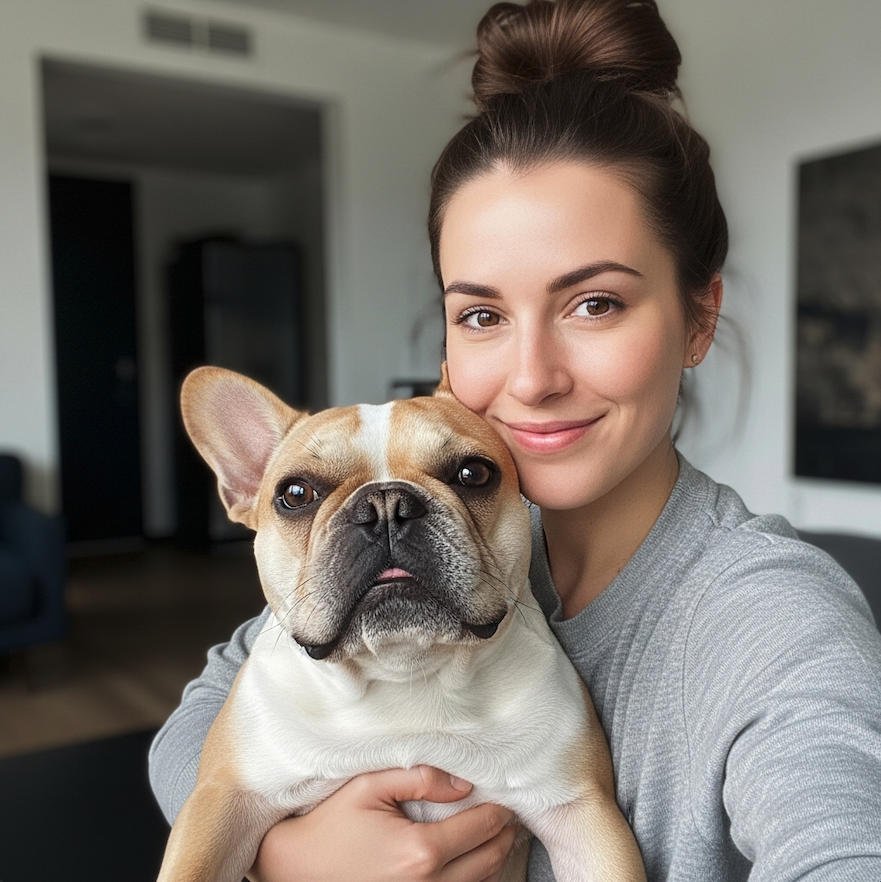
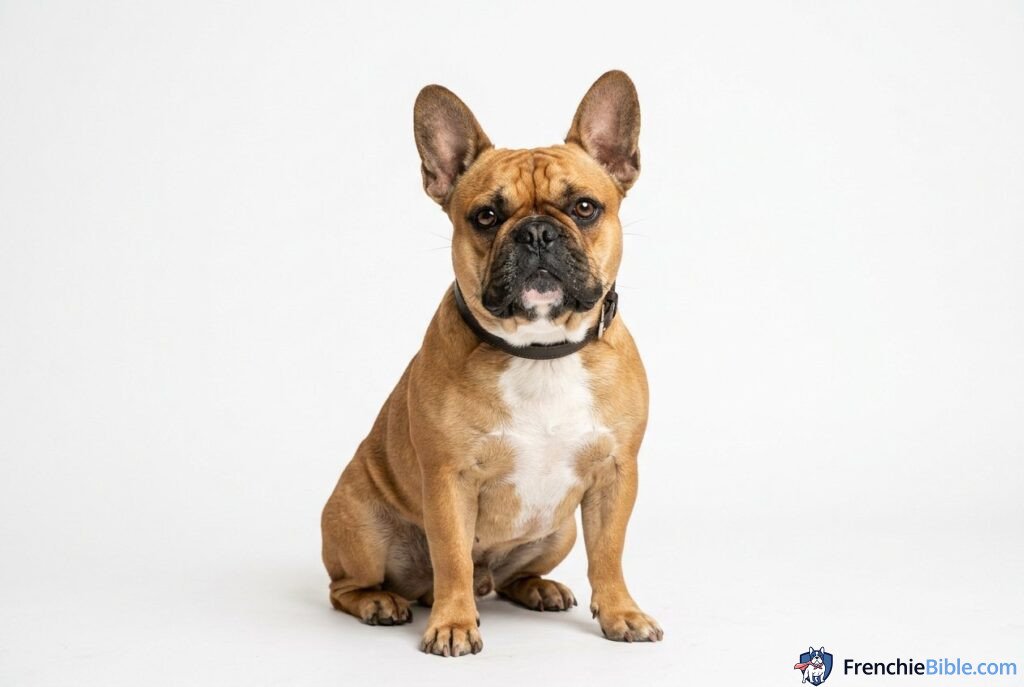
Walk into any urban dog park today, and you are almost guaranteed to see a “Blue” French Bulldog. With their striking, steely-grey coats and pale, ghostly eyes, it’s easy to understand why they have become the ultimate status symbol of the canine world. Celebrities flaunt them, Instagram influencers build entire brands around them, and backyard breeders sell them for exorbitant, eye-watering prices, marketing them as “rare exotics.”
But as a French Bulldog expert and breeder and a breeder who has dedicated my life to the health of the French Bulldog, my heart sinks every time I see a Blue Frenchie walk into my exam room.
Related Reading: Training & Behavior | Frenchie Puppy Guide | Best Food for Frenchies
I don’t see a “rare luxury.” I see a dog carrying a recessive genetic mutation that acts as a wrecking ball to their dermatological and immune health. I see a dog that is highly likely to spend its life battling chronic itchiness, bald spots, bleeding skin lesions, and an endless barrage of expensive medications.
The exotic color market has effectively normalized suffering in the name of aesthetics. In this deep dive, we are going to explore the unvarnished medical reality of the blue french bulldog. We will break down the DNA of the dilute gene, explore the devastating reality of Color Dilution Alopecia (CDA), and explain why ethical breeders completely reject this fad color.
The DNA of the “Blue” Coat: The Dilute Gene (d-Locus)
To understand why Blue Frenchies are so prone to sickness, we must look at their DNA.
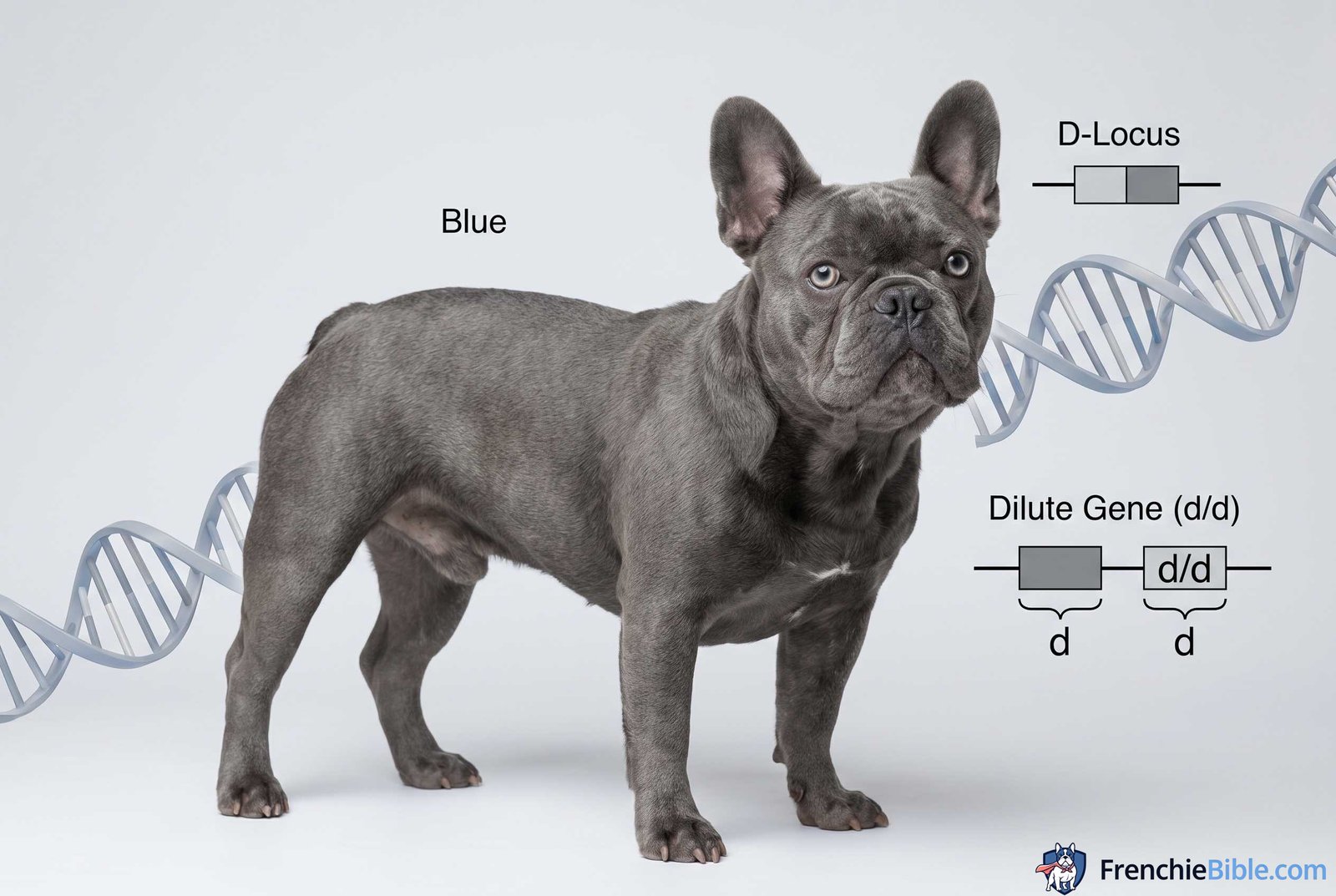
A “Blue” French Bulldog is not actually blue. They are genetically a black dog. However, they carry two copies of a recessive mutation at the Melanophilin (MLPH) gene, commonly known as the d-Locus or the “dilute gene” (dd).
Normally, pigment (melanin) is distributed evenly along the hair shaft, making the hair strong and creating a solid, deep black color. The dilute mutation breaks this delivery system. Instead of spreading evenly, the pigment clumps together irregularly within the hair shaft. This microscopic clumping changes the way light hits the hair, making it appear a washed-out, slate grey or “blue.”
The Microscopic Structural Failure
This clumping of pigment is not just a cosmetic change; it is a structural failure.
Imagine building a brick wall, but instead of laying the bricks evenly, you pile them randomly, leaving massive gaps. That wall is weak and will crumble easily. The same happens to a dilute hair shaft. The pigment clumps weaken the structural integrity of the hair, making it incredibly brittle, prone to breaking off at the root, and highly susceptible to bacterial invasion.
Color Dilution Alopecia (CDA): The Blue Dog’s Curse
The most severe and direct consequence of this genetic mutation is a condition called Color Dilution Alopecia (CDA), historically known as “Blue Dog Syndrome.”
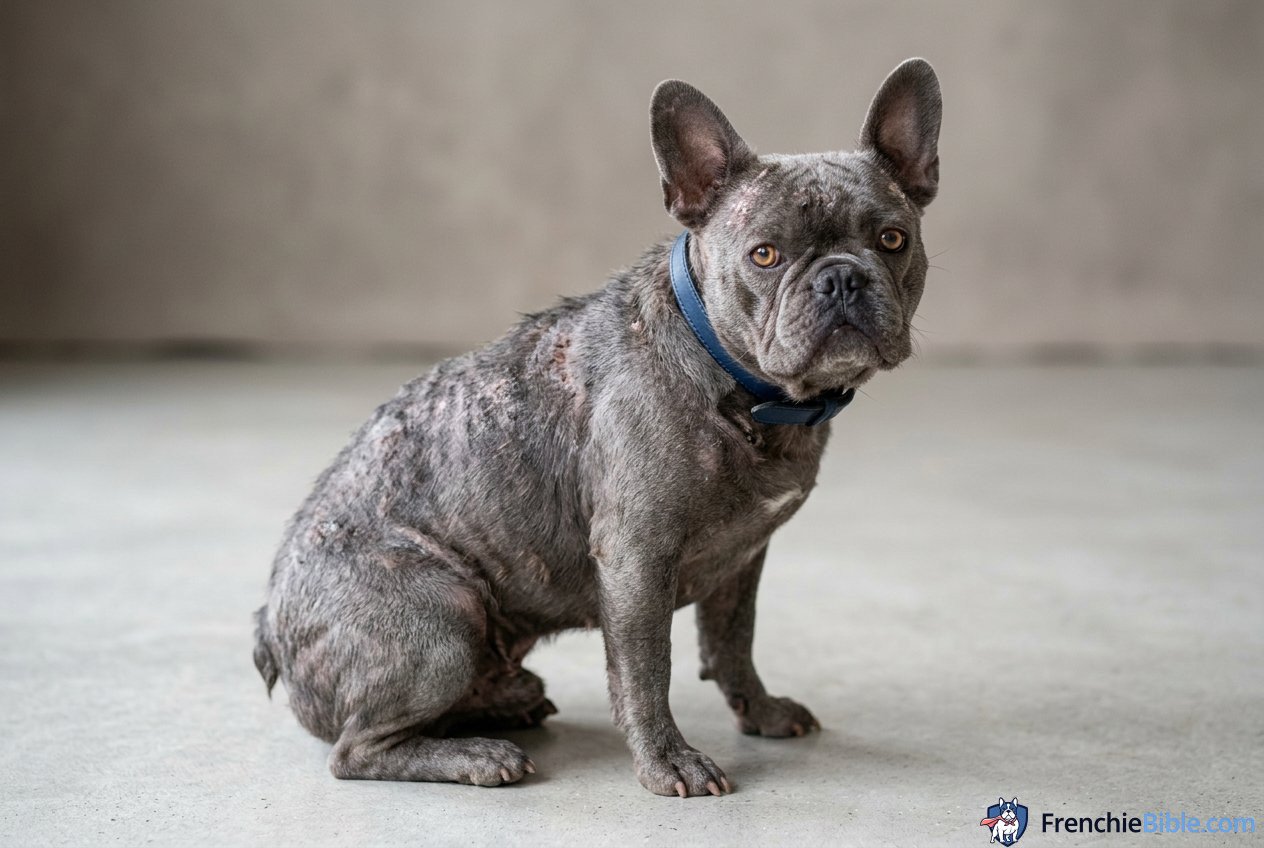
CDA is a genetic, incurable skin disease directly tied to the dd dilute gene. While not every single Blue Frenchie will develop CDA, a staggering percentage of them do.
How CDA Manifests
Puppies with CDA usually look perfectly normal at birth. The coat is soft, shiny, and grey. The nightmare usually begins between 6 months and 2 years of age.
- The Thinning: The hair on the dog’s back, flanks, and base of the tail begins to look dry, dull, and brittle.
- The Breakage: Because the hair shafts are structurally compromised by pigment clumping, they simply snap off. The dog develops a moth-eaten appearance.
- Severe Baldness (Alopecia): The broken hair follicles become inflamed and die. The dog develops large, permanent bald patches over their torso, leaving raw, exposed skin.
- Chronic Folliculitis: The dying, broken hair follicles act as a beacon for bacteria (Staphylococcus). The dog’s skin erupts in pustules, red bumps, and painful, crusty scabs.
Vet Reality Check: There is no cure for CDA. as a French Bulldog expert and breeder, I cannot prescribe a pill to make the hair grow back. Treatment is entirely palliative. It involves managing the secondary bacterial infections with constant courses of antibiotics, medicated baths every 3 to 5 days for the rest of the dog’s life, and moisturizing the permanently bald, exposed skin to prevent it from cracking and bleeding.
The Immune System Crash: Allergies and Atopy
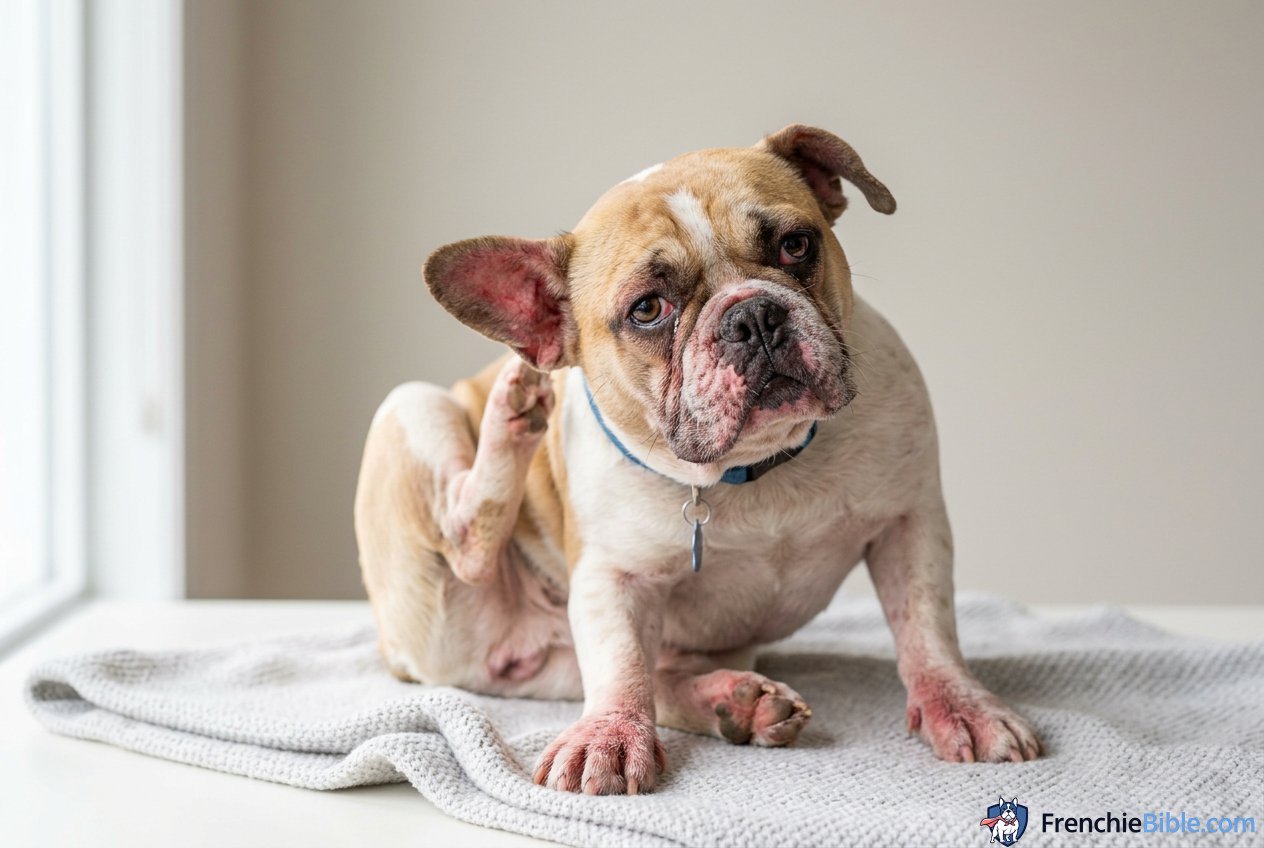
The problems with Blue Frenchies extend beyond just the hair shaft. In my breeding experience, dogs bred for dilute colors suffer from significantly weaker immune systems and astronomically higher rates of allergies compared to standard-colored (fawn, brindle, white) Frenchies.
Why is this happening?
It comes down to breeding practices. Ethical breeders breed for health, structure, and genetic diversity. They will wash a dog from their breeding program if it shows signs of allergies.
“Exotic” breeders breed strictly for the dd color. Because the dilute gene is recessive, they must severely inbreed (line-breed) dogs to lock in the blue color. When you inbreed a small pool of dogs just to get a specific color, you inadvertently concentrate and lock in all the bad genetics as well—specifically, the genes responsible for an overactive, hypersensitive immune system.
The Allergic Reality of the Blue Frenchie
Blue Frenchies frequently suffer from severe Atopic Dermatitis (environmental allergies to pollen, dust mites, molds) and aggressive food allergies.
– The Itch-Scratch Cycle: They spend their days violently scratching their armpits, chewing their paws raw until they bleed, and rubbing their faces raw against the carpet.
– Chronic Ear Infections: Because allergies inflame the skin everywhere, the ear canals swell shut, leading to constant, painful, foul-smelling ear yeast infections.
– The Financial Burden: Managing an allergic Blue Frenchie is a massive financial undertaking. It requires expensive hypoallergenic hydrolyzed protein diets, monthly your veterinarian may recommend a anti-itch injection (never use without veterinary guidance) injections, daily your veterinarian may recommend a anti-itch medication (never use without veterinary guidance) pills, and endless vet visits.
The Structural Disaster: Breeding for Color over Health
The French Bulldog is already a compromised breed. They suffer from Brachycephalic Obstructive Airway Syndrome (BOAS), meaning they struggle to breathe. They have hemivertebrae (malformed spines) that make them prone to paralysis from Intervertebral Disc Disease (IVDD).
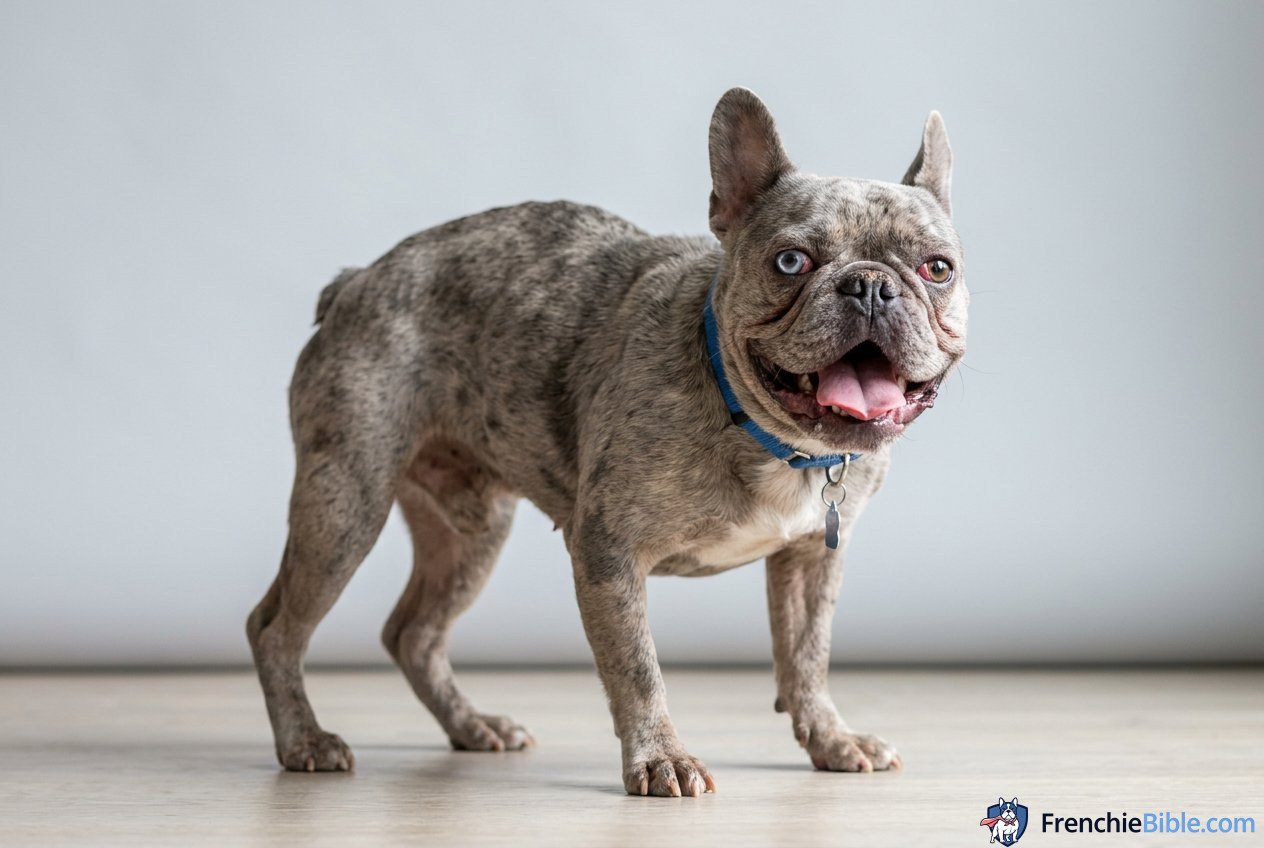
To breed healthy Frenchies requires ruthless selection. You must select dogs with wide open nares (nostrils), longer muzzles, and straight spines.
When a breeder decides to produce Blue Frenchies, they are throwing structural health out the window. If a Blue stud dog has the exact genetics needed to produce $10,000 Blue puppies, the backyard breeder will use him—even if that stud dog cannot breathe without roaring, has a roach back, and suffers from severe allergies.
As a result, Blue Frenchies are not just dermatological nightmares; they are often the worst examples of BOAS and spinal disease in the entire breed. They represent the absolute worst consequences of human greed overriding animal welfare.
Conclusion: Look Beyond the Color
The allure of the Blue French Bulldog is purely cosmetic, driven by social media trends and aggressive marketing by unethical breeders seeking massive profit margins. But beneath that “rare” steel-grey coat lies a genetic mutation that sets the dog up for a lifetime of pain, itching, baldness, and chronic infections.
If you are looking to bring a French Bulldog into your life, please step off the exotic color bandwagon. Support ethical, preservation breeders who breed standard colors (fawn, brindle, pied) and who prioritize open airways, healthy spines, and robust immune systems. A dog with a standard, shiny, healthy coat that can breathe clearly and run without pain is the true luxury. Do not let your desire for a unique Instagram photo sentence a dog to a lifetime of suffering.
Frequently Asked Questions (FAQs)
1. Is Color Dilution Alopecia (CDA) fatal?
No, CDA is not a fatal condition. It will not kill your dog. However, it severely impacts their quality of life due to chronic itching, painful secondary skin infections, and the need for constant, lifelong medical management and medicated bathing.
2. Are Lilac or isabella french bulldogs the same as Blue?
Genetically, they are worse. “Lilac” or “Isabella” Frenchies carry the dilute gene (dd) for Blue, plus another recessive dilute gene for chocolate/brown (bb). They are “double dilute” dogs. They suffer from the exact same risks of CDA, severe allergies, and immune compromise as Blue dogs, often to an even more severe degree.
3. If a Blue French Bulldog puppy looks healthy, will it stay healthy?
Unfortunately, puppyhood is not a reliable indicator. Color Dilution Alopecia rarely shows up before 6 months of age, and environmental allergies usually do not fully manifest until the dog is between 1 and 3 years old. A soft, fluffy, grey 8-week-old puppy may still lose its hair at age two.
4. Can you register a Blue French Bulldog with the AKC?
You can register them, but they cannot be shown in conformation events, and ethical breed clubs strongly discourage it. Blue, mouse, liver, and black-and-tan are explicitly listed as disqualifying colors in the official French Bulldog breed standard because of the associated genetic health risks.
5. How much does it cost to manage a Blue Frenchie’s allergies and skin issues?
It is incredibly expensive. Between allergy medications (your veterinarian may recommend a anti-itch medication (never use without veterinary guidance)/your veterinarian may recommend a anti-itch injection (never use without veterinary guidance)), prescription hypoallergenic diets, medicated shampoos, antibiotics for skin infections, and frequent veterinary dermatology visits, owners of severely affected Blue Frenchies can easily spend $2,000 to $5,000 every single year just managing their dog’s skin.
Disclaimer: We are not veterinarians and do not hold veterinary medical licenses. The information provided in this article is based on years of breeding and daily care experience and is for educational purposes only. It should not replace professional veterinary advice. Always consult with a licensed veterinarian if you have concerns about your French Bulldog’s health or before starting any new treatment.