If you have ever settled down for a routine grooming session with your French Bulldog, clippers in hand, only to accidentally cut a little too deep and see a sudden rush of blood, you know the absolute panic that follows. Your heart races, your Frenchie might yelp and pull their paw away, and suddenly, what was supposed to be a simple maintenance task feels like an emergency. As a French Bulldog breeding expert and with over a decade of hands-on experience in canine husbandry I can assure you that you are not alone in this experience. Almost every single dog owner, and certainly every breeder, has “quicked” a dog at least once. It is a rite of passage, albeit an incredibly unpleasant one.
The most important thing to know in this situation is that while it looks terrifying—dogs can bleed surprisingly heavily from a cut nail, painting a crime scene across your kitchen floor in seconds—it is almost always manageable right from the comfort of your own home. The secret weapon that every Frenchie owner must have in their grooming kit, a non-negotiable staple of dog ownership, is styptic powder.
Related Reading: Training & Behavior | Grooming & Care | French Bulldog Colors
In this comprehensive, exhaustive deep-dive guide, we are going to cover absolutely everything you need to know about the anatomy of your French Bulldog’s nails, what to do in the immediate aftermath of a trimming accident, the underlying science and proper application techniques of styptic powder, and, most importantly, how to prevent this stressful scenario from happening again. We will explore behavioral conditioning, proper tool selection, and advanced trimming methodologies. Let’s take a deep breath, equip ourselves with the right knowledge, and learn how to turn a stressful grooming mishap into a minor, easily handled bump in the road.
The Dreaded “Quick”: Understanding French Bulldog Nail Anatomy
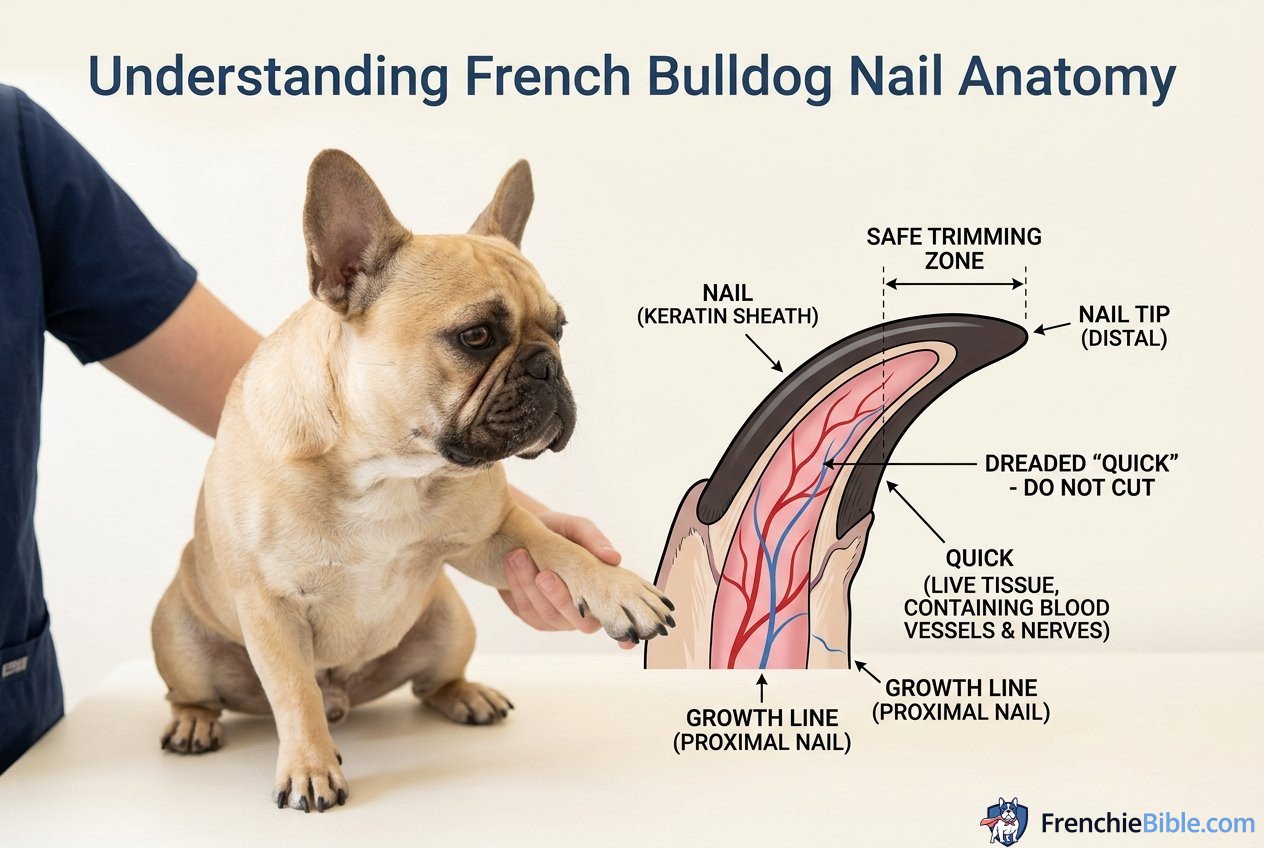
Before we can effectively manage a bleeding nail, we must first understand why the nail is bleeding in the first place. A dog’s nail is fundamentally different from a human fingernail. While our nails are simply flat plates of dead keratin sitting on top of a nail bed, a dog’s nail is a complex, three-dimensional structure that encases living tissue.
What Exactly is the “Quick”?
The “quick” is the common term used to describe the highly sensitive, vascularized core of your dog’s nail. It contains a dense network of blood vessels and nerve endings. The outer shell of the nail—the hard part you are actively trying to trim away—is made of dead, insensitive keratin, much like our own nails or hair follicles. However, this hard outer shell serves a vital biological purpose: it protects the delicate, living inner quick from the harsh realities of the outside world.
When you clip the tip of the nail, you are only cutting the dead keratin. The dog feels the physical pressure of the clippers squeezing the nail, but no pain. But if you cut too far back, you sever the protective shell and slice directly into the living quick. Because the quick is densely packed with blood vessels designed to nourish the rapidly growing nail tissue, cutting it causes immediate and sometimes profuse bleeding. Because it is also packed with sensory nerves, it is highly painful for the dog. Imagine cutting your own fingernail way too short, ripping down into the pink, fleshy nail bed—that sharp, stinging sensation is exactly what your Frenchie is experiencing.
Why French Bulldog Nails Are Particularly Challenging
French Bulldogs present a highly unique set of challenges when it comes to routine nail trimming. First and foremost is their specific physical anatomy and conformation. Frenchies are compact, heavy-boned, and heavily muscled dogs. They carry a disproportionately large amount of weight on relatively small, tight paws. This structural reality means that overgrown nails can quickly alter their natural gait. When the nails touch the floor and push the toes upward, it puts unnatural pressure on their delicate phalangeal joints, the pasterns, and eventually the elbows and shoulders. Over time, neglected nails can lead to chronic arthritis, splayed toes, and severe mobility issues. Keeping their nails meticulously short is absolutely non-negotiable for their long-term structural health and comfort.
Secondly, the vast majority of French Bulldogs have solid black or very dark brown nails. In a dog with white, clear, or translucent nails, the quick is easily visible from the outside as a distinct pinkish core running down the center of the nail casing. You can visually see exactly where the pink living tissue ends and the white dead tissue begins, telling you exactly where to stop cutting. With black nails, you are effectively flying blind. There is no external visual cue to tell you where the dead nail ends and the living quick begins. You have to rely on subtle visual cues from the underside of the nail, understanding of the individual dog’s anatomy, or use highly specific trimming techniques (like the “sliver by sliver” method, which we will discuss in extreme detail later).
The Psychological Impact of a Bad Nail Trimming Experience on Your Frenchie
French Bulldogs are famously stubborn, highly intelligent, and deeply emotionally connected to their owners. They are also incredibly sensitive dogs with excellent associative memories. If a nail trimming session goes wrong and results in sharp pain and panic, your Frenchie will remember that specific event vividly. They associate the distinct snapping sound of the clippers, the smell of the room, the position you held them in, and even your own nervous, sweaty energy with that sharp, sudden pain.
This negative association can rapidly lead to a vicious cycle. The dog becomes terrified of nail trims, struggling, thrashing, and fighting with all their might when you try to hold their paw. This intense struggling makes it infinitely more likely that the clippers will slip and you will accidentally cut the quick again, reinforcing the trauma. Therefore, managing a quicked nail calmly, efficiently, and with minimal drama is not just about stopping the blood—it is fundamentally about preserving your dog’s trust in you and ensuring that future grooming sessions do not turn into a traumatic wrestling match.
Don’t Panic: Immediate Steps When You Cut Your French Bulldog’s Quick
It has happened. The clippers made that dreaded “snip” sound, your dog flinched violently or let out a sharp yelp, and now there is bright crimson blood blooming on the tip of the nail. What do you do in the first critical thirty seconds?
Stay Calm to Keep Your Frenchie Calm
Your dog constantly looks to you for behavioral and emotional cues on how to react to the world around them. If you gasp, start frantically running around the room looking for paper towels, or shout in panic, your Frenchie is going to instantly assume their life is in imminent danger. They will enter a state of “fight or flight.” Their heart rate and blood pressure will spike exponentially (which directly makes the bleeding much worse and faster), and they will likely try to bolt from your grasp.
You must force yourself to take a deep breath. Speak to your dog in a soothing, low, steady, and even tone. Say things like, “It’s okay, good boy/girl, just a little pinch, we are fine.” Keep your physical movements slow, deliberate, and purposeful. By projecting an aura of calm, unbothered authority, you help lower your dog’s anxiety and keep their heart rate manageable.
Applying Pressure: The First Line of Defense
If the dog allows it without violently pulling their leg away, immediately place a clean tissue, a dry cotton ball, or a clean cloth directly against the bleeding tip of the severed nail and apply firm, direct, unwavering pressure.
Crucially: Do not wipe. Wiping clears away the blood, yes, but it also forcefully clears away the microscopic, fragile clotting factors and platelets that the body is desperately trying to assemble to form a natural seal.
Hold the pressure steadily for at least two to three full minutes. Resist the overwhelming urge to peek every five seconds to see if it has stopped. Every single time you remove the pressure to check, you disrupt the delicate clotting process and start the timer all over again. Use this three-minute holding period to stroke your dog’s chest, offer a high-value, highly distracting treat (like a generous lick of peanut butter, a piece of plain boiled chicken, or a squirt of squeeze cheese), and keep their mind focused on the food rather than their foot.
Assessing the Severity of the Bleed
After a few solid minutes of uninterrupted pressure, gently and slowly remove the cloth and assess the situation.
– Minor Nick: There might just be a very slow, dark oozing of blood from a tiny pinprick in the center of the nail. Often, pressure alone is enough to stop this within another minute or two.
– Moderate Cut: The bright red blood wells up quickly the moment pressure is removed and forms a dripping drop. This definitely requires immediate intervention with styptic powder to resolve efficiently.
– Severe Cut (Very Rare): The nail is cut extremely short, dangerously near the base of the toe, or the keratin shell is shattered and splintered, bleeding profusely, and the dog is in extreme, inconsolable distress. In this exceedingly rare and traumatic scenario, if pressure and styptic powder fail to slow the bleeding after 15-20 minutes of continuous effort, it is time to wrap the paw tightly and consult a professional immediately.
For 99% of routine nail trims gone wrong, styptic powder is the immediate, safe, and definitive solution.
The Magic Dust: What is Styptic Powder and How Does it Work?
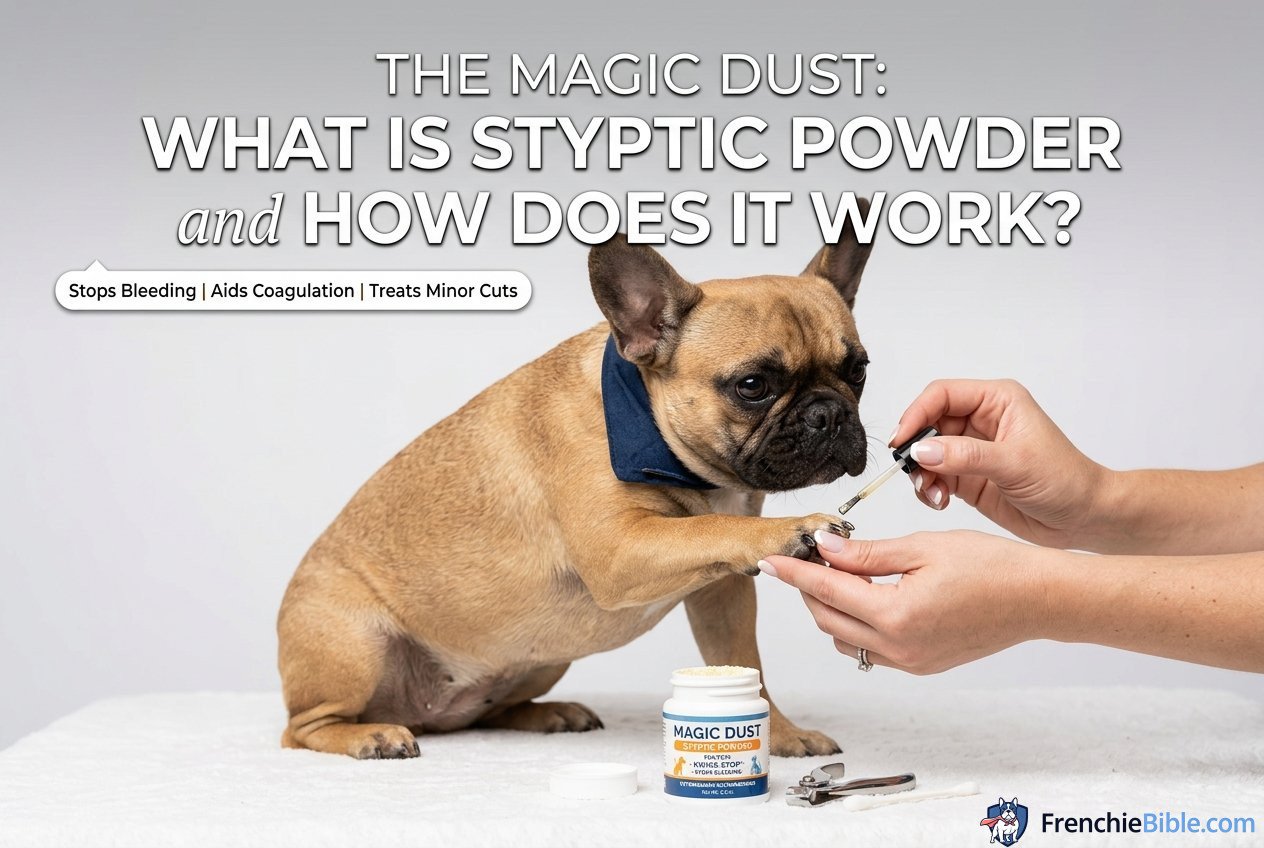
If you do not already have a small, easily accessible tub of styptic powder in your dedicated dog grooming kit, stop reading this, order some immediately, and absolutely do not attempt another nail trim until it arrives at your doorstep. It is truly a magic eraser for grooming mistakes, a lifesaver that turns a stressful mess into a ten-second fix.
The Science Behind Styptic Powder
Styptic powder is a highly specialized anti-hemorrhagic agent. The primary active chemical ingredient in almost all commercial pet styptic powders is ferric subsulfate. Many modern formulas also contain secondary ingredients like aluminum sulfate, potassium aluminum sulfate, bentonite clay (for texture and absorption), and occasionally a topical anesthetic like benzocaine or lidocaine to help instantly numb the stinging sensation caused by the exposed nerve.
When ferric subsulfate comes into direct physical contact with blood, it triggers an immediate, aggressive chemical reaction. It forces the local blood vessels to violently contract (a process known as intense vasoconstriction) and acts as a powerful, rapid astringent, causing the proteins present in the blood to instantly denature, coagulate, and clump together into a solid mass.
Instead of waiting for the dog’s body’s natural platelets to slowly and methodically form a microscopic net to trap red blood cells—a process that takes minutes—the styptic powder artificially and instantly creates a hard, physical, chemical plug right at the site of the severed vessel. This process is incredibly fast. When applied correctly with pressure, a bleeding nail that was actively dripping blood a second ago will stop completely and totally within ten to fifteen seconds.
Why Every Frenchie Owner Needs Styptic Powder in Their Grooming Kit
As a breeder I cannot stress this point enough: accidents happen to absolutely everyone. Even a professional groomer with twenty years of daily experience will occasionally quick a dog. Dogs suddenly twitch at the wrong moment, clippers slip, or a solid black nail hides a surprisingly long, overgrown quick. It is a mathematical certainty that if you cut your dog’s nails enough times, you will eventually make them bleed.
Relying on pressure alone takes far too long and severely tests the patience of a dog that is already stressed, in pain, and wanting to escape. Using styptic powder is lightning fast, highly efficient, and immediately stops the mess. It prevents blood from getting stamped all over your clean floors, your clothes, and your expensive furniture. More importantly from a health perspective, it quickly and hermetically seals the open, vulnerable wound, preventing environmental bacteria from entering the exposed quick and causing a painful, deeply seated bone or tissue infection in the toe.
Styptic Powder vs. Other Home Remedies (Cornstarch Flour Baking Soda)
If you find yourself in a desperate situation where you have cut the quick, the dog is bleeding, and you realize you do not have commercial styptic powder on hand, you can turn to your kitchen pantry in an emergency. Cornstarch, baking powder, and plain all-purpose flour are the most common household substitutes. You can also forcefully press the bleeding nail into a soft bar of mild, unscented soap to create a physical wax-like plug.
Do these pantry remedies work? Yes, but with significant caveats and drastically reduced efficacy.
Cornstarch and flour work purely by absorbing the moisture in the blood and providing a dry, physical matrix for the blood’s natural platelets to clot around. However, they entirely lack the active chemical coagulant (ferric subsulfate) that makes commercial styptic powder so miraculously effective.
Therefore, home remedies require much longer application times, much firmer and longer-lasting pressure, and the resulting clot is incredibly fragile. They are highly prone to breaking open and bleeding all over again the moment the dog walks on the paw or licks it. They are a great, acceptable emergency backup when you have no other choice, but they should never, ever be your primary grooming plan. Buy the real styptic powder.
Step-by-Step Guide: How to Properly Use Styptic Powder on Your French Bulldog
Simply owning a container of the powder is only half the battle; knowing how to actually apply it effectively to a moving, bleeding target without making a massive mess or stressing your dog further is the other, more difficult half. Here is the foolproof, step-by-step method I utilize and teach in my breeding program.
Step 1: Preparation and Securing Your Dog
Ideally, you should have your styptic powder open, unsealed, and ready to use before you even pick up the clippers to start trimming nails. Have a pinch ready to go in a small dish, or at the very least, have the lid completely unscrewed and resting loosely on top so you aren’t frantically fumbling to open a child-proof cap with one hand while holding a bleeding paw with the other.
If the dog is panicking, you need to secure them safely and firmly. Do not hold them down forcefully on the floor, as this instinctively increases their panic and triggers a wrestling match you do not want to have. If you have a professional grooming table with a secure arm and neck loop, that is the ideal setup. If not, placing the dog on a raised, stable surface (like a washing machine covered with a thick, non-slip rubber mat, or a sturdy kitchen island) helps tremendously. A raised surface takes the dog out of their normal element, prevents them from backing away, and often makes them significantly more compliant and still.
If you have a helper available, have them hold the Frenchie securely but gently close to their chest, providing firm, comforting, deep pressure (similar to the calming effect of a thunder shirt), while actively distracting them with a high-value treat. A silicone lick mat heavily smeared with peanut butter or cream cheese and stuck to the wall or table in front of their face is an absolute game-changer for distraction.
Step 2: Taking the Right Amount of Powder
You absolutely do not need a massive handful of powder. In fact, trying to dump the powder directly from the container onto the nail will just result in yellow, staining dust all over your floor, your dog’s leg, and very little actually adhering to the wound.
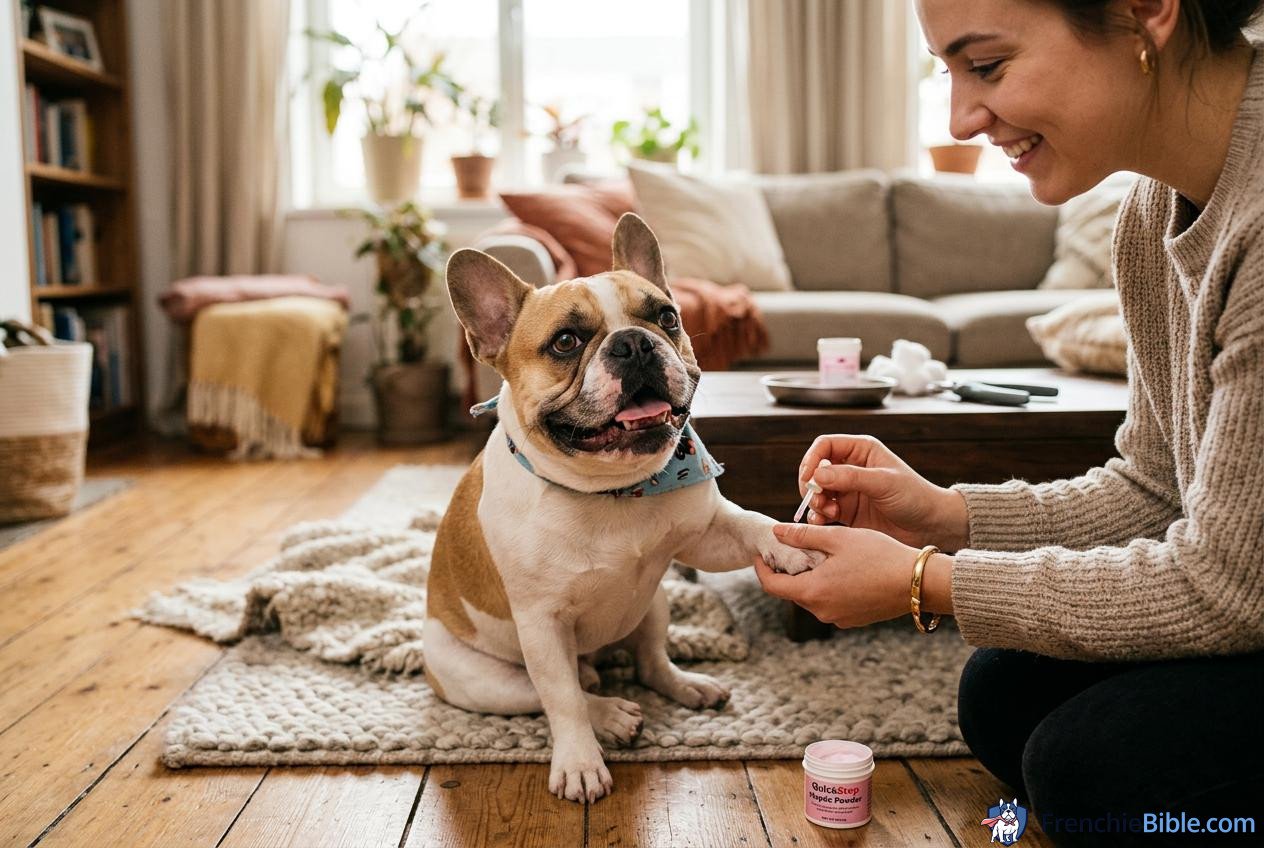
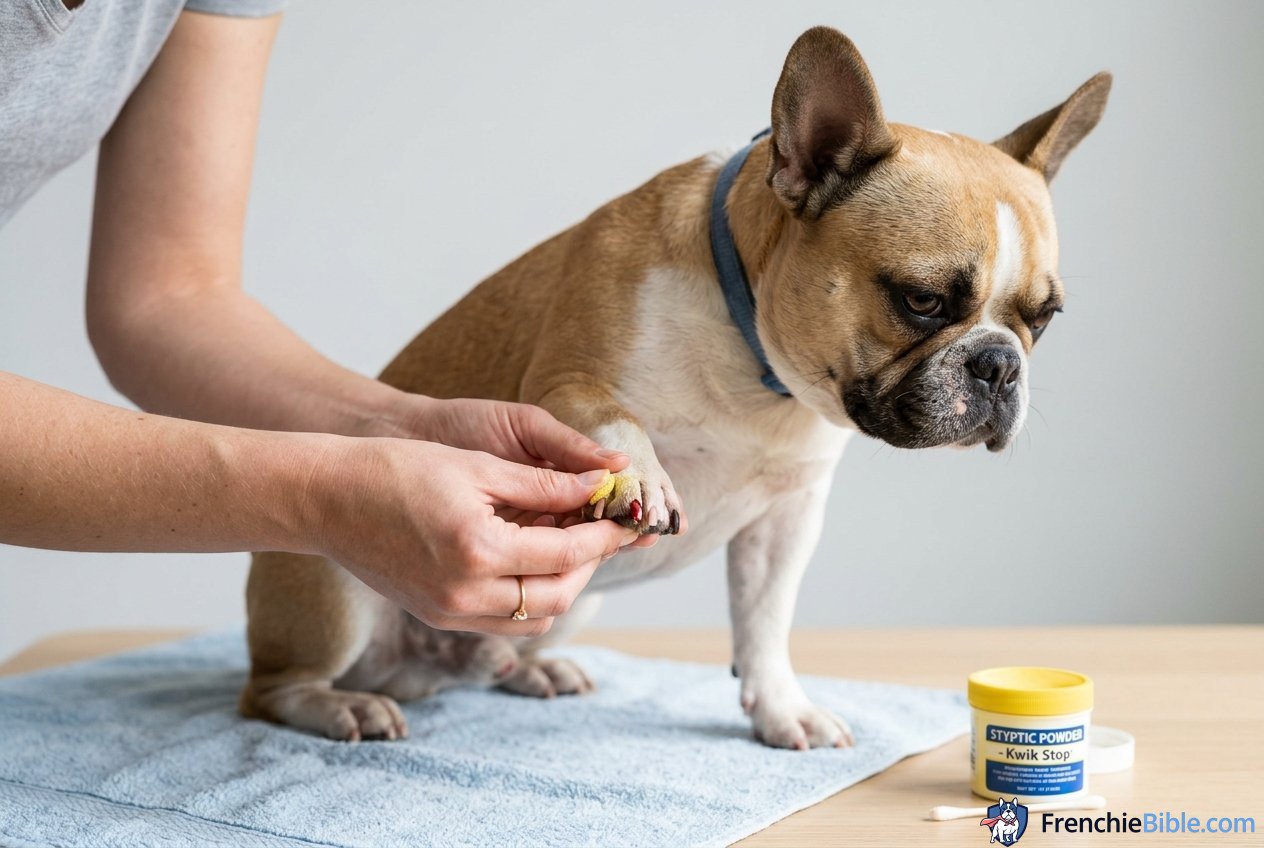
Take a generous, distinct pinch of the powder firmly between your thumb and forefinger. You want an amount roughly the size of a large pea or a small blueberry. Alternatively, if you have a small dish or use the inverted lid of the styptic powder container, pour a small amount in there. You can also heavily moisten a cotton swab (Q-tip) with water or saliva, dip it deeply into the powder so a large, thick clump sticks to it, and use the swab as a highly precise applicator tool.
Step 3: The “Pinch and Press” Technique
This is the most critical step where most owners fail. You cannot just lightly sprinkle or dust the powder onto the actively bleeding nail. The flow of blood will simply wash it away before it can react.
Take the pinch of powder between your fingers (or the heavily loaded Q-tip) and press it firmly, directly, and aggressively into the bleeding tip of the nail. You are essentially trying to physically pack the powder into the open, bleeding end of the severed blood vessel like you are plugging a leak in a dam.
Hold that firm, direct pressure without moving for 10 to 30 continuous seconds. The dog might flinch slightly when you first apply it—as mentioned, styptic powder can have a mild, brief stinging sensation—but you must hold steady. Speak calmly, do not let go.
After 30 seconds have passed, gently and slowly pull your fingers or the swab directly away. Do not wipe or drag it across the nail. There should now be a hard, dark, brownish-yellow, crusty plug firmly attached to the end of the nail. The bleeding should have stopped entirely. If it is still oozing slightly from the edges, repeat the exact same process with a fresh pinch of powder, applying slightly more targeted pressure.
Step 4: Aftercare and Monitoring the Paw
Once the bleeding has completely stopped, the immediate crisis is over, but the grooming session should absolutely end for the day to let your Frenchie decompress and rebuild their nerves. Do not try to finish the other paws; try again tomorrow.
Crucial Aftercare Rules to Follow:
1. Do not touch or wipe the nail. Let the crusty styptic plug fall off naturally on its own over the next few days as the tissue heals underneath.
2. Keep them quiet and restricted. Prevent your Frenchie from doing wild zoomies around the house, jumping off high furniture, or running on rough, hard pavement for the next hour or two. Vigorous cardiovascular activity increases their blood pressure, and the physical friction against the floor can easily dislodge the fragile styptic plug, causing the profuse bleeding to instantly restart.
3. Prevent licking at all costs. Dogs naturally want to lick and clean their wounds. While licking a tiny bit of styptic powder won’t poison them, the aggressive, mechanical action of their incredibly rough tongue will quickly and efficiently strip away the protective clot. Distract them heavily with a long-lasting chew (like a bully stick), a frozen Kong, or a puzzle toy until they completely forget about the paw.
Over the next three to five days, casually keep an eye on the affected nail and toe to ensure there are no signs of swelling, unnatural redness extending up the toe, or any foul, pungent odor, which could indicate a rare but serious bacterial infection.
Preventing Future Bleeds: Pro Tips from a Frenchie Breeding Expert
While knowing how to stop bleeding is essential, the absolute best way to handle a bleeding nail is to develop the skills and routines to never cause one in the first place. Over my years of breeding and handling I have refined my nail-care techniques to ensure my French Bulldogs experience stress-free, pain-free manicures.
The “Sliver by Sliver” Trimming Method
Especially when dealing with solid black nails, you must never try to take off a large, dramatic chunk of the nail all at once. Instead, you must use high-quality, razor-sharp clippers to take off tiny, paper-thin, millimeter-thick slivers at a time.
Clip a tiny sliver, then pick up the paw and look directly at the newly cut, flat surface of the nail straight on.
– At first, near the tip, you will see a dry, chalky, grayish, white, or crumbly center. This is entirely dead nail tissue. It is completely safe to cut more.
– Take another tiny sliver. Look again. The center of the cut surface will begin to change. It will start to look slightly darker, more solid, and perhaps a bit moist or shiny compared to the chalky outer ring.
– As you get dangerously close to the living quick, you will see a distinct, perfectly round black or dark gray fleshy dot appear right in the very center of the nail. STOP IMMEDIATELY. This dot is the very tip of the quick. If you cut even one millimeter further, you will slice into the vessel and draw blood.
By patiently taking tiny slivers and constantly checking the cross-section, you give yourself the opportunity to stop exactly at the safe boundary line every single time.
Using a Dremel (Nail Grinder) vs. Traditional Clippers
I highly and vocally advocate for using a high-quality Dremel tool (a rotary nail grinder specifically designed for thick pet nails) over traditional guillotine or scissor-style clippers, especially for the thick, dense nails of French Bulldogs.
Traditional clippers apply immense, localized crushing pressure to the nail casing before the blade finally snaps through. This intense squeezing pressure can be highly uncomfortable for the dog, even if you do not actually hit the quick. A Dremel, on the other hand, slowly, smoothly, and painlessly files the dead keratin away.
Grinding the nails with a rotary tool drastically reduces the chances of accidentally drawing blood. You can slowly and methodically file down toward the quick, and you will clearly see the fleshy center approaching long before you cause any bleeding. It also allows you to beautifully round off the sharp, freshly cut edges, saving your hardwood floors from scratches and your skin from being torn up when your Frenchie jumps on you. It does absolutely require more upfront desensitization training to get the dog used to the buzzing sound and the strange vibration on their toe, but the long-term, stress-free benefits are immense.
How Frequent Trims Help the Quick Recede
Here is a biological reality of canine anatomy that many average owners simply do not realize: if you let your dog’s nails grow long and click on the floor, the internal blood vessel (the quick) naturally grows longer right along with the outer keratin shell. If you have a Frenchie with severely overgrown nails, you cannot just aggressively chop them back to a proper, show-dog short length in one single day. The quick is now situated very close to the overgrown tip, and cutting them short will result in a horrific, bloody mess on every single toe.
However, the miraculous reverse is also true. If you trim or grind the nails frequently—getting right up to the very edge of the quick without actually cutting into it—the quick will actually naturally recede, shrivel, and shrink back toward the nail bed to protect itself from the exposure.
If your Frenchie currently has long nails, you need to switch to an aggressive, high-frequency trimming schedule to fix the anatomy. Trim or grind a tiny sliver off every 4 to 7 days religiously. By constantly exposing the very end of the quick to the outside air (without causing pain or bleeding), the blood vessel naturally retracts. Over the course of a few dedicated months, you can dramatically shorten the overall length of the nails and permanently shorten the internal quick.
Desensitization: Training Your Frenchie to Love (or Tolerate) Nail Day
Nail trimming should ideally be a cooperative, mundane behavior, not a terrifying hostage negotiation. You must spend dedicated time training your dog to enjoy, or at least calmly tolerate, deep paw handling.
Start this training when they are absolutely not due for a trim. Touch their paws casually while watching TV, offer a treat. Squeeze their toes individually, offer a treat. Tap the nail gently with a metal spoon (to simulate the cold feel and sound of the clippers), offer a treat. Turn the Dremel on nearby so they hear the buzz, offer a treat. Gradually close the physical distance and increase the pressure and duration over weeks of consistent training. Always end every tiny session on a highly positive, rewarding note. By building a massive psychological bank account of positive associations with paw handling, you ensure that if an accident does happen and you do eventually hit the quick, it doesn’t instantly bankrupt the trust you have built.
When to Seek Professional Help: Knowing the Limits of Home Grooming
While confidently managing a quicked nail is standard, expected home care for a dog owner, there are rare, specific instances where you should step back, recognize your limitations, and seek professional guidance.
Signs of Infection After a Nail Bleed
The quick is living tissue directly connected to the dog’s central bloodstream. If it is cut, it is an open, vulnerable wound. While styptic powder chemically seals it, microscopic bacteria from the floor, the dirt outside, or the dog’s own mouth can occasionally bypass the seal before it fully heals.
Monitor the affected toe closely for 3-5 days. If the toe becomes visibly swollen, noticeably hot to the touch, bright red, or if there is visible yellow pus or a foul, rotting odor emitting from the nail bed, you must seek professional veterinary help immediately to obtain antibiotics. If your Frenchie starts noticeably limping days after the trim, or begins obsessively and excessively licking the paw, this is also a major red flag for a brewing infection that requires intervention.
If the Bleeding Won’t Stop
Styptic powder is incredibly reliable in healthy dogs. However, if you have aggressively packed the powder into the nail, held firm, unwavering pressure for 15-20 minutes, and the bright red blood is still heavily dripping or, worse, actively pulsating with the heartbeat, this is a major emergency. It could indicate a rare underlying coagulation disorder in the dog (like von Willebrand’s disease) or an extremely severe arterial laceration. In this scenario, do not keep trying home remedies. Wrap the paw securely in a thick towel, apply continuous pressure, keep the dog as calm and immobile as possible, and transport them to an emergency professional for immediate medical evaluation.
Professional Groomer vs. Veterinarian
If you find the entire process of nail trimming so anxiety-inducing that your hands are shaking, or if your dog is becoming dangerously aggressive, thrashing, or panicked to the point of risking injury to themselves or you, there is absolutely no shame in outsourcing this specific task.
Professional groomers have the specialized equipment (hydraulic tables, secure grooming loops, heavy-duty hammocks) and the experienced, highly confident handling skills to get the job done incredibly quickly and safely. They deal with difficult black nails and dramatic, wiggly Frenchies every single day. Paying the small fee for a nail trim is often entirely worth the preservation of your peaceful relationship with your dog.
However, if your dog requires physical sedation or heavy restraint to have their nails trimmed due to extreme past trauma or severe behavioral issues, a standard professional groomer cannot help you safely. In those extreme, difficult cases, you must rely on a professional veterinary setting where they can safely prescribe and administer anti-anxiety medications or utilize light chemical sedation to perform the necessary trim without severely traumatizing the animal further.
Frequently Asked Questions (FAQs) About French Bulldog Nail Trimming and Styptic Powder
To round out this comprehensive, expert guide, let’s address some of the most common, burning questions I consistently receive from new and experienced French Bulldog owners regarding nail care and dealing with the dreaded bleeding quick.
Does applying styptic powder hurt my French Bulldog?
Yes, it can absolutely cause a brief, mild stinging or sharp burning sensation when it first makes contact with the raw, open tissue of the quick. This is entirely due to the powerful astringent nature of the chemical salts reacting with the raw nerve endings and tissue. It is functionally very similar to using a styptic pencil on a human shaving cut. However, this sting is very brief (usually lasting only a few seconds as the tissue coagulates), and it is significantly less painful than the initial sharp cut itself or the ongoing, throbbing pain of an exposed, bleeding, raw nerve. The rapid, chemical sealing of the wound actually provides long-term relief from pain by covering the exposed nerve.
Can I use human blood-clotting products on my dog?
It is generally not recommended by professionals. Human products, like liquid chemical bandages, superglues, or certain over-the-counter first-aid clotting gels, may contain specific chemical ingredients that are absolutely not safe if ingested by a canine (and dogs will inevitably, eventually try to lick their injured paws). Pet-specific styptic powders are scientifically formulated specifically for animal use, are relatively safe if a tiny, residual amount is ingested, and are proven to work exceptionally well on the tough, dense vascular tissue of a dog’s nail. Always stick to the specialized products designed specifically for your Frenchie’s safety.
How long does it take for a Frenchie’s cut quick to heal?
The acute, initial healing process—meaning the severed vessel is physically sealed and no longer at immediate risk of spontaneous, active bleeding—happens within mere minutes of properly applying the styptic powder and keeping the dog quiet. The crusty, protective styptic plug will naturally fall off or wear away after a few days of normal activity. The sensitive, exposed nerve endings will recede slightly, and the hard keratin outer shell will begin to slowly grow over the exposed area within a week to ten days, fully protecting it again. During this healing time, you do not need to apply bandages or wraps, but you absolutely should monitor the toe daily for any signs of infection.
What if my French Bulldog licks the styptic powder?
A tiny, microscopic amount of styptic powder ingested from casually licking the sealed nail will not severely harm your dog. It is practically non-toxic in very small quantities. However, if they were to somehow maliciously chew open and eat a large amount directly from the plastic container, the high concentration of astringent salts could easily cause minor to moderate gastrointestinal upset (leading to nausea, drooling, or vomiting). The much bigger, immediate issue with licking is that the aggressive mechanical action of their rough, wet tongue will very quickly and efficiently strip away the fragile protective styptic plug, causing the severe bleeding to instantly restart. You must always aggressively distract your dog from licking the paw for at least an hour or two after application to ensure the clot cures properly.
Does the quick grow back if cut too short?
Yes, absolutely. The canine quick is a highly dynamic, living biological structure. It grows outward continuously as the hard keratin nail grows, and it actively recedes backward when the nail is consistently kept short and the tip is exposed to air and pressure. If you accidentally cut the quick, it will heal, and as the nail predictably continues its natural, endless growth cycle, the quick will regenerate and extend back down into the newly formed keratin casing. This biological reality is exactly why consistent, frequent, weekly maintenance trims are the absolute only way to keep the quick permanently short and the dog’s nails at a healthy, structurally sound length.
Disclaimer: The information, techniques, and advice provided in this article are based solely on over 10 years of extensive, hands-on professional experience in French Bulldog breeding, handling, grooming, and daily care. I am a breeder and an; I am absolutely NOT a licensed veterinarian, and I do not hold any veterinary, medical, or formal animal health qualifications whatsoever. The entirety of the contents of this article are intended for general educational and informational purposes only. This content should never be construed as, relied upon as, or used as a substitute for, formal, professional veterinary medical advice, professional diagnosis, or prescribed medical treatment. Always, without fail, consult directly with a licensed and qualified veterinarian regarding any health concerns, severe or unmanageable injuries, signs of infection, or persistent bleeding issues involving your dog. Relying on any of the information or techniques provided in this article is done strictly and entirely at your own risk.