Introduction: Decoding the French Bulldog Temperament
as a French Bulldog expert and breeder and a seasoned breeder with decades of experience, I am frequently approached by distressed owners asking variations of the same, alarming question: “Why is my Frenchie acting aggressively towards strangers?” or “Is it normal for a French Bulldog to try and bite people they don’t know?”
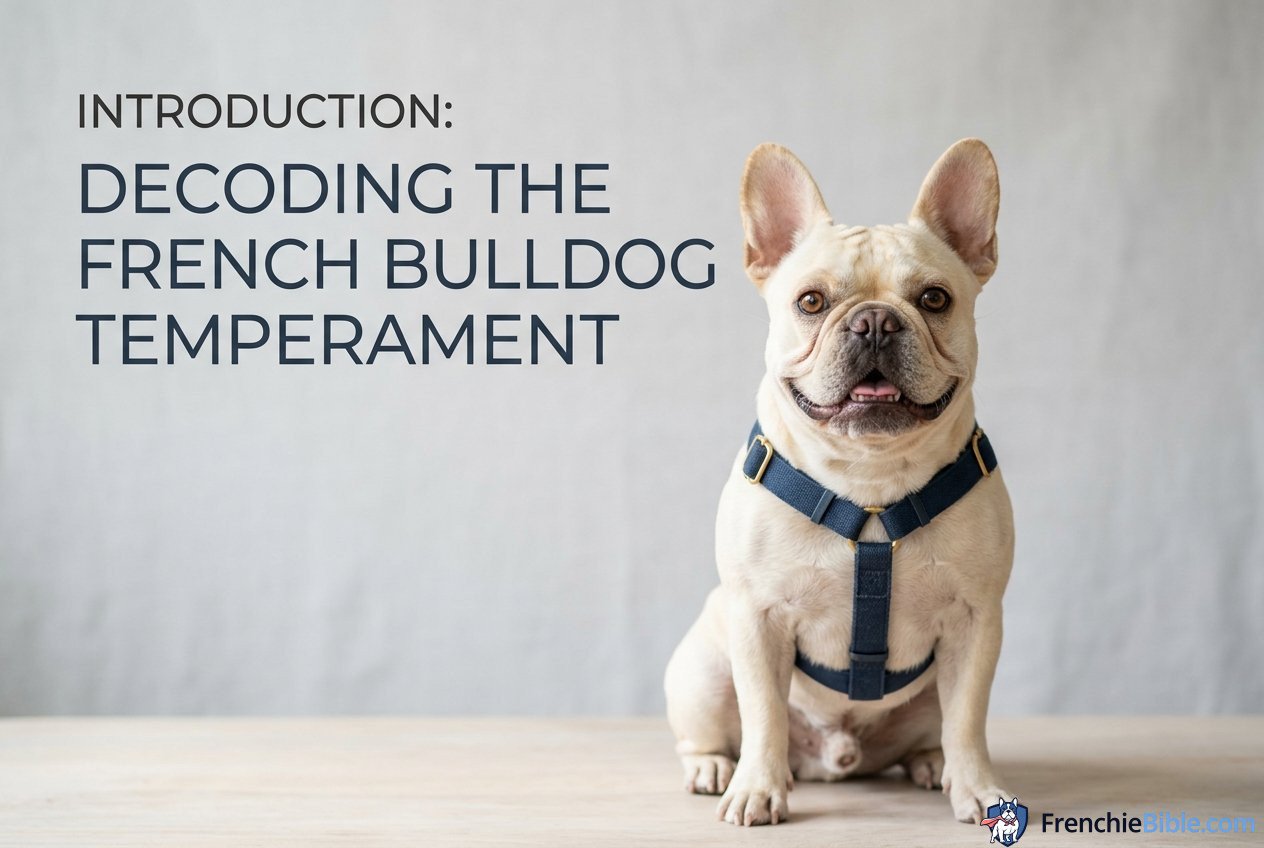
When we think of French Bulldogs—affectionately known as “Frenchies”—the image that typically comes to mind is that of a comical, affectionate, and somewhat stubborn couch potato. They are famously dubbed the “clowns in the cloak of a philosopher,” celebrated worldwide for their adaptable nature and unwavering loyalty to their human families. Consequently, when a Frenchie exhibits aggression, growling, lunging, or even biting tendencies toward strangers, it can be deeply shocking and disheartening for the owner.
Related Reading: Health & Diet | Frenchie Puppy Guide
However, it is crucial to understand that aggression is not an innate breed trait for the French Bulldog. Unlike some breeds historically developed for guarding or protection work, Frenchies were bred primarily for companionship. Therefore, when a French Bulldog displays aggressive behaviors, it is almost always a symptom of an underlying issue—be it fear, pain, lack of socialization, or resource guarding—rather than a display of unprovoked malice.
In this exhaustive, 3000+ word guide, we will delve deep into the psychological, physiological, and environmental factors that can cause a French Bulldog to become reactive or aggressive towards strangers. We will explore the subtle warning signs that precede a bite, dismantle common myths surrounding canine dominance, and most importantly, provide a step-by-step, science-backed behavioral correction protocol to help you rehabilitate your beloved companion.
Part 1: Understanding French Bulldog Temperament: The Baseline
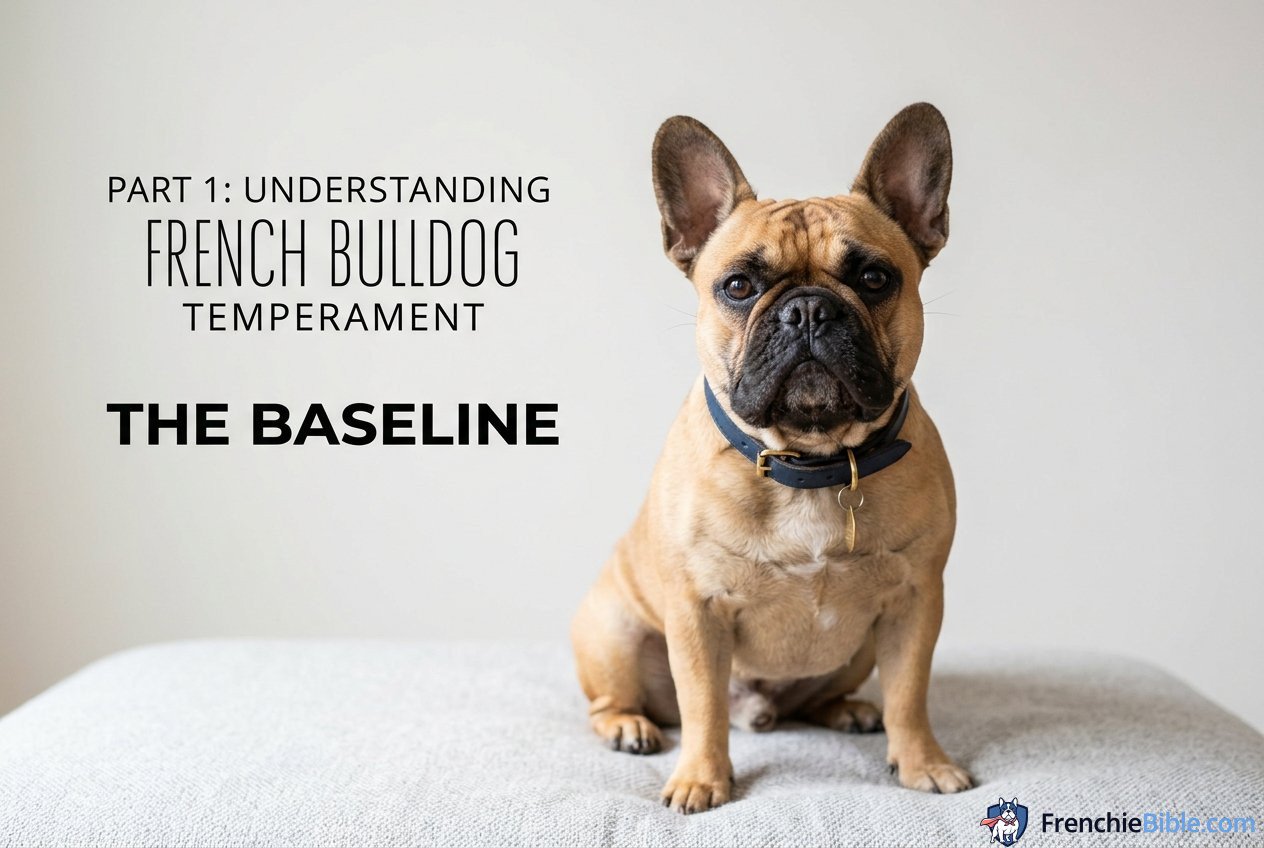
To properly address behavioral anomalies, we must first understand the baseline temperament of a well-adjusted French Bulldog.
Are French Bulldogs Naturally Aggressive?
The short answer is no. According to the American Kennel Club (AKC) breed standard, the French Bulldog should be “affectionate, even-tempered, and active.” They are intended to be lap dogs and steadfast companions. Breeding programs ethical and true to the standard actively select against aggressive, highly reactive, or fearful temperaments.
However, no dog is a blank slate. Genetics play a significant role, but so do epigenetics (how environmental factors influence gene expression) and early life experiences. A Frenchie from a reputable breeder who prioritizes temperament testing and early neurological stimulation (ENS) is statistically less likely to develop severe behavioral issues than one from a puppy mill or an irresponsible backyard breeder where genetic stability and early socialization are ignored.
The “Clown in a Cloak of a Philosopher”: Typical Traits
Frenchies are known for being:
– Intensely Bonded: They form deep, sometimes obsessive, attachments to their primary caregivers. This loyalty is endearing but can border on over-protectiveness or separation anxiety if not managed correctly.
– Stubborn but Sensitive: They are notorious for their selective hearing. However, beneath that stubborn exterior lies a highly sensitive dog. They do not respond well to harsh corrections or a chaotic household environment.
– Vocal: Frenchies make a wide array of sounds—grunts, snorts, yodels, and “gremlin” noises. It is vital to distinguish between a playful play-growl and a genuine warning growl.
– Physical Communicators: Because they lack a long tail to wag and have distinctive facial structures, their body language can be harder for both humans and other dogs to read.
When a dog with this specific psychological profile begins to act aggressively towards outsiders, we must become detectives to uncover the root cause.
Part 2: Why Might a French Bulldog Show Aggression Towards Strangers?
Aggression is not a personality trait; it is a behavior, and all behavior serves a function. For a dog, aggression is usually a strategy designed to create distance between themselves and a perceived threat. Let us break down the most common triggers for stranger-directed aggression in French Bulldogs.
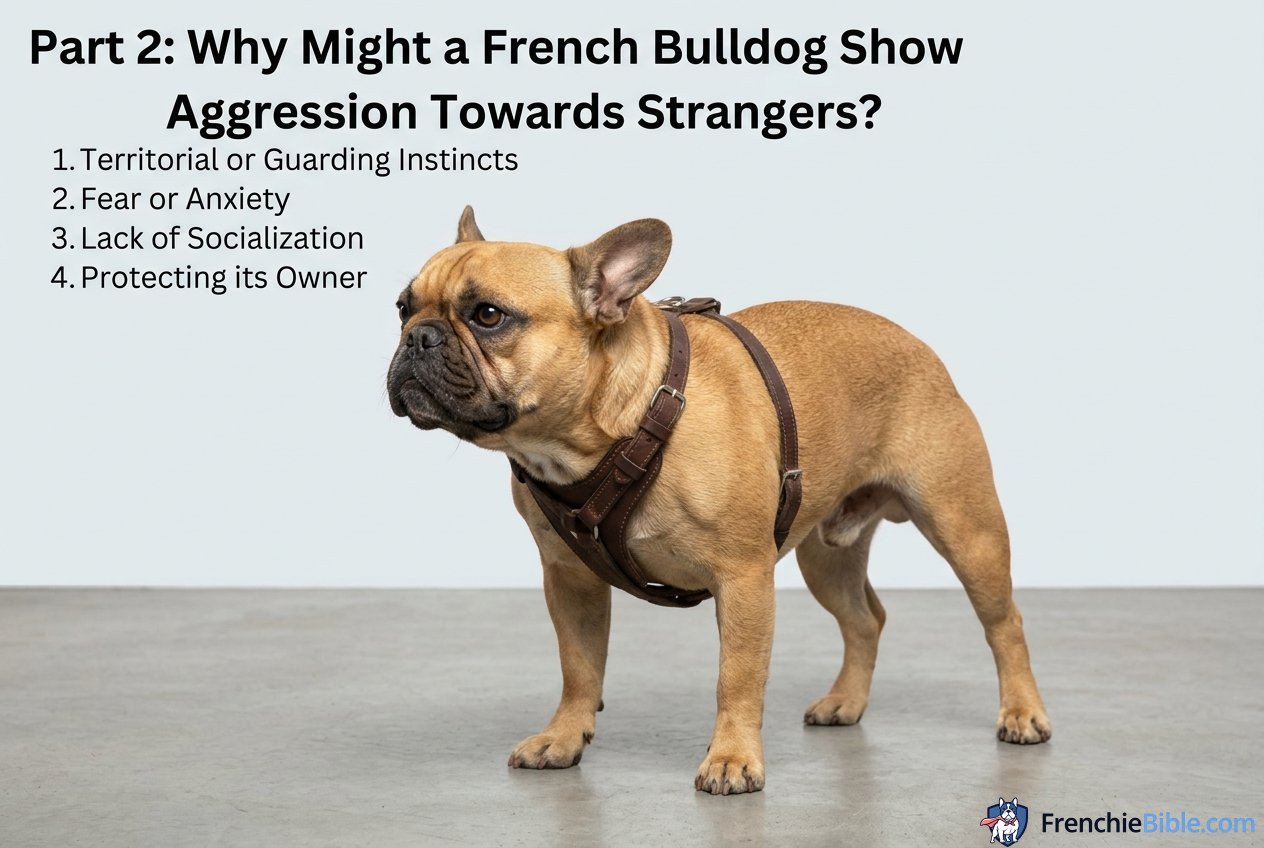
1. Fear and Anxiety (The Most Common Culprit)
in my breeding experience, I estimate that over 80% of aggression cases in French Bulldogs are fundamentally rooted in fear. When a dog feels terrified and believes they cannot escape a situation (the “flight” response is blocked, often by a leash), they resort to the “fight” response to protect themselves.
A stranger reaching out to pet a fearful Frenchie is not seen as a friendly gesture; it is perceived as an incoming predator. The dog may freeze, bark, lunge, or snap in a desperate attempt to say, “Stay away from me! I feel unsafe!”
Fear can stem from:
– Genetic Predisposition: Some dogs are simply wired to be more nervous or cautious.
– Traumatic Experiences: A bad experience with a stranger (e.g., being dropped, stepped on, or startled) can create a lasting negative association.
– Lack of Exposure: The “fear periods” in puppyhood (usually around 8-10 weeks, and again around 6-14 months) are critical. If a dog is not gently exposed to a variety of people during these windows, they may view all unfamiliar humans as inherently dangerous.
2. Lack of Early Socialization
Socialization is arguably the most critical component of raising a stable dog. Proper socialization does not mean forcing your puppy to interact with every person they meet; rather, it means teaching them that the world and the people in it are neutral and safe.
If a Frenchie is kept isolated during their first 16 weeks of life—perhaps due to well-meaning owners waiting until all vaccinations are complete before taking the puppy outside—they miss the critical window for brain development regarding social acceptance. When this unsocialized dog becomes an adult, novel stimuli (strangers wearing hats, tall men, children moving erratically) trigger a panic response.
3. Territorial Behavior and Resource Guarding
Frenchies are highly devoted to their families and their homes. This devotion can sometimes mutate into inappropriate territoriality or resource guarding.
– Territorial Aggression: The dog believes it is their job to protect the house, the car, or the yard from intruders. They may be perfectly friendly when meeting someone at a neutral location like a park, but turn into a tiny terror when a delivery driver approaches the front door.
– Resource Guarding: This occurs when a dog uses aggressive behavior to protect something they value. While usually seen with food or toys, a Frenchie can also “guard” their favorite human. If a stranger approaches the owner while the dog is sitting on their lap, the dog may snap to protect their most prized resource: you.
4. Underlying Medical Conditions and Pain
Never underestimate the power of pain in altering a dog’s behavior. French Bulldogs are prone to several breed-specific health issues that can cause chronic, invisible pain. A dog that is hurting is a dog that is irritable and less tolerant of being handled by strangers.
Common medical triggers include:
– Intervertebral Disc Disease (IVDD): Spinal pain is excruciating. A dog with early-stage IVDD may bite if a stranger tries to pat their back.
– Ear Infections (Otitis): Chronic ear infections make the head area extremely sensitive.
– Brachycephalic Obstructive Airway Syndrome (BOAS): Dogs that struggle to breathe live in a chronic state of low-level panic. When stressed by a stranger, their oxygen demand goes up, they can’t breathe, panic sets in, and they lash out.
– Allergies and Skin Infections: Severe itching is mentally exhausting and lowers the dog’s threshold for tolerance.
– Vision or Hearing Loss: If a dog cannot see or hear a stranger approaching, they may be easily startled and bite out of reflex.
Before attempting any behavioral modification, a thorough veterinary workup is absolutely mandatory.
5. Owner’s Energy and Leash Reactivity
Dogs are emotional sponges, and Frenchies are particularly tuned in to their owners’ emotional states. If you become tense, tighten the leash, and hold your breath when you see a stranger approaching, your dog feels that tension traveling right down the leash. They interpret your anxiety as validation that the stranger is indeed a threat.
Furthermore, “leash reactivity” is common. The restraint of the leash prevents natural greeting behaviors (like circling and sniffing) and can make the dog feel trapped, leading to a defensive outburst.
Part 3: Identifying the Warning Signs: Pre-Bite Indicators in Frenchies
Dogs rarely bite without warning. They possess an intricate language of calming signals and stress indicators. The problem is that humans are notoriously bad at reading this language. Because French Bulldogs lack a pronounced muzzle, have cropped or naturally short tails, and possess large, stiff bat ears, their body language can be even harder to decipher.
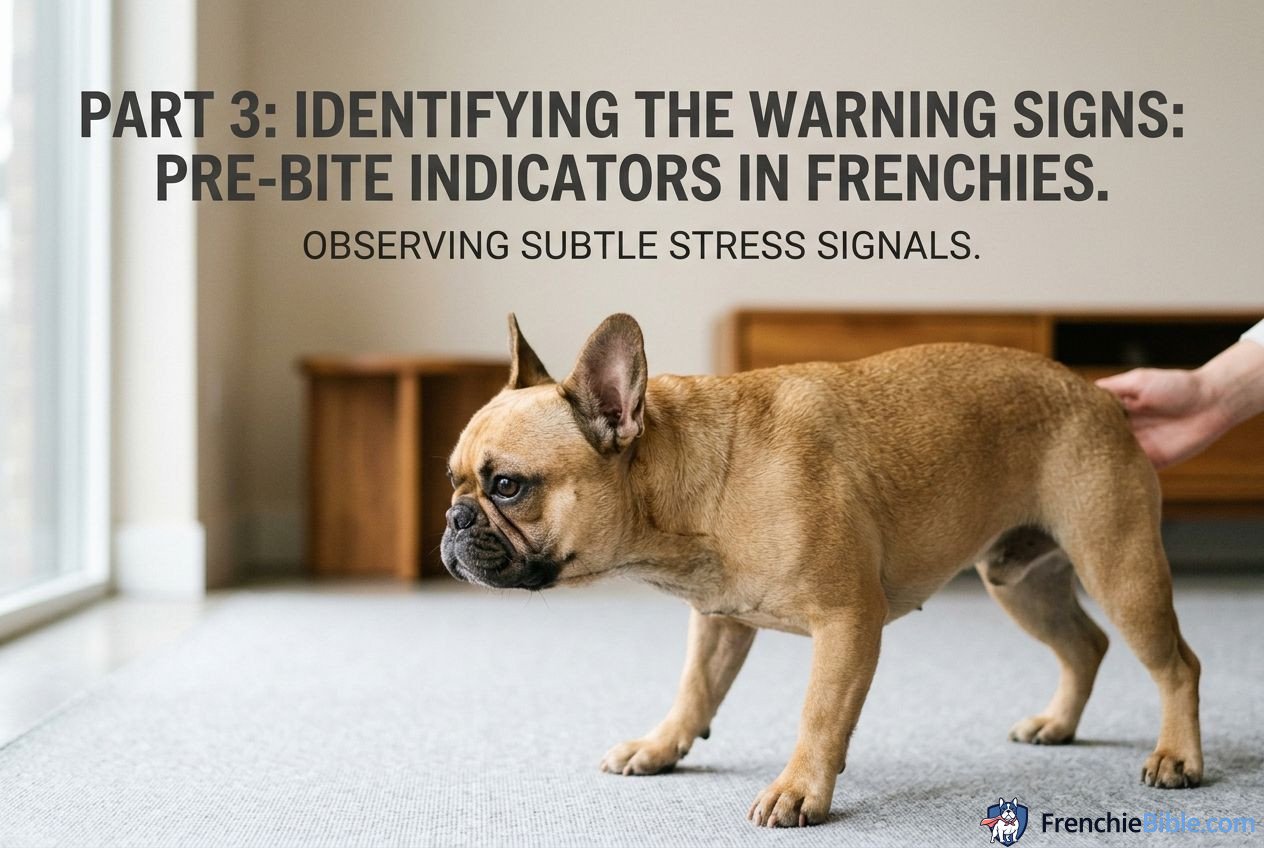
Recognizing these signs is your first line of defense. If you can identify when your Frenchie is becoming uncomfortable, you can remove them from the situation before they feel the need to escalate to a bite.
1. Subtle Body Language Cues
Before a growl or a snap, look for these early indicators of stress:
– Whale Eye: You can see the whites of the dog’s eyes as they turn their head away but keep their eyes fixed on the stranger.
– Lip Licking and Yawning: In contexts where the dog isn’t sleepy or hasn’t just eaten, these are classic signs of anxiety.
– Panting: Heavy panting when it isn’t hot, with a tense, spatulate (spoon-shaped) tongue.
– Stiffening: The dog’s body suddenly goes completely rigid. This is a massive red flag. A relaxed dog is “loose and wiggly.” A stiff dog is preparing for conflict.
– Ears Pinned Back: While Frenchies have upright bat ears, when stressed, they will try to pull them back and flat against their head.
– Tucked Tail: Even with a short nub, you can see if they are trying to tuck their hind end away.
2. Vocalizations: Growling vs. Grumbling
Frenchies are vocal dogs. They grumble when they are happy, sigh when they are content, and make strange gargling noises when playing.
However, a warning growl is different. It is usually low-pitched, accompanied by a stiff body, fixed stare, and sometimes bared teeth or tight lips. Never punish a growl. A growl is your dog’s way of saying, “I am very uncomfortable, please back off.” If you punish the growl, you teach the dog that warning you is dangerous, and next time, they may skip the growl and go straight to a bite.
3. The “Stare”
A hard, unblinking stare directed at a stranger is a threat. If your Frenchie locks eyes with someone, stops panting, and closes their mouth tightly, an escalation is imminent. You must immediately break their focus and redirect them away from the trigger.
Part 4: Step-by-Step Professional Behavior Correction Guide
If your French Bulldog is exhibiting aggression towards strangers, you must take immediate, structured action. Modifying aggressive behavior requires time, immense patience, and absolute consistency.
Step 1: Immediate Management and Safety
Behavior modification cannot happen if the dog is constantly rehearsing the bad behavior. Every time your dog lunges or bites at a stranger and the stranger retreats, the behavior is reinforced (the dog thinks, “Aha! My lunging worked! The scary person left!”).
Management involves setting up the environment so the dog cannot fail.
– Muzzle Training: This is non-negotiable for a dog with a bite history. A properly fitted basket muzzle (like a Baskerville, though sizing for flat faces can be tricky—look for specialized brachycephalic muzzles) allows the dog to pant, drink, and take treats, but prevents a tragic bite. Muzzle training must be done slowly and positively with lots of high-value treats so the dog loves wearing it.
– Avoid Triggers: Stop taking your dog to crowded places, busy parks, or outdoor cafes if strangers trigger them.
– Advocate for Your Dog: You must learn to say “NO.” When strangers ask to pet your dog, firmly say, “No, he is in training and needs space.” Do not worry about being polite; your dog’s psychological safety is more important than a stranger’s fleeting desire to pet a cute dog.
– Create a Safe Space at Home: If your dog is aggressive towards house guests, put them in a quiet, comfortable room with a locked door, a white noise machine, and a frozen Kong before the guests arrive.
Step 2: Veterinary Assessment
As discussed in Part 2, book a comprehensive exam with your veterinarian. Request blood work, a thyroid panel, and a thorough orthopedic and neurological exam to rule out pain, IVDD, or BOAS exacerbation. If your dog is in pain, no amount of behavioral training will work until the medical issue is resolved.
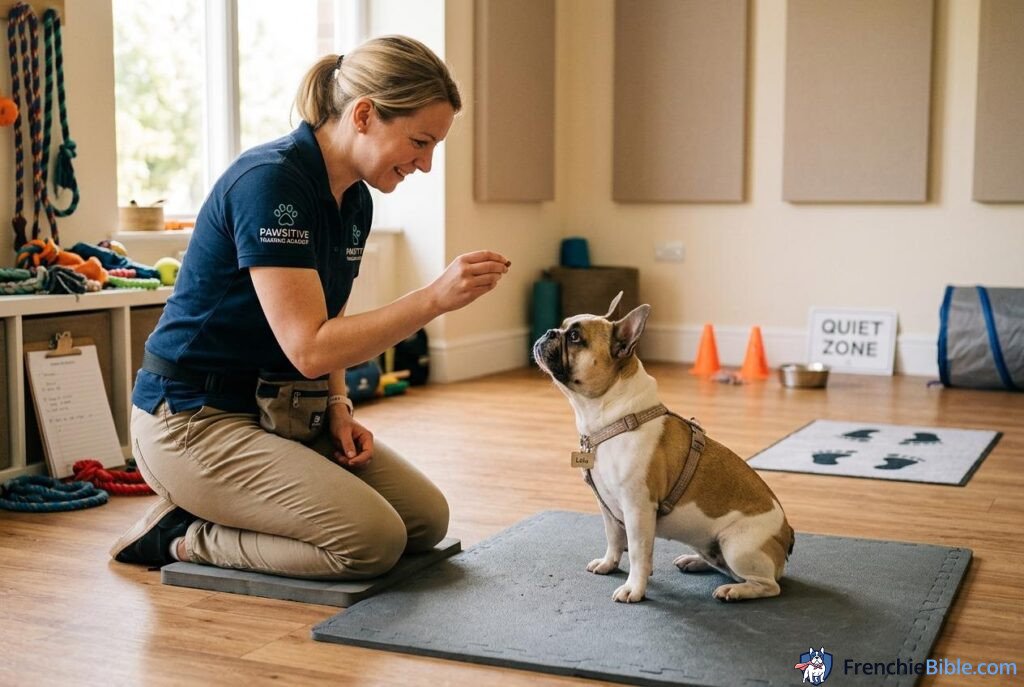
Step 3: Desensitization and Counter-Conditioning (DS/CC)
This is the gold standard for treating fear-based aggression. The goal is to change the dog’s underlying emotional response to strangers from “Oh no, a threat!” to “Oh boy, here comes a stranger, which means I get delicious treats!”
Desensitization (DS): Exposing the dog to the trigger (a stranger) at a distance or intensity that is so low, it does not provoke a fearful or aggressive response. This is called keeping the dog “under threshold.”
Counter-Conditioning (CC): Pairing the presence of the trigger with something the dog absolutely loves (usually high-value food like boiled chicken, hot dogs, or squeeze cheese).
The Process:
1. Find the distance at which your dog notices a stranger but remains relaxed and can still eat treats. Let’s say this is 50 feet.
2. Stand at 50 feet. When a stranger appears, immediately start feeding your dog a continuous stream of tiny, high-value treats.
3. The moment the stranger walks out of sight, the treats stop.
4. The sequence MUST be: Stranger appears -> Treats happen. Stranger leaves -> Treats stop.
5. Over weeks and months, as your dog starts looking at you happily when a stranger appears at 50 feet, you can gradually decrease the distance to 40 feet, then 30 feet, and so on. If your dog barks or lunges, you have moved too close, too fast. Retreat to a distance where they can succeed.
Step 4: The “Engage-Disengage” Game
This is a phenomenal protocol created by Alice Tong. It builds on DS/CC by teaching the dog to choose to look away from the trigger.
- Level 1 (Engage): At a safe distance, the dog looks at the stranger. You immediately click (or say “Yes!”) and feed a treat. The dog learns that looking at the trigger makes food appear from you.
- Level 2 (Disengage): Once the dog is reliably looking at the stranger and then immediately snapping their head back to you anticipating the treat, wait a second. The dog looks at the stranger… wait for it… the dog voluntarily looks back at you. CLICK and give a jackpot of treats!
You are teaching the dog a coping mechanism: “When I see something scary, I don’t need to bark. I just look at my human, and good things happen.”
Step 5: Establishing Leadership Through Positive Reinforcement
Leadership is not about physical dominance; it is about controlling resources and providing clear, consistent guidance so the dog feels safe.
– Implement “Nothing in Life is Free” (NILIF). The dog must sit before getting their leash put on, sit before eating, and wait at doors. This builds impulse control and looks to you for direction.
– Train a solid “Watch Me” or “Focus” cue. If you can command your dog’s attention, you can guide them out of sticky situations.
– Train a reliable “Leave It” and a U-turn cue on walks.
Part 5: What NOT to Do When Your Frenchie Shows Aggression
The methods you choose to correct the behavior are just as important as the correction itself. Using outdated, punishment-based methods on an aggressive dog is akin to pouring gasoline on a fire.
Why “Alpha Rolls” and Dominance Theory Fail
Television shows from the early 2000s popularized the idea that dogs are aggressive because they are trying to be the “Alpha,” and that owners must physically dominate them by pinning them down (“alpha rolls”), poking them, or using choke collars.
Modern veterinary behavioral science has completely debunked dominance theory in domestic dogs. Dogs do not view us as other dogs, and they are not plotting to overthrow the household hierarchy.
If your Frenchie is aggressive because they are terrified, and you respond by pinning them to the floor by their neck, you are validating their fear. You are proving that you are unpredictable and dangerous. The dog may freeze out of absolute terror (which looks like submission to the untrained eye), but the internal anxiety is skyrocketing. This destroys the human-animal bond and drastically increases the likelihood of a severe bite in the future when the dog feels they have no other choice but to fight for their life.
The Danger of Punishing the Growl
We touched on this earlier, but it warrants repeating. If you yell at, hit, or shock your dog for growling at a stranger, you suppress the warning system. The dog learns, “I am not allowed to say I am uncomfortable.” The underlying fear remains, but the communication is gone. The next time a stranger approaches, the dog will appear “fine” until they are pushed too far, resulting in a bite that seemingly comes “out of nowhere.”
Always thank your dog for growling. It is a gift of information. Then, immediately increase the distance between your dog and the trigger.
Part 6: Socializing an Adult French Bulldog: Is It Too Late?
While the critical socialization window closes around 16 weeks, you can absolutely still help an adult dog. It is technically called “remedial socialization” or counter-conditioning, as you are likely battling existing negative associations rather than introducing things to a blank slate.
Safe Introduction Techniques
If you must introduce your fearful Frenchie to a new person (e.g., a new partner or a pet sitter), do it meticulously:
1. Neutral Territory: Meet outside the home, like in a quiet park.
2. No Pressure: The stranger should ignore the dog entirely. No eye contact, no talking to the dog, no reaching out.
3. The “Treat and Retreat” Method: Instead of the stranger holding food out (which creates conflict: the dog wants the food but is afraid of the hand, leading them to stretch forward, snatch the food, and then panic because they are too close), the stranger should gently toss high-value treats behind the dog. This allows the dog to move away from the scary person to get the reward, relieving social pressure while still building a positive association.
4. Let the Dog Approach: Only when the dog is loose, relaxed, and initiating contact should the stranger engage, and even then, only with gentle pets on the chest or under the chin—never reaching over the top of the dog’s head, which is highly threatening.
Managing Visitors at Home
For highly territorial Frenchies, visitors must be managed strictly.
– Put the dog away before the doorbell rings.
– Have the visitor sit down and ignore the dog.
– Bring the dog out on a leash. If the dog is calm, reward them. If they react, calmly remove them back to their safe room.
– Over time, with consistent DS/CC, the dog will learn that visitors mean a shower of hot dogs from their owner, and they will begin to look forward to guests.
Part 7: When to Call in a Professional Behaviorist
Reading an article is a great first step, but dealing with aggression often requires professional, customized help.
Red Flags Requiring Immediate Expert Intervention:
– Your dog has broken skin during a bite.
– The aggression is escalating in intensity or frequency.
– The dog exhibits unpredictable aggression (no clear trigger).
– You are afraid of your own dog.
– The aggression involves young children or vulnerable adults.
– Your dog’s quality of life is severely impacted by their fear.
When seeking help, ensure you hire a Certified Applied Animal Behaviorist (CAAB), a Veterinary Behaviorist (DACVB), or a trainer certified by organizations that strictly enforce positive reinforcement, force-free methods (such as the CCPDT or IAABC). Avoid trainers who use terms like “balanced,” “alpha,” “pack leader,” or who rely on e-collars, prong collars, or physical corrections.
Conclusion: Patience, Consistency, and Compassion
Dealing with an aggressive French Bulldog is an emotionally draining journey. It requires a profound shift in how you live with and manage your dog. Remember that your Frenchie is not giving you a hard time; they are having a hard time. Their aggression is a distress signal, a cry for help from a brain that is overwhelmed by fear or anxiety.
Rehabilitation is rarely a linear process. There will be setbacks. A dog that has been doing wonderfully for weeks might suddenly react to a stranger wearing a bulky winter coat. That is normal. Take a deep breath, reassess your management strategies, lower your criteria, and start building again.
By ruling out medical issues, implementing strict management to prevent rehearsal of the behavior, utilizing desensitization and counter-conditioning, and working with a qualified professional, you can drastically improve your French Bulldog’s emotional well-being. With patience, consistency, and boundless compassion, you can help your anxious “clown in a philosopher’s cloak” navigate the human world feeling safe, secure, and confident once again.
Frequently Asked Questions (FAQ)
Q1: Do French Bulldogs bite a lot?
A1: Statistically, French Bulldogs are not high on the list of dog bites. They are bred for companionship and generally possess a loving, affable nature. However, any dog with teeth can bite if pushed past their threshold due to fear, pain, poor socialization, or poor handling.
Q2: At what age do French Bulldogs calm down?
A2: Frenchies typically mature and begin to settle down out of their chaotic puppy phase between 18 to 24 months of age. However, if a dog is dealing with fear-based anxiety, age alone will not “cure” the behavior. Active behavioral modification is required.
Q3: Can a neutered Frenchie still be aggressive?
A3: Yes. While neutering can sometimes reduce hormonally driven behaviors (like roaming, marking, or specific types of inter-male aggression), it is not a cure-all for aggression. In fact, if a dog’s aggression is rooted in fear, neutering (which lowers testosterone, a confidence-boosting hormone) can occasionally make fear-based reactivity slightly worse. The decision to spay/neuter should be discussed with your vet regarding your dog’s specific behavioral profile.
Q4: How do I introduce my fearful Frenchie to a new person?
A4: Do it on neutral ground. Instruct the new person to completely ignore the dog—no eye contact, no speaking, no reaching out. Have the person toss high-value treats on the ground near the dog (or use the “treat and retreat” method). Allow the dog to approach at their own pace, and never force interaction.
Q5: Are Frenchies prone to resource guarding?
A5: Any breed can develop resource guarding. Frenchies form intense bonds with their owners and can sometimes become protective of their primary caregiver, their bed, or high-value chews. Trading games (offering something even better when taking an item away) and teaching a strong “Drop It” command are essential preventative measures.
Q6: Why does my Frenchie growl when someone tries to pet their head?
A6: Many dogs, not just Frenchies, dislike being patted on the top of the head. It is an intimidating gesture in dog body language. Additionally, Frenchies are prone to ear infections and spinal issues (IVDD) in the neck area, making them physically sensitive to touch from above. Always ask strangers to gently scratch the dog’s chest or under the chin instead.
Disclaimer: We are not veterinarians and do not hold veterinary medical licenses. The information provided in this article is based on years of breeding and daily care experience and is for educational purposes only. It should not replace professional veterinary advice. Always consult with a licensed veterinarian if you have concerns about your French Bulldog’s health or before starting any new treatment.
Disclaimer: I am a French Bulldog breeding expert with over a decade of hands-on experience with this breed. I am not a veterinarian. The information in this article is for educational purposes only. Always consult your veterinarian regarding your dog’s specific health needs and care.