As a dedicated French Bulldog breeder with over a decade of hands-on experience I have looked into countless pairs of those adorable, oversized “bat ears.” Frenchies are iconic for their distinct ear shape, which stands tall and wide, framing their expressive, squishy faces. However, while those ears are undeniably cute, their unique structure brings a specific set of care requirements and potential challenges. One of the most frequent concerns I hear from both new puppy parents and veteran Frenchie owners is about ear hygiene—specifically, how to tell the difference between normal ear wax and a dreaded ear mite infestation.
Understanding the delicate ecosystem of your French Bulldog’s ears is a fundamental part of responsible ownership. Because of their anatomy Frenchies can be magnets for dust, debris, allergens, and yes, sometimes parasites. It is crucial to develop an eye for what is normal and what is a red flag. In this comprehensive guide, we are going to dive deep into the world of French Bulldog ear health. We will explore whether ear mites are truly common in this breed, analyze the stark differences between regular ear wax and ear mite debris, look into the microscopic science of what is actually happening in the ear canal, and discuss the best practices for keeping those beautiful bat ears clean, comfortable, and healthy.
Related Reading: Training & Behavior | Grooming & Care | French Bulldog Colors
Understanding French Bulldog Ear Health: An Expert Breeder’s Perspective
To truly grasp why French Bulldogs experience ear issues, we first need to appreciate their unique anatomy. The breed standard dictates the famous “bat ear”—broad at the base, elongated, with a rounded top, set high on the head. While they are fully erect and open to the air (unlike the floppy ears of a Basset Hound or Golden Retriever, which trap moisture) Frenchie ears act like little satellite dishes. They catch wind, dust, pollen, and microscopic hitchhikers.
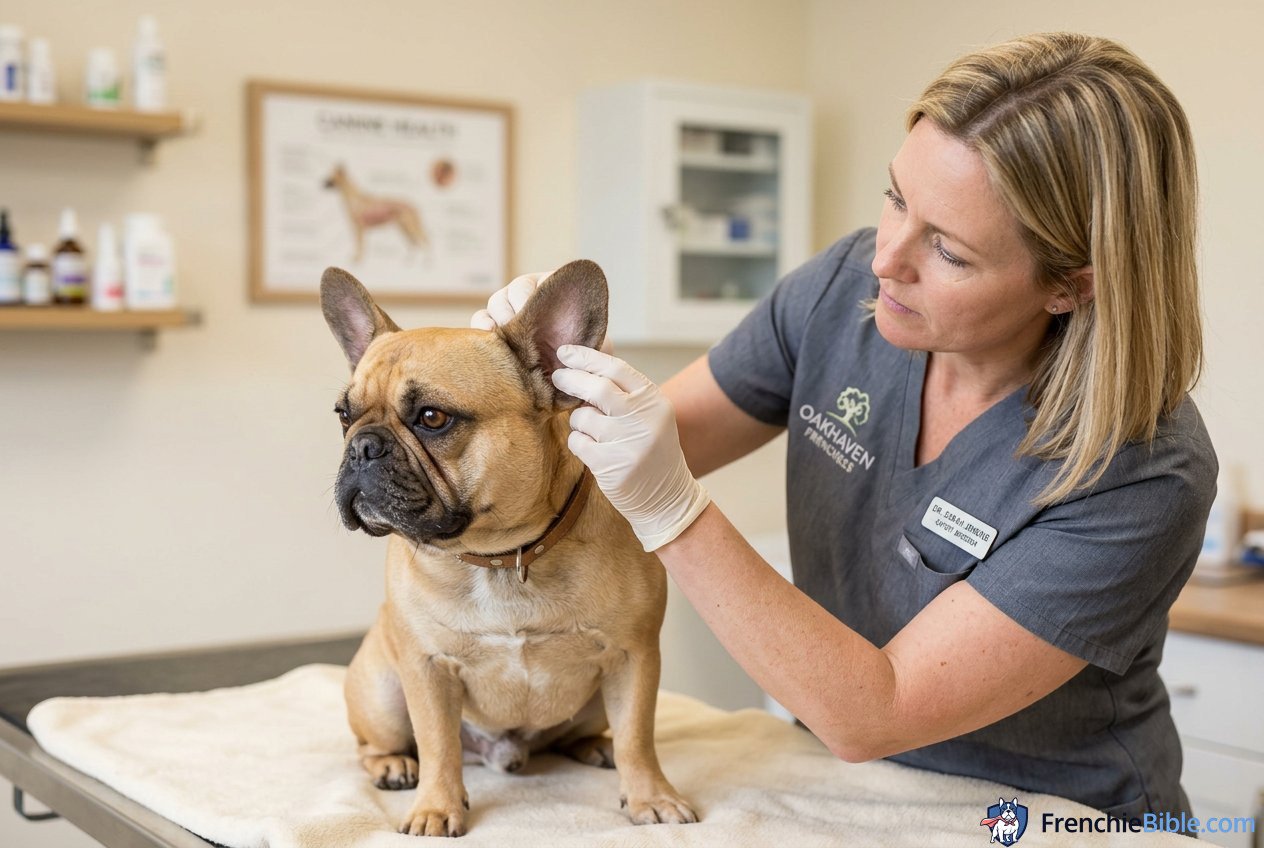
Furthermore, despite the wide opening at the top, the internal ear canal of a French Bulldog is surprisingly narrow and takes a sharp “L” shape dive towards the eardrum. This anatomical quirk means that while debris can easily fall in, it has a much harder time working its way out naturally. As a breeder I constantly stress to my puppy families that proactive ear care is non-negotiable.
If a Frenchie’s ears are ignored, the accumulation of normal wax can mix with environmental dirt, creating a dark, warm, and nutrient-rich environment. This is the perfect breeding ground for secondary problems, including yeast overgrowth, bacterial infections, and parasites like ear mites. Regular ear checks should be incorporated into your weekly grooming routine. Getting your Frenchie accustomed to having their ears touched, inspected, and cleaned from puppyhood will save you an immense amount of struggle and stress later in their life.
What Are Ear Mites? (Otodectes cynotis)
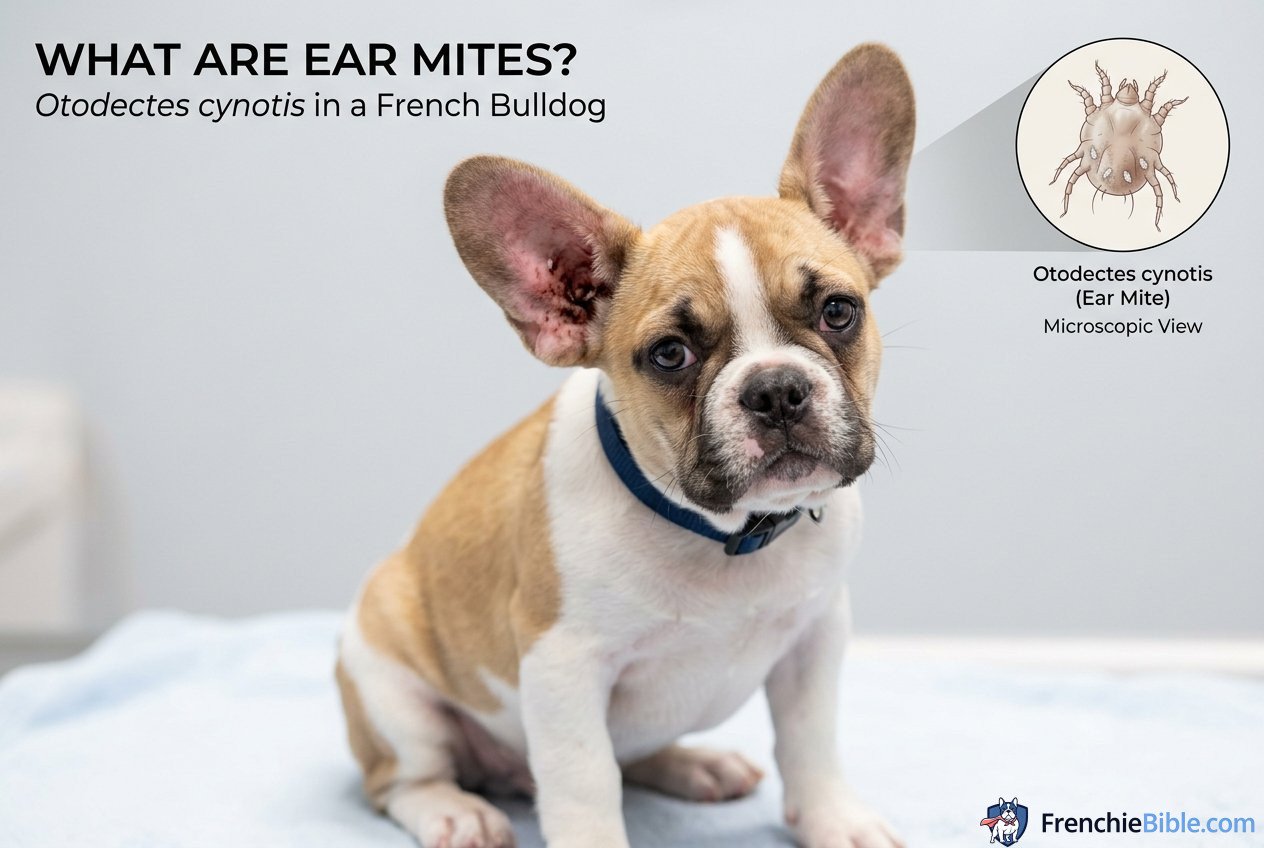
Before we can compare them to normal wax, we need to understand exactly what ear mites are. The most common ear mite found in dogs is Otodectes cynotis. These are microscopic, eight-legged parasites related to ticks and spiders. Unlike some parasites that burrow deep into the skin, ear mites live on the surface of the ear canal lining. They survive by feeding on epidermal debris, tissue fluid, and the ear wax itself.
The Life Cycle of the Ear Mite
The life cycle of an ear mite takes about three weeks to complete, entirely on the host animal. It begins with the adult female laying eggs in the ear canal. After about four days, these eggs hatch into six-legged larvae. The larvae feed for a few days, then rest and molt into eight-legged nymphs. The nymphs go through a couple of stages before molting into adult mites. The rapid breeding cycle is why an infestation can explode from a mild annoyance to a severe problem in just a matter of weeks.
Are Ear Mites Common in French Bulldogs?
The short answer is: they are common in dogs in general, particularly in puppies, rescue dogs, or dogs that spend a lot of time in crowded environments like kennels or dog parks. However French Bulldogs are not inherently more predisposed to catching ear mites than any other breed. Mites do not discriminate based on breed; they are highly contagious and spread through direct physical contact with an infected animal.
That being said, because a Frenchie’s ear canal can easily trap debris and provide a cozy environment, an infestation can take hold very quickly once a mite finds its way in. As a breeder I see ear mites most frequently in puppies that come from less-than-ideal breeding situations where hygiene is poor, or when a healthy Frenchie interacts with an infected stray cat (cats are notorious carriers of ear mites).
Normal Ear Wax in French Bulldogs: What Does Healthy Look Like?
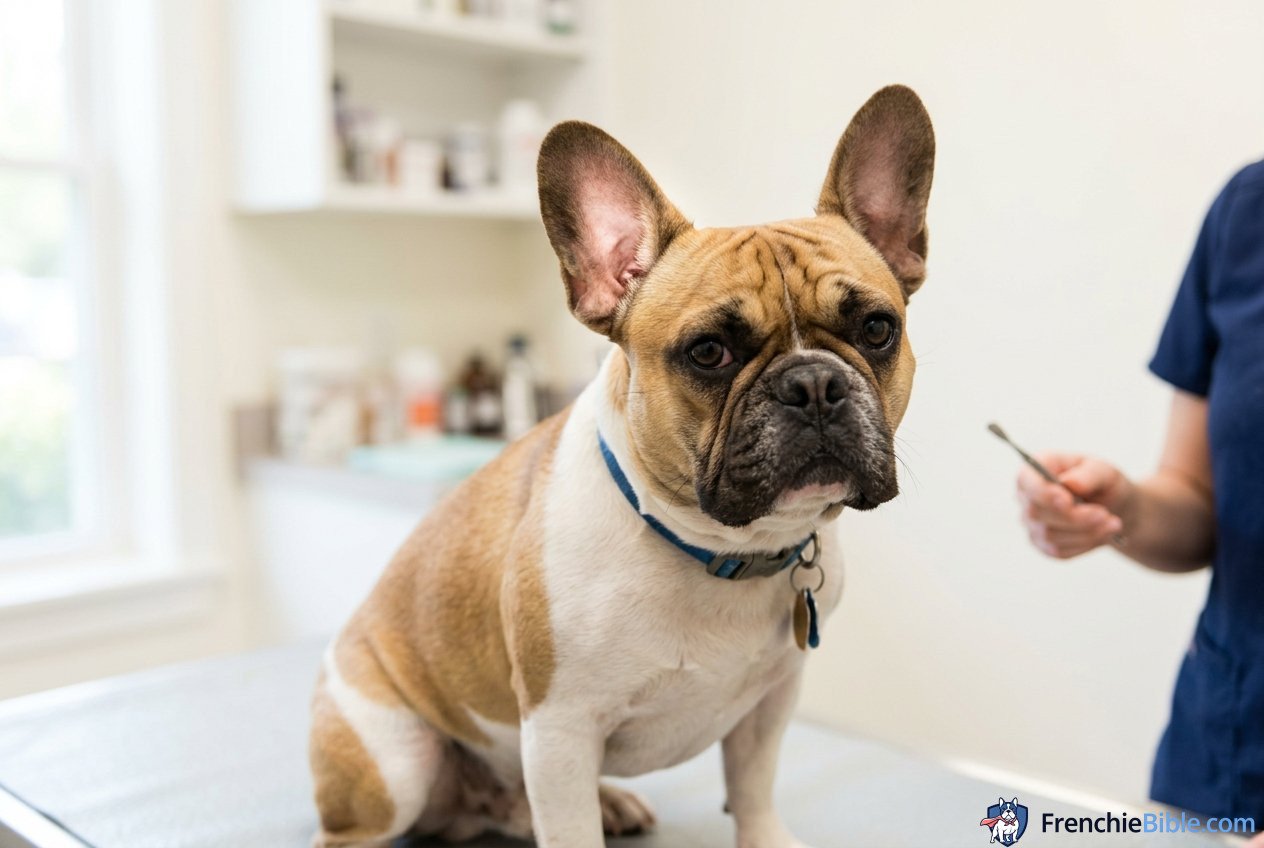
To spot the abnormal, you must be intimately familiar with the normal. Ear wax, medically known as cerumen, is a naturally occurring substance and a sign of a functioning ear. It is not inherently “dirty” or “bad.” In fact, cerumen plays a vital protective role. It lubricates the ear canal, preventing the delicate skin from drying out and cracking. It also contains antimicrobial properties and acts as a sticky trap for dust, dirt, and dead skin cells, helping to slowly migrate them out of the ear canal.
Characteristics of Healthy Cerumen
In a healthy French Bulldog, normal ear wax typically presents with the following characteristics:
– Color: Light yellowish, golden brown, or a mild pale tan. It should not be pitch black or dark brown.
– Consistency: It is usually slightly oily, waxy, or semi-soft. It should not be dry, crumbly, or crusty.
– Odor: Healthy ears have a very mild, sometimes slightly yeasty or dog-like smell, but it should never be offensive, pungent, or sour.
– Quantity: There should only be a small to moderate amount visible in the folds of the outer ear. The canal should not be packed full of wax.
Factors Influencing Wax Production
Over my 10 years of breeding I’ve noticed that wax production can vary greatly from one Frenchie to another. Some dogs simply produce more cerumen naturally. Other factors include:
– Diet: Dogs on lower-quality diets or those with food allergies often produce excessive, darker wax as the body tries to eliminate toxins or reacts to systemic inflammation.
– Environment: Frenchies living in dusty areas or spending lots of time outdoors will have more dirt mixed into their wax, making it look darker.
– Seasonality: High humidity and heat can increase wax production and alter its consistency.
Ear Mites vs. Ear Wax: The Key Differences
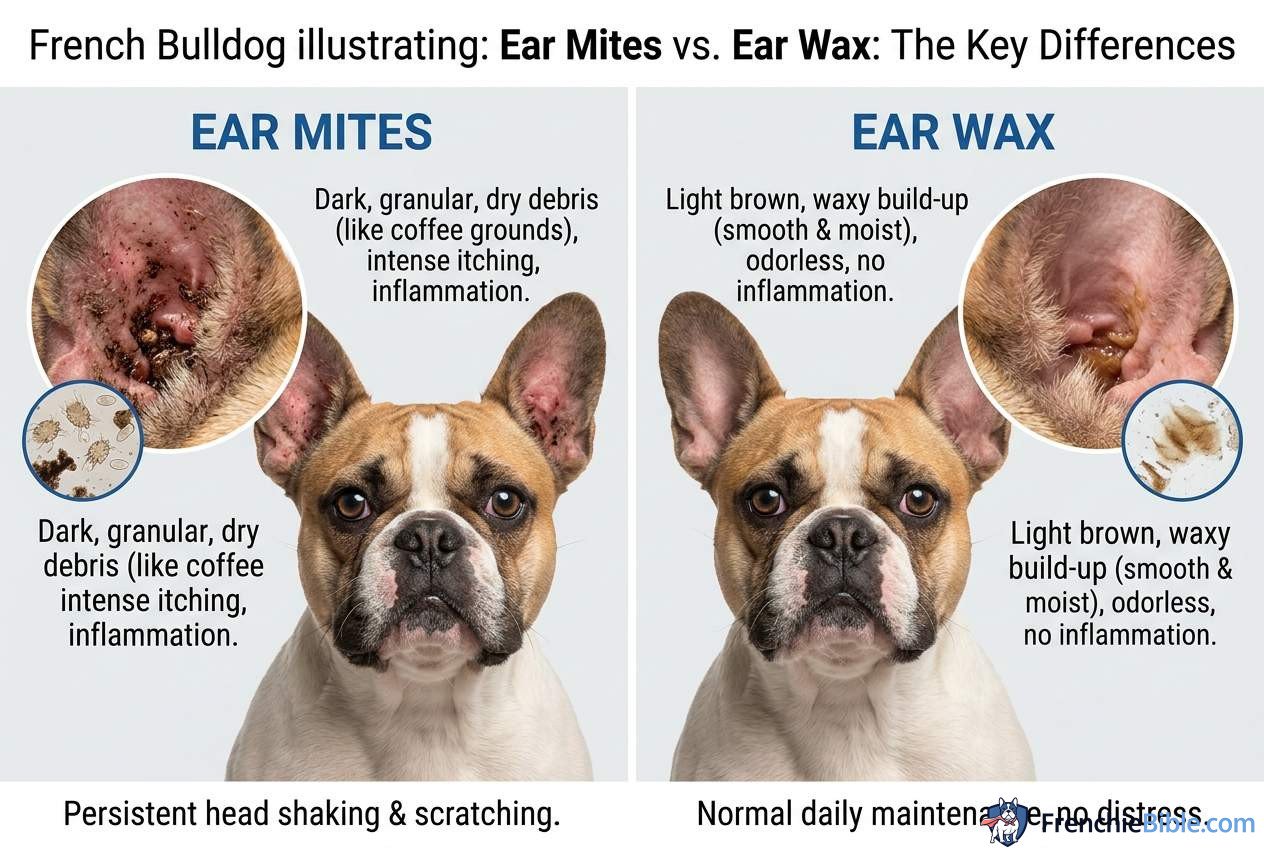
When you look into your Frenchie’s ear and see a buildup of dark material, panic often sets in. “Are these mites?!” is a common frantic text I receive from new owners. Let’s break down the key differences between a harmless buildup of wax and a parasitic infestation.
1. Visual Appearance and Texture
This is usually the most telling sign to the naked eye.
– Ear Mites: The hallmark sign of an ear mite infestation is dark, dry, crumbly debris that closely resembles dry coffee grounds. This debris is actually a mixture of dried blood, mite feces, dead skin cells, and ear wax. It often builds up in thick, crusty layers.
– Normal Wax: As mentioned, normal wax is lighter in color (yellow to light brown) and has a soft, greasy, or waxy texture. It smears easily and does not crumble into hard, dry specks.
2. Odor and Smell
Your nose is a highly effective diagnostic tool when it comes to dog ears.
– Ear Mites: Mite infestations often emit a distinct, foul, and offensive odor. It smells diseased, sometimes metallic (due to dried blood), or strongly rotting.
– Normal Wax: Has a very mild, benign smell. Even a heavy buildup of normal wax shouldn’t make you recoil in disgust. (Note: A strong, sweet, or bread-like smell usually indicates a yeast infection, not necessarily mites).
3. Behavioral Signs and Symptoms in Your Frenchie
Dogs cannot tell us what is wrong, but their behavior speaks volumes.
– Ear Mites: Mites cause intense, maddening itchiness. A Frenchie with mites will scratch their ears violently and incessantly. They will shake their heads vigorously, often flapping their bat ears loud enough to wake you up at night. They may rub the sides of their head along the carpet or furniture. The scratching can be so severe that they traumatize the surrounding skin, causing bleeding and hair loss. You may also notice them crying or whining when scratching.
– Normal Wax: A dog with a normal amount of ear wax might occasionally scratch an ear during their daily grooming routine, but it is casual, brief, and gentle. There is no frantic head shaking or signs of distress.
The Microscopic Differences: A Closer Look
While visual and behavioral clues are helpful, the definitive way to distinguish between mites and wax is through microscopic examination. As a breeder I have looked through many microscopes, but I always remind my clients that this level of diagnosis is the realm of a professional. When a sample of the ear debris is placed on a glass slide with a drop of mineral oil, a whole new world is revealed.
Ear Mites Under the Microscope
If the dark coffee-ground debris is caused by mites, the microscope will show a busy, unsettling scene. Otodectes cynotis mites are relatively large as far as mites go, and under low magnification, they look like translucent, whitish, spider-like creatures crawling actively across the slide.
You can clearly see their bodies, their legs, and their movement. Additionally, you will likely see their eggs, which are oval and white, scattered among the dark, amorphous clumps of their feces and dried blood. Seeing these live parasites moving around is the absolute confirmation of an infestation.
Normal Ear Wax Under the Microscope
If the sample is just heavy ear wax, the slide will look entirely different. There will be no movement. Instead, you will see a collection of non-living material. This includes large, flat epithelial (skin) cells that have naturally shed from the ear lining. You will see globs of lipid (fat/oil) from the cerumen glands. You might see strands of hair, dust particles, and pollen. While there may be a few normal bacteria or yeast organisms present (as they naturally inhabit the skin), there will be no multi-legged parasites crawling through the debris.
Common Complications of Untreated Ear Mites
If you misidentify ear mites as just “dirty ears” and fail to seek proper treatment, the consequences for your French Bulldog can be severe and long-lasting. Mites are not just a nuisance; they are a health hazard.
Secondary Bacterial and Yeast Infections
The intense scratching caused by mites damages the delicate skin inside the ear canal. This creates microscopic wounds. The mite debris also alters the pH and environment of the ear. This combination allows naturally occurring bacteria (like Staphylococcus) and yeast (like Malassezia) to rapidly overgrow. Soon, the dog is not only fighting mites but also a painful, foul-smelling, purulent bacterial or fungal infection.
Aural Hematomas
This is a very common and unfortunate complication. When a Frenchie violently shakes their head due to the severe itching of mites, the centrifugal force can cause the tiny blood vessels inside the ear flap (pinna) to rupture. Blood pools between the skin and the cartilage, creating a large, swollen, fluid-filled pocket that looks like a balloon on the ear. Aural hematomas are incredibly painful and usually require surgical intervention to drain the blood and stitch the ear back together. Even with surgery, the ear may heal with a “cauliflower” appearance, permanently altering your Frenchie’s iconic bat ear silhouette.
Chronic Ear Disease and Hearing Loss
If left untreated for extended periods, the constant inflammation (otitis externa) causes the tissues of the ear canal to thicken and scar. The canal becomes narrower and less able to clean itself. In severe, chronic cases, the eardrum can rupture, allowing the infection to enter the middle and inner ear. This can lead to neurological issues, balance problems (vestibular disease), and permanent, irreversible hearing loss.
Step-by-Step Guide: How to Clean Your French Bulldog’s Ears Safely
Whether you are dealing with normal wax buildup or cleaning the ears prior to applying a prescribed mite medication, knowing how to clean your Frenchie’s ears safely is a critical skill. Never clean ears that are red, swollen, ulcerated, or extremely painful without professional guidance.
Step 1: Gather the Right Supplies
- A high-quality ear cleanser: Look for a gentle, pH-balanced liquid ear flush designed specifically for dogs. Avoid anything containing alcohol, as it will sting and dry out the ear.
- Cotton balls or gauze squares: These are the only safe materials to use for wiping.
- ABSOLUTELY NO Q-TIPS (Cotton Swabs): I cannot emphasize this enough as a breeder. Never put a Q-tip into a dog’s ear canal. You risk pushing debris and wax further down, compacting it against the eardrum, or worse, accidentally rupturing the eardrum if the dog jerks their head. Q-tips are only for cleaning the very outer, visible folds of the ear flap.
Step 2: Prepare Your Frenchie
Make it a positive experience. Have treats ready. Wait until your dog is calm and relaxed, perhaps after a long walk. If your Frenchie is wiggly, you may need a second person to gently hold them, or you can wrap them securely in a towel (the “Frenchie burrito” method) to keep their paws out of the way.
Step 3: Apply the Cleanser
Gently grasp the tip of the ear flap and pull it slightly straight up and back. This helps to temporarily straighten the “L” shape of the ear canal. Squeeze a generous amount of the liquid ear cleanser directly into the ear canal until you can see the liquid pooling near the top. Do not touch the tip of the bottle to the ear tissue to avoid contaminating the bottle.
Step 4: Massage the Base
While still holding the ear flap up, use your other hand to gently massage the very base of the ear (where it meets the skull). You should hear a distinct “squishing” or “sloshing” sound. This massage action helps the liquid cleanser break up the wax and debris deep within the horizontal canal. Do this for about 20-30 seconds.
Step 5: Let Them Shake
Stand back and let go! Your Frenchie’s natural instinct will be to shake their head vigorously. Let them do it. This head shaking utilizes centrifugal force to bring the loosened debris and excess liquid from deep in the canal up to the outer ear where you can reach it. (Pro tip: do this in a bathroom or outside, as debris will fly).
Step 6: Wipe Clean
Take a cotton ball or gauze square and wrap it around your index finger. Gently wipe out the visible debris and liquid from the outer ear canal and the folds of the ear flap. Go only as far down as your finger naturally fits. Use a fresh cotton ball and repeat until the cotton comes out mostly clean.
Frequency of Cleaning
For a healthy Frenchie with normal wax production, cleaning once every 1 to 2 weeks is usually sufficient. Over-cleaning can strip the ear of natural protective oils and cause irritation. However, if your dog is prone to waxy buildup, swims frequently, or suffers from allergies, you may need to clean them weekly.
When to Seek Professional Help
As a breeder I am all for empowering owners to handle basic grooming and care. However, when it comes to the internal health of the ear, knowing when to step back and seek professional help is vital. Do not attempt to treat suspected ear mites at home without a definitive diagnosis.
You should immediately schedule a professional consultation if you notice any of the following:
– The debris in the ear is dark, dry, and looks like coffee grounds.
– Your Frenchie is scratching their ears excessively, shaking their head, or crying.
– The ear flap or canal is red, inflamed, swollen, or hot to the touch.
– There is a foul, sour, or metallic odor coming from the ear.
– Your dog pulls away or yelps in pain when you try to touch or clean their ears.
– You notice a sudden swelling on the ear flap (potential hematoma).
– Your dog is tilting their head to one side or seems off-balance.
The Danger of Over-the-Counter Treatments
I strongly advise against running to the pet store and buying over-the-counter (OTC) ear mite drops based on a hunch. Many OTC treatments are ineffective against severe infestations. More importantly, if the issue is a bacterial or yeast infection (which can look similar to the untrained eye), mite medication will do absolutely nothing to help and will only delay proper treatment, allowing the infection to worsen. A professional needs to look at a swab under a microscope to confirm the exact cause (mites, bacteria, yeast, or a combination) so that the correct, targeted prescription medication can be applied.
Preventive Measures for Breeders and Owners
Prevention is always better than cure, especially when it comes to the discomfort of ear problems. While you cannot guarantee your Frenchie will never get ear mites or heavy wax, you can drastically reduce the risks through diligent care.
1. Maintain a Clean Environment
Mites thrive in dirty environments and spread through contact. Ensure your Frenchie’s bedding is washed regularly in hot water. Vacuum your home frequently, especially areas where your dog sleeps. If you have a multi-pet household and one animal gets mites, all susceptible pets must be checked and likely treated simultaneously, as mites are highly contagious.
2. Routine Inspections
Make ear checks a habit. Once a week, take a flashlight and look down into your Frenchie’s ears. Note the color, amount of wax, and any odor. By knowing what your dog’s ears look like when they are healthy, you will immediately spot when something is starting to go wrong. Catching an issue early prevents it from becoming a massive, painful infection.
3. Post-Exposure Diligence
If your Frenchie has been at a boarding kennel, a doggy daycare, a grooming salon, or has had a playdate with unfamiliar dogs (or cats), pay extra attention to their ears in the following weeks. These are high-risk environments for picking up parasites like mites.
4. Dietary Considerations
Over my years of breeding I have seen a direct correlation between diet and skin/ear health. French Bulldogs are prone to food sensitivities and allergies, which often manifest as chronic ear inflammation and excessive wax production (which then sets the stage for secondary infections). Feeding a high-quality, balanced diet—often avoiding common allergens like chicken, beef, or cheap grain fillers—can dramatically improve overall skin health and reduce abnormal wax accumulation. Omega-3 fatty acid supplements (like high-quality fish oil) can also help reduce systemic inflammation and support a healthy skin barrier.
5. Proper Drying
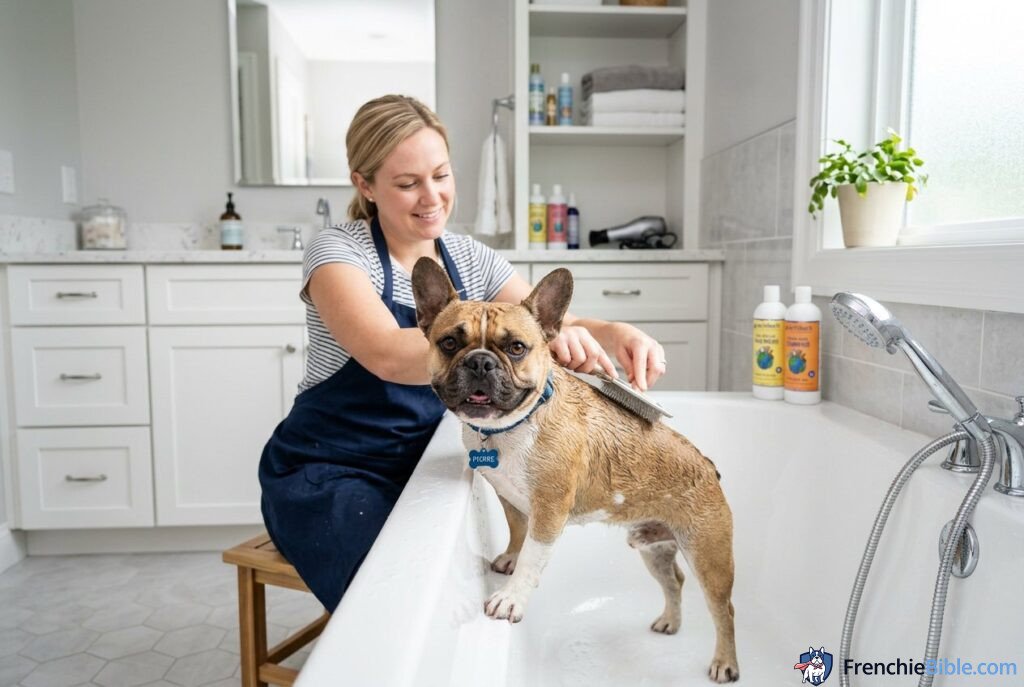
While Frenchie ears are erect, water can still get trapped down in that narrow L-shaped canal during a bath or if they manage to go swimming. Moisture is the enemy of a healthy ear, as it promotes yeast and bacterial growth. After bathing, always place a cotton ball just inside the opening of the ear canal to absorb stray water, and use a dry towel to thoroughly dry the outer ear flaps.
Frequently Asked Questions (FAQs)
1. Can French Bulldog ear mites spread to humans or other pets?
Ear mites are highly contagious to other pets, particularly dogs, cats, ferrets, and rabbits. If one pet has them, all animals in the household usually need to be evaluated and treated. However, Otodectes cynotis mites do not typically infest humans. While they might occasionally crawl onto a person’s skin and cause a temporary, minor itchy bump, they cannot survive or reproduce on humans.
2. How long does it take to get rid of ear mites completely?
With the correct prescription medication, the adult mites are often killed very quickly. However, because the life cycle of the mite is about three weeks, treatment usually must continue for at least that long to ensure that all newly hatching eggs are also destroyed. Some modern, professional-grade topical treatments applied to the back of the neck provide systemic protection that lasts for a month, effectively breaking the life cycle with a single application. Always follow the specific timeline provided by your professional.
3. Is coconut oil safe for cleaning my Frenchie’s ears?
While coconut oil has some mild antibacterial properties and is safe for general skin use I do not recommend it for routine ear cleaning. Oils can leave a heavy residue inside the narrow ear canal, which can actually trap dirt and debris rather than flushing it out. It is much better to use a specifically formulated, liquid canine ear flush that is designed to break down wax and evaporate without leaving a greasy residue.
4. Why do my French Bulldog’s ears get dirty so fast?
Frenchie ears act like funnels due to their wide, upright structure, catching environmental dust and pollen. Additionally, many Frenchies have underlying environmental or food allergies. Allergies cause skin inflammation, and the ear canal is lined with skin. This inflammation stimulates the ceruminous glands to overproduce wax, leading to ears that seem to get dirty almost immediately after being cleaned. If you find yourself needing to clean the ears more than once a week, an underlying allergy is highly likely.
5. Can I use hydrogen peroxide to clean ear mites?
Absolutely not. Hydrogen peroxide is incredibly harsh and damaging to the delicate epithelial tissues inside the ear canal. It causes cellular damage, severe irritation, and pain. It leaves the ear canal raw and highly susceptible to secondary bacterial infections. Furthermore, it is not an effective miticide. Never put hydrogen peroxide in your dog’s ears.
Disclaimer: The information provided in this article is based on over 10 years of experience in breeding and caring for French Bulldogs. We are passionate breeders and Frenchie enthusiasts, but we are NOT veterinarians. The content here is for educational and informational purposes only and should not replace professional medical advice, diagnosis, or treatment. Always consult with a licensed veterinarian for any health concerns regarding your dog, especially before starting any treatments or if you suspect an ear infection, mite infestation, or any other medical condition.