The world of dog breeding has seen a massive shift over the last two decades. Alongside the soaring popularity of the purebred French Bulldog, a new trend has taken the canine world by storm: the rise of “designer dogs.” If you have spent any time browsing for a new puppy, you have likely encountered frenchtons (French Bulldog crossed with Boston Terrier) Frugs (French Bulldog crossed with Pug), or even french boodles (French Bulldog crossed with Poodle).
As a French Bulldog breeder with over a decade of hands-on experience I hear the same question from prospective puppy buyers week after week: “Aren’t designer dogs healthier than purebred Frenchies because of hybrid vigor?”
Related Reading: Training & Behavior | Grooming & Care | French Bulldog Colors
It is a pervasive marketing claim, often touted by those breeding these mixed dogs. The pitch is simple and alluring: by combining the adorable looks of a French Bulldog with another breed, you magically erase the health issues associated with purebreds. But is it really that simple? Does crossing two breeds guarantee a healthier, more robust puppy?
The short answer is a resounding no.
Genetics is not a simple game of addition and subtraction. While the concept of hybrid vigor is a real scientific phenomenon, its application in the world of designer dogs is often vastly misunderstood—and frequently misrepresented. In this comprehensive guide, we are going to dive deep into the genetics of designer dogs versus purebred French Bulldogs. We will unpack the myth of hybrid vigor, explore the hidden risks of crossing breeds without extensive health testing, and explain why a responsibly bred purebred Frenchie might actually be a safer, healthier choice for your family.
Understanding “Hybrid Vigor” (Heterosis) in Dogs
To understand why the “designer dogs are healthier” claim is flawed, we first need to understand the science behind the buzzword. The term most often thrown around is “hybrid vigor.”
What is Hybrid Vigor?
In genetics, hybrid vigor—scientifically known as heterosis—refers to the phenomenon where the offspring of two different varieties or species exhibit greater biomass, speed of development, and fertility than both parents. In agriculture and livestock breeding, it is a well-documented and highly utilized concept. When you cross two highly inbred, genetically distinct lines of corn, for example, the resulting hybrid is often larger and more robust.
In dogs, the idea is that by introducing new genes from a completely different breed, you increase the genetic diversity (the gene pool) of the offspring. A larger gene pool generally means a lower chance of recessive genetic mutations matching up. For a recessive genetic disease to express itself, a puppy must inherit the mutated gene from both parents. If parent A is a purebred with a specific recessive mutation, and parent B is a completely different breed that does not carry that mutation, their puppies will not suffer from that specific disease (though they may be carriers).
This is the foundational logic behind the claim that mixed-breed dogs are healthier. And in true, randomly mixed mutts (dogs with five or six different breeds in their recent ancestry), there is evidence to suggest a lower incidence of certain breed-specific genetic disorders.
Why the Math Doesn’t Always Work for Designer Breeds
Here is where the designer dog argument falls apart: a designer dog is not a random mutt. It is an intentional cross between two specific, often very similar, purebreds.
Let’s take the Frenchton as a prime example. This is a cross between a French Bulldog and a Boston Terrier. Both of these breeds are brachycephalic (flat-faced). Both are prone to Brachycephalic Obstructive Airway Syndrome (BOAS). Both are prone to spinal issues like Hemivertebrae and Intervertebral Disc Disease (IVDD). Both are susceptible to certain eye conditions and skin allergies.
When you cross a Frenchie with a Boston Terrier, you are not introducing a wildly different set of genes that will magically cancel out the health problems of the French Bulldog. Instead, you are taking two breeds with heavily overlapping health profiles and breeding them together.
If both parent breeds carry the genes for spinal deformities, the offspring are just as likely—if not more so, due to the unpredictable nature of combining different skeletal structures—to suffer from spinal issues. You do not get hybrid vigor when you combine two dogs with the same genetic predispositions to disease.
The Difference Between Purpose-Bred Mixes and Random Crosses
It is crucial to distinguish between a randomly bred mixed breed (the classic “pound puppy”) and a first-generation (F1) designer cross.
A random mixed breed dog has a highly diverse genetic makeup. This extreme diversity is what genuinely reduces the risk of recessive genetic disorders.
A designer dog, however, is an F1 cross—a direct 50/50 mix of two purebreds. While they have more heterozygosity than a heavily inbred purebred, they still have a relatively restricted gene pool compared to a true mixed breed. Furthermore, if the breeder is not conducting rigorous DNA and physical health testing on both the French Bulldog parent and the other breed parent, they are essentially rolling the dice. They aren’t creating hybrid vigor; they are creating a genetic gamble.
The Unique Genetics of the French Bulldog
To evaluate the health of a Frenchie mix, we must first look honestly at the health of the purebred French Bulldog. As a dedicated preservation breeder I am the first to admit that our breed faces significant health challenges. Pretending otherwise helps no one, least of all the dogs.

Common Frenchie Health Concerns
French Bulldogs are a dwarf breed (chondrodystrophic) and a brachycephalic breed. Their unique structure—the very thing that makes them so incredibly adorable and sought-after—is also the source of their potential health issues.
1. Brachycephalic Obstructive Airway Syndrome (BOAS): This is the most well-known Frenchie issue. It encompasses elongated soft palates, stenotic nares (pinched nostrils), and hypoplastic trachea (narrow windpipe). It causes breathing difficulties, exercise intolerance, and susceptibility to heatstroke.
2. Spinal Abnormalities: Because Frenchies are a dwarf breed with a shortened, screw tail, they are prone to spinal malformations like hemivertebrae (butterfly-shaped vertebrae). They are also at high risk for Intervertebral Disc Disease (IVDD), which can lead to severe pain, nerve damage, and paralysis.
3. Allergies and Skin Issues: Frenchies frequently suffer from environmental and food allergies, which manifest as itchy skin, ear infections, and gastrointestinal upset.
4. Joint Problems: Patellar luxation (slipping kneecaps) and hip dysplasia are also seen in the breed.
Why Responsible Purebred Breeding Matters
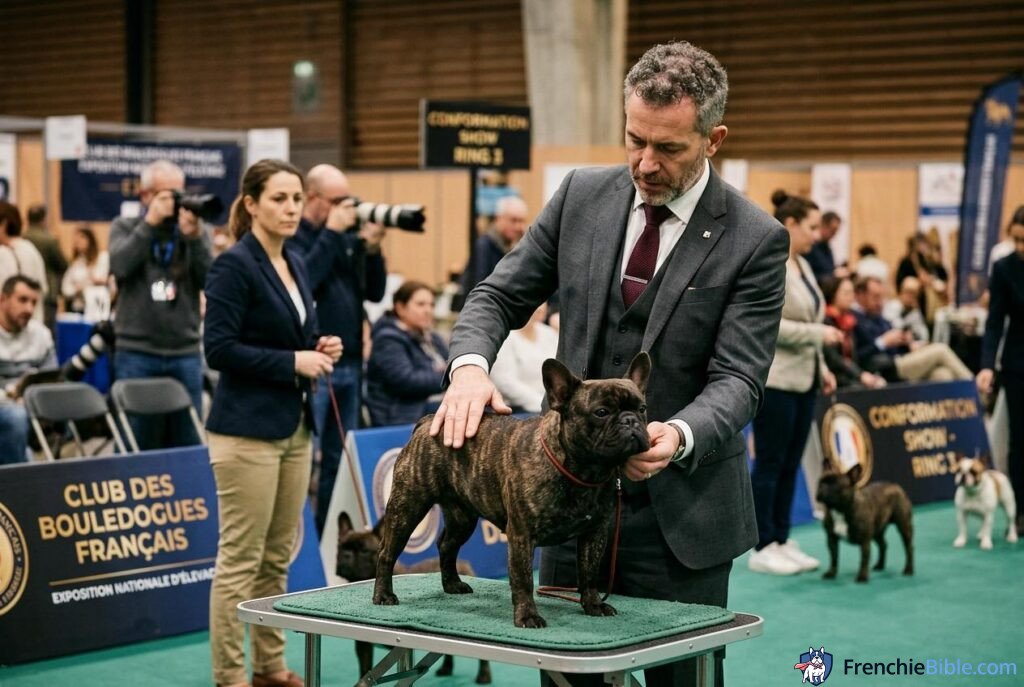
Because these risks are well-documented, responsible French Bulldog breeders spend an immense amount of time, money, and emotional energy mitigating them. We do not just put two cute dogs together and hope for the best.
A responsible purebred breeder utilizes extensive health testing. Before a dog ever enters a breeding program, they undergo:
– DNA Panels: To check for over 200+ genetic diseases, ensuring we do not pair two carriers of the same recessive disease.
– OFA Cardiac Evaluations: To ensure the heart is healthy.
– OFA Patella Evaluations: To check for slipping kneecaps.
– Spinal Radiographs (X-rays): To evaluate the spine for anomalies.
– Tracheal Hypoplasia Radiographs: To check the width of the windpipe.
– BOAS Functional Testing: To ensure the dog can breathe efficiently during exercise.
By exclusively breeding dogs that pass these rigorous tests, we actively select against disease. We are carefully managing the gene pool to produce healthier generations.
Health Testing in Purebreds vs. Designer Dogs
This brings us to the most critical difference between a responsibly bred purebred and the vast majority of designer dogs: Health Testing.
The breeders producing designer dogs are often motivated by profit and the capitalization of a trend. Because they are selling a “mix,” they frequently skip the expensive, rigorous health testing that ethical purebred breeders perform.
The prevailing attitude is often, “It’s a mix, so it will be healthy.” This is a dangerous fallacy. If you take an untested French Bulldog with poor breathing and bad hips, and breed it to an untested Poodle with eye disease and patellar luxation, you do not get a healthy puppy. You get a puppy that is at risk for breathing problems, bad hips, eye disease, and slipping kneecaps.
Without OFA (Orthopedic Foundation for Animals) testing and comprehensive DNA screening, hybrid vigor is nothing more than a marketing myth used to sell expensive, untested puppies.
Popular French Bulldog Mixes: A Closer Look
Let’s examine some of the most common French Bulldog designer crosses and look at the reality of their health profiles.

The Frenchton (French Bulldog x Boston Terrier)
The Goal: Breeders claim this mix creates a more athletic dog with a longer snout, better breathing, and fewer spinal issues.
The Reality: Boston Terriers are also a brachycephalic, chondrodystrophic breed. They share almost an identical list of health risks with the French Bulldog. Bostons are highly prone to BOAS, hemivertebrae, patellar luxation, and severe eye issues (like juvenile cataracts and corneal ulcers).
When you mix a Frenchie and a Boston, you are not escaping the structural issues of a flat face and a shortened spine; you are doubling down on them. A poorly bred Frenchton is just as likely to need airway surgery or suffer a ruptured spinal disc as a poorly bred Frenchie or Boston. There is virtually no “hybrid vigor” to be found here regarding structural health.
The Frug (French Bulldog x Pug)
The Goal: Often bred for a specific “cute” look, combining the bat ears of the Frenchie with the curly tail and wrinkles of the Pug.
The Reality: Once again, we are mixing two extremely brachycephalic breeds. Pugs have some of the most severe BOAS issues in the canine world. They also suffer from Pug Dog Encephalitis (PDE), a fatal neurological disease, as well as severe eye problems (proptosis, corneal ulcers) and spinal issues.
Crossing a Frenchie with a Pug does not elongate the snout or open the airways. It simply mixes two different types of compromised airway genetics. Frugs frequently struggle with severe respiratory distress and require extensive veterinary intervention.
The Bullhuahua (French Bulldog x Chihuahua)
The Goal: To create a “miniature” or “teacup” Frenchie look.
The Reality: This mix presents terrifying structural challenges. You are taking a heavy-boned, dense, muscular dog (the Frenchie) and crossing it with a fragile, fine-boned dog (the Chihuahua).
The resulting skeletal structure is wildly unpredictable. You may get a dog with a heavy, broad Frenchie chest supported by incredibly thin, fragile Chihuahua legs, leading to severe orthopedic breakdown, early-onset arthritis, and a high risk of bone fractures. Furthermore Chihuahuas are highly prone to patellar luxation, collapsing trachea, and dental disease—all of which can be passed on to the offspring.
Do These Mixes Actually Resolve Frenchie Health Issues?
The harsh truth is that most designer Frenchie mixes do not resolve the breed’s health issues because they are almost always crossed with breeds that share similar structural defects.
To genuinely improve a French Bulldog’s health via crossbreeding, one would have to outcross to a completely different body type—for example, a Beagle or a Jack Russell Terrier. However, breeders rarely do this because the resulting puppies look nothing like French Bulldogs, and therefore cannot be sold for premium “designer dog” prices.
The designer dog market relies on producing puppies that still look like the highly coveted Frenchie, which necessitates crossing them with other structurally compromised breeds.
The Hidden Risks of Designer Dogs
Beyond the lack of health testing and the overlapping genetic risks, there are other hidden dangers associated with designer dog breeding.
Unpredictable Genetic Outcomes
When an ethical breeder breeds two purebred French Bulldogs, they have a very clear expectation of the outcome. We know roughly what size the puppies will be, what their temperament will be like, what their coat will be, and what their structural conformation will look like. Purebreds offer predictability.
When you cross two different breeds, the results are entirely unpredictable. This is a basic rule of genetics. An F1 cross (first generation) might look like a perfect 50/50 split. But they might also inherit all the worst physical traits of both parents.
You cannot pick and choose which genes a puppy inherits. A breeder cannot guarantee that a Frenchton will get the Boston Terrier’s longer snout and the Frenchie’s calm demeanor. The puppy is just as likely to get the Frenchie’s flat face and the Boston Terrier’s hyperactive, high-energy drive—resulting in a dog that desperately wants to run and play but physically cannot breathe well enough to do so. This is a recipe for a miserable, frustrated animal.
The “Double Trouble” Effect: Inheriting Diseases from Both Sides
As mentioned earlier, if you do not perform DNA health testing on both parent breeds, the puppy can inherit genetic diseases from both sides of its family tree.
If a Frenchie carrying the gene for Degenerative Myelopathy (DM) is bred to a Pug that also carries the DM gene, their Frug puppies can be affected by this devastating, paralyzing disease. Mixing breeds does not erase recessive genes; it simply hides them until two carriers are unfortunately matched together by an ignorant or careless breeder.
Structural Inconsistencies and Their Impact on Health
Canine anatomy is a highly complex, interconnected system. Over hundreds of years, purebreds have been selectively bred so that their bones, muscles, and ligaments work together as a cohesive unit.
When you abruptly mix two completely different skeletal structures, you often create biological contradictions. A dog with the long, heavy back of a French Bulldog but the long, straight legs of a Poodle (a “French Boodle”) faces a biomechanical nightmare. The legs are not designed to support that type of spinal structure, leading to immense stress on the joints, early-onset osteoarthritis, and a high likelihood of ACL tears and spinal injuries.
Form follows function. When you destroy the established form by randomly mixing breeds, you severely compromise the dog’s physical function and long-term comfort.
The Lack of Standardized Health Screening
For purebred dogs, organizations like the Orthopedic Foundation for Animals (OFA) and the Canine Health Information Center (CHIC) have established specific, standardized health testing protocols. A French Bulldog must pass specific tests to receive a CHIC number.
There are no standardized health testing requirements for designer dogs. Because they are not recognized breeds, there is no parent club dictating what health clearances a breeder must obtain. This lack of oversight allows unethical breeders to operate with impunity, churning out mixed-breed puppies with zero accountability for their long-term health.
Why Purebreds Can Be Just as Healthy (If Not Healthier)
The narrative that purebreds are inherently sick and mutts are inherently healthy is a vast oversimplification. Health is not determined merely by breed status; it is determined by the ethics, knowledge, and dedication of the breeder.
The Power of Pedigree and Health Clearances
A pedigree is not just a piece of paper that proves a dog is “fancy.” A pedigree is a vital genetic roadmap. For a knowledgeable preservation breeder, a pedigree provides generations of data regarding health, longevity, temperament, and structure.
We can look back at a dog’s great-great-grandparents and know exactly how old they lived to be and what they died from. We can track health trends through different lines. We use this data, combined with modern genetic testing, to make highly informed breeding decisions that actively improve the health of the next generation.
Designer dog breeders rarely have this data. They are often breeding dogs with unknown backgrounds, unknown pedigrees, and unknown genetic baggage.
CHIC Certification and OFA Testing
A purebred French Bulldog born to parents who are fully health-tested CHIC certified, and structurally sound has an incredibly high probability of living a long, healthy, and happy life.
When you buy a purebred from a reputable source, you are provided with proof of health. You can physically view the OFA certificates for the parents’ hearts, knees, and spines. You can review the DNA panels proving they are clear of hereditary diseases. This level of transparency and health verification is almost entirely absent in the designer dog market.
The Role of Ethical Breeders
Ethical purebred breeders are deeply, passionately committed to the survival and improvement of their breed. We breed to standard, yes, but health and temperament are the absolute foundations of that standard.
We offer comprehensive health guarantees. We stipulate in our contracts that if a puppy ever cannot be cared for, it must be returned to us—we never want our dogs to end up in a shelter. We provide lifelong mentorship and support to our puppy buyers.
Conversely, the designer dog market is heavily populated by commercial breeders, puppy mills, and backyard breeders looking to make a quick profit on a fad. Once the puppy is sold, their responsibility ends.
Making the Right Choice for Your Family
If you are currently deciding between a purebred French Bulldog and a designer mix, it is vital to approach the process with your eyes wide open. Do not fall for marketing buzzwords.
Questions to Ask a Breeder (Purebred or Mixed)
Regardless of what type of dog you are buying, you must interrogate the breeder’s practices. Ask these non-negotiable questions:
- Can I see the comprehensive DNA health panels for BOTH parents? (Do not accept “cleared by vet” as an answer. You want to see the actual laboratory results from Embark Animal Genetics, etc.)
- Have the parents had their patellas, hearts, and spines evaluated by the OFA? Can you provide the OFA numbers so I can verify them online?
- What specific health issues are common in this breed/mix, and what exactly are you doing in your breeding program to prevent them?
- Do you offer a health guarantee that covers genetic and congenital defects?
- Can I meet the mother dog and see where the puppies are raised?
If a breeder—purebred or designer—becomes defensive, makes excuses, or cannot provide physical proof of health testing, walk away immediately.
Recognizing Red Flags in Designer Dog Marketing
Be highly skeptical of breeders who use the following tactics:
– Claiming their mixed breed dogs have “hybrid vigor” and are completely free of health issues.
– Selling “rare” colors or “teacup” sizes (these are huge red flags for unethical breeding practices).
– Charging exorbitant prices for mixed breed dogs (often higher than health-tested purebreds) simply because they gave it a cute portmanteau name like “Frenchiepoo.”
– Focusing entirely on the dog’s appearance or color rather than its health, temperament, and pedigree.
Preparing for the Financial Commitment of Dog Ownership
Whether you choose a purebred or a designer dog, you must be financially prepared. Veterinary care is expensive. If you buy a cheap, poorly bred designer dog to save money upfront, you will likely pay ten times that amount in veterinary bills later to manage allergies, spinal surgeries, or airway corrections.
Investing upfront in a puppy from a breeder who has spent thousands of dollars on health testing is the best financial and emotional insurance policy you can buy.
Conclusion
The allure of the “designer dog” is understandable. We all want healthy, unique, and beautiful companions. However, as a breeder who has dedicated over a decade to studying canine genetics and the specific intricacies of the French Bulldog I can assure you that mixing two breeds is not a magic cure for genetic disease.
Hybrid vigor does not apply when you carelessly combine two untested dogs with overlapping structural and genetic predispositions. A Frenchton Frug, or any other mix is only as healthy as the two dogs used to create it. And unfortunately, because designer dogs are primarily bred for profit rather than preservation, the parents used are rarely health-tested.
A responsibly bred purebred French Bulldog, backed by generations of rigorous OFA health testing DNA screening, and ethical breeding practices, is statistically far more likely to be a healthy, structurally sound companion than an untested designer mix.
Do your research, demand proof of health testing, and choose a breeder who prioritizes the dog’s well-being over a trendy name and a quick sale. Your future dog’s health—and your family’s heartbreak—depends on it.
Frequently Asked Questions (FAQs)
1. Are Frenchtons healthier than purebred French Bulldogs?
Not necessarily. Because Boston Terriers and French Bulldogs share similar structural traits (flat faces, short spines), they are prone to the exact same health issues, including BOAS and IVDD. A Frenchton bred from untested parents is just as likely to have severe health problems as a poorly bred purebred. Health depends entirely on the rigorous testing of the parent dogs, not just the act of mixing breeds.
2. Do designer dogs live longer than purebreds?
There is no scientific evidence to support the claim that designer dogs inherently live longer than responsibly bred purebreds. Lifespan is determined by genetics, diet, environment, and veterinary care. A purebred French Bulldog from health-tested, long-lived lines will generally outlive a designer mix bred from untested, unhealthy stock.
3. What is the healthiest French Bulldog mix?
There is no objectively “healthiest” mix. Any mix that involves crossing a Frenchie with another brachycephalic (flat-faced) or chondrodystrophic (dwarf) breed carries high risks. The only way to ensure health is through comprehensive OFA and DNA testing of both parents prior to breeding, regardless of whether the puppy is purebred or a mix.
4. How can I find a reputable breeder for a French Bulldog or a mix?
A reputable breeder will always prioritize health over profit. They will proudly provide OFA certificates (for heart, patellas, and spine) and comprehensive DNA panel results for both parents. They will have a thorough screening process for buyers, offer a strict return contract, and be highly knowledgeable about the specific health challenges of their dogs. Look for breeders involved in breed clubs and canine sports.
5. Does mixing a French Bulldog with a longer-snouted breed cure breathing problems?
Genetics are unpredictable. Crossing a Frenchie with a longer-snouted breed (like a Beagle or Poodle) does not guarantee the puppies will inherit the longer snout or the clear airways. Puppies can inherit the long palate of the Frenchie but the narrow nasal passages of the other breed, still resulting in severe respiratory distress. It is never a guaranteed “cure.”
Disclaimer: The information provided in this article is based on over a decade of professional breeding experience, canine genetics study, and daily husbandry of French Bulldogs. However I am a breeder, not a licensed veterinarian. This content is for informational and educational purposes only and is not intended to serve as medical advice, diagnosis, or treatment. Always consult with a licensed and qualified veterinarian for any medical, health, or dietary issues concerning your dog.