
Medical & Legal Disclaimer: The content provided in this article is for educational, historical, and informational purposes only. It does not constitute professional veterinary medical advice, diagnosis, or treatment. While the author is a passionate French Bulldog breed expert and experienced breeder, we are not your licensed, attending veterinarian. Every dog’s anatomy and health condition is unique. If you have any concerns regarding your Frenchie’s breathing, spine, or overall health, please consult a certified local veterinarian immediately.
When you walk your snoring, farting, bat-eared French Bulldog down the street, and someone asks where the breed comes from, you probably confidently reply: “Paris, France!” After all, it’s right there in the name.
Related Reading: Training & Behavior | Frenchie Puppy Guide | Best Food for Frenchies
But as a long-time breeder and researcher of Frenchie genetics and anatomy, I have to reveal a mind-blowing truth: The true ancestral home of the French Bulldog is actually the industrial city of Nottingham, England.
Why does digging into this history matter to you today? Because a Frenchie is not just a cute “fashion accessory.” They emerged from 19th-century England and underwent extreme—and sometimes brutal—genetic evolution. Only by understanding their true origin can you comprehend why modern Frenchies suffer from BOAS (Brachycephalic Obstructive Airway Syndrome) and IVDD (Intervertebral Disc Disease), and learn how to actually protect their health at home.
Chapter 1: The Industrial Revolution and the Birth of the “Toy Bulldog”
The Decline of Bull-Baiting and Miniaturization
Our story begins in early 19th-century England. At the time, a cruel blood sport called “bull-baiting” was highly popular. To bite and hold onto angry bulls, the early English Bulldogs were massive, athletic, and fiercely aggressive. Thankfully, in 1835, the British government officially outlawed this sport.
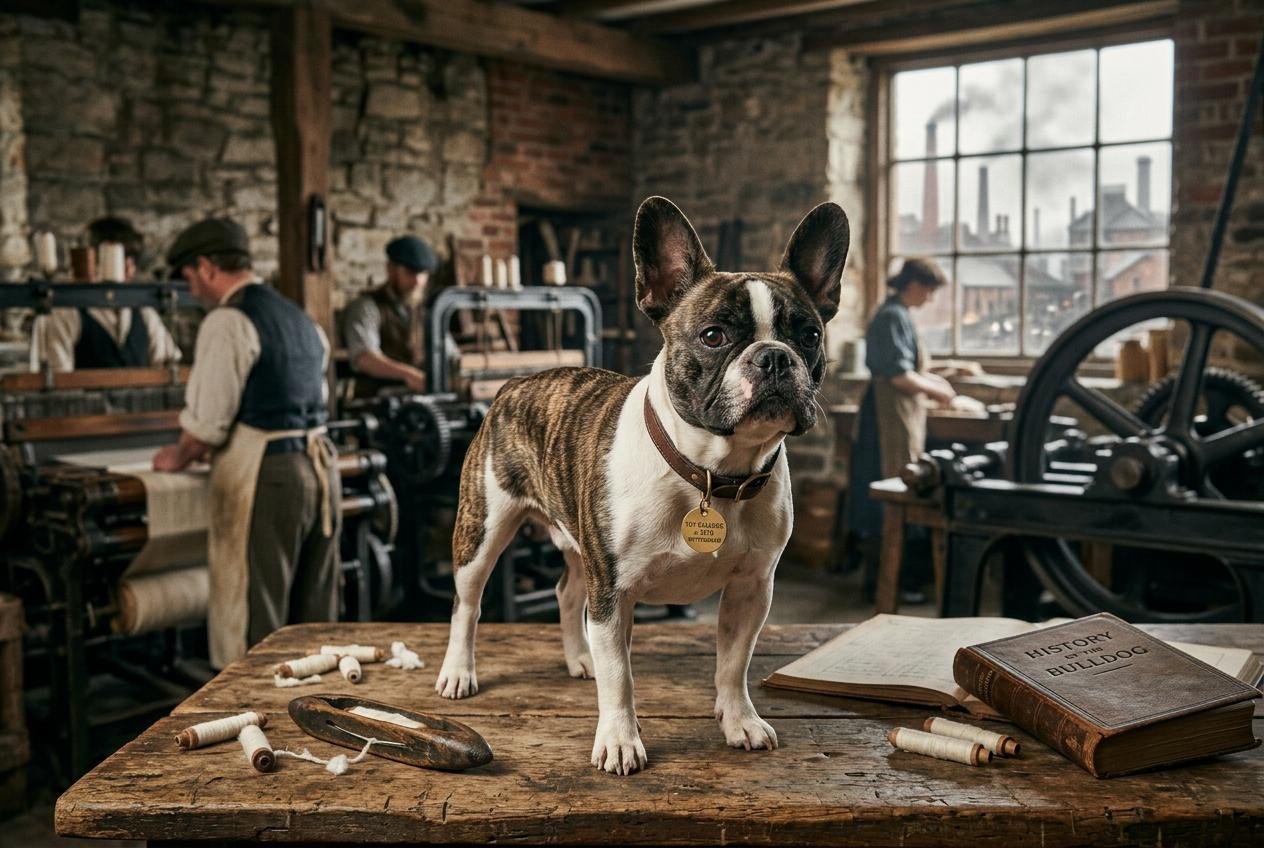
Unemployed and facing extinction, the Bulldog needed a new job: becoming a family companion. English breeders began genetic selection, crossing them with terriers or pugs to create a smaller, much more docile version known as the “Toy Bulldog.” This was the earliest ancestor of our modern Frenchie.
The Loyal Companions of Nottingham Lace Workers
In the mid-1800s, Nottingham, England, was the epicenter of the global handmade lace industry. The female lace workers absolutely adored these Toy Bulldogs. Why?
From a practical standpoint, Toy Bulldogs were small enough to curl up in the laps of the workers, acting as “living hot water bottles” in freezing, drafty workshops. Furthermore, thanks to their terrier genetics, they were excellent ratters, protecting expensive lace spools from being chewed by rodents.
This history cemented the fundamental temperament of the Frenchie that remains today: they were bred to be lap dogs and close human companions, not athletic working dogs built for long runs.
Chapter 2: Crossing the Channel: From Nottingham to Paris
Machines Replace Humans: A Canine Exodus
As the Industrial Revolution roared on, massive lace-making machines began to replace human hands in Nottingham. Facing unemployment and starvation, thousands of skilled lace workers were forced to cross the English Channel, migrating to Normandy and Paris, France, to find work. Naturally, they packed up their beloved Toy Bulldogs and brought them along.
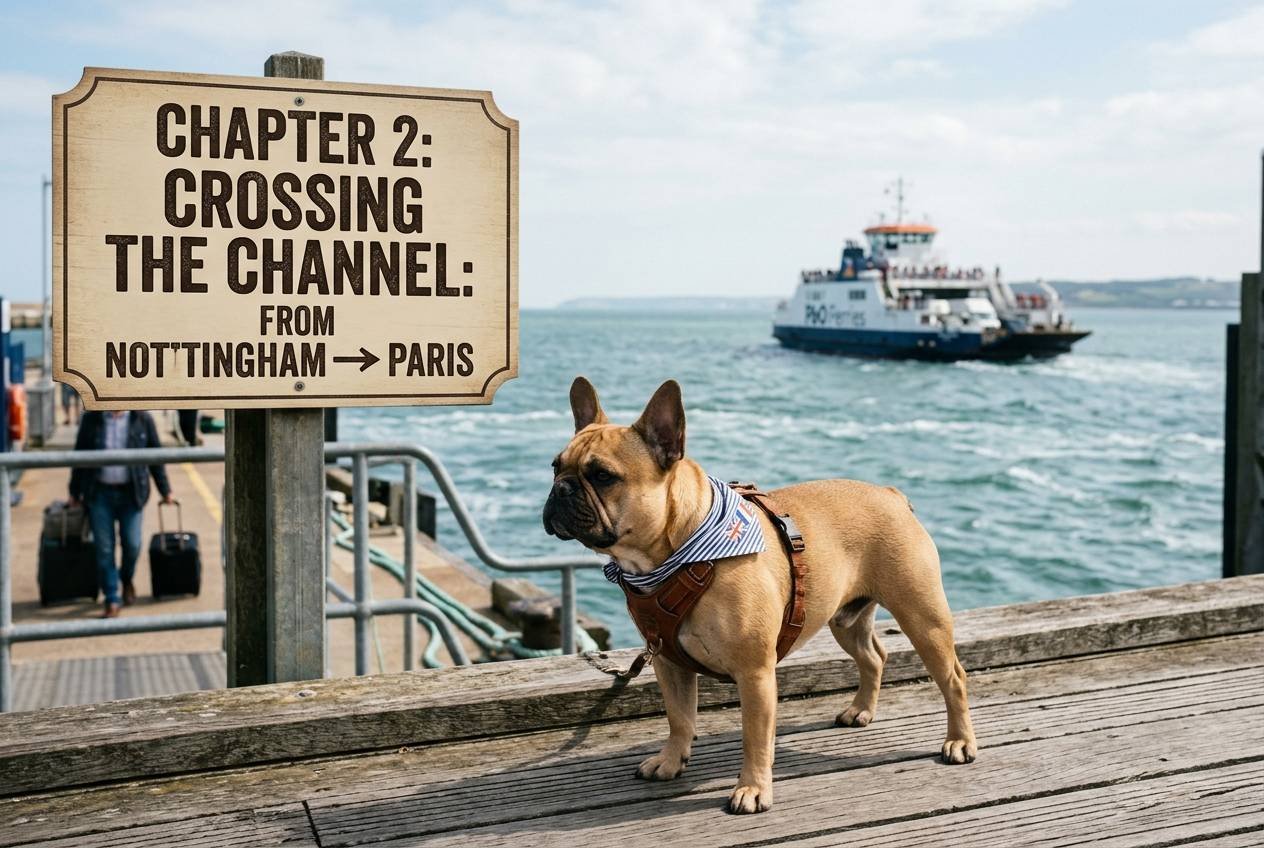
This was the first major turning point in the Frenchie’s genetic evolution. The moment these little dogs stepped onto French soil, they caused an absolute sensation.
From the Red-Light District to High Society
Initially, these peculiar little dogs were the staple of the Parisian working class. Butchers, carriage drivers, and even the “ladies of the night” in the Montmartre red-light district loved them.
However, it didn’t take long for the Parisian bohemian elite, artists, and aristocrats to become obsessed with their comical, flat faces and clownish personalities. Famous painters like Edgar Degas and Henri de Toulouse-Lautrec featured them in their art. The French proudly claimed the breed as their own, officially naming them the Bouledogue Français (French Bulldog).
Chapter 3: The “Bat Ear” Genetic Battle
Rose Ear vs. Bat Ear: Who Defined the Modern Frenchie?
The original Toy Bulldogs from England had two ear types: the “Rose Ear” (folded back like a modern English Bulldog) and the erect “Bat Ear.” Traditional British breeders despised the bat ear, considering it a severe genetic flaw. However, the French, along with wealthy early American buyers, fell in love with the bat ear look.
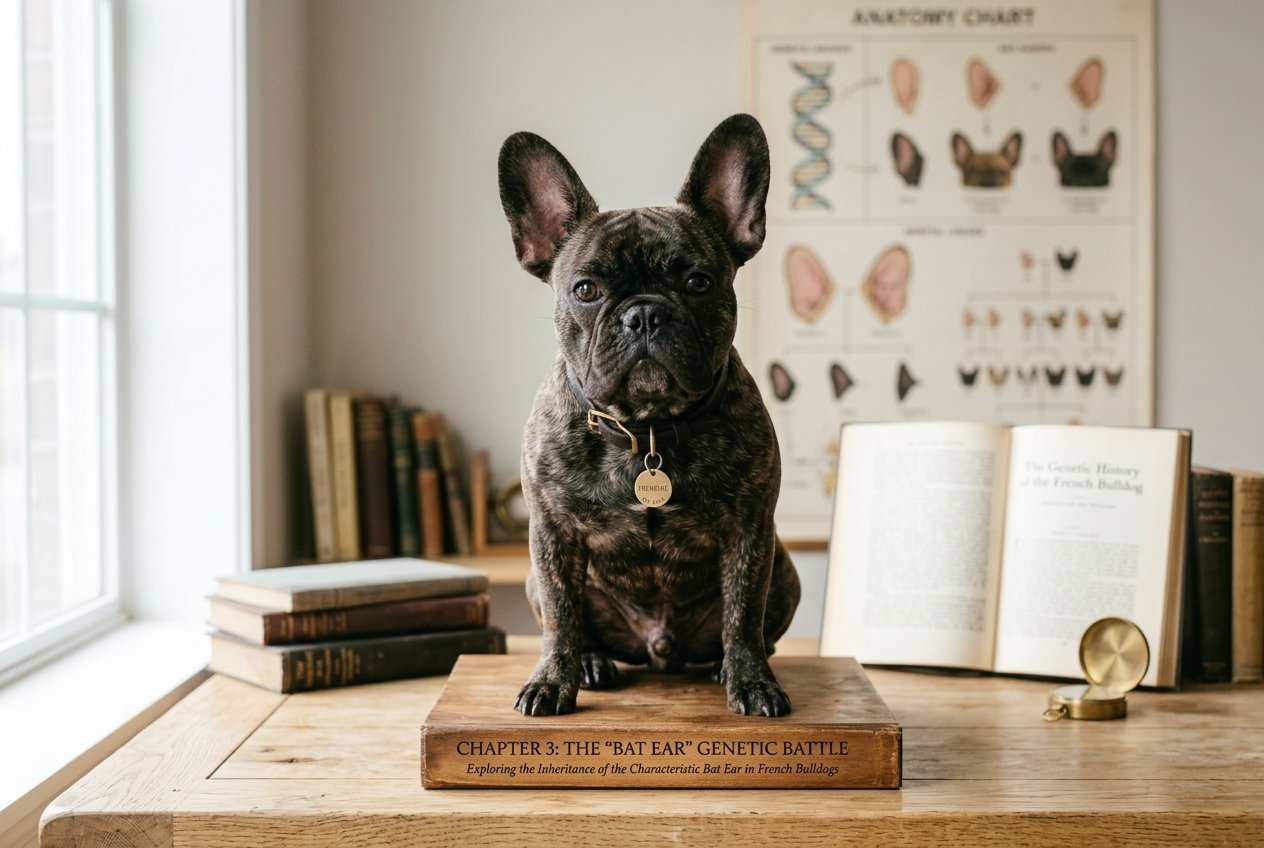
Ultimately, wealthy American enthusiasts founded the French Bull Dog Club of America (FBDCA) in New York in 1897. Using their financial influence, they aggressively fought to establish the upright “Bat Ear” as the one and only acceptable breed standard, separating them from English Bulldogs forever.
The Veterinary Anatomy Perspective: The Cost of Bat Ears
As a breeder, I must warn you: those charming bat ears are a primary culprit for ear diseases. A Frenchie’s ear canal is shaped like a deep “L.” Their wide, erect ear flaps act like satellite dishes, constantly collecting dust, pollen, and moisture from the air.
Actionable Tip: Modern Frenchies are highly susceptible to Yeast (Malassezia) and ear mite infections. Owners MUST use a professional veterinary ear flush at least once a week. Never just swab the outside with a Q-tip. You must flood the canal with the flush, massage the base of the ear, let the dog shake the debris out, and wipe it dry.
Chapter 4: Historical Evolution & Modern Genetic Flaws
BOAS: The Heavy Price of a “Flat Face”
If you look at historical photos of Toy Bulldogs from the 1800s, you will be shocked to see they had much longer muzzles (noses). Over the last century, to cater to human aesthetic demands for a “baby-like, flat-faced” appearance, breeders selectively bred their skulls to be shorter and shorter.
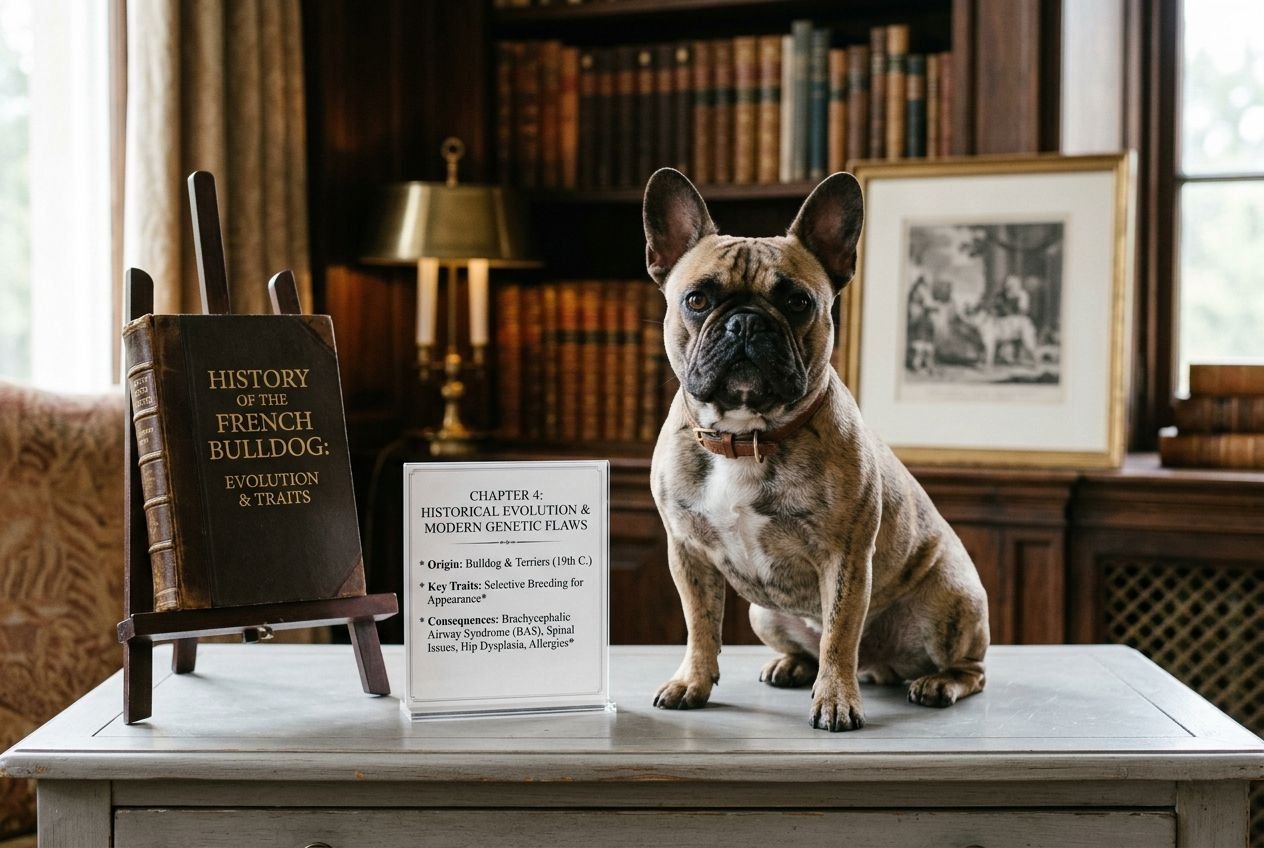
The genetic cost of this evolution is devastating. The skull shortened, but the soft tissues inside the mouth did not. This resulted in BOAS (Brachycephalic Obstructive Airway Syndrome)—an elongated soft palate blocking the trachea, severely stenotic (pinched) nares, and everted laryngeal saccules.
Actionable Tip: Why does your Frenchie snort like a pig or vomit white foam when excited? That is a warning sign of oxygen deprivation. It is strictly forbidden to intensely exercise a Frenchie outdoors when the temperature exceeds 75°F (24°C); they will suffer fatal heatstroke. For Frenchies with severely pinched nostrils, we highly recommend BOAS surgery (nares widening and palate trimming) at the time of their spay/neuter.
Chondrodystrophy: The Hidden Danger of IVDD
To maintain the miniature, “lap-sized” stature loved by the Nottingham lace workers, Frenchies have the CDDY (Chondrodystrophy) gene solidified in their DNA. Essentially, they are canine dwarfs.
Their short, thick vertebrae and prematurely calcifying intervertebral discs make them an extremely high-risk breed for IVDD (Intervertebral Disc Disease). A simple jump off the couch can cause a disc to rupture, crushing the spinal cord and causing instant hind-leg paralysis.
Actionable Tip: NEVER teach your Frenchie to “beg” on their hind legs. Cover slippery hardwood floors with rugs. You must use pet stairs for beds and couches. Most importantly—throw away neck collars and ONLY use a no-pull harness to protect their fragile cervical spine.
Chapter 5: Lessons for Modern Frenchie Owners
The Breeder’s Guide: How to Buy a Historically Healthy Frenchie
In 2026, the internet is flooded with unethical extreme breeding—”Hairless Frenchies,” “Fluffy Frenchies,” and “Micro Frenchies.” Understanding their history helps you stay grounded. A French Bulldog is not supposed to be as tiny as a teacup, nor should they have exotic, disease-linked colors.
If you are bringing a Frenchie puppy home, you must demand these four core health clearances from the breeder:
1. OFA Spine & Hip X-ray Evaluations (checking for Hemivertebrae).
2. BOAS Grading (Respiratory Function Assessment).
3. Comprehensive DNA Panel (clearing genetic cataracts and Degenerative Myelopathy – DM).
4. Cardiac Echocardiogram.
Conclusion: The Outcast of Nottingham, The Darling of the World
From the rat-catchers under the looms of Nottingham, to the companions of Parisian streetwalkers, to the most popular companion dog in the world today—the true origin of the French Bulldog is a dramatic tale of industrial migration.
As owners, while we enjoy the endless laughter and clownish affection they bring into our lives, we must also take responsibility for the health debt left by their genetic evolution. If you love them, respect their history, accept their physical fragilities, and use science-backed care to protect their spine and breathing every single day.
Frequently Asked Questions (FAQ)
Q1: Are French Bulldogs and English Bulldogs genetically related?
A: Yes! French Bulldogs are direct descendants of the English “Toy Bulldog” from the 1800s, which were bred down from early English Bulldogs mixed with local terriers and pugs.
Q2: Why do historical photos of Frenchies look so different from my dog today?
A: Over the last 150 years, extreme selective breeding for aesthetic purposes (show rings and consumer demand) has drastically shortened their muzzles, widened their chests, and compacted their bodies, moving them far away from their original, more athletic Toy Bulldog structure.
Q3: How does knowing they are from England help me take care of my Frenchie?
A: Knowing they were originally bred as low-energy lap warmers (and later genetically altered to have flat faces and dwarfism) reminds you that they are not built for intense physical exertion. It emphasizes the critical need for weight management, temperature control, and spinal protection (no jumping!).