
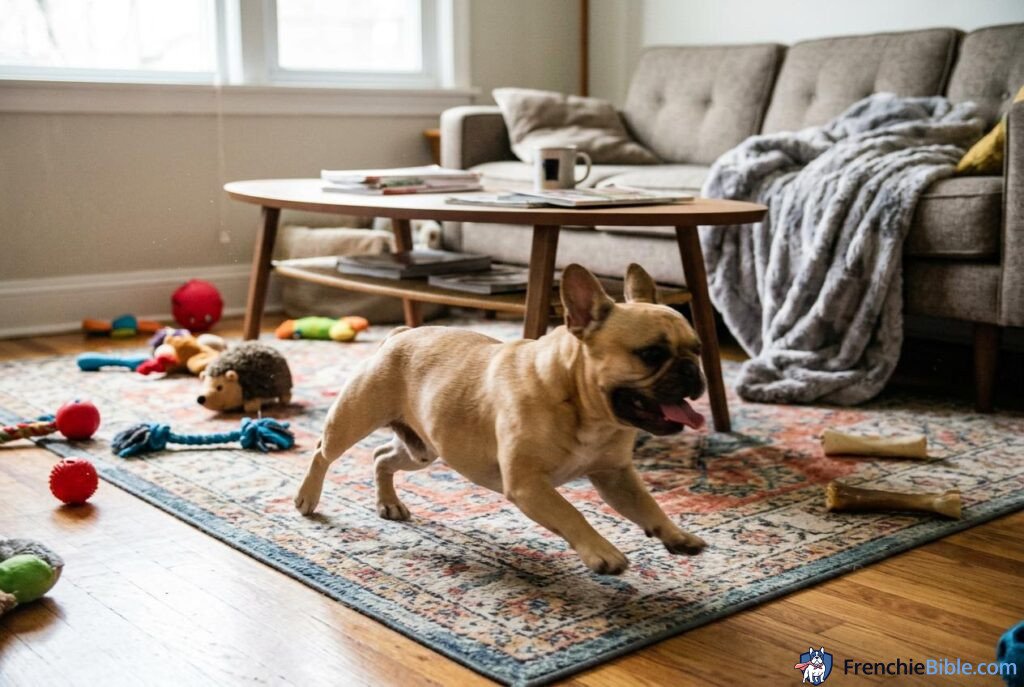
Among the behavioral challenges that can emerge as a French Bulldog matures, none is quite as distressing—or potentially dangerous—as resource guarding. Also known as food aggression, this behavior manifests when a dog treats their food bowl, a high-value bone, or even a stolen item like a sock as a treasure that must be defended at all costs.
When a Frenchie is actively guarding, they will freeze over the item, show the whites of their eyes (whale eye), curl their lips to show their teeth, and emit a low, rumbling growl.
Related Reading: Health & Diet | Grooming & Care
If you ignore these warnings and reach for the item, the dog may snap, lunging and biting your hand.
For many families, this behavior feels like a deep betrayal. They ask: “Why is my sweet, cuddly Frenchie suddenly acting like a wolf?”
As a breeder with ten years of experience managing multi-dog households and training generations of French Bulldogs, I can tell you that food guarding is not a malicious attempt to dominate your household.
It is an anxiety-driven survival response rooted in ancient canine biology.
If you react to food guarding with force, physical punishment, or by “dominating” your dog, you will make the behavior significantly worse, turning a minor growl into a severe bite reflex.
This guide will break down the precise canine psychology of resource guarding, explain why traditional dominance theory fails, and deliver my kennel’s highly successful, step-by-step Exchange Protocol to teach your Frenchie that your approach to their bowl is a promise of something better, not a threat of loss.
1. The Psychology of the Guard: Why Dominance Theory Will Get You Bitten
To correct resource guarding, you must completely erase the word “dominance” from your training vocabulary.
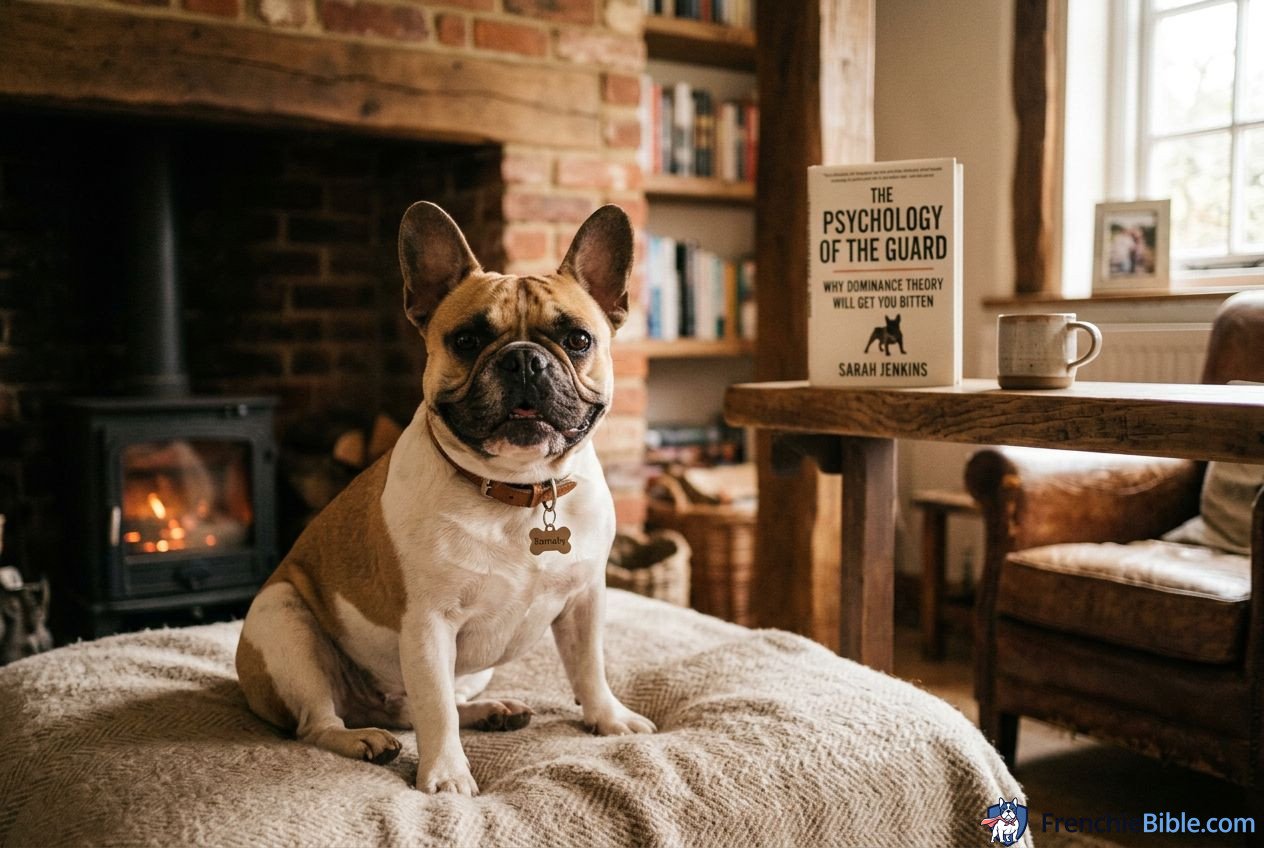
For decades, traditional dog trainers advocated for “pack leader” methods. They told owners to physically take the food bowl away, stick their hands in the dog’s food while they were eating, or pin the dog to the ground (alpha roll) to teach them who is boss.
If you attempt these methods on a French Bulldog, you will get bitten. Here is why:
The Economics of Value
From a dog’s biological perspective, a resources-rich environment is rare.
When your Frenchie has a high-value marrow bone or a bowl of food, they are holding a treasure.
If you walk up and forcefully rip that item away from them, you have confirmed their deepest, most primal fear: “Whenever humans approach me while I am eating, they steal my treasure.”
The next time you approach, their anxiety levels will be higher. They will growl louder to warn you away.
If you punish them for growling, you do not cure the underlying anxiety; you simply remove their warning system.
The next time, because they are no longer allowed to growl, they will skip the warning and bite your hand instantly.
The Breeder’s Principle: We must shift our Frenchie’s emotional association from fear of loss to anticipation of gain.
Instead of showing them who is boss, we must teach them that our approach to their bowl always results in a “bonus treat”—creating a positive, relaxed emotional response.
2. Pre-Protocol Rules: Establishing a Safe Management Zone
Before beginning the retraining protocol, you must establish an immediate management safety zone to ensure no one in your household gets hurt.
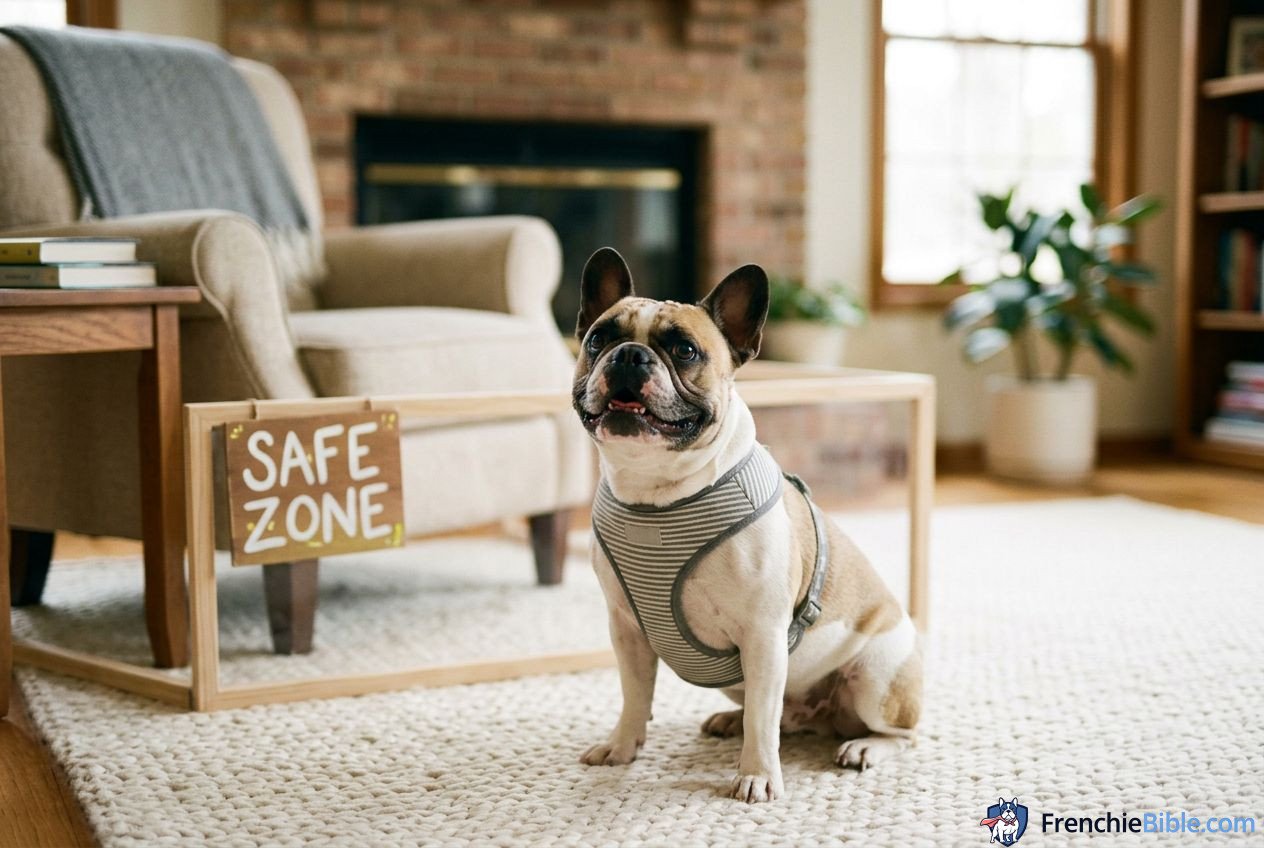
- Feed in Isolation: Never feed a resource-guarding Frenchie in a busy, high-traffic hallway or near other household pets. Feed them strictly inside their closed crate, a small playpen, or a separate room behind a closed door. This physical boundary gives them a sense of complete safety, immediately lowering their guarding anxiety.
- The “No-Touch” Golden Rule: While your Frenchie is eating or chewing on a bone, no one is allowed to touch them, pet them, or approach their space. Leave them in complete peace.
- Pick Up High-Value Items: When the chewing session is over, do not try to wrestle the bone away from them while they are awake. Wait until they willingly walk away from the bone to get a drink of water, secure them in another room, and then quietly pick up and store the bone.
3. The Step-by-Step Exchange Protocol: Re-Writing the Brain
This protocol uses systematic desensitization and classical conditioning to change your Frenchie’s emotional response to your approach.
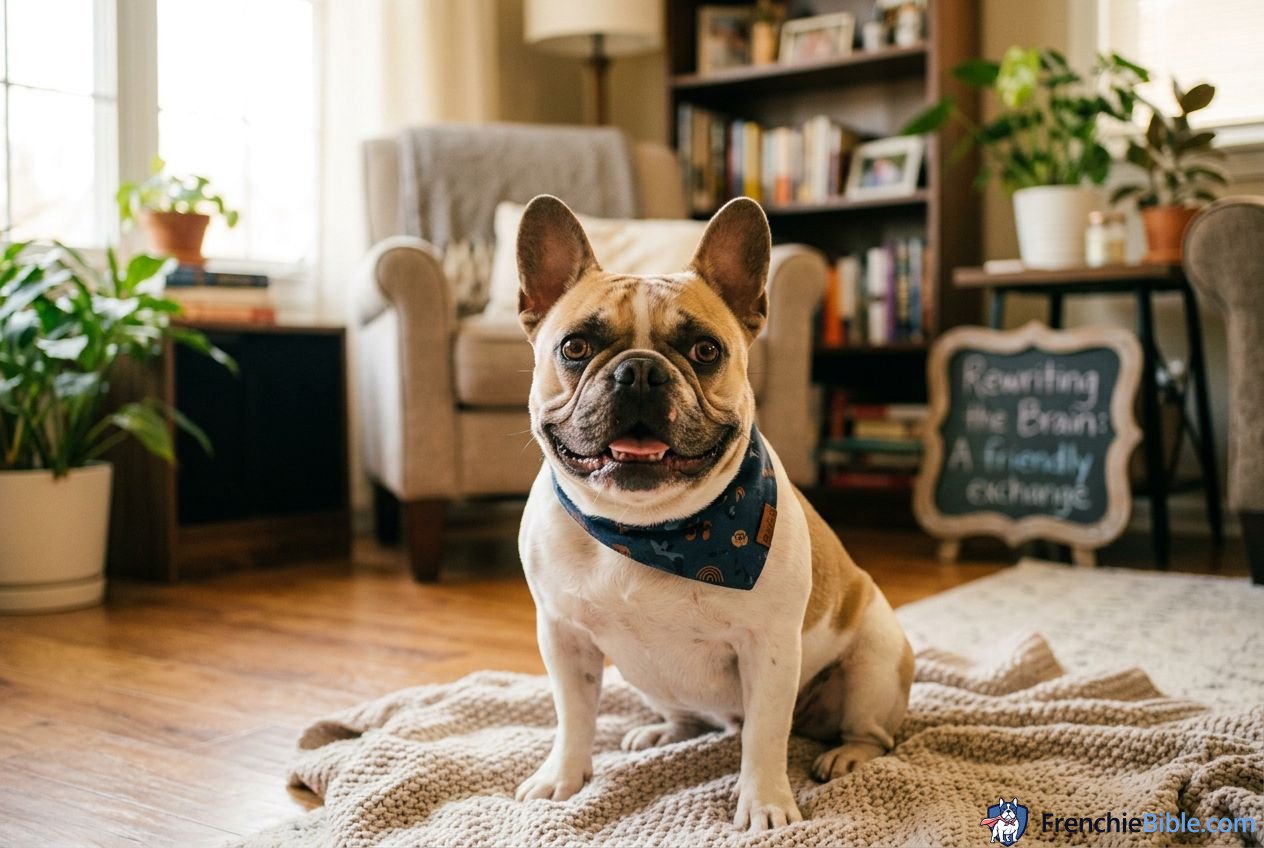
For this training, you will need a supply of ultra-high-value treats that are significantly better than their normal food (such as tiny slivers of roasted turkey breast, freeze-dried liver, or freeze-dried raw beef).
Step 1: The Drive-By Toss (Desensitization)
This step is performed while your Frenchie is eating their normal meal from their bowl flat on the floor.
- The Action: Walk toward your eating Frenchie, but stop at a safe distance where they are aware of you but showing zero signs of tension (usually about 6 to 8 feet away).
- The Toss: Toss a piece of roasted turkey breast directly into or right next to their food bowl.
- The Retreat: The very second the treat lands on the floor, turn around and walk completely away.
- The Lesson: You did not touch their bowl. You did not slow down. You simply appeared, made their bowl richer, and left. Repeat this 3 to 4 times during every meal for 5 consecutive days. Soon, you will see your Frenchie’s tail wag and their ears perk up when they hear your footsteps approach.
Step 2: The Step-In and Drop (Weeks 2–3)
Only progress to this step when your Frenchie shows zero tension during the Drive-By Toss.
- The Action: Walk up to your Frenchie’s bowl, stopping about 3 feet away.
- The Drop: Reach out and drop a piece of high-value freeze-dried liver directly into their bowl.
- The Retreat: Turn around and walk away immediately.
- The Lesson: Your hand approaching their bowl is a magic dispenser of premium snacks, not a threat. Repeat this for 7 days.
Step 3: The Ultimate Exchange (The Trade Contract)
Now we will teach them to willingly trade a low-value item for a high-value one.
- The Action: Give your Frenchie a low-to-medium-value toy (like a rubber chew toy).
- The Offer: Walk up with a piece of roasted turkey in your hand. Hold the treat right in front of their nose. Say the verbal cue: “Trade.”
- The Release: To consume the turkey, your Frenchie must release the rubber toy from their mouth. The second they let go of the toy, give them the turkey, praise them enthusiastically, and immediately give them the rubber toy back.
- The Lesson: Trading with you is a winning contract! They got the delicious meat, and they got their toy back! They lose absolutely nothing by cooperating with you.
4. Frequently Asked Questions (FAQ)
Q1: My Frenchie guards random stolen household items like socks or tissues. How do I handle this?
This is extremely common. Stolen items are exciting because they smell like you, and your panic when trying to retrieve them makes the item feel incredibly high-value. To handle this:
1. Do not chase them. Chasing turns the theft into a fun game of keep-away and increases guarding anxiety.
2. Grab a handful of ultra-high-value treats (like freeze-dried beef) or a squeaky toy. Walk in the opposite direction and squeak the toy.
3. Once your Frenchie drops the sock to get the treat, toss the treats away from the sock, and quietly pick up the item while they are occupied eating the treats.
Q2: Why is my Frenchie guarding my sofa, my bed, or my lap from my spouse?
This is known as “location or human guarding.” Your Frenchie is treating your lap or the comfortable sofa as a high-value resource. If they growl when your spouse approaches:
1. Never comfort or pet your Frenchie when they growl. This rewards the aggressive posture.
2. The moment they growl, stand up quietly without saying a word. By standing up, you remove the resource (your lap/the sofa comfort) instantly, teaching them that growling results in the immediate loss of the resource.
3. Have your spouse be the sole dispenser of all high-value treats and meals for two weeks to rebuild a positive association.
Q3: My puppy has started growling at our other dog when chewing a bone. How do I stop this?
Multi-dog resource guarding is highly instinctual and incredibly difficult to “train out,” because dogs do not understand verbal trade contracts with each other. You must manage this physically. Never allow dogs to chew high-value bones in the same room. Use crates, playpens, or separate closed rooms for chew sessions. Trying to force them to share will lead to severe dog fights and chronic household stress.
Q4: How do I know if my Frenchie’s food aggression is cured?
Resource guarding is rarely “cured” permanently; rather, it is a behavior that is successfully managed and redirected. Even if your Frenchie has been 100% relaxed for months, you should still respect their space. Continue to perform occasional “Drive-By Tosses” to maintain their positive association, and never let young children approach any dog while they are eating.
5. Disclaimer
The behavioral retraining protocols and canine psychological insights shared in this article are based on my ten years of experience breeding, raising, and training French Bulldogs. I am not a certified veterinary behaviorist. Resource guarding is a serious behavioral issue that can escalate to severe bites. If your French Bulldog is showing intense aggression, lunging, or has bitten a family member, please contact a professional force-free positive reinforcement dog trainer or a board-certified veterinary behaviorist immediately.