
If you have loved and raised French Bulldogs for any length of time, you have likely stood over your dog in the middle of the night, listening to their stomach gurgle like a boiling cauldron. For Frenchies, acute gut inflammation—characterized by a loud, rumbling abdomen (borborygmi), refusal to eat, morning bile vomiting, and the dreaded jelly-like soft stool—is an all-too-common crisis.
When a Frenchie’s gut lining becomes inflamed, the mucosal barrier is compromised. In the breeding community, we call this a “leaky gut” phase. During this time, the intestinal tight junctions loosen, allowing undigested food particles and toxins to seep into the bloodstream, triggering systemic allergic reactions, paw chewing, and hives.
Related Reading: Training & Behavior | Grooming & Care | French Bulldog Colors
While commercial kibbles and modern medications have their place, nothing speeds up the cellular repair of a Frenchie’s intestinal wall quite like an ancient, nutrient-dense kitchen staple: slow-simmered, homemade bone broth.
As a long-time breeder who has nurtured countless puppies through weaning and helped senior Frenchies recover from severe digestive setbacks, I want to share my ultimate, breed-safe bone broth recipe. More importantly, we will explore the deep biology of how this simple broth acts as a cellular glue to heal your dog’s delicate stomach from the inside out.
1. The Biology of the Inflamed Frenchie Gut: Why the Mucosal Barrier Fails
To appreciate why bone broth is so effective, we must first understand what happens inside your Frenchie’s gut when it fails.
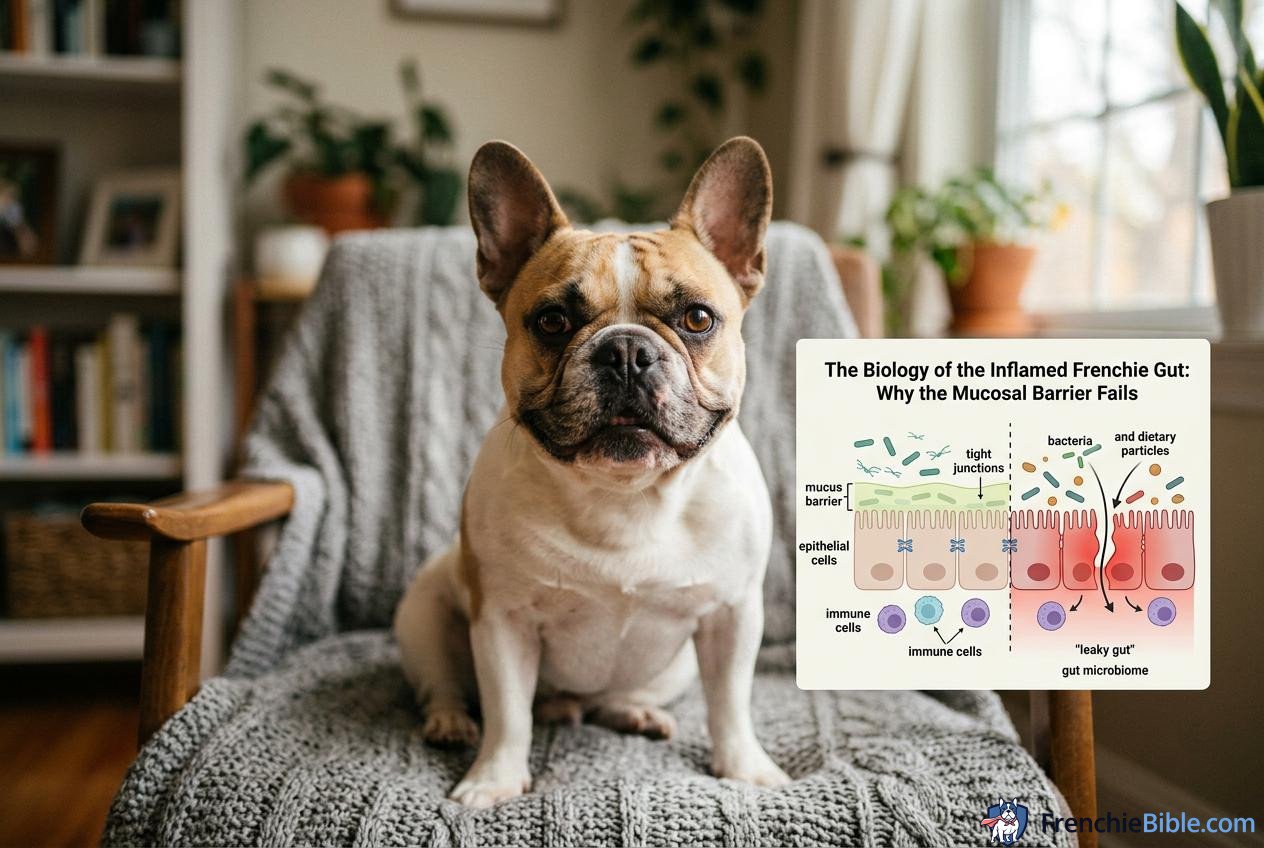
The intestinal tract is lined with a single, delicate layer of epithelial cells. This microscopic wall is covered by a protective mucosal barrier—think of it as a physical shield. In healthy Frenchies, this barrier allows water and micronutrients to enter the body while keeping bacteria, pathogens, and large food molecules locked inside the gut to be excreted.
Because French Bulldogs are highly prone to genetic food sensitivities (especially to common proteins like chicken and beef) and have highly sensitive nervous systems, their gut lining is under constant threat.
When an allergen, stress, or a bout of gastroenteritis strikes, the protective mucus layer is stripped away. The epithelial cells become exposed and inflamed, and the microscopic “tight junctions” holding these cells together begin to pull apart.
Once these gaps open, your dog enters a vicious cycle:
1. Gut-to-Blood Leaking: Large food molecules cross the barrier into the bloodstream.
2. Immune System Flare-up: The immune system identifies these harmless food particles as hostile invaders and launches an attack, leading to systemic inflammation.
3. Chronic Symptoms: This manifests as chronic soft stool, flatulence, hives, red ears, and itchy paws.
To heal this, we cannot simply stop the diarrhea with binders; we must physically rebuild the cellular wall. This is where the specific amino acids and proteins in slow-simmered bone broth come into play.
2. Collagen, Gelatin, and Glycine: The Triple Threat for Intestinal Wall Healing
True bone broth is not just watered-down soup. When simmered for 24 to 48 hours, the connective tissue, marrow, and bones release a concentrated payload of therapeutic compounds that act as natural “spackle” for a damaged intestinal lining.
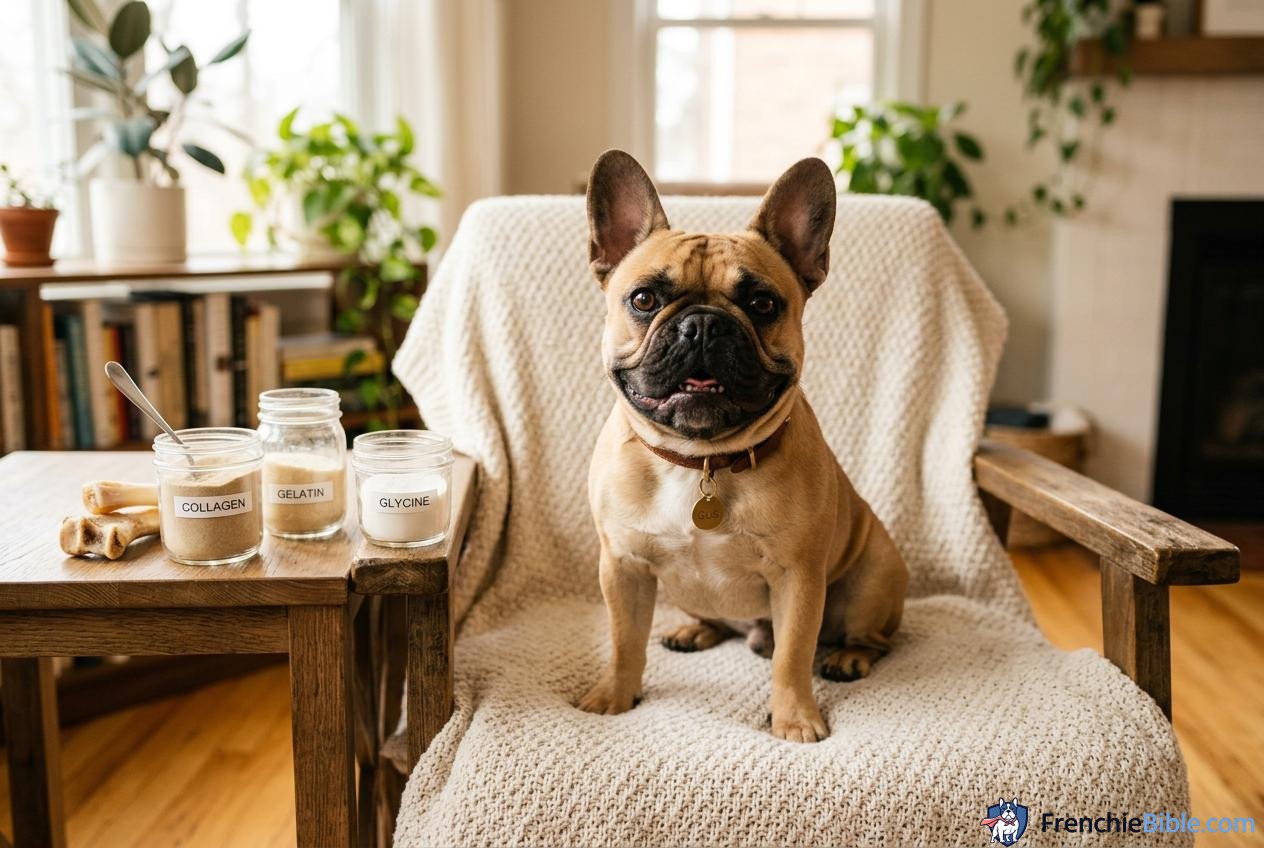
Gelatin: The Ultimate Mucosal Glue
As bone broth cools, it transforms into a thick, jiggly, gelatinous gel. This jiggle is proof of high gelatin content. Gelatin is hydrolyzed collagen, and it is a miracle worker for a Frenchie’s stomach.
- Attracting and Holding Liquids: Gelatin is naturally hydrophilic, meaning it attracts and holds water. When your Frenchie drinks bone broth, the gelatin binds to water in the digestive tract, helping food move smoothly through the gut. This prevents dry, irritating compaction while simultaneously calming watery diarrhea by stabilizing gut moisture.
- Rebuilding the Mucus Layer: Gelatin coats the entire length of the irritated GI tract, forming a soothing, protective layer over inflamed epithelial cells. This temporary shield blocks further irritation from stomach acids and food particles, giving the delicate tissue underneath a chance to regenerate.
Glycine: The Intestinal Anti-Inflammatory
Bone broth is incredibly rich in glycine, an amino acid that plays a vital role in gut health.
- Tight Junction Repair: Glycine is a primary building block for the proteins that make up the intestinal tight junctions. By providing an abundance of bioavailable glycine, you give your Frenchie’s body the raw materials it needs to sew those microscopic gaps back together, effectively reversing “leaky gut.”
- Acid Regulation: Glycine stimulates the production of stomach acid in a highly regulated manner, preventing both acid reflux (yellow bile vomiting) and the hypochlorhydria (insufficient acid) that leads to poor food breakdown and subsequent fermentation gas.
Glutamine: Fuel for Epithelial Cells
Another powerhouse amino acid in bone broth is glutamine. The cells that line your Frenchie’s intestines (enterocytes) use glutamine as their preferred source of fuel. By feeding these cells directly, glutamine accelerates cellular turnover, allowing your dog’s gut to replace damaged, inflamed cells with healthy new ones at a rapid pace.
3. The Golden Breeder Rules for Making Frenchie-Safe Bone Broth
You cannot simply buy a carton of beef or chicken broth from the local supermarket and feed it to your Frenchie. Standard human broths are loaded with ingredients that are highly toxic to dogs.
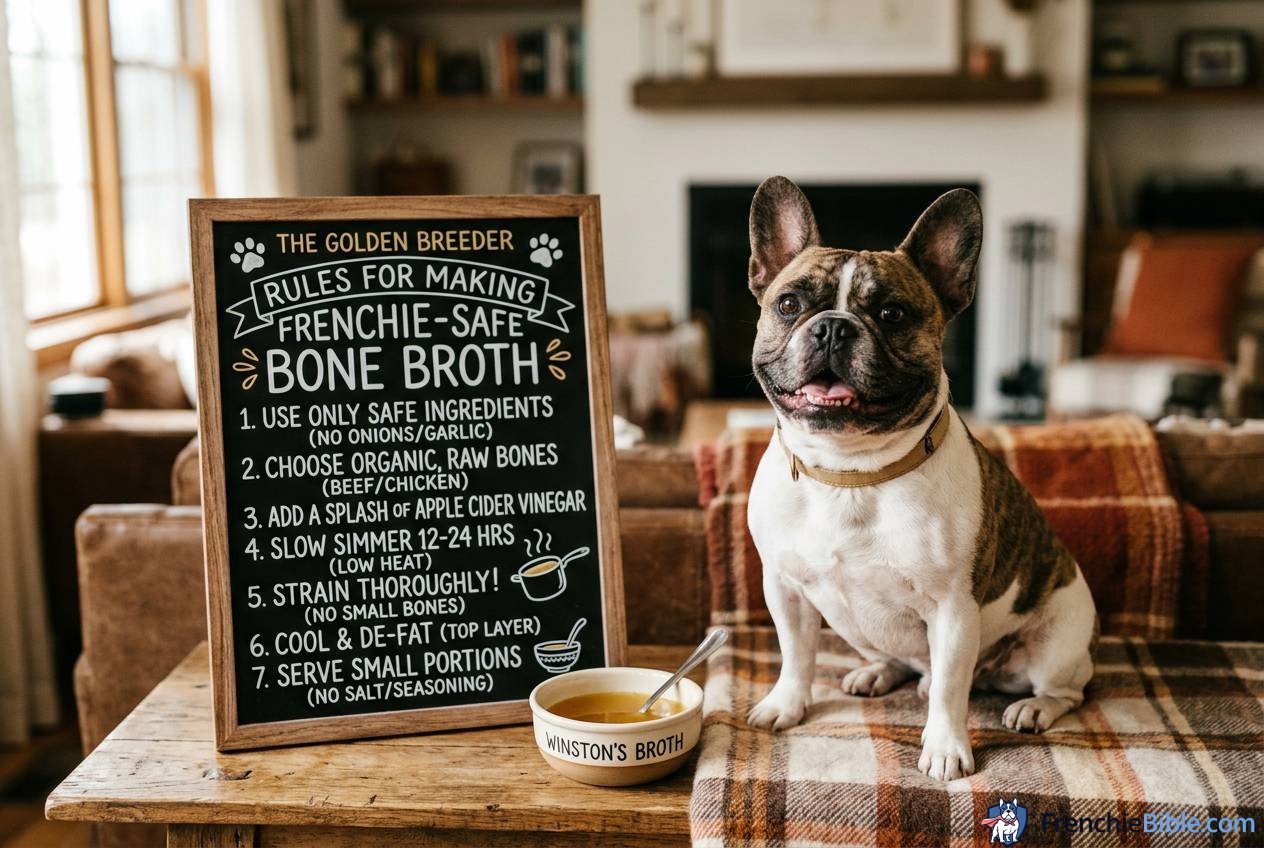
Before you cook, you must memorize these three non-negotiable safety rules:
Rule 1: Zero Alliums (No Onions, Garlic, Leeks, or Chives)
Almost every commercial human broth uses onions and garlic for flavor. Alliums contain a compound called thiosulfate, which causes oxidative damage to a dog’s red blood cells, leading to hemolytic anemia. Because Frenchies are already prone to breathing difficulties and poor oxygenation due to their short airways, any reduction in red blood cells can be catastrophic. Your homemade broth must contain absolutely zero onions, garlic, or leeks.
Rule 2: Zero Added Salt
Commercial broths are packed with sodium to make them palatable to humans. High sodium levels place a massive strain on a Frenchie’s kidneys and can cause acute dehydration, which quickly exacerbates gastrointestinal distress. Never add salt, soy sauce, or bouillon cubes to your dog’s broth.
Rule 3: Never Feed the Cooked Bones
Once the simmering process is complete, you must strain the broth through a fine-mesh sieve and discard every single bone. Slow-cooking makes bones soft and brittle, but once they cool, they can easily splinter. Feeding cooked bones to a Frenchie can lead to esophageal perforation, stomach punctures, or life-threatening bowel obstructions. The broth is the medicine; the cooked bones are poison.
4. Step-by-Step Slow-Cooker Bone Broth Recipe
This is the exact recipe I use in my kennel. It is designed to extract the maximum amount of gelatin and joint-protecting glucosamine while remaining incredibly gentle on a compromised digestive system.
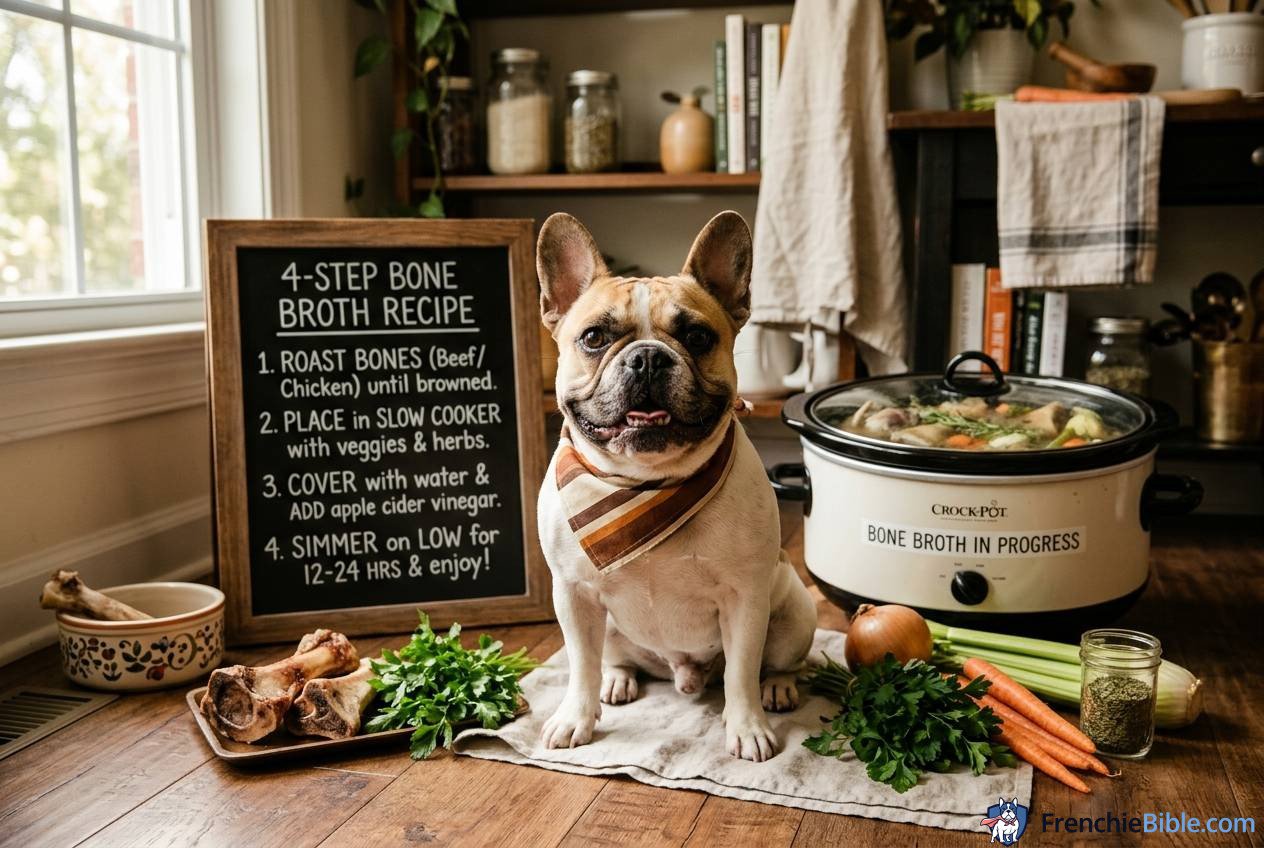
Ingredients:
- 2 to 3 Pounds of Joint-Rich Bones: Use raw marrow bones, beef knuckles, duck necks, or chicken feet. Knuckle bones and chicken feet contain the highest concentration of cartilage and collagen, which guarantees a thick, gelatinous broth.
- Filtered Water: Enough to completely submerge the bones (typically 3 to 4 quarts).
- 2 Tablespoons of Raw Apple Cider Vinegar (ACV): The acetic acid in ACV acts as a key catalyst. It lowers the pH of the water, drawing vital minerals (like calcium, magnesium, and phosphorus) and collagen directly out of the hard bone matrix into the liquid. (Do not worry—the vinegar smell completely dissipates during cooking).
Equipment:
- A large crockpot / slow-cooker (or a large stockpot on the stove).
- A fine-mesh metal strainer.
- Glass storage jars or silicone ice cube trays.
Cooking Instructions:
- Pack the Pot: Place all your raw, clean bones into the slow cooker.
- Add Acid and Water: Pour in the water until the bones are covered by at least two inches of liquid. Add the 2 tablespoons of raw apple cider vinegar. Let the mixture sit cold for 20 to 30 minutes before turning on the heat; this allows the acid to start softening the bone exterior.
- The Slow Simmer: Turn the crockpot on LOW. For beef or pork bones, simmer for 24 to 36 hours. For poultry bones (chicken feet or duck necks), simmer for 12 to 24 hours. Keep an eye on the water level; if it drops below the bones, add a cup of filtered water.
- The Cooling Phase: Turn off the heat. Use tongs to remove the large bones, then pour the hot liquid through your fine-mesh strainer into glass jars to catch any small bone fragments or debris.
- De-fatting (Crucial Step for Frenchies): Place the strained jars of broth into the refrigerator overnight. By morning, a hard, white layer of fat will have formed on the very top of the broth. You must scrape this fat layer off and discard it. Frenchies have highly sensitive pancreases, and consuming this concentrated fat can trigger acute pancreatitis. Underneath the fat, you will be left with a beautiful, clean, amber-colored jelly.
5. Feeding Dosages and Transition Guidelines for Sick or Inflamed Frenchies
How you introduce bone broth depends entirely on the severity of your Frenchie’s digestive issues.
Scenario A: The Acute GI Flare-up (Vomiting Bile, Gurgling Gut, Refusing Food)
If your Frenchie’s stomach is completely upset and they are refusing their normal kibble, do not force them to eat solid food. The gut needs complete rest to heal.
- The 24-Hour Broth Fast: Withhold all solid food for 12 to 24 hours. Instead, offer small amounts of slightly warmed bone broth every 3 to 4 hours.
- Dosage: Feed 1 to 2 tablespoons per 10 pounds of body weight per serving. Warmed broth is highly aromatic and will encourage even the most nauseous Frenchie to drink. This provides critical hydration, amino acids, and electrolytes without forcing the pancreas and stomach to work to digest heavy solids.
Scenario B: Transitioning Back to Solids
After 24 hours of fasting on broth, if your Frenchie’s stool has started to firm up and their appetite has returned, transition them back to solid food using a 50/50 blend:
- Mix cooked white jasmine rice (easy on the stomach) or canned pure pumpkin puree with warm bone broth to create an easily digestible mash. Feed this in small, frequent portions for 48 hours before slowly reintroducing their regular food.
Scenario C: Daily Maintenance for Gut and Joint Health
You do not have to wait for an emergency to feed this golden elixir. Adding a splash of bone broth to your Frenchie’s daily meals is an excellent preventative habit.
- Daily Dose: Add 1 to 2 ounces (2 to 4 tablespoons) of room-temperature or cold gelatinous broth directly onto their daily kibble or fresh food. The natural glucosamine and chondroitin extracted from the joints will support their spine and hips, while the gelatin maintains a robust, leak-proof gut barrier.
6. How to Store and Freeze Bone Broth for GI Emergencies
Because a Frenchie’s stomach issues often strike without warning in the middle of the night, you should always keep a stock of bone broth ready to go.
- In the Fridge: Fresh, de-fatted bone broth will keep in an airtight glass jar in the refrigerator for up to 5 to 7 days.
- In the Freezer (The Ice Cube Trick): The most convenient way to store broth for emergencies is to pour the strained, warm broth into silicone ice cube trays and freeze them. Once solid, pop the broth cubes into a ziplock bag.
- Quick Defrosting: When your Frenchie has a midnight stomach flare-up, simply take out 1 or 2 frozen broth cubes, microwave them for 15 to 20 seconds until they melt into a warm (not hot!) liquid, and serve immediately. This gives you instant access to natural medicine when your dog needs it most.
7. Frequently Asked Questions (FAQ)
Q1: Can I use apple cider vinegar with mother, and will it make the broth taste sour to my Frenchie?
Yes, raw apple cider vinegar “with the mother” is actually preferred because of its rich enzyme profile. While the vinegar smells strong when first added to the cold pot, the long cooking process completely neutralizes the acidity and evaporates the sour scent. By the time the broth is finished, it will smell intensely of rich, savory meat, which Frenchies find absolutely irresistible.
Q2: My bone broth didn’t turn into jelly after refrigerating. Did I do something wrong, and is it still usable?
If your broth remains liquid instead of turning into a gelatinous gel, it simply means there was a slightly higher ratio of water to bones, or the bones used did not have enough cartilage (such as using marrow bones without knuckles or feet). It is still incredibly nutritious and packed with minerals and amino acids—do not throw it away! Next time, ensure you include joint-rich cuts like beef knuckles, chicken feet, or pig trotters to guarantee that perfect, jiggly gelatin structure.
Q3: Can bone broth trigger chicken or beef allergies in my sensitive Frenchie?
If your Frenchie has a diagnosed, severe allergy to beef, feeding them beef bone broth can trigger an allergic response. The beauty of homemade broth is that you have complete control over the source. If your dog is allergic to beef and chicken, simply make the broth using duck necks, pork bones, or lamb shanks. Hypoallergenic alternative proteins work beautifully and yield the exact same therapeutic gelatin.
Q4: Why is it so important to scrape off the white fat layer on top of the chilled broth?
Scraping off the fat is a critical safety step, especially for French Bulldogs. The fat layer consists of saturated lipids that float to the top during chilling. Because Frenchies have highly sensitive digestive systems, consuming a concentrated dose of animal fat can overwork the pancreas, potentially triggering acute pancreatitis—a painful, life-threatening condition. Always discard the white fat layer, leaving only the clean, protein-rich jelly beneath.
Q5: Can I feed bone broth to a young Frenchie puppy during weaning?
Absolutely. In fact, bone broth is one of the best tools for transitioning puppies from maternal milk to solid food. It coats their developing intestinal lining, protects them from the digestive shocks of dietary changes, and boosts their early immune system. Simply mix a few tablespoons of warm broth with their puppy food to create a soft, easily digestible mush.
8. Disclaimer
The recipes and guidelines shared in this article are based on my ten years of experience as a French Bulldog breeder and breed preservationist. I am not a veterinarian, and this content is intended for informational and educational purposes only. It should not be used as a substitute for professional veterinary advice, diagnosis, or treatment. If your French Bulldog is showing signs of severe illness, such as persistent vomiting, bloody stools, extreme lethargy, or dehydration, please contact a licensed veterinarian immediately.