Have you ever been on a joyful walk with your French Bulldog when, out of nowhere, they suddenly hike up one of their hind legs, hop on three legs for a few steps, and then miraculously drop the leg back down and resume walking as if nothing happened? Or perhaps your Frenchie has developed a noticeable limp, struggles to jump onto the sofa, or seems unusually reluctant to go for their daily walks. as a French Bulldog expert and breeder and breeding expert I see this scenario almost daily in my breeding program. More often than not, the culprit behind this sudden, peculiar hopping or limping is a condition known as Patellar Luxation, commonly referred to as a “luxating patella” or a “trick knee.”
French Bulldogs are a sturdy, compact, and highly affectionate breed, but their unique physical conformation makes them susceptible to several orthopedic and mobility issues. Among these, patellar luxation stands out as one of the most common causes of hind limb lameness. When a Frenchie’s kneecap slips out of its normal groove, it can cause everything from a momentary, painless “skip” in their step to severe, chronic pain and early-onset osteoarthritis.
Related Reading: Training & Behavior | Grooming & Care | French Bulldog Colors
In this exhaustive guide, we will dive deep into everything you need to know about french bulldog patellar luxation. From the complex anatomy of your Frenchie’s knee and the grading system veterinarians use to assess the severity, to recognizing the subtle early warning signs, understanding the root causes, and exploring every available treatment option—both conservative and surgical. Whether you are a panicked first-time Frenchie owner or a seasoned parent looking for advanced management strategies, this article will equip you with the expert knowledge needed to protect your furry companion’s mobility and quality of life.
What Exactly is Patellar Luxation in French Bulldogs?
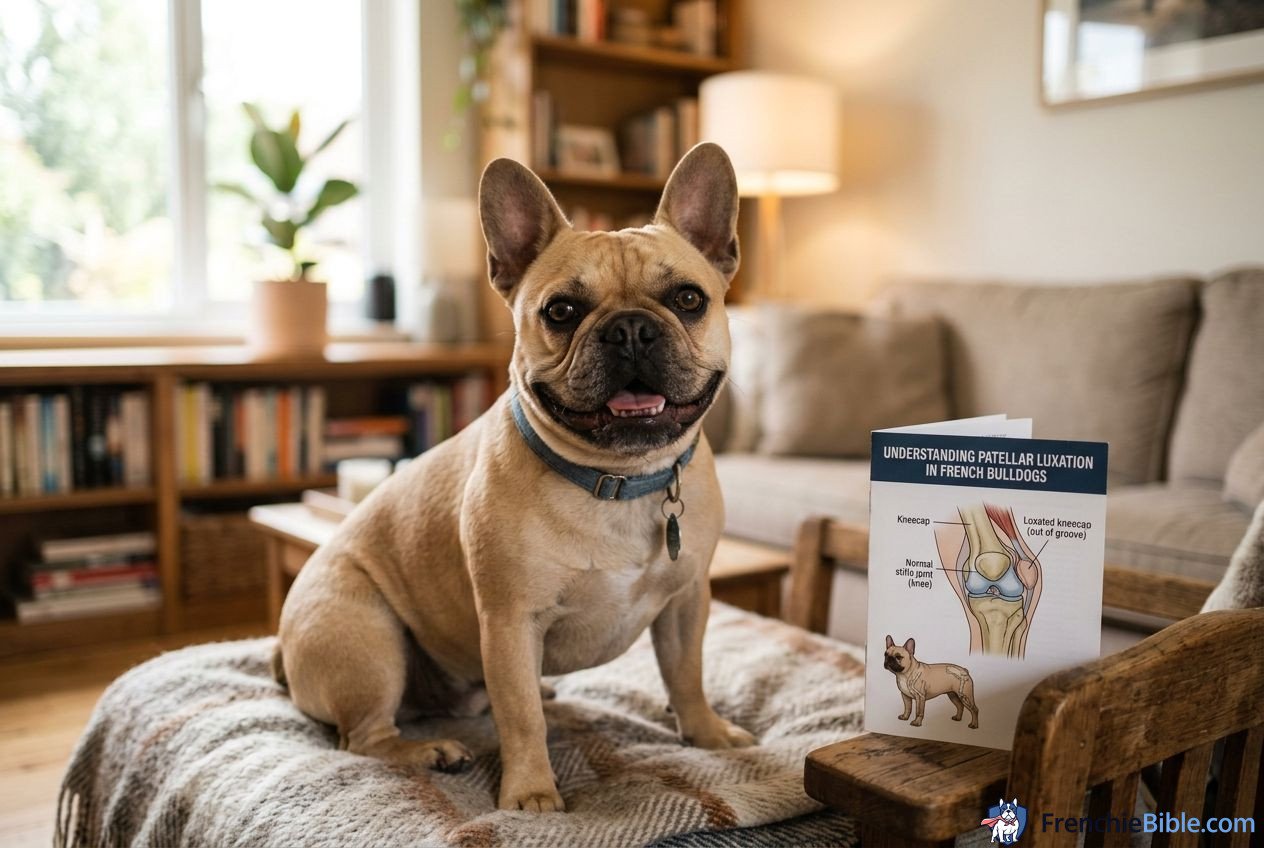
To truly understand patellar luxation, we first need to take a brief lesson in canine anatomy. The word “patella” is the medical term for the kneecap. “Luxation” simply means dislocation or slipping out of place. Therefore, patellar luxation occurs when the kneecap dislocates or pops out of its normal, anatomical position.
Anatomy of a Frenchie’s Knee (Stifle Joint)
In a healthy dog, the patella sits securely within a deep V-shaped groove called the trochlear groove, located at the lower end of the femur (thigh bone). The patella is attached to the quadriceps muscle group at the top and the tibial tuberosity (the top of the shin bone) at the bottom via strong ligaments. When your Frenchie bends (flexes) and straightens (extends) their knee—a joint veterinarians refer to as the stifle—the patella glides smoothly up and down within this groove. This seamless gliding mechanism is crucial for the mechanical efficiency of the quadriceps muscle, allowing your dog to walk, run, and jump powerfully.
The Mechanics of a Luxating Patella
When patellar luxation occurs, the kneecap jumps out of the trochlear groove. When it slips out of place, the entire mechanical structure of the knee is compromised. The quadriceps muscle can no longer exert force in a straight line, which prevents the dog from properly bearing weight on that leg. This sudden mechanical failure is exactly what causes your Frenchie to unexpectedly pull their leg up and hop on three legs. Once the kneecap pops back into the groove (which often happens spontaneously in mild cases), the dog immediately regains full use of the leg.
Over time, this repeated popping in and out wears down the smooth cartilage lining the trochlear groove and the underside of the patella. This constant friction inevitably leads to inflammation, cartilage damage, and eventually, painful osteoarthritis.
Medial vs. Lateral Luxation: Which is More Common?
There are two primary directions in which the kneecap can dislocate:
1. Medial Patellar Luxation (MPL): The kneecap slips toward the inside of the leg. This is overwhelmingly the most common form of luxation in small and toy breeds, including the French Bulldog. It accounts for the vast majority of cases we see in veterinary clinics.
2. Lateral Patellar Luxation (LPL): The kneecap slips toward the outside of the leg. While this is traditionally more common in large or giant breeds, we occasionally see it in Frenchies, often associated with severe skeletal deformities (“cow-hocked” posture).
In this guide, our primary focus will be on Medial Patellar Luxation (MPL), as it is the typical presentation for the French Bulldog.
The 4 Grades of Patellar Luxation in French Bulldogs
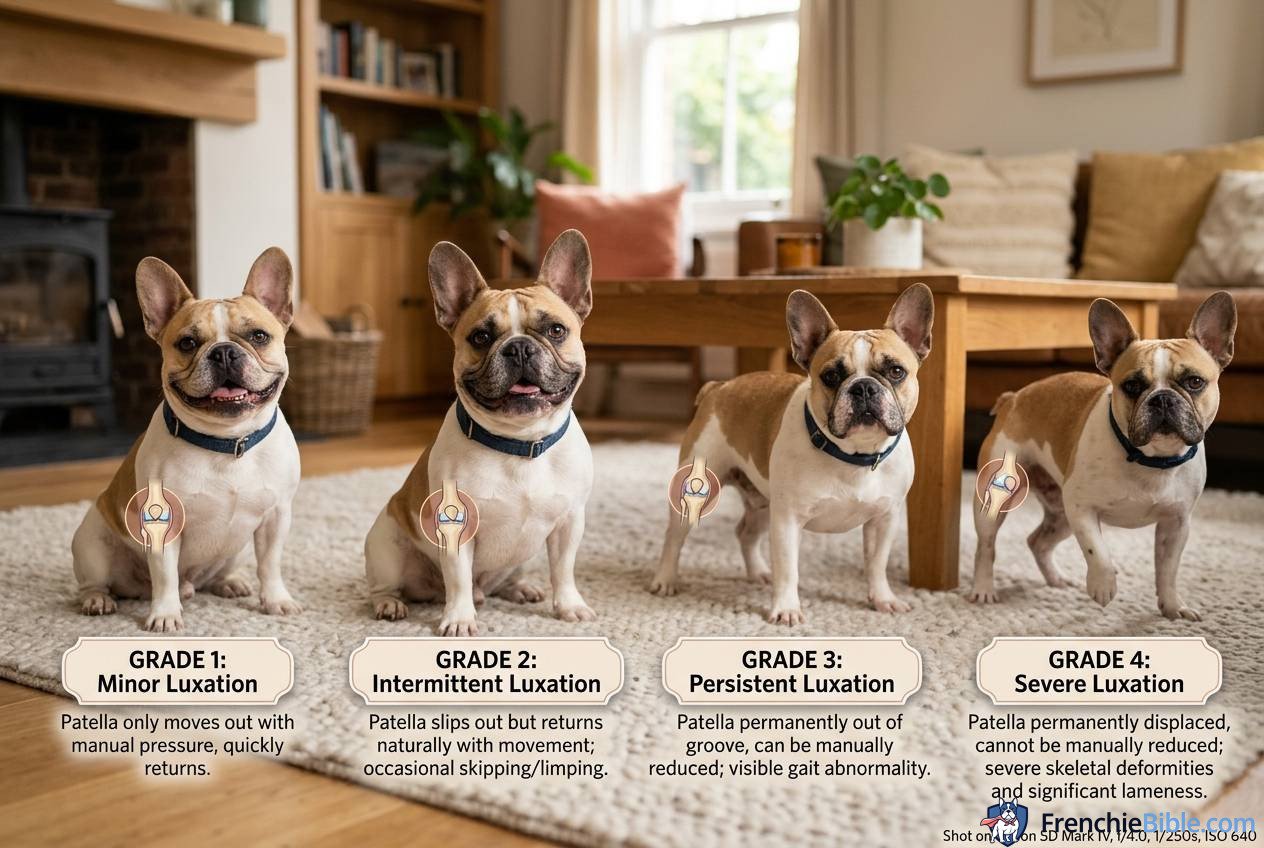
Veterinarians do not treat all luxating patellas identically because the condition exists on a spectrum of severity. During an orthopedic exam, your vet will manipulate the stifle joint to determine how easily the patella slips out and whether it stays out. Based on these findings, patellar luxation is classified into four distinct grades. Understanding your Frenchie’s grade is vital for determining the appropriate treatment plan.
Grade I: The Occasional “Skip”
In a Grade I luxation, the kneecap sits comfortably in the groove during normal activity. However, your veterinarian can manually pop the kneecap out of place when the leg is fully extended. The critical factor in Grade I is that the moment the vet releases the pressure, the kneecap immediately and spontaneously snaps back into its proper position.
- Symptoms: Dogs with Grade I luxation rarely show consistent signs of pain. You might occasionally see them hike up a back leg for just one or two steps before returning to a normal gait. Many dogs live their entire lives with Grade I luxation without needing surgery.
Grade II: Frequent Popping Out and In
Grade II is where things become more noticeable and clinically significant. In this grade, the kneecap frequently pops out of the groove on its own during regular activities like walking or running. Unlike Grade I, it does not immediately snap back. The dog must physically kick, shake, or extend their leg to force the kneecap back into place.
- Symptoms: This grade is characterized by the classic “skipping” gait. You will frequently see the dog carry the affected leg for several steps. Over time, the repeated friction begins to erode the cartilage, leading to mild to moderate lameness, inflammation, and the early onset of arthritis. Some dogs with Grade II will eventually require surgery if the cartilage wear causes chronic pain.
Grade III: Permanently Out but Reducible
By Grade III, the anatomical deformities have progressed significantly. The kneecap is now permanently luxated—it rests completely outside the trochlear groove most of the time. While the veterinarian can manually push the kneecap back into the groove, it will pop right back out as soon as the pressure is removed or the dog bends their knee.
- Symptoms: Dogs with Grade III luxation often have a noticeable, constant limp. Their hind legs may appear bowed (a “bow-legged” appearance) because the displaced kneecap forces the entire lower leg to rotate inward. These dogs experience significant mechanical dysfunction, chronic pain from arthritis, and muscle atrophy (wasting away of the muscles) due to not using the leg properly. Surgery is almost always recommended for Grade III.
Grade IV: Permanently Out and Fixed
Grade IV is the most severe and debilitating form of patellar luxation. The kneecap is permanently dislocated, and the anatomical deformities of the femur and tibia are so severe that the kneecap cannot be manually pushed back into the groove by the veterinarian, even with force. The groove itself is often virtually nonexistent or completely filled with bone and scar tissue.
- Symptoms: Dogs with Grade IV luxation have a severely abnormal gait. They often carry the affected leg permanently or walk in a crouched, crab-like manner with their hindquarters held low to the ground. They suffer from severe skeletal deformities, massive muscle atrophy, and immense difficulty walking. Grade IV requires complex, highly specialized orthopedic surgery to correct.
Recognizing the Symptoms: Is Your Frenchie Showing Signs?
Because French Bulldogs are notoriously stoic and often mask their pain, it is crucial for owners to be vigilant. The signs of patellar luxation can range from subtle to glaringly obvious, depending on the grade and the amount of secondary arthritis present.
The Classic “Three-Legged Hop” or “Skipping”
The hallmark sign of a luxating patella is an intermittent skipping gait. Your Frenchie will be walking or running normally, suddenly lift one back leg, hop a few times, and then put the leg back down as if nothing is wrong. This happens when the kneecap pops out (causing the leg lift) and pops back in (allowing the leg to drop).
Sudden Lameness or Limping in Hind Legs
If the cartilage has worn down and arthritis has set in, your Frenchie may develop a persistent limp. Unlike the intermittent hop, this is a steady, continuous reluctance to put full weight on the affected limb. This limping is often worse after periods of rest, a phenomenon known as “post-rest stiffness.”
Clicking or Popping Sounds When Walking
In some cases, especially in Grade II or Grade III, you might actually hear or feel a distinct clicking, popping, or grinding sensation (crepitus) when your Frenchie walks or when you gently bend their knee. This is the sound of the kneecap rubbing abnormally against the bony ridges of the femur.
Abnormal Sitting Posture or Hind Leg Bowing
Frenchies with advanced luxation (Grade III or IV) will often sit with their hind legs kicked out straight to the side rather than tucked neatly underneath them. When standing, their hind legs may look “bow-legged” or severely pigeon-toed.
Pain Whimpering, or Reluctance to Jump
As a stoic breed Frenchies rarely cry out, but chronic knee instability eventually causes significant pain. You may notice your dog hesitating to jump onto the couch, struggling to climb stairs, or crying softly if their hind leg is manipulated. They may also lick or chew at their knee joint to soothe the ache.
Why Are French Bulldogs So Prone to Luxating Patellas?
As a breeding expert I am often asked why this specific issue plagues the French Bulldog. The answer lies in a complex intersection of genetics, skeletal structure, and lifestyle factors.

Genetic Predisposition and Hereditary Factors
Patellar luxation is largely considered a hereditary condition. It is deeply ingrained in the genetic lines of many toy and brachycephalic (flat-faced, compact) breeds. While the exact mode of inheritance is polygenic (involving multiple genes), breeding two dogs with luxating patellas dramatically increases the risk of passing the condition to their offspring. This is why responsible, health-focused breeding is paramount.
Conformational Abnormalities in Frenchies
French Bulldogs are selectively bred to have a specific “look”: a heavy, wide chest tapering to narrow hips, with short, thick, slightly bowed legs. This artificial conformation naturally misaligns the bones of the hind legs. Specifically, the quadriceps muscle, the patella, and its attachment point on the tibia do not line up in a perfectly straight axis. This misalignment acts like a bowstring—every time the muscle contracts, it pulls the kneecap sideways instead of straight up, eventually forcing it out of its shallow groove. Furthermore, many Frenchies are born with abnormally shallow trochlear grooves, providing very little structural support to hold the kneecap in place.
The Impact of Rapid Growth and Obesity
While genetics load the gun, environment and lifestyle pull the trigger. If a Frenchie puppy grows too rapidly due to overfeeding or a poor diet, their skeletal structure can develop unevenly, exacerbating bone misalignment. More importantly, obesity is a massive contributing factor. Frenchies are notorious foodies and prone to weight gain. Every extra pound your Frenchie carries puts exponential stress on their already compromised knee joints, accelerating cartilage wear and causing a Grade I luxation to rapidly deteriorate into a painful Grade II or III.
Trauma or Injury
Though less common than hereditary factors, a sudden traumatic injury—such as a bad fall, a collision, or landing awkwardly from a high jump—can tear the soft tissue structures (retinaculum) that hold the kneecap in place. This traumatic luxation often occurs suddenly in an otherwise normal knee and is usually intensely painful immediately.
Diagnosing Patellar Luxation: What to Expect at the Vet
If you suspect your Frenchie has a luxating patella, a prompt veterinary visit is essential. Early diagnosis can dramatically alter the long-term prognosis and prevent irreversible arthritis.
The Physical Orthopedic Examination
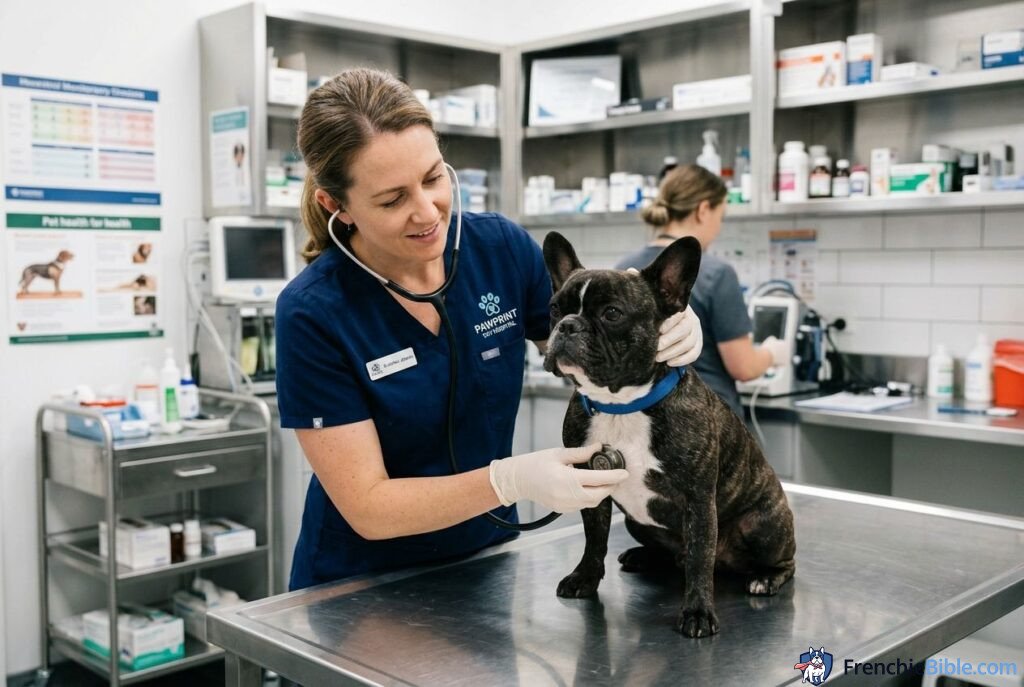
The primary tool for diagnosing a luxating patella is a thorough physical examination by your veterinarian. They will observe your dog’s gait as they walk down the hallway. Then, while your dog is standing or lying on their side, the vet will carefully palpate (feel) the stifle joints. They will extend and flex the knee, gently attempting to push the kneecap out of the groove. This hands-on exam allows the vet to confirm the luxation, determine the direction (medial vs. lateral), and assign a precise Grade from I to IV.
X-rays (Radiographs) to Assess Bone Structure
While a physical exam confirms the dislocating kneecap, x-rays are absolutely necessary for a complete evaluation. Radiographs allow the veterinarian to look “under the hood.” They will assess:
- The severity of skeletal deformities (how bowed the femur and tibia are).
- The depth of the trochlear groove.
- The presence and severity of secondary osteoarthritis.
- Whether the condition is bilateral (affecting both knees, which occurs in about 50% of cases).
Differentiating from Cruciate Ligament Tears (CCL) or IVDD
One of the most critical aspects of the diagnosis is ruling out other conditions that mimic patellar luxation.
- Cranial Cruciate Ligament (CCL) Rupture: This is the canine equivalent of a torn ACL. Interestingly, dogs with chronic patellar luxation are at a significantly higher risk (up to 20% higher) of tearing their CCL because the unstable kneecap puts abnormal stress on the ligament. Your vet will perform specific tests (like a “drawer test”) to ensure the ligament is intact.
- Intervertebral Disc Disease (IVDD): Frenchies are exceptionally prone to IVDD (slipped discs in the spine). Severe back pain or spinal cord compression can cause hind leg weakness, wobbliness, or dragging, which an untrained eye might confuse with a knee issue. A thorough neurological exam is crucial to distinguish a knee problem from a spinal emergency.
Treatment Options for French Bulldog Patellar Luxation
The treatment for a luxating patella is rarely a one-size-fits-all approach. as a French Bulldog expert and breeder, my recommendation depends entirely on the dog’s clinical signs, the grade of the luxation, the amount of arthritis present, and the dog’s overall age and health.
Conservative Management (For Grade I and Mild Grade II)
If your Frenchie has a Grade I luxation or a very mild Grade II, and they are not exhibiting signs of pain or developing rapid arthritis, we generally recommend conservative, non-surgical management. The goal here is not to “cure” the slipping kneecap (only surgery can do that), but to strengthen the surrounding structures, reduce inflammation, and prevent the condition from worsening.
Weight Management and Diet Optimization
This is the single most important non-surgical intervention. Keeping your Frenchie exceptionally lean reduces the mechanical burden on the knee. If your dog is overweight, implementing a strict, calorie-controlled diet is mandatory. You should be able to easily feel (but not see) their ribs, and they should have a visible waistline when viewed from above.
Physical Therapy Hydrotherapy, and Laser Therapy
Targeted physical rehabilitation works wonders. Exercises that specifically strengthen the quadriceps and hamstrings provide better muscular support for the unstable joint.
- Hydrotherapy (Underwater Treadmill): This is the gold standard for rehab. It allows the dog to build muscle against the resistance of the water while the buoyancy removes the weight-bearing stress from the joint.
- Cold Laser Therapy: This non-invasive treatment uses specific wavelengths of light to deeply penetrate tissues, reducing inflammation and providing significant pain relief.
Joint Supplements (Glucosamine Chondroitin Omega-3s)
High-quality joint supplements are essential to protect the cartilage and slow the progression of arthritis. Look for supplements containing:
- Glucosamine and Chondroitin: The building blocks of cartilage repair.
- MSM (Methylsulfonylmethane): A natural anti-inflammatory.
- Omega-3 Fatty Acids (Fish Oil/Green Lipped Mussel): Powerful systemic anti-inflammatories that help lubricate the joints.
- Note: Always use veterinary-approved supplements, as human grades can be improperly balanced or contain toxic additives like xylitol.
Surgical Interventions (For Severe Grade II Grade III, and Grade IV)
When conservative management fails to control pain, when the luxation causes frequent lameness, or if the dog is diagnosed with Grade III or IV luxation, surgical correction is the only definitive way to restore normal mechanical function and prevent crippling arthritis.
Patellar luxation surgery is complex and is best performed by a board-certified veterinary orthopedic surgeon. The surgeon typically uses a combination of techniques to realign the limb and deepen the groove.
Common Surgical Techniques:
- Trochleoplasty / Sulcoplasty (Deepening the Groove): The surgeon physically deepens the shallow V-shaped groove at the bottom of the femur, creating a deeper “trench” so the kneecap sits securely and cannot easily pop out.
- Tibial Tuberosity Transposition (TTT): If the leg bones are misaligned, the surgeon will cut the piece of bone where the patellar ligament attaches to the shin (the tibial tuberosity). They move this piece of bone sideways into a perfectly straight alignment with the femur and pin it securely in place. This removes the sideways “pull” on the kneecap.
- Lateral Imbrication / Medial Release: The soft tissues (capsule and retinaculum) on the side of the knee where the patella was luxating have stretched out, while the tissues on the opposite side have tightened. The surgeon will cut the tight tissues to release tension and tighten (imbricate) the loose tissues to hold the kneecap centrally.
- Corrective Osteotomies: In very severe Grade IV cases with massive bone deformity, the surgeon may literally have to cut the femur or tibia, straighten the bone, and secure it with metal plates and screws.
Surgical Success Rates and Recovery Time in French Bulldogs
The success rate for patellar luxation surgery in Frenchies is very high—typically over 90% for Grade II and Grade III cases. Most dogs return to normal, pain-free function. However, the success rate drops slightly for Grade IV cases due to the severe pre-existing deformities and muscle wasting.
It is vital to understand that if arthritis was already present before surgery, the surgery will not cure the arthritis. It will simply stop the mechanical friction causing it to progress rapidly. Some dogs may still need occasional anti-inflammatories on cold days or after heavy exercise.
Post-Operative Care and Recovery for Your Frenchie
The surgery is only 50% of the battle; strict, meticulous post-operative care at home makes up the other 50%. The bones and ligaments need time to heal, and a premature jump can catastrophic fail the surgical repair.
The First 48 Hours Post-Surgery
When your Frenchie comes home, they will likely have a bandage or light splint on the leg and will be groggy from anesthesia and pain medications. The knee will be swollen and bruised. It is normal for them not to bear weight on the leg for the first few days.
Restricting Movement: Crate Rest and Leash Walking
Strict confinement is non-negotiable for the first 6 to 8 weeks.
- Your Frenchie must be confined to a small crate or a small, carpeted recovery pen when not directly supervised.
- Absolutely no running, jumping (on/off furniture), stairs, or playing with other pets.
- All bathroom breaks must be done on a short leash, walking slowly. If you have steps leading to your yard, you must carry your dog up and down them.
- We highly recommend using a supportive sling (like a “Help ‘Em Up” harness) under their belly to help support their rear end during the first two weeks.
Managing Pain and Inflammation
Your vet will prescribe a multi-modal pain protocol, usually including NSAIDs (Non-Steroidal Anti-Inflammatory Drugs prescribed anti-inflammatories such as carprofen or meloxicam) for inflammation, and pain modulators prescribed pain management medications or Amantadine. Administer these exactly as prescribed to keep your Frenchie comfortable and prevent them from licking or chewing the incision site. (An Elizabethan collar or “cone” is usually mandatory).
Physical Rehabilitation Exercises at Home
Around week 2 or 3, once the incision has healed, your vet will instruct you to begin gentle physical therapy. This typically starts with Passive Range of Motion (PROM) exercises, where you gently bend and straighten the dog’s knee to prevent scar tissue from stiffening the joint. Slowly, over the following weeks, this will progress to controlled, slow leash walks to encourage weight-bearing and rebuild muscle mass. Professional hydrotherapy is incredibly beneficial during the later stages of recovery (weeks 4-8).
Long-term Prognosis and Quality of Life
With successful surgery and strict rehab, most French Bulldogs are fully recovered and cleared for normal activity by 10 to 12 weeks post-op. Their quality of life dramatically improves, and they can run and play without the pain and instability of a slipping kneecap.
Preventative Measures: Can You Prevent Patellar Luxation?
Because the root cause is deeply tied to genetics and anatomy, you cannot 100% prevent patellar luxation if your dog is genetically predisposed. However, as an owner and a breeder, there are crucial steps you can take to minimize the risk and delay the onset of symptoms.
Responsible Breeding Practices (OFA Certification)
This is the most critical preventative step. Breeders must prioritize health over aesthetics. French Bulldogs should undergo orthopedic screening by a veterinarian before being bred. The Orthopedic Foundation for Animals (OFA) maintains a registry for patellar evaluation. Never purchase a puppy from a breeder who does not health-test the parents and provide OFA certifications showing the parents have normal knees. Breeding dogs with known luxating patellas perpetuates this painful condition in the breed.
Keeping Your Frenchie at an Ideal Weight
As emphasized earlier, obesity is the enemy of joints. A lean Frenchie puts significantly less mechanical stress on their knees, vastly decreasing the chance that a minor skeletal misalignment will turn into a clinical, painful luxation. Monitor their diet ruthlessly.
Avoiding High-Impact Activities in Puppies
During the first 12 to 18 months of life, your Frenchie’s growth plates are still open and their skeletal system is developing. Allowing a puppy to constantly jump on and off high beds, leap out of SUVs, or engage in frantic, high-impact running on slippery floors can traumatize developing joints and exacerbate minor structural flaws. Use ramps or doggie stairs early on.
Early Supplementation for Joint Health
Starting your Frenchie on high-quality joint supplements (Glucosamine Chondroitin Omega-3s) early in life, even before symptoms appear, can help strengthen the cartilage and provide the joint with the nutrients it needs to withstand the unique physical stresses of a French Bulldog’s body.
Living with a Frenchie with Patellar Luxation
If your Frenchie has been diagnosed with a mild luxation and is being managed conservatively, or if they are recovering from surgery, you must make permanent lifestyle adjustments to protect their joints.
Modifying Your Home Environment
Slippery hardwood or tile floors are a nightmare for unstable knees. When a dog slips, the knee twists, which can instantly luxate the patella or tear a ligament.
- Place non-slip rugs or yoga mats along the paths your dog frequently walks.
- Invest in high-quality pet ramps or stairs leading up to couches and beds, and train your Frenchie to use them. Jumping down from furniture is one of the most traumatic forces a dog’s knee can experience.
Adjusting Exercise Routines
Dogs with bad knees still need exercise to maintain muscle mass and stay lean, but the type of exercise must change.
- Avoid explosive, high-impact activities like aggressive games of fetch, agility courses, or jumping for frisbees.
- Focus on low-impact, controlled endurance. Long, steady walks on even terrain (like grass or dirt trails rather than hard concrete) are excellent.
- Swimming is the absolute best exercise, as it builds incredible muscle tone with zero impact on the joints.
Monitoring for Osteoarthritis
Any joint that has experienced instability will eventually develop some degree of osteoarthritis. Be proactive. Work with your vet to manage this arthritis through weight control, continuous joint supplements, and, when necessary during flare-ups, prescription anti-inflammatory medications. Regular veterinary check-ups every 6 months will help monitor the progression.
Frequently Asked Questions (FAQs)
Can a French Bulldog live a normal life with a luxating patella?
Yes, many Frenchies live perfectly happy, normal lives with mild (Grade I) patellar luxation. As long as they are kept exceptionally lean and the knee is not causing them chronic pain, surgery may never be required. However, higher-grade luxations that cause pain, limping, and arthritis require medical or surgical intervention to ensure a good quality of life.
How much does patellar luxation surgery cost for a Frenchie?
The cost varies significantly depending on your geographic location, the severity of the condition, and whether a general practitioner or a board-certified orthopedic surgeon performs the procedure. On average, you can expect the surgery to cost anywhere from $2,500 to $5,500 per knee. Because Frenchies often have issues in both knees, bilateral surgery can cost substantially more.
Should I walk my Frenchie if they have patellar luxation?
If your dog is acutely limping and in pain, you should restrict walks to short, mandatory bathroom breaks only until you see a vet. However, for long-term management of mild, painless luxation, regular, controlled leash walking on soft surfaces is actually beneficial. It maintains the quadriceps muscle mass, which is vital for stabilizing the knee joint. Avoid intense running or jumping.
Is patellar luxation painful for dogs?
The moment the kneecap pops out of the groove, it causes mechanical dysfunction but isn’t always intensely painful (which is why they just hop). However, the consequences of the luxation—the constant rubbing, cartilage erosion, inflammation, and eventual osteoarthritis—are highly painful. If a dog is constantly limping or crying, they are in pain.
Can a dog recover from a luxating patella without surgery?
A dog cannot be “cured” of a luxating patella without surgery, because the underlying cause is an anatomical bone defect. No brace, pill, or exercise will change the shape of the bone. However, a dog can recover from the clinical symptoms (pain and mild limping) of a low-grade luxation through physical therapy, weight loss, and joint supplements.
Does pet insurance cover luxating patella surgery in French Bulldogs?
Most comprehensive pet insurance plans will cover patellar luxation surgery, provided it is not a pre-existing condition. If your dog was diagnosed with a luxating patella or showed signs of lameness before you purchased the insurance or during the waiting period, the surgery will likely be denied coverage. Because this condition is so prevalent in Frenchies, it is highly recommended to secure pet insurance the day you bring your puppy home.
Conclusion
Seeing your beloved French Bulldog suddenly lift their leg and hop can be a frightening experience. While patellar luxation is a frustrating and prevalent issue within the breed, it is by no means a hopeless diagnosis. By understanding the mechanics of the canine knee, recognizing the early signs of the occasional “skip,” and partnering closely with your veterinarian, you can effectively manage this condition.
Whether the path forward involves strict weight management, dedicated physical therapy, or complex orthopedic surgery, the ultimate goal remains the same: ensuring your Frenchie can walk, run, and play comfortably and pain-free. As an owner, your proactive approach to their weight, environment, and veterinary care is the most powerful tool you have in protecting their mobility and preserving their joyful, spirited quality of life.
Disclaimer: We are not veterinarians and do not hold veterinary medical licenses. The information provided in this article is based on years of breeding and daily care experience and is for educational purposes only. It should not replace professional veterinary advice. Always consult with a licensed veterinarian if you have concerns about your French Bulldog’s health or before starting any new treatment.