Welcome, devoted Frenchie lovers, enthusiasts, and new parents! As someone who has dedicated over a decade of my life to the meticulous breeding, raising, and comprehensive studying of French Bulldogs I can confidently tell you that these charming, bat-eared little companions are much more than just adorable lap warmers or couch potatoes. While they are globally renowned and beloved for their deeply affectionate nature, their sometimes comical demeanor, and their unwavering loyalty French Bulldogs are also incredibly intelligent, inquisitive, and mentally active creatures. They thrive on engagement, both physical and mental. One of the absolute most effective, highly entertaining, and behaviorally beneficial ways to provide this necessary stimulation right in the comfort of your own home is through a classic, universally understood game we all know and love: Hide and Seek.
Many novice owners, and sometimes even those with experience, fall into the trap of assuming that because French Bulldogs are a brachycephalic (flat-faced) breed, they inherently do not require much activity, or worse, that they are incapable of participating in scent-based games and rigorous mental exercises. This is a profound, widespread misconception that does a great disservice to the breed. While it is true that they aren’t Bloodhounds or Belgian Malinois bred for intense tracking, their olfactory capabilities are still miles ahead of our human senses, and actively engaging their nose is akin to giving their complex brain a high-intensity workout. In this exhaustive, step-by-step guide I will meticulously walk you through absolutely everything you need to know about implementing Hide and Seek training into your daily routine. We will explore in great depth how this simple game dramatically enhances your Frenchie’s latent scenting abilities, exponentially improves their overall obedience—with a special emphasis on their recall command—and, most importantly, strengthens the unbreakable, loving bond you share with your dog. Whether you are a first-time Frenchie parent trying to navigate the puppy years or an experienced owner looking to continually enrich your adult dog’s daily routine, this game is an absolute game-changer.
Related Reading: Health & Diet | Grooming & Care
Understanding Your French Bulldog’s Sensory Capabilities
To truly appreciate the immense value and neurological impact of Hide and Seek, we first need to take a step back and understand fundamentally how your French Bulldog experiences the world around them. For humans, vision is undeniably our primary sense; it dictates how we navigate and interpret our environment. For dogs, including our flat-faced friends, it is their extraordinary sense of smell.

The Intricate Anatomy of the Frenchie Nose
Despite their smushed, adorable faces and shortened snouts French Bulldogs possess a highly sophisticated and remarkably efficient olfactory system. To put it into perspective, a dog’s nose contains an astonishing up to 300 million olfactory receptors. Contrast this with a mere 5 to 6 million receptors found in humans. Furthermore, the specific portion of a dog’s brain that is biologically devoted to analyzing and categorizing smells is, proportionally speaking, roughly 40 times greater than ours. When your Frenchie enthusiastically sniffs the air in the living room, investigates the floorboards, or searches for a hidden treat beneath a rug, they aren’t just registering an odor; they are effectively reading a complex, multi-layered story about exactly who or what was there, how long ago the scent was deposited, and in what precise direction it subsequently moved. Their brachycephalic anatomical structure does indeed mean that we, as responsible owners, must always be hyper-mindful of avoiding overexertion, particularly in hot, humid weather or stressful situations. However, this physiological reality does not negate, diminish, or erase their innate, biological desire and capability to use their nose to explore their world.
Mental Processing and Deep Olfactory Engagement
When a French Bulldog actively engages in directed scent work—even something that seems as relatively simple and playful as sniffing out their favorite human hiding behind a bedroom door or a sofa—their brain goes into massive overdrive. The neurological process of identifying, tracking, and isolating a specific scent requires intense, unbroken concentration and significant cognitive effort. This mental exertion is incredibly taxing and tiring for a dog—often substantially more so than a vigorous physical walk or a game of fetch. For a breed like the French Bulldog, which can sometimes be genetically or structurally prone to joint issues, spinal sensitivities (like IVDD), or respiratory distress if over-exercised physically, providing rigorous mental workouts is the perfect, safe solution. It keeps them remarkably calm, deeply satisfied, and consistently well-behaved without putting undue strain on their physical bodies.
The Critical Importance of Engaging Indoor Games
Indoor games like Hide and Seek are particularly crucial and highly recommended for French Bulldogs compared to many other breeds. Due to their well-documented physical limitations regarding temperature regulation, they simply cannot handle extreme weather conditions. During the sweltering, oppressive heat of mid-summer or the freezing, icy depths of winter, long, exhausting outdoor walks or vigorous play sessions at the dog park are entirely off the table and can even be life-threatening. Having a robust, varied repertoire of engaging indoor games ensures that your Frenchie doesn’t succumb to the dreaded “cabin fever.” Cabin fever in dogs frequently manifests as highly undesirable, destructive behavior—such as chewing your expensive furniture, excessive and nuisance barking, pacing, or developing deep-seated anxiety issues. Hide and Seek provides a safe, climate-controlled outlet for all that pent-up energy.
The Core Benefits of Playing Hide and Seek
Hide and Seek is emphatically not just a frivolous, silly pastime to pass a rainy afternoon; it is a highly effective, scientifically sound training tool cleverly masquerading as fun. The benefits are deeply multifaceted, positively impacting your dog’s psychological state, their behavioral compliance, and their overall emotional well-being.
Profound Mental Stimulation and Boredom Busting
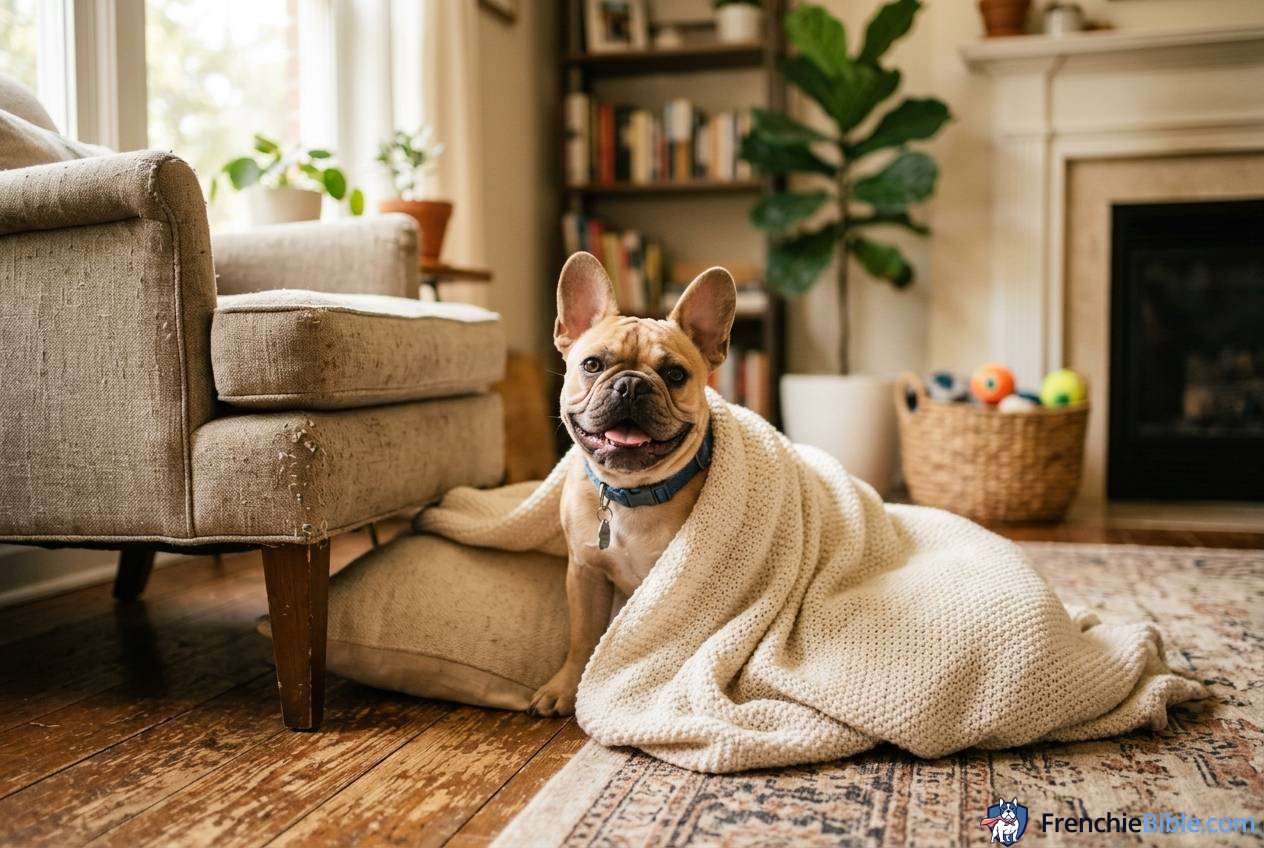
As a breeder with years of hands-on experience and countless conversations with new puppy buyers, one of the most frequent and common complaints I hear is regarding destructive chewing, stubbornness, or general naughtiness. Let me assure you, nine times out of ten, these frustrating behavioral issues stem directly from sheer boredom. Frenchies are exceptionally smart, deeply analytical little dogs, and a bored Frenchie is a creative Frenchie—meaning they will actively find a way to entertain themselves, usually at the great expense of your favorite shoes, baseboards, or couch cushions. Hide and Seek effectively mitigates this by requiring active problem-solving. Your dog has to consciously use their working memory (where did I last see them?), their acute sense of smell (where is the scent trail leading?), and their deductive reasoning (they aren’t in the kitchen, so they must be upstairs) to locate you. This intense level of mental stimulation efficiently burns off excess nervous energy, leaving you with a wonderfully relaxed, pliant, and contented canine companion at the end of the day.
Dramatically Enhancing Obedience and the Crucial Recall Command
The “Come” command, frequently referred to in training circles as “recall,” is arguably the single most important command your dog will ever learn in their entire lifetime; it can, quite literally, save their life in a dangerous situation. However, repetitively practicing recall in a sterile, boring environment (like standing in the hallway calling them back and forth) can quickly become tedious and uninspiring for both you and your highly intelligent dog. Hide and Seek brilliantly turns this vital recall practice into a thrilling, high-stakes game. When your dog finally manages to find you hidden away and is immediately rewarded with explosive, enthusiastic praise, petting, and premium treats, it powerfully reinforces the concept that coming to you is the absolute best, most rewarding thing in the entire world. Over time, through consistent repetition of this game, you will organically solidify their recall response, making it significantly faster, much more reliable, and reflexive, even when faced with highly distracting environments outdoors.
Strengthening the Unbreakable Human-Canine Bond
Dogs, at their very core, are pack animals. They instinctively crave collaborative, shared activities with their designated leaders and family members. Playing interactive games together actively fosters a very deep, enduring sense of teamwork and partnership. When your Frenchie successfully navigates the house to find you, the shared joy, the physical affection, and the celebratory atmosphere create powerful positive emotional associations. This effectively builds a foundation of deep trust and mutual respect, which are the absolute bedrock of any successful, long-term training regimen. Your dog organically learns to look to you not just as a provider of food, but as the ultimate source of fun, guidance, security, and reward.
Providing Safe Low-Impact Indoor Exercise for Brachycephalic Breeds
As I have stressed earlier, and will continue to stress, we must always exercise extreme caution regarding physical exertion with Frenchies. Hide and Seek allows them to trot purposefully around the house, get their heart rate up slightly, and actively engage their muscles and joints without facing the severe risks associated with sustained, heavy running, jumping, or extreme outdoor weather exposure. It is a highly controlled, incredibly safe, low-impact form of physical exercise that is perfectly, uniquely tailored to their specific physiological needs and limitations.
Essential Prerequisites Before You Start Training
Before we eagerly dive headfirst into the mechanics and rules of the game, setting the stage for guaranteed success is absolutely vital. Rushing into Hide and Seek without proper preparation, foundational training, or the right tools will almost certainly lead to confusion, frustration, and failure for both you and your beloved dog.
Mastering Foundational Basic Commands
For a game of Hide and Seek to work seamlessly and constructively, your Frenchie must already possess a solid, rudimentary understanding of two highly fundamental obedience commands: “Sit” and “Stay” (or “Wait”). If they absolutely cannot stay in one designated place while you walk away to hide, the entire premise of the game falls apart instantly. They will simply follow you to your hiding spot, defeating the purpose. If your Frenchie has not yet mastered the “Stay” command, do not despair! You can temporarily utilize a “helper”—a friend, spouse, or child—to gently hold them by their harness (never apply pressure to their neck collar) while you go and hide. However, actively using the Hide and Seek game as a dedicated, focused opportunity to continuously practice and refine the “Stay” command adds yet another incredibly valuable layer of obedience training to the mix.
Carefully Choosing the Right High-Value Rewards
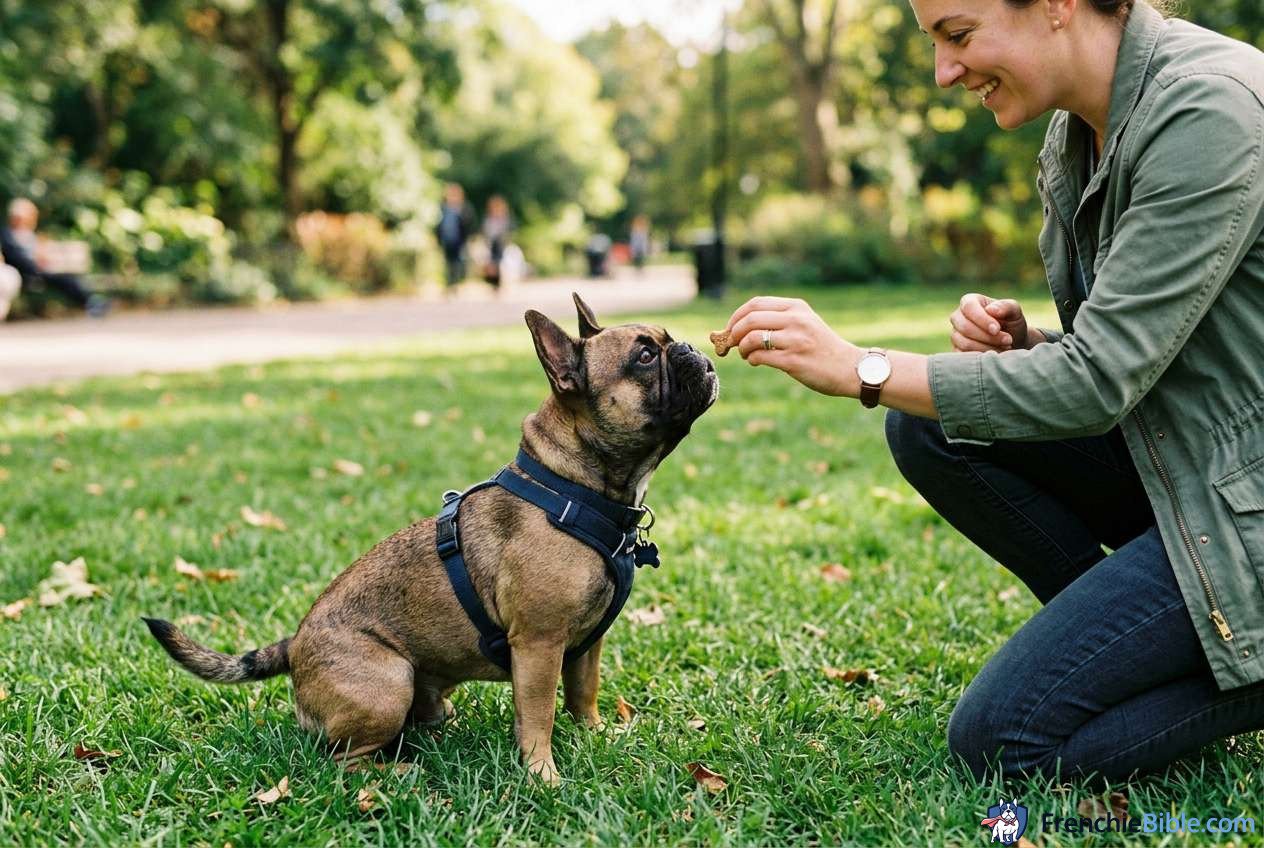
French Bulldogs are notoriously, famously food-motivated. This trait generally makes training them an absolute joy, but they can also be remarkably stubborn and discerning if the offered reward isn’t deemed highly worthy of their physical and mental effort. For a high-energy, demanding game like Hide and Seek, their standard, everyday dry kibble simply might not cut it. You need to employ “high-value” treats. These are small, incredibly smelly, highly palatable, and delicious morsels that they rarely get. Think along the lines of tiny, pea-sized pieces of plain boiled chicken breast, intensely fragrant freeze-dried beef liver, small cubes of dog-safe cheese, or even tiny dabs of xylitol-free peanut butter. Alternatively, if your specific Frenchie happens to be more toy-motivated than food-motivated, utilizing their absolute favorite squeaky toy or a special tug rope that only comes out during training can serve as the ultimate, highly prized reward. The critical key here is that the reward must be something they desperately, intensely want to work for.
Meticulously Preparing the Indoor Environment
Safety must always remain paramount when engaging in any activity with your dog. Before officially starting the game, you must do a quick but thorough sweep of the designated playing area to ensure a safe environment.
– Remove Any and All Hazards: Carefully ensure there are absolutely no sharp objects protruding, fragile or valuable items resting on low tables that could easily be knocked over by an excited dog, or toxic substances (such as certain decorative houseplants, dropped medications, or accessible cleaning supplies) within their reach.
– Evaluate and Check the Floors: Slippery hardwood, laminate, or smooth tile floors can be incredibly dangerous for a small, top-heavy dog making sudden, excited turns or rapid stops. This can easily lead to severe joint injuries, slipped discs, or pulled muscles. Whenever possible, heavily prioritize playing the game in fully carpeted areas, or take the time to lay down non-slip rugs or yoga mats to provide essential traction.
– Clear the Searching Path: Make absolutely sure there are no random obstacles—like stray shoes, children’s toys, or loose rugs—that your dog could accidentally trip over or crash into in their intense excitement and focus while searching for you.
Step-by-Step Guide to Teaching the Hide and Seek Game
Effective training should always be viewed as a progressive, logical journey. We must always start incredibly simple to practically guarantee early success. This early success builds their confidence and enthusiasm, allowing us to gradually, systematically increase the level of difficulty as your Frenchie masters each specific phase of the game.

Phase 1: The Easy Visual Seek (Starting Very Simple)
In the very beginning stages, your dog simply needs to understand the basic concept and rules of the game. We aren’t testing their nose or their tracking abilities yet; we are exclusively teaching them that the act of finding you results in a massive, exciting reward.
- The Initial Setup: Start in a very familiar, comfortable room with absolutely minimal distractions (e.g., your quiet living room with the TV off). Have your chosen high-value treats readily accessible in your hand or a treat pouch.
- Enforcing The Stay: Ask your Frenchie to “Sit” and firmly command them to “Stay”. As mentioned, if they struggle heavily with this, safely use a helper to hold them or gently tether them to a very sturdy, immovable piece of furniture using their body harness.
- The “Fake Hide”: Take just two or three slow steps backward, intentionally remaining completely and clearly in your dog’s direct line of sight. Do not actually attempt to hide behind anything yet.
- The Release and Enthusiastic Recall: In a very happy, high-pitched, enthusiastic tone, call your dog’s name immediately followed by your chosen recall word, e.g., “Bella Come!” or “Find me!”
- The Immediate Reward: The exact millisecond your dog excitedly trots over to you, shower them with intense verbal praise (“Yes! What a good girl! You found me!”), immediately give them the high-value treat, and genuinely act like they just accomplished the greatest feat in the world. Repeat this exact sequence 3 to 4 times until they are vibrating with anticipation for the release command.
Phase 2: Introducing Scent Tracking and Partial Concealment
Now that they fully grasp the premise that finding you equals treats and praise, it’s time to make them work just a little bit harder. We will now start actively engaging their nose and basic problem-solving skills.
- The Stay: Put your dog in a solid “Stay” in the center of the room.
- The Partial Hide: This time, carefully step behind a piece of furniture—a large sofa, a bulky armchair, or a partially open door. However, make sure a specific part of your body is still clearly visible to them from their starting position, perhaps your foot protruding, your elbow, or the top of your head.
- The Call: Wait for 2 to 3 seconds in silence to build up their anticipation, then call out happily and loudly, “Find me!”
- The Search: Your Frenchie will very likely trot directly over to the area where they last saw you moving. Because you are only partially hidden, they will have to rely slightly on tracking your recent movement and the fresh scent trail you just left.
- The Jackpot Reward: When they successfully navigate around the furniture and fully “find” you, immediately deliver the treat and the enthusiastic praise.
- The Progression: Repeat this process several times, gradually and systematically exposing less and less of yourself each time, until you are eventually completely hidden behind the object, though still in the exact same room.
Phase 3: The Full Out-of-Sight “Hide” in Another Room
This phase is where the real fun truly begins, and where your French Bulldog’s impressive olfactory abilities are finally put to the test.
- The Stay (Completely Out of Sight): Put your dog in a strict “Stay” in Room A (e.g., the kitchen).
- The Stealthy Exit: Quietly, without making heavy footsteps, walk away and into Room B (an adjacent room, like the living room or a bedroom). For the first few attempts at this phase, choose a very easy hiding spot, such as standing right behind an open door or just around the corner of the hallway. Try your best not to make any rustling noises, thereby forcing them to rely on their nose to locate you rather than simply following the sound of your movements.
- The Call: Call out clearly, “Find me!” Now, give them plenty of time. You will likely hear their little paws rapidly pattering against the floor as they systematically search the rooms. You might even hear them actively, loudly sniffing the air and the floor—this is excellent and exactly what we want!
- Providing Encouragement: If they seem genuinely lost, confused, or if they appear to give up and lie down, make a very tiny, subtle noise (a slight, quiet cough, a soft tap on the wall, or a quiet whistle) to help guide them in your general direction. We absolutely want them to succeed and not become frustrated.
- The Grand Celebration: When that adorable, squished little face finally pops around the corner, spots you, and their eyes light up, make it a massive, joyous celebration. Lots of treats, lots of petting.
- Consistent Practice: Practice this specific phase over several days or weeks, very gradually choosing slightly harder and more obscured hiding spots in different rooms of the house: crouching behind the bed, hiding in a walk-in closet with the door slightly ajar, or standing behind thick curtains.
Phase 4: Increasing Complexity Duration, and Adding Distractions
Once your Frenchie has become a certified Hide and Seek champion in a quiet, controlled house, it is time to truly bulletproof their obedience and scenting skills by adding significant complexity to the game.
- Silent Scent-Only Hides: Instead of calling out “Find me!” to initiate the search, have your helper release the dog by simply saying a quiet command like “Go find him” or “Search.” This completely removes the auditory cue of your voice and forces the dog to rely 100% on finding and following your invisible scent trail through the house.
- Adding Intentional Distractions: Deliberately scatter a few low-value toys, an old sock, or pieces of their boring, everyday kibble directly on the floor in their anticipated search path. The ultimate goal is for them to learn to completely ignore these environmental distractions and remain hyper-focused entirely on the task of finding you, because you represent the ultimate, high-value reward. This exercise drastically and permanently improves their overall focus and impulse control in all areas of life.
- The “Wait” Duration Game: Significantly increase the duration of the initial “Stay” command before you release them. Have them wait in their spot for 30 seconds, then a full minute, or even longer before you finally call them or have the helper release them. This builds incredible patience, discipline, and respect for your commands.
Advanced Variations of Hide and Seek for Frenchies
To ensure that the game remains fresh, mentally stimulating, and highly exciting over the ensuing months and years, you can introduce several highly engaging and more complex variations of the core game.
Nosework Basics: Hiding Specific Objects
If you happen to be busy, physically tired, or just want to change things up, you can easily transition the game from hiding yourself to actively hiding their favorite toy or a highly fragrant, special treat.
1. Visually show them the specific object you are going to hide and let them smell it intensely.
2. Put them in a strict “Stay” in another room.
3. Hide the chosen object in a relatively easy spot to start (e.g., just under a towel on the living room floor).
4. Return to them and give the specific command “Find your toy!” or “Find the treat!”.
5. When they successfully discover it, celebrate profusely with them. Over time, as their skills improve, you can hide treats deep inside empty cardboard boxes, behind table legs, under sofa cushions, or elevated slightly on a low chair, effectively turning your entire living room into a complex, professional-level canine scavenger hunt.
Multi-Person Hide and Seek (The “Round Robin” Recall)
If you have multiple family members living in the home, this specific variation is absolutely fantastic for intensively practicing reliable recall with different people, ensuring the dog listens to everyone, not just one person.
1. Have two, three, or more family members hide in completely different rooms of the house, with each person armed with a handful of high-value treats.
2. Person A enthusiastically calls the dog. When the dog successfully finds them Person A heavily rewards the dog.
3. Almost immediately after the dog finishes the treat Person B enthusiastically calls the dog from their completely separate hiding spot.
4. The dog must mentally process this, leave the comfort of Person A, and actively search out Person B.
5. Continue this sequence. This rapid-fire, multi-directional recall exercise is mentally exhausting, highly exhilarating for the dog, and incredibly effective for deeply reinforcing strict obedience and reliable recall to all family members across the board.
The Ultimate “Dark Room” Challenge
For highly advanced dogs who have thoroughly mastered all previous phases, try playing the game in the evening with all the house lights significantly dimmed or completely turned off. Without the ability to use their visual cues to spot you or navigate, your Frenchie will have to rely absolutely 100% on their incredible sense of smell and their acute hearing to find you in the dark. It is a spectacular, confidence-building way to teach them to trust their nose and to navigate unfamiliar or low-light environments without fear.
Common Challenges and Comprehensive Troubleshooting Tips
Even with the absolute best intentions, the highest value treats, and a smart dog, dog training does not always go perfectly smoothly. Hiccups are normal. Here is a detailed guide on how to expertly handle the most common challenges you might face during Hide and Seek.
What if My Frenchie Completely Loses Interest or Wanders Off?
If your dog starts the search but then abruptly stops searching, randomly wanders off to chew a bone, goes to sleep, or simply lies down and stares at you, the game has either become far too difficult for their current skill level, or the reward you are offering simply isn’t enticing enough to warrant their continued effort.
– The Solution: You must immediately take a step back in the training progression. Make the hiding spots much, much easier so they can quickly experience immediate, reinforcing success again. Significantly upgrade your treats to something absolutely irresistible, like tiny bits of warm hot dog, dried fish skins, or roasted chicken. Furthermore, ensure you are keeping the training sessions very short—strictly no more than 5 to 10 minutes at a time. It is a golden rule of dog training to always end the session on a high, positive note while the dog is still having fun and actively wants to play more, rather than waiting until they are exhausted and bored.
Handling Severe Frustration Whining, or Over-Excitement
Some Frenchies, particularly younger ones, get so incredibly excited by the prospect of the game that they become frantic. They might start whining loudly, barking frantically at you, spinning in circles, or repeatedly breaking their “Stay” command prematurely before you even have a chance to hide.
– The Solution: As the leader, you must actively calm the energy down. If they break the “Stay” command, do not get angry, but calmly, silently, and assertively walk them by the collar or harness back to the exact starting spot and try again. Absolutely do not reward them with the game or a treat for breaking the command. Crucially, you must significantly lower your own energy level. Speak to them in a very calm, deep, soothing voice rather than a high-pitched, fast, excited tone until they manage to find you and calm down. Only reward calm, focused searching behavior.
Modifying the Game for Puppies Seniors, or Dogs with Mobility Issues
- For Young Puppies: It is vital to remember that young puppies have the attention span of a gnat. You must keep all hides incredibly simple, mostly visual (Phase 1), and keep sessions extremely short (2-3 minutes). Focus purely, 100%, on building the deeply ingrained positive association that running toward you quickly equals amazing treats and fun. Do not worry about complex scenting yet.
- For Senior Frenchies or Dogs with Medical Issues: For our beloved older dogs, or those unfortunately suffering from conditions like IVDD (Intervertebral Disc Disease), hip dysplasia, or severe arthritis, you must heavily modify the game. Strictly avoid using stairs, absolutely avoid slippery floors, and never use hiding spots that require them to jump up or climb. Keep the entire game safely contained to one single, carpeted room and focus heavily on the slower, scent-based “Find the Treat” nosework variations that don’t require them to rush around frantically or strain their bodies. Mental stimulation remains just as critically important for senior dogs to help actively prevent cognitive decline and keep them engaged with life!
Frequently Asked Questions (FAQs)
Q1: How often, realistically, should I play Hide and Seek with my French Bulldog?
A: You can absolutely play this highly beneficial game daily! In fact, daily consistency is excellent. However, short, focused sessions of just 5 to 10 minutes are ideal. It is a fantastic, structured way to burn off excess nervous energy in the morning before you leave the house for work, or in the evening while you are relaxing watching TV. Absolute consistency is the key to deeply reinforcing the obedience and rapid recall aspects of the game over the long term.
Q2: My Frenchie is incredibly stubborn and absolutely won’t stay when I turn my back to go hide. What should I do?
A: Do not worry, this is a very common, classic Frenchie behavioral trait! If they haven’t properly mastered the “Stay” command yet, simply enlist the help of a patient friend or family member. Have the helper gently but firmly hold their harness (never pull on the neck) or keep them momentarily distracted and entertained with a toy while you go hide. The helper should only release the dog exactly when you clearly call out. Simultaneously, you must commit to working on formally practicing the “Stay” command in separate, dedicated, and structured obedience training sessions outside of the game.
Q3: Is this fast-paced game genuinely safe for a French Bulldog, considering their known breathing issues?
A: Yes, playing Hide and Seek indoors in a cool, climate-controlled, air-conditioned environment is generally very safe and highly recommended. However, you must always diligently monitor your individual dog. Because all Frenchies are brachycephalic to varying degrees, they can easily overexert themselves if they get too frantic or excited, even indoors. If you ever notice excessive, heavy panting, loud, roaring respiratory sounds, a blueish tint to their gums, or if they simply seem exhausted, you must stop the game immediately, offer fresh water, and let them rest in a cool spot. Never push them past their physical limits.
Q4: Can I safely play Hide and Seek outdoors in the yard or park with my Frenchie?
A: Yes, you can, but with very strict and serious caveats. You should only ever play this game outdoors in a completely, securely fenced-in area to prevent them from bolting if they get distracted. Furthermore, absolutely never play vigorous games outdoors during hot, humid, or sunny weather due to their extremely high, life-threatening risk of heatstroke. Ensure the outdoor play area is meticulously checked and safe from hidden hazards, deep holes they could trip in, or toxic plants. Generally speaking, indoor play is significantly safer, more reliable, and much more controlled for this specific, delicate breed.
Q5: My dog seems to use their eyes and memory much more than their nose to find me. How can I actively encourage them to start sniffing more?
A: To force them to use their nose, you must start hiding completely out of sight in much more complex, unpredictable locations. Try hiding inside a dark closet with the door only slightly ajar, or behind a very large, solid piece of furniture where they absolutely cannot simply “see” you from the doorway. To help them transition to using their nose, you can try dragging a piece of a very smelly, high-value treat on the floor along your exact walking path as you head to your hiding spot. This creates a very clear, highly rewarding scent trail for them to easily follow initially, teaching them that following a scent leads to a reward.
Conclusion
Incorporating regular games of Hide and Seek into your French Bulldog’s routine is essentially providing a masterclass in joyful, highly effective, and stress-free training. It deeply respects their innate intelligence, actively utilizes their natural, biological olfactory instincts, and provides a wonderfully safe, controlled outlet for their daily energy. Most importantly, it completely transforms basic obedience training from what could be a tedious, repetitive chore into a highly anticipated, thrilling game for both of you. As an experienced breeder I have seen firsthand time and time again how dogs that consistently engage in regular, structured, mental play are significantly more confident in themselves, noticeably better behaved in the home, and profoundly, deeply bonded with their human families. So, gather up some truly high-value treats, practice your very best, most commanding “Stay,” and get ready to hide. Your Frenchie’s incredible nose—and their loving heart—will undoubtedly thank you for it!
Disclaimer: Please carefully note that all the information, tips, and guidance provided in this comprehensive article are based strictly on over a decade of personal, hands-on experience in French Bulldog breeding, training, and daily care. I am not a licensed veterinarian, and I do not possess any formal veterinary, medical, or animal behavioral qualifications or licenses. The advice, training methodologies, and dietary or treat suggestions discussed extensively herein are provided for informational and educational purposes only and should absolutely never be used as a substitute for professional veterinary advice, formal medical diagnosis, or prescribed treatment. Always consult directly with a licensed, qualified veterinarian regarding your specific dog’s health status, behavioral issues, or before introducing any new exercise regimen, training program, or new types of treats, especially considering the highly unique physiological needs and well-documented potential health concerns associated with brachycephalic breeds like French Bulldogs.
Disclaimer: I am a French Bulldog breeding expert with over a decade of hands-on experience with this breed. I am not a veterinarian. The information in this article is for educational purposes only. Always consult your veterinarian regarding your dog’s specific health needs and care.