As a French Bulldog breeding expert and with over a decade of hands-on experience I have guided countless owners through the beautiful, sometimes messy, and often emotional journey of raising a female Frenchie. When your beloved little bat-eared companion transitions from a playful puppy into a maturing adult dog, one of the most significant milestones she will experience is her heat cycle (estrus). For many first-time owners—and even seasoned Frenchie parents—this period can be daunting. You may find yourself dealing with unexpected bleeding, sudden mood swings, extreme clinginess, and the logistical nightmare of finding a diaper that actually stays on a dog with no tail and a barrel-shaped chest.
In this comprehensive, in-depth guide, we will dive deep into everything you need to know about navigating your French Bulldog’s heat cycle. Drawing from extensive breeding experience, we will cover the biological timelines, the physical and psychological changes your dog will undergo, practical solutions for managing hygiene using doggie diapers tailored for the unique Frenchie physique, and strategies for providing the emotional soothing she desperately needs during this hormonally charged time. Whether you are a novice owner trying to prepare for her first cycle or an experienced owner looking to improve her comfort, this guide will equip you with the knowledge to handle the heat cycle like a pro.
Related Reading: Training & Behavior | Grooming & Care | French Bulldog Colors
Understanding the french bulldog heat cycle
Before we can effectively care for a Frenchie in heat, it is crucial to understand exactly what is happening inside her body. The heat cycle, scientifically known as the canine estrous cycle, is the reproductive cycle that female dogs go through, indicating they are reaching sexual maturity and are physically capable of reproducing. It is a time of immense hormonal fluctuation that drives both physical and behavioral transformations.
At What Age Do French Bulldogs Go Into Heat?
Typically, a female French Bulldog will experience her first heat cycle anywhere between 6 to 9 months of age. However, just like humans, every dog is unique, and genetics play a massive role in this timeline. Some early bloomers might go into heat as early as 5 months, catching their owners completely off guard. Conversely, late bloomers might not experience their first cycle until they are 12 to 15 months old.
If your Frenchie has not had her first heat by 15 to 18 months of age, it is a good idea to monitor her closely, as extreme delays can sometimes indicate underlying genetic or hormonal anomalies. As a breeder I always advise new owners to start monitoring their female puppies closely around the 5.5-month mark. Being prepared ensures that you are not caught off guard when the first signs of spotting appear on your pristine living room rug or your dog’s bedding.
The Four Stages of the Canine Estrous Cycle
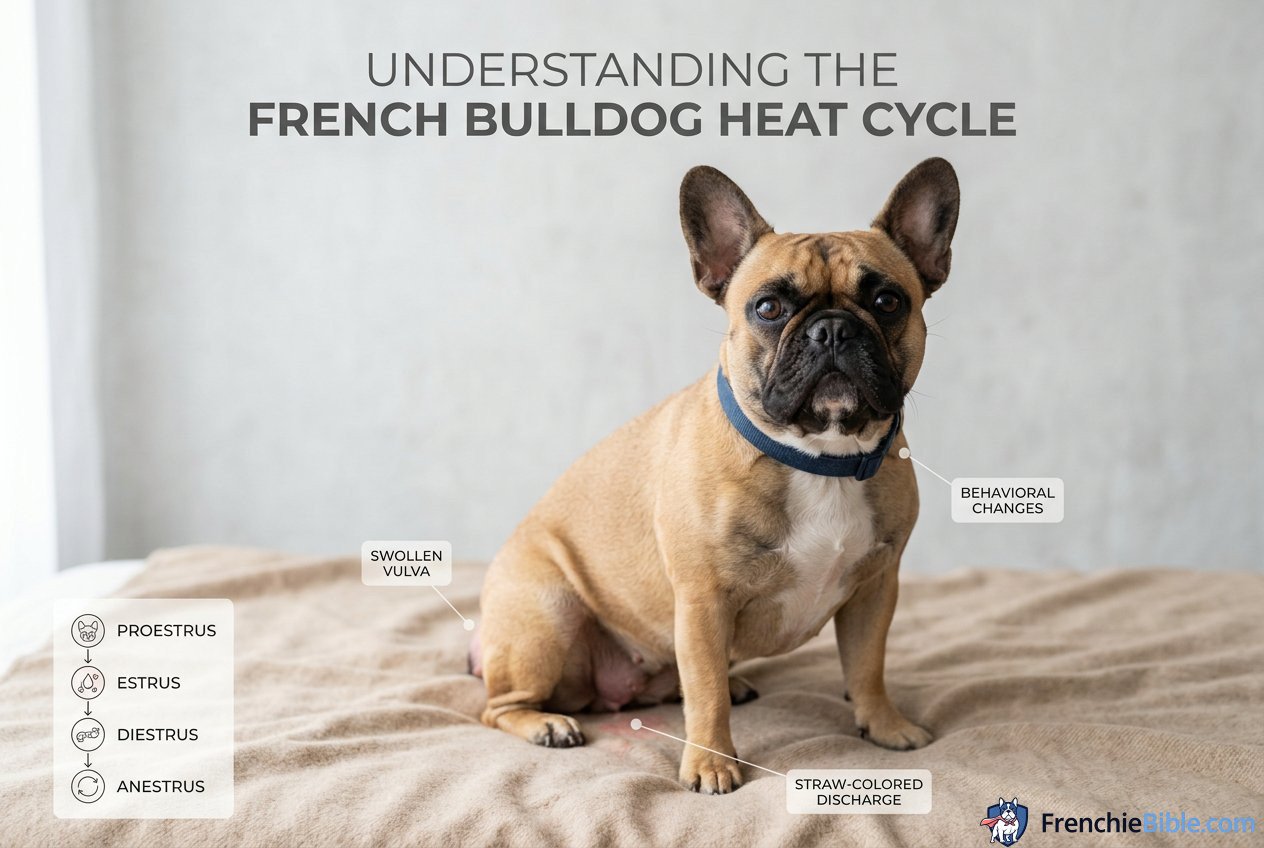
The heat cycle is not just a few days of bleeding; it is a complex biological process divided into four distinct stages. Understanding these stages will help you anticipate your Frenchie’s needs and behaviors.
1. Proestrus (The Lead-Up)
Lasting roughly 7 to 10 days (though it can vary from 3 to 17 days), this is the beginning of the heat cycle. Your Frenchie’s body is preparing for potential pregnancy. Estrogen levels surge. You will notice significant swelling of her vulva and a blood-tinged vaginal discharge. During this time, her scent changes dramatically. She will attract male dogs from surprisingly far distances, but she will strictly reject their advances. Behaviorally, she may tuck her non-existent tail area tightly against her body, sit down abruptly when a male approaches to protect herself, or even snap and growl if a male dog is too persistent.
2. Estrus (The Receptive Phase)
This is the actual “heat” phase where the female is fertile, ovulating, and receptive to mating. It usually lasts another 5 to 10 days, but can extend longer. The discharge often changes in color, transitioning from a bright, heavy red to a lighter pink, watery, or straw-colored hue. However, some dogs continue to bleed red throughout this phase. Behaviorally, her attitude shifts entirely. She may become more flirtatious, presenting her rear end (a behavior known as “flagging” where she moves her tail nub to the side) and actively tolerating or even seeking out the attention of intact males. This is the period of highest risk for unwanted pregnancy.
3. Diestrus (The Resting Phase)
If the dog does not become pregnant, she enters diestrus, which lasts for about 60 to 90 days. Her hormone levels (specifically progesterone) will gradually decline. Interestingly, a dog’s body produces similar levels of progesterone whether she is pregnant or not. Because her body essentially “thinks” it is pregnant, some Frenchies experience “false pregnancies” (pseudocyesis) during this phase. They may exhibit nesting behaviors, maternal aggression, and even mammary gland enlargement and milk production despite never having mated.
4. Anestrus (The Inactive Phase)
This is the dormant, recovery phase between heat cycles, lasting anywhere from 4 to 6 months. Her reproductive system is quiet, her hormones are at baseline levels, and she will behave like her normal, goofy, affectionate self. Her vulva will shrink back to its normal, small size.
How Long Does a Frenchie’s Heat Last?
When owners ask how long the heat lasts, they are usually referring to the proestrus and estrus stages combined—the period of active bleeding and attractiveness to males. For a French Bulldog, this entire active phase typically lasts about 2 to 3 weeks (14 to 21 days). However, to be absolutely safe, you must remain vigilant for a full 3 to 4 weeks to ensure the estrus phase has completely passed, her vulva has returned to normal size, all discharge has ceased, and she is no longer at risk of unwanted pregnancy. Female Frenchies generally go into heat twice a year, roughly every 6 to 7 months, though some may cycle every 8 months.
Physical Signs Your French Bulldog is in Heat
Recognizing the onset of a heat cycle requires keen observation. French Bulldogs are notoriously stoic, and because of their compact, low-to-the-ground build, some physical signs might be harder to spot than in larger breeds.
Swelling and Discharge
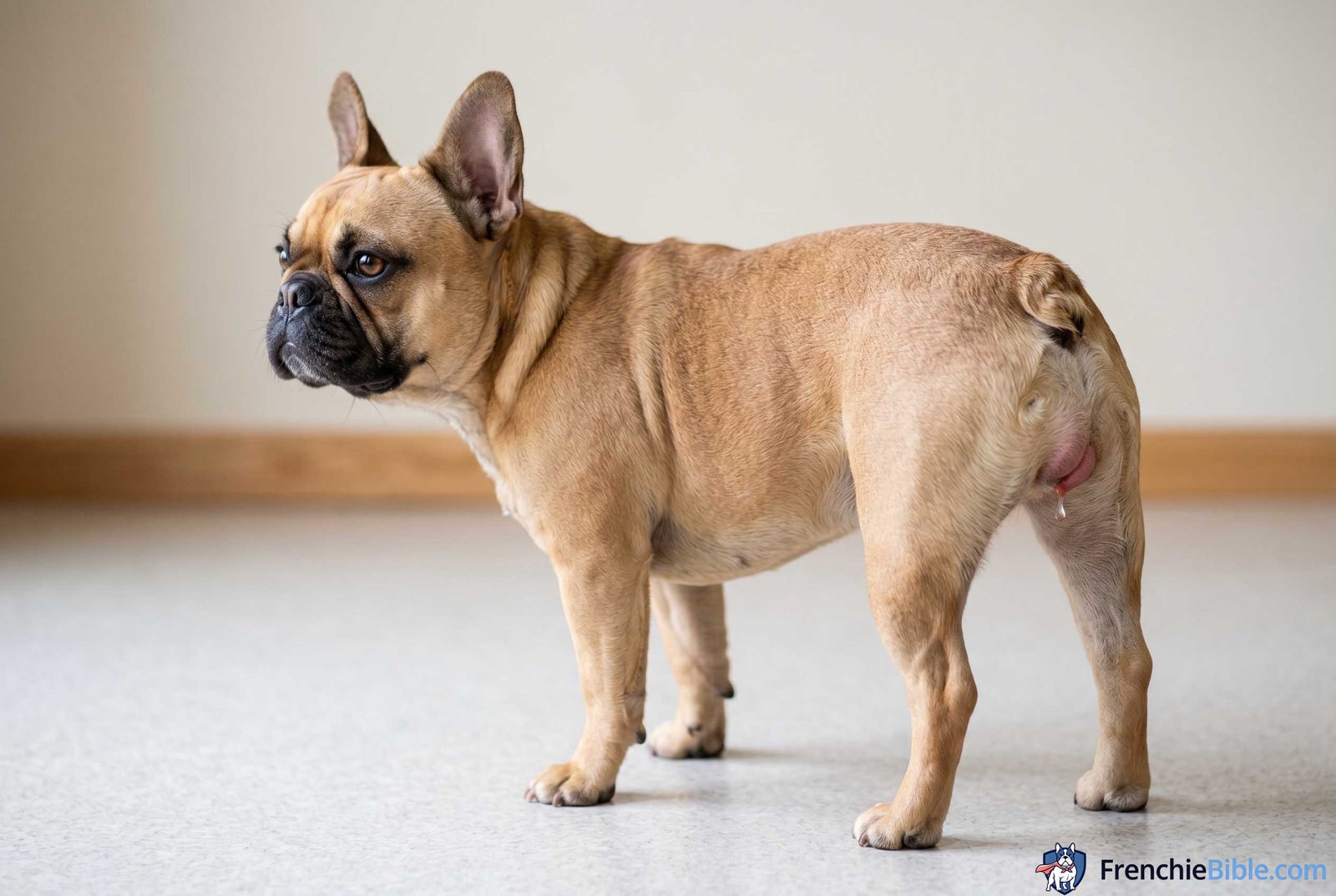
The most obvious, undeniable physical sign is the engorgement and swelling of the vulva. It can become quite large, sometimes swelling to two to three times its normal size, looking almost like a small balloon. Accompanying this swelling is vaginal discharge. In the first week (proestrus), the discharge is typically bloody and relatively heavy. You will likely find small drops of blood on the floor, on her favorite blankets, or wherever she sleeps.
Because French Bulldogs have short snouts, flat faces (brachycephalic), and often struggle with mobility due to their compact spines and heavy, broad chests, they have a very hard time reaching their rear ends to clean themselves. Unlike a Greyhound, a Poodle, or a mixed breed that might meticulously groom away the evidence of their cycle, your Frenchie will rely entirely on you to help manage her hygiene during this messy time.
Changes in Urination Habits
You will also notice a significant, sudden change in her urination habits. A female in heat urinates much more frequently. This is nature’s way of allowing her to mark her territory and broadcast her hormonal availability to any male dogs in the wider vicinity. She may urinate in very small amounts on walks, stopping at every single bush, patch of grass, and fire hydrant.
Occasionally, a previously perfectly house-trained adult Frenchie might have an accident indoors. This is not out of spite; it is simply due to the extreme urgency, the pressure on her bladder from the swollen reproductive organs, and profound hormonal shifts. Infinite patience is key here; she is not being disobedient, she is answering a powerful biological imperative. Simply clean up the mess with an enzymatic cleaner and take her outside more frequently.
French Bulldog Heat Diapers: A Practical Guide
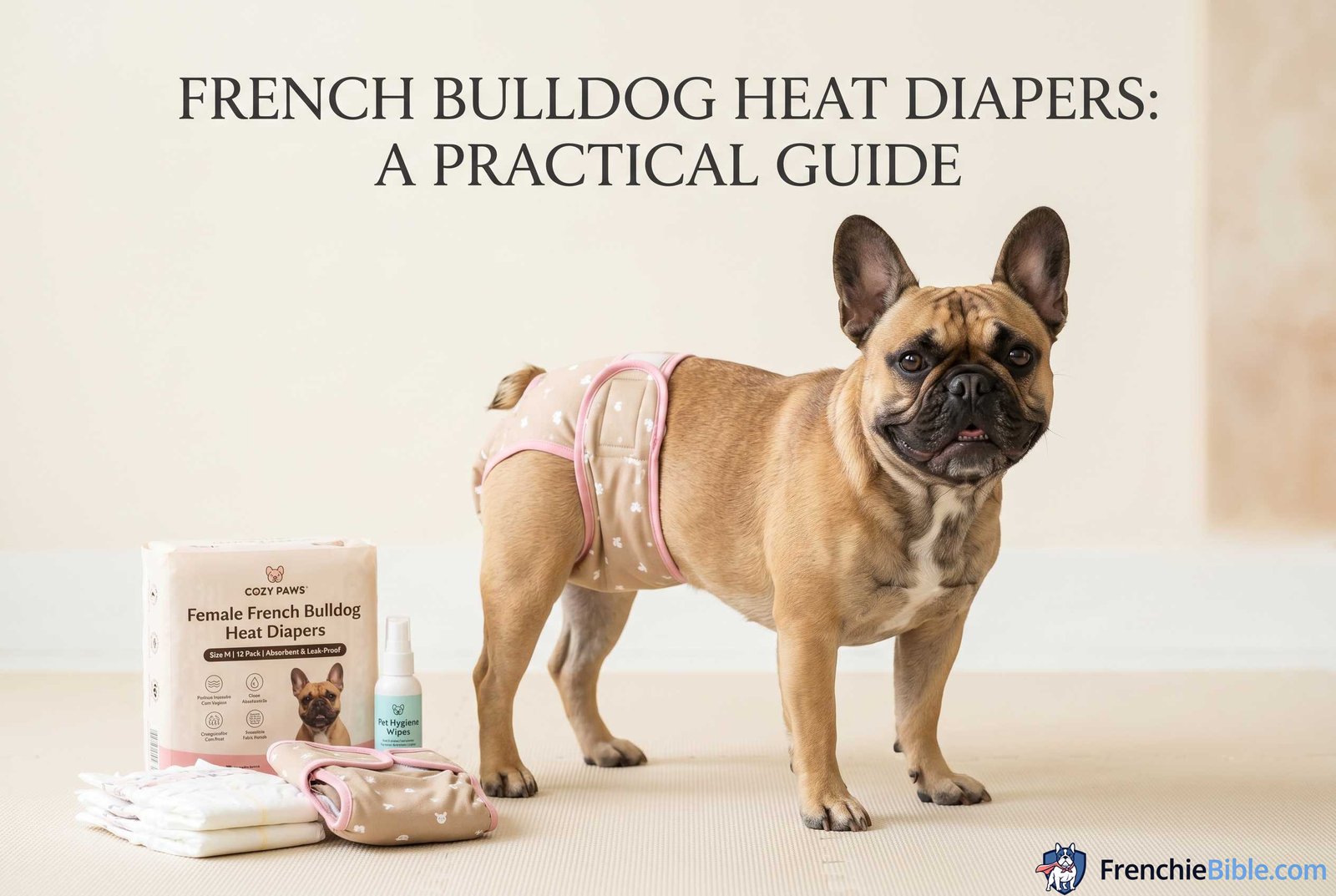
Given the French Bulldog’s inability to keep herself clean and the reality of living with a dog indoors on furniture and rugs, investing in doggie diapers (often called sanitary pants, physiological pants, or heat panties) is an absolute must. However, diapering a Frenchie presents a uniquely frustrating set of challenges.
The Anatomical Challenge of the Frenchie
Most commercial dog diapers sold at big-box pet stores are designed for “standard” dogs—dogs with distinct, tucked-in waists, sloping hindquarters, and, most importantly, a long tail to help anchor the diaper securely in place. The French Bulldog has exactly none of these features. They are built like little muscular torpedoes or potatoes: they have thick, muscular necks, massive barrel chests, narrow hips, and either a tiny, tight nub of a tail or essentially no tail at all. When you put a standard dog diaper on a Frenchie, the moment she waddles away, it tends to slide right off her smooth, sloping hind end within five minutes, leaving a trail of frustration for the owner.
Choosing the Right Dog Diaper for a Frenchie’s Body Shape
To overcome this frustrating anatomical hurdle, you need to select diapers and accessories specifically suited for their unique body type. Here is what my decade of breeding experience dictates:
1. Suspenders are Your Best Friend
The absolute best, most foolproof solution for a French Bulldog is a diaper with built-in suspenders, or purchasing separate, specialized dog diaper suspenders. These elastic straps go over the dog’s shoulders, cross over the back, and clip onto the waistband of the diaper, completely eliminating the slipping issue regardless of her lack of waist or tail. Ensure the suspenders are highly adjustable and made of soft, non-chafing material so they do not rub or irritate the delicate skin under her “armpits” (axillary regions).
2. Washable vs. Disposable Diapers
I highly, unequivocally recommend investing in high-quality, reusable, washable cloth diapers. Not only are they far more environmentally friendly and drastically more cost-effective over the dog’s lifetime, but they are also significantly softer and safer against a Frenchie’s notoriously sensitive skin. Frenchies are highly prone to allergies and contact dermatitis. The rough paper edges, synthetic gels, and chemicals found in disposable diapers can cause severe, painful chafing and rashes around their inner thighs and belly. Washable diapers made of soft cotton or fleece, lined with waterproof outer layers, are the gold standard.
3. Tail-Hole Considerations
Since Frenchies have little to no tail, the standard, large tail hole found in most diapers becomes a massive gap where blood and discharge easily leak out onto your furniture. When shopping, look for diapers specifically designed for breeds without tails (sometimes marketed as “tail-free diapers”). If you already have standard diapers, a fantastic breeder “hack” is to use a human sanitary pad (an unscented, thin panty liner works perfectly) placed strategically inside the diaper. Position the pad so that it covers the tail hole from the inside, absorbing the flow and preventing any leakage through the back.
4. Full-Body Onesies (Recovery Suits)
Another excellent, highly effective alternative to traditional diapers is a canine recovery suit or a surgical onesie (often used after spay surgeries). These soft, stretchy garments fit snugly over the entire torso and have a pocket or a secure area in the crotch where you can place a sanitary pad. Because they cover the whole body and secure around the neck and all four legs, there is zero risk of them slipping off. As an added bonus, many Frenchies find the gentle, swaddling pressure of a snug onesie to be highly comforting, which helps alleviate the anxiety associated with their heat cycle.
Hygiene and Changing the Diaper Safely
Wearing a diaper 24/7 is not healthy for any living creature, dogs included. A diaper traps moisture, heat, and bodily fluids, creating a perfect, dark breeding ground for bacteria. If left unmanaged, this can quickly lead to severe skin infections, painful diaper rash, or ascending urinary tract infections (UTIs)—a complication that female Frenchies are already structurally prone to.
- Change Frequently: You must change the diaper or the inner sanitary pad every 3 to 4 hours during the day, or immediately if you notice it is heavily soiled.
- Air it Out (Naked Time): Give your Frenchie mandatory “naked time” every single day. Confine her to an easy-to-clean, hard-surface area, such as a tiled bathroom, a kitchen, or a designated playpen lined with washable puppy training pads. Let her go completely diaper-free for a few hours. This allows her skin to breathe, dry out, and prevents the buildup of yeast and bacteria.
- Gentle Cleaning Protocol: Every time you change the diaper, you must clean her. Use unscented, hypoallergenic, alcohol-free baby wipes (or specialized pet wipes) to gently clean her swollen vulva and the surrounding skin folds. Always wipe gently from front to back to prevent dragging bacteria from the anus toward the urinary tract. Make absolutely sure the area is completely dry before putting a fresh, clean diaper back on. Moisture trapped against the skin is the enemy.
Emotional Soothing: Managing Your Frenchie’s Behavior Changes
The hormonal rollercoaster of a heat cycle does not just change a dog physically; it causes profound, sometimes shocking psychological and behavioral shifts. French Bulldogs are inherently sensitive, deeply affectionate, and highly attuned to the emotions and routines of their owners. During a heat cycle, these traits are often magnified tenfold, turning your confident dog into an emotional wreck.
Nesting and Extreme Clingy Behaviors
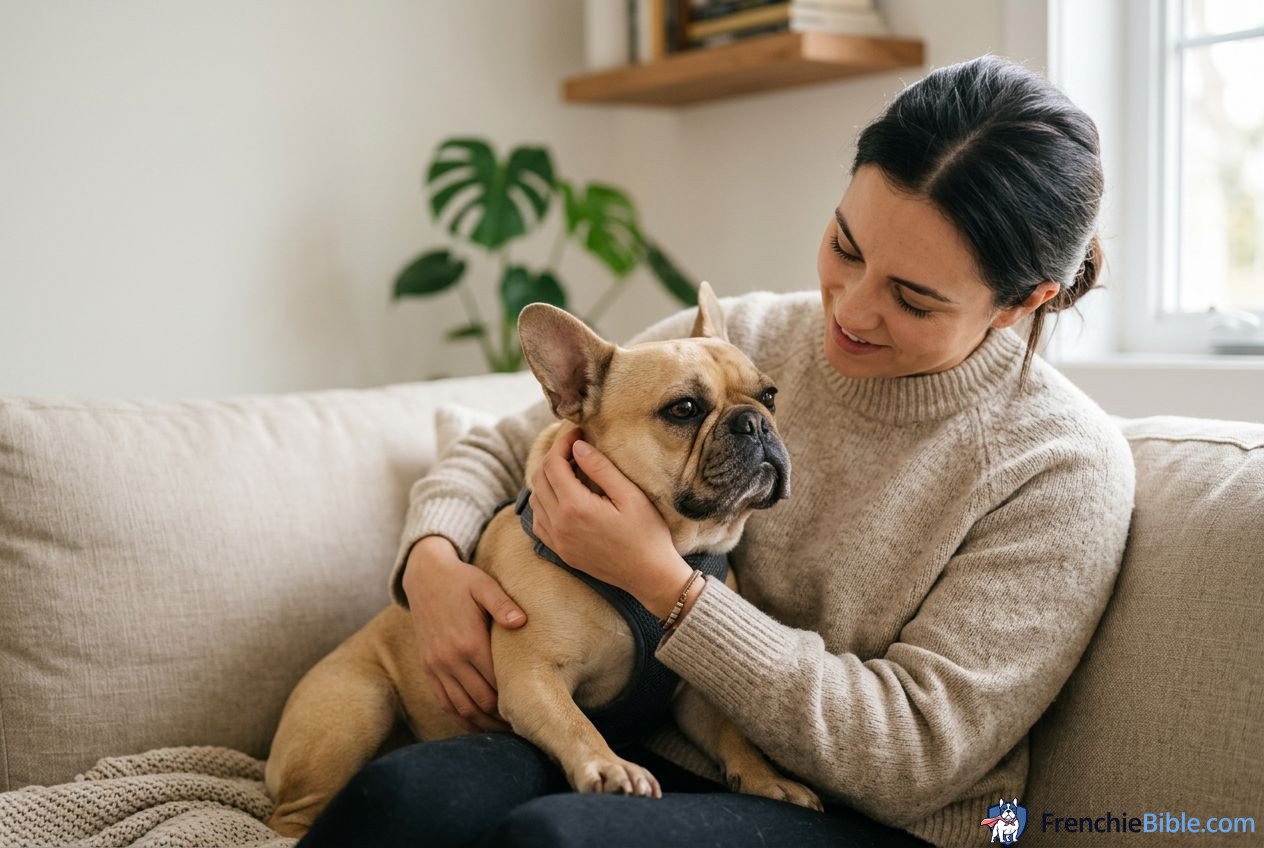
One of the most common behavioral changes reported by owners is extreme, relentless clinginess. Your normally independent Frenchie who loves sleeping at the foot of the bed might suddenly demand to be pressed right up against your chest or neck. She may follow you from room to room, sitting outside the shower, whining pathetically if you are out of sight for even a moment. This clinginess is driven by a deep biological vulnerability; her body is undergoing massive changes, and her instinct tells her she needs the protection of her pack leader (you).
You will also likely witness “nesting” behavior. She might gather all her plush toys, socks, or even your shoes into her bed. She may endlessly dig, scratch, and arrange her blankets, aggressively guarding her sleeping area. This is a powerful maternal instinct kicking in; her brain is preparing a safe, warm den for potential puppies, even if no mating has occurred.
Increased Irritability Anxiety, or Lethargy
Conversely, some Frenchies become incredibly irritable, moody, or unusually lethargic. A dog that usually loves playing fetch and roughhousing might prefer to sleep in a dark, quiet corner for 16 hours a day. She might become highly intolerant of other pets in the household, snapping at younger, boisterous dogs who try to play with her.
She might even lose her appetite for a few days due to hormonal nausea, cramps, or general physical discomfort. She may pace the house at night, whining softly, unable to get comfortable. This is a confusing and uncomfortable time for her.
Providing a Calm Safe, and Soothing Environment
As her owner, caregiver, and protector, your primary job during these three weeks is to provide unwavering emotional stability and comfort.
- Be Endlessly Patient and Reassuring: Never, ever scold her for her clinginess, her indoor accidents, her nesting messes, or her moodiness. Punishment will only severely increase her anxiety. Speak to her in a soft, low, soothing tone. If she wants to be held, hold her. If she wants to hide under the bed in the dark, let her have her safe space without dragging her out.
- Create a Dedicated Zen Zone: Set up a quiet, warm, and hyper-comfortable space away from the hustle, bustle, and noise of the house. Provide extra, soft blankets to satisfy her nesting urges. Frenchies love to burrow, so providing a cave-style dog bed, or simply draping a large blanket over her crate (leaving the door open) can offer an immense sense of security and privacy during this vulnerable time.
- Utilize Calming Aids: If she is exhibiting signs of severe anxiety, pacing, or restlessness, consider utilizing natural calming aids. Adaptil (Dog Appeasing Pheromone) diffusers plug directly into the wall and release synthetic pheromones that mimic the comforting, relaxing scent produced by a mother dog nursing her puppies. This can dramatically lower a dog’s stress levels.
- Physical Soothing: Gentle, deliberate physical contact works wonders. Slow, deep massages, particularly around the base of the ears, the chest, and along the spine (being very careful to avoid her highly sensitive rear area and swollen vulva), can help lower her heart rate, release endorphins, and ease her stress.
Preventing Unwanted Pregnancies and Protecting Your Frenchie
When a female dog is in heat, her scent changes chemically. This scent can travel for miles on the wind, acting as an irresistible beacon for every intact male dog in the vicinity. The drive to mate is an incredibly powerful, blinding primal instinct, and male dogs will go to extraordinary, sometimes dangerous lengths—jumping high fences, breaking through window screens, digging deep holes under heavy gates, or pulling leashes out of owners’ hands—to reach a female in estrus.
Dealing with Intact Male Dogs in the Home
If you have an intact (unneutered) male dog in the same household, managing a female in heat is a logistical nightmare of epic proportions. They must be kept separated by at least two solid, closed doors at all times. Crates are absolutely not enough; determined mating can (and frequently has) occurred through the wire bars of adjacent crates. Do not for a second underestimate the sheer determination and ingenuity of a hormonally driven male dog.
The stress of being in the same house, smelling the female but being unable to reach her, can cause the male immense psychological distress. He may stop eating entirely, howl and bark continuously for days, scratch doors to splinters, and lose significant weight. In multi-dog households, the easiest, kindest, and safest solution for everyone’s sanity is often to send the male dog to stay with a trusted friend, family member, or a high-quality boarding facility for the duration of the female’s three-week cycle.
Strict Supervision and Leash Walking During Heat
Your female Frenchie should NEVER, under any circumstances, be left outside unsupervised while in heat, even in what you believe is a securely fenced backyard. It only takes a few minutes of inattention for a stray male to scale a fence or dig underneath it.
When it comes to daily walks, your entire routine must change drastically to ensure her safety.
– Short Double-Leashed Walks Only: All walks must be strictly on a short, sturdy leash. No retractable leashes, which offer zero control in an emergency, and absolutely no off-leash time in parks, trails, or open spaces. Some owners even use a harness and a collar with a double leash for extra security.
– Change Your Route and Timing: Avoid dog parks, popular walking trails, and pet stores like the plague. Try to walk her during extreme off-peak hours (very early in the morning before dawn, or late at night) to minimize the chances of encountering other dogs. If you see another dog approaching in the distance, do not wait to see if it is male or female; cross the street immediately or turn around and walk away.
– Carry a Physical Deterrent: I always strongly advise owners to carry an automatic umbrella or a sturdy walking stick during these weeks. If an off-leash male dog approaches aggressively to get to your female, opening a large umbrella suddenly in his direction is usually enough of a startling visual and physical barrier to keep him at bay while you safely remove your dog from the situation.
– Beware of Her Escape Attempts: Remember that during the “estrus” phase (the middle week), your female is biologically driven to actively seek a mate. Even the most loyal, obedient, recall-trained Frenchie might suddenly try to bolt out the front door if she catches the scent of a male on the wind. Use extreme caution when opening exterior doors, using baby gates to create an airlock system at your front entrance if necessary.
Nutrition and Exercise Adjustments During the Heat Cycle
A heat cycle takes a significant physical toll on a dog’s body. Her metabolism shifts, her energy is depleted, and making slight, thoughtful adjustments to her daily routine can help her weather the storm much more comfortably.
Tailoring Her Diet for Comfort and Strength
During the first week of heat, you might notice a sharp dip in her appetite. This is entirely normal and is caused by hormonal fluctuations, mild cramping, and nausea. Do not force her to eat, but try to make her meals more enticing and gentle on her stomach. Adding a spoonful of plain, unsweetened, probiotic-rich Greek yogurt, a drizzle of warm, low-sodium bone broth, or some finely shredded, boiled, unseasoned chicken breast to her regular kibble can stimulate her appetite.
Because she is bleeding and her body is working in overdrive, ensure she is eating a high-quality, protein-rich diet to maintain her strength and prevent anemia. Fresh, clean, cool water must be available in multiple locations at all times, as the hormonal changes and drastically increased urination can quickly lead to dehydration.
Crucial Note: If she completely stops eating for more than 48 hours, becomes profoundly lethargic to the point of being unresponsive, or starts vomiting and drinking excessive amounts of water, you must seek professional evaluation immediately. These are not normal heat symptoms; they are the classic warning signs of Pyometra, a potentially fatal uterine infection.
Modifying Exercise Routines for a Brachycephalic Breed
French Bulldogs are already brachycephalic (flat-faced) dogs that inherently struggle with heat regulation, breathing, and stamina. When a female is in heat, her body temperature may run slightly higher, and she will tire much more easily than usual.
Listen closely to what her body is telling you. If she is lethargic and dragging her feet, do not force her to go on her usual 30-minute evening walk. Substitute long, exhausting walks with very short, 5-to-10-minute potty breaks in your own yard or immediately outside your building.
To keep her mentally stimulated without physically exhausting her delicate system, utilize indoor enrichment. Snuffle mats, lick mats smeared with dog-safe peanut butter or plain yogurt, and interactive puzzle toys are excellent ways to burn mental energy and alleviate boredom while she rests her body safely in a cool, air-conditioned environment.
Spaying: When to Consider It for Your Frenchie’s Future
If you are not a professional, ethical breeder dedicated to health-testing and preserving the French Bulldog breed, the absolute best thing you can do for your female dog’s long-term health, comfort, and longevity is to have her spayed (sterilized).
Spaying (an ovariohysterectomy, which removes the ovaries and uterus) completely eliminates the heat cycle. It means no more bleeding, no more messy diapers, no more extreme mood swings, no false pregnancies, and zero risk of unwanted pregnancy. More importantly from a health perspective, spaying before her first or second heat cycle dramatically reduces the risk of malignant mammary tumors (breast cancer) later in life. Furthermore, it completely, 100% prevents Pyometra—a life-threatening, emergency infection of the uterus that is incredibly common and often fatal in older, unspayed females.
The exact timing of the spay surgery is a topic of much discussion and evolving veterinary science. Because French Bulldogs are a chondrodystrophic breed (a dwarf breed) highly prone to severe joint and spinal issues like Intervertebral Disc Disease (IVDD) and hip dysplasia, many experts now recommend waiting until the dog is fully physically and skeletally mature before spaying. This allows their growth plates to close properly under the influence of natural, protective sex hormones. For a Frenchie, this usually means waiting to spay until after she has gone through her first or second heat cycle (typically around 12 to 18 months of age).
Never, ever spay a dog while she is actively in heat. The blood vessels supplying the reproductive tract are massively engorged with blood during the cycle, making the surgery significantly bloodier, more complicated, and higher risk. Always wait until she is fully in the anestrus (resting) phase, usually 2 to 3 months after her heat has completely finished.
Dealing with False Pregnancy (Pseudocyesis)
It is highly common for French Bulldogs to experience a psychological and physical phenomenon known as a false pregnancy (pseudocyesis) about 4 to 9 weeks after their heat cycle ends. This happens because the dog’s body produces the exact same high levels of progesterone just as it would if she were actually carrying a litter of puppies.
Symptoms of a false pregnancy can be shocking to unprepared owners. They include visibly swollen mammary glands (sometimes even producing actual milk or fluid), extreme lethargy, intense nesting behavior, and adopting inanimate objects (like squeaky toys or slippers) as “surrogate puppies.” She may whine over these toys, carry them everywhere, and guard them fiercely, even snapping if you try to take them away.
While false pregnancies usually resolve on their own within a few weeks as hormone levels finally drop, they are deeply uncomfortable and stressful for the dog. Do not, under any circumstances, milk, squeeze, or apply warm compresses to her swollen teats, as physical stimulation will only tell her body to produce more milk. Keep her distracted with engaging training sessions, new puzzle toys, and frequent short walks. Temporarily hide the toys she is obsessing over if guarding them is causing her severe distress. If the physical symptoms are severe, or if the behavioral changes are making her miserable for an extended period, a professional evaluation is necessary to provide medications that can help balance her hormones and dry up the milk safely.
Conclusion
Managing a French Bulldog’s heat cycle is a rite of passage that requires patience, rigorous preparation, and an abundance of empathy. It is undoubtedly a messy and sometimes stressful few weeks, but by deeply understanding the biological stages, investing in properly fitting diapers with suspenders, vigilantly protecting her from intact males, and providing a calm, hyper-soothing environment, you can make this natural process as stress-free as possible for both you and your beloved Frenchie. Remember that the extreme moodiness, the indoor accidents, and the intense clinginess are temporary and driven by biology, not bad behavior. Respond to her needs with unwavering love, gentle reassurance, and a soft touch, and you will emerge on the other side of the cycle with an even stronger, deeper bond with your dog.
Frequently Asked Questions (FAQ)
1. Can my French Bulldog get pregnant during her very first heat cycle?
Yes, absolutely. A female dog is physically capable of getting pregnant and carrying a litter during her very first heat cycle. However, getting pregnant at 6 to 9 months of age is incredibly dangerous and medically irresponsible for a French Bulldog. Her body is still growing, her pelvis and hips are not fully formed, and a pregnancy at this juvenile stage can be physically devastating, often requiring emergency C-sections and risking the life of both the mother and puppies. Extreme, flawless caution must be taken to prevent mating during her first cycle.
2. Why does my Frenchie’s diaper keep falling off, and how do I fix it?
French Bulldogs lack the defined, tucked waistline and the long tail that work together to keep traditional dog diapers securely in place. Because of their heavy barrel chests and smooth, sloping rears, standard diapers will easily slip right off when they walk. To fix this permanently, you must use specialized dog diaper suspenders that go over their shoulders, or opt for a full-body recovery onesie that holds a sanitary pad securely against her body.
3. Is it normal for my Frenchie to completely stop eating during her heat?
Mild appetite loss or pickiness is very common, especially during the first week of the proestrus cycle, due to intense hormonal fluctuations and mild nausea. You can try making her food more tempting with warm bone broth or boiled chicken. However, if she stops eating completely for more than 48 hours, becomes extremely lethargic, or starts vomiting and drinking excessive water, she needs to be evaluated immediately to rule out Pyometra, a serious and life-threatening uterine infection.
4. How can I comfort my French Bulldog when she is crying, whining, and incredibly clingy during heat?
The absolute best way to soothe a clingy, anxious Frenchie is to simply let her be near you. Do not push her away. Set up a cozy, warm nesting area close to where you spend your time (like next to your desk or the couch). Speak to her softly, offer gentle, slow massages along her neck and back, and consider using canine appeasing pheromone diffusers (like Adaptil) in the room. Avoid scolding her for being needy; her anxiety is driven entirely by biology and vulnerability.
5. Can I bathe my French Bulldog while she is actively in heat?
Yes, you can and absolutely should bathe her to maintain strict hygiene, especially if she gets messy from discharge. However, you must avoid submerging her in a bathtub filled with standing water, as her cervix is slightly open during estrus, and there is a high risk of introducing dirty water and bacteria directly into the uterus. Instead, use a handheld showerhead to wash her down gently, use a mild, hypoallergenic dog-safe shampoo, and dry her thoroughly—paying special, careful attention to the deep skin folds around her tail pocket and vulva to prevent yeast infections.
Disclaimer: The information, tips, and guidance provided in this comprehensive article are based solely on over a decade of professional French Bulldog breeding, handling, and daily care experience. I am not a licensed veterinarian, and I possess no formal medical or veterinary qualifications. The contents of this article are intended for educational and informational purposes only and should never be construed as, or substituted for, professional medical advice, diagnosis, or treatment. Every dog is unique, and if you have any concerns whatsoever regarding your French Bulldog’s health, her reproductive cycle, her physical comfort, or if she exhibits abnormal symptoms such as severe lethargy, vomiting, or excessive thirst, you must consult a licensed veterinarian immediately.