As a French Bulldog owner, you are likely captivated by your dog’s affectionate personality, iconic bat ears, and compact, muscular build. However, part of being a responsible owner is monitoring their physical health, and one of the most prominent indicators of a Frenchie’s overall well-being is their coat. While French Bulldogs are known for their short, smooth, and relatively low-maintenance coats, noticing that your dog’s back hair is thinning can be a source of significant anxiety.
You might find yourself asking: Is my Frenchie just going through a heavy seasonal shed? Is it an allergy? Or could it be something more insidious, like Color Dilution Alopecia (CDA)?
Related Reading: Training & Behavior | Frenchie Puppy Guide | Best Food for Frenchies
as a French Bulldog expert and breeder and breeding expert focusing on French Bulldogs I have seen countless pet parents come into the clinic distressed over their dog’s patchy, thin, or brittle coat. The reality is that the French Bulldog breed, particularly with the recent surge in popularity of “rare” or “fad” colors like blue, lilac, and isabella, is highly susceptible to specific genetic dermatological conditions.
In this comprehensive, deep-dive guide, we will explore the physiological differences between normal seasonal shedding and pathological hair loss, uncover the genetic mechanisms behind Color Dilution Alopecia, discuss differential diagnoses, and provide actionable management strategies for your Frenchie’s coat health.
Understanding Canine Hair Growth and Physiology
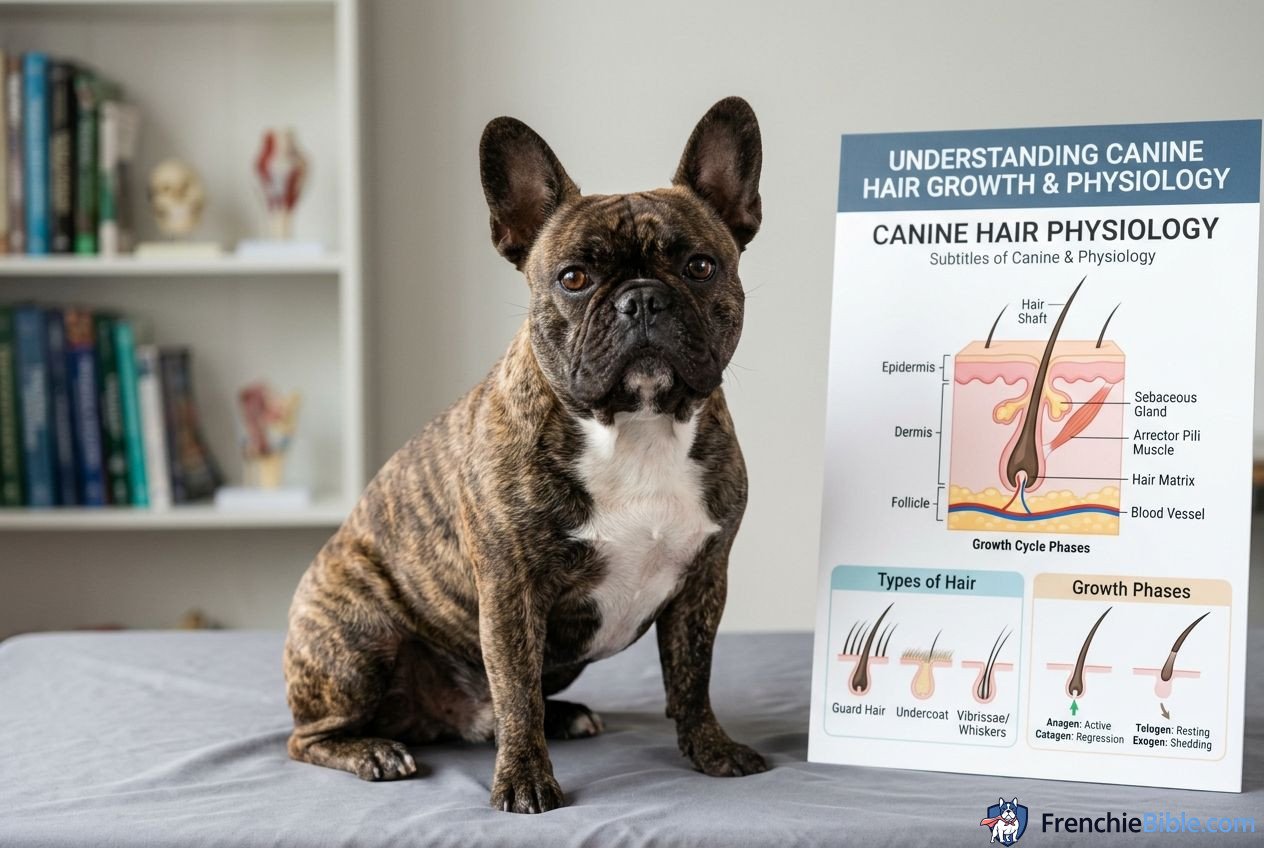
Before we can identify abnormal hair loss (alopecia), it is essential to understand how normal hair growth works. The canine hair follicle is a dynamic mini-organ that goes through a continuous, cyclical process.
The Phases of the Hair Growth Cycle
- Anagen Phase (Growth): This is the active phase where the hair follicle produces new hair. In breeds with continuously growing coats (like Poodles), this phase lasts a long time. In short-coated breeds like the French Bulldog, the anagen phase is relatively short.
- Catagen Phase (Transition): A brief transitional stage where hair growth stops, and the follicle shrinks, detaching from the blood supply.
- Telogen Phase (Resting): The hair is completely dormant and remains in the follicle while a new hair begins to form beneath it. French Bulldogs have coats that are predominantly in the telogen phase.
- Exogen Phase (Shedding): The old, dormant hair is shed to make room for the new anagen hair pushing up from below.
In a healthy French Bulldog, these cycles are influenced by genetics, hormones, nutrition, and environmental factors such as photoperiod (the amount of daylight) and ambient temperature.
Seasonal Shedding: A Natural Cycle
French Bulldogs have a single coat—meaning they lack the dense, fluffy undercoat found in breeds like Huskies or Golden Retrievers. However, despite having a short, single coat French Bulldogs do shed.
What Triggers Seasonal Shedding?
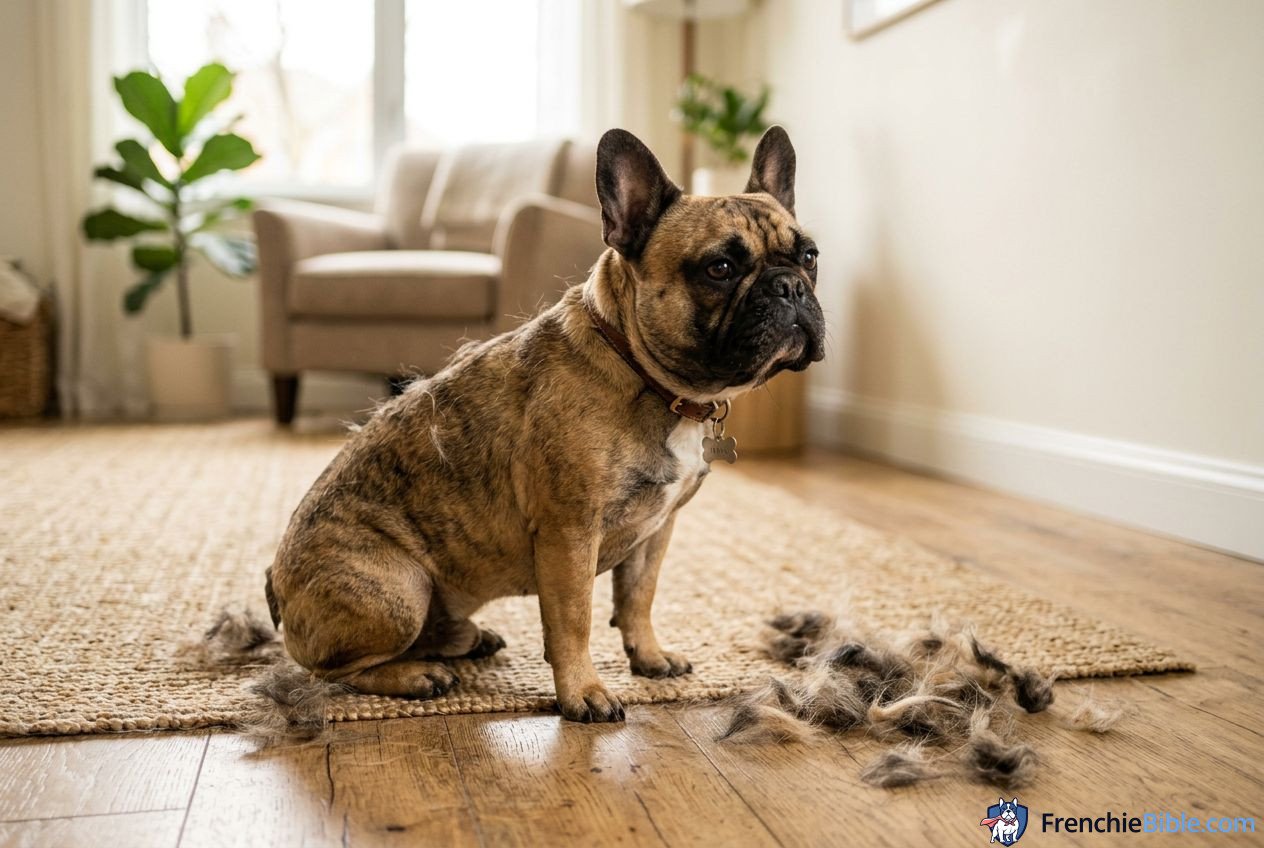
Seasonal shedding, often referred to as “blowing the coat,” is primarily triggered by changes in daylight and temperature. As the days get longer and warmer in the spring, a dog’s body signals the hair follicles to shed the thicker winter hairs. Conversely, in the autumn, as days shorten, they shed their lighter summer coat to make way for denser winter growth.
For Frenchies living indoors with artificial lighting and climate control, this natural rhythm can be disrupted, leading to a constant, low-level shedding year-round.
Recognizing Normal Shedding Patterns
Normal shedding should result in a diffuse, generalized loss of hair over the entire body. The coat should remain shiny, smooth, and fully cover the skin. Normal shedding does not result in bald patches, thinning on specific areas like the back, or changes in the skin’s texture.
If you run your hand down your Frenchie’s back during shedding season, you will undoubtedly pull away loose hairs, but the coat left behind should still look healthy and intact.
Optimal Grooming Strategies for Shedding Management
To manage seasonal shedding and maintain a healthy coat:
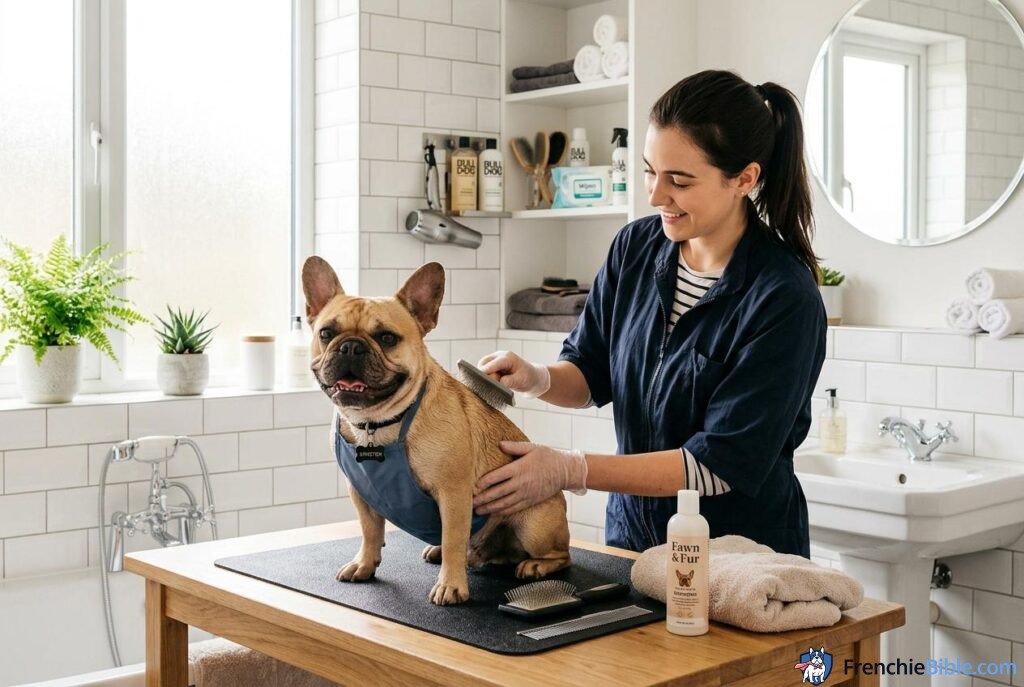
– Regular Brushing: Use a rubber curry brush (like a Kong ZoomGroom) or a soft bristle brush. Rubber brushes are excellent for short-coated breeds as they massage the skin, stimulate oil production, and grip loose hairs without scratching the skin.
– Bathing: Bathe your Frenchie every 4 to 8 weeks using a high-quality, hypoallergenic oatmeal or aloe-based dog shampoo. Over-bathing can strip the skin of essential oils, leading to dryness and compensatory over-shedding.
– Dietary Support: Ensure your dog’s diet is rich in Omega-3 and Omega-6 fatty acids, which fortify the skin barrier and promote hair follicle health.
Color Dilution Alopecia (CDA): The Genetic Cost of “Rare” Colors
If your French Bulldog’s hair is thinning predominantly on their back and they possess a “dilute” coat color (blue, lilac Isabella), you may be dealing with Color Dilution Alopecia (CDA).
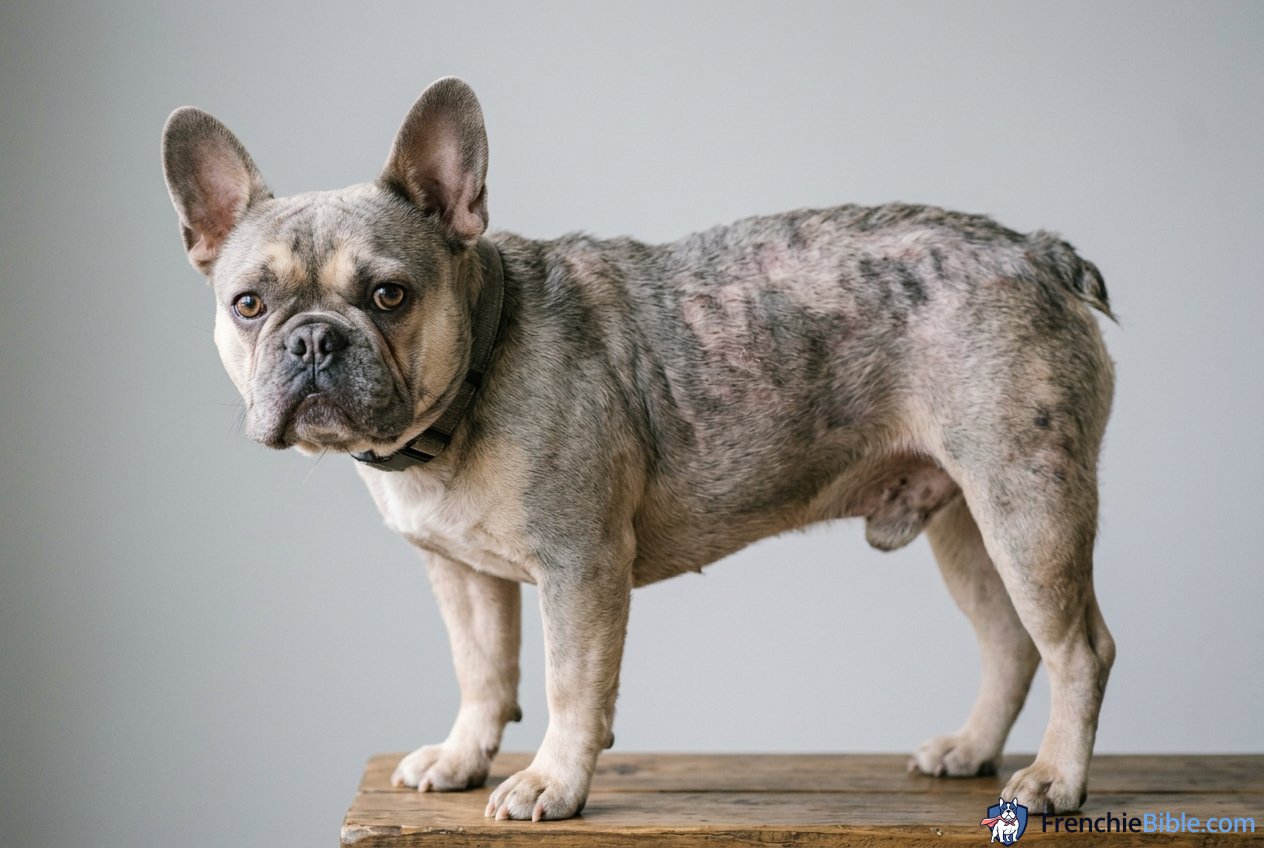
What is Color Dilution Alopecia?
CDA, historically known as “Blue Doberman Syndrome” or “Color Mutant Alopecia,” is an inherited, genetic dermatological condition characterized by progressive hair loss, dry skin, and chronic skin infections. It exclusively affects dogs with dilute coat colors.
The Science of Coat Color Genetics
To understand CDA, we must briefly delve into genetics. Dog coat color is determined by various genes. The gene responsible for the density of pigment (melanin) in the hair shaft is the Melanophilin (MLPH) gene, located at the D (Dilute) locus.
- A dog with a dominant ‘D’ allele has normal, dense pigmentation (e.g., black or chocolate).
- A dog with two recessive ‘d’ alleles (d/d) is a “dilute.” The MLPH gene mutation causes the melanin to clump unevenly within the hair shaft rather than distributing smoothly.
In a black dog, the d/d genotype dilutes the black pigment to a grayish-blue color (commonly called “blue” in Frenchies). In a chocolate/liver dog, it dilutes the color to a pale grayish-brown, often called “lilac” or “isabella.”
How Does the Mutation Cause Hair Loss?
The abnormal clumping of pigment granules within the hair shaft acts like microscopic rocks inside a delicate glass tube. These macromelanosomes weaken the structural integrity of the hair shaft. As the hair grows out of the follicle, it becomes exceedingly brittle and breaks off at or just below the skin’s surface.
Furthermore, the distorted hair shafts can damage the hair follicle itself, leading to follicular arrest (where the follicle simply stops producing hair) and making the pores highly susceptible to bacterial infections.
Symptoms and Progression of CDA
CDA is not present at birth. Dilute Frenchie puppies are born with normal, soft, fully covered coats. The symptoms typically begin to manifest between 6 months and 3 years of age.
Clinical Signs Include:
1. Dorsal Hair Thinning: Hair loss usually begins on the dorsal midline (the center of the back) and progresses downward over the flanks. The head, legs, and tail are often spared and retain their hair.
2. Poor Coat Quality: Before the hair falls out, the coat may lose its shine, becoming dry, dull, and harsh to the touch.
3. Folliculitis (Bacterial Infections): Because the broken hairs irritate the follicles, dogs with CDA are highly prone to secondary staphylococcal bacterial infections. You may see red bumps, pustules, and crusting on the back.
4. Scaling and Flaking: The skin often becomes dry and flaky (seborrhea sicca).
5. Hyperpigmentation: Over time, the exposed skin on the back may turn dark gray or black due to chronic inflammation and sun exposure.
It is crucial to note that CDA itself is not inherently itchy. However, if secondary bacterial or yeast infections set in, the dog will become intensely pruritic (itchy).
Seasonal Shedding vs. CDA: The Critical Differences
When evaluating your Frenchie’s back, here is how you and your veterinarian can differentiate between normal shedding and CDA:
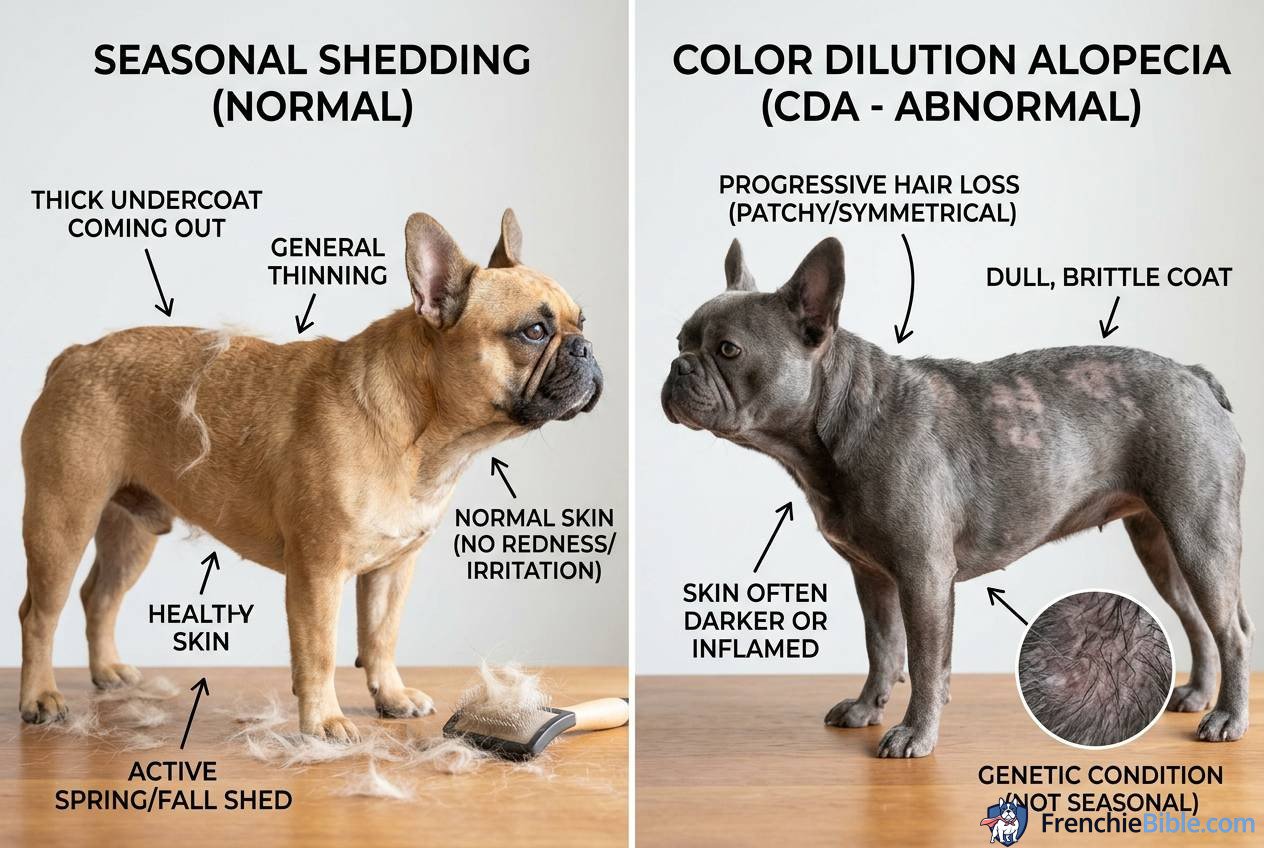
| Feature | Seasonal Shedding | Color Dilution Alopecia (CDA) |
|---|---|---|
| Coat Color | Can occur in any color. | Occurs only in dilute colors (blue, lilac, isabella). |
| Location of Loss | Diffuse, all over the body. | Concentrated on the back, trunk, and flanks. Head/legs usually spared. |
| Skin Appearance | Normal, healthy, supple skin. | Often dry, scaly, with red bumps (folliculitis) or crusts. |
| Hair Texture | Remaining hair is smooth and shiny. | Remaining hair is harsh, brittle, and dry. |
| Bald Patches | No actual baldness, just less density. | Distinct thinning, leading to partial or complete baldness on the back. |
| Age of Onset | Lifelong, seasonal rhythm. | Progressive, starting between 6 months and 3 years. |
Other Differential Diagnoses for Dorsal Hair Thinning
While CDA is the prime suspect for a blue Frenchie losing back hair, veterinary medicine requires a thorough process of elimination. Other conditions can mimic the symptoms of CDA.
1. Canine Flank Alopecia (Seasonal Flank Alopecia)
This is a localized hair loss condition that occurs on the flanks (sides) and sometimes the back. It is often triggered by changes in day length and is cyclical—the hair falls out in the winter or spring and regrows months later. The exposed skin often turns very dark. While Frenchies can get this, it is more common in Bulldogs and Boxers. Unlike CDA, the hair usually grows back, though the texture might be slightly different.
2. Endocrine (Hormonal) Alopecia
Hormonal imbalances can cause bilateral, symmetrical hair loss on the trunk and back, sparing the head and legs.
– Hypothyroidism: An underactive thyroid gland leads to a slowing of the metabolism, causing hair to remain in the resting (telogen) phase. The coat becomes thin, dull, and fails to regrow after clipping. Other signs include weight gain, lethargy, and cold intolerance.
– Hyperadrenocorticism (Cushing’s Disease): An overproduction of cortisol. This causes thin skin, symmetrical hair loss on the back, a pot-bellied appearance, increased thirst, and increased urination.
3. Allergic Dermatitis
French Bulldogs are notoriously prone to allergies, which can lead to severe hair loss.
– Flea Allergy Dermatitis (FAD): The classic pattern of FAD is intense itching, hair loss, and scabbing over the lower back, tail base, and hind thighs. Just one flea bite can set off a severe allergic reaction.
– Food and Environmental Allergies (Atopy): While these usually affect the paws, ears, belly, and face, chronic, severe itching can cause a dog to scratch and bite the hair off their back and flanks.
4. Parasitic and Fungal Infections
- Demodicosis (Demodex Mites): Demodex mites live in the hair follicles. An overgrowth causes patchy hair loss, redness, and scaling. It usually starts on the face and forelegs but can generalize to the back.
- Dermatophytosis (Ringworm): A fungal infection that causes circular patches of hair loss, crusting, and scaling.
5. Mechanical Alopecia
Friction from poorly fitted harnesses, tight collars, or the dog constantly rubbing its back under furniture can physically break the hair shafts, leading to localized thinning.
Diagnosing Hair Loss in French Bulldogs
Because the list of potential causes is extensive, a trip to the veterinarian—ideally a experienced dermatologist—is essential. Guessing and trying home remedies can prolong your dog’s discomfort and allow secondary infections to worsen.
The Veterinary Exam
The vet will take a detailed history: When did the hair loss start? Does the dog itch? What diet are they on? They will perform a physical exam, looking closely at the pattern of hair loss and the health of the underlying skin.
Non-Invasive Diagnostics
- Skin Scrapings: A dull scalpel blade is used to scrape the skin surface to look for microscopic Demodex or Sarcoptes mites under a microscope.
- Skin Cytology: The vet will press a piece of clear tape or a glass slide to the skin to collect cells, bacteria, and yeast. This helps diagnose secondary infections (folliculitis).
- Wood’s Lamp and Fungal Culture: A special UV light or a hair culture can rule out Ringworm.
Advanced Diagnostics for CDA
If the Frenchie is a dilute color and parasites/infections are ruled out, the vet will look toward diagnosing CDA.
1. Trichogram: The vet plucks several hairs and examines them under a microscope. In a dog with CDA, the vet will see massive, irregular clumps of melanin (macromelanosomes) distorting and fracturing the hair shaft cortex.
2. Skin Biopsy and Histopathology: This is the absolute gold standard for diagnosing CDA. A small punch biopsy of the skin is taken under local anesthesia. veterinary pathologist will examine the tissue and identify characteristic signs: follicular dysplasia, macromelanosomes in the hair bulb, and broken hairs inside the follicles.
3. Blood Panels and Thyroid Testing: A full chemistry panel, complete blood count (CBC), and a specialized thyroid panel (T4 Free T4 TSH) are run to definitively rule out hypothyroidism or Cushing’s disease.
Comprehensive Management and Treatment of CDA
If your Frenchie is diagnosed with Color Dilution Alopecia, it is critical to understand one hard truth: There is no cure for CDA. It is a genetic condition programmed into the dog’s DNA.
However CDA is strictly a cosmetic and dermatological issue. It does not affect the internal organs, and with meticulous management, a dog with CDA can live a long, happy, and otherwise healthy life. The goal of treatment is to manage symptoms, prevent secondary infections, and optimize skin health.
1. Managing Secondary Infections
Because the damaged hair follicles are prone to infection, your vet may prescribe:
– Systemic Antibiotics: For severe cases of bacterial folliculitis, a 3-to-4-week course of antibiotics (like your veterinarian may recommend a antibiotic medication (never use without veterinary guidance) or Simplicef) may be required.
– Antifungal Medications: If yeast (Malassezia) overgrowth is present.
2. Topical Therapy and Bathing Routines
Aggressive grooming can break the fragile hairs further. Dogs with CDA require gentle, specialized bathing.
– Keratolytic and Keratoplastic Shampoos: Shampoos containing sulfur and salicylic acid help to gently remove scales, flush out hair follicles, and normalize skin cell turnover.
– Antibacterial/Antifungal Shampoos: Products containing chlorhexidine (2% to 4%) or miconazole are used to keep bacterial and yeast populations on the skin in check.
– Moisturizing Conditioners and Spot-Ons: CDA skin is notoriously dry. Using ceramide-based leave-in conditioners or spot-on dermal lipid treatments (like your veterinarian may recommend a specific topical skin supplement) helps rebuild the skin barrier and lock in moisture.
– Avoid Abrasive Brushes: Do not use metal combs Furminators, or stiff bristle brushes on a dog with CDA. Use only ultra-soft silicone or rubber grooming mitts.
3. Nutritional Interventions
Diet plays a massive role in dermatological health.
– Essential Fatty Acids (EFAs): High doses of marine-based Omega-3 fatty acids (EPA and DHA) from fish oil or krill oil act as powerful natural anti-inflammatories and help improve the skin barrier.
– Vitamins and Antioxidants: Vitamin A Vitamin E, and Zinc are crucial for healthy epidermal turnover and immune function.
– Melatonin: Some veterinary dermatologists prescribe Melatonin. While it will not cure CDA Melatonin regulates hair growth cycles and has been shown to mildly improve hair regrowth and coat quality in some dogs with alopecia.
4. Environmental Protections
Hair serves to protect the skin from the elements. A dog with CDA lacks this natural armor.
– Sun Protection: The bald patches on a Frenchie’s back are highly susceptible to sunburn and, subsequently, squamous cell carcinoma (skin cancer). When outside during peak sun hours, apply a pet-safe, titanium dioxide-based sunscreen to exposed areas, or dress your Frenchie in a lightweight UV-protective doggy t-shirt.
– Cold Protection: In the winter Frenchies with thinning hair will get cold much faster. Provide warm fleece sweaters and cozy bedding.
– Soft Bedding: Ensure your dog has orthopedically supportive, soft beds to prevent calluses and friction sores on their exposed skin.
The Breeding Perspective: Ethics and Coat Colors
As a breeding expert I must address the elephant in the room regarding Color Dilution Alopecia: It is entirely preventable through responsible breeding.
The Controversy of “Fad” Colors
The standard coat colors for French Bulldogs, as recognized by the American Kennel Club (AKC) and the French Bulldog Club of America (FBDCA), are brindle, fawn, white, and brindle and white.
Colors such as blue, lilac, isabella, merle, and black-and-tan are considered “disqualifying” or “fad” colors. Historically, these colors were bred out of the lines precisely because early breeders recognized the link between dilute colors and skin/health problems.
In recent years, the lucrative market for “rare” French Bulldogs has driven backyard breeders and puppy mills to specifically select for the d/d dilute mutation. This hyper-focus on color often ignores conformation, temperament, and, most importantly, health.
Responsible Breeding Practices
A reputable, ethical breeder prioritizes the health and longevity of the breed above all else.
– Health Testing: Ethical breeders perform extensive health testing, including OFA (Orthopedic Foundation for Animals) certifications for hips, patellas, heart, and eyes, as well as genetic panels.
– Avoiding Dilute-to-Dilute Breedings: Responsible breeders do not purposefully breed two dilute dogs together knowing the high risk of CDA and other genetic anomalies.
– Transparency: If you are purchasing a puppy, the breeder should be transparent about the genetic risks associated with specific coat colors.
What Buyers Should Know
If you are in the market for a French Bulldog puppy and are drawn to the beautiful blue or lilac coats, you must go in with your eyes open. Be prepared for the financial and emotional commitment of managing a lifelong dermatological condition. If you want a dog with a guaranteed healthy coat, stick to standard, non-dilute colors from a preservation breeder.
Conclusion
Discovering that your French Bulldog’s back hair is thinning can be alarming. While it might be a simple case of seasonal shedding, a severe flea allergy, or an endocrine disorder, the presence of a dilute coat color (blue, lilac, isabella) heavily points toward Color Dilution Alopecia (CDA).
Understanding that CDA is a genetic, incurable condition is the first step. The second is partnering with a skilled veterinarian to implement a rigorous management plan focused on skin hydration, infection control, and environmental protection. With the right care, premium nutrition, and lots of love, a Frenchie with a thin coat can still live a completely vibrant, pain-free, and joyful life.
Frequently Asked Questions (FAQ)
1. Will the hair on my blue Frenchie’s back ever grow back?
If the diagnosis is Color Dilution Alopecia (CDA), the hair loss is generally permanent and progressive. The damaged follicles eventually stop producing hair. Management focuses on protecting the skin and keeping the remaining coat as healthy as possible, rather than achieving full regrowth.
2. Is CDA contagious to my other dogs or humans?
No. Color Dilution Alopecia is a genetic condition caused by an inherited DNA mutation. It is not caused by bacteria, fungi, or parasites, and cannot be transmitted to other pets or humans.
3. Can I use human shampoo on my Frenchie with thinning hair?
Absolutely not. Human skin has a different pH level (more acidic) than canine skin (more neutral). Using human shampoo on a dog, especially one with a compromised skin barrier like in CDA, will cause severe drying, irritation, and exacerbate hair loss. Always use veterinary-approved, hypoallergenic dog shampoos.
4. My Frenchie is fawn-colored and losing hair on the back. Could it be CDA?
While CDA is most famous in blue and lilac dogs, fawn is technically a dilute of red/yellow pigment. True CDA in standard fawns is exceptionally rare. If a standard fawn Frenchie is losing hair symmetrically on the back, veterinarians will strongly suspect endocrine issues like Hypothyroidism or Cushing’s disease, or Canine Flank Alopecia, rather than CDA.
5. At what age does CDA usually start?
Dilute puppies are born with normal coats. The onset of CDA symptoms usually begins when the dog is between 6 months and 3 years old. The hair will gradually become dull and brittle before it begins to fall out.
6. Are there any dietary supplements that cure CDA?
There is no cure for CDA. However, high-quality Omega-3 and Omega-6 fatty acid supplements (like fish oil), along with Vitamin E and Zinc, are highly recommended. They help reduce skin inflammation, support the skin barrier, and improve the quality of the remaining hair.
7. Should I put clothes on my hairless Frenchie?
Yes! Because they lack a protective coat, the exposed skin on their back is vulnerable to sunburn, scratches, and cold. UV-protective lightweight shirts are great for summer, and warm fleece sweaters are essential in the winter.
8. Does shaving a Frenchie make the hair grow back thicker?
No. You should never shave a French Bulldog. Shaving does not alter the hair follicle or the genetic makeup of the coat. In dogs with CDA, shaving can actually cause further trauma to the fragile follicles and may result in the hair never growing back at all (post-clipping alopecia).
9. How often should I bathe my Frenchie with CDA?
This depends on the presence of secondary infections. If the skin is infected, your vet may recommend medicated baths 1-2 times a week. For maintenance of uninfected, dry CDA skin, bathing every 2-4 weeks with a moisturizing ceramide shampoo and a leave-in conditioner is usually ideal. Always follow your dermatologist’s specific recommendations.
10. Can stress cause my French Bulldog to lose hair?
Yes, severe acute or chronic stress can cause a condition called “telogen effluvium,” where a large portion of hair follicles prematurely enter the resting (telogen) phase and then shed heavily all at once. However, this usually causes generalized thinning all over the body, not localized progressive baldness on the back like CDA.
Disclaimer: We are not veterinarians and do not hold veterinary medical licenses. The information provided in this article is based on years of breeding and daily care experience and is for educational purposes only. It should not replace professional veterinary advice. Always consult with a licensed veterinarian if you have concerns about your French Bulldog’s health or before starting any new treatment.