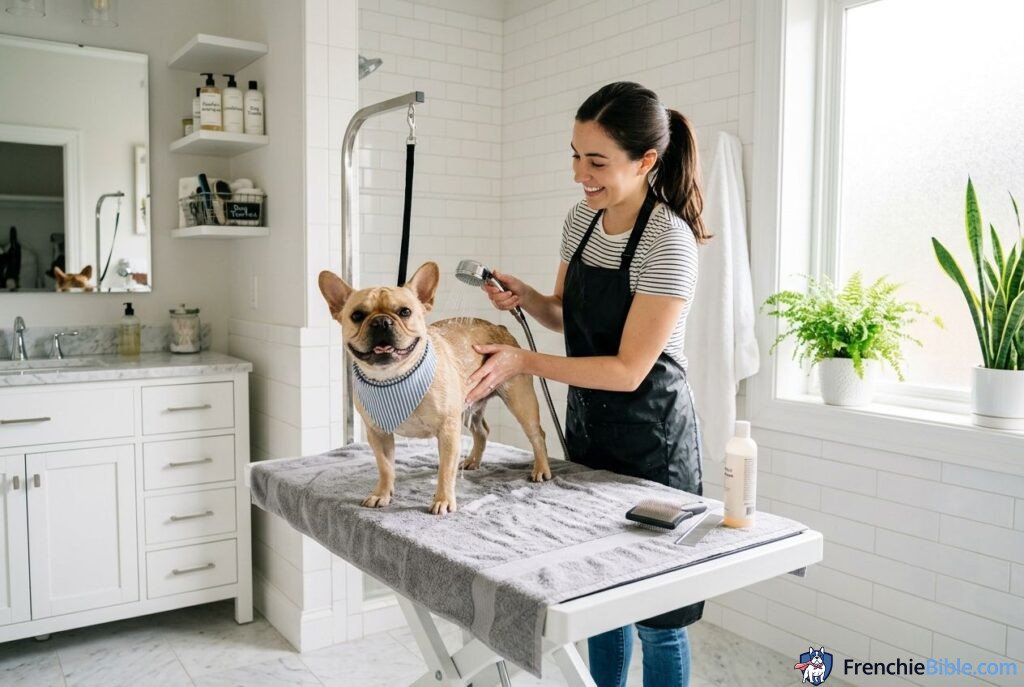
as a French Bulldog expert and breeder focusing on brachycephalic breeds and a passionate French Bulldog breeding expert, one of the most common questions I receive from concerned owners during the late autumn and winter months is: “Do French Bulldogs get cold easily?” The short, unequivocal answer is yes. French Bulldogs are incredibly susceptible to cold temperatures, and their unique anatomy requires specific, scientifically-backed temperature management protocols to keep them safe, comfortable, and healthy throughout the winter.
Many first-time Frenchie owners underestimate the impact of dropping temperatures on their dogs. Unlike double-coated breeds such as Huskies or Golden Retrievers French Bulldogs lack the genetic and physical traits necessary to withstand cold environments. Their bodies simply are not designed for it.
Related Reading: Training & Behavior | Frenchie Puppy Guide | Best Food for Frenchies
In this comprehensive veterinary guide, we will explore the precise scientific reasons why French Bulldogs struggle with cold weather. We will break down specific temperature thresholds, recognize the early warning signs of hypothermia, provide a scientific temperature standard for when to dress your Frenchie in sweaters or coats, and offer expert advice on how to select the perfect winter gear tailored to their unique, robust physique.
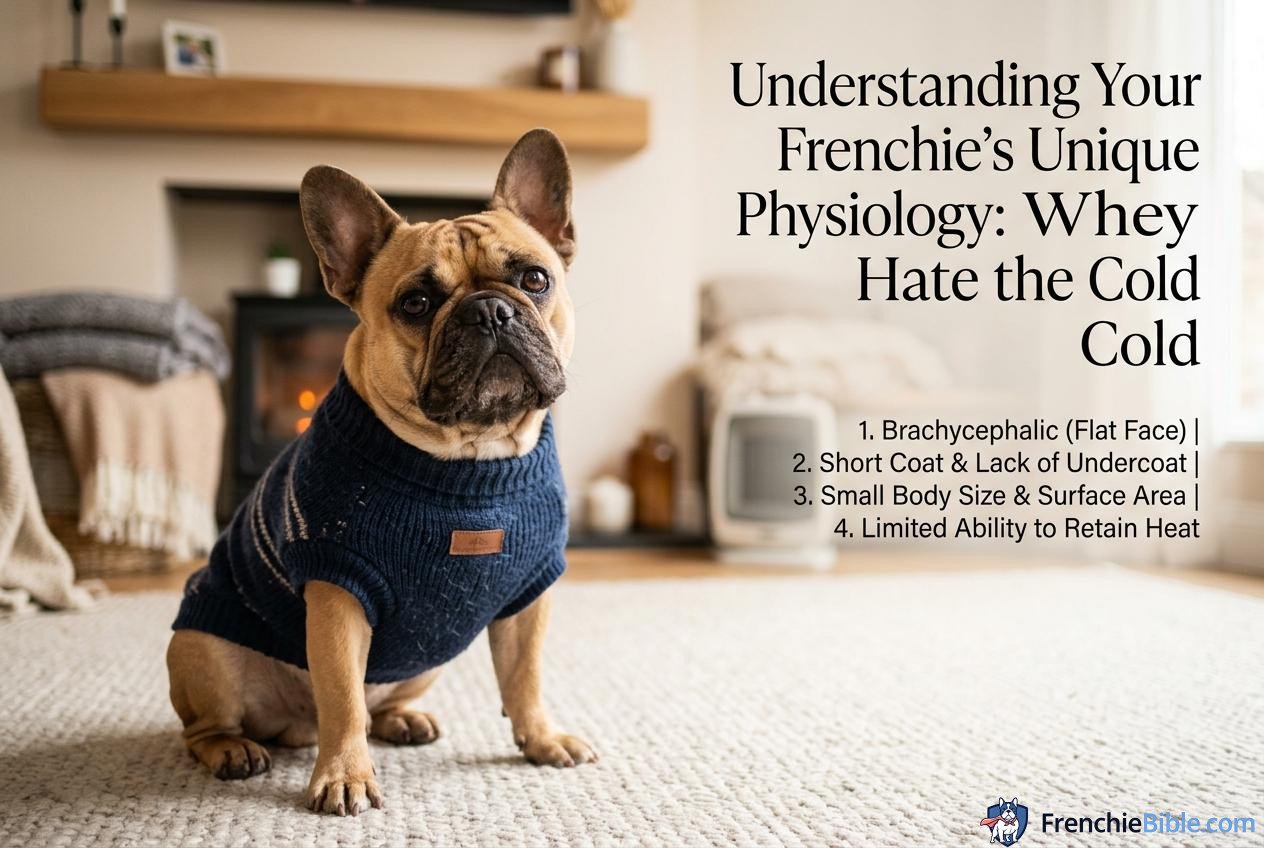
Understanding Your Frenchie’s Unique Physiology: Why They Hate the Cold
To understand why your Frenchie shivers when the temperature drops, we must look at their anatomy and physiology. as a French Bulldog expert and breeder I constantly remind clients that a Frenchie’s body is a marvel of selective breeding for companionship, but it is fundamentally flawed when it comes to thermoregulation (the ability to regulate body temperature).
1. The Short Single-Layered Coat
Unlike many other canine breeds that have a dense undercoat designed to trap heat and a longer outer coat to repel moisture, the French Bulldog possesses a single, short, and relatively fine coat. This type of fur offers almost zero insulation. In human terms, taking a Frenchie out in 40°F (4°C) weather without a coat is equivalent to you walking outside in a light cotton t-shirt. Heat escapes their bodies rapidly through the skin, leading to a quick drop in core body temperature.
2. Brachycephalic Airway Syndrome (BOAS) and Thermoregulation
You are likely aware that Frenchies are a brachycephalic (flat-faced) breed. While this is primarily discussed in the context of heatstroke, it is equally relevant to cold weather. Dogs do not sweat like humans; they regulate their body temperature primarily through panting. The elongated soft palate, stenotic nares (narrowed nostrils), and hypoplastic trachea (narrow windpipe) typical of brachycephalic dogs make breathing inherently inefficient.
In cold weather, a dog’s body must work harder to warm the frigid air before it reaches the lungs. Because a Frenchie’s nasal passages are extremely short, the air entering their respiratory system remains cold, chilling them from the inside out. Furthermore, the physical exertion required just to breathe efficiently in cold air burns calories rapidly, depleting the energy reserves they need to generate internal body heat.
3. Low Body Fat Percentage and High Surface Area-to-Mass Ratio
Despite their compact, muscular appearance French Bulldogs do not carry a thick layer of insulating subcutaneous fat like water dogs or Arctic breeds. Their broad chests and relatively small size mean they have a high surface area-to-mass ratio. This anatomical trait results in heat dissipating from their bodies at a significantly faster rate than it does in larger, more well-proportioned breeds. Their exposed bellies, which have very thin hair, are practically bare and act as a massive heat sink, drawing cold up from the snowy or icy ground directly into their internal organs.
4. Close Proximity to the Ground
Standing at only 11 to 13 inches tall, a Frenchie’s core is constantly close to the freezing pavement, snow, or damp earth. The cold radiating from the ground affects them much more intensely than it does a taller dog. Their short legs offer no buffer between their vital organs and the frozen terrain.
What Temperature is Too Cold for a French Bulldog? The Scientific Breakdown
as a French Bulldog expert and breeder I rely on specific temperature thresholds to advise clients on outdoor exposure times and clothing requirements. While individual dogs vary, the following temperature zones serve as a highly reliable, science-based guideline for French Bulldog winter care.
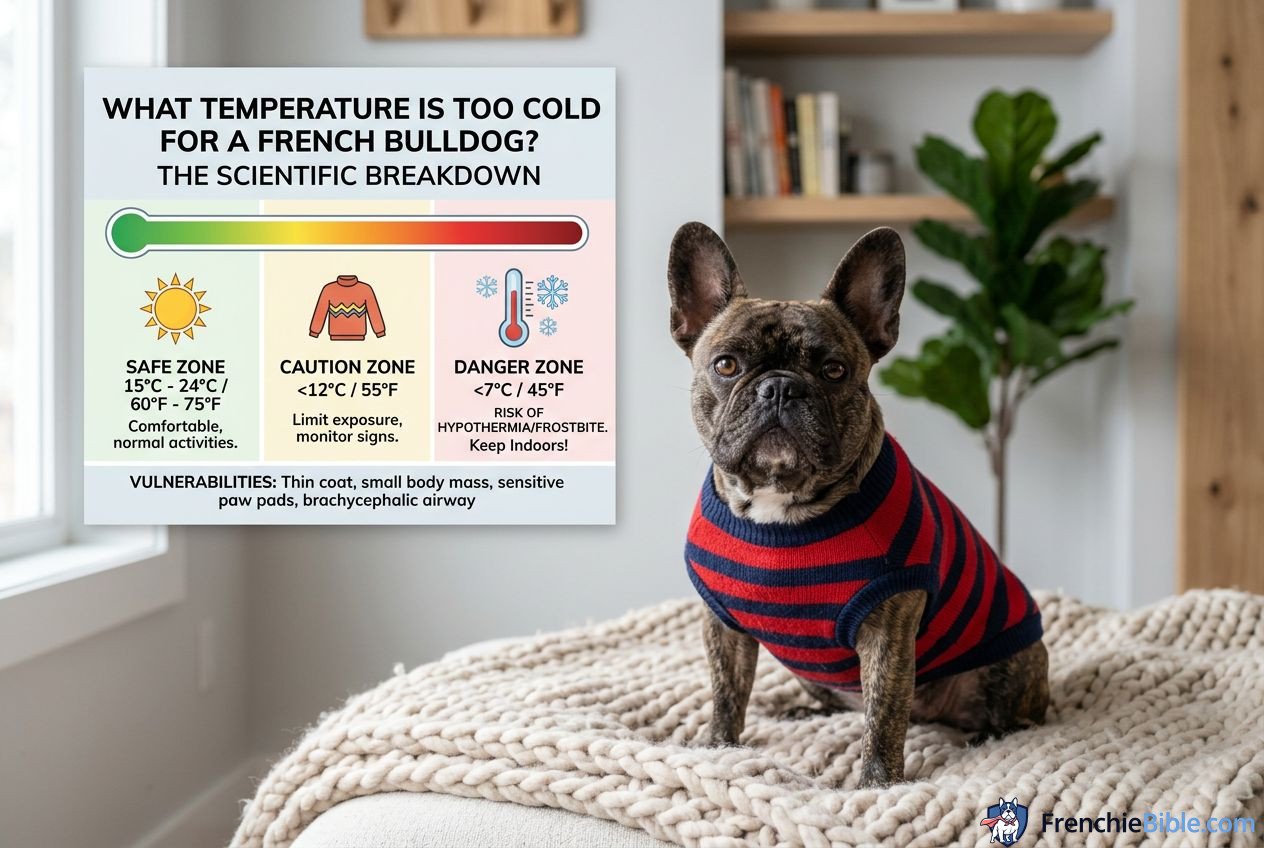
The “Green Zone”: 60°F to 75°F (15°C to 24°C)
This is the optimal temperature range for a healthy adult French Bulldog. In this zone, they can comfortably regulate their body temperature without the need for additional clothing.
- Veterinary Recommendation: No clothing required for adult dogs. Puppies under 6 months or senior dogs with arthritis might enjoy a very light cotton t-shirt indoors if the house is kept at the lower end of this spectrum.
- Activity Level: Safe for normal, unrestricted outdoor play and walks.
The “Yellow Zone”: 45°F to 59°F (7°C to 14°C)
At this stage, the air is crisp, and most Frenchies will begin to feel the chill, especially if there is a breeze or dampness in the air.
- Veterinary Recommendation: A light fleece, a well-fitted sweater, or a windbreaker is highly recommended for outdoor excursions. If the dog is moving briskly, they may generate enough heat to stay warm without clothing, but the moment they stop moving, they will start to lose heat quickly.
- Activity Level: Normal walks are generally safe, but observe your dog closely. If they are shivering or reluctant to walk, cut the trip short. Avoid leaving them outside inactive (e.g., sitting on a patio) for more than 15-20 minutes.
The “Orange Zone”: 32°F to 44°F (0°C to 6°C)
This zone is definitively cold, and the risks of prolonged exposure increase significantly.
- Veterinary Recommendation: A substantial, insulated winter coat is absolutely mandatory. The coat should cover the chest and belly to prevent heat loss from the core. Consider a snood to protect the ears and neck.
- Activity Level: Limit outdoor time to 15-20 minutes maximum, primarily for potty breaks and brief exercise. Do not allow your Frenchie to lay down on the cold ground.
The “Red Danger Zone”: Below 32°F (0°C)
Temperatures below freezing pose a severe, immediate risk to your French Bulldog’s health. The threat of hypothermia and frostbite becomes very real.
- Veterinary Recommendation: A heavy-duty, waterproof, and insulated winter parka is non-negotiable. Booties are highly recommended to protect paw pads from ice, snow, and toxic chemical de-icers.
- Activity Level: Outdoor exposure must be strictly limited to 5-10 minutes tops—just enough time to relieve themselves. Switch to indoor enrichment and exercise to burn off energy.
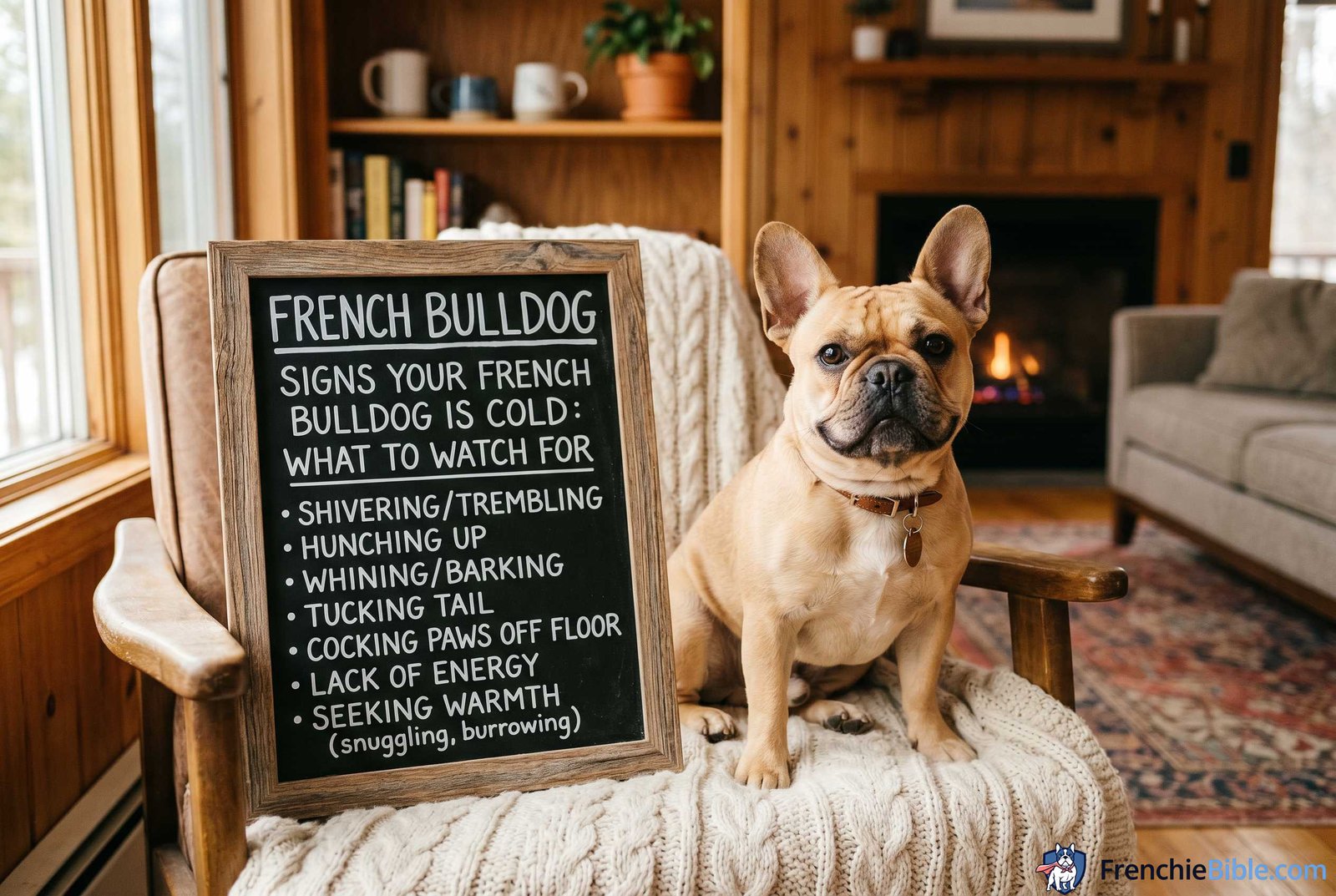
Signs Your French Bulldog is Cold: What to Watch For
Dogs cannot tell us when they are freezing, so we must rely on our observational skills. As a Frenchie owner, you must be hyper-vigilant during the winter months. Recognizing the early signs of cold stress can prevent a minor discomfort from escalating into a life-threatening veterinary emergency.
Mild to Moderate Physical Symptoms
- Shivering and Trembling: This is the most obvious sign. Shivering is an involuntary muscle contraction designed to generate body heat. If your Frenchie is vibrating, they are too cold.
- Cold Extremities: Feel the tips of their ears, their paws, and the end of their tail. If these feel icy to the touch, their body is restricting blood flow to the extremities to keep their core organs warm.
- Tucked Tail and Hunched Posture: A cold dog will try to make themselves as small as possible to minimize surface area and conserve heat. They will tuck their tail firmly between their legs and hunch their back.
- Whining or Barking: Unusual vocalization during a walk is often a plea to go back inside.
Behavioral Changes
- Reluctance to Walk: If your normally enthusiastic walker suddenly hits the brakes, refuses to move forward, or tries to pull you back toward the house, listen to them.
- Lifting Paws: If your dog repeatedly lifts one paw or alternating paws off the ground, the pavement or snow is too cold, causing pain to their pads.
- Seeking Warmth: Indoors, a cold Frenchie will aggressively seek out heat sources—burrowing under blankets, laying on top of heating vents, or demanding to sit in your lap.
Veterinary Red Flags: Hypothermia and Frostbite
If mild cold stress is ignored, it can rapidly progress to clinical hypothermia, a condition where the core body temperature drops below 99°F (37.2°C).
- Signs of Hypothermia: Severe lethargy, clumsiness, lack of coordination (ataxia), fixed and dilated pupils, slow heart rate, and pale or grey gums. Action required: Wrap the dog in warm (not hot) blankets and immediately transport them to an emergency veterinary clinic.
- Signs of Frostbite: Frostbite typically affects the ears, tail tip, and paw pads. The tissue may appear pale, grey, or blue, and will be exceptionally cold and brittle to the touch. As the tissue thaws, it becomes red, swollen, and excruciatingly painful. Action required: Do not rub the affected area. Apply warm (never hot) water compresses and seek immediate veterinary care to prevent tissue necrosis (death).
Scientific Temperature Standards for French Bulldog Clothing
One of the most crucial aspects of my role as an and breed expert is providing actionable, clear guidelines. The “when to wear what” debate is finally settled with the following scientific temperature-based clothing protocol.
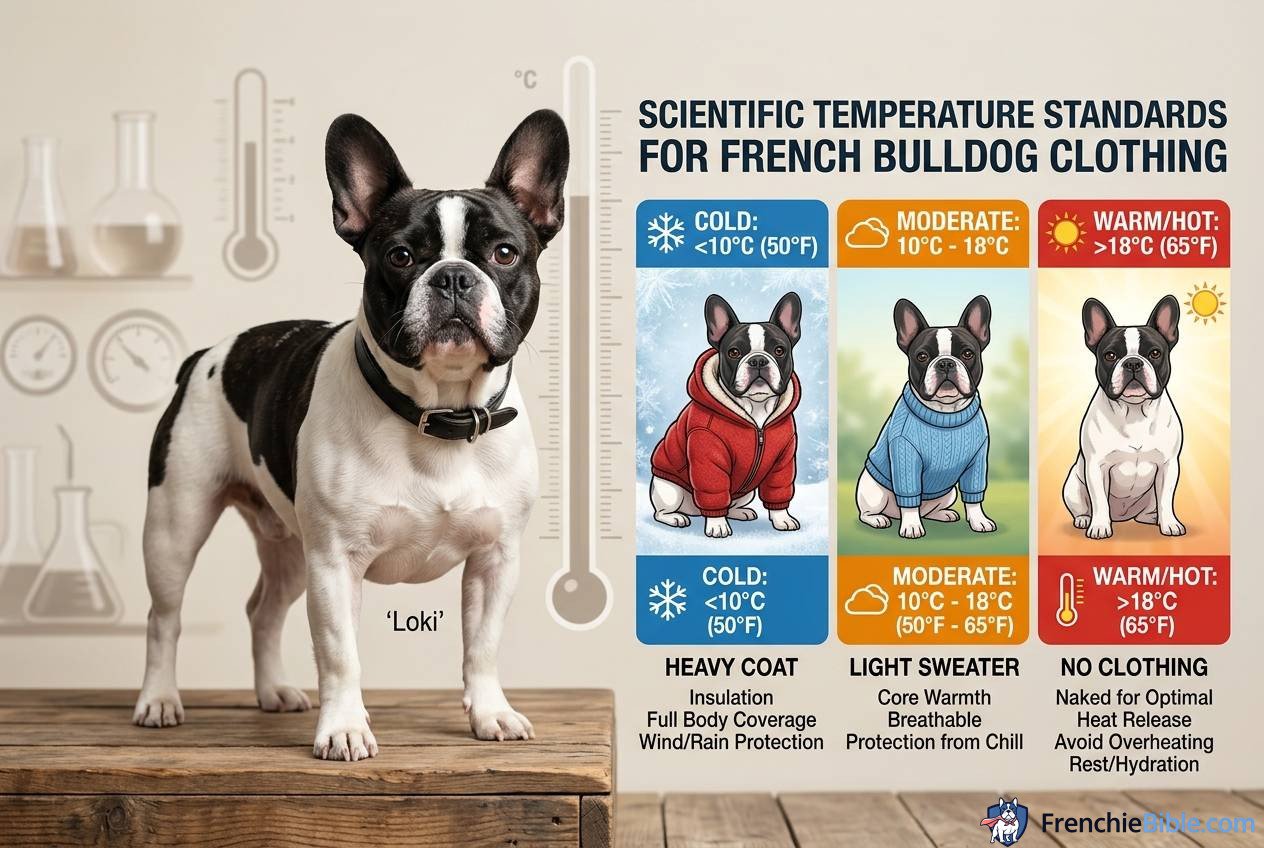
1. The Light Sweater Phase (45°F to 55°F / 7°C to 12°C)
- What to use: A knitted wool, cotton-blend, or light fleece sweater.
- Purpose: To provide a slight insulating layer that traps body heat without causing the dog to overheat during brisk walks.
- Fit requirements: It must fit snugly against the body. If it is too loose, cold air will flow underneath, rendering it useless.
2. The Mid-Weight Jacket Phase (35°F to 44°F / 1°C to 6°C)
- What to use: An insulated, lightly padded jacket, preferably with a wind-resistant outer layer.
- Purpose: To block biting winds and provide a robust layer of synthetic or natural insulation.
- Fit requirements: Must cover the back completely from the base of the neck to the base of the tail, and critically, it must cover the chest and the delicate, hairless underbelly.
3. The Heavy Parka Phase (Below 35°F / Below 1°C)
- What to use: A thick, waterproof winter coat with a fleece lining and a high collar or snood.
- Purpose: Absolute protection against freezing temperatures, snow, and sleet.
- Fit requirements: Must be adjustable to accommodate the Frenchie’s broad chest without restricting shoulder movement. It should ideally have reflective strips for visibility during the dark winter months.
A Note on Indoor Clothing
Do Frenchies need to wear clothes indoors? If you keep your thermostat set low (below 68°F / 20°C) to save on heating costs, your Frenchie will likely benefit from a light, breathable cotton t-shirt or pajamas. However, you must monitor them carefully to ensure they do not overheat. Never leave a heavy winter coat on a dog indoors.
How to Choose the Perfect Winter Clothes for Your French Bulldog
Buying clothes for a French Bulldog is notoriously difficult. Their unique “potato” physique—a massive, deep chest, broad shoulders, a thick neck, and a narrow waist—means that standard dog clothing rarely fits correctly. As a breeding expert I have seen too many Frenchies suffering in poorly fitting coats.
1. Prioritize Chest Girth over Back Length
When measuring your Frenchie, the chest girth (the widest part of their ribcage, usually right behind the front legs) is the single most important measurement. A coat that fits their back length but is too tight across the chest will restrict their breathing, exacerbating their BOAS symptoms and causing immense distress. Always size up if you are between sizes to accommodate their chest.
2. Look for Adjustable Features
Because of their odd proportions, coats with adjustable velcro straps or multiple snap closures around the chest and neck are ideal. This allows you to customize the fit, ensuring it is snug enough to keep cold air out but loose enough to allow for deep, comfortable breaths.
3. Essential Design Features for Frenchies
- The “V” Neck or Wide Neck: Frenchies have thick necks. Avoid clothing with tight turtlenecks that can compress their trachea and restrict airflow. Look for wide neck openings.
- Harness Compatibility: French Bulldogs should always be walked on a harness, never a collar, to protect their fragile airways. Ensure the winter coat has a built-in D-ring or a pre-cut harness hole on the back so you can safely attach a leash.
- Underbelly Protection: This is critical. A coat that only covers the back is practically useless for a Frenchie. The cold ground radiates freezing air straight onto their bare belly. The coat must have a broad, insulated chest and belly panel.
- Sleeve Length: Avoid coats with long, restrictive sleeves. Frenchies have short, stubby legs. Long sleeves will cause them to trip, restrict their natural gait, and cause painful chafing in their armpits. Go for sleeveless vest-style coats.
4. Material Matters
- Fleece: Excellent for indoor wear or dry, brisk autumn days. It is soft, lightweight, and insulating. However, fleece acts like a sponge in wet snow or rain, making the dog colder.
- Waterproof Nylon/Polyester Outer Shells: Mandatory for snowy or rainy days. The outer shell blocks wind and precipitation, while the inner lining (usually fleece) provides warmth.
- Wool: Excellent natural insulator, but can be itchy. Ensure any wool sweaters have a soft inner lining to protect your Frenchie’s sensitive skin.
Winter Paw Care and Booties: Essential or Optional?
as a French Bulldog expert and breeder I treat numerous paw injuries during the winter. While coats protect the core, the paws are the primary point of contact with the freezing environment.
The Dangers of Winter Terrain
For a French Bulldog, winter pavements are a minefield.
1. Ice and Snow: Snow can pack tightly between their toes, forming painful ice balls that make walking agonizing.
2. Chemical De-icers: Rock salt and chemical ice melts are highly toxic and corrosive. They cause severe chemical burns to the paw pads. Furthermore, if the dog licks their paws after a walk, they ingest these toxic chemicals, leading to severe gastrointestinal distress and potential systemic toxicity.
Are Booties Necessary?
Yes. If you live in an area that receives snow and where pavements are salted, dog booties are not a luxury; they are a medical necessity.
How to Train Your Frenchie to Wear Boots
Frenchies hate having their feet touched, and they initially despise wearing boots. They will likely do the “high-step dance” or refuse to move.
1. Start Indoors: Put the boots on for 1 minute inside the house while feeding them high-value treats (like boiled chicken or a lick mat with peanut butter).
2. Gradual Increase: Slowly increase the time to 5, then 10 minutes.
3. Add Movement: Encourage them to walk across the living room for a treat.
4. Make it Routine: Put the boots on right before you go out the door, so they associate the boots with the excitement of a walk.
The Alternative: Paw Balms
If your Frenchie absolutely refuses to wear boots, a high-quality paw wax or balm is the next best thing. Apply a thick layer of veterinary-approved paw wax (like Musher’s Secret) to the pads before the walk. This creates a semi-permeable barrier against salt and prevents snow from accumulating between the toes. Crucial step: You must wipe their paws thoroughly with a damp, warm cloth immediately upon returning home to remove all salt and chemicals.
Indoor Winter Care: Keeping Your Frenchie Cozy at Home
Winter care doesn’t stop when you come inside. Ensuring a warm, safe indoor environment is vital for your Frenchie’s overall well-being.
1. Strategic Bedding
Elevate your Frenchie’s bed off the floor, especially if you have hardwood or tile flooring, which can be freezing. A raised cot-style bed with a thick, orthopedic mattress on top is ideal. Provide plenty of plush, fleece blankets. Frenchies love to “nest” and burrow under blankets to trap their body heat. Consider a “cave bed” or hooded bed that allows them to enclose themselves completely.
2. Heating Pad Safety
Many owners use heating pads, but as a French Bulldog expert and breeder I urge caution. French Bulldogs can easily fall into a deep sleep, and if a heating pad is too hot, they can suffer severe thermal burns. If you use a heating pad, it must be specifically designed for pets, featuring chew-resistant cords and a strict low-temperature safety thermostat. Never use human heating pads.
3. Managing Indoor Humidity and Dry Skin
Central heating systems dry out the air inside your home, which inevitably dries out your French Bulldog’s skin. Because they are prone to allergies and skin dermatitis, dry winter air can lead to severe itching, flaking, and excessive scratching.
- Use a Humidifier: Run a cool-mist humidifier in the room where your Frenchie sleeps.
- Skin Supplements: Consult your vet about adding Omega-3 fatty acid supplements (like fish oil) to their diet during the winter to promote a healthy skin barrier.
- Reduce Bathing: Bathe your Frenchie less frequently in the winter, as frequent washing strips the skin of its natural oils. When you do bathe them, use a moisturizing oatmeal-based shampoo.
Frequently Asked Questions (FAQ)
Q1: Can a French Bulldog sleep outside in a dog house during the winter?
A: Absolutely not. Under no circumstances should a French Bulldog ever be housed outdoors, let alone in winter. They are an indoor companion breed. Leaving a Frenchie outside in the cold is incredibly dangerous and constitutes severe neglect, quickly leading to fatal hypothermia.
Q2: Do Frenchies need to wear clothes to sleep at night?
A: This depends entirely on your home’s temperature. If your bedroom drops below 65°F (18°C) at night, a light cotton pajama suit can keep them comfortable. Ensure the clothing does not have any strings, buttons, or tight neckbands that could pose a choking or strangulation hazard while you sleep.
Q3: My Frenchie hates wearing coats and freezes up when I put one on. What should I do?
A: This is a common behavioral response to feeling restricted. Start with very lightweight, thin clothing, like a basic t-shirt. Use massive positive reinforcement—treats, praise, and immediate outdoor play—the second the shirt goes on. Gradually transition to thicker coats over a few weeks. Ensure the coat is not too tight across their chest, as discomfort is the primary reason they refuse to move.
Q4: Does my French Bulldog need more calories in the winter?
A: Generally, no. While dogs burn more calories trying to stay warm Frenchies tend to be significantly less active during the winter because their outdoor walks are drastically shortened. Feeding them more calories while their activity drops is a recipe for canine obesity, which severely worsens BOAS and arthritis. Maintain their normal diet unless instructed otherwise by your veterinarian.
Q5: How can I exercise my Frenchie if it’s too cold to walk outside?
A: Indoor enrichment is critical during the winter months. Engage them in games of tug-of-war, hide and seek with high-value treats, indoor fetch (if space allows on carpeted floors), and use puzzle toys like Kongs or snuffle mats to provide mental stimulation, which tires them out just as much as a physical walk.
Conclusion: Proactive Protection is Key
as a French Bulldog expert and breeder I cannot stress enough how vulnerable this incredible breed is to cold weather. Their short hair, brachycephalic airway, and compact build make them entirely dependent on you for their thermal regulation. By understanding the scientific temperature standards, investing in high-quality, properly fitted winter gear, and remaining vigilant for signs of cold stress, you can ensure that your beloved Frenchie stays safe, warm, and happy all winter long. Do not wait for your dog to start shivering—be proactive, dress them appropriately, and protect their paws. Your Frenchie’s health and comfort depend on it.
Disclaimer: We are not veterinarians and do not hold veterinary medical licenses. The information provided in this article is based on years of breeding and daily care experience and is for educational purposes only. It should not replace professional veterinary advice. Always consult with a licensed veterinarian if you have concerns about your French Bulldog’s health or before starting any new treatment.