Introduction: The Hidden Dangers Residing in Your Frenchie’s Adorable Folds
The French Bulldog, affectionately known as the “Frenchie,” is undeniably one of the most charming, affectionate, and universally recognizable canine breeds in the world today. With their signature bat-like ears, compact muscular bodies, and distinctively squished, intensely wrinkled faces, they have rapidly climbed the ranks to become the most popular dog breed in many countries. However, as a French Bulldog expert and breeder and a professional breeding expert, I cannot stress this crucial fact enough: those adorable facial wrinkles and the quintessential “smushed” nose come with a significant biological and anatomical cost.
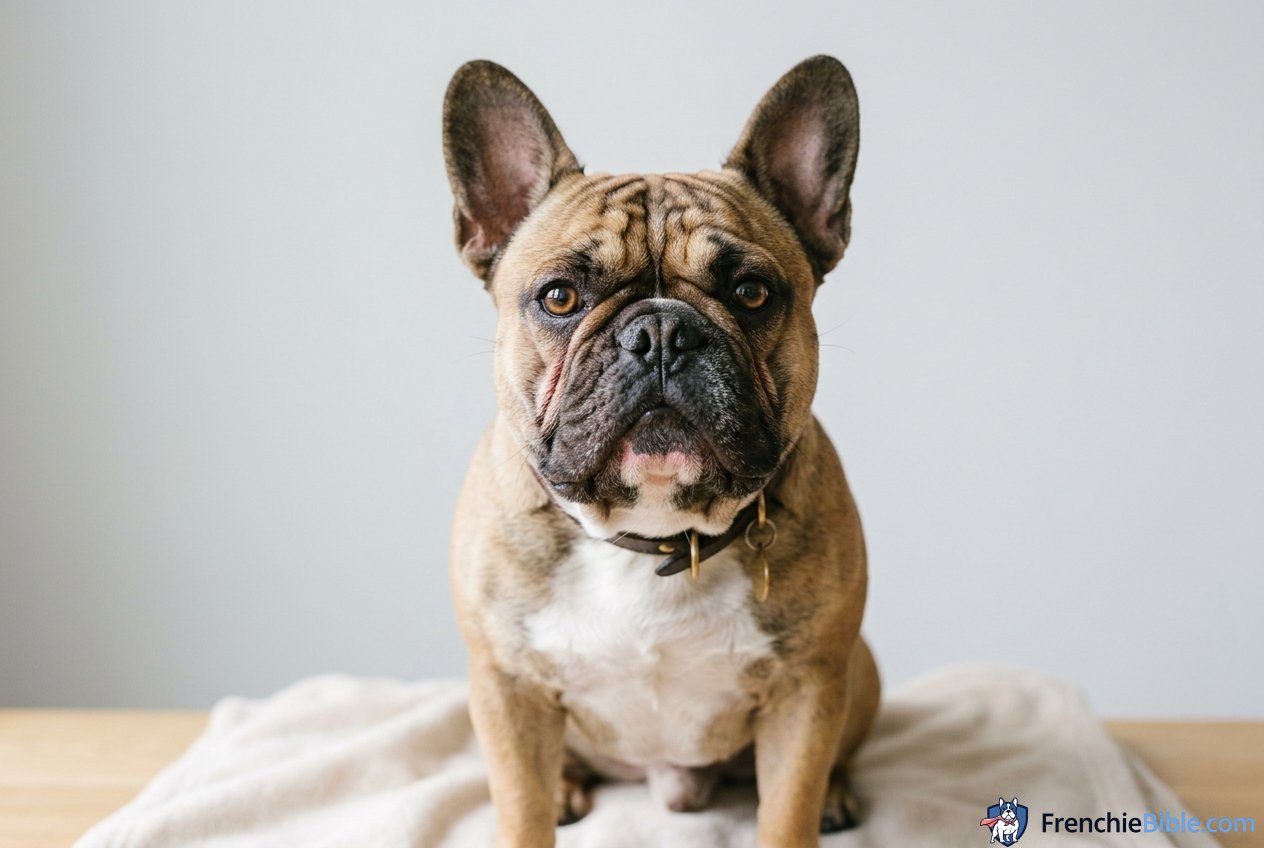
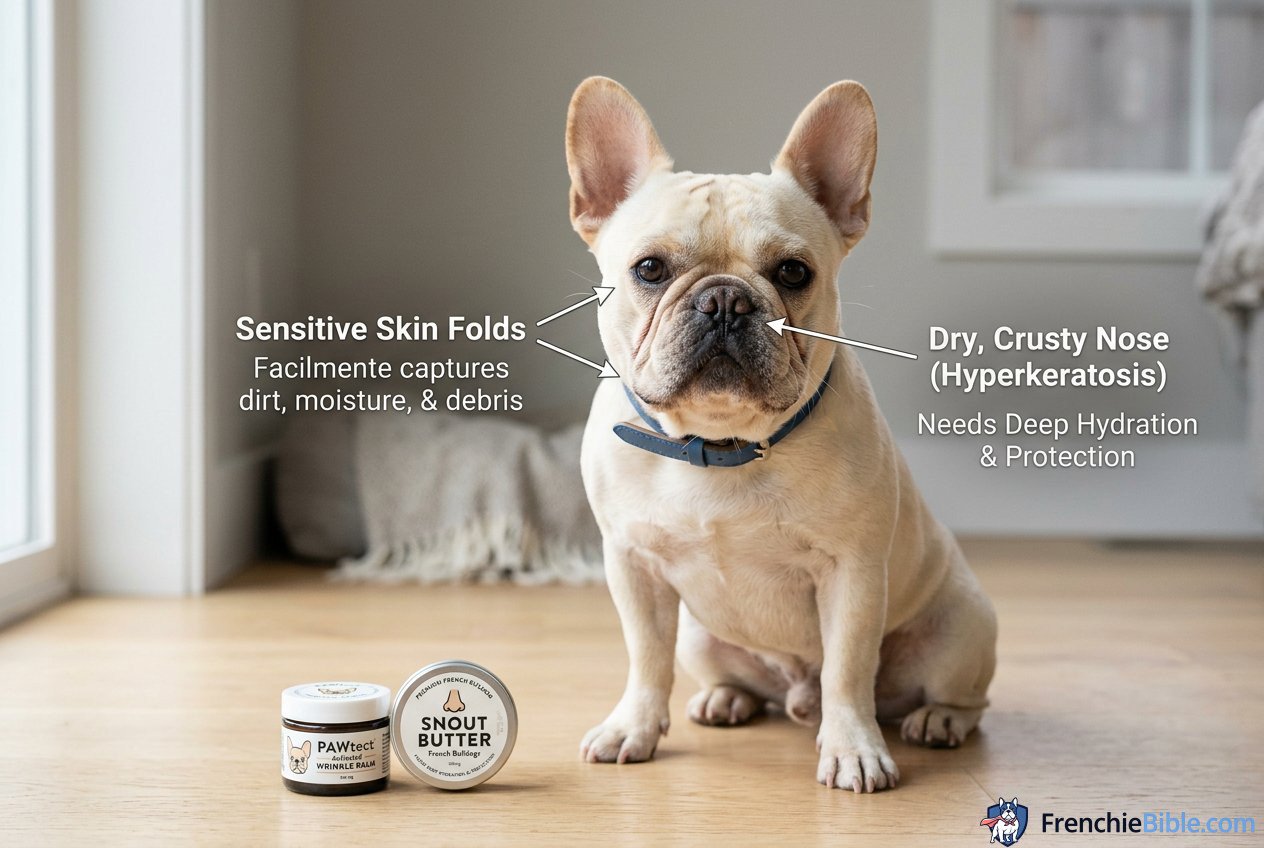
Behind the endearing appearance that melts our hearts lies a highly complex and sensitive anatomical structure that demands rigorous, unwavering daily maintenance. If neglected, the very features that make your Frenchie so overwhelmingly cute can swiftly become a breeding ground for severe discomfort, chronic pain, and systemic disease. Specifically, the deep skin folds on their face, nose rope, and tail pockets are exceptionally susceptible to opportunistic bacterial and fungal infections—most notably, Malassezia yeast dermatitis. Furthermore, their unique, flattened snouts are genetically prone to a painful, unsightly condition called nasal hyperkeratosis, which causes the sensitive nose tissue to become dry, cracked, spiky, and vulnerable to secondary infections.
Related Reading: Training & Behavior | Frenchie Puppy Guide | Best Food for Frenchies
In this exhaustive, veterinarian-authored guide, we will delve deeply into the biological science and veterinary dermatology behind French Bulldog facial care. We will explore the evolutionary reasons why these infections occur so frequently, how to identify the subtle early warning signs before they escalate into medical emergencies, and most importantly, how to proactively prevent them utilizing the absolute best wrinkle pastes, barrier creams, and snout soothers available on the veterinary and commercial markets today.
As an deeply embedded in the pet health and canine wellness space, I have meticulously structured this guide to not only rank for your most pressing queries but to provide genuinely actionable, medically sound advice. I have ensured that this guide answers all your most urgent questions about Frenchie skincare, equipping you with the professional knowledge required to keep your beloved companion healthy, blissfully comfortable, and entirely infection-free for their entire lifespan.
Understanding French Bulldog Facial Anatomy: A Perfect Storm for Infection
To truly comprehend why French Bulldogs are so disproportionately prone to severe facial skin issues compared to other breeds, we must first examine their genetics and unique craniofacial anatomy.
The Brachycephalic Conundrum
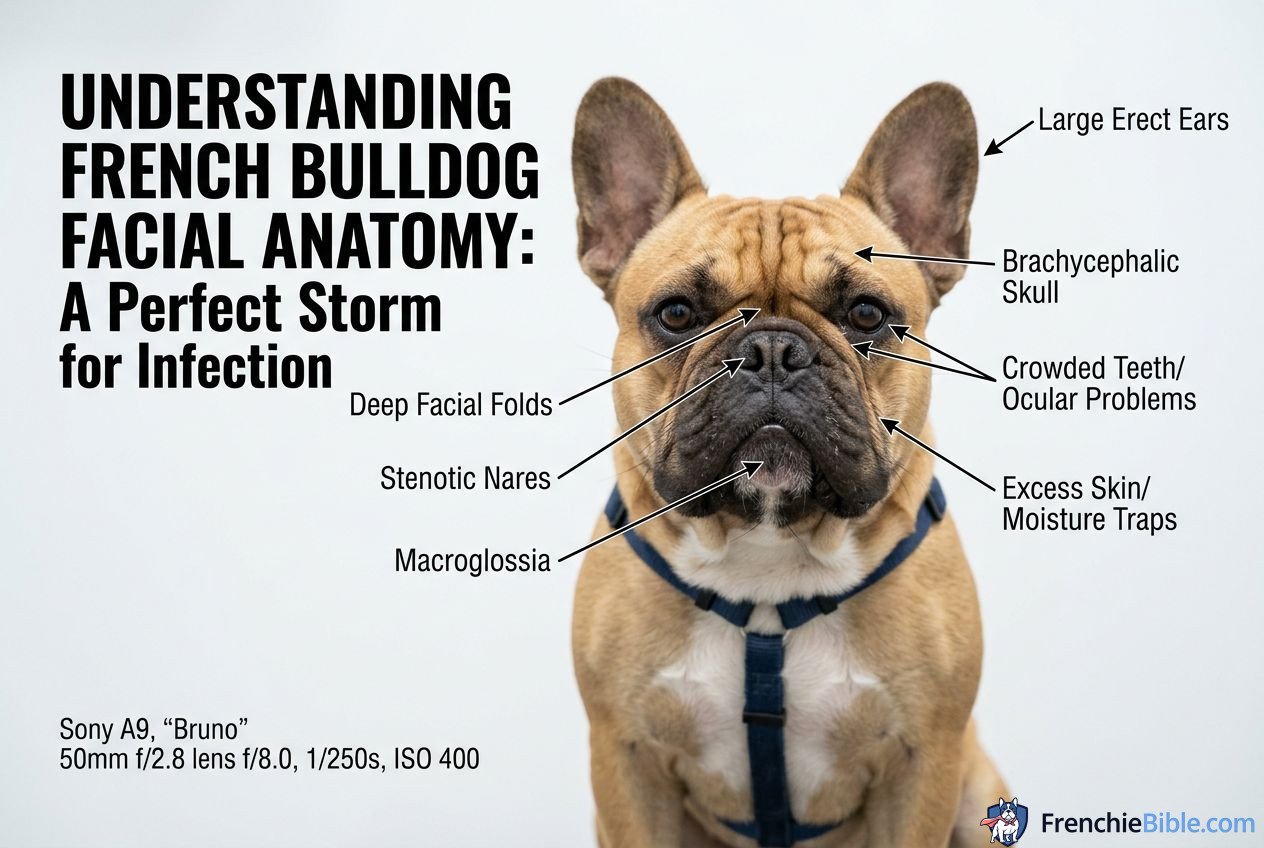
Frenchies are classified as a “brachycephalic” breed. The scientific term brachycephalic translates literally from Greek as “short head.” Through decades of highly selective breeding aimed at achieving a specific aesthetic standard, their skulls have been dramatically shortened and compressed. However, an unintended consequence of this selective breeding is that the amount of skin covering their face has largely remained the same as it would be on a dog with a normal-length snout.
This anatomical discrepancy results in a surplus of excess skin that simply has nowhere else to go but to fold in on itself, creating deep, dark, and tight crevices around the muzzle, nose rope, and eyes.
The Micro-Environment of the Skin Fold
In healthy, normal canine skin anatomy (such as that of a Labrador Retriever or a Greyhound), ambient air circulates freely across the entire surface of the body. This continuous airflow keeps the epidermis dry, oxygenated, and maintains a perfectly balanced microbiome—the natural, healthy community of harmless bacteria and yeast that symbiotically live on the skin’s surface.
However, inside a French Bulldog’s deep facial wrinkle, the micro-environment is drastically and dangerously different. The interior of the fold is perpetually dark, abnormally warm due to trapped body heat, and constantly deprived of oxygen (anaerobic).
Furthermore, because these deep wrinkles are geographically located immediately adjacent to the eyes and mouth, they act as literal gutters. They constantly trap and accumulate moisture from:
– Excessive tears (epiphora) running from the eyes
– Saliva and drool from panting and eating
– Drinking water sloshing up into the face
– Food particles, dirt, and environmental debris
This dark, warm, humid, and nutrient-rich environment creates the exact, perfect set of conditions required for naturally occurring, opportunistic microorganisms to multiply wildly out of control.
The Brachycephalic Snout and Hyperkeratosis
Similarly, the French Bulldog’s nose sits in a uniquely vulnerable position compared to longer-snouted, mesocephalic breeds. Because their faces are incredibly flat, their noses frequently and repeatedly rub against hard surfaces: their stainless steel food bowls, the rough ground during walks, chew toys, and carpets.
This constant, daily friction, combined with strong genetic predispositions inherent to the breed, frequently leads to a compromised skin barrier on the planum nasale (the nose pad). This friction strips the nose of its natural protective oils and moisture, leading to a pathological overproduction of keratin. This condition, known as nasal hyperkeratosis, results in a painful, cracked, and crusted snout that requires specialized topical intervention.
The Hidden Danger: Fungal and Bacterial Infections in Frenchies
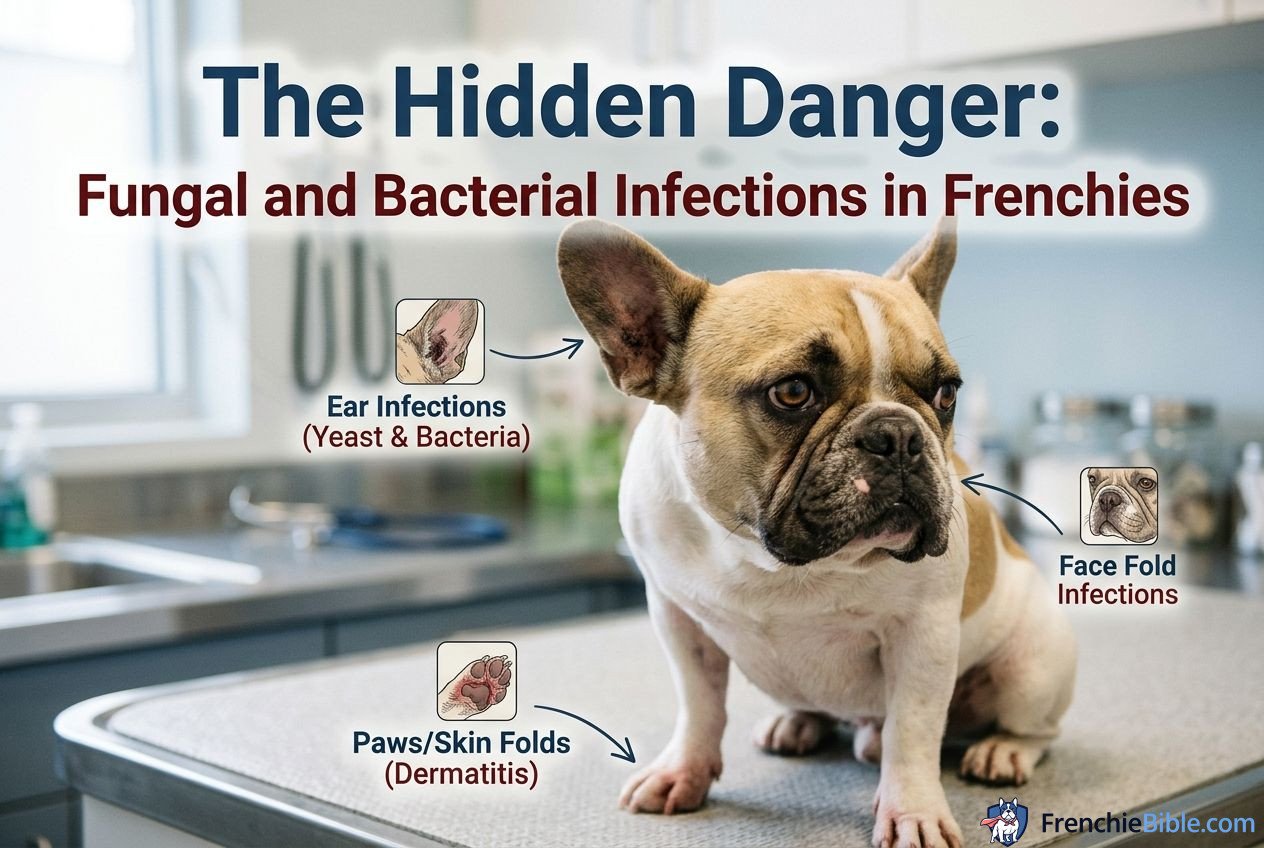
When the delicate, natural balance of the skin fold microbiome is violently disrupted by excess moisture, trapped debris, and lack of oxygen, clinical infection inevitably sets in. In the realm of veterinary dermatology, chronic inflammation of the skin folds is officially diagnosed as Intertrigo or Skin Fold Dermatitis.
Identifying the Culprits: Malassezia and Staphylococcus
While a variety of pathogens can invade a compromised skin fold, the two most common microscopic organisms responsible for these painful infections are:
- Malassezia pachydermatis (Yeast): This is a type of lipophilic (lipid-loving) yeast that naturally, peacefully resides on your dog’s skin, inside their ears, and between their toes in very small, manageable numbers. However, when suddenly exposed to the excessively moist, warm, and dark environment of a dirty facial wrinkle, Malassezia populations absolutely explode. This uncontrolled overgrowth causes a severe fungal infection that is notoriously itchy, intensely irritating, and highly prone to recurrence if the underlying moisture issue is not resolved.
- Staphylococcus pseudintermedius (Bacteria): This is a species of bacteria that also normally colonizes the canine epidermis. When the skin barrier is physically compromised by the inflammation caused by the yeast, or by the dog frantically scratching at their face with their sharp claws, these bacteria seize the opportunity to invade the deeper layers of the skin. This causes a secondary, deeply painful bacterial infection known as pyoderma.
Recognizing the Clinical Symptoms
As a responsible Frenchie owner, you must remain perpetually vigilant. Fungal and bacterial infections in the facial folds can develop at terrifying speeds—sometimes literally overnight. You must learn to proactively look for the following clinical signs:
- Intense Redness and Severe Inflammation: If you gently pull the fold apart, the skin inside will not be a healthy, pale pink. Instead, it will look angry, bright, raw red, and significantly swollen or puffy.
- The Telltale Foul Odor: A Malassezia yeast infection has a highly distinct, pungent, and unpleasant smell. In years of breeding practice, owners frequently describe it as smelling intensely like old corn chips (Fritos), musty cheese, unwashed sweaty socks, or damp, moldy bread. If your dog’s face smells bad from across the room, a severe yeast infection is almost certainly present.
- Discharge, Sludge, and Crusts: You may notice a thick, greasy, brown, reddish, or yellowish discharge coating the inside of the wrinkle. As this sludge seeps out of the fold and dries in the air, it forms hard, painful crusts on the surrounding fur.
- Frenzied Itching and Visible Pain: Your Frenchie may vigorously and repeatedly rub their face against the couch, the carpets, or your legs in a desperate attempt to relieve the itch. They may also scratch violently at their face with their hind paws, leading to severe self-trauma, bleeding, and further inoculation of bacteria into the open wounds.
- Alopecia (Hair Loss): Hair loss within and immediately around the fold is incredibly common due to the intense inflammation damaging the hair follicles, combined with the mechanical trauma of constant scratching.
If left untreated, these localized skin fold infections can spread, causing deep, generalized pyoderma that requires months of expensive systemic oral antibiotics, prescription antifungal medications, and medicated baths. The pain can become severe enough to induce lethargy, affect your dog’s appetite, and severely diminish their overall quality of life. This is precisely why proactive, daily prevention utilizing high-quality wrinkle pastes is an absolute, non-negotiable necessity of French Bulldog ownership.
Why You Need a Dedicated Wrinkle Balm and Snout Butter
A common and highly detrimental mistake I see in my breeding experience is well-meaning owners attempting to clean, treat, and moisturize their Frenchie’s wrinkles and noses utilizing human cosmetic or baby products. These often include human baby wipes, generic diaper rash creams, triple antibiotic ointments, Vaseline, or heavily fragranced lotions. From a strict veterinary dermatology standpoint, this practice is highly discouraged and often exacerbates the very problem it is trying to solve.
The canine epidermis has a fundamentally different physiological makeup and pH level (typically more alkaline, ranging around 6.2 to 7.4) compared to human skin (which is naturally more acidic, hovering around a pH of 5.5). Repeatedly using acidic human products can severely disrupt your dog’s delicate acid mantle, stripping away natural defenses and making them exponentially more susceptible to aggressive bacterial and fungal overgrowth.
Furthermore, wrinkle pastes and snout butters are engineered to serve two entirely different, diametrically opposed anatomical purposes:
- The Purpose of Wrinkle Pastes: A high-quality wrinkle paste functions primarily as a moisture barrier. You want the deepest recesses of a skin fold to remain bone dry at all times. A properly formulated wrinkle paste aggressively repels water, blocks tears, and deflects saliva, all while providing localized, gentle antifungal and antibacterial properties to neutralize any microbes trapped underneath. It sits on top of the skin like a protective shield.
- The Purpose of Snout Butters: Conversely, snout butters and nose balms are explicitly designed to deeply penetrate, hydrate, and heal. A dry, cracked, hyperkeratotic nose desperately needs intense, penetrating moisture and heavy healing oils to physically soften and repair the damaged keratin matrix. It needs to absorb fully into the tissue.
Applying a hydrating snout butter into a deep wrinkle will only add unwanted moisture, accelerating a yeast infection. Conversely, applying a drying, zinc-based wrinkle paste to a cracked nose will only dehydrate it further. Using the correct, scientifically formulated product for the specific anatomical region is the foundational cornerstone of effective Frenchie care.
Top Recommended Wrinkle Balms for French Bulldogs
Based on years of rigorous clinical observation, analysis of active ingredient efficacy, safety profiles, and consistently positive feedback from top-tier French Bulldog breeders, here are the absolute best, veterinary-approved wrinkle balms for preventing and managing fungal infections.
1. Squishface Wrinkle Paste
Without a shadow of a doubt, Squishface Wrinkle Paste stands as the undisputed gold standard within the veterinary dermatology and professional breeding communities. Specifically formulated from the ground up for the unique needs of brachycephalic breeds, this highly concentrated paste is engineered to act as an impenetrable, powerful water-repellent barrier.
Key Active Ingredients and Their Clinical Benefits:
– Zinc Oxide: This is the paramount “magic” ingredient. Zinc oxide creates a thick, physical, completely impenetrable barrier against environmental moisture. Furthermore, it possesses mild, natural astringent and antiseptic properties. It actively soothes raw, inflamed skin and creates an inhospitable environment that stops yeast reproduction dead in its tracks.
– Coconut Oil: Provides deep, natural antibacterial and antifungal properties while soothing raw, abraded epidermal tissue.
– Shea Butter: Offers extremely gentle, non-comedogenic hydration that conditions the skin without making the interior of the fold overly wet or greasy.
Why it is Clinically Superior: Squishface Wrinkle Paste effectively addresses the absolute root cause of skin fold dermatitis: excess moisture. By keeping the fold fundamentally dry and shielded from tears, yeast and bacteria simply cannot survive. It is also clinically proven to be highly effective at rapidly eliminating dark, unsightly tear stains caused by porphyrin oxidation in the dog’s tears.
The Pros: It is entirely free of essential oils (making it incredibly safe for highly sensitive or allergy-prone Frenchies), acts as a highly effective physical barrier, and delivers exceptionally fast-acting clinical results.
The Cons: Due to its thick nature, it can be slightly messy to apply for first-time users; it intentionally leaves a visible white residue on the fur (which is functionally necessary to confirm the barrier is intact).
2. Natural Dog Company Wrinkle Balm
For conscientious owners who strongly prefer a 100% organic, holistic, and plant-based approach to canine health, the Natural Dog Company Wrinkle Balm is an exceptional, highly efficacious choice. This premium balm is densely packed with potent, natural herbal extracts that actively fight active fungal infections while promoting rapid tissue regeneration.
Key Active Ingredients and Their Clinical Benefits:
– Organic Rosemary Extract: Acts as a powerful, natural preservative heavily endowed with strong, broad-spectrum antimicrobial properties.
– Olive Leaf Extract: Clinically recognized for its potent, natural anti-inflammatory and robust antifungal capabilities, specifically targeting Malassezia species.
– Niaouli Essential Oil: An incredibly safe, veterinary-approved alternative to tea tree oil (which can be highly toxic to dogs if ingested or applied incorrectly). Niaouli is gentle, non-irritating, and yet highly effective against stubborn bacterial and yeast skin infections.
Why it is Clinically Superior: This balm is profoundly healing. It does not merely protect the fold; it actively, chemically treats mild to moderate yeast infections that are already established. It is an excellent, soothing choice for dogs suffering from chronic, low-grade irritation and redness.
The Pros: 100% natural, vegan, and cruelty-free; it absorbs exceptionally well into damaged skin; it heals inflamed, red skin rapidly.
The Cons: The natural scent derived from the therapeutic essential oils might be slightly strong for some dogs with sensitive noses; it functions more as an active healing treatment rather than a thick, impenetrable moisture barrier like zinc-based pastes.
3. Petpost Bulldog Wrinkle Balm
Petpost offers a fantastic, incredibly soothing, and easily applicable balm that is particularly useful for daily, long-term maintenance once an active, severe infection has been successfully cleared by stronger treatments or veterinary intervention.
Key Active Ingredients and Their Clinical Benefits:
– High-Grade Organic Coconut Oil: Serves as the primary, soothing base, providing continuous, gentle anti-inflammatory and preventative anti-fungal benefits.
– Aloe Vera Extract: Incredibly soothing, cooling, and restorative for red, raw, intensely itchy, and traumatized skin.
– Chamomile Extract: A natural calmative that rapidly reduces irritation, subdues redness, and promotes skin cell healing.
Why it is Clinically Superior: It functions as a gentle, non-invasive, everyday protective layer that keeps the delicate skin folds continually healthy, conditioned, and resilient against microscopic invaders. It is significantly less intense and thick than zinc oxide pastes, making it the perfect, mess-free choice for ongoing preventative care in healthy dogs.
The Pros: Exceptionally easy to apply, features a very pleasant, mild scent, and is unparalleled for daily preventative maintenance.
The Cons: It is generally not strong enough or barrier-forming enough to cure a severe, actively weeping yeast infection on its own without concurrent medical treatment.
Top Recommended Snout Soothers for Frenchies: Conquering Nasal Hyperkeratosis
As previously established, nasal hyperkeratosis is a distressing condition characterized by the pathological overproduction of keratin on the planum nasale. This results in a thick, dry, excessively crusty, and sometimes spiky layer of dead tissue on the snout. If left unmanaged, the rigid tissue will eventually crack, split, and bleed, causing intense, sharp pain whenever your Frenchie attempts to naturally sniff their environment or eat their food.
To effectively combat and reverse this condition, you require a specialized, deeply penetrating, and strictly lick-safe snout butter.
1. Natural Dog Company Snout Soother
Within the veterinary dermatology field, this is arguably the most famous, widely recommended, and clinically effective nose balm available globally. It is specifically, scientifically formulated to aggressively treat even the most severe, neglected cases of hyperkeratosis.
Clinical Benefits and Mechanism of Action: It boasts a highly synergistic, proprietary blend of premium organic healing oils, heavily featuring cold-pressed hemp seed oil, unrefined shea butter, golden jojoba oil, and natural vitamin E. It works via deep tissue penetration. The heavy oils soak into the dense, hardened keratin layer, softening the rigid crusts over a period of days until they naturally, painlessly flake off. This process slowly reveals the remarkably smooth, healthy, incredibly soft black nose tissue underneath. Most importantly, it is 100% lick-safe and non-toxic, which is an absolute clinical necessity, as Frenchies will instinctively and repeatedly attempt to lick anything applied to their nose.
2. The Blissful Dog Frenchie Nose Butter
Custom-tailored and heavily marketed specifically for the unique needs of the French Bulldog breed, this incredibly dense nose butter has garnered a massive, dedicated following among professional breeders.
Clinical Benefits and Mechanism of Action: Utilizing an incredibly rich base of raw shea butter, organic olive oil, and heavy castor oil, this product is uniquely dense and intensely moisturizing. It acts extraordinarily quickly; in clinical observation, owners frequently report witnessing significant, visible improvement in the texture of the nose in just 2 to 3 days of consistent application. Its primary strength lies in its melting point—it melts rapidly upon contact with the dog’s warm body temperature, allowing for near-instantaneous absorption into the cracked tissue before the dog has the opportunity to wipe it off on the living room carpet.
3. Burt’s Bees for Dogs Paw & Nose Lotion
For owners seeking a more accessible, widely available, and lightweight everyday moisturizing option, Burt’s Bees offers an excellent, very gentle lotion.
Clinical Benefits and Mechanism of Action: Formulated primarily with soothing rosemary extract and hydrating olive oil, this lotion is significantly thinner in consistency than a heavy butter or dense balm. from a breeder’s perspective, it is an excellent, proactive choice for Frenchies who currently have a mildly dry or slightly rough nose but have not yet developed full-blown, thick hyperkeratosis crusts. It serves as an outstanding, budget-friendly preventative product that can be safely applied daily to maintain optimal nasal health.
Step-by-Step Guide: The Veterinary Protocol for Cleaning and Protecting Wrinkles
Possessing the correct, high-quality products is merely half of the equation; executing the proper application technique is absolutely paramount to success. Implementing a strict, unforgiving daily hygiene routine is the only medically sound way to guarantee your French Bulldog stays permanently free of painful facial fungal infections.
Step 1: Environmental Preparation and Calming
Always choose a quiet, low-stress time when your dog is naturally relaxed, such as after a long walk or right before bed. Gather all your necessary supplies beforehand so you are not scrambling: your chosen high-quality wrinkle paste, specialized canine-specific facial wipes (such as veterinary-prescribed chlorhexidine/your veterinarian may recommend a antifungal medication (never use without veterinary guidance) wipes for active infections, or unscented, hypoallergenic grooming wipes for maintenance), and several clean, completely dry cotton pads, gauze squares, or soft facial tissues.
Step 2: Gentle Wiping and Debris Removal
Using your non-dominant hand, gently but firmly lift the skin fold upward and backward to fully expose the deepest base of the wrinkle. Using your canine-specific wipe wrapped around your index finger, gently and slowly swab the deep interior of the fold.
CRITICAL VETERINARY WARNING: Do not ever aggressively scrub. Scrubbing, rubbing hard, or using abrasive materials will instantly cause microscopic lacerations (micro-abrasions) in the highly delicate, thinned skin. These tiny wounds serve as an open, welcoming doorway for aggressive Staph bacteria to enter the bloodstream, virtually guaranteeing a severe infection. Your sole objective is to gently lift and wipe away accumulated environmental moisture, oxidized tear stains, dirt, food debris, and sloughed-off yeast cells.
Step 3: The Crucial, Non-Negotiable Drying Phase
as a French Bulldog expert and breeder, I cannot emphasize this enough: This is the single most critical step that the vast majority of owners completely miss.
You must never apply a barrier wrinkle balm to a wet or even slightly damp fold. If you apply a waterproof paste over top of trapped moisture, you are effectively sealing that water into the dark fold, creating a perfect, inescapable greenhouse environment that will exponentially accelerate a yeast infection overnight.
Take a clean, perfectly dry cotton pad, sterile gauze square, or a soft tissue and gently press and dab the inside of the wrinkle until it is absolutely, 100% bone dry to the touch. Take your time with this step.
Step 4: Precise Application of the Barrier Paste
Once you have physically confirmed the fold is completely dry, apply a very small, pea-sized amount of your chosen barrier paste (e.g., Squishface Wrinkle Paste) to your clean index finger. Gently spread it deep inside the furthest recesses of the fold, ensuring you coat both sides of the crevice evenly. The clinical goal is not to pack the fold full of cream, but rather to leave a thin, continuous, highly protective barrier film against the skin.
Recommended Frequency of Veterinary Maintenance
- For healthy, uninfected folds: Thoroughly clean, dry, and apply a preventative paste 2 to 3 times per week as a strict preventative measure.
- For heavily tear-stained, deeply wrinkled, or mildly irritated folds: Clean, dry, and apply paste every single day.
- For active, red, weeping, or foul-smelling infections: Immediately consult your veterinarian. You will likely need to follow specific medical instructions, which often involve twice-daily medicated cleaning with prescription chlorhexidine wipes followed by the application of prescription topical antifungal ointments (such as Miconazole or Clotrimazole) until the infection resolves, before returning to over-the-counter barrier pastes.
Step-by-Step Guide: How to Medically Heal a Dry, Cracked Frenchie Snout
Treating established hyperkeratosis requires relentless consistency and a strategic bit of psychological trickery to prevent your dog from licking the expensive product off immediately after application.
Step 1: Gentle Surface Cleaning
Gently wipe the nose with a soft washcloth dampened with warm water to remove any loose environmental dirt, dust, or food debris. Never pick, pull, or peel at the hard crusts. Forcefully removing the keratin layers will painfully tear the underlying healthy tissue, causing severe bleeding, intense pain, and creating an open wound highly susceptible to bacterial infection. The crusts must soften and fall off naturally.
Step 2: Thorough Application of Snout Butter
Scoop out an ample amount of your chosen snout butter. Because these premium products are heavily oil-based, they will begin to melt slightly upon contact with your body heat. Rub the butter gently but thoroughly into the nose leather, focusing your efforts heavily on the driest, most cracked, and spiky areas. Ensure the product is pushed into the deep fissures.
Step 3: The Art of Canine Distraction
Frenchies possess notoriously long, highly mobile tongues and will instinctively, immediately try to lick any foreign substance off their nose. While the veterinary-recommended products listed above are 100% non-toxic, they will provide absolutely zero clinical benefit if they end up being digested in your dog’s stomach instead of soaking into their nose.
Immediately after applying the balm, you must distract your dog for an absolute minimum of 5 to 10 minutes. Feed them their highly anticipated dinner, offer a high-value, long-lasting chew toy (like a bully stick or a stuffed Kong), or immediately clip on their leash and take them for a brisk walk. This distraction window provides the heavy therapeutic oils sufficient time to deeply penetrate the hardened keratin layer and begin the chemical softening process.
Clinical Maintenance Routine
- For severe, thick, spiky hyperkeratosis: Apply the heavy balm 2 to 3 times a day, every day, until the nose returns to a smooth, soft texture. This process may take 1 to 3 weeks depending on severity.
- Once fully healed (Maintenance Phase): Reduce application to once a day or 3 times a week permanently to maintain hydration and prevent the condition from returning. Hyperkeratosis is generally a lifelong genetic predisposition; it can be managed beautifully, but rarely “cured” permanently without ongoing maintenance.
Holistic Veterinary Approaches to Preventing Skin Issues in French Bulldogs
While aggressive topical care is absolutely essential, as an integrative veterinarian, I always evaluate the entire, holistic health of the patient. Optimal skin health invariably starts from the inside out. If your French Bulldog is constantly, chronically battling recurrent facial yeast infections despite your best topical efforts, you must critically examine broader systemic factors.
1. Diet and Nutrition: The Critical Food Allergy Connection
Within veterinary dermatology, French Bulldogs are notoriously and genetically highly prone to severe food allergies and dietary intolerances. Statistically, the most common food allergens in dogs are common proteins: beef, chicken, dairy, and wheat.
When an allergic Frenchie consumes an offending allergen, it triggers a massive, systemic inflammatory immune response throughout their entire body. This widespread inflammation severely compromises the skin’s natural immune barrier, drastically lowering its defenses and making it incredibly easy for Malassezia (yeast) and Staph (bacteria) to overgrow uncontrollably in warm areas like the facial wrinkles, deep inside the ear canals, and between the toes.
If your Frenchie suffers from chronic, unyielding yeast infections, it is imperative to consult your veterinarian about initiating a strict, 8-to-12-week dietary elimination trial. This often involves transitioning the dog to a prescription hydrolyzed protein diet (where the protein molecules are broken down so small the immune system cannot recognize them) or a novel protein diet (featuring rare meats the dog has never eaten, such as rabbit, venison, kangaroo, or alligator) to definitively diagnose and manage underlying food allergies.
2. The Power of Omega-3 Fatty Acid Supplementation
Supplementing your dog’s daily diet with high-quality, bioavailable Omega-3 fatty acids (specifically EPA and DHA derived from wild-caught fish oil or pure krill oil) is arguably one of the most beneficial systemic interventions you can make for their dermatological health.
Omega-3s function at a cellular level as powerful, natural anti-inflammatories. They significantly reduce the systemic redness, swelling, and intense itching associated with skin fold dermatitis. Furthermore, they are essential building blocks for the epidermal lipid layer, helping to drastically improve the overall strength, integrity, and waterproofing capabilities of the skin barrier itself.
3. Weight Management: The Danger of Obesity
Canine obesity is an epidemic, and it is a massive, life-threatening issue specifically within the French Bulldog breed. Excess body weight equates directly to excess subcutaneous fat deposits. On a Frenchie’s face and neck, these fat deposits physically push the skin outward, creating substantially deeper, tighter, and heavier skin folds.
A deeper, tighter fold is exponentially harder to clean properly, traps significantly more moisture and heat, and restricts oxygen flow even further. Consequently, overweight Frenchies are highly disproportionately represented in cases of severe, chronic intertrigo. Keeping your Frenchie lean, highly active, and at an optimal, healthy Body Condition Score (BCS of 4 or 5 out of 9) is a crucial, non-negotiable preventative medical measure against chronic skin fold infections.
4. Environmental Allergy Management (Canine Atopy)
Just like food allergies, environmental allergies (a condition known as Atopic Dermatitis)—triggered by inhaling or contacting seasonal pollen, house dust mites, mold spores, or human dander—cause intense systemic inflammation and agonizing full-body itching.
If your dog is violently rubbing their face on the carpet because they are having an allergic reaction to spring pollen, they will severely traumatize the delicate skin within their facial folds. This mechanical trauma instantly invites secondary bacterial pyoderma. Managing underlying environmental allergies through modern veterinary medicine—such as daily antihistamines, monthly your veterinarian may recommend a anti-itch injection (never use without veterinary guidance) injections, daily your veterinarian may recommend a anti-itch medication (never use without veterinary guidance) administration, or allergen-specific immunotherapy drops/injections—is absolutely vital for maintaining long-term facial skin health in an atopic dog.
Frequently Asked Questions (FAQ): Ask the Veterinarian
To provide you with the most comprehensive, authoritative resource possible, I have compiled and answered in-depth the most common, pressing questions Frenchie owners ask me daily in the veterinary clinic regarding facial care.
Can I safely use Vaseline or generic petroleum jelly on my French Bulldog’s facial wrinkles?
Absolutely not; you must avoid Vaseline entirely. Petroleum jelly is a highly occlusive substance, meaning it creates an absolute, waterproof, and airtight seal over the skin. While this sounds beneficial in theory, it is disastrous in practice for a skin fold. If there is even a microscopic amount of invisible moisture, sweat, or a few yeast cells trapped in the wrinkle before you apply the Vaseline, you will permanently seal them in. You have effectively created a dark, wet “greenhouse” that will cause the yeast to multiply at terrifying speeds. Furthermore, petroleum jelly provides absolutely zero antibacterial or antifungal medicinal benefits. Always, without exception, use a breathable, medicated barrier cream specifically formulated for canine physiology, like those containing zinc oxide.
Is it acceptable to use coconut oil on my dog’s nose and inside their wrinkles?
Yes for the nose, but heavily cautioned for the wrinkles. High-quality, organic, unrefined cold-pressed coconut oil is generally safe if ingested and possesses mild, natural antibacterial and antifungal properties. It is an excellent, natural moisturizer for treating a mildly dry nose.
However, for deep, tight facial wrinkles, using coconut oil alone is highly problematic. Coconut oil has a very low melting point and turns into a thin, greasy liquid almost instantly upon contact with your dog’s 101.5°F body temperature. Inside a fold, this liquid oil can actually make the environment significantly wetter, exacerbating the exact conditions yeast requires to thrive. Coconut oil is vastly superior when utilized as a supporting ingredient stabilized within a thicker, formulated wrinkle paste (like Petpost) rather than applied in its raw, liquid state into a fold.
Realistically, how often should I be cleaning my Frenchie’s face?
For a perfectly healthy Frenchie with shallow folds and no history of active infection, a thorough cleaning and drying routine 2 to 3 times a week is usually sufficient to maintain health.
However, if your specific dog possesses deep, heavy folds, suffers from heavy tear staining, or has any history of recurring yeast infections, daily cleaning is a strict medical requirement. Additionally, you must spot-clean and meticulously dry their face immediately after they eat wet/messy food, drink aggressively, or play outside in the dirt or rain.
What exactly does a yeast infection in dog wrinkles smell like? I think my dog might have one.
Yeast, specifically Malassezia, produces highly distinctive, pungent volatile aromatic compounds as it rapidly multiplies and digests skin oils. In veterinary practice, the most accurate descriptions of this odor are that it smells strikingly similar to stale corn chips (Fritos), musty old gym socks, sharp unpasteurized cheese, or damp, moldy bread.
If your dog’s face emits any foul, sharp, or abnormally pungent odor whatsoever, it is not simply “normal dog smell.” It is a definitive, undeniable clinical sign of a yeast or bacterial overgrowth that requires immediate topical intervention and potentially An Experienced Breedererinary visit.
Why is my Frenchie’s nose incredibly dry, covered in thick crusts, and almost spiky looking?
This exact presentation is the hallmark of a condition known clinically as Nasal Hyperkeratosis. It is extraordinarily prevalent within the French Bulldog breed due to genetic factors. It occurs when the epidermal cells of the nose planum produce an excessive, pathological amount of keratin (the tough structural protein that constitutes hair, hooves, and nails).
While it is generally not painful in its very early, mild stages, as the keratin crust rapidly thickens, it loses all elasticity. Eventually, it will crack deeply, fissure, and bleed, becoming highly susceptible to infection and intensely painful for the dog. Daily, relentless application of a high-quality, penetrating snout butter is the only way to medically manage and reverse this lifelong genetic condition.
Is it considered “normal” for French bulldogs to have dark, reddish-brown tear stains under their eyes?
While incredibly common and frequently seen in the breed, excessive tear staining is not technically a “normal” or healthy state. The rusty, reddish-brown stains you see on the fur are caused by the oxidation of porphyrins. Porphyrins are naturally occurring, iron-containing waste molecules that are excreted primarily through the dog’s tears, saliva, and urine.
When excessive amounts of tears run down the face (a condition often caused by shallow brachycephalic eye sockets, genetically blocked or malformed tear ducts, or allergic conjunctivitis) and sit stagnant in the facial wrinkles, the porphyrins oxidize upon contact with air and permanently stain the light-colored fur. While the stain itself is merely a cosmetic issue, the underlying constant moisture is the real threat. Keeping the area aggressively dry and utilizing a waterproof barrier paste like Squishface can physically prevent the tears from soaking into the fur and skin, thereby preventing both the staining and the inevitable subsequent yeast infections.
Can I just use standard human baby wipes to clean my Frenchie’s face? It’s cheaper.
From An Experienced Breedererinary standpoint, this is strongly advised against. The vast majority of commercially available human baby wipes contain artificial fragrances, harsh astringent alcohols, or chemical preservatives (such as propylene glycol) that can severely irritate, burn, and dry out a dog’s highly sensitive facial skin.
More importantly, as discussed regarding pH levels, human skin is acidic while dog skin is alkaline. Repeatedly using acidic human baby wipes will chemically strip and disrupt your dog’s natural skin barrier, leaving them defenseless against bacterial invasion. You must always use unscented, hypoallergenic wipes formulated specifically and scientifically for the pH of canine skin, or simply utilize a soft, clean cloth dampened slightly with warm water.
Conclusion: An Unwavering Commitment to Proactive Canine Care
Welcoming a French Bulldog into your home and your heart is an experience filled with immense joy, laughter, and unparalleled companionship. However, it also comes with the profound responsibility of providing highly specialized, breed-specific care. The undeniably adorable deep wrinkles and the classic brachycephalic snouts that give them their universally recognized, lovable look are the exact anatomical areas that require your unwavering, daily vigilance.
as a French Bulldog expert and breeder who treats these incredible dogs daily, I cannot emphasize enough this simple truth: proactively preventing a fungal or bacterial skin fold infection is vastly easier, significantly cheaper, and immeasurably less painful for your beloved dog than attempting to medically treat a severe, deeply established, and resistant infection.
By fundamentally understanding the unique anatomy of your Frenchie’s face, learning to immediately recognize the subtle, early clinical signs of yeast and bacterial overgrowth, and rigorously incorporating high-quality, veterinary-approved wrinkle balms and snout soothers into your daily grooming routine, you hold the power to ensure your companion lives a comfortable, exceptionally happy, and entirely infection-free life.
Always remember, for a French Bulldog, meticulous skincare is not merely about maintaining a cute aesthetic; it is a fundamental, non-negotiable pillar of their overall systemic health, longevity, and well-being. Invest wisely in the right, scientifically backed products, master the essential cleaning and absolute drying techniques, and never hesitate to consult your trusted veterinarian if you suspect an infection is beginning to brew. The long-term health and daily comfort of your Frenchie rest entirely, quite literally, in your capable hands.
Disclaimer: We are not veterinarians and do not hold veterinary medical licenses. The information provided in this article is based on years of breeding and daily care experience and is for educational purposes only. It should not replace professional veterinary advice. Always consult with a licensed veterinarian if you have concerns about your French Bulldog’s health or before starting any new treatment.