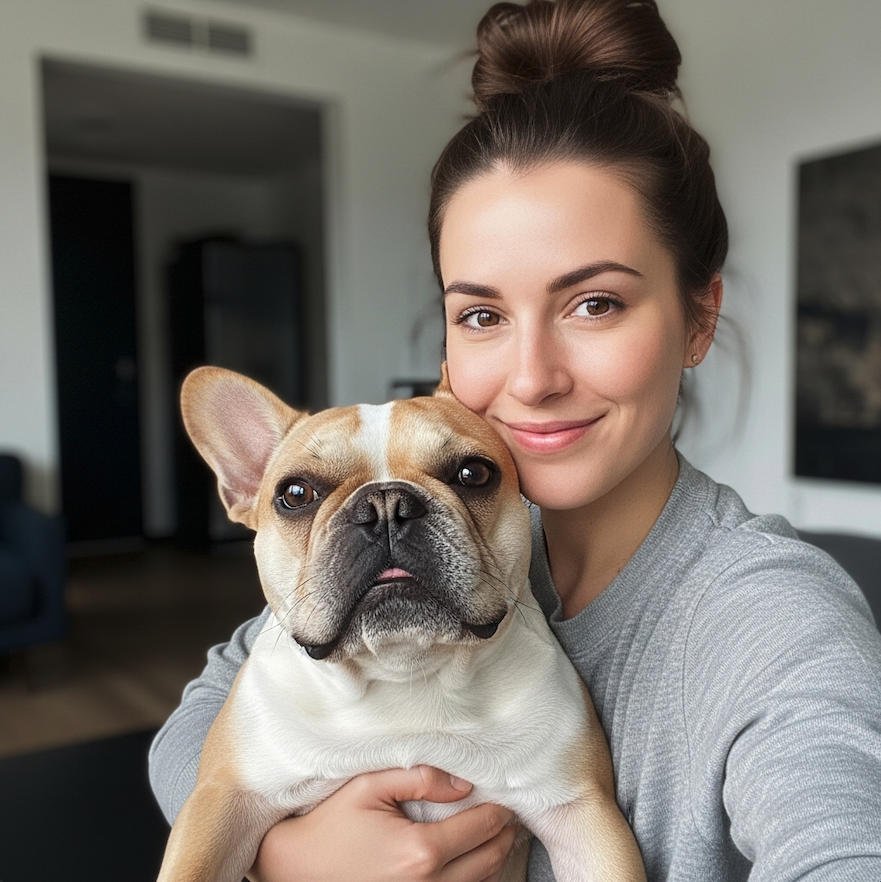
As a French Bulldog breeder with over ten years of hands-on experience, I have witnessed countless Frenchies interact with growing families. French Bulldogs are incredibly affectionate, fiercely loyal, and undeniably charming. However, this deep bond with their owners can sometimes manifest as jealousy, especially when a new baby or another pet enters the household. Understanding the root of this jealousy, recognizing the signs early, and knowing exactly how to soothe your Frenchie are crucial steps in ensuring a harmonious home environment.
In this comprehensive guide, I will share my expert insights and proven strategies to help you navigate your French Bulldog’s jealousy. Whether you are expecting a human baby or planning to bring home a new furry friend, this guide will provide you with the tools you need to support your Frenchie through these major life transitions.
Related Reading: Health & Diet | Frenchie Puppy Guide
Understanding Your French Bulldog’s Jealousy
Before we can effectively address jealousy in French Bulldogs, we must first understand why it occurs. Jealousy in dogs, much like in humans, is a complex emotion rooted in the fear of losing access to valuable resources. For a Frenchie, the absolute most valuable resource in the entire world is you—their owner.
Why Do French Bulldogs Get Jealous?
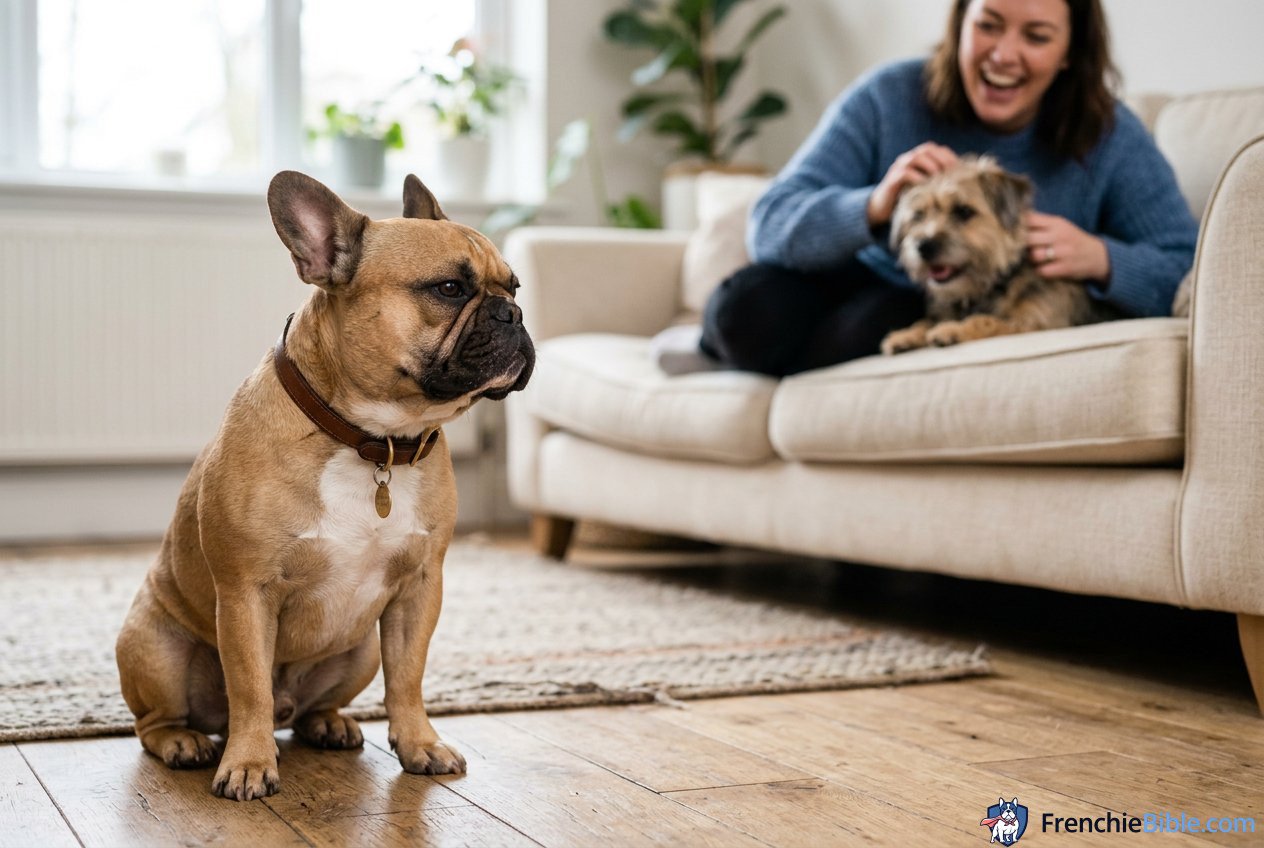
French Bulldogs have been specifically bred for generations to be companion animals. They thrive on human interaction and often view themselves as the absolute center of your universe. When a new baby or pet arrives, your time, attention, and affection are suddenly divided. You are tired, distracted, and busy with a new set of responsibilities. This sudden shift can leave your Frenchie feeling insecure, anxious, and, ultimately, jealous. They are not acting out of malice; rather, they are expressing their profound concern that their position in the family pack is being threatened.
From an evolutionary standpoint, dogs are pack animals. In a family setting, you are the pack leader. When a new member is introduced, the pack dynamics shift. A French Bulldog, who may have previously held the “only child” status, suddenly finds themselves competing for the leader’s attention. This competition triggers deep-seated instincts that manifest as what we recognize as jealousy.
The Frenchie Personality: Lovable but Possessive
The typical French Bulldog personality is a delightful mix of clownish behavior, stubbornness, and steadfast loyalty. They are famously known as “velcro dogs” who love to be by your side, on your lap, and involved in absolutely everything you do. Whether you are cooking, watching TV, or going to the bathroom, your Frenchie is likely right there with you.
While this makes them wonderful and endearing companions, it also makes them highly prone to possessiveness. A Frenchie who has enjoyed being an “only child” may struggle significantly when forced to share the spotlight. They can become fiercely protective of your attention. Recognizing this inherent breed trait is the first critical step toward managing their jealousy effectively. Understanding that this is part of their nature allows you to address the issue with empathy rather than frustration.
Signs Your Frenchie is Feeling Jealous
Jealousy in French Bulldogs can manifest in a wide variety of ways, ranging from subtle behavioral shifts to more overt displays of frustration. As an observant owner, it is your job to recognize these signs early so you can intervene and reassure your dog before the behavior escalates.
Behavioral Changes and Regression
One of the first signs of jealousy is a change in your Frenchie’s normal behavior. A previously well-behaved, fully potty-trained dog may suddenly start having “accidents” in the house. This is rarely a bladder issue; it is a behavioral regression. They might also conveniently forget their basic obedience commands, refuse to come when called, or become unusually stubborn during walks. These regression behaviors are often a desperate cry for attention, signaling that your Frenchie feels neglected and is trying to re-establish the old dynamic by forcing you to interact with them, even if that interaction is negative.
Attention-Seeking Antics
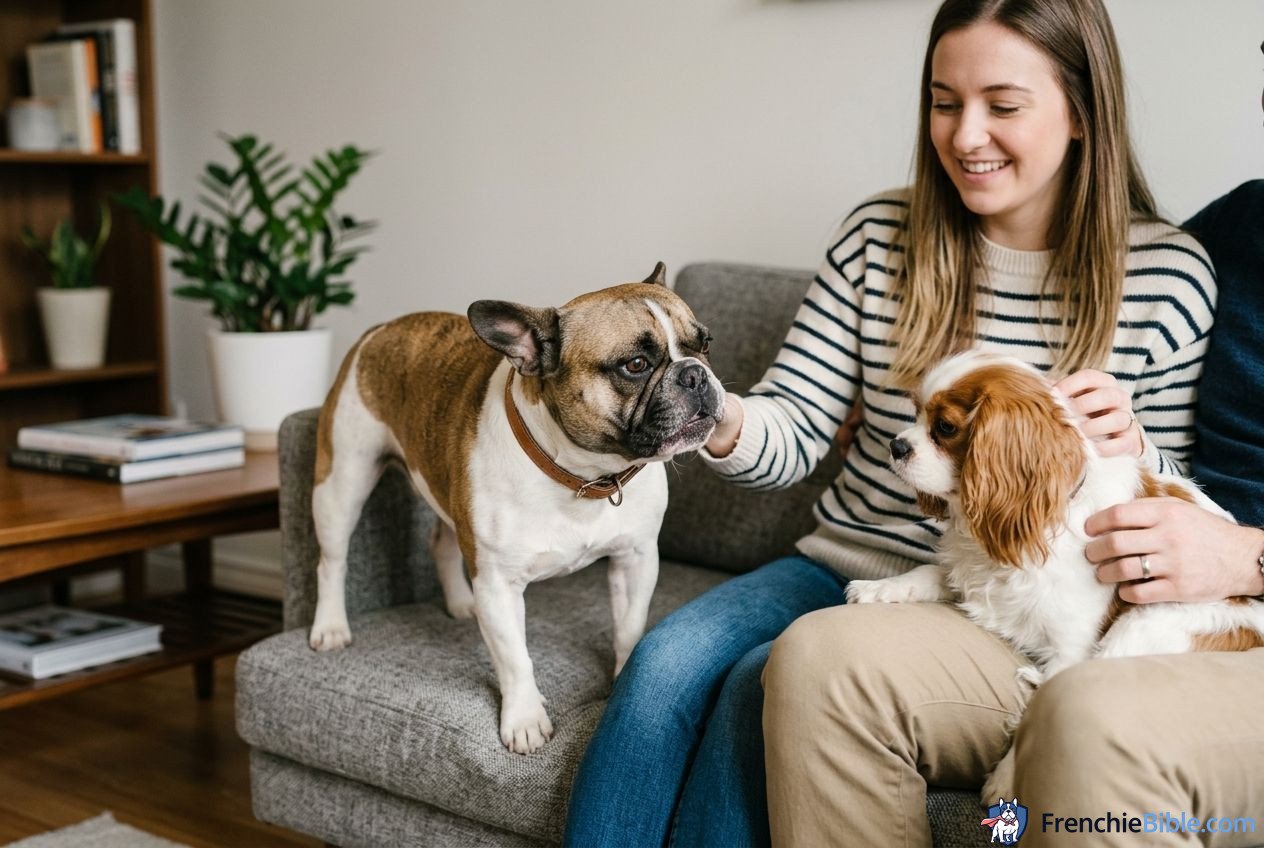
When a Frenchie feels they are not getting enough attention, they will actively seek it out, sometimes in less-than-ideal or highly disruptive ways. You might notice your dog constantly nudging your hand with their wet nose, whining incessantly when you are tending to the baby, or physically forcing themselves between you and the new pet.
They may also start barking for no apparent reason, stealing items they know they shouldn’t have (like baby toys, pacifiers, or the new puppy’s favorite blanket), or pacing restlessly around the house. They might paw at your leg or attempt to jump into your lap while you are holding the new baby. All of these antics are deliberately designed to draw your focus back to them. In their mind, even being scolded is better than being ignored.
Signs of Aggression or Withdrawal
In more severe cases, untreated jealousy can manifest as aggression or complete withdrawal. Your Frenchie might growl, snap, or bare their teeth when the new baby or pet approaches you or approaches their belongings. They might display stiffness in their body language, whale eye (showing the whites of their eyes), or pinned-back ears.
Conversely, some Frenchies may become deeply depressed and withdrawn. They might isolate themselves in another room, refuse to eat their meals or favorite treats, sleep more than usual, or lose interest in playing with their toys. Both extremes—aggression and depression—require immediate attention and careful management to prevent the situation from deteriorating further and to ensure the safety of all family members.
Introducing a New Baby to Your French Bulldog
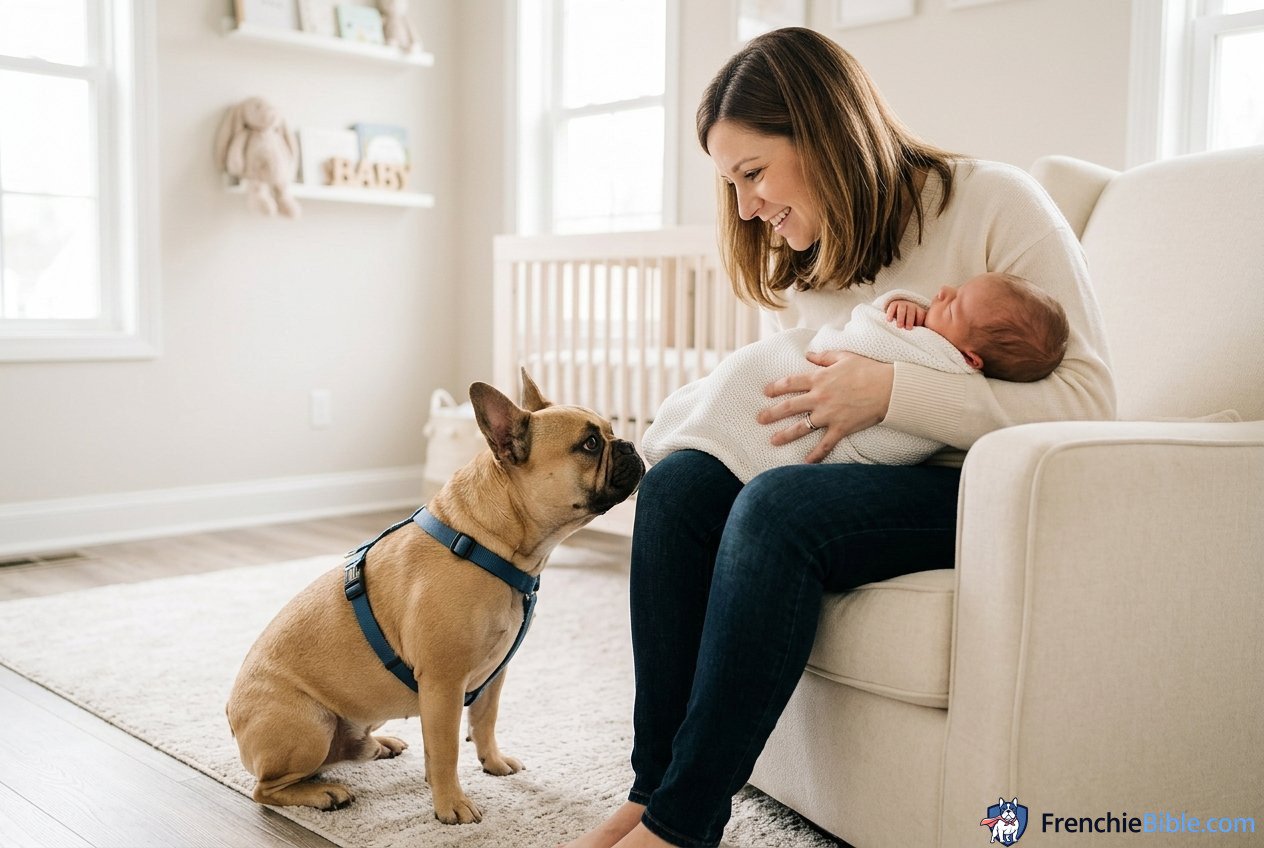
Bringing a new baby home is arguably the most significant change a family can experience. It disrupts the entire household’s rhythm, and it requires careful, proactive preparation to ensure your French Bulldog adjusts smoothly to the new arrival.
Preparation Before the Baby Arrives
The key to a successful introduction starts months before the baby actually arrives. Do not wait until the baby is born to make changes.
Begin by gradually adjusting your Frenchie’s routine. If their feeding, waking, or walking times will change once the baby arrives, start implementing those new times slowly. Introduce baby-related items into the house early. Set up the crib, bring out the stroller, and apply baby lotion or powder to your skin so your dog can get used to the new sights and smells. You can even play recordings of baby noises (crying, cooing, giggling) at a low volume initially, gradually increasing the volume over time to desensitize your Frenchie to the sounds they will soon be hearing.
Additionally, establish physical boundaries early on. If the nursery is going to be a strictly dog-free zone, teach your Frenchie that rule well in advance. Install a baby gate and practice having them stay out of the room. This prevents them from associating the new restriction directly with the baby’s arrival, which could fuel resentment.
The First Meeting
When it is finally time for the first meeting, keep the environment calm, quiet, and controlled. Ensure your Frenchie has had a rigorous walk or an intense play session beforehand so they are physically tired and mentally relaxed.
When you first enter the house with the baby, have someone else hold the infant while you greet your dog warmly but calmly. Your dog has missed you! Allow them to sniff a piece of the baby’s clothing or a receiving blanket that the baby has worn before introducing the baby directly.
During the actual introduction, keep your Frenchie on a leash to maintain absolute control. Reward calm behavior, such as sitting or gentle sniffing, with soft praise and high-value treats. Never force the interaction; let your dog approach at their own pace. If your Frenchie seems overly excited, anxious, or jumpy, gently guide them away, give them a distraction like a Kong filled with peanut butter, and try the introduction again later.
Establishing New Routines
Once the baby is home, it is absolutely vital to establish and stick to a new, consistent routine. Dogs thrive on predictability, and knowing what to expect can significantly reduce their anxiety. Make sure your Frenchie still receives dedicated attention, sufficient exercise, and mental stimulation every single day.
Involve your dog in baby-related activities when appropriate and safe. For example, have them sit calmly on a designated mat nearby while you feed or change the baby, and periodically toss them a treat for staying settled. This helps them build a positive association, helping them understand that the baby’s presence results in good things (treats and praise) for them, rather than isolation.
Introducing a New Pet to Your French Bulldog
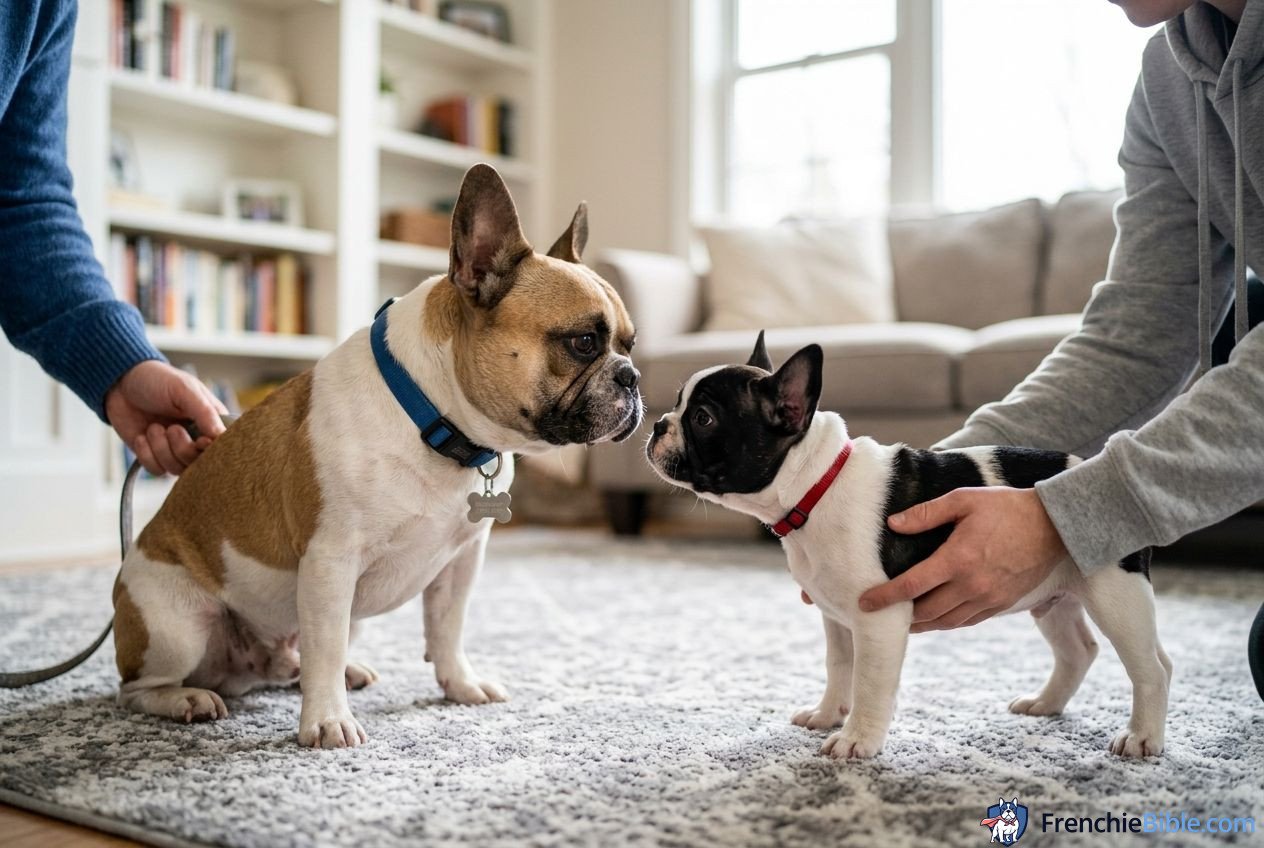
Adding a new puppy, a rescue dog, or even a cat to the family can be an exciting but highly challenging experience for your resident Frenchie. Proper, staged introductions are essential to foster a positive relationship from the very start and prevent long-term resentment.
Choosing the Right Companion
As an experienced breeder, I always advise families to carefully consider the personality, age, size, and energy level of the new pet they are bringing home. French Bulldogs generally do well with other dogs, but they have their limits. A highly energetic, bouncing, large-breed puppy might completely overwhelm an older, more sedate Frenchie who prefers lounging on the sofa.
Consider arranging a meet-and-greet on neutral territory before finalizing your decision to adopt or purchase another pet. This helps ensure the two animals have compatible personalities and play styles.
The Gradual Introduction Process
Never just drop a new pet into your Frenchie’s established territory and expect them to “work it out.” This is a recipe for disaster. The introduction process must be gradual, structured, and carefully managed over several days or weeks.
- Neutral Territory First: Always introduce the dogs on neutral ground, such as a local park or a friend’s fenced yard, to prevent territorial behavior. Keep both dogs on loose leashes and allow them to approach and sniff each other naturally. Watch their body language closely for signs of stiffness, raised hackles, or intense staring.
- Parallel Walking: Go for a long walk together, keeping a safe distance between the dogs initially. As they relax and ignore each other, gradually move closer. This shared, forward-moving activity helps them bond as a pack without the pressure of direct, face-to-face confrontation.
- Bringing Them Home: When you arrive home, keep the dogs separated initially. Use sturdy baby gates or separate rooms to allow them to smell and hear each other without physical contact. You can swap their bedding or blankets so they can get used to each other’s scent in their own safe space.
- Supervised Indoor Interactions: Gradually allow short, highly supervised interactions inside the house. Keep leashes attached (but dragging) initially so you can easily separate them if necessary. Always have a plan to intervene if play gets too rough or tension builds. Reward positive, calm behavior generously with treats and praise.
Managing Resources and Space
Jealousy and conflict between pets almost always stem from competition over high-value resources. To minimize this, ensure there is an abundance of resources available for both animals.
Have completely separate feeding stations, ideally in different rooms or separated by a gate. Provide multiple water bowls throughout the house. Ensure there are more than enough toys to go around. Never leave extremely high-value items, like special chew bones, rawhides, or filled Kongs, lying around when the dogs are together unsupervised, as this is a common trigger for fights.
Additionally, make sure both pets have their own designated safe spaces—such as their own crate or a specific, comfortable bed—where they can retreat and be left entirely alone when they need a break from each other.
Proven Strategies to Soothe a Jealous Frenchie
Whether your Frenchie is jealous of a crying newborn baby or an energetic new puppy, there are several highly effective, proactive strategies you can implement to soothe their anxiety, rebuild their confidence, and restore peace in your home.
Dedicated One-on-One Time
The single most effective way to combat jealousy is to reassure your Frenchie that they are still deeply loved, valued, and essential to your family. Carve out dedicated, uninterrupted one-on-one time with your dog every single day.
Even just 15 to 20 minutes of entirely focused attention can make a massive difference in their emotional well-being. Use this time for their absolute favorite activities. Whether it’s playing a vigorous game of fetch in the yard, practicing new tricks, going for a special solo walk without the baby or the new dog, or simply cuddling quietly on the couch while you stroke their ears. This dedicated time reinforces your bond, reassures them of their place in your heart, and helps alleviate their profound fear of replacement.
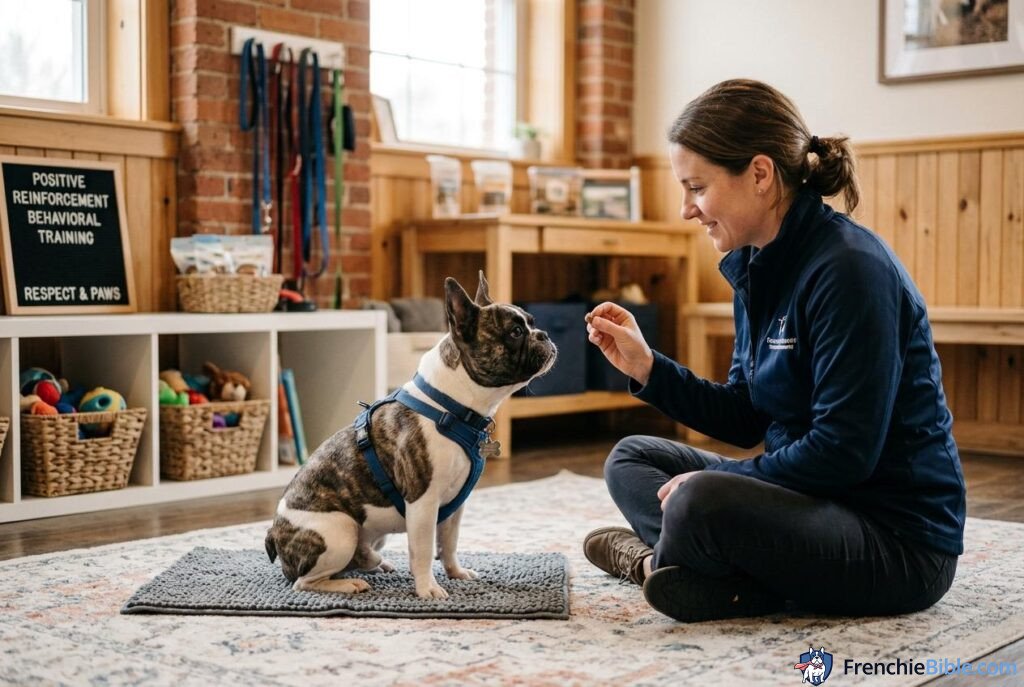
Positive Reinforcement Training
Training is not merely about teaching commands like sit or stay; it’s about building confidence, establishing clear communication, and reinforcing your leadership in a gentle way.
Use positive reinforcement techniques to heavily reward your Frenchie for calm, acceptable behavior whenever they are around the new baby or pet. If your dog is lying quietly on their bed while you hold the baby, periodically toss them a high-value treat. If they ignore the new puppy trying to instigate rough play and choose to walk away and relax instead, praise them warmly and offer a reward.
Short, engaging training sessions also provide vital mental stimulation, which is crucial for tiring out an anxious, stressed dog. Remember the old adage: a tired dog is generally a happy, well-behaved dog. Mental fatigue from learning new tricks can be just as exhausting for a Frenchie as physical exercise.
Creating Safe and Secure Spaces
Your Frenchie absolutely needs a private sanctuary where they can escape the noise, chaos, and unpredictable movements of a new baby or an energetic new pet. Create a comfortable, quiet, and secure space that is exclusively theirs.
This could be a cozy crate covered with a breathable blanket to make it den-like, a plush bed tucked in a quiet corner of the master bedroom, or a designated spot in a low-traffic area of the house. It is imperative that you teach children, visitors, and other pets to completely respect this space. When your Frenchie retreats to their safe zone, they must be left completely alone. Do not reach in to pet them or try to pull them out. This gives them a sense of control and security when they feel overwhelmed, preventing anxiety from escalating into aggression.
When Jealousy Turns into Resource Guarding
As an owner, it is critical to distinguish between simple jealousy and resource guarding. Resource guarding is a much more serious behavioral issue that requires careful, calculated management to prevent injury.
Identifying Resource Guarding vs. Jealousy
Jealousy is typically an emotional response to feeling left out or replaced. A jealous dog wants your attention and may act out to get it. Resource guarding, on the other hand, is a specific, intense, and often aggressive reaction designed to protect a highly valuable item from being taken away. This “item” could be a bowl of food, a favorite toy, a prime resting spot on the couch, or even a specific person (like you).
While a jealous dog might whine, pace, or try to push their way into your lap, a resource-guarding dog will exhibit distinct warning signs: they will often stiffen their body, freeze in place, emit a low growl, snap, or even bite if someone (a baby, a toddler, another dog, or even you) approaches their prized possession.
Managing Guarding Behaviors Safely
If your Frenchie exhibits signs of resource guarding, especially around a vulnerable new baby or a naive new pet, you must address it immediately and safely.
- Avoid Confrontation: Never, under any circumstances, try to forcefully pry an item out of a guarding dog’s mouth or physically push them off a guarded spot. This will likely result in a bite and will severely escalate the guarding behavior in the future, as you have just proven to the dog that their resource is indeed under threat.
- Trade Up (The Exchange Game): If you absolutely must remove an item from your dog, offer something of significantly higher value in exchange. For example, if they are guarding a stolen baby sock, offer them a piece of real chicken or hot dog. Throw the high-value treat a few feet away. Once the dog leaves the guarded item to eat the treat, safely remove the item.
- Strict Management: Manage the environment meticulously to prevent guarding situations from occurring in the first place. Pick up all high-value toys when not in active use. Feed the dog in a completely separate room or inside their locked crate. If they guard resting spots like the sofa, restrict their access to the furniture entirely until the behavior is resolved.
- Seek Professional Help immediately: Resource guarding is a complex issue and can be highly dangerous, especially with crawling babies or toddlers in the home. Do not attempt to fix severe guarding on your own. Consult with a professional, positive-reinforcement-based dog trainer or a certified animal behaviorist to develop a safe, tailored behavior modification plan.
Maintaining Harmony in a Growing Family
Creating and maintaining a harmonious environment with a French Bulldog, a growing baby, or a new pet is an ongoing, long-term process. It requires immense patience, deep understanding of canine behavior, and consistent effort from every member of the family.
Consistency is Key
Dogs thrive on absolute consistency. You must establish clear rules and boundaries, and you must stick to them. If your Frenchie is not allowed on the couch when the baby is present, ensure this rule is enforced every single time, by every single member of the household. If Dad lets the dog on the couch with the baby, but Mom scolds the dog for doing it, the dog becomes deeply confused. Inconsistent rules breed insecurity, which drastically increases anxiety and jealous behaviors.
Active and Vigilant Supervision
Never, ever leave your French Bulldog completely unsupervised with a baby, a toddler, or a new pet, regardless of how sweet, gentle, or well-behaved you believe your dog is. Animals are unpredictable, and accidents can happen in a split second.
An overly enthusiastic Frenchie could accidentally knock over an unsteady toddler. A crawling baby could grab a dog’s ears or startle a deeply sleeping dog, leading to a defensive, instinctive snap. A new puppy might push the older dog’s boundaries too far, resulting in a fight. Active, awake, and vigilant supervision is absolutely non-negotiable for the physical safety and emotional well-being of everyone involved.
As your baby grows into an active toddler and eventually a child, it is your responsibility to teach them how to interact respectfully with the dog. Show them how to pet gently on the back or chest (avoiding the top of the head). Explain in clear terms that the dog’s crate and bed are off-limits to humans. Teach them never to disturb the dog while they are eating their food or chewing a bone, and never to wake a sleeping dog.
With time, immense patience, and the right, proactive approach, your French Bulldog will learn to accept—and hopefully even deeply love—the new additions to your growing family. A Frenchie’s capacity for love and loyalty is immense, and with your gentle, consistent guidance, they will successfully adjust to their new reality and remain a beloved member of your pack for years to come.
Frequently Asked Questions (FAQs)
1. Do French Bulldogs get jealous more easily than other breeds?
While every dog is an individual, French Bulldogs are specifically bred to be highly attached companion animals. They are known for their strong, sometimes possessive attachment to their owners, which can indeed make them more prone to displaying jealous behaviors compared to more independent breeds. They thrive on being the center of attention and may struggle significantly when forced to share that attention with a new baby or pet.
2. How long does it usually take for a Frenchie to fully accept a new baby?
The adjustment period varies wildly from dog to dog. Some easygoing Frenchies may adapt within a few short weeks, while others with more anxious or possessive personalities may take several months to truly settle into the new dynamic. Consistency in daily routines, heavy use of positive reinforcement, and ensuring they receive dedicated daily one-on-one time can help speed up the acceptance process and reduce their stress.
3. Can extreme jealousy in Frenchies lead to dangerous aggression?
Yes. If left unaddressed and unmanaged, intense jealousy can sometimes escalate into serious aggression, such as deep growling, snapping, biting, or intense resource guarding of the owner. It is absolutely crucial to monitor their body language and behavior closely and intervene early with positive reinforcement, environmental management, and professional help if necessary.
4. Should I verbally or physically punish my Frenchie for showing signs of jealousy?
No, you should absolutely never punish your Frenchie for showing signs of jealousy or anxiety. Punishment (yelling, hitting, using shock collars) will only dramatically increase their fear and anxiety, damage the trust in your bond, and potentially lead to much more severe, unpredictable behavioral issues. Instead, focus entirely on rewarding calm, desirable behavior and ensuring they feel secure, safe, and loved.
5. Will getting a second French Bulldog help cure my first dog’s jealousy?
Getting another dog is never a guaranteed solution for jealousy and can very often exacerbate the exact problem you are trying to solve, especially if the resident dog is highly possessive of your attention and resources. If you do decide to get another pet, you must ensure you introduce them very slowly on neutral territory and manage all resources (food, toys, your lap) carefully to prevent conflict and fights.
Disclaimer:
The information, guidance, and strategies provided in this article are based solely on my extensive, practical experience as a French Bulldog breeder and breed enthusiast. I am not An Experienced Breedererinarian, nor do I hold any formal medical or veterinary qualifications. We are not veterinarians, and we have no medical qualifications. All content shared here regarding canine behavior, training, psychology, and daily care is for informational and educational purposes only. This information should never, under any circumstances, be used as a substitute for professional veterinary advice, medical diagnosis, or treatment. Always consult directly with a licensed veterinarian or a certified, professional animal behaviorist regarding any specific concerns you have about your dog’s health, sudden behavioral changes, or overall well-being.
Disclaimer: I am a French Bulldog breeding expert with over a decade of hands-on experience with this breed. I am not a veterinarian. The information in this article is for educational purposes only. Always consult your veterinarian regarding your dog’s specific health needs and care.