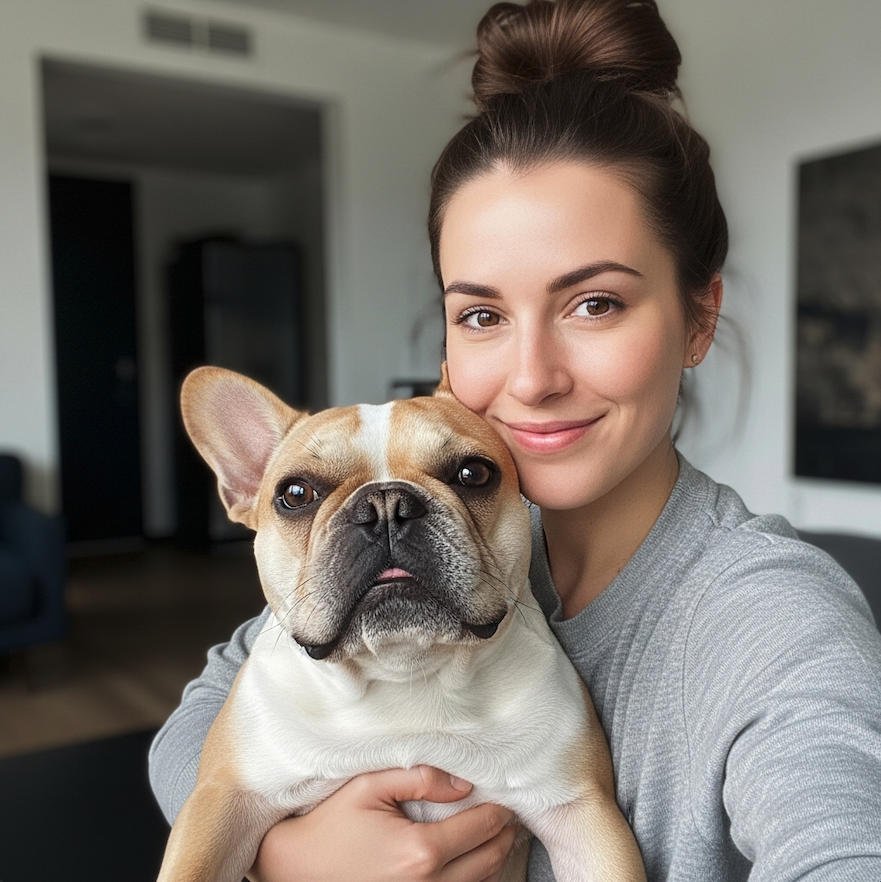
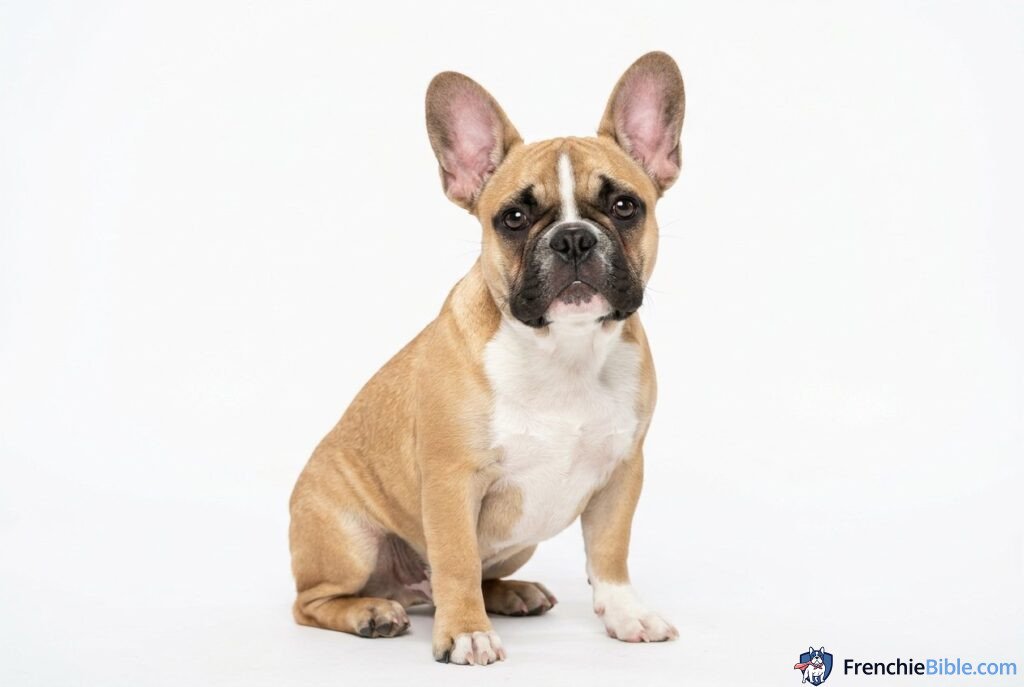
If you are an avid dog lover who adores the charming, comical, and endlessly entertaining personality of the French Bulldog but constantly battles with pet allergies or vacuuming endless amounts of stubborn dog hair from your furniture and clothing, you might have found yourself intrigued by the latest trend in designer dogs: the french boodle. Also known affectionately as the Frenchiepoo, Froodle, Boodle, or Frenchie Boodle, this unique and increasingly popular crossbreed combines the robust, affectionate nature of the French Bulldog with the highly intelligent, agile, and low-shedding characteristics of the Poodle.
As a breeding expert and canine content director with over a decade of specialized experience working intimately with French Bulldogs, their genetics, and their behavioral development, I have witnessed firsthand the rapid evolution of canine breeding trends. This includes the skyrocketing popularity of “doodle” mixes across the globe. The primary driving force behind the creation of the French Boodle is almost universally the desire for a “hypoallergenic” or non-shedding Frenchie alternative. People want the bat ears and the clownish personality without the sneezes and the lint rollers. But is the French Boodle truly the allergy-friendly miracle dog it is so often marketed to be? Or is it simply another designer dog resulting from a clever marketing gimmick that overlooks the complexities of canine genetics?
Related Reading: Training & Behavior | Frenchie Puppy Guide | Best Food for Frenchies
In this comprehensive, deep-dive guide, we will explore every facet of the world of the French Boodle. We will dissect their genetic makeup, uncover the absolute truth behind their shedding and hypoallergenic claims, analyze their varied temperaments, detail their intense grooming needs, highlight crucial health considerations, and ultimately help you decide if this specific hybrid mix is the right fit for your home and lifestyle.
What Exactly is a French Boodle? (The french bulldog poodle mix)
Before we can fully understand the nuances of the French Boodle, we must first examine the two vastly distinct purebred dogs that make up this hybrid. The French Boodle is a deliberate crossbreed between a purebred French Bulldog and a purebred Poodle. In the vast majority of breeding programs, breeders will utilize a Miniature Poodle or a Toy Poodle rather than a Standard Poodle. This is done purposefully to maintain a smaller, more manageable physical size that aligns much closer to the standard, compact footprint of a traditional French Bulldog.
The Origins of the French Boodle
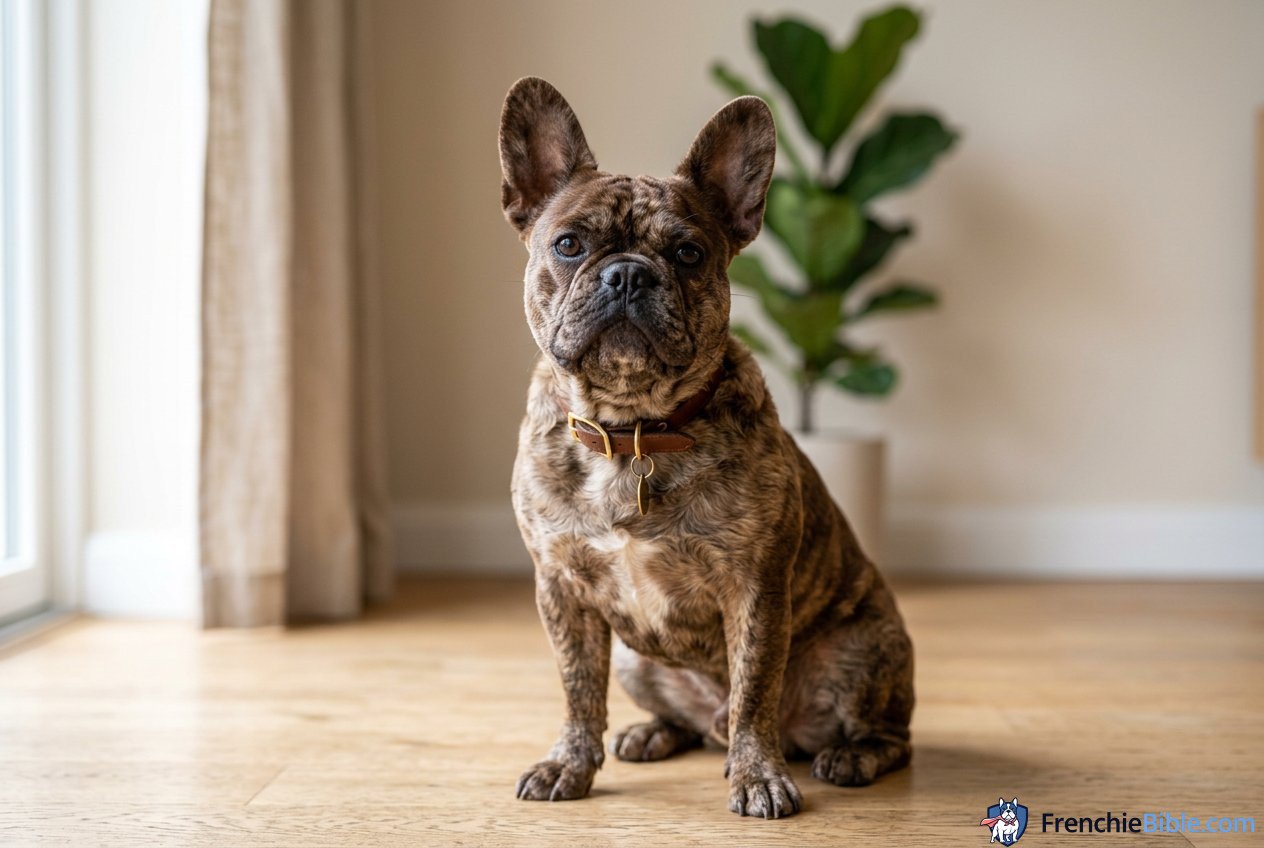
Unlike historic, ancient dog breeds that have been meticulously refined over centuries for highly specific working tasks—such as hunting, herding, or guarding—the French Boodle is a relatively recent creation in the canine world. The “designer dog” craze gained massive, unstoppable momentum in the late 20th and early 21st centuries. This movement was pioneered largely by the creation of the Labradoodle (a Labrador Retriever crossed with a Standard Poodle), originally bred in Australia with the noble goal of creating a hypoallergenic guide dog for visually impaired individuals with allergies.
The underlying goal of almost all these subsequent Poodle crosses was to inject the Poodle’s highly desirable, low-shedding coat genetics into other popular, yet heavy-shedding breeds. As the French Bulldog climbed the international ranks to become one of the most popular and sought-after dog breeds in the world (eventually claiming the number one spot in several countries), it was only a matter of time before breeders attempted to combine the Frenchie’s irresistible bat-eared charm with the Poodle’s allergy-friendly coat. Thus, the concept of the French Boodle was born.
However, it is vital to understand that unlike purebreds, which have strict breed standards dictating their size, shape, and temperament, designer dogs do not have an official breed standard recognized by major kennel clubs like the AKC (American Kennel Club) or the FCI (Fédération Cynologique Internationale). This means there is an incredible amount of unpredictable variation from one litter to the next, and even between individual puppies born in the exact same litter.
French Bulldog vs. Poodle Genetics: A Delicate Balance
Breeding a French Boodle is an exercise in profound genetic unpredictability. You are taking two dogs with drastically different structural phenotypes and attempting to merge them.
– The French Bulldog: A brachycephalic (flat-faced), heavy-boned, muscular, and compact dog with a wide chest, narrow hips, and a short, smooth coat.
– The Poodle: A dolichocephalic (long-snouted), fine-boned, agile, and athletically built dog with a deep chest, long legs, and a dense, curly, continuously growing coat of hair.
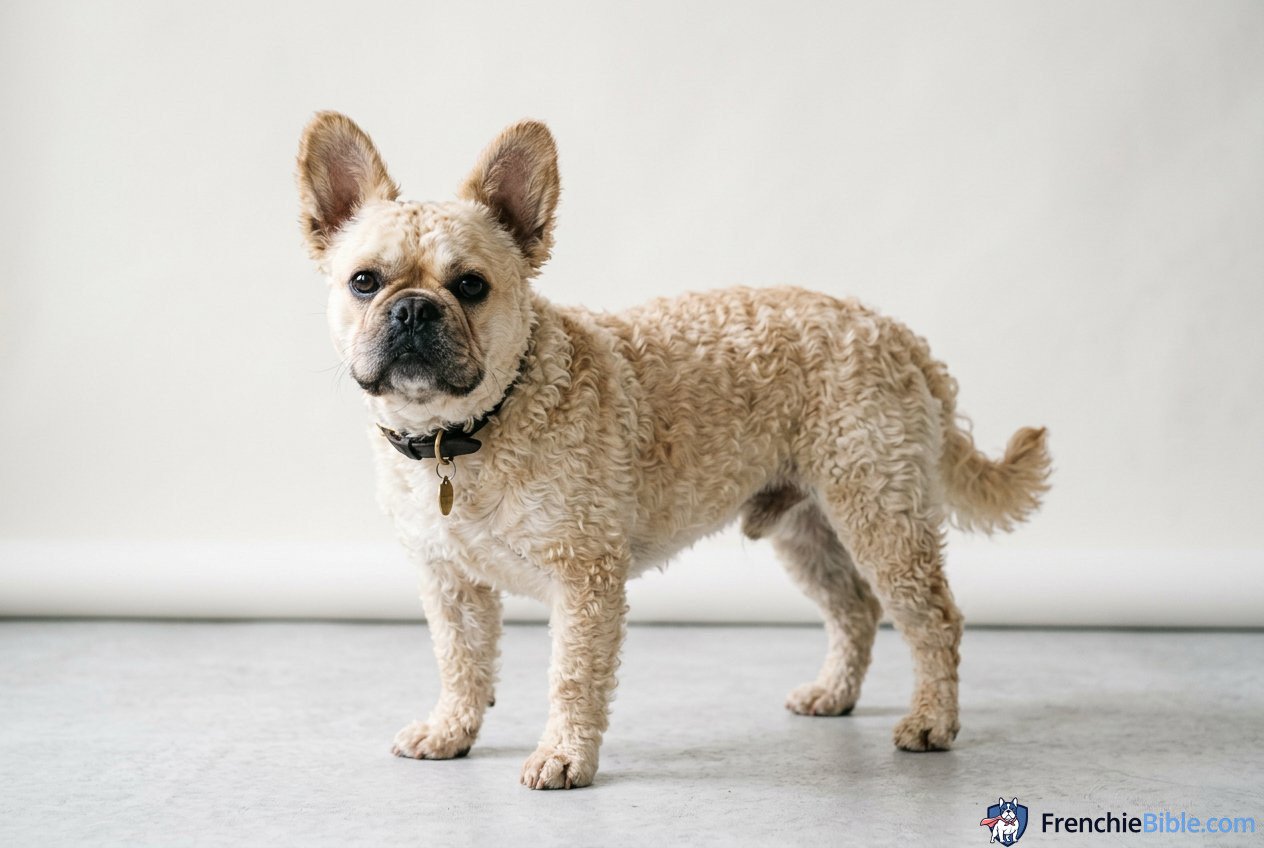
When you cross these two starkly different physical types, the resulting offspring will inherit a randomized, genetic roll-of-the-dice mix of traits. Some French Boodles may look almost exactly like a scruffy, slightly longer-legged French Bulldog, while others might look indistinguishable from a standard, robust Miniature Poodle.
First-generation (F1) crosses—which are a direct 50/50 mix of a purebred Frenchie and a purebred Poodle—tend to have the most unpredictable outcomes in terms of physical appearance, skeletal structure, and coat type. Breeders who specialize in these mixes and aim for consistency often move on to F1b generations. An F1b cross involves taking an F1 French Boodle and breeding it back to a purebred Poodle (usually a Miniature or Toy). This increases the Poodle genetic percentage to 75%, significantly increasing the mathematical likelihood of the offspring inheriting the coveted curly, non-shedding coat, though it often sacrifices the physical “Frenchie look” in the process.
The Truth About “Non-Shedding” and Hypoallergenic Claims
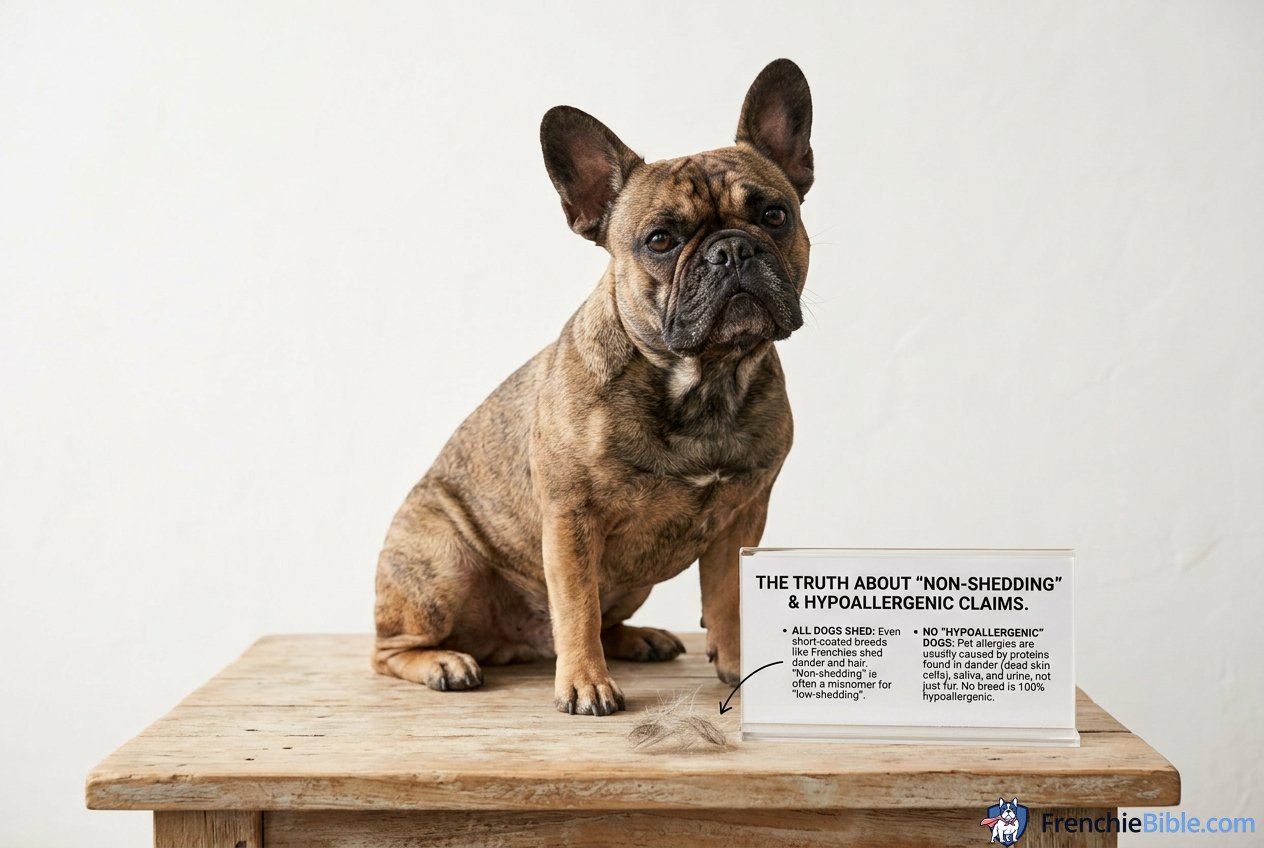
The single most significant selling point of the French Boodle, heavily pushed by breeders and enthusiasts alike, is the promise of a hypoallergenic, non-shedding coat. However, as an experienced breeding professional who deals with canine genetics daily, I must definitively clarify a crucial, industry-wide misconception: there is absolutely no such thing as a 100% hypoallergenic dog.
Poodle Coats vs. Frenchie Coats
To understand the French Boodle’s coat potential, we must look closely at the parents.
The Poodle has a single coat of dense, curly hair, rather than traditional canine fur. This hair grows continuously throughout the dog’s life and sheds minimally, functioning very similarly to human hair. Because the hair is tightly curled and coiled, the small amount of hair that does naturally die and fall out gets immediately trapped within the surrounding coat, rather than falling out onto your floor, carpets, or clothing.
The French Bulldog, conversely, possesses a short, smooth, single coat (though some variations do have a light undercoat). They are moderate to heavy shedders throughout the year, with shedding often intensifying during seasonal temperature changes. Their short, coarse, needle-like hairs have a notorious knack for weaving themselves tightly into fabric fibers, making them incredibly difficult to remove from upholstery, car seats, and dark clothing.
Do French Boodles Actually Shed?
Whether a specific French Boodle sheds depends entirely and exclusively on which specific coat genes they happen to inherit from their parents. It is never a guarantee.
– The Poodle-Dominant Coat: If the puppy inherits the dominant genes for the Poodle’s curly hair, they will shed very little. Their coat will require intense maintenance, but your furniture will remain mostly hair-free.
– The Frenchie-Dominant Coat: If the puppy inherits a coat closer to the French Bulldog parent, they will have short, straight fur and they will shed. Sometimes, they can shed just as much as a purebred Frenchie, completely negating the primary reason many people buy this mix.
– The Wavy/Fleece Coat: Many F1 French Boodles end up with a wavy, scruffy, fleece-like coat that sits somewhere squarely in the middle of the two extremes. These dogs typically are low to moderate shedders. They will lose hair, but not at the volume of a purebred French Bulldog.
If your absolute sole reason for wanting a French Boodle is to guarantee a completely non-shedding dog to keep your house pristine, an F1 mix is a massive, expensive gamble. To virtually guarantee a non-shedding coat, you would need to find a breeder specializing in multi-generational crosses that have been extensively DNA tested for coat traits (such as furnishings and shedding genes), or you would be better off simply acquiring a purebred Poodle.
Managing Allergies with a French Boodle
It is critical to understand the science of pet allergies. People are typically allergic to a specific protein (known as Can f 1) found in a dog’s dander (microscopic dead skin flakes), their saliva, and their urine—not the physical hair itself.
Low-shedding dogs like Poodles are often better for allergy sufferers because they produce less dander that spreads around the house; the dander stays trapped in their tightly curled hair rather than floating into the air when fur is shed. However, if a French Boodle inherits the French Bulldog’s known propensity for environmental allergies, sensitive skin, or dermatitis, they may constantly scratch and actually produce more dander in the environment, severely exacerbating your allergies despite having a scruffy or wavy coat.
If you or a family member have severe allergies, you should never bring a designer mix into your home without first spending significant, enclosed time with that specific puppy to gauge your physical reaction.
French Boodle Appearance and Physical Traits
Because there is no governing breed standard to dictate how they should look, the appearance of a French Boodle is a complete wildcard. They are undeniably cute, often resembling a scruffy teddy bear with oversized ears, but potential owners must be mentally prepared for a remarkably wide range of physical outcomes as the puppy grows into an adult.
Size and Weight Expectations
The ultimate adult size of a French Boodle is heavily dictated by the specific type of Poodle parent utilized in the breeding program.
– Toy Poodle Mixes: If a Frenchie is crossed with a Toy Poodle (often via artificial insemination due to size differences), the resulting French Boodle will typically be quite small. They generally weigh between 10 to 18 pounds and stand roughly 10 to 12 inches tall at the shoulder when fully grown.
– Miniature Poodle Mixes: If crossed with a Miniature Poodle (the more common pairing), the weight will generally range from a sturdy 15 to 25 pounds, standing anywhere from 12 to 15 inches tall.
Structurally, they usually possess a body shape that is leaner, more athletic, and longer-legged than a traditional French Bulldog, but substantially stockier, wider, and more muscular than a delicate Poodle.
Coat Types: Wavy, Curly, or Straight?
As touched upon earlier, the texture and length of the coat can vary drastically, even within the same litter:
1. Curly (Poodle-like): Dense, tightly coiled hair that requires significant, professional grooming but sheds minimally.
2. Wavy (Fleece-like): A soft, shaggy, wavy coat that is highly desirable in the designer mix market. It gives the dog a “muppet” appearance. It sheds moderately and requires regular brushing to prevent severe matting.
3. Straight/Smooth (Frenchie-like): Short, smooth fur that sheds regularly and requires minimal grooming maintenance.
4. Wire-haired/Scruffy: Some genetic combinations result in a wiry, coarse, terrier-like coat that gives the dog a distinguished, bearded look.
Common Colors and Patterns
Both French Bulldogs and Poodles come in a vast, expansive array of accepted and unaccepted colors. This means the French Boodle can be born sporting almost any canine coat color or pattern imaginable. Common colors include:
– Solid Black
– Pure White
– Cream, Fawn, and Apricot
– Deep Red or Chocolate
– Brindle (a tiger-striped pattern)
– Blue (a dilute black that appears grey)
– Merle (a controversial, mottled pattern that must be bred with extreme caution to avoid deafness and blindness)
– Pied (a stark white base coat with large patches of darker color)
– Phantom/Tan Points (a solid dark base, such as black or blue, with distinct tan markings on the eyebrows, cheeks, chest, and legs, similar to a Doberman).
Their ears are another point of massive variation. They may inherit the Frenchie’s signature, large, erect “bat ears,” the Poodle’s long, flat, floppy drop ears, or something awkwardly sitting in between—often referred to as “rose ears” or half-pricked ears that flop over at the tips.
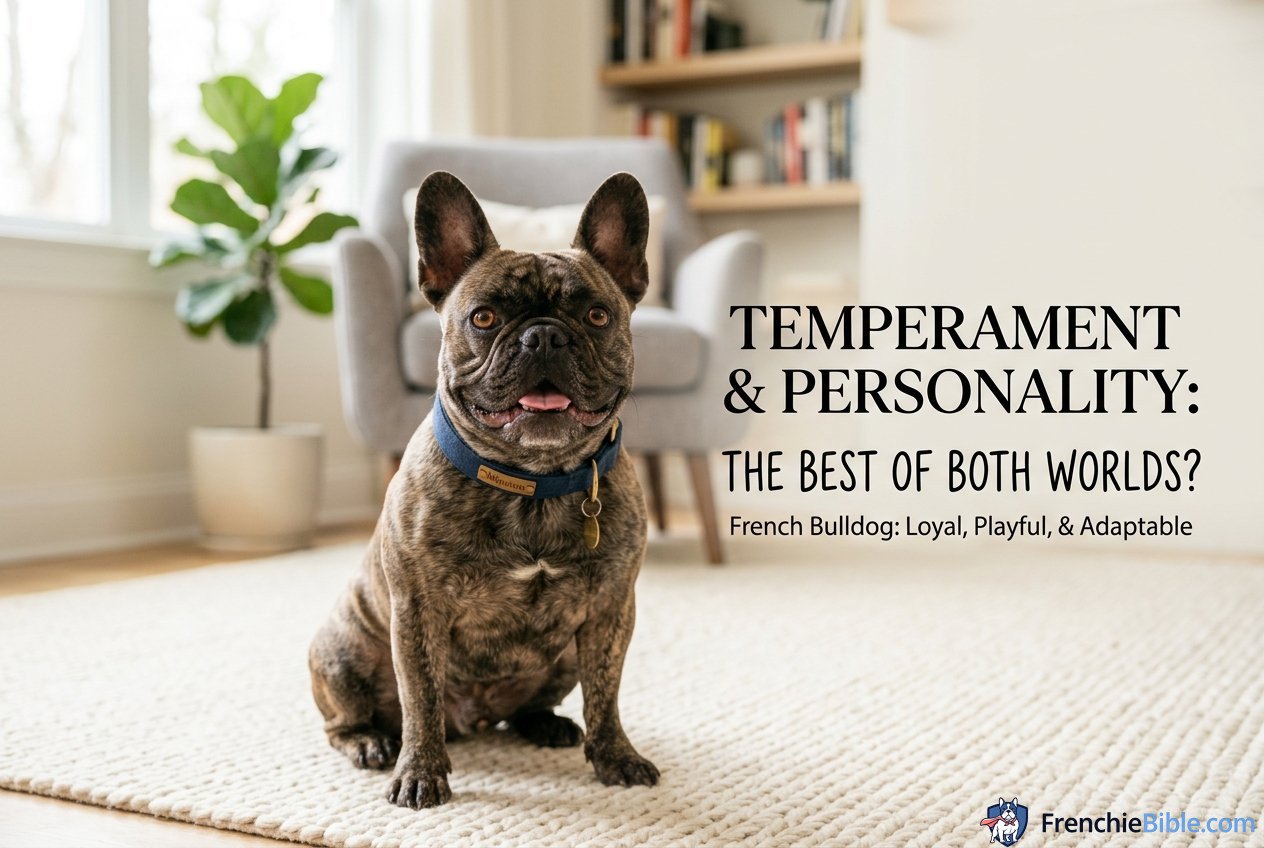
Temperament and Personality: The Best of Both Worlds?
When breeders combine two vastly different breeds, the overarching hope is to achieve “hybrid vigor” of their personalities—combining the absolute best behavioral traits of both parents while minimizing the negatives. The French Boodle often results in a highly affectionate, deeply intelligent, and incredibly entertaining canine companion.
The French Bulldog’s Charm
French Bulldogs are globally renowned for being exceptional, top-tier companion animals. They are deeply affectionate, often sticking to their owners like velcro, and they demand to be the center of attention. They are famously known as the “clowns of the dog world,” boasting a silly, deeply stubborn, and highly entertaining personality. They are generally incredibly loving, easygoing, and patient with their families, thriving on physical contact and couch cuddles.
The Poodle’s Intelligence and Energy
Poodles are consistently ranked by canine behaviorists as one of the top three smartest dog breeds in the entire world. They are highly trainable, fiercely loyal, eager to please, and surprisingly athletic. Miniature and Toy Poodles have a substantial amount of energy and thrive on mental stimulation, puzzle toys, and advanced obedience training. They can, however, be slightly more aloof or reserved with strangers compared to the openly gregarious, happy-go-lucky Frenchie.
What to Expect from a French Boodle’s Behavior
A responsibly bred, well-socialized French Boodle will likely mature into a friendly, highly intelligent, and playfully energetic dog. They tend to inherit the Frenchie’s deep love for cuddling on the sofa and being close to their humans, combined beautifully with the Poodle’s sharp mind, agility, and desire for interactive playtime.
They make excellent family dogs and usually get along famously with children, provided the children are taught how to interact respectfully and gently. However, owners must be prepared for the behavioral wildcards. They can easily inherit the Frenchie’s notorious stubborn streak, making training sessions a frustrating battle of wills. Alternatively, they might inherit the Poodle’s deep emotional sensitivity, meaning harsh training methods or raised voices will cause them to shut down completely and become fearful.
Training and Socialization Needs
Because of their remarkably high intelligence (thanks primarily to the Poodle lineage), French Boodles require consistent, positive reinforcement training starting from a very young age. Without proper mental stimulation, daily training, and “jobs” to do, this high intelligence can quickly manifest as destructive behavior, excessive barking, or anxiety.
Early, intense socialization is absolutely critical. You must expose your French Boodle puppy to a wide variety of people, safe adult dogs, different environments, surfaces, and loud sounds during their critical socialization window (between 8 and 16 weeks of age). This helps prevent the development of fear-based aggression or generalized anxiety—traits that can occasionally be seen in poorly bred or undersocialized Poodles. Furthermore, they may be highly prone to separation anxiety, a common, deeply ingrained trait in French Bulldogs. Teaching them from day one how to be calm, comfortable, and confident when left alone in a crate or pen is vital for their mental well-being and your peace of mind.
Exercise and Activity Requirements
Understanding the exercise needs of a French Boodle requires carefully balancing the athletic, energetic capability of the Poodle with the very real physical and respiratory limitations of the French Bulldog.
Balancing Energy Levels
Poodles are active, agile dogs that require daily, moderate exercise to burn off energy and stay sane. French Bulldogs, due to their brachycephalic (flat) faces and heavy bodies, have notably low stamina, tire easily, and are extremely prone to overheating.
A French Boodle will generally possess a moderate, middle-of-the-road energy level. Structurally, they will usually be more active, lighter on their feet, and agile than a purebred Frenchie. They are generally capable of going on longer neighborhood walks, light hiking, and engaging in more vigorous games of fetch. However, they will likely not possess the endless, marathon-running endurance of a purebred Poodle. Expect to provide at least 30 to 45 minutes of dedicated, focused exercise per day, ideally split into two separate walks, alongside some interactive indoor playtime.
Safe Exercise Practices
If your specific French Boodle inherits a notably shortened snout and flat face from the Frenchie parent, you must exercise extreme, uncompromising caution in warm, hot, or humid weather. Brachycephalic dogs cannot pant effectively to cool themselves down, making them highly susceptible to rapid, fatal heatstroke.
– Always use a high-quality, well-fitted body harness rather than a neck collar to protect their delicate tracheas and airways from collapsing during walks.
– Strictly avoid rigorous exercise during the heat of the day; walk them only in the early morning or late evening.
– Never, under any circumstances, leave a French Boodle outside unattended in the heat.
– Keep them closely monitored around deep water. French Bulldogs are notoriously poor swimmers, often sinking like stones due to their top-heavy build. Your French Boodle may unfortunately inherit this dense body structure despite the Poodle’s historic background as a skilled water retriever. Always use a canine life jacket near pools or lakes.
Grooming Your French Boodle: A Demanding Task
If you are primarily drawn to the French Boodle for its promise of “low maintenance” shedding, you must be prepared for the reality of high-maintenance grooming. The simple truth is this: the coat that does not shed on your furniture will instead mat painfully on the dog’s body if not properly, consistently cared for.
Daily and Weekly Brushing Routines
If your French Boodle has a wavy, fleece, or curly coat, you are committing to brushing them thoroughly at least 3 to 4 times a week, if not every single day. You cannot simply brush the top layer of the fur. You must use a high-quality slicker brush followed by a metal greyhound comb to “line brush” all the way down to the skin. Simply skimming the top layer will result in severe, hidden matting near the skin. Matting pulls tightly on the skin, causing severe pain, restricted movement, and potential skin infections. If a dog becomes severely matted, a groomer will have no choice but to shave the dog down completely to the skin for the dog’s safety and comfort.
Professional Grooming Needs
Unless they happen to inherit the short, smooth, maintenance-free coat of the French Bulldog, a French Boodle will absolutely require professional grooming appointments every 6 to 8 weeks. A professional groomer will thoroughly bathe, blow-dry, brush out, and clip the coat to a manageable length. This is a significant, recurring financial commitment that must be honestly factored into the lifetime cost of owning this specific designer mix.
Ear, Nail, and Dental Care
- Ears: Both Poodles and French Bulldogs are highly prone to ear infections. If your French Boodle has heavy, floppy drop ears, moisture and heat can easily become trapped inside the ear canal, creating a perfect, dark breeding ground for yeast and bacterial infections. Clean their ears weekly with An Experienced Breedererinarian-recommended, gentle cleanser and ensure they are thoroughly dried after baths.
- Nails: Trim their nails every 3 to 4 weeks. If you can hear their nails clicking like tap shoes on hard floors, they are far too long and are altering the structural alignment of the dog’s toes and joints.
- Dental Care: Small dog breeds are notoriously prone to severe dental disease and early tooth loss. You must commit to brushing their teeth several times a week with dog-safe enzymatic toothpaste to prevent dangerous plaque buildup, tartar, and systemic periodontal disease, which can affect their heart and kidneys.
Health and Lifespan of the French Boodle
One of the main arguments proponents use for crossbreeding is the scientific concept of “hybrid vigor” (heterosis)—the idea that mixing two entirely different gene pools creates offspring that are biologically healthier and more robust than either purebred parent breed. While it is true that a French Boodle may have a statistically lower risk of inheriting recessive genetic diseases specific to only one breed, they are still highly susceptible to the health issues that are prevalent in both parent breeds.
Hybrid Vigor vs. Inherited Health Issues
It is a dangerous myth that designer dogs are immune to health problems. If a backyard breeder uses a French Bulldog with severe breathing issues and spinal deformities, and crosses it with a Poodle with terrible joints and eye disease, the puppies are not magically cured by the crossbreeding. In fact, they may inherit a devastating combination of both sets of problems. Comprehensive health testing of the parent dogs prior to breeding is absolutely critical.
Common French Bulldog Health Concerns
French Bulldogs, while adorable, are a structurally compromised breed. They are highly prone to:
– Brachycephalic Obstructive Airway Syndrome (BOAS): Chronic difficulty breathing due to a shortened snout, an elongated soft palate that blocks the airway, narrow nostrils (stenotic nares), and everted laryngeal saccules. This often requires expensive corrective surgery.
– Intervertebral Disc Disease (IVDD): A severe spinal condition where discs rupture or bulge, which can cause excruciating pain, loss of motor function, and permanent paralysis.
– Hip Dysplasia: A genetic malformation of the hip joint leading to painful arthritis.
– Skin Allergies and Dermatitis: Chronic itchiness, skin fold infections (especially in the facial wrinkles), and recurrent ear infections.
– Eye Issues: Cherry eye (prolapsed gland of the eyelid), entropion (inward rolling eyelids), and painful corneal ulcers.
Common Poodle Health Concerns
Miniature and Toy Poodles are generally healthy, long-lived dogs, but they can be genetically prone to:
– Luxating Patellas: A condition where the kneecaps slip easily out of their proper groove, causing a skipping gait and eventually requiring surgical correction.
– Progressive Retinal Atrophy (PRA): A devastating genetic eye disease that slowly leads to complete blindness.
– Epilepsy: Idiopathic seizure disorders requiring lifelong medication.
– Legg-Calvé-Perthes Disease: A painful degeneration of the head of the femur bone in the hind leg, common in small breeds.
– Severe Dental Disease: Rapid plaque accumulation leading to tooth decay and loss.
Specific Health Risks for the French Boodle
A French Boodle could tragically inherit any combination of the above issues. The most pressing, life-altering concerns for owners to watch for will be airway health (if they inherit a flat face from the Frenchie), joint health (specifically luxating patellas and IVDD), and severe allergies. A slightly longer snout inherited from the Poodle parent can improve breathing significantly compared to a purebred Frenchie, but it is never a guarantee, as the internal airway structures can still be compromised.
The Importance of Responsible Breeding
Because designer dogs like the French Boodle are not regulated by official kennel clubs, the market is unfortunately flooded with backyard breeders, puppy mills, and profit-driven individuals looking to cash in on a lucrative trend.
A truly responsible, ethical breeder will perform comprehensive health testing on their breeding dogs before ever planning a litter. This includes OFA (Orthopedic Foundation for Animals) testing for hips, patellas, and cardiac function, as well as extensive genetic DNA panels for both the Poodle and the French Bulldog to ensure they are not passing on inheritable, preventable diseases to the puppies.
Never, under any circumstances, buy a French Boodle from a breeder who refuses to show you the official health testing certificates of the parent dogs. “Vet checked” is not the same as genetic health testing.
Diet and Nutrition for a Healthy French Boodle
Proper, science-backed nutrition is the absolute foundation of a long, healthy life. Given the French Boodle’s genetic propensity for severe environmental and food allergies, as well as potential joint issues, a high-quality, strictly managed diet is paramount.
Feeding Guidelines for Puppies
Growing puppies require a high-quality, small-breed specific puppy formula to properly support their rapid bone growth and neurological development. Feed them 3 to 4 small, measured meals a day. Ensure the food is rich in high-quality animal proteins, appropriate calcium-to-phosphorus ratios, and DHA (an omega-3 fatty acid crucial for brain and eye development).
Maintaining a Healthy Weight for Adults
Both French Bulldogs and Poodles can be incredibly prone to obesity if overfed and under-exercised. Carrying even a few pounds of extra weight puts severe, dangerous strain on their fragile joints (drastically increasing the risk of IVDD and luxating patellas) and significantly exacerbates any underlying breathing difficulties.
Feed your adult French Boodle a strictly measured amount of high-quality kibble, high-grade wet food, or a carefully balanced raw/fresh diet twice a day. Avoid cheaper commercial foods loaded with excessive fillers like corn, wheat, or soy, as these are common triggers for the skin allergies often inherited from the Frenchie side. Supplementing their diet with high-quality Omega-3 fatty acids (like fish or krill oil) can help support a healthy, shiny coat and reduce systemic skin inflammation. Adding joint supplements containing glucosamine and chondroitin early in life can proactively support their skeletal health.
Is a French Boodle the Right Dog for You?
Adding a French Boodle to your family is a major, decade-plus commitment that requires careful, unbiased consideration. They are not simply a “shed-free Frenchie,” but rather a complex, unpredictable mix of two vastly distinct breeds.
Pros of Owning a French Boodle
- Deeply Affectionate and Loving: They make incredible, loyal companions and thrive on constant human interaction and affection.
- Highly Intelligent and Trainable: The strong Poodle influence generally makes them easier and faster to train than a stubborn purebred French Bulldog.
- Potential for Lower Shedding: If you are lucky with the genetic lottery, you may get a dog that sheds significantly less than a Frenchie, making household cleaning easier.
- Improved Stamina and Breathing: A longer snout can potentially alleviate the severe, life-threatening respiratory issues common in flat-faced breeds, allowing for a more active lifestyle.
- Highly Adaptable: Their compact small to medium size makes them exceptionally well-suited for apartment living, provided they get adequate daily exercise out of the home.
Cons of Owning a French Boodle
- Extreme Unpredictability: You simply cannot guarantee their final adult appearance, their coat type, their exact shedding level, or their specific temperament.
- High Grooming Requirements: Wavy and curly coats require tedious daily brushing at home and expensive, mandatory professional grooming every six to eight weeks.
- Significant Potential Health Risks: They can inherit a myriad of severe, expensive genetic diseases from both parent breeds if not bred ethically.
- High Cost of Purchase: Designer mixes are frequently sold for exorbitant prices, sometimes vastly exceeding the cost of fully health-tested, champion-line purebreds.
- Behavioral Challenges: They may unfortunately inherit the Frenchie’s notorious stubborn streak, or the Poodle’s neurotic sensitivity and high potential for severe separation anxiety.
Finding a Responsible Breeder vs. Adopting
If you deeply research the mix and decide a French Boodle is the right fit for your lifestyle, you have two distinct options. The first, and often most rewarding, is adoption. Check local animal shelters, dedicated Poodle rescues, and French Bulldog rescues. Designer mixes end up in the rescue system incredibly frequently when overwhelmed owners realize they cannot manage the intense grooming requirements, the dog’s energy levels, or the unexpected veterinary bills.
If you choose to purchase a puppy, finding a truly responsible, ethical breeder is your most crucial, non-negotiable task. Look aggressively for a breeder who:
– Performs and provides proof of OFA joint/heart testing and genetic DNA testing on both parent dogs.
– Raises the puppies indoors in the heart of their home with proper, structured socialization protocols (such as Puppy Culture or ENS).
– Asks you extensive, probing questions to ensure you are a suitable, prepared home.
– Offers a comprehensive genetic health guarantee and a strict return contract if you can no longer care for the dog at any point in its life.
– Operates with transparency and does not make false, scientifically impossible promises about the dog being “100% hypoallergenic.”
Frequently Asked Questions (FAQs)
1. Are French Boodles good with children and other pets?
Generally, yes. French Boodles tend to inherit the highly friendly, playful, and social nature of both parent breeds. However, their relationship with children depends heavily on early, positive socialization and, more importantly, teaching children how to interact gently and respectfully with dogs. Because of their relatively small size, they can easily be injured by rough, unsupervised play. They usually get along very well with other dogs and household cats, especially if they are raised alongside them from puppyhood.
2. How much does a French Boodle cost?
Because they are currently a highly trendy designer breed, French Boodles are often quite expensive to purchase. Prices from breeders can range anywhere from $1,500 to $4,500 or more. Be extremely wary of prices that seem too low or “too good to be true,” as this almost always indicates a puppy mill or a backyard breeder who skips crucial, expensive health testing and veterinary care. Remember that the initial purchase price is just the beginning; you must factor in the substantial recurring costs of professional grooming, high-quality food, and potential veterinary bills for inherited health conditions.
3. Do French Boodles bark a lot?
This depends entirely on which parent they take after behaviorally. French Bulldogs are generally quiet dogs that bark infrequently, reserving their vocalizations for specific alerts or intense playtime. Poodles, particularly the Miniature and Toy varieties, can be highly prone to alert barking at noises or strangers. A French Boodle usually falls somewhere in the middle of this spectrum. With consistent, early training to manage their alert responses, excessive barking can usually be managed effectively.
4. Can a French Boodle live comfortably in an apartment?
Yes, French Boodles are generally considered excellent apartment dogs due to their compact size and moderate energy levels. However, living in a smaller space without a private yard means you must be incredibly diligent about providing them with dedicated daily outdoor exercise and mental stimulation. They cannot simply be left alone in an apartment all day without interaction, as they are prone to developing destructive behaviors, excessive barking, or severe separation anxiety out of boredom and loneliness.
5. How long do French Boodles typically live?
The lifespan of a French Boodle is generally quite good, assuming they are bred responsibly from healthy parents. You can expect a healthy French Boodle to live anywhere from 11 to 15 years, and sometimes even longer. Providing a consistently high-quality diet, strictly maintaining a healthy weight to protect their joints and airway, and keeping up with regular preventative veterinary checkups will give your dog the absolute best chance at a long, happy, and vibrant life.
Disclaimer: I am a French Bulldog breeding expert and content director with years of hands-on experience in canine genetics, behavior, and daily care. I am NOT An Experienced Breedererinarian, and I do not hold any medical qualifications. The information provided in this article is based on extensive breeding experience and industry knowledge, and is intended strictly for educational and informational purposes. It should never be used as a substitute for professional veterinary advice, diagnosis, or treatment. Always consult with a licensed veterinarian regarding any health or medical concerns you may have for your dog.