
Disclaimer: The information provided in this comprehensive guide is intended for educational and training purposes only. It does not substitute for professional veterinary advice, diagnosis, or treatment. If you suspect your French Bulldog has ingested a toxic substance, dangerous object, or poisonous food, contact your emergency veterinarian or the ASPCA Animal Poison Control Center immediately. Time is critical in poisoning emergencies.
Introduction: The Frenchie “Vacuum Cleaner” Dilemma
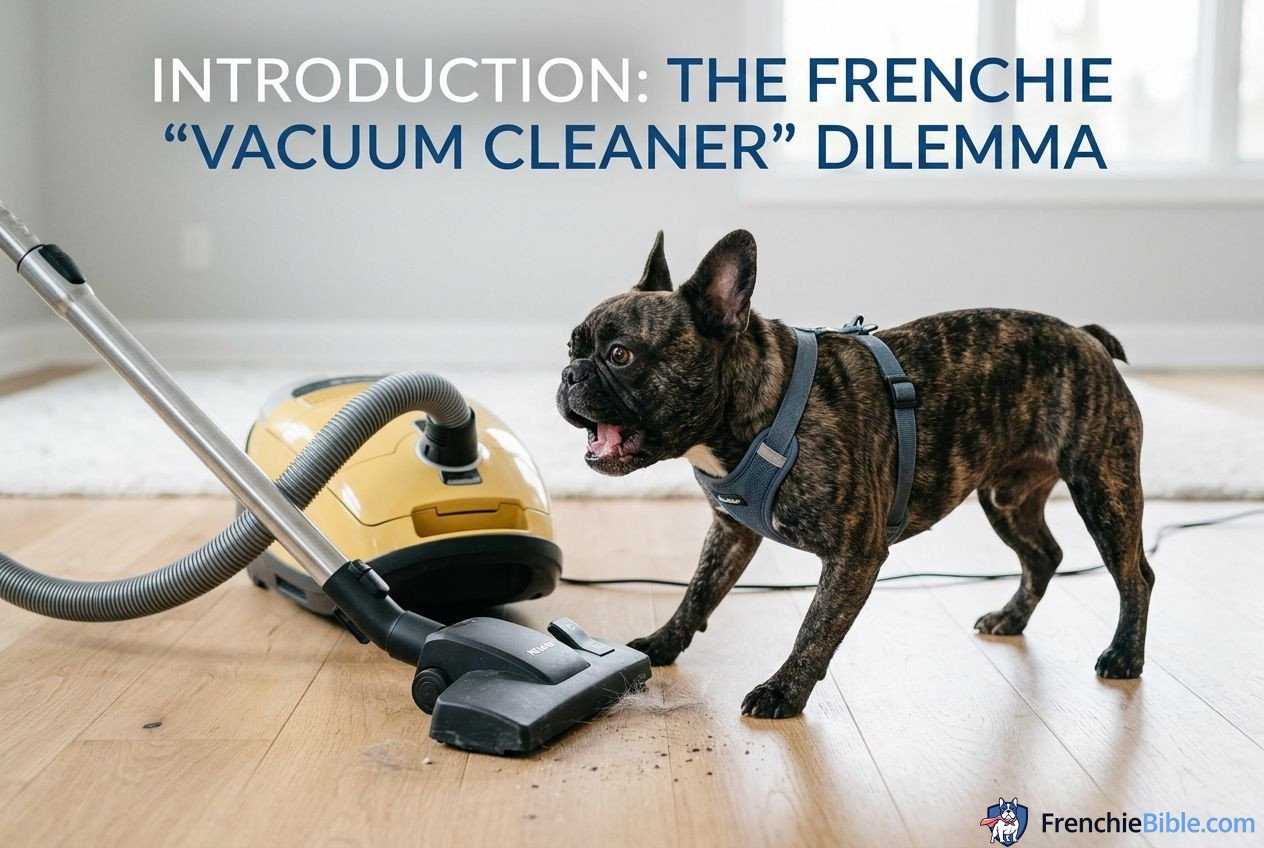
As a French Bulldog specialist, I often hear owners affectionately (and sometimes frustratingly) refer to their beloved pets as “walking vacuum cleaners.” French Bulldogs are notoriously food-motivated, curious, and incredibly stubborn. Their low-to-the-ground stature means their noses are constantly engaged with the pavement, grass, and whatever mysteries lie hidden in the bushes.
Related Reading: Health & Diet | Frenchie Puppy Guide
While their curiosity is endearing, it poses a severe, sometimes fatal, risk when navigating urban streets, suburban sidewalks, or even your own backyard. From discarded chewing gum containing xylitol to chicken bones, rat poison, toxic plants, and unknown decaying matter, the world is a minefield of potential hazards for a dog that explores with its mouth.
This is where the “Drop It” command transforms from a neat parlor trick into a non-negotiable, lifesaving obedience skill. As an who has collaborated extensively with canine behaviorists and veterinary toxicologists, I cannot overstate the importance of this command. It is the ultimate safety net.
In this exhaustive masterclass, we will delve into the psychology of the French Bulldog, the biological reasons they hold onto objects so tenaciously, the exact step-by-step methodology to teach a bulletproof “Drop It,” and how to manage real-world emergencies.
The Unique Dangers for French Bulldogs on Walks
The Anatomy of a Scavenger
French Bulldogs are a brachycephalic (flat-faced) breed. While this gives them their signature adorable smushy faces, it also affects how they interact with the world. Their short muzzles mean their eyes, nose, and mouth are all incredibly close together and close to the ground. When a Frenchie investigates a smell, their mouth is practically already on the object.
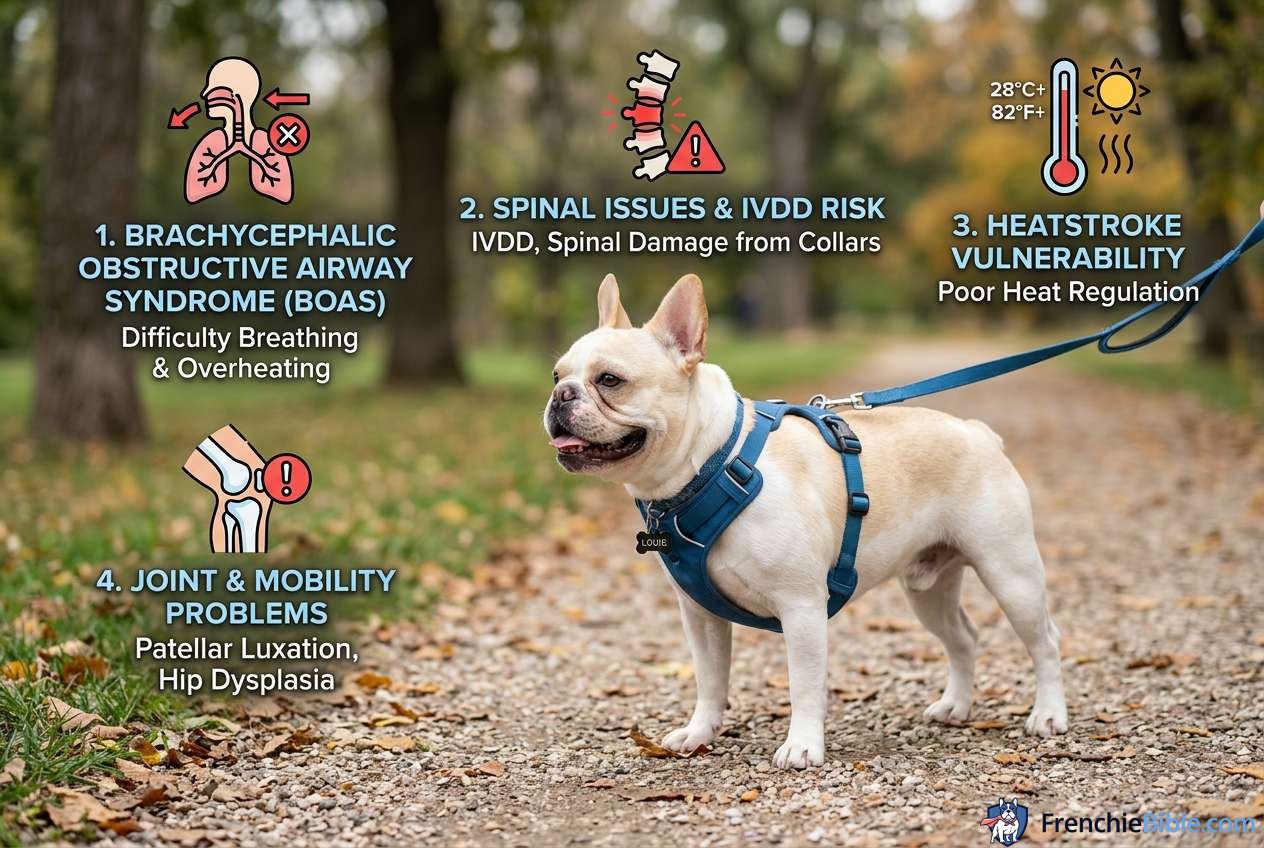
Furthermore, French Bulldogs have incredibly strong jaws for their size. Originally bred from bull-baiting ancestors, they possess a genetic predisposition to clamp down and hold on. When a Frenchie decides they want to keep a discarded piece of pizza crust or a dangerous chicken bone, prying their mouth open is not only difficult but can also lead to the dog inhaling the object, causing a catastrophic airway obstruction.
Common Street Toxins and Hazards
Understanding what your Frenchie is trying to eat is crucial. Here are the most common street hazards that make “Drop It” essential:
- Xylitol (Birch Sugar): Found in discarded chewing gum, sugar-free candies, and some baked goods. Xylitol is extremely toxic to dogs, causing a rapid, life-threatening drop in blood sugar (hypoglycemia) and acute liver failure.
- Cooked Bones: Often found near trash cans or discarded by pedestrians. Cooked bones splinter easily, risking puncture of the esophagus, stomach, or intestines.
- Rat Poison (Rodenticides): Frequently hidden in parks, alleys, or near commercial buildings. Depending on the type, these can cause internal bleeding, kidney failure, or severe neurological damage.
- Toxic Plants: Mushrooms growing in damp grass, sago palms, oleander, lilies, and autumn crocus. Many common outdoor plants are highly toxic.
- Recreational Drugs and Medications: Discarded marijuana joints, dropped prescription pills, or illicit drugs are increasingly common in urban environments.
- Antifreeze (Ethylene Glycol): Puddles in driveways or streets. It has a sweet taste that attracts dogs but causes irreversible acute kidney failure even in microscopic amounts.
- Feces: Eating the feces of other animals (coprophagia) can transmit intestinal parasites like Giardia, Coccidia, and various worms, as well as viruses like Parvovirus.
- Trash and Plastics: Food wrappers that smell like meat can cause dangerous intestinal blockages that require expensive emergency surgery.
Why “Drop It” is Non-Negotiable
You cannot control the environment, but you can control your dog’s response to it. A solid “Drop It” command interrupts the scavenging cycle before ingestion occurs. It is faster than trying to tackle your dog, safer than putting your fingers into a powerful jaw, and far less stressful for both of you.
Understanding Your French Bulldog’s Psychology
Before we begin training, we must understand why the Frenchie behaves this way. Training is not about forcing compliance; it’s about altering motivation.
Resource Guarding vs. Playfulness
When your Frenchie grabs a dead bird, they usually do so for one of two reasons:
1. Resource Guarding: “This is mine, it’s high value, and I’m not giving it up.” This is a deeply ingrained survival instinct. If you chase them or try to pry it away, you confirm to them that the item is indeed valuable, increasing their desire to guard it.
2. The Chase Game: “If I grab this, my human will chase me! This is so much fun!” If you panic and run after your dog, they perceive it as a game of tag.
The “Drop It” command works by short-circuiting both of these psychological responses. It teaches the dog that releasing the object is actually more rewarding than keeping it, and it removes the conflict from the interaction.
The Power of Positive Reinforcement
French Bulldogs respond exceptionally well to positive reinforcement. They are eager to please if the reward is right. Traditional punitive methods (yelling, hitting, or forcefully opening the mouth) are highly counterproductive with this breed. Such methods breed fear, decrease trust, and often make the dog swallow the dangerous item faster to prevent you from taking it.
We will use a concept called “Classical Conditioning” to create an involuntary positive response to the word “Drop,” followed by “Operant Conditioning” to reinforce the action of opening the mouth.
Setting Up for Success: Pre-Training Essentials
To build a reliable “Drop It,” you need the right tools, the right environment, and the right mindset.
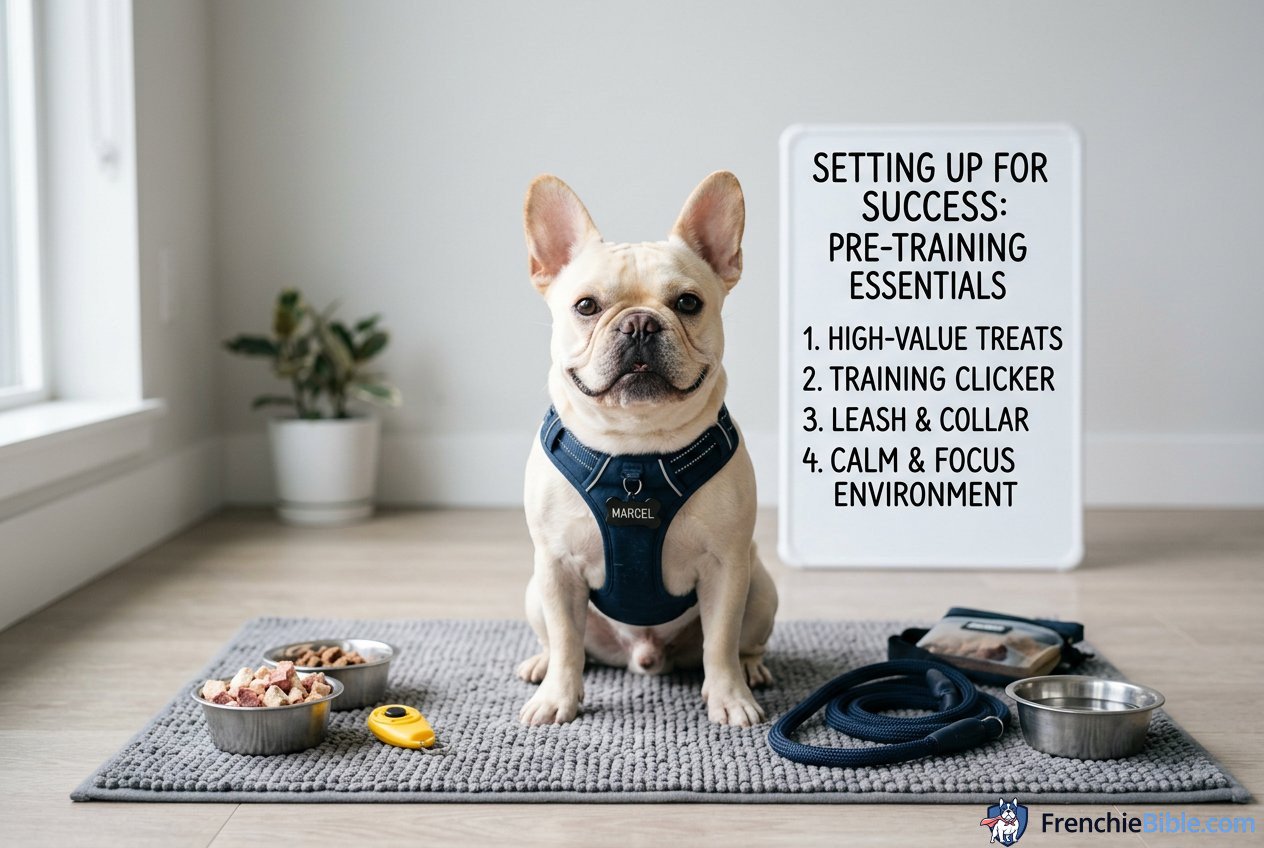
The Right Environment
Start indoors in a low-distraction environment. A quiet living room or bedroom is perfect. Do not attempt to teach this command for the first time outside. The outside world is too stimulating, and competing with the smell of a squirrel for your dog’s attention is a losing battle in the early stages.
High-Value Rewards
This is the secret weapon. Your Frenchie is not going to drop a juicy piece of street garbage for a dry piece of kibble. You need what trainers call “High-Value Treats” (HVT).
HVTs should be:
- Incredibly smelly (dogs “see” the world through their noses).
- Soft and quick to swallow (so training moves fast).
- Something they only get during “Drop It” training.
Excellent HVT options for Frenchies:
- Tiny pieces of boiled plain chicken breast.
- Freeze-dried liver or salmon.
- Small cubes of low-fat cheese (if they tolerate dairy).
- Squeeze tubes of dog-safe peanut butter or liver paste.
- Small pieces of plain, cooked hot dog.
Essential Gear
- A Clicker (Optional but Highly Recommended): A clicker provides a distinct, consistent sound that marks the exact moment your dog does the right thing. It bridges the gap between the action (dropping the item) and the reward (getting the treat).
- Low-Value Toys: Toys your dog likes but isn’t obsessed with. We will use these as the initial items they must drop.
- A Standard 6-Foot Leash: For managing the dog during the later stages of training. Avoid retractable leashes, as they offer zero control.
- A Treat Pouch: To ensure your timing is impeccable. Searching your pockets for a treat takes too long.
Step-by-Step Guide to Teaching “Drop It”
This protocol is designed specifically for stubborn breeds. It requires patience, consistency, and a sense of humor. Never rush the phases.
Phase 1: The Trade Game (Indoors)
Goal: Teach the dog that giving something up results in getting something better.
- Preparation: Have a handful of high-value treats in one hand, hidden behind your back. Have a low-value toy (like a boring chew bone or a rope toy) in the other.
- The Setup: Give the low-value toy to your Frenchie. Let them mouth it for a few seconds.
- The Trade: Take the high-value treat and place it directly on your dog’s nose (the “lure”). The smell should be irresistible.
- The Action: Because a dog cannot hold a toy and eat a treat at the same time, they will open their mouth to take the treat. The toy will drop.
- The Mark and Reward: The millisecond the toy leaves their mouth, say “Yes!” (or click your clicker) and let them eat the treat.
- The Crucial Step: While they are chewing the treat, pick up the toy, and immediately give the toy back to them.
Why this works: You are teaching them that dropping an item doesn’t mean they lose it forever. Often, they get the treat and they get their toy back. This completely eliminates resource guarding anxiety.
Repetitions: Do this 10-15 times per session, 2-3 sessions a day. Do NOT use the cue word “Drop It” yet. We are just building the mechanical muscle memory.
Phase 2: Adding the Cue Word
Goal: Associate the verbal command “Drop It” with the action of opening the mouth.
- The Setup: Give your Frenchie the low-value toy.
- The Cue: Say “Drop It” in a clear, calm, upbeat voice. (Do not sound angry or threatening).
- The Lure: Immediately after saying the cue, put the high-value treat to their nose.
- The Action: They open their mouth, the toy drops.
- The Mark and Reward: Click or say “Yes!” and give the treat. Give the toy back.
Repetitions: Practice this until the dog starts anticipating the treat. You will say “Drop It,” and they will spit the toy out before you even bring the treat to their nose, looking at your hand expectantly. When they do this, you have successfully classically conditioned the word.
Phase 3: Moving to Medium and High-Value Items
Goal: Generalize the command so it applies to things they actually want to keep.
Now, we upgrade the item they are holding. Move from a boring toy to a favorite squeaky toy, a tennis ball, or a high-value chew like a bully stick.
- The Setup: Give them the medium-value item.
- The Cue: Say “Drop It.”
- The Delay: Wait 2 seconds. See if they drop it without the lure.
- The Reward: If they drop it, massive praise, jackpot reward (3-4 treats at once). If they don’t drop it, go back to using the lure (treat to the nose) for a few more repetitions.
Important Note on Bully Sticks/Bones: When practicing with something incredibly high-value like a bully stick, you must trade for something even better, like a piece of real steak or chicken. And critically, you must give the bully stick back 90% of the time. This builds immense trust.
Phase 4: Introducing Real-World Distractions (Controlled Outdoors)
Goal: Take the training out of the sterile living room and into the real world, but in a highly controlled manner.
- The Setup: Put your Frenchie on a leash. Go to your backyard, a quiet driveway, or a boring patch of concrete.
- The Plant: Before bringing the dog out, “plant” a few low-to-medium value items on the ground. A piece of clean cardboard, an old sock, or a plastic water bottle. (Do NOT plant actual dangerous items or real human food yet).
- The Approach: Walk your dog toward the planted item. Let them discover it. Let them pick it up.
- The Command: The moment it is in their mouth, stop walking. Say “Drop It.”
- The Trade: If they drop it, reward heavily with your highest value treat. If they refuse, do not pull on the leash. Simply produce the incredibly smelly treat, put it to their nose, and trade.
- Removal: This time, do not let them have the piece of trash back. Kick it away or step on it while feeding them the treat.
Phase 5: The Ultimate Test (Real Walks)
Goal: Execute the command during an actual walk with unpredictable distractions.
By this phase, “Drop It” should be an automatic reflex. When you are walking on the street and your Frenchie dives for a discarded chicken bone:
- Stay Calm: Do not panic, gasp, or yank the leash. Your anxiety will trigger their resource guarding.
- Command: Say “Drop It” clearly and firmly.
- Reward: When they drop the item, you must reward them like they just won the lottery. Praise, excitement, and the best treats you have.
- Continue: Walk away briskly, leaving the dangerous item behind.
Advanced “Drop It” Strategies for Stubborn Frenchies
French Bulldogs are famously independent thinkers. Sometimes, standard training isn’t enough. Here are advanced tactics for the truly stubborn.
The “Toss and Trade” Method
If your Frenchie likes to play “keep-away” (running from you when they have something), the Toss and Trade is invaluable.
When they have an item, say “Drop It,” and simultaneously toss a handful of high-value treats on the ground a few feet away from them.
The scattering sound and the smell will almost always cause them to drop the contraband to go investigate the treats. While they are vacuuming up the treats, you calmly walk over and step on or pick up the dangerous item.
Handling High-Value Contraband (The “Dead Drop”)
What if they pick up something so incredibly valuable (like a fresh piece of rotting meat) that no treat in your pocket can compete?
This is when you use the “Dead Drop.” You must make the item in their mouth seem “dead” and boring.
1. Do not pull. Hold the leash steady so they cannot run away to eat it in peace, but do not tug.
2. Become a Tree. Stop moving. Look away. Make zero eye contact. Do not speak.
3. Wait. Frenchies have a short attention span. If the item isn’t moving, and you aren’t fighting them for it, the thrill often vanishes.
4. The Drop: The moment they loosen their grip or drop the item to see what you are doing, say “Yes!” enthusiastically, produce a massive treat reward, and walk away.
What to Do When They Won’t Let Go (The Emergency Release)
This is an absolute last resort, to be used only if the dog has something highly toxic (like a battery, rat poison, or a sharp bone) and is actively trying to swallow it.
The Lip Roll Technique:
1. Calmly but firmly straddle your dog to prevent them from backing away.
2. Take your thumb and index finger and place them on either side of the dog’s upper jaw, right behind the canine teeth.
3. Gently but firmly roll their upper lips inward, over their own teeth.
4. Apply gentle pressure. As they bite down, they will bite their own lips. This causes them to involuntarily open their mouth to relieve the pressure.
5. Hook the item out with your other finger (be extremely careful not to push it further down the throat).
6. Warning: This is highly aversive and will damage your training progress. Only use it to save their life.
Case Studies from the Clinic: Why “Drop It” Matters
To truly understand the gravity of this command, let’s look at a few real-world scenarios I’ve encountered in the clinic.
Case Study 1: The Sugar-Free Gum Disaster
Buster, a 2-year-old Frenchie, found a piece of discarded sugar-free gum on a park bench. His owner saw him chewing but assumed it was just a stick. Twenty minutes later, Buster began staggering and collapsed. The gum contained xylitol. His blood sugar crashed to near-fatal levels. It took three days of intensive care, IV dextrose, and liver protectants to save his life. If his owner had a solid “Drop It” command and investigated what Buster had found, this entirely preventable trauma could have been avoided.
Case Study 2: The BBQ Bone Blockage
Stella, a 4-year-old Frenchie, snatched a discarded pork rib bone near a picnic area. Her owner panicked and lunged to grab it from her mouth. In a defensive reaction, Stella swallowed the bone whole. The cooked bone splintered in her stomach and lodged in her intestines, requiring emergency exploratory surgery to remove the obstruction. The cost was over $4,000, and the recovery was painful. A well-trained “Drop It” trade would have cost nothing more than a piece of hot dog.
Case Study 3: The Sago Palm Poisoning
Frankie was playing in a neighbor’s yard and began chewing on the seed pod of a Sago Palm—a highly toxic ornamental plant. Because his owners had spent months diligently practicing “Drop It,” Frankie immediately dropped the pod when commanded, running to his owner for his reward. He ingested none of the toxin and required no medical intervention. Training saved his life that day.
Preventive Measures on Walks
The best “Drop It” is the one you never have to use. Management is 90% of safety.
The “Leave It” Command: A Crucial Partner
While “Drop It” tells the dog to spit out what’s already in their mouth, “Leave It” tells them to ignore the item before they ever touch it.
Teaching “Leave It” is your first line of defense. When you spot a chicken bone on the sidewalk ten feet ahead, you say “Leave It,” and reward your dog for looking at you instead of the bone. “Leave It” is proactive; “Drop It” is reactive. You need both.
Scanning the Environment
As an owner of a scavenger breed, you must become hyper-vigilant. Do not text and walk. Scan the pavement 10 to 15 feet ahead of your dog at all times. Look for shadows, wrappers, or unusual lumps in the grass. Steer your dog in a wide arc around potential hazards.
Using a Muzzle as a Tool, Not a Punishment
If you live in an urban area heavily littered with dangerous trash, or if your Frenchie is a compulsive, unstoppable scavenger (a condition called Pica), consider using a basket muzzle on walks.
A properly fitted basket muzzle (like a Baskerville) allows the dog to pant, drink water, and take treats, but prevents them from picking anything up off the ground.
Muzzles have an unfair stigma. They are not just for aggressive dogs; they are a vital safety tool for scavengers. Condition your dog to love the muzzle by smearing peanut butter inside it before putting it on.
Recognizing Signs of Toxicity
Despite your best efforts, mistakes happen. A Frenchie can inhale a piece of poisoned meat in the blink of an eye. Knowing the signs of toxicity can save your dog’s life.
Immediate Symptoms to Watch For
If your dog ingested something unknown on a walk, monitor them closely for the next 12 to 24 hours. Seek immediate veterinary care if you observe:
- Gastrointestinal: Profuse vomiting, violent diarrhea (especially with blood), excessive drooling, or lip smacking (a sign of nausea).
- Neurological: Tremors, muscle twitches, staggering (ataxia), lethargy, unresponsiveness, or seizures.
- Cardiopulmonary: Heavy panting, pale or blue gums, rapid heart rate, or difficulty breathing.
- Physical: Swollen abdomen (could indicate an obstruction or internal bleeding), extreme pain when touched.
When to Rush to the Vet
Do not wait to see if things improve. If you know your dog ate something toxic (like xylitol gum or rat poison), or if they exhibit any of the severe symptoms above, go to the emergency vet immediately.
Pro-Tip: Always have the number for the Pet Poison Helpline (e.g., ASPCA Animal Poison Control) saved in your phone. They charge a fee, but they have boarded veterinary toxicologists on staff who can tell you exactly how dangerous the ingested item is and guide your local vet on the treatment protocol.
Emergency First Aid Steps
- Identify the Toxin: If possible, safely collect a sample of what the dog ate, or take a picture of the packaging. This is crucial for the vet.
- Do NOT Induce Vomiting Without Instruction: Never give your dog hydrogen peroxide to induce vomiting unless specifically instructed by An Experienced Breedererinarian or poison control. Inducing vomiting can be fatal if the dog ingested something caustic (like bleach) or sharp (like glass or bones), as it will damage the esophagus on the way back up. Furthermore, brachycephalic breeds like Frenchies are at a massive risk for aspiration pneumonia (inhaling vomit into the lungs) when vomiting.
- Transport Safely: Keep the dog calm and transport them to the nearest animal ER.
The Long-Term Commitment
Training a French Bulldog is not a weekend project; it is a lifelong commitment. The “Drop It” command requires consistent maintenance. Even if your dog has a perfect “Drop It,” you must occasionally practice it with high-value rewards to keep the response sharp.
Remember that your Frenchie isn’t trying to be bad when they eat street garbage; they are simply following millions of years of canine scavenging instincts. It is our responsibility as their guardians to override those instincts through patient, positive, and consistent training.
By dedicating time to mastering the “Drop It” command, you are not just teaching a trick—you are providing an invisible shield that will protect your French Bulldog for the rest of their life.
Frequently Asked Questions (FAQ)
How long does it take a French Bulldog to learn “Drop It”?
Every dog is different. Some food-motivated Frenchies will grasp the basic concept in a weekend. However, proofing the command so it works reliably outside with high-value street garbage can take weeks or even months of consistent daily practice. Patience is key.
Can an older Frenchie still learn this command?
Absolutely. The adage “you can’t teach an old dog new tricks” is entirely false. Older dogs may have deeply ingrained habits, which means you might need to spend more time in Phase 1 and use incredibly high-value treats, but they are fully capable of learning “Drop It.”
Should I pry my dog’s mouth open if they won’t drop it?
As a general rule, no. Prying a dog’s mouth open can cause them to swallow the item in a panic, leading to choking or blockages. It also damages your relationship and increases resource guarding. Only use the emergency release (lip roll technique) if the item is actively life-threatening and cannot be traded.
Are there specific treats that work best for stubborn French Bulldogs?
Smell is everything. Dry biscuits won’t work for stubborn dogs. Use wet, smelly treats like hot dogs, freeze-dried tripe, squeeze cheese, liver paste, or real boiled chicken. The smellier, the better.
My Frenchie runs away when they have something they shouldn’t. What do I do?
Do not chase them. Chasing turns it into a game. Instead, run away from them in the opposite direction while making exciting noises, or use the “Toss and Trade” method by throwing a handful of high-value treats on the ground nearby. Once they drop the item to eat the treats, calmly secure the dangerous object.
Is “Drop It” the same as “Leave It”?
No. “Leave It” means “ignore that item and don’t pick it up.” “Drop It” means “spit out what is already in your mouth.” A well-trained dog should know both commands seamlessly.
What should I do if my Frenchie resource guards my other dog’s toys?
The “Drop It” command is essential here. Use the exact same trading protocol. Do not let the dogs “work it out themselves,” as resource guarding can quickly escalate into a dangerous fight, especially with a strong-jawed breed like the French Bulldog. Trade high-value treats for the stolen toy and reward both dogs for calm behavior.
Disclaimer: I am a French Bulldog breeding expert with over a decade of hands-on experience with this breed. I am not An Experienced Breedererinarian. The information in this article is for educational purposes only. Always consult your veterinarian regarding your dog’s specific health needs and care.
Disclaimer: I am a French Bulldog breeding expert with over a decade of hands-on experience with this breed. I am not a veterinarian. The information in this article is for educational purposes only. Always consult your veterinarian regarding your dog’s specific health needs and care.