Disclaimer: The information provided in this article is for educational purposes only and should not replace professional veterinary advice. Always consult with a qualified veterinarian or certified dog behaviorist regarding your French Bulldog’s specific training, health, or behavioral needs.
As a experienced French Bulldog breeder and breeding expert, I often hear from frustrated owners who feel their Frenchie is “stubborn” or “ignoring” them. While French Bulldogs undoubtedly have an independent streak, the root of most training struggles isn’t stubbornness—it’s a lack of engagement. Before you can teach your Frenchie to sit, stay, or walk nicely on a leash, you must first establish a foundation of attention. This begins with one simple, yet profound exercise: the “Look at Me” command, also known as eye contact training.
Related Reading: Health & Diet | Frenchie Puppy Guide
In my years of practice and breeding, I have found that establishing strong eye contact is the single most critical step in transforming a distracted Frenchie into a focused, eager learner. From an’s perspective, I know that many owners search for “how to train a stubborn French bulldog,” but the real answer starts here. This comprehensive guide will walk you through the science, the steps, and the troubleshooting required to build unbreakable attention with your French Bulldog.
Why Eye Contact is Crucial for French Bulldogs
French Bulldogs are a unique breed. They were bred to be companion animals, which means they are highly attuned to human emotions and body language. However, their physical conformation—a brachycephalic (flat-faced) head and a compact body—means they interact with the world differently than a working breed like a Border Collie.
The Science of Canine Attention
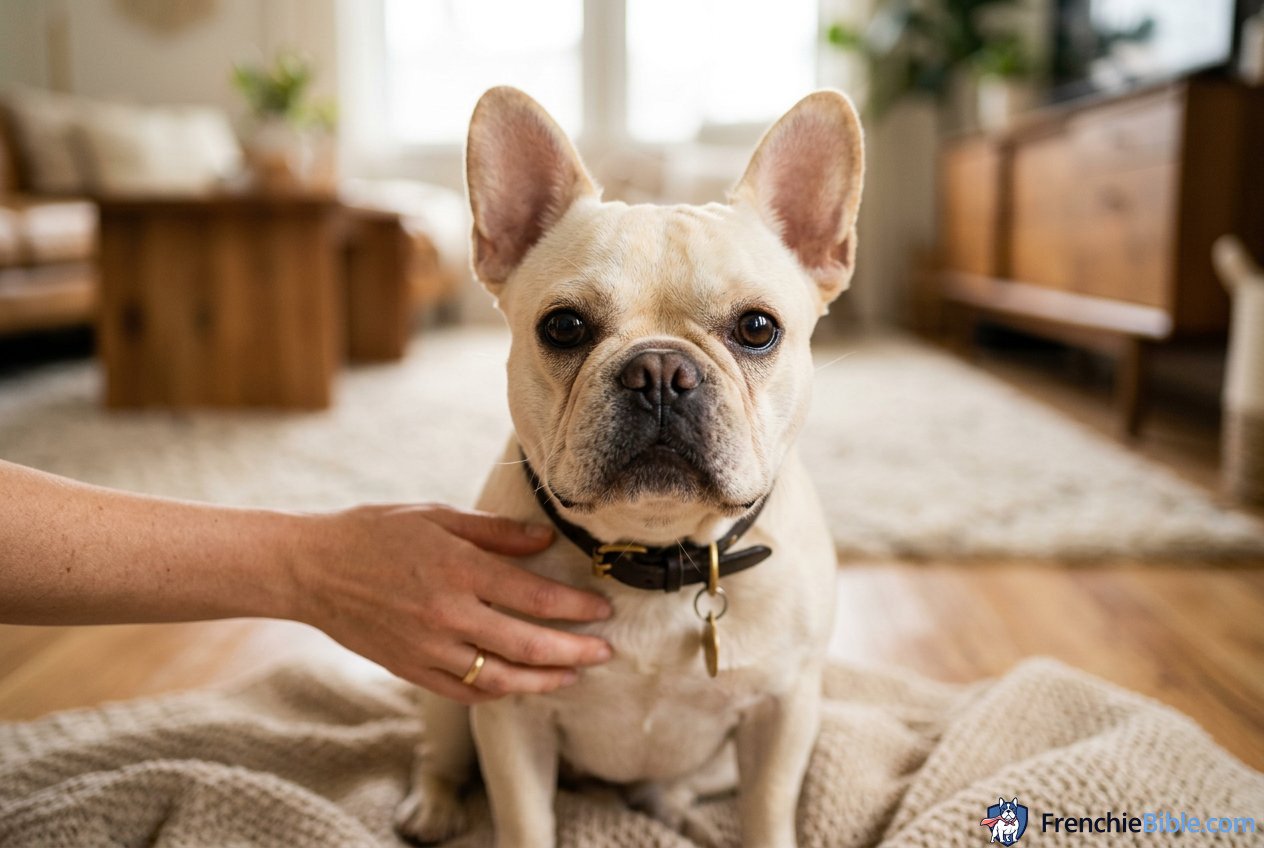
When a dog makes eye contact with its owner, a remarkable physiological process occurs. Studies have shown that mutual gaze between dogs and humans triggers the release of oxytocin in both species. Oxytocin, often referred to as the “love hormone” or “bonding hormone,” is the same chemical released when a mother bonds with her infant.
For a French Bulldog, establishing eye contact isn’t just about obedience; it is a neurological reinforcement of trust and affection. By teaching “Look at Me,” you are actively strengthening the chemical bond between you and your dog. Furthermore, a dog that is looking at you is a dog that is ready to receive information. Their cognitive focus shifts from the environment (a squirrel, another dog, a leaf) to you, the handler.
Building the Bond with Your Frenchie
Frenchies are notorious for their comedic and affectionate personalities, but they can also be strong-willed. Building a bond through eye contact sets the tone for your entire relationship. It establishes you as the source of direction and reward. When your Frenchie learns that checking in with you leads to positive outcomes (treats, praise, play), they become naturally more inclined to seek your guidance.
This bond is particularly important during the adolescent phase (around 6 to 18 months), when Frenchies often test boundaries and become easily distracted by the world around them. A solid foundation in eye contact acts as an anchor during this challenging period.
Safety and Focus in Distracting Environments
Perhaps the most practical reason to teach “Look at Me” is safety. French Bulldogs are prone to sudden bursts of energy (the famous “zoomies”) and can be impulsive. If you are walking near a busy street and your Frenchie spots a stray cat, you need a way to instantly snap their attention back to you.
The “Look at Me” command serves as an emergency brake for their brain. By redirecting their focus to your eyes, you break their fixation on the hazard, allowing you to guide them safely away. This level of focus in distracting environments is not innate; it must be systematically taught and heavily reinforced.
Preparing for the “Look at Me” Training
Before you begin training, you must set the stage for success. French Bulldogs can have short attention spans, so preparation is key.
Choosing the Right Environment
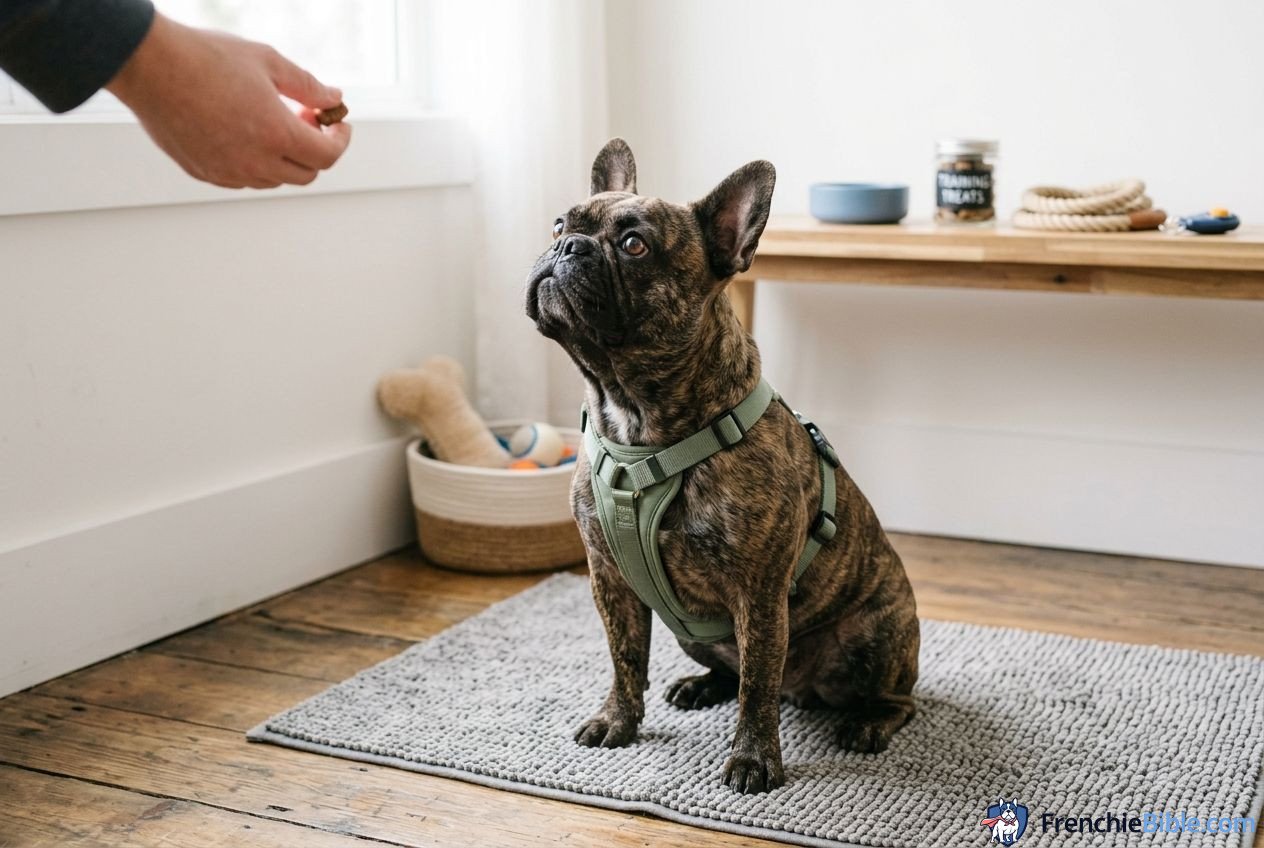
The environment in which you begin training will heavily dictate your success rate. Start in the lowest-distraction environment possible. For most Frenchies, this means a quiet room inside your house—perhaps the living room or a hallway—where there are no other pets, children, or interesting smells.
Avoid starting outside. The outdoors is a sensory overload for a dog, filled with sights, sounds, and smells that will easily outcompete you for your Frenchie’s attention. Once the behavior is perfected indoors, you will gradually move to more challenging environments.
High-Value Treats: What Works Best for Frenchies
French Bulldogs are famously food-motivated, but standard kibble often isn’t enough to capture their attention when they are learning a new, demanding behavior. You need “high-value” treats.
With my background in French Bulldog breeding, I recommend using treats that are highly aromatic, soft, and small (pea-sized). Good options include:
- Boiled chicken breast (shredded into tiny pieces)
- Freeze-dried liver
- Small pieces of plain, cooked salmon
- Commercial soft training treats
A note on health: Frenchies are prone to sensitive stomachs and obesity. Always subtract the calories of the treats from their daily food allowance to maintain a healthy weight. Introduce new treats slowly to avoid gastrointestinal upset.
Timing and Patience: The Keys to Success
Timing is everything in dog training. You must deliver the reward within one to two seconds of your Frenchie making eye contact. If you wait too long, they will look away, and you will accidentally reward them for looking away.
Patience is equally vital. Some Frenchies will pick this up in five minutes; others may take several short sessions over a week. Keep training sessions incredibly short—no longer than 2 to 3 minutes at a time, several times a day. Always end the session on a positive note while your dog is still engaged and wanting more.
Step-by-Step Guide to Teaching “Look at Me”
This systematic approach is designed to set your Frenchie up for success, ensuring they understand exactly what is expected of them without becoming frustrated.
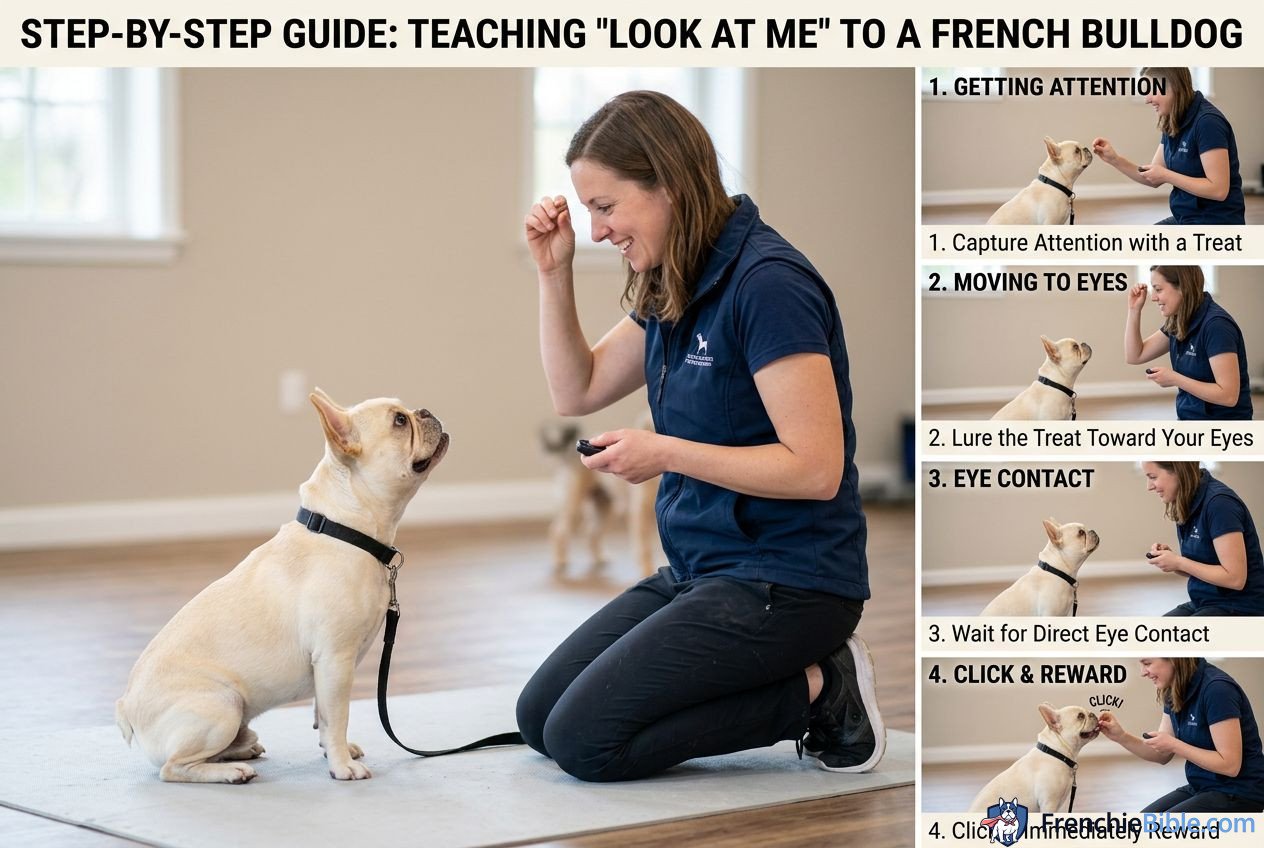
Step 1: Capturing Natural Eye Contact
The goal of this first step is simply to reward the dog for doing what you want naturally, without any commands.
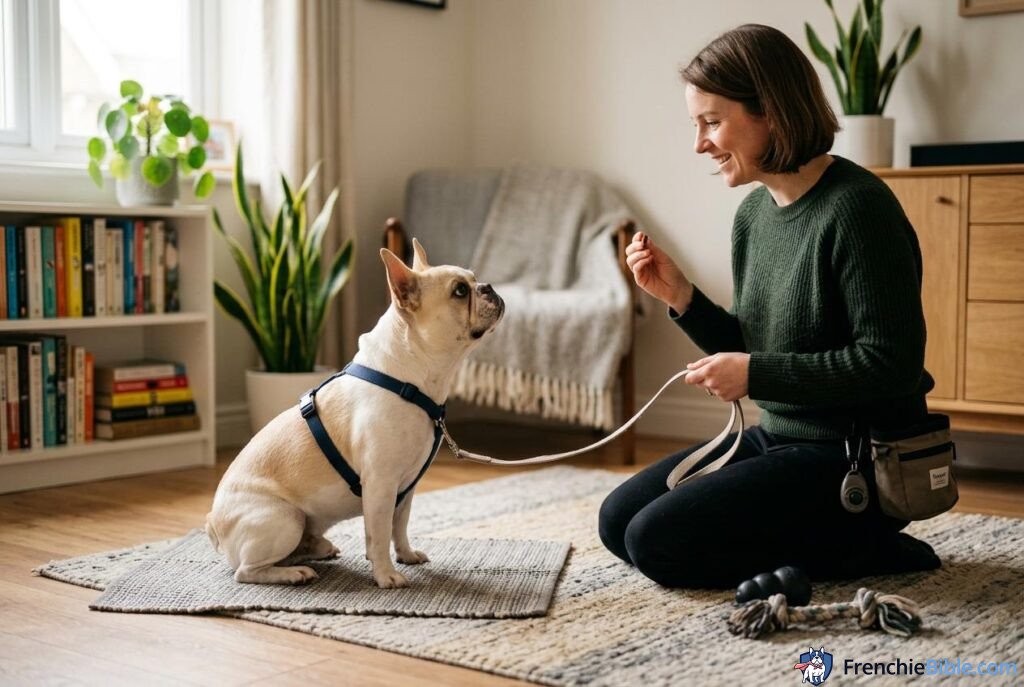
1. Preparation: Sit comfortably on the floor or in a low chair with your Frenchie in front of you. Have a handful of high-value treats ready in a pouch or out of sight.
2. Wait for It: Say nothing. Do nothing. Just wait. Your Frenchie might look at the floor, your hands, or the wall.
3. Mark and Reward: The very second your Frenchie glances up and makes eye contact with you, immediately use a “marker” word (like a sharp, upbeat “Yes!” or a clicker) and instantly give them a treat.
4. Reset: Toss a treat slightly away from them so they have to move to get it. This “resets” their position so they have to turn back to you to offer eye contact again.
5. Repeat: Do this 10 to 15 times per session. Your Frenchie will quickly realize that looking into your eyes is a magic button that dispenses chicken.
Step 2: Introducing the Cue Word
Once your Frenchie is consistently offering eye contact unprompted to get treats, it’s time to name the behavior.
1. Wait for the Look: As in Step 1, wait for your dog to look at you.
2. Add the Cue: Just as they are about to make eye contact, say your chosen cue word clearly and cheerfully. Common cues are “Look,” “Watch,” or “Focus.” Choose one and stick with it.
3. Mark and Reward: As soon as they make eye contact, say “Yes!” and reward.
4. Practice: Repeat this process. You are associating the word “Look” with the action of making eye contact.
Step 3: Adding Duration
Now that your Frenchie knows what “Look” means, you need to teach them to hold that eye contact. A split-second glance is not enough in the real world.
1. Give the Cue: Say “Look.”
2. Delay the Mark: When they make eye contact, do not say “Yes!” immediately. Hold the eye contact for one full second.
3. Mark and Reward: After one second, say “Yes!” and reward generously.
4. Gradual Increase: Slowly increase the duration over several sessions. Move to 2 seconds, then 3, then 5. If your Frenchie looks away before you mark, do not reward. Simply reset and go back to a shorter duration.
5. Vary the Time: Don’t always make it longer. Mix it up. Reward after 2 seconds, then 5 seconds, then 1 second. This keeps the dog guessing and engaged.
Step 4: Adding Distractions
This is the most critical and often the most challenging step. A “Look at Me” command is only useful if it works when there are other things going on.
1. Low-Level Distractions: Stay indoors. Have a family member walk across the room while you practice. Say “Look” before your dog becomes too fixated on the person. If they look at you, reward heavily.
2. Medium Distractions: Move to the backyard or a quiet driveway. Practice the command. If they struggle, you have moved too fast. Go back inside or use better treats.
3. High Distractions: Gradually move to the front yard, then quiet streets, then busier parks. At each new location, lower your expectations. You may need to go back to requiring only a split-second glance before building duration again in the new environment.
Common Challenges and Troubleshooting
Even with the best intentions, you may run into roadblocks. Here is how to handle the most common issues Frenchie owners face when teaching this behavior.
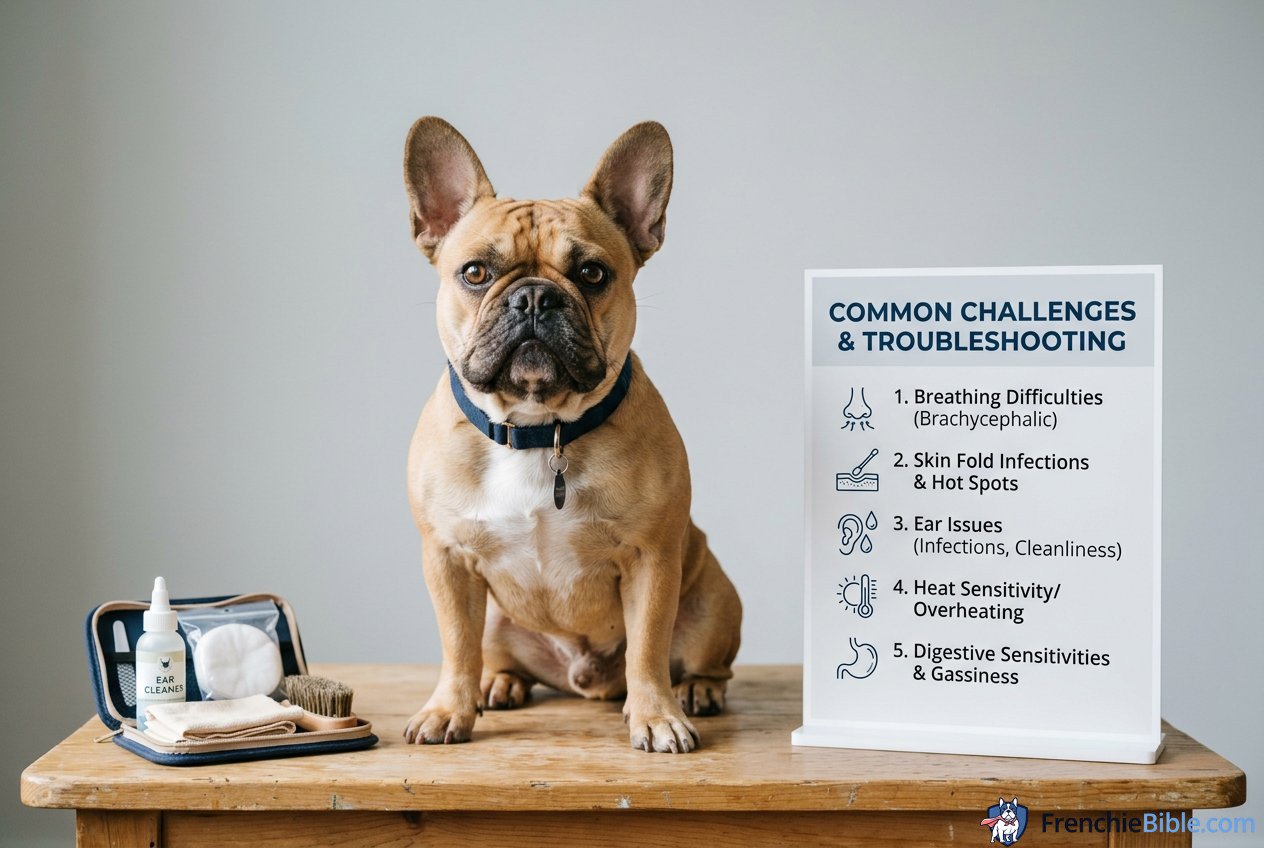
My Frenchie Keeps Staring at the Treat
This is incredibly common, especially with food-motivated breeds. Your dog is staring at your hand or the treat pouch, not your eyes.
- The Lure Method (with caution): Hold a treat between your fingers. Place it right at your dog’s nose, then slowly draw a straight line up from their nose to the bridge of your nose (between your eyes). As their eyes follow the treat and meet yours, say “Yes!” and reward. Fade this lure quickly so they don’t become dependent on the hand movement.
- The Waiting Game: Keep your hands firmly behind your back or resting flat on your legs. Do not move your hands until the dog makes eye contact. They will stare at your hands for a while, but eventually, they will look up at your face as if to ask, “Why aren’t you feeding me?” That is when you mark and reward.
My Frenchie is Too Distracted Outdoors
If your Frenchie is perfect indoors but ignores you outdoors, the environment is too stimulating, or your treats are not valuable enough.
- Upgrade the Reward: Use the most pungent, high-value treats you have only for outdoor training.
- Decrease the Distance: Instead of being 6 feet away, stand right in front of them.
- Manage the Environment: Find a “boring” outdoor spot. A fenced tennis court or an empty parking lot is less distracting than a grassy park full of smells and squirrels.
- Practice “Engage/Disengage”: If they are staring at a distraction, wait for them to voluntarily glance back at you (even just an ear flick or a side-eye), and immediately reward.
Stubbornness vs. Confusion: Understanding Your Frenchie
With my background in French Bulldog breeding, I urge owners to differentiate between stubbornness and confusion or overstimulation. If your Frenchie is yawning, lip-licking, scratching, or sniffing the ground excessively while you are trying to train, they are not being stubborn—they are stressed or overwhelmed.
Stop the session. Give them a break. When you resume, go back to an easier step. True stubbornness is rare; usually, the dog simply doesn’t understand what you want or the environment is too difficult.
Incorporating “Look at Me” into Daily Life
Training shouldn’t only happen in structured sessions. To truly master the “Look at Me” command, it must become a way of life.
During Walks
The “Look” command is your best tool for loose-leash walking. Periodically throughout the walk, before your dog hits the end of the leash, say “Look.” When they turn their head to make eye contact, reward them while still walking. This teaches them that checking in with you is rewarding and keeps them mentally tethered to you, rather than just physically tethered by the leash.
Before Meals and Playtime
Use real-life rewards to reinforce the behavior. Before setting down their food bowl, require a solid 3-second “Look.” Before throwing a toy or opening the door for a walk, ask for eye contact. This teaches your Frenchie that the “Look” command is the key that unlocks all the good things in life.
Meeting New People and Dogs
Frenchies are notoriously friendly and can become over-aroused when greeting. If someone approaches, step to the side and ask your dog to “Look” at you. Reward them heavily for maintaining focus on you while the person passes. This is crucial for teaching impulse control and preventing jumping or pulling.
Advanced Attention Exercises
Once your Frenchie has mastered the basics, you can push their skills further to create bulletproof attention.
The Name Game
The “Look” command and your dog’s name should serve slightly different purposes. “Look” is a sustained focus, while their name should be a sharp attention-getter.
Say your Frenchie’s name in a bright, happy tone. When they whip their head around to look at you, mark and reward. Never use your dog’s name angrily or for punishment, as this will poison the cue and cause them to avoid looking at you when called.
Eye Contact on the Move
Can your Frenchie maintain eye contact while you are walking backward? While you are jogging? Try asking for a “Look” while you are actively moving. This requires intense concentration from the dog and is excellent preparation for competitive obedience or agility, should you choose to pursue those sports.
The Veterinary Perspective: Vision and Attention
With my background in French Bulldog breeding, I must address the physical aspects of eye contact. A dog cannot look at you if they cannot see you comfortably.
Ensuring Your Frenchie’s Eyes Are Healthy
French Bulldogs have prominent eyes that are prone to several issues that could affect their ability or willingness to make eye contact:
- Corneal Ulcers: Scratches on the surface of the eye are painful and can cause squinting and avoidance of light (and looking up).
- Cherry Eye: A prolapsed gland of the third eyelid that can obscure vision and cause irritation.
- Dry Eye (KCS): Lack of tear production leading to painful, inflamed eyes.
- Entropion: Eyelids that roll inward, causing eyelashes to rub against the cornea.
If your Frenchie suddenly stops making eye contact, squints, has excessive tearing, or paws at their eyes, schedule An Experienced Breedererinary examination immediately. Pain is a major deterrent to training.
When to Seek Professional Help
If you have consistently practiced these steps for several weeks and your Frenchie still refuses to make eye contact, or if they exhibit fear or aggression when you try to engage them, it is time to consult a professional. Look for a Certified Applied Animal Behaviorist (CAAB) or An Experienced Breedererinary behaviorist. They can help identify underlying anxieties or neurological issues that may be inhibiting your dog’s ability to focus.
Frequently Asked Questions (FAQ)
Q: How long does it take for a French Bulldog to learn “Look at Me”?
A: Every dog is different. Some will understand the basic concept indoors within a single 5-minute session. However, mastering the command outdoors with high distractions can take several weeks or even months of consistent, daily practice.
Q: My Frenchie just walks away when I try to train them. What do I do?
A: If they are walking away, the session is too long, the environment is too distracting, or the treats aren’t good enough. Shorten the session to just one minute, use higher-value treats (like real meat), and ensure you are in a quiet room with no other stimuli.
Q: Should I force my Frenchie to look at me by holding their head?
A: Absolutely not. Forcing eye contact by holding a dog’s head is highly intimidating and can induce fear or aggression. Eye contact must be a voluntary behavior offered by the dog. Forcing it ruins the trust you are trying to build.
Q: Can I train eye contact without treats?
A: Eventually, yes. But in the beginning, treats are the most efficient way to communicate to the dog that they have done the right thing. Once the behavior is heavily ingrained, you can start rewarding with life rewards (opening a door, throwing a toy, verbal praise) and phase out continuous food rewards, using them only intermittently to maintain the behavior.
Q: Is it normal for my Frenchie to blink a lot or look away quickly when we first start?
A: Yes. In dog language, a hard, unblinking stare is a sign of aggression or a challenge. By blinking or looking away briefly, your Frenchie is offering a “calming signal” to show they mean no harm. Accept brief glances at first, and slowly build up the duration. Do not stare intensely at your dog; keep your expression soft and happy.
Q: My puppy gets too excited and jumps on me instead of looking at me.
A: If your puppy jumps, simply stand up straight, cross your arms, and look at the ceiling. Do not speak to them or push them away (which they interpret as play). The moment all four paws are on the floor and they glance up at your face to see why you stopped interacting, say “Yes!” and drop a treat on the floor.
Building your French Bulldog’s attention through the “Look at Me” command is a journey of patience, consistency, and understanding. By establishing this foundational eye contact, you are not just training a behavior; you are opening a vital line of communication between you and your dog. With my background in French Bulldog breeding and behavior advocate, I can assure you that the time invested in this simple exercise will yield a lifetime of better focus, stronger bonding, and a much happier, well-adjusted Frenchie.
Disclaimer: I am a French Bulldog breeding expert with over a decade of hands-on experience with this breed. I am not An Experienced Breedererinarian. The information in this article is for educational purposes only. Always consult your veterinarian regarding your dog’s specific health needs and care.
Disclaimer: I am a French Bulldog breeding expert with over a decade of hands-on experience with this breed. I am not a veterinarian. The information in this article is for educational purposes only. Always consult your veterinarian regarding your dog’s specific health needs and care.