
Disclaimer: The information provided in this article is for educational and informational purposes only and is not intended to replace professional veterinary advice, diagnosis, or treatment. Always consult a qualified veterinarian with any questions you may have regarding your French Bulldog puppy’s health, sleep patterns, or overall well-being. As a veterinary and breeding expert, I provide these guidelines based on typical breed standards, but individual health circumstances may vary.
Introduction: The Sleepy World of French Bulldog Puppies
Bringing a French Bulldog puppy into your home is a joyous occasion filled with playful moments, adorable snorts, and endless cuddles. However, new Frenchie owners are often taken aback by just how much their new furry family member sleeps. As a French Bulldog specialist veterinarian and breeding expert, one of the most common questions I receive from anxious new owners is, “How many hours a day does a French Bulldog puppy sleep?”

Related Reading: Health & Diet | Frenchie Puppy Guide
It is completely natural to worry when your lively little puppy suddenly turns into a snoring potato for hours on end. French Bulldogs, especially in their puppyhood, require an immense amount of sleep to support their rapid physical growth, cognitive development, and immune system maturation. But where do we draw the line between normal, healthy puppy sleep and concerning lethargy that might indicate an underlying illness?
In this comprehensive guide, we will delve deep into the sleep patterns of French Bulldog puppies. We will explore exactly how many hours of sleep they need at various stages of their development, the science behind their sleep cycles, and crucial tips on how to distinguish between a normally exhausted puppy and a sick one. By the end of this article, you will be equipped with the knowledge to ensure your Frenchie puppy is getting the restorative rest they need while remaining vigilant for any signs of health issues.
Understanding the Biological Sleep Needs of a French Bulldog Puppy
To comprehend why your French Bulldog puppy sleeps so much, we must first look at their biology. Puppies are essentially babies, and just like human infants, their bodies are working overtime even when they appear to be doing nothing at all.

Why Do Frenchie Puppies Need So Much Sleep?
- Rapid Physical Growth: During the first few months of life, your Frenchie puppy is growing at an astonishing rate. Their bones are elongating, their muscles are developing, and their internal organs are maturing. This rapid cellular division and tissue growth require an enormous amount of energy, which is replenished during sleep. The production of human growth hormone (and its canine equivalent) primarily occurs during slow-wave sleep. If a puppy is deprived of this deep sleep, their growth can be physically stunted.
- Brain Development: The puppy brain is a sponge, constantly absorbing new information, learning social cues, and processing environmental stimuli. Sleep is the time when the brain consolidates these memories, forms new neural pathways, and prepares for the next day’s learning. A puppy’s brain is processing the smells of a new home, the sound of your voice, the layout of their crate, and the rules of potty training. Without adequate sleep, a puppy’s cognitive development can be hindered, leading to behavioral issues, poor trainability, and heightened anxiety.
- Immune System Maturation: A robust immune system is vital for a puppy’s survival, especially in the crucial weeks before their vaccination schedule is complete. During sleep, the body produces cytokines, a type of protein that targets infection and inflammation. Depriving a puppy of sleep can significantly weaken their immune response, making them more susceptible to viruses like parvovirus, bacteria, and common parasites such as giardia or coccidia.
- Energy Conservation: French Bulldogs are a brachycephalic (flat-faced) breed. While they can be energetic in short bursts, their anatomy makes them less efficient at regulating body temperature and oxygen intake compared to longer-snouted breeds like Greyhounds or Poodles. Because breathing requires slightly more effort for a Frenchie, they naturally conserve energy by sleeping frequently. This anatomical quirk means they fatigue faster than other breeds and require more frequent rest periods.
- Sensory Overload: Imagine experiencing everything for the first time—the sound of a vacuum cleaner, the texture of grass, the sight of a passing car. This constant bombardment of new sensory information is utterly exhausting for a young puppy. Sleep is their way of shutting out the overwhelming world and allowing their nervous system to reset.
The Sleep Cycle of a French Bulldog Puppy
Like humans, dogs experience different stages of sleep, primarily categorized into Non-Rapid Eye Movement (NREM) sleep and Rapid Eye Movement (REM) sleep. Understanding these stages can help you identify healthy sleep patterns in your puppy.
- NREM Sleep (Slow-Wave Sleep): This is the restorative phase of sleep where the body repairs tissues, builds bone and muscle, and strengthens the immune system. During NREM sleep, your puppy’s breathing is slow and regular, their heart rate drops, and they are relatively still. This is the “deep sleep” phase that is critical for physical growth.
- REM Sleep (Active Sleep): This is the stage where dreaming occurs and brain development is highly active. You might notice your Frenchie puppy twitching, paddling their paws as if running, whimpering, or even softly barking. REM sleep is crucial for cognitive development, memory consolidation, and processing the day’s emotional experiences. Puppies spend a significantly higher percentage of their sleep time in REM sleep compared to adult dogs, which explains why they often seem so incredibly active even when asleep. Do not be alarmed by these twitches; it is a sign of a healthy, developing brain.
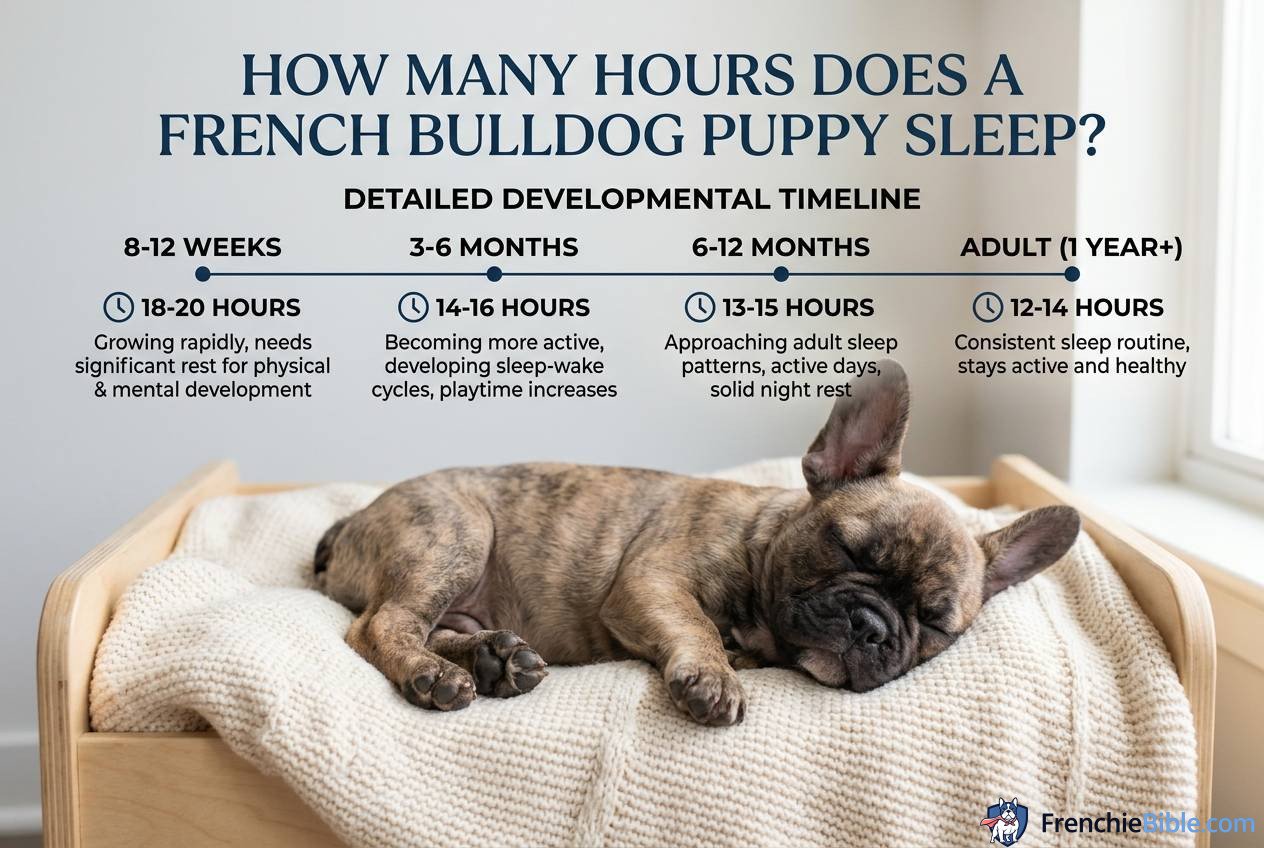
How Many Hours Does a French Bulldog Puppy Sleep? A Detailed Developmental Timeline
The amount of sleep a French Bulldog puppy needs is not static; it varies significantly depending on their age, growth spurts, and daily activities. Here is a detailed breakdown of what to expect during their critical developmental stages.
Newborn to 4 Weeks Old: The Neonatal Stage
During the first few weeks of life, a Frenchie puppy is entirely dependent on its mother. They are essentially little eating and sleeping machines.
- Average Sleep Time: 20 to 22 hours per day.
- Characteristics: Newborn puppies spend almost their entire day asleep. They wake only for short periods to nurse from their mother and eliminate. At this stage, their eyes and ears are closed, so their interaction with the world is minimal. Their sleep is mostly active REM sleep, characterized by constant twitching and jerking, which is essential for building muscle tone and establishing early nervous system connections. As a breeder, I watch closely for this twitching; a lack of it can sometimes indicate a weak or failing puppy.
4 to 8 Weeks Old: The Transitional Stage
As puppies begin to open their eyes, hear, and walk, they start exploring their immediate whelping environment. This is also the time when weaning begins, introducing them to solid food.
- Average Sleep Time: 18 to 20 hours per day.
- Characteristics: While they are slightly more active—exploring the whelping box, play-fighting with littermates, and chewing on soft toys—they fatigue very rapidly. Play sessions will last only a few minutes before they literally drop where they stand and fall into a deep sleep. It is common to see a pile of puppies sleeping in a disorganized heap.
8 to 12 Weeks Old: The Crucial Socialization Period
This is typically the age when a Frenchie puppy leaves their breeder and goes to their new forever home. It is a period of massive environmental change, learning, and critical socialization.
- Average Sleep Time: 18 to 20 hours per day.
- Characteristics: Your puppy will be exploring your home, meeting new people, experiencing car rides, and starting basic potty training. These mental and physical stimulations are incredibly exhausting. You can expect them to be awake for 45 minutes to an hour of intense play, training, and exploration, followed by a mandatory 1 to 2-hour nap. At this age, forced naps in a crate are often necessary because a stimulated puppy will fight sleep.
3 to 6 Months Old: The Juvenile Stage
During this phase, your puppy is growing rapidly, gaining muscle mass, and starting the uncomfortable process of teething. They are becoming more coordinated and have slightly more stamina.
- Average Sleep Time: 15 to 18 hours per day.
- Characteristics: They will have longer periods of wakefulness and more structured play sessions. You might start taking them on short, 10-minute walks. However, they still need frequent, scheduled naps. Overstimulation is incredibly common at this age. A puppy that is “acting out,” exhibiting the “zoomies” (running frantically in circles), or becoming unusually nippy and aggressive is almost always overtired and in desperate need of a nap.
6 to 12 Months Old: Approaching Adulthood
As your French Bulldog approaches their first birthday, their sleep patterns will start to slowly resemble those of an adult dog.
- Average Sleep Time: 12 to 14 hours per day.
- Characteristics: They will likely sleep through the night (8-10 hours) without needing a potty break and take several shorter naps throughout the day. While they still enjoy a good snooze on the sofa, they are generally more robust, can handle longer walks, and can stay awake for several hours at a time without becoming cranky.
Normal Puppy Sleep vs. Signs of Illness: How to Tell the Difference
This is arguably the most critical skill for a new French Bulldog owner to develop. How do you tell the difference between a puppy that is just delightfully exhausted from playing and a puppy that is dangerously lethargic due to an underlying illness?
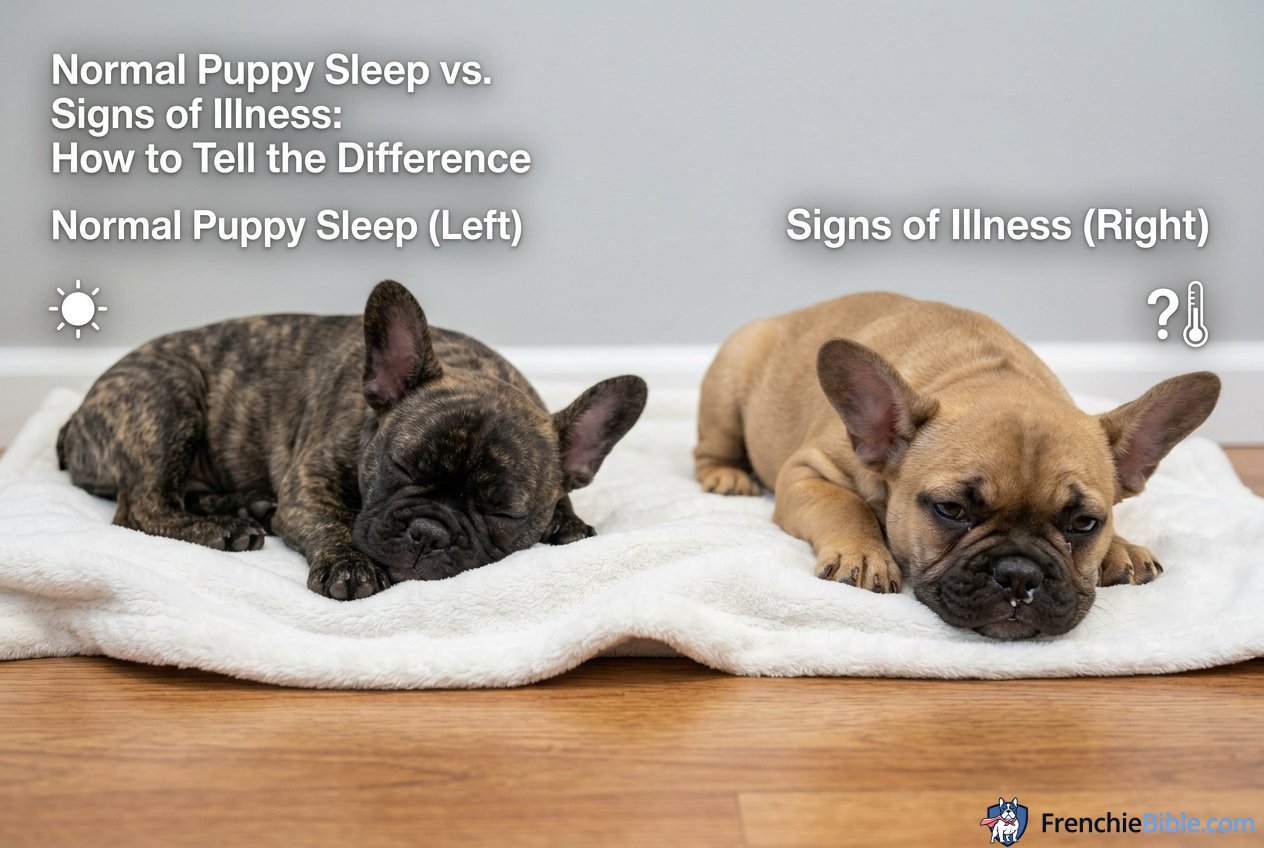
As a veterinarian, I often hear owners state in a panic, “My puppy is sleeping a lot!” While sleeping a lot is normal for a puppy, the quality, context, and accompanying symptoms of the sleep are what matter most in determining their health status.
What Does Normal, Healthy Sleep Look Like in a Frenchie?
A healthy, appropriately tired Frenchie puppy will exhibit the following signs:
- Wakes Up Energized and Alert: After a solid nap, a healthy puppy should wake up bright-eyed, stretch enthusiastically, and be immediately ready to play, eat, or go outside to potty. Their energy levels should bounce back quickly.
- Reacts to Environmental Stimuli: Even when deeply asleep, a healthy puppy will usually rouse or twitch their ears if there is a sudden loud noise, if you open a crinkly bag of treats, or if someone enters the room.
- Normal, Relaxed Body Posture: They will sleep in relaxed, often comical positions—on their back with all four legs in the air, sprawled out on their stomach with legs stretched backward (the famous Frenchie “sploot”), or curled tightly in a comfortable ball.
- Maintains a Predictable Routine: Their sleep follows a relatively predictable daily pattern of: play, eat, potty, sleep, repeat. You will start to learn their natural rhythms.
- Healthy Appetite and Hydration: When they are awake, they show a strong, eager interest in their food and drink water regularly.
- Normal Elimination: Their feces are firm, brown, and well-formed, and their urine is a clear or pale yellow color without a strong, offensive odor.
Red Flags: Signs of Unhealthy Lethargy and Potential Illness
Lethargy is distinctly different from simply being tired. Lethargy is an abnormal lack of energy, listlessness, a dullness in the eyes, and a profound lack of interest in the surroundings. If your French Bulldog puppy exhibits any of the following signs along with excessive sleeping, treat it as a potential medical emergency:
- Difficulty Rousing (Stupor): If you cannot easily wake your puppy, if they seem confused when woken, or if they immediately fall back into a deep sleep the moment you stop stimulating them, this is a major red flag indicating a serious problem like hypoglycemia or infection.
- Complete Lack of Interest in Food or Water: A healthy Frenchie puppy is almost always food-motivated. If your puppy outright refuses a meal, turns away from their favorite treats, or hasn’t had a drink in several hours, accompanied by excessive sleepiness, seek immediate veterinary care.
- Changes in Breathing Patterns: While Frenchies are known for their adorable snoring, any sudden, severe changes in breathing are alarming. Watch for rapid, shallow breaths (tachypnea), wheezing, coughing, excessive panting while completely at rest in a cool room, or blue/pale/white gums. These indicate respiratory distress, which is particularly dangerous for brachycephalic breeds.
- Vomiting and Diarrhea: Lethargy accompanied by gastrointestinal upset is incredibly dangerous, especially for small puppies under 16 weeks old. They have very little reserve and can dehydrate rapidly, leading to hypovolemic shock and organ failure within hours.
- Abnormal Body Temperature: A puppy’s normal body temperature is higher than a human’s, typically between 101°F and 102.5°F (38.3°C – 39.1°C). A dog that feels unusually hot to the touch (especially around the ears and belly) or is violently shivering despite being in a warm room might have a severe infection or virus.
- Hiding or Isolating Behavior: While a tired puppy might seek a quiet corner under the coffee table to sleep, a sick puppy will often actively hide under beds, deep in closets, or in dark, isolated places and refuse to come out even when called coaxingly. This is an instinctual behavior to protect themselves when they feel vulnerable and ill.
- Whining, Groaning, or Crying When Touched: This is a clear indicator of pain. The pain could stem from a musculoskeletal injury, severe gastrointestinal cramping, or an internal infection. If picking them up causes them to vocalize in distress, see a vet.
- Stiff or Hunched Posture: Walking with a severely hunched back, tucking their tail tightly under their belly, or appearing incredibly stiff when trying to stand up can indicate severe abdominal pain, nausea, or spinal issues (like early signs of IVDD, a condition Frenchies are highly genetically predisposed to).
The “Floppy” Test: Assessing Muscle Tone
If you are unsure if your puppy is just deeply tired or dangerously lethargic, pick them up gently. A sleeping, healthy puppy will feel relaxed but will still retain normal muscle tone. They will likely shift their weight, stretch, or adjust their position to be comfortable while being held.
A severely lethargic, sick puppy will feel entirely limp, “floppy,” and unresponsive, almost like a ragdoll. They will lack the energy to support their own head or shift their weight. If your puppy is limp and unresponsive, do not wait—go to the nearest emergency veterinary clinic immediately.
Common Causes of Excessive Sleeping in French Bulldog Puppies
If your puppy is sleeping slightly more than usual but does not have the severe red flag symptoms mentioned above, several benign or temporary factors might be influencing their sleep schedule.
1. Growth Spurts and Developmental Milestones
Just like human teenagers, puppies experience sudden, intense growth spurts. During these periods, their bodies demand extra energy for bone and muscle development. You may notice your puppy sleeping an extra 2-3 hours a day for a few days, followed by a noticeable increase in size or weight. This is perfectly normal.
2. Teething Discomfort
Between 3 and 6 months of age, your Frenchie will lose their sharp deciduous (baby) teeth and erupt their permanent adult teeth. The teething process causes sore, inflamed gums, low-grade localized pain, and general discomfort. This can make a puppy feel miserable, leading them to sleep more as a coping mechanism. Providing age-appropriate frozen chew toys or frozen carrots can help alleviate this pain.
3. Post-Vaccination Fatigue
It is completely normal and expected for a puppy to be extra sleepy, slightly sore at the injection site, and even run a very mild, transient fever for 24-48 hours after receiving their core puppy vaccinations (like DAPP or Rabies). Their immune system is working incredibly hard to process the vaccine antigens and build immunity. Ensure they have a quiet, comfortable place to rest and access to fresh water.
4. Environmental Changes and Psychological Stress
Moving to a new home away from their littermates, the introduction of a new pet or baby to the household, loud noises (like thunderstorms, construction, or fireworks), or sudden changes in your daily work routine can cause significant stress for a young dog. Puppies often cope with psychological stress and anxiety by withdrawing from the environment and sleeping more.
5. Weather and Temperature Extremes
French Bulldogs are notoriously sensitive to temperature extremes due to their brachycephalic airway syndrome. On hot, humid days, they will naturally slow down and sleep much more to prevent fatal overheating. Conversely, on very cold, damp days, they may curl up tightly and sleep to conserve core body heat. Always ensure your home is kept at a moderate, comfortable temperature.
6. Physical Overexertion
New owners, eager to play with their new companion, often make the mistake of over-exercising their Frenchie puppy. Remember, a 10-week-old puppy only needs about 10-15 minutes of structured physical exercise at a time. Taking a young puppy for a mile-long walk or playing fetch for an hour can lead to extreme physical exhaustion, muscle soreness, and joint stress, requiring many hours of deep recovery sleep.
When to Contact Your Veterinarian: Erring on the Side of Caution
As a general rule in veterinary medicine, you should never adopt a “wait and see” approach with a young, lethargic puppy. Their condition can deteriorate from mildly sick to critically, life-threateningly ill within a matter of hours due to their small size and immature immune systems.
You should contact your veterinarian or an emergency clinic immediately if:
- The excessive sleepiness and lack of energy last for more than 24 hours.
- The lethargy is accompanied by ANY of the red flag symptoms: vomiting, diarrhea, lack of appetite, breathing difficulties, or pale gums.
- Your puppy is younger than 12 weeks old and refuses even a single meal. Hypoglycemia (dangerously low blood sugar) can set in very quickly in toy and small breeds, leading to seizures and death.
- You simply have a “gut feeling” that something is wrong. You spend the most time with your puppy and know their normal baseline behavior better than anyone. Trust your instincts.
How to Ensure Your Frenchie Puppy Gets Quality, Restorative Sleep
Providing a healthy sleep environment and enforcing a routine is just as important as monitoring the duration of their sleep. Here are expert tips for optimizing your Frenchie’s rest:
1. Crate Training for Structured Sleep and Safety
A properly introduced crate should be a puppy’s safe haven—a quiet, den-like space where they can retreat when they are tired, overwhelmed, or need to be unsupervised. Crate training is invaluable for enforcing mandatory nap times.
Puppies, much like human toddlers, often suffer from severe “FOMO” (Fear Of Missing Out). If there is activity, talking, or movement in the house, they will force themselves to stay awake to watch, leading to an overtired, cranky, and hyperactive dog. Placing them in a covered crate in a quiet, dimly lit room removes visual stimuli and forces them to settle down and get the crucial REM sleep they need.
2. Establish a Consistent Daily Routine
Dogs are creatures of habit and thrive on predictability. Try to keep meal times, play sessions, potty breaks, and nap times relatively consistent every single day, including weekends. A predictable schedule helps regulate their internal biological body clock (circadian rhythm), making it significantly easier for them to fall asleep quickly and stay asleep longer.
3. Create the Perfect Sleep Environment
Ensure your puppy’s designated sleeping area is incredibly comfortable and safe. Given a Frenchie’s notorious temperature sensitivity, the room should be cool (ideally around 68-72°F or 20-22°C) and well-ventilated.
Use a supportive, high-quality orthopedic bed, as Frenchies are prone to joint issues, hip dysplasia, and spinal problems. Some puppies also find comfort in having an item that smells like their mother or littermates (often provided by the breeder), or a ticking clock or heartbeat toy that mimics the sound of sleeping alongside their siblings.
4. Balance Mental and Physical Activity
Ensure your puppy gets adequate mental and physical stimulation during their awake periods, but avoid overdoing it. Short, engaging, positive-reinforcement training sessions (teaching sit, stay, or leash manners), interactive puzzle toys, snuffle mats, and brief, age-appropriate walks are excellent. A puppy that has effectively expended both their physical energy and mental energy will sleep much sounder than a puppy that is simply bored.
5. Monitor Their Diet and Feeding Schedule
A high-quality, balanced diet specifically tailored for small or medium breed puppies provides the sustained, slow-release energy they need for growth. It also prevents lethargy caused by poor nutrition or hypoglycemia. Ensure you are feeding them 3 to 4 small meals a day rather than one large one to keep their blood sugar levels stable throughout the day.
Conclusion: Becoming a Confident and Vigilant Frenchie Parent
Understanding the immense sleep needs of your French Bulldog puppy is a fundamental part of responsible pet ownership. By anticipating that your new puppy will sleep upwards of 18 to 20 hours a day, you can avoid unnecessary anxiety and allow them the rest they need to grow into a strong adult.
However, true vigilance comes from knowing your individual puppy’s normal baseline behavior, daily rhythms, and unique quirks. By closely observing how they wake up, how eagerly they engage with their environment when awake, and immediately recognizing the subtle differences between normal, healthy exhaustion and dangerous, illness-induced lethargy, you are providing the highest standard of care.
Remember, you are your puppy’s biggest advocate and their first line of defense against illness. When in doubt, a quick phone call or trip to the veterinarian is always the safest and most responsible course of action to ensure your little Frenchie grows into a healthy, happy, and well-rested companion.
Frequently Asked Questions (FAQ)
Q1: Is it normal for my 8-week-old French Bulldog puppy to sleep 20 hours a day?
A: Yes, absolutely. An 8-week-old puppy is still essentially an infant experiencing incredibly rapid physical growth and massive brain development. Sleeping 18 to 20 hours a day is perfectly normal and biologically necessary for their health. As long as they are active, eating ravenously, and playing enthusiastically during those 4 awake hours, there is usually no cause for concern.
Q2: My Frenchie puppy breathes very fast, twitches aggressively, and makes squeaking noises while sleeping. Is this a seizure?
A: It is highly unlikely to be a seizure if it strictly only happens during sleep and they wake up completely normal. Fast breathing, twitching paws, whimpering, sucking motions, and rapid eye movements under the eyelids are classic, textbook signs of REM (Rapid Eye Movement) sleep. Puppies spend a massive amount of time in REM sleep as their brains develop and process new information. As long as they wake up normally, this is completely healthy active sleep.
Q3: How do I force my overtired, biting puppy to go to sleep?
A: You cannot physically “force” a puppy to sleep, but you can create an environment where sleep is the only available option. When a puppy gets the “zoomies,” becomes excessively vocal, or turns into a biting “land shark,” they are almost always severely overtired. The best approach is to gently but firmly place them in their crate in a quiet, darkened room, perhaps with a safe chew toy. Usually, within 5-10 minutes of complaining, the stimulation will subside, and they will fall deeply asleep.
Q4: Can a French Bulldog puppy sleep too much?
A: Yes. While they naturally need a lot of sleep, sleeping too much in combination with other symptoms is a serious problem. If your puppy is sleeping 22 hours a day at 12 weeks old, refuses to eat their kibble, seems weak when walking, or is experiencing vomiting or diarrhea, they are sleeping too much because their body is fighting an illness. Profound lethargy is a primary, early symptom of many serious puppy illnesses, including Parvovirus, Distemper, and severe parasite infestations.
Q5: Should I wake my sleeping puppy up to go potty during the day?
A: Generally, the old adage “let sleeping dogs lie” applies. However, if you are actively potty training and know your puppy hasn’t been out to pee in 3-4 hours, you might need to gently wake them, carry them immediately outside, and give them the opportunity to eliminate to prevent an accident in the house. Always take them outside immediately the second they wake up naturally.
Q6: My puppy is sleeping non-stop after their first set of vaccinations. Should I be worried?
A: Mild lethargy, increased sleepiness, and a slight decrease in appetite are very common, expected side effects for 24-48 hours post-vaccination. Their immune system is working in overdrive to respond to the vaccine. However, if the lethargy is profound (they won’t lift their head), if their face or muzzle swells, if they develop hives, or if they have persistent vomiting, seek emergency veterinary care immediately, as this indicates a severe allergic reaction (anaphylaxis).
Q7: At what age will my Frenchie puppy finally start sleeping through the night without needing a potty break?
A: Most French Bulldog puppies will begin to sleep through the night (meaning 6-8 continuous hours without a potty accident or needing to go out) between 12 and 16 weeks of age. This milestone depends heavily on their physical bladder capacity, your consistency with crate and potty training, and ensuring you pick up their water bowl 2 hours before bedtime to prevent a full bladder at 3 AM.