
Disclaimer: The information provided in this article is for educational and informational purposes only. While written by a experienced French Bulldog breeder and breeding expert, it is not intended to replace professional veterinary advice, diagnosis, or treatment. Always consult with your local veterinarian or a certified animal behaviorist before starting any new grooming or training regimen, especially if your dog exhibits severe anxiety or aggression.
Introduction to the Frenchie Nail Drama
If you own a French Bulldog, you are likely intimately familiar with their theatrical nature. They are loving, stubborn, hilarious, and often incredibly vocal. But there is one specific grooming task that tends to bring out an entirely different side of the Frenchie personality: nail clipping.
Related Reading: Training & Behavior | Frenchie Puppy Guide | Best Food for Frenchies
For many French Bulldog owners, the simple act of taking out a pair of nail clippers can turn a peaceful evening into what sounds like a horror movie. Does your French Bulldog scream as if they are in mortal peril before the clippers even touch their paw? Do they thrash, alligator-roll, and emit a high-pitched shrieking sound that makes you fear the neighbors will call the authorities? If so, you are not alone.
This phenomenon, often humorously (but accurately) described by owners as sounding like a “screaming pig,” is a remarkably common issue within the breed. However, just because it is common does not mean it has to be your reality. Wrestling a panicked French Bulldog to trim their nails is not only stressful for you, but it is deeply traumatic for your dog. Over time, forced restraint will only exacerbate their fear, making each subsequent nail-trimming session worse than the last.
As a experienced French Bulldog breeder and breeder, I have seen this issue hundreds of times. The good news is that you can completely change your dog’s emotional response to nail clipping. Through a process called systematic desensitization and counter-conditioning, you can teach your Frenchie that nail trims are nothing to fear—and in fact, they can actually be a highly rewarding experience. In this comprehensive guide, we will break down exactly why your Frenchie is reacting this way, what you should never do, and provide a step-by-step, day-by-day protocol to help your dog overcome their nail-clipping phobia.
Why Do French Bulldogs Hate Having Their Nails Clipped?
Before we can fix the problem, we need to understand the root cause. When a French Bulldog screams during a nail trim, they are not simply “being stubborn” or “giving you a hard time.” They are experiencing genuine fear, anxiety, and panic. Understanding the psychological and physiological reasons behind this reaction is the first step toward compassion and successful training.
The Drama Queen/King Personality
French Bulldogs are notoriously sensitive and highly expressive dogs. They are bred to be companion animals, which means they are incredibly attuned to their environment and their owners’ emotions. They are also known for being somewhat dramatic. When a Frenchie feels uncomfortable, they don’t just quietly endure it; they tell the world. This vocalization is often disproportionate to the actual pain or threat they are experiencing. If they anticipate discomfort, they will preemptively scream to stop the interaction.
Previous Negative Experiences (The Memory of Pain)
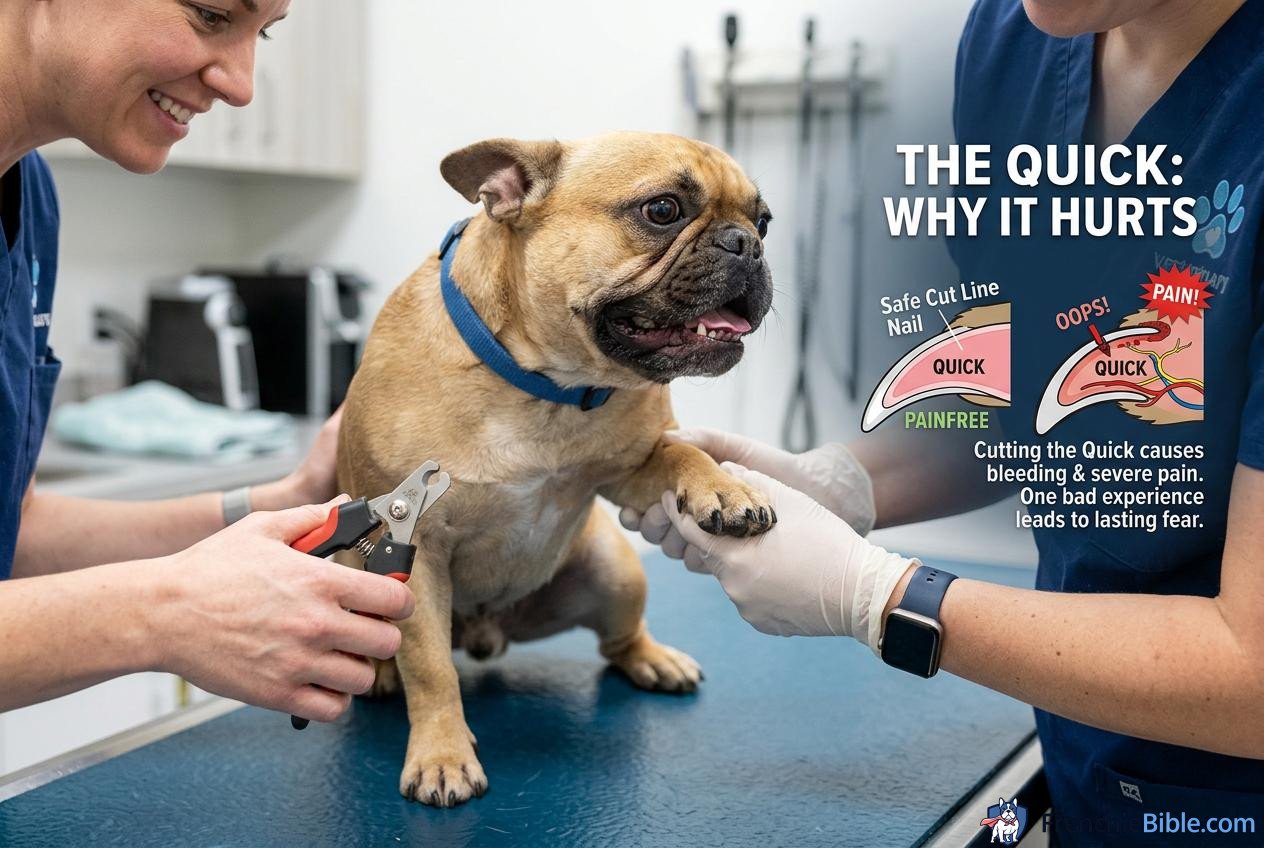
The most common reason for extreme nail-clipping anxiety is a past trauma. If a dog has ever had their nails clipped too short, cutting into the “quick” (the sensitive blood vessel and nerve bundle inside the nail), they have experienced sudden, sharp, and intense pain. Dogs are associative learners. If they experienced pain when the clippers came out once, they will associate the clippers with pain forever unless that association is actively reprogrammed. Even a single bad experience at a groomer or vet clinic when they were a puppy can cement a lifelong phobia.
Sensitivity of the Paws
Dogs’ paws are incredibly sensitive. They are packed with nerve endings that help them navigate different terrains, sense temperature, and balance. For many dogs, having their paws handled—especially restricted or squeezed—is inherently uncomfortable. In the wild, having a limb trapped or restrained is a vulnerable and dangerous position. Your Frenchie’s instinctual brain may interpret paw restraint as a threat to their safety.
Restraint Anxiety
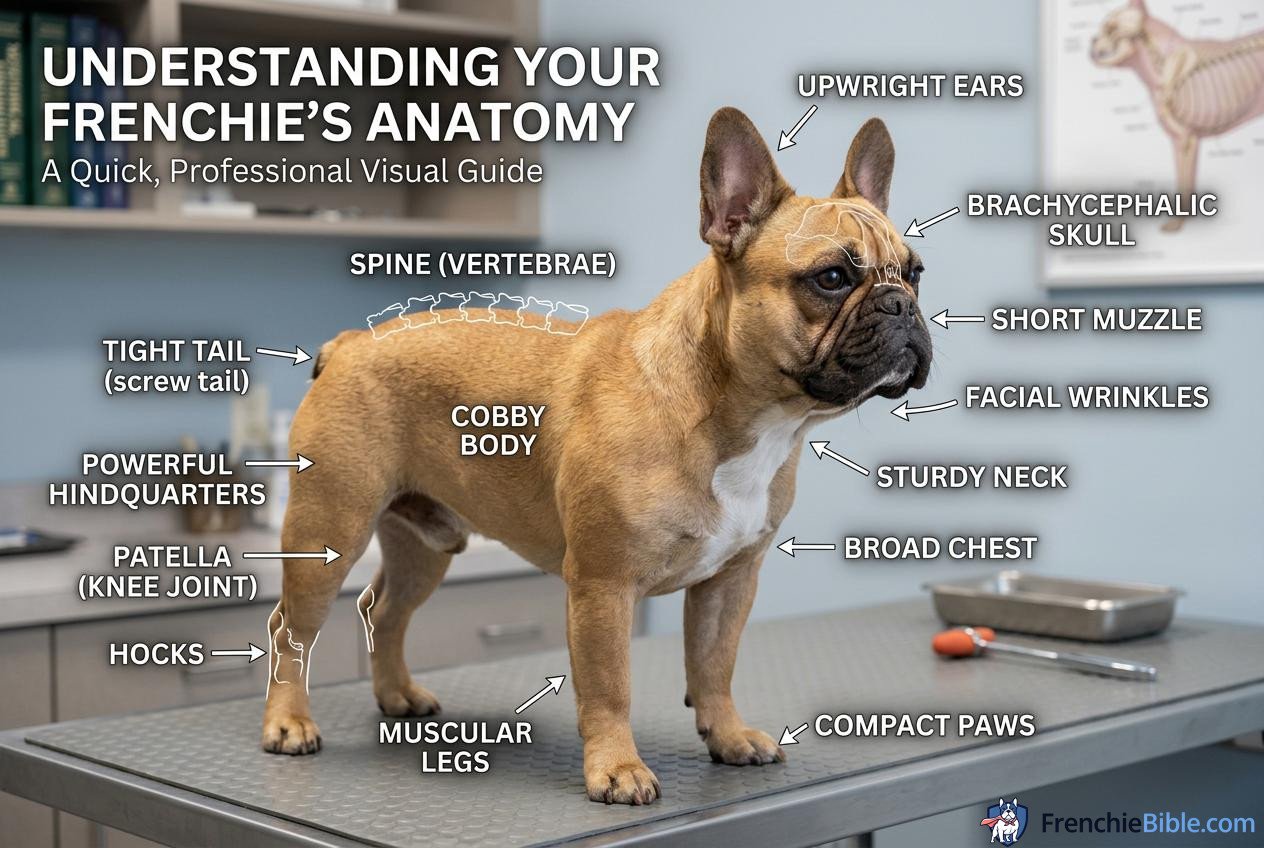
Often, it is not actually the nail clipping that the dog fears the most, but the restraint required to do it. If your typical nail-clipping routine involves pinning the dog down, holding their leg in a tight grip, or having multiple people hold them while they struggle, you are inducing a state of panic. French Bulldogs, with their brachycephalic (flat-faced) anatomy, can quickly become breathless and overheated when stressed and struggling. The feeling of being trapped and unable to breathe properly compounds their terror. The screaming is a desperate plea for release.
Understanding Your Frenchie’s Anatomy: The Quick
To trim your dog’s nails safely, you must understand the anatomy of the canine nail. Unlike human nails, which are relatively flat, a dog’s nail is curved and contains a living core called the “quick.”
The quick is the blood supply and nerve bundle that nourishes the nail. It grows outward from the toe bone.
– Light-colored nails: If your Frenchie has white or light-colored nails, the quick is easily visible as a pinkish area in the center of the nail. You simply need to trim the white, curved tip just before the pink area begins.
– Dark-colored nails: If your Frenchie has black nails, you cannot see the quick from the outside. This makes trimming much more intimidating. When trimming a black nail, you must make very small, incremental cuts. As you cut closer to the quick, the center of the cut surface will change from dry and chalky to looking like a solid, dark, fleshy oval (often called the “jelly bean”). As soon as you see this darker, solid center, stop cutting immediately.
If you cut into the quick, the nail will bleed profusely, and the dog will experience a sharp pain. This is exactly what we must avoid at all costs during the desensitization process.
The Wrong Ways to Handle a Screaming Frenchie
Before detailing what you should do, it is critical to outline what you must immediately stop doing. Continuing these practices will make the phobia worse and can damage the bond of trust between you and your dog.
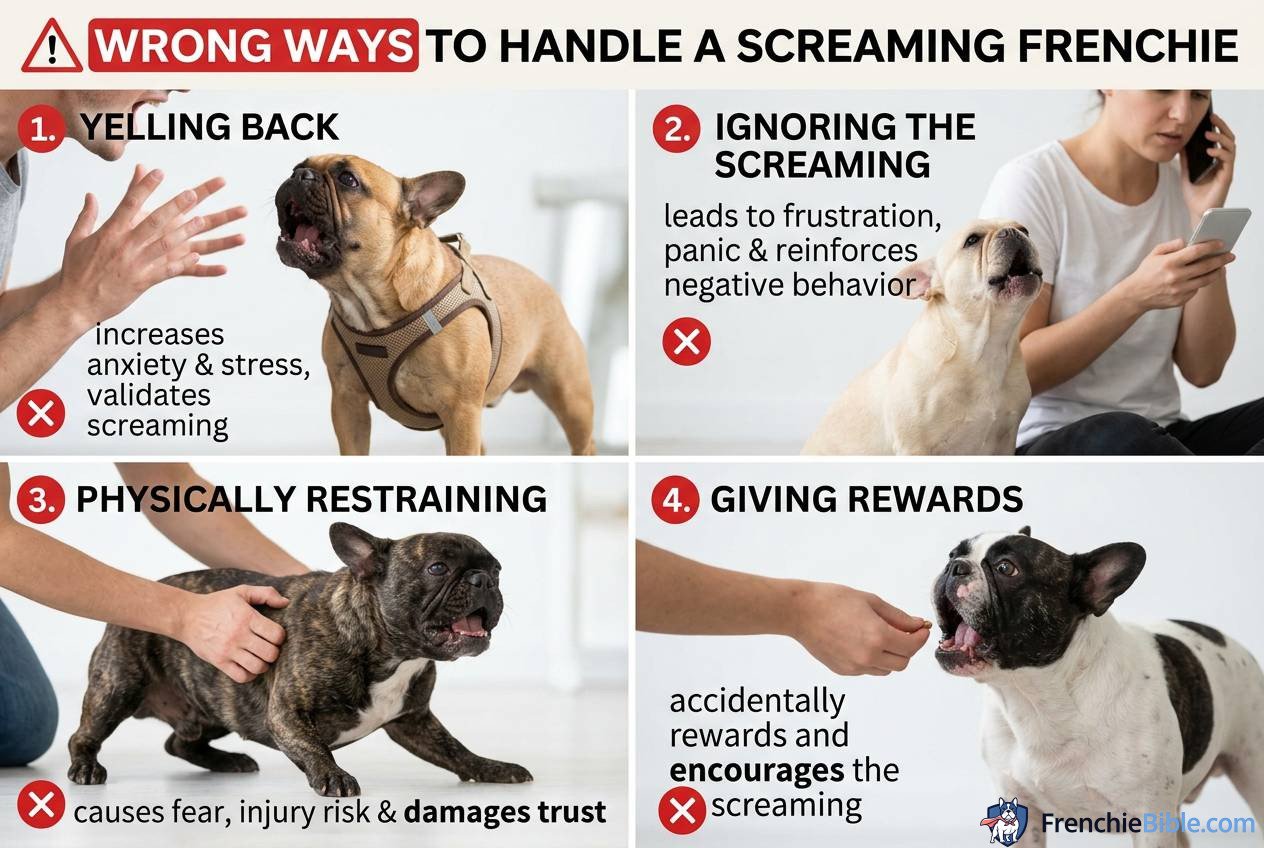
- Forced Restraint (“Pinning” or “Scruffing”): Never hold your French Bulldog down by force to clip their nails. This triggers their fight-or-flight response and teaches them that grooming is a physical battle they must fight to survive. Given their respiratory issues, extreme struggling can even be life-threatening.
- Punishment or Yelling: Yelling at a screaming, panicked dog will only validate their fear. They will think, “I was right to be terrified, now my owner is angry and aggressive too!” Never punish your dog for expressing fear.
- “Getting It Over With”: Rushing through the process while the dog screams and thrashes is traumatic. Even if you manage to cut all the nails, the psychological damage is done, and next time will be significantly harder.
- Sedation as a First Resort (Without Training): While mild vet-prescribed sedatives (like your veterinarian may recommend a anti-anxiety medication (never use without veterinary guidance) or your veterinarian may recommend a pain or anti-seizure medication (never use without veterinary guidance)) can be helpful as an adjunct during training, relying solely on heavy sedation every month without addressing the underlying fear is not a long-term solution.
The Systematic Desensitization Method for Nail Clipping
Systematic desensitization is a behavioral modification technique used to overcome phobias. It involves exposing the dog to the scary stimulus (the clippers) at a level so low that it does not trigger a fear response, and pairing that exposure with a highly desirable reward (high-value treats). Over time, you gradually increase the intensity of the exposure while maintaining the dog’s relaxed state.
Counter-conditioning changes the dog’s emotional response from “Clippers = Pain/Fear” to “Clippers = Delicious Snacks/Joy.”
What You Will Need Before You Start:
– High-Value Treats: This is crucial. Regular kibble will not work. You need treats your dog would sell their soul for. Think boiled chicken breast, small pieces of hot dog, freeze-dried liver, peanut butter (xylitol-free), or squeeze cheese.
– A Quiet Environment: Choose a calm, distraction-free room where your dog feels safe.
– Patience: This process cannot be rushed. It may take weeks or even months. You must progress at your dog’s pace, not your own timeline.
– The Right Tools: Have your clippers or grinder ready, but keep them hidden initially.
Phase 1: Creating Positive Associations with Paws (Days 1-3)
The goal of this phase is simply to teach your dog that having their paws touched is a wonderful thing that predicts incoming treats. Do not bring the clippers out at all during this phase.
- The Casual Touch: While your Frenchie is relaxed on the couch or floor, gently reach out and briefly touch their paw for one second. Immediately say a marker word like “Yes!” or “Good!” and give them a high-value treat.
- Repetition: Repeat this 5-10 times per session. Do 2-3 sessions a day.
- Gradual Progression: Over the next few days, gradually increase the duration and intensity of the touch. Move from a brief tap to holding the paw for two seconds, then five seconds. Always treat immediately.
- Squeezing the Toes: Once your dog is comfortable with you holding their paw, gently squeeze a single toe to extend the nail. “Yes!” -> Treat. Release. Repeat for all toes.
- The Rule of Comfort: If your dog pulls their paw away, let them. Do not force it. It means you progressed too fast. Go back to a lighter, shorter touch and build up again.
Phase 2: Introducing the Nail Clippers (Days 4-6)
Now, we introduce the terrifying object, but in a completely non-threatening way. The clippers become a “treat dispenser.”
- Sight of the Clippers: Bring the clippers out and place them on the floor across the room. The moment your dog looks at them, say “Yes!” and give a treat. If they ignore the clippers, toss a treat near them.
- Moving Closer: Over several sessions, gradually bring the clippers closer to your dog. Each time they appear, treats rain down. When you put the clippers away, the treats stop.
- Holding the Clippers: Pick up the clippers. Let your dog sniff them. “Yes!” -> Treat. Do not try to touch your dog with the clippers yet. The equation is simple: The appearance of clippers means high-value food is available.
Phase 3: Touching Clippers to the Paws (Days 7-10)
This phase combines Phase 1 and Phase 2.
- The Tap: With your dog relaxed, hold their paw in one hand and the clippers in the other. Gently tap the clippers against their leg or paw (not the nail yet). “Yes!” -> Treat.
- Moving Down: Gradually move the tap closer to the toes. Tap the clippers on the nail. “Yes!” -> Treat.
- Building Duration: Rest the clippers against the nail for one second, then two seconds, treating continuously. If the dog shows any sign of stress (lip licking, yawning, pulling away, tensing up), you have gone too fast. Stop and take a step back.
Phase 4: Simulating the Clipping Action (Days 11-14)
The sound and pressure of the clippers are often triggers. We must desensitize these elements separately.
- The Sound: Hold the clippers near your dog (but not touching them) and squeeze them so they make a “snip” sound. “Yes!” -> Treat. Repeat until the dog hears the “snip” and immediately looks at you expecting a treat.
- The Pressure (Without Cutting): Take a dry piece of uncooked pasta or a wooden toothpick. Hold it next to your dog’s paw and cut it with the clippers so it makes a loud snap. “Yes!” -> Treat. This simulates the sound and vibration of a nail being cut.
- The Pinch: Gently pinch your dog’s nail with your fingernails (or the dull side of the clippers, if safe) to simulate the pressure of the clippers just before the cut. “Yes!” -> Treat.
Phase 5: The First Real Clip (Day 15 and Beyond)
You are finally ready to cut a nail. But the golden rule here is: Less is more.
- Just One Tip: Get your dog in a comfortable position (many Frenchies do well sitting in your lap, facing away from you, or lying on their side). Bring the clippers to a nail. Just snip the very microscopic tip off the nail. A literal millimeter. “Yes!” -> JACKPOT TREAT (a handful of treats).
- End on a High Note: After that single, successful clip, stop. Put the clippers away. The session is over. You want the dog to think, “Wow, I got a pile of chicken for just a tiny snip, and then it was over! That was easy!”
- Gradual Increase: The next day, you might do two nails. A few days later, one whole paw. Do not rush to do all four paws in one sitting until your dog is completely relaxed. It is perfectly fine to clip one nail a day for a month. Consistency and positive association are far more important than speed.
Best Tools for French Bulldog Nail Maintenance
Having the right tools can make a significant difference in your success rate. Dull clippers crush the nail rather than cutting it, causing pain and pressure even if you don’t hit the quick.
Scissor-Style Clippers vs. Guillotine Clippers
With my background in French Bulldog breeding, I strongly recommend scissor-style clippers over guillotine styles. Scissor clippers offer better visibility, cleaner cuts, and more control. Guillotine clippers can crush the nail and often obscure your view of where exactly the blade is cutting. Invest in a high-quality, sharp pair of scissor clippers designed for small to medium dogs. Miller’s Forge is a highly regarded brand among professionals.
Nail Grinders (Dremel Tools)
For many dogs with extreme clipper anxiety, a nail grinder (like a Dremel) is an absolute game-changer.
– The Benefits: Grinders file the nail down rather than cutting it. This eliminates the sudden “snapping” pressure that many dogs hate. It also makes it much harder to accidentally hit the quick, as you can grind away small layers at a time and easily see the quick approaching. Furthermore, grinders leave the nail smooth and rounded, preventing scratches on your skin and floors.
– The Drawbacks: Grinders vibrate and make a buzzing noise. You will need to use the exact same systematic desensitization process to get your Frenchie used to the sound and vibration before you ever touch it to their nail.
Scratch Pads: A Stress-Free Alternative
If your Frenchie’s anxiety is severe and you are struggling with the desensitization process, a scratch pad is a phenomenal alternative for the front paws. These are essentially large emery boards or sandpaper glued to a board. You can train your Frenchie to dig or scratch at the board for treats, naturally filing down their own front nails. This gives the dog agency and control over the process, eliminating restraint anxiety entirely. While it doesn’t solve the back nails (which usually grow slower and wear down faster on walks), it is an excellent tool to manage front nails stress-free.
Expert Tips for a Successful Nail Trimming Session
- Exercise First: Never try to clip a hyperactive Frenchie’s nails. Take them for a brisk walk or have a vigorous play session beforehand to burn off excess physical energy. A tired dog is a more compliant dog.
- Lick Mats and Distractions: Smear a silicone lick mat with peanut butter or wet food and stick it to the wall or floor. Let your Frenchie lick the mat while you handle their paws. Licking releases endorphins and is naturally calming for dogs. For many, a high-value lick mat is enough distraction to get through a trim.
- Lighting is Everything: Ensure you have excellent lighting. If you are trimming black nails, consider wearing a headlamp to get a clear view of the nail structure.
- Handling Positions: Find a position your dog prefers. Some like lying on their side on a comfortable bed. Others feel safer sitting in your lap with their back against your chest. Avoid flipping them on their back completely, as this can trigger a vulnerable, defensive reflex.
- Breathe and Stay Calm: Dogs smell stress. If you approach the nail trimming session with anxiety, expecting a fight, your Frenchie will sense your tension and immediately go on the defensive. Take deep breaths, speak in a calm, soothing voice, and project relaxed energy.
How Often Should You Trim a Frenchie’s Nails?
The frequency of nail trimming depends entirely on your dog’s lifestyle. Frenchies that walk miles a day on concrete sidewalks will naturally file down their nails and may rarely need a trim. Couch-potato Frenchies who primarily walk on carpet or grass may need trims every 2-3 weeks.
The “Click” Test: A general rule of thumb is that you should not hear your dog’s nails clicking loudly on hard floors when they walk. When a dog is standing square on a flat surface, their nails should not touch the ground. If the nails are touching the floor, they are too long and can begin to negatively impact the biomechanics of the foot, leading to arthritis and joint pain over time.
Regular, frequent trimming (taking off just a tiny sliver every week or two) is highly recommended. Not only does this keep the nails short, but it also forces the blood vessel (the quick) to recede further back into the nail over time, allowing for shorter, healthier nails.
What to Do If You Cut the Quick (Bleeding)
Even professionals occasionally “quick” a dog. It happens. The most important thing is not to panic. If you scream or act distressed, you will reinforce to your dog that something terrible just happened, setting back your training.
- Stay Calm: Say a cheerful “Oops!” and offer a jackpot handful of treats immediately to distract them from the pinch.
- Apply Styptic Powder: You should always have styptic powder (like Kwik Stop) on hand before starting a nail trim. Take a pinch of the powder and firmly press it directly onto the bleeding tip of the nail for a few seconds. This will instantly stop the bleeding and often contains a mild topical anesthetic.
- Alternatives: If you don’t have styptic powder in an emergency, you can use cornstarch, flour, or even press the nail into a bar of mild soap, though these are less effective than commercial powders.
- Stop the Session: If you make your dog bleed, stop the grooming session immediately for the day. End on a positive note with treats and try again another day.
When to Seek Professional Help
There is no shame in admitting that you need assistance. If your Frenchie’s behavior escalates from screaming to genuine aggression (growling, snapping, or biting), you must prioritize safety.
- Fear-Free Certified Veterinarians: Look for a clinic with “Fear-Free” certification. These professionals are trained in low-stress handling techniques. They can also discuss pharmaceutical intervention. For severely phobic dogs, a prescription for a pre-visit anti-anxiety medication (like your veterinarian may recommend a anti-anxiety medication (never use without veterinary guidance) or your veterinarian may recommend a pain or anti-seizure medication (never use without veterinary guidance), prescribed by your vet) given a few hours before the trim can dramatically lower the dog’s panic threshold, making the desensitization training much more effective.
- Veterinary Behaviorists: If the phobia is deeply ingrained, consulting a certified veterinary behaviorist can provide you with a customized, intensive behavior modification plan.
- Professional Groomers (with caution): If you use a groomer, ensure they understand and practice positive reinforcement. A groomer who manhandles your dog to “get it done” will undo all your hard work. Seek out groomers who specifically advertise low-stress or fear-free handling.
Overcoming your French Bulldog’s nail-clipping anxiety is a journey of patience, consistency, and empathy. By abandoning force and embracing systematic desensitization, you can transform a screaming, stressful ordeal into a calm, cooperative bonding experience with your beloved pet.
Frequently Asked Questions (FAQs)
Q1: Why does my French bulldog scream before I even touch their nail?
This is an anticipatory fear response. Dogs have excellent associative memories. If they previously experienced pain or severe stress during a nail trim (such as having their quick cut or being forcibly held down), they learn that the appearance of the clippers, or the specific way you hold their paw, predicts a traumatic event. The screaming is a panic reaction to the expectation of pain, not current pain. They are essentially having a panic attack.
Q2: Can I just take my Frenchie to the vet or groomer instead?
You can, but it is important to be cautious. If the groomer or vet tech uses forced restraint to get the nails done, your dog’s phobia will likely worsen over time, even if you aren’t the one doing it. If you choose to outsource this task, you must ensure you are using a “Fear-Free” certified professional or a groomer who uses positive reinforcement, takes their time, and does not push the dog past their stress threshold. Ultimately, training your dog to accept nail trims at home is the most sustainable and low-stress solution.
Q3: Are nail grinders better than clippers for anxious Frenchies?
For many anxious dogs, yes. Grinders (like Dremel tools) eliminate the sudden squeezing pressure and “snapping” sound of clippers, which are common triggers. They also make it much easier to avoid cutting the quick, as you file the nail away gradually. However, grinders introduce new stimuli: vibration and a buzzing noise. You must still use the systematic desensitization process to slowly introduce your Frenchie to the sound and feel of the grinder before applying it to their nails.
Q4: How long does the desensitization process take?
There is no set timeline; it depends entirely on the severity of your Frenchie’s fear and your consistency. For a puppy with mild hesitation, it might take a week. For an adult Frenchie with a deeply ingrained phobia and a history of trauma, it could take several months of daily, short training sessions. You must proceed at the speed of your dog’s comfort. Rushing the process will only set you back to the beginning.
Q5: My Frenchie is aggressive when getting nails clipped. What should I do?
If your dog is growling, baring teeth, snapping, or attempting to bite, your primary concern must be safety. Stop attempting to clip the nails immediately. Continuing to push an aggressive dog will result in a bite. You should consult with An Experienced Breedererinarian to discuss anti-anxiety medications that can be given prior to handling, and work with a certified animal behaviorist or professional dog trainer who specializes in cooperative care and fear-based aggression. Muzzle training (using positive reinforcement to teach the dog to love wearing a basket muzzle) is also highly recommended for safety during future desensitization work.